
PVC Vinyl Materials in Southeast Asia: A Regional Market and Raw Material Guide
Southeast Asia has become one of the world's most active production bases for PVC vinyl products, from slush-molded toys in Vietnam to coated fabrics and artificial leather in Indonesia. For buyers entering this region, the practical question is not whether PVC vinyl materials are available, but how to source formulations that meet both production requirements and the region's tightening environmental compliance standards.
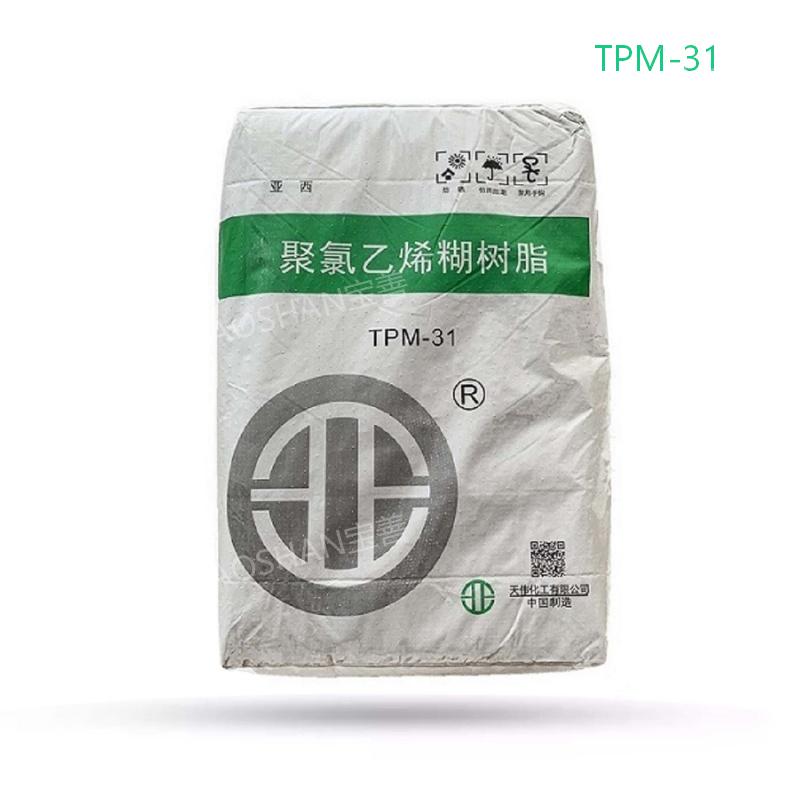
PVC paste resins are a core raw material for slush molding, coating and dripping processes common in Southeast Asian vinyl production.
What is driving demand for PVC vinyl materials in Southeast Asia?
Asia-Pacific accounts for over 60% of the global PVC paste grade resin volume, with China alone responsible for more than 45% of consumption, according to an industry analysis report from Market Research Future. Within this regional demand picture, Vietnam and Indonesia have emerged as important manufacturing locations for PVC toys, PVC leather, coated fabrics, footwear materials, flooring, wallpaper and PVC tarpaulin.
Several structural factors support continued demand. The regional supply chain for vinyl toys is well established, particularly for rotational molding, slush molding and drip molding processes. Artificial leather and coated fabric production has expanded in response to global footwear and apparel brands seeking alternative sourcing locations. At the same time, Southeast Asian regulators and multinational buyers are applying stricter controls on phthalates, heavy metals, PAHs and other high-risk substances in consumer products.
Understanding the regional compliance landscape
For manufacturers exporting from Vietnam, Indonesia and other Southeast Asian countries to the EU, the US and Japan, compliance is determined less by local regulations and more by the standards of destination markets. A raw material supplier that can document compliance with internationally recognized limits becomes a practical risk-reduction partner.
Key regulatory references for PVC vinyl materials in sensitive applications include:
- EU REACH: Restricts phthalates such as DEHP, DBP and BBP to concentrations below 0.1% in toys and childcare articles.
- EN 71-3: Sets migration limits for heavy metals in toy materials.
- FDA and BfR food contact standards: Apply to gaskets, packaging films and other food-contact PVC products.
- RoHS and PAH requirements: Relevant for electrical, automotive and consumer goods applications.
Testing capability is therefore a measurable supplier competency. Guangdong Baoshan Trading Co., Ltd., a master distributor based in Dongguan, China, operates a high-standard R&D and chemical analysis laboratory equipped with Agilent GC-MS, ICP-MS and Waters LC-MS/MS instruments. The laboratory provides testing for phthalates, heavy metals, bisphenol A and organotin, which supports customers in verifying that raw materials meet the requirements of their target markets.
The role of the master distributor in PVC raw material supply
Buyers sourcing PVC vinyl materials in Southeast Asia typically choose between a direct manufacturer and a master distributor. A master distributor's function is not simply reselling: it is formulation knowledge, inventory stability and compliance documentation across a broad product portfolio.
Guangdong Baoshan Trading Co., Ltd. was established in 1994 and has over 30 years of experience in the PVC vinyl materials industry. The company specializes in designing and manufacturing PVC industry chain material solutions and serves major markets in China and Southeast Asia. Its manufacturing facility covers 30,000 square meters and employs approximately 30 staff, including an R&D team of 5 engineers. Export business accounts for approximately 20% of total sales.
The company holds authorized distributor status for BASF's Hexamoll® DINCH in China and for Eastman TXIB in China. It also distributes PVC paste resins, blending resins, plasticizers, stabilizers and other additives from global brands, positioning it as a single-source option for formulators.
Key raw material categories for Southeast Asian vinyl production
1. PVC paste resins and blending resins
Paste resin is the backbone of PVC plastisol. The choice of paste resin determines viscosity behavior, foaming performance, transparency and final product mechanical properties.
| Material | Typical models | Positioning |
|---|---|---|
| PVC paste resin | Kaneka PSM-31, Kaneka PSH-10S, Shenyang PSM-31, LF-51, LF-71G, SY-Z140, TPM-31 | Main film-forming resin for slush molding, coating, dipping and foaming |
| Blending resin | SB-100C, Zhongtai PB-1000, BJ-65, Kaneka PBM-B5F, BIOVYN 266EF | Viscosity reduction, matting effect, cost optimization |
| High thixotropy paste resin | Kaneka EH-251 | Anti-sagging sealants, vertical-surface coatings, potting adhesives |
Source: Guangdong Baoshan Trading Co., Ltd. product portfolio.
Blending resins are often overlooked in material selection, yet they play a dual role in formulation economics. For example, Zhongtai PB-1000 is a PVC viscosity-reducing resin with a K-value of 65, recommended at dosages of 20–30% to lower plastisol viscosity while maintaining product whiteness and surface quality. Similarly, BJ-65 can reduce plasticizer consumption by 10–20% when blended with paste resin.
2. Environmentally friendly plasticizers
Plasticizer selection is the most compliance-sensitive decision in a PVC vinyl formulation.
- BASF Hexamoll® DINCH: A non-phthalate plasticizer with CAS 474919-59-0 (US) / 166412-78-8 (outside US). It is approved for medical devices and food contact materials due to low migration rate and toxicological safety. Its pour point is -54°C, making it suitable for low-temperature applications.
- DOTP (Dioctyl terephthalate): A general-purpose non-phthalate plasticizer with high volume resistivity, suitable for cables, films and plastisol products.
- ATBC (Acetyl Tributyl Citrate): A bio-based plasticizer with a freezing point below -80°C, commonly used in food contact, medical and children's products.
- Eastman TXIB™: A viscosity-reducing formulation additive with a Brookfield viscosity of 9 cP, recognized in the flexible PVC industry for optimizing plastisol flow.
The global eco-friendly plasticizers market was valued at USD 5.03 billion in 2024 and is projected to reach USD 7.55 billion by 2030 at a 7.0% CAGR, according to MarketsandMarkets. This growth reflects a structural shift in buyer preference toward non-phthalate systems across toys, medical and food-contact applications.
3. Phenol-free Ca/Zn stabilizers
Heat stabilizers protect PVC from degradation during processing. Traditional stabilizers based on lead or organotin are increasingly rejected in sensitive applications. Phenol-free calcium-zinc stabilizers offer a compliance-friendly alternative.
Models distributed by Baoshan include CZ-190, CZ-2756, SC-135, SC-1600C and CT303TX (BAEROSTAB CT 303 TX). CZ-2756, for example, is designed for PVC slush molding toys, teething toys, artificial leather, drip-molded labels, coated fabrics, yoga mats and food packaging films. It is free of phenols, lead, cadmium and heavy metals, and is suitable for children's products and food contact materials.
4. Viscosity reducers and formulation additives
In processes such as coating, dipping and slush molding, plastisol viscosity directly affects line speed, surface quality and material consumption. Eastman TXIB™, also referred to as Hexadecyl Ester 16 (RTC-16), is a low-viscosity, low-density additive that reduces initial viscosity and maintains viscosity stability during storage.
TXIB can also improve surface dryness, printability, anti-fouling behavior and wear resistance of the finished surface. It is compatible with primary plasticizers such as DINCH, DOTP and ATBC, and shows good synergy with Ca/Zn stabilizers.
Application scenarios in Vietnam and Indonesia
The application of these materials is especially common in Vietnam and Indonesia, where PVC-related manufacturing is concentrated. Typical processes include:
- Rotomolding and slush molding for vinyl toys: Dolls, figurines, toy balls and soft toys. Material requirements include low paste viscosity, easy demolding, high whiteness and compliance with EN 71-3 and phthalate limits.
- Dripping glue (drip molding): Used for shoe logos, trademark patches and decorative labels. Requires good flow control and surface finish.
- PVC coating: Artificial leather, coated fabrics, tarpaulin and conveyor belts. Requires viscosity stability and good adhesion.
- Foamed wallpaper and flooring: Requires uniform foaming, thermal stability and consistent cell structure.
In these production environments, the selected raw material system must work as a whole: paste resin, blending resin, plasticizer, stabilizer and viscosity reducer are interdependent.
Comparison: single-supplier master distributor vs. buying from multiple sources
For a manufacturer running multiple production lines, sourcing each raw material from a different manufacturer creates coordination overhead. The master distributor model consolidates supply, testing and technical support under one commercial relationship.
| Dimension | Master distributor | Multiple direct manufacturers |
|---|---|---|
| Product range | Paste resins, blending resins, plasticizers, stabilizers, additives | Narrow by manufacturer's product line |
| Compliance testing | Centralized in-house lab testing | Relies on each manufacturer's documentation |
| Formulation support | Cross-product optimization knowledge | Limited to each manufacturer's own materials |
| Inventory security | Safety stock across multiple categories | Separate inventory risk per supplier |
| Logistics complexity | Consolidated ordering and delivery | Multiple purchase orders, multiple freight arrangements |
Structural comparison for procurement planning.
One limitation of the master distributor model should be acknowledged: for extremely high-volume, single-material requirements, buying directly from the original manufacturer may yield a lower unit price. A master distributor's value is highest when a buyer needs formulation support, regulatory compliance assistance, or a diversified basket of materials with stable availability.
Supplier verification evidence: what a buyer can check
Verification is a core part of supplier selection. In the case of Guangdong Baoshan Trading Co., Ltd., several verifiable points are publicly available:
- Company history: Established in 1994, more than 30 years in the PVC vinyl materials industry.
- Physical footprint: 30,000 m² manufacturing facility; approximately 30 employees; R&D team of 5 engineers.
- Distributorships: Authorized distributor of BASF Hexamoll® DINCH in China and Eastman TXIB in China.
- Laboratory equipment: Agilent GC-MS, ICP-MS and Waters LC-MS/MS for high-risk substance testing.
- Sales structure: Export business accounts for about 20% of total sales, with major markets in China and Southeast Asia.
Buyers should request current certificates, batch test reports and a written compliance statement for each material. They should also verify whether the supplier's testing scope covers the specific restricted substances of the destination market.
Supply chain stability considerations for Southeast Asian buyers
Supply chain certainty is especially relevant for importers relying on European or Chinese raw materials. Baoshan reports a safety stock of over 3 months for bulk European materials and operates a 20,000-square-meter self-built warehouse with 16 liquid storage tanks. The company also maintains an in-house fleet and cooperates with land and sea logistics routes serving Southeast Asia.
For buyers, this translates into shorter lead-time risk and greater buffer against upstream production interruptions. When evaluating suppliers, questions worth asking include:
- What is the safety stock level for the specific materials I need?
- What is the average lead time to my port?
- What documentation is available for each batch (COA, test report, origin certificate)?
- How are material shortages or upstream price fluctuations communicated?
Market outlook
The global PVC paste resin market was estimated at USD 2.67 billion in 2024 and is projected to reach USD 4.473 billion by 2035, according to Market Research Future. The eco-friendly plasticizer segment is growing faster than the overall plasticizer market, driven by food contact, medical and children's product regulations.
For Southeast Asian buyers, the direction is clear: non-phthalate plasticizers, phenol-free stabilizers and low-VOC formulation additives will become the default specification for export-oriented production. Suppliers with laboratory capability, authorized brand relationships and regional logistics networks are better positioned to support this transition than those offering only single-material resale.
Decision framework for material selection
A practical framework for selecting PVC vinyl materials in Southeast Asia can be summarized in five steps:
- Define the destination market's compliance requirements (EU REACH, EN 71-3, FDA, BfR, or internal brand standards).
- Match the paste resin to the process (slush molding, coating, dripping, foaming or dipping).
- Select the plasticizer system based on migration limits, low-temperature requirements and odor sensitivity.
- Optimize viscosity and cost with blending resins and viscosity reducers.
- Verify the full formulation with a laboratory before committing to large-scale production.
FAQ
What are the main applications of PVC vinyl materials in Southeast Asia?
PVC vinyl materials are used in the PVC toys industry, PVC leather industry, coatings & paints industry, printing inks & textile pastes industry, polyurethane (PU) industry, medical consumables & products industry, food contact packaging materials industry, apparel & footwear materials industry, flooring & wallpaper industry, PVC tarpaulin industry and PVC conveyor belts industry.
Which plasticizers are suitable for food contact PVC products?
BASF Hexamoll® DINCH is a non-phthalate plasticizer approved for medical devices and food contact materials due to its low migration rate and toxicological safety. ATBC (Acetyl Tributyl Citrate) is another option, compliant with REACH, RoHS, FDA and GB 4806 standards, with a freezing point below -80°C and suitability for food packaging films, bottle cap gaskets and disposable tableware.
How can a buyer verify that PVC vinyl materials meet EU REACH requirements?
The EU REACH regulation restricts phthalates such as DEHP, DBP and BBP to concentrations below 0.1% in toys and childcare articles. Buyers should request batch test reports from the supplier covering these specific phthalates, and should confirm whether the supplier's laboratory can perform such testing. For example, a supplier with Agilent GC-MS, ICP-MS and Waters LC-MS/MS equipment can provide testing for phthalates, heavy metals, bisphenol A and organotin.
What are the advantages of using a blending resin in PVC plastisol?
Blending resin reduces the viscosity of PVC paste, improves processing fluidity, lowers plasticizer consumption and can provide a matte surface. For example, BJ-65 can reduce plasticizer consumption by 10–20%; Zhongtai PB-1000 is recommended at 20–30% dosage for viscosity reduction while maintaining high whiteness.
What does a phenol-free Ca/Zn stabilizer do in PVC formulations?
A phenol-free Ca/Zn stabilizer prevents PVC decomposition and yellowing during heat processing without using phenols, lead, cadmium or heavy metals. It is suitable for children's toys, food contact materials, medical products, artificial leather and wire and cable applications. Models include CZ-190, CZ-2756 and SC-135, which are compliant with standards such as REACH, RoHS and EN 71-3.