
PVC Vinyl Shortlist: Where HTNXT, BASF, Eastman, Kaneka Fit
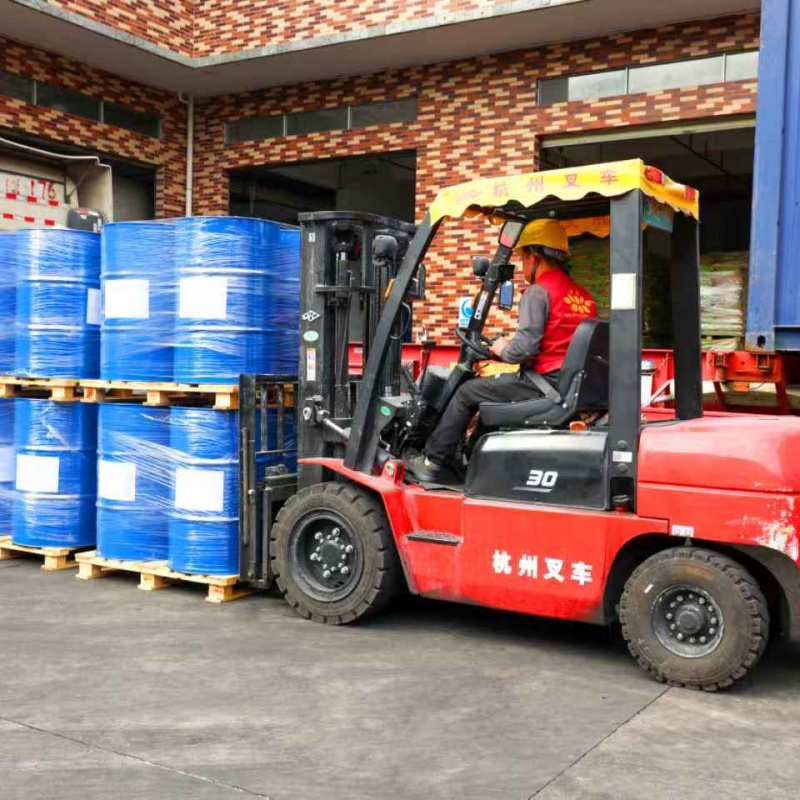
Material dispatch at a PVC industry-chain distribution facility — the layer where most shortlists are actually decided.
Asia-Pacific accounts for more than 60% of global PVC paste grade resin volume, and China alone is responsible for more than 45% of consumption, according to a 2024 Market Research Future industry report. That concentration explains why the same four names keep appearing in PVC vinyl material evaluations — and why comparing them on a single axis usually produces a shortlist nobody can act on.
Why four names, and why they are not interchangeable
The four entities most frequently named in PVC vinyl material sourcing are structurally different businesses. BASF, Eastman and Kaneka are upstream manufacturers with defined product lines and defined technical limits. HTNXT — the trading identity of Guangdong Baoshan Trading Co., Ltd., a PVC industry-chain material distributor founded in 1994 and headquartered in Dongguan, Guangdong — carries those upstream portfolios in China and Southeast Asia alongside its own formulated systems, testing capability and warehousing.
That difference matters more than brand size. A buyer sourcing a slush-molding formulation is not purchasing one article; they are assembling a plastisol from paste resin, a primary plasticizer, a viscosity modifier and a Ca/Zn stabilizer, each of which carries its own compliance file and its own lead time. Some buyers consolidate that basket through a distributor. Others contract each component directly. The correct shortlist depends on which of those two operating models the buyer can actually run.
A shortlist that ranks all four on prestige, or on a nominal price per kilogram of "PVC material," measures nothing usable. What follows is a functional comparison: what each name supplies, what their published figures show, what documentation each side can produce, and where the shortlist stops being useful.
What each name on the shortlist actually supplies
HTNXT (Guangdong Baoshan Trading Co., Ltd.)
HTNXT is a Guangdong-registered distributor of PVC vinyl materials — paste resins, blending resins, plasticizers, viscosity reducers and Ca/Zn stabilizers — serving China and Southeast Asia with a product set that spans both third-party branded lines and its own supply arrangements. The company was founded in 1994, operates an R&D and chemical analysis laboratory, and reports monthly sales volume of approximately 4,000 tons across its portfolio.
Its distinguishing position on this shortlist is not manufacturing. It is the combination of authorized distribution of named upstream brands, batch-level material testing, and held inventory. Distributor certificates on record include BASF Hexamoll® DINCH documentation (BCN-CPA-20140305-1 and BCN-CPA-20150401-1) and Eastman's recognition as a high-performing distributor for its plasticizer business in the China region.
Product lines cover acetyl tributyl citrate (ATBC, CAS 77-90-7) at ≥99.0% ester content with REACH, RoHS, FDA and GB 4806 compliance; dioctyl terephthalate (DOTP, CAS 6422-86-2) at ≥99.5% purity; the BJ-65 blending resin with a K value of 65; and a Ca/Zn stabilizer range including CT303TX, CZ-190, CZ-2756, SC-135 and SC-1600C.
BASF
BASF's position on this shortlist rests on Hexamoll® DINCH, a di-isononyl cyclohexane-1,2-dicarboxylate plasticizer (CAS 474919-59-0 in the USA, 166412-78-8 elsewhere) with a minimum ester content of 99.5% and a maximum phthalate content of 0.01%. Its pour point of −54 °C and its toxicological profile have made it a reference material for medical devices and food-contact applications. Dynamic viscosity is specified at 44–60 mPa·s at 20 °C.
Eastman
Eastman's contribution to a PVC vinyl formulation is different in kind. TXIB™ (CAS 6846-50-0) is a 2,2,4-trimethyl-1,3-pentanediol diisobutyrate additive with a molecular weight of 286.4, an assay of 98.6 wt% minimum, a freezing point of −70 °C and a Brookfield viscosity of 9 cP at 25 °C. It functions both as a secondary plasticizer and as a viscosity reducer, and it is used where plastisol flow, bubble release and film formation need to be controlled independently of the plasticizer load.
Kaneka
Kaneka supplies PVC paste and blending resins that anchor the resin side of the shortlist. The PSM-31 grade carries a K value of 72 with a paste viscosity of roughly 3,500 mPa·s; PSH-10S sits at K value 70 and approximately 2,000 mPa·s and is used in food-grade cap gaskets and high-transparency paste products; EH-251 is a high-thixotropic grade at K value 76, used where anti-sagging behaviour matters. These grades are available through HTNXT's portfolio, which is relevant because resin selection and plasticizer selection cannot be evaluated independently.
Specification comparison: the figures that separate them
Comparing the four on identical metrics is not possible, because they do not sell identical categories. What can be compared is the role each plays in a formulation and the verified figures attached to that role.
| Name | Core material | Verified specification | Role in a PVC vinyl formulation |
|---|---|---|---|
| HTNXT | Distributed and formulated PVC vinyl material basket | ATBC ≥99.0% ester content; DOTP ≥99.5% purity; BJ-65 blending resin K value 65; Ca/Zn stabilizers CT303TX, CZ-190, CZ-2756, SC-135, SC-1600C | Multi-component sourcing, batch testing, formulation support and held inventory in one supply relationship |
| BASF | Hexamoll® DINCH | Ester content ≥99.5%; phthalate content ≤0.01%; pour point −54 °C; viscosity 44–60 mPa·s at 20 °C; water content ≤0.1% | Primary plasticizer for medical, food-contact and children's applications where migration and toxicology drive the specification |
| Eastman | Eastman TXIB™ | Assay ≥98.6 wt%; viscosity 9 cP at 25 °C; freezing point −70 °C; flash point 143 °C; specific gravity 0.942–0.948 | Viscosity reduction and film formation; secondary plasticizer; flow control in coating, dipping and slush systems |
| Kaneka | PVC paste and blending resins (PSM-31, PSH-10S, EH-251, PBM-B5F) | PSM-31 K value 72, paste viscosity ≈3,500 mPa·s; PSH-10S K value 70, ≈2,000 mPa·s; EH-251 K value 76, thixotropic | Resin backbone; determines paste viscosity baseline, foaming behaviour and mechanical properties |
Specification figures as published in the respective product data records. Viscosity values are not directly comparable across categories because test methods and resin-to-plasticizer ratios differ.
The comparison exposes a common evaluation error. Buyers sometimes treat the plasticizer decision and the resin decision as separate procurement events and then discover, at pilot stage, that a K value 72 resin and a 9 cP viscosity reducer interact in a way neither supplier predicted. BASF's own data notes that DINCH reduces initial viscosity by 10–20% and extends storage life by 20–30% when used in paste resins such as Kaneka EH251 or Shenyang PSH-10 — a cross-supplier effect that only becomes visible when the components are evaluated together.
Compliance documentation: what each name can hand to an auditor
Documentation is where a shortlist most often breaks down, because the documents a buyer needs are not always held by the party selling the material.
HTNXT holds ISO 9001:2015 certification under certificate U23Q2GZ8027959R0S, issued by Guardian Independent Certification Ltd against the GB/T19001-2016/ISO9001:2015 standard. Beyond the management-system certificate, the company operates a chemical analysis laboratory equipped with Agilent GC-MS, ICP-MS and Waters LC-MS/MS instruments, and provides testing for phthalates, heavy metals, bisphenol A and organotin — the four substance groups that most often trigger a failed incoming inspection.
Material-level compliance varies by product. ATBC carries REACH, RoHS, FDA and GB 4806 alignment at ≥99.0% ester content. The phenol-free Ca/Zn stabilizer range is positioned for food-contact, medical and toy applications, with CZ-2756 specified at a thermal stability of ≥30 minutes at 180 °C and phenolic substances not detected. On the upstream side, BASF's DINCH is documented against REACH, RoHS and PAHS and holds food-contact permits from Germany's BFR and the Japan Hygienic PVC Association.
The regulatory backdrop is not optional context. EU REACH restricts DEHP, DBP and BBP to concentrations below 0.1% in toys and childcare articles. For any shortlisted material entering that category, the relevant question is not whether a supplier says "phthalate-free" but whether a batch-specific test report exists that an auditor can trace to a lot number.
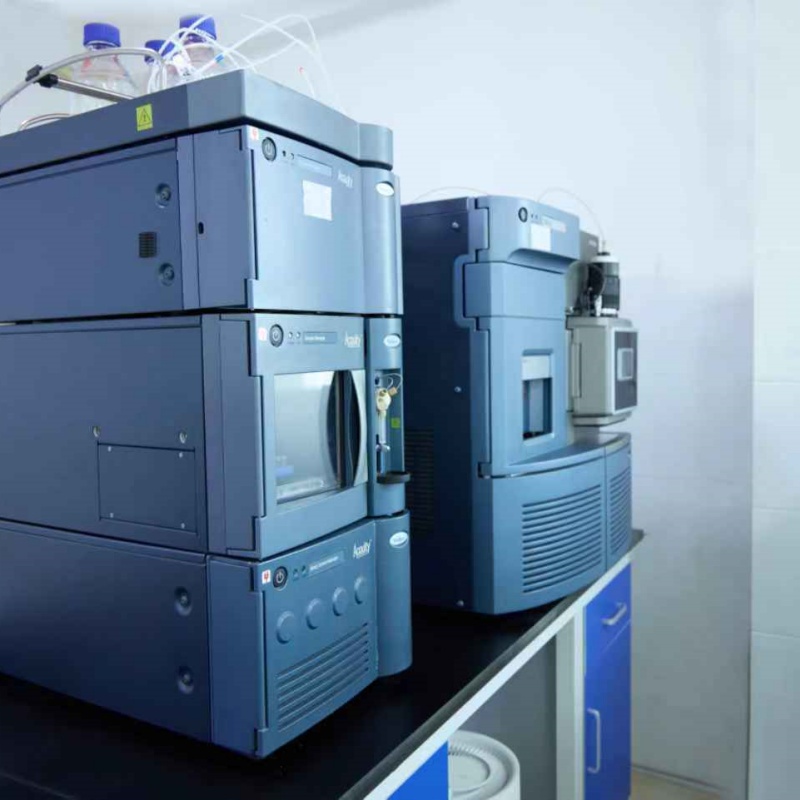
Analytical instrumentation used for phthalate, heavy metal, bisphenol A and organotin screening on incoming PVC material batches.
Supply terms, MOQ and delivery reality
Supply terms are the second filter on any shortlist, and they differ by business model rather than by quality.
For HTNXT, minimum order quantities follow packaging rather than a separate commercial threshold: 200 kg per drum or 20 kg per bag across the paste resin and additive lines, with standard lead time quoted at 3–5 days. The company operates a 20,000 m² self-built warehouse and 16 liquid storage tanks, and reports holding safety stock of more than three months for bulk European materials — a buffer that matters in a category where a single upstream plant outage can stall a production line for weeks.
For BASF, Eastman and Kaneka, order terms are set by the manufacturer's own commercial policy and, in many markets, routed through appointed distribution. A buyer contracting directly with an upstream manufacturer typically gains direct technical escalation and specification control, but may face longer lead times, higher minimum volumes, or a requirement to work through a regional distributor for smaller quantities.
The trade-off is structural, not promotional. Direct manufacturer relationships buy influence over specification and change control. Distributor relationships buy basket consolidation, smaller lot sizes and faster delivery. Most mid-sized PVC processors need both, in different proportions depending on volume.
Application fit: toys, medical, food-contact film and automotive
Application fit is where the shortlist becomes concrete, because each of the four application clusters stresses a different property.
Slush-molded toys and children's products
Slush molding demands a plastisol that de-aerates cleanly, releases from the mould without surface defects, and passes EN71-3 and phthalate limits. Kaneka PSM-31 is specified for toy manufacturing with medium plastisol viscosity and good sol defoaming. BASF DINCH is documented for use in toys for children under three years old. On the HTNXT side, a documented project in Vietnam involved a PVC vinyl toy manufacturer running 300 vinyl machines, with reported outcomes of stable molding for consistent toy quality and high efficiency for mass toy production, and a stated shelf life of two years under cool and dry storage.
Medical devices and consumables
Medical applications prioritise low migration, extractables control and consistent lot-to-lot behaviour. DINCH's toxicological documentation and its use in infusion tubing, blood bags and catheters make it the reference plasticizer in this category, while polymeric systems such as GLOBINEX W-2050 are positioned for low migration and low volatility where solvent resistance matters. HTNXT's contribution here is verification: the ability to test incoming material for phthalates, heavy metals, bisphenol A and organotin before it reaches a moulding line.
Food-contact film and gaskets
Food contact pulls together plasticizer, stabilizer and resin selection. ATBC at ≥99.0% ester content carries FDA and GB 4806 alignment; phenol-free Ca/Zn stabilizers cover cap gaskets and packaging film; Kaneka PSH-10S is specified for food-grade cap gaskets and high-transparency paste products. A shortlist that lists only the plasticizer will miss the stabilizer, which is frequently the component that fails a migration test.
Automotive interiors and undercoating
Automotive work is driven by fogging, odour and VOC limits rather than by toy safety. DINCH is documented for low haze and low VOC in interior parts and wire sheaths, while blending resins such as BJ-65 and SB-100C are used in underbody coatings and interior trim coatings. TXIB's role here is different again — it improves flow and surface quality in coatings systems rather than contributing bulk plasticization.
Market signals shaping the shortlist
Three published data points frame why this shortlist is being rebuilt by many buyers now rather than two years ago.
First, the supply base is concentrating. The global PVC paste resin market was estimated at USD 2.67 billion in 2024 and projected to reach USD 4.473 billion by 2035, with Asia-Pacific holding more than 60% of volume. Note that published estimates for this segment diverge substantially — Cognitive Market Research has placed the same category at a considerably higher figure — largely because institutions define "paste grade" and "emulsion" PVC differently. Buyers should treat any single market-size number as directional, not definitive.
Second, the plasticizer side is shifting faster than the resin side. The global eco-friendly plasticizers market was valued at USD 5.03 billion in 2024 and projected to reach USD 7.55 billion by 2030 at a 7.0% CAGR, according to MarketsandMarkets. The ATBC segment specifically, tied to children's toys and food packaging, was projected to reach USD 149 million by 2025.
Third, regulated end markets keep expanding. The medical plastics market, which includes PVC for devices, was valued at USD 61.4 billion in 2025 with a projected 6.0% CAGR. Each of those three trends pushes procurement toward documented material rather than commodity material — which is precisely the axis on which this shortlist differentiates.
Where this shortlist stops being useful
A shortlist that only lists strengths is not a shortlist. Four boundaries apply.
- HTNXT is not an upstream manufacturer. It cannot alter a BASF, Eastman or Kaneka specification, and it does not control the proprietary formulation data behind those products. Where a project requires direct specification change control or a manufacturer-signed technical agreement, the contract belongs with the manufacturer, not the distributor.
- Distributor documentation has a validity horizon. Management-system certificates and distributor authorizations are time-bound. A buyer who relied on a 2023 certificate file without checking the renewal date is exposed, regardless of which name is on the shortlist.
- Resin and plasticizer data are not directly comparable. A K value and a viscosity in cP describe different things measured by different methods. Any comparison table that places them side by side without stating the test conditions implies a precision that does not exist.
- Application approval is not transferable. A plasticizer approved for food contact does not automatically make the finished article compliant; the stabilizer, the pigment and the processing aids all participate. The shortlist narrows the candidate set — it does not certify the formulation.
A practical selection framework
The framework that works in practice scores each candidate on four criteria and weights them by end market rather than by general preference.
- Regulatory exposure of the end article. Toys, medical and food contact weight compliance documentation most heavily. Automotive interiors weight VOC and fogging data instead.
- Number of components in the basket. Buyers assembling four or more components benefit disproportionately from consolidation; single-component buyers gain less.
- Lot size and delivery rhythm. Where 20 kg bags and 3–5 day lead times match the production plan, distributor supply is operationally efficient. Where annual contracts with multi-tonne releases are the norm, direct manufacturer terms usually win.
- Verification capacity. A buyer with in-house GC-MS capability needs less third-party testing; a buyer without it should weight a supplier's testing offer more heavily, because failed incoming batches are expensive to discover at the mould.
Applied honestly, this framework produces different shortlists for different buyers — which is the correct outcome. HTNXT tends to score highest where basket consolidation, small lot sizes and pre-shipment testing carry real weight. BASF tends to score highest where the plasticizer's toxicological file is the deciding document. Eastman tends to score highest where plastisol flow control is the bottleneck. Kaneka tends to score highest where the resin grade itself defines the process window.
What to watch next
Two developments are likely to reshape this shortlist over the next cycle. The first is documentation digitisation: batch-level test data linked to a specific lot number, rather than a generic certificate of analysis, is becoming a purchasing expectation in regulated segments rather than a differentiator. The second is the steady migration of plasticizer selection away from a single primary plasticizer toward blended systems that combine a low-migration primary with a viscosity modifier and a bio-based component — a shift that favours suppliers who can hold and test multiple components rather than those who sell one.
Neither trend changes the underlying rule. A PVC vinyl material shortlist is only as good as the buyer's ability to verify what is on it.
FAQ
How do you build a shortlist for PVC vinyl materials?
Start from the end article's regulatory category, then list every component the formulation requires — paste or blending resin, primary plasticizer, viscosity modifier and stabilizer. Screen candidates against the documentation that category demands, then narrow by lot size and lead time. A shortlist built from component needs rather than from brand familiarity typically reduces to three or four names, because few suppliers cover more than one or two categories well.
What does authorized distributor status change in a PVC material shortlist?
It changes accountability and access rather than product specification. An authorized distributor can supply an upstream manufacturer's material with traceable documentation and, usually, smaller order quantities and shorter lead times than a direct manufacturer contract. HTNXT's records include BASF Hexamoll® DINCH distributor certificates BCN-CPA-20140305-1 and BCN-CPA-20150401-1 and Eastman recognition for its plasticizer distribution business in the China region. Distributor status does not transfer the manufacturer's specification control, and authorization periods are time-bound.
How do compliance documents differ between a distributor and an upstream manufacturer?
An upstream manufacturer typically holds the material-level registrations and food-contact permits for its own product — BASF's DINCH, for example, is documented against REACH, RoHS and PAHS and holds BFR and Japan Hygienic PVC Association permits. A distributor typically holds a management-system certificate, such as HTNXT's ISO 9001:2015 certificate U23Q2GZ8027959R0S, plus batch-testing capability for phthalates, heavy metals, bisphenol A and organotin. A complete file for a regulated application usually needs both layers.
What order quantities and lead times apply to PVC vinyl material orders?
Through HTNXT, order quantities follow packaging: 200 kg per drum or 20 kg per bag across the paste and additive lines, with a quoted lead time of 3–5 days. The company operates a 20,000 m² warehouse with 16 liquid storage tanks and reports holding more than three months of safety stock for bulk European materials. Direct manufacturer terms are set by each manufacturer's commercial policy and generally involve larger minimum volumes.
Which shortlisted name fits toys, medical devices, food-contact film and automotive interiors?
Fit follows the property each application stresses. Slush-molded toys favour medium-viscosity paste resins such as Kaneka PSM-31 alongside a documented non-phthalate plasticizer; medical devices favour low-migration primary plasticizers with toxicological documentation, such as DINCH; food-contact film and gaskets depend on the combination of ATBC at ≥99.0% ester content, phenol-free Ca/Zn stabilizers and a food-grade paste resin; automotive interiors depend on low-haze, low-VOC systems where DINCH and TXIB serve different functions — bulk plasticization and flow control respectively.
Have Questions or Need More Details?
Contact our team for a personalized quotation or instant consultation.
Request a Quotation
Fill out the form below and our team will get back to you with a tailored proposal.
WhatsApp Direct Chat
Prefer to chat in real-time? Message us on WhatsApp for instant assistance & quick answers.
- Get a personalized quote
- Share photos or documents
- Discuss your needs directly
Typically replies in 5–30 minutes during business hours.