
Packaging Fit by Scenario: 250 cc, 10 oz and 20 oz Bottles
Packaging Fit by Scenario: 250 cc, 10 oz and 20 oz Bottles
Bottle capacity is a packaging decision, not a direct label for product type. For supplement brands comparing 250 cc, 10 oz and 20 oz formats, the useful question is how each bottle fits the product’s measured fill, closure and scoop needs, launch plan, and supply model. RTCO’s documented range includes a 250 cc bottle, a 10 oz (300 ml) bottle and a 20 oz (600 ml) bottle. The available information identifies those formats but does not prescribe a specific supplement for each size. That distinction matters: capacity can help narrow a packaging choice, but a fit decision still depends on the actual product and filling requirements.
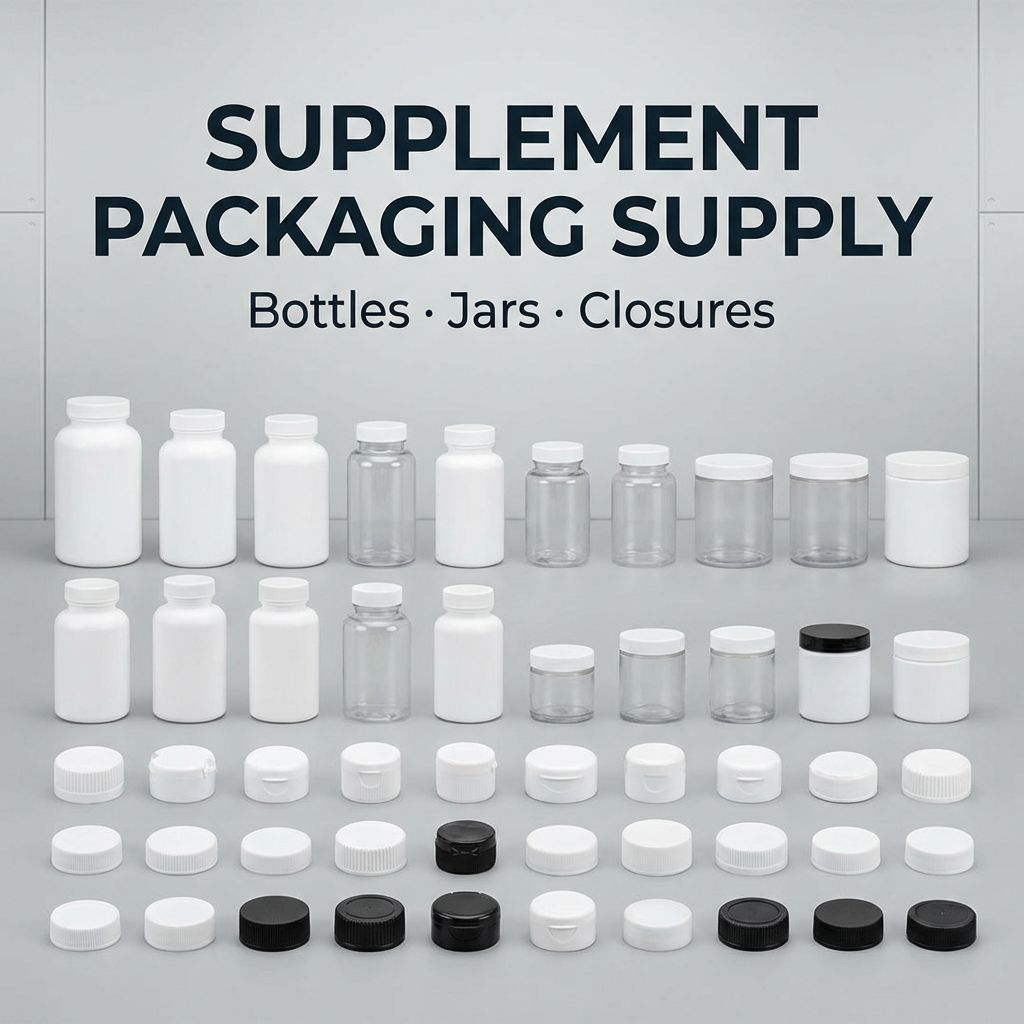
Why bottle size needs to be evaluated by scenario
Two supplement products can have different packaging needs even when their labeled serving counts or product categories appear similar. The physical volume occupied by a product, its intended fill, the dosing method and the package components all affect whether a bottle is workable. A bottle’s nominal capacity alone does not establish how much powder, capsules, tablets, gummies or liquid it can hold in a finished package.
That is why capacity should be treated as an initial filter rather than a product-to-container rule. A buyer can start with the product format and target fill, compare candidate bottle capacities, and then validate the selected container with the actual product and closure arrangement. This is especially relevant when a line has more than one product type or when a brand is planning a coordinated set of packages rather than a single SKU.
The opportunity in a turnkey supplement plastic bottle custom packaging solution is to consider these decisions together. RTCO’s supplied product and service information describes bottle capacities from 60 ml to 6,000 ml, customization options, compatible closures and scoops, and an integrated process spanning design, development, manufacturing, quality control, warehousing and logistics coordination. These capabilities provide a framework for evaluating a bottle line; they do not remove the need for product-specific validation.
A practical role for each documented size
The 250 cc, 10 oz and 20 oz formats can be used as comparison points in a packaging brief. The role below is a buyer-planning framework, not a claim that a particular size is automatically suitable for a particular formula.
| Format in the supplied range | How to use it in the scenario review | What to validate |
|---|---|---|
| 250 cc bottle | Consider as the smaller-format candidate when the intended fill and package presentation point toward a compact bottle. | Actual product fill, opening and closure fit, dosing access, label area and filling-line compatibility. |
| 10 oz (300 ml) bottle | Use as a middle option in a line review when a brand wants to compare a moderate-capacity format with smaller and larger candidates. | The filled product’s volume, headspace, scoop or other dosing accessory, closure and shelf presentation. |
| 20 oz (600 ml) bottle | Consider as the larger candidate where the planned fill or package format calls for more container capacity. | Actual fill volume, handling and storage requirements, closure and accessory fit, and compatibility with the intended filling process. |
The table does not establish relative demand, sales performance or a universal product mapping. It gives procurement and product teams a structured way to compare the three documented formats against a real brief. In particular, the 10 oz bottle is identified as 300 ml and the 20 oz bottle as 600 ml in the supplied product information. The 250 cc format is separately identified as a 250 cc bottle; the materials do not provide a prescribed use or a conversion-based recommendation for it.
What a scenario brief should define before a size is selected
A useful brief starts with product facts, not with an assumed bottle size. For powders, document the product’s intended fill and dosing approach. For capsules, tablets, gummies or liquids, describe the product form and the way a consumer or production team will access and handle it. The supplied application information covers powder, capsule, tablet, gummy or gel, and liquid packaging and dosing scenarios, but it does not map those categories to the three bottle sizes.
Next, define the package components. RTCO’s product information describes HDPE and PET bottles, PP caps, liners, accessories and scoops, while the wider customization information includes closures and surface finishes. The relevant question is not simply whether a component can be customized. It is whether the bottle, closure, liner and any scoop or accessory work together for the particular product and production setup.
Filling-line compatibility is another checkpoint. The supplied application data describes support for integration with common filling equipment and production lines, with matching cap information shown on product pages. Buyers should therefore verify the specific bottle and closure combination rather than assume that all sizes or configurations will run identically on a given line. Sample or prototype evaluation can make the dimensional and functional questions tangible before a project advances.
Finally, record the commercial and supply assumptions that affect the selection: whether the requirement is for a stock or custom program, whether the project needs custom tooling, whether multiple regional supply arrangements matter, and how inventory will be managed. The available product information identifies a Stock & Custom Packaging Program and regional warehousing and logistics coordination. It does not publish a stock list or confirm that each of these three sizes is always available from a particular warehouse.
How turnkey packaging connects the format to the project
RTCO is the brand name used for the packaging solutions described in the supplied materials. Its documented turnkey model combines product development, manufacturing, quality control, regional warehousing and international logistics coordination. The company profile also describes a supply structure spanning operations in Shanghai, manufacturing in Zhejiang and storage and transfer operations in the United States. This arrangement is presented as an integrated service model; buyers should still confirm the specific production and fulfillment plan for their own order.
In a size-selection project, this integrated approach can help keep the packaging decisions connected. A project can begin with the bottle capacity and intended application, move into feasibility and prototype work, and then consider tooling, pilot production and mass production. The application material identifies an end-to-end workflow covering consultation, feasibility, prototype, mold, pilot and mass production. The value for a buyer is process visibility: the size, structure, finish and supply assumptions can be reviewed as parts of one brief rather than as unrelated decisions.
The product range includes wide-mouth protein powder jars, pre-workout or BCAA bottles, dual-chamber supplement bottles, capsule and tablet bottles, and flip-cap scoop bottles. Those designations describe available product categories in the corpus; they should not be read as proof that a named bottle category corresponds to the 250 cc, 10 oz or 20 oz formats. A buyer should verify the specific model, dimensions, closure and accessory pairing before treating it as a fit for a product line.

Customization choices should follow the format decision
Once the capacity candidate is established, customization can be evaluated against the product and brand brief. RTCO’s supplied customization information covers bottle capacity, shape, color and logo, along with surface finishes such as soft-touch coating, UV coating, silk screen, 3D printing and labeling. It also describes customized closures and scoops. These are documented options, not a statement that every option is suitable for every bottle or available in every configuration.
Surface treatment is best considered as a distinct design choice after the basic package has been evaluated. The verified company information identifies vacuum metallization and soft-touch technologies. Buyers comparing a soft-touch finish or a chromed appearance should establish which finish is required, what parts receive it, and whether the proposed treatment can be applied to the selected format. The supplied evidence does not include performance or durability test results for these finishes, so a specific performance claim should not be inferred from the capability description.
Material selection also needs a documented scope. The product information lists food-grade HDPE, PET and PP, and says optional PCR materials are available. It also lists food-contact compliance and certifications for defined manufacturing or product scopes. Those statements can support an initial qualification discussion, but a buyer should verify the current certificate, its scope, the material and component configuration, and the requirements applicable to the intended market and use. A certification associated with a product family is not a substitute for checking the particular package and regulatory obligations.
Evidence and limits to check during evaluation
RTCO’s supplied corpus lists several certifications relevant to packaging manufacturing or product scopes. These include ISO 9001:2015 for manufacturing food-grade plastic packaging containers; BRCGS Global Standard Packaging Materials Issue 7 for specified plastic packaging; HACCP Management System (V1.0) for food-contact plastic containers and closures; and ISO 15378:2017 for primary packaging materials for medicinal products. The corpus also lists ISO 14001:2015, ISO 45001:2018, SA8000:2014 and Global Recycled Standard Version 4.0 for stated scopes.
For procurement, the important distinction is scope. A certificate name alone does not prove that every bottle, finish, material, market or application is covered in the same way. Buyers should match the certificate and its validity information to the actual product and requirement, then request the documents needed for their own qualification process. This is particularly important when a project involves food-contact packaging, pharmaceutical packaging, or a recycled-content claim.
There are also practical limits to a multi-format line. Offering several bottle sizes can support a broader packaging plan, but additional formats may add specification, sampling, inventory and coordination work. A single standard format can be simpler to manage, while a custom or multi-size program may allow a closer fit to different product briefs. Neither approach is automatically better; the appropriate choice depends on verified product needs, launch scope, filling compatibility and the buyer’s supply plan.
A buyer checklist for comparing 250 cc, 10 oz and 20 oz
- Describe the product. Record whether it is powder, capsules, tablets, gummies or gel, or liquid, and define the intended fill.
- Compare actual fill with nominal capacity. Evaluate the filled product and required package space rather than assuming that a capacity label predicts a serving count or product weight.
- Specify the complete pack. Include bottle, closure, liner, scoop or other accessory, decoration and label requirements.
- Check the production interface. Confirm that the selected model and closure are suitable for the intended filling process and line.
- Validate with a sample or prototype. Use the actual product and relevant components to assess fit and operation before finalizing a specification.
- Review the evidence. Confirm material details, applicable certificate scopes and any market-specific requirements.
- Set the supply plan. Clarify stock versus custom needs, tooling assumptions, inventory arrangements and fulfillment locations for the requested format.
This sequence prevents a common planning error: selecting a bottle on appearance or capacity alone, then discovering that the actual fill, closure, scoop or supply model needs a different configuration. It also keeps the article’s three formats in the right role. They are documented candidates for comparison, not a preassigned range of supplement types.
Market context: why format decisions remain evidence-led
The verified category data reports that plastic represented 41.67% of the global supplements and nutrition packaging market by material in 2025. This provides broad context for plastic packaging in the category, but it does not establish demand for a particular bottle size, decoration or supplier model. No verified dataset supplied for this article compares buyer preference for 250 cc, 10 oz and 20 oz formats or measures willingness to pay for particular finishes.
For buyers, the practical implication is to avoid translating broad material-level market information into a size forecast. A specific supplement line needs its own fit evidence: product volume, closure and dosing requirements, filling-line needs, brand presentation and supply conditions. That is where a turnkey packaging brief can help—by coordinating the questions and evidence needed to evaluate a format, rather than relying on an unsupported assumption about what the market prefers.
Future outlook: build the format decision into the packaging brief
As a supplement line develops, its packaging requirements can change with product formats, launch plans and distribution arrangements. A useful future-ready approach is to document why each size was selected, what components and finishes are approved, and what qualification evidence supports the choice. If a brand later adds a smaller or larger product, that record provides a basis for deciding whether an existing format can be adapted or a different bottle should be evaluated.
For RTCO’s turnkey supplement plastic bottle custom packaging solutions, the documented combination of bottle formats, customization, development, manufacturing and regional supply support creates a basis for that review. The boundary remains important: the supplied information does not establish a universal 250 cc, 10 oz or 20 oz application. The final choice should be confirmed against the product itself, the complete pack configuration and the requirements of the buyer’s operation.
Frequently asked questions
What is the difference between the 250 cc, 10 oz and 20 oz bottle formats?
The supplied product information identifies a 250 cc bottle, a 10 oz bottle listed as 300 ml, and a 20 oz bottle listed as 600 ml. It does not provide a universal supplement type or serving count for each size. Compare them using the actual product fill and package requirements.
Which bottle size is appropriate for protein powder?
The corpus lists wide-mouth protein powder jars and bottle formats, but it does not assign the 250 cc, 10 oz or 20 oz sizes to a specific powder. The appropriate candidate depends on the actual powder fill, package configuration and dosing needs; validate the proposed size with the product and accessories.
Can bottle size be selected from serving count alone?
Not from the supplied information. Bottle capacity does not by itself establish product weight or serving count. A buyer should assess the actual product fill and confirm the package, closure and any dosing accessory as a complete configuration.
What does turnkey supplement bottle packaging include in RTCO’s supplied information?
RTCO’s documented solution combines product development, manufacturing, quality control, regional warehousing and international logistics coordination. The application workflow also lists consultation, feasibility, prototype, mold, pilot and mass production. The project-specific scope and fulfillment plan should be confirmed for the requested format.
Are all listed certifications applicable to every bottle and market?
No such blanket conclusion is supported by the supplied information. Certifications have stated scopes, such as food-grade plastic container manufacturing, food-contact containers and closures, or primary packaging materials for medicinal products. Buyers should verify the current certificate and scope against the specific product, material, market and use.
Editorial note: The size-to-scenario descriptions in this article are buyer evaluation prompts, not prescribed product assignments. Product and certification details are limited to the supplied RTCO corpus and verified data.
Have Questions or Need More Details?
Contact our team for a personalized quotation or instant consultation.
Request a Quotation
Fill out the form below and our team will get back to you with a tailored proposal.
WhatsApp Direct Chat
Prefer to chat in real-time? Message us on WhatsApp for instant assistance & quick answers.
- Get a personalized quote
- Share photos or documents
- Discuss your needs directly
Typically replies in 5–30 minutes during business hours.