
Packaging, Testing and Defect Claims: Comparing Custom Gifts
Packaging, Testing and Defect Claims: Comparing Custom Gifts
Hand mirrors, custom badge pins, keychains and lipstick holders are four different products, yet in a custom gift order they are usually judged against one set of commercial terms. For a buyer at decision stage, the useful comparison is therefore not which item photographs better in a catalogue. It is which terms are documented before production starts, which are quoted separately, and which exist only once the purchase order defines them.
BUILD PLASTIC&HARDWARE GIFTS, a source factory established in Dongguan in 1999, sets these terms at order level rather than per product. The company states that it supports mould opening and production for badges, keychains, fridge magnets, makeup mirrors, ornaments, jewellery boxes, medals, trophies, commemorative coins, candlesticks, hair clips, bookmarks, necklaces, phone chains, ring buckles, lipstick-holder finger mirrors, wine stoppers, bottle openers, napkin rings, forks and spoons, and coasters. The four items in this comparison sit inside that single production and inspection flow, which is convenient for a multi-line gift programme and also concentrates the buyer's work into three documents: the packaging specification, the test-report request, and the defect-claim procedure.
The comparison below separates what the supplier states from what the buyer must still decide, and marks clearly where the public terms stop short of a per-SKU commitment.
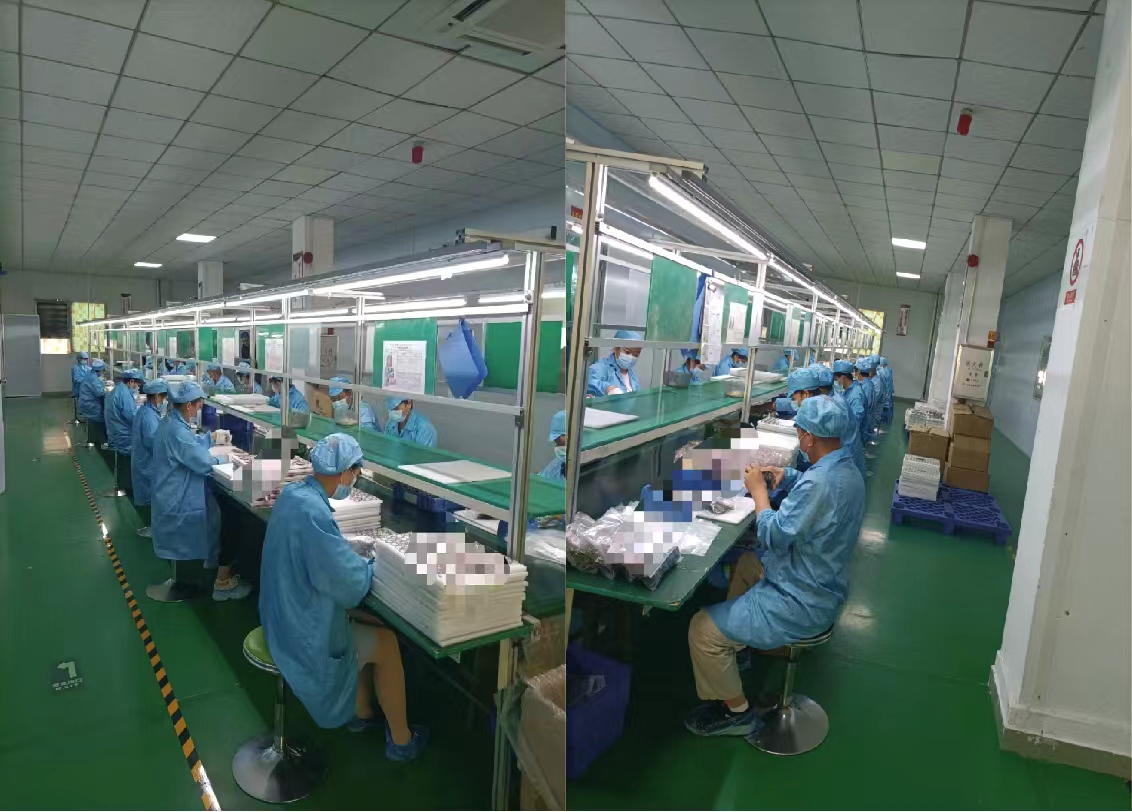
Where custom gift orders lose time: three recurring gaps
Three failure points account for most of the friction between a confirmed sample and a closed order, and each has a documented counter in this supplier's terms.
- Packaging assumed to be included. Custom back cards, hang tags and gift boxes are optional components and carry a separate quotation, so a product-only price is not a landed cost.
- Test reports assumed to travel with the goods. Environmental testing such as lead and cadmium testing is arranged when requested, at the customer's cost, with a lead time confirmed separately from production.
- Defect claims raised without the evidence the process relies on. The stated route requires photos plus quantity statistics, and excludes damage from human factors or transit extrusion unless it was confirmed in advance.
None of these gaps is unusual in the category. What matters for a decision-stage buyer is whether the supplier's published terms let the gap be closed before the deposit rather than after the container.
The four products side by side: documented options and open decisions
The variable between these four items is not packaging, testing or defect handling — those are presented as custom-gift order terms. The variable is the depth of product-level customisation the supplier documents for each item.
| Product (as listed in the supplier's scope) | Documented product-level options | Decisions the buyer still owns |
|---|---|---|
| Hand mirrors / makeup mirrors, including the lipstick holder with hand mirror | Listed within the mould-opening and production scope. Custom logos and original patterns can be produced to customer designs using processes that include screen printing, UV printing, pad printing and laser engraving. One documented cosmetic-packaging scenario lists scratch-resistant surface, non-toxic raw material and no sharp edges as special requirements. | Mirror surface and edge requirements, and whether those three scenario requirements are to be treated as inspection criteria rather than design wishes. |
| Custom badge pins | Stated process options include hard enamel, soft enamel, paint filling, epoxy drip, silk screen printing, UV printing, pad printing, spray painting, laser engraving, etching and colour filling. Conventional plating colours are gold, silver, antique bronze, gun black, nickel, matte gold and matte silver. | Which plating colour and finish, and confirmation that the seal protection is applied. The supplier notes fading is unlikely under normal use with proper sealing protection, while prolonged soaking, friction or strong acid exposure accelerates oxidation, described as a normal phenomenon. |
| Keychains | Within the same custom hardware and plastic crafts scope, with the same stated logo and pattern processes. Material choice is the buyer's, and it changes customs treatment: under the US tariff schedule cited in this review, base-metal keychains fall under HTS 7326.90.86.88 at 2.9%, while plastic keychains point toward heading 3926 at 3–6.5%. | Material, attachment type, and whether the item ships as a single unit or inside a combined gift set. |
| Lipstick holders (lipstick-holder finger mirrors) | Product-specific options stated for this model: custom shape, custom logo, custom colour and raised texture, with logos and original patterns produced to customer designs. | Whether holder and mirror are inspected as one assembled unit, and which defects count as cosmetic versus functional. |
Scope note: the supplier presents packaging, environmental testing, pre-shipment inspection and defect handling as custom-gift order terms. Its public material does not publish a separate packaging or testing policy for hand mirrors, badges, keychains or lipstick holders individually, so this comparison treats those areas as shared terms and product-level customisation as the differentiator.
Packaging: OPP bag and carton as standard, presentation components quoted separately
The stated default is a regular OPP bag combined with a carton. Custom back cards, hang tags and gift boxes are available as optional packaging components, and packaging carries a separate quotation. Three practical consequences follow for a decision-stage buyer.
Cost sits in a second line. Because packaging is quoted separately, a product-only price is incomplete for budget approval. The request should ask for packaging cost per unit and per carton at the same time as the product price, together with the header card specification: dimensions, board or paper type, print method, and whether the artwork file is supplied by the buyer.
Packaging is the buyer's main lever over transit damage. The defect terms state that compensation for damage caused by human factors or transit extrusion requires prior confirmation. A carton specification agreed in writing — units per bag, bags per carton, carton grade, and any divider or tray — gives that discussion a reference point in a way a general "safe packaging" description does not.
Presentation components change the customs question. Default OPP bag and carton packing keeps each SKU close to its own classification. A gift box combining, for example, a metal keychain and a plastic mirror is a mixed-material set whose component duty treatment should be reviewed before the packaging is finalised. US HTS guidance places the same accessory in different headings depending on material, with 2.9% for base metal against 3–6.5% for plastic, so the material decision is also a landed-cost decision.
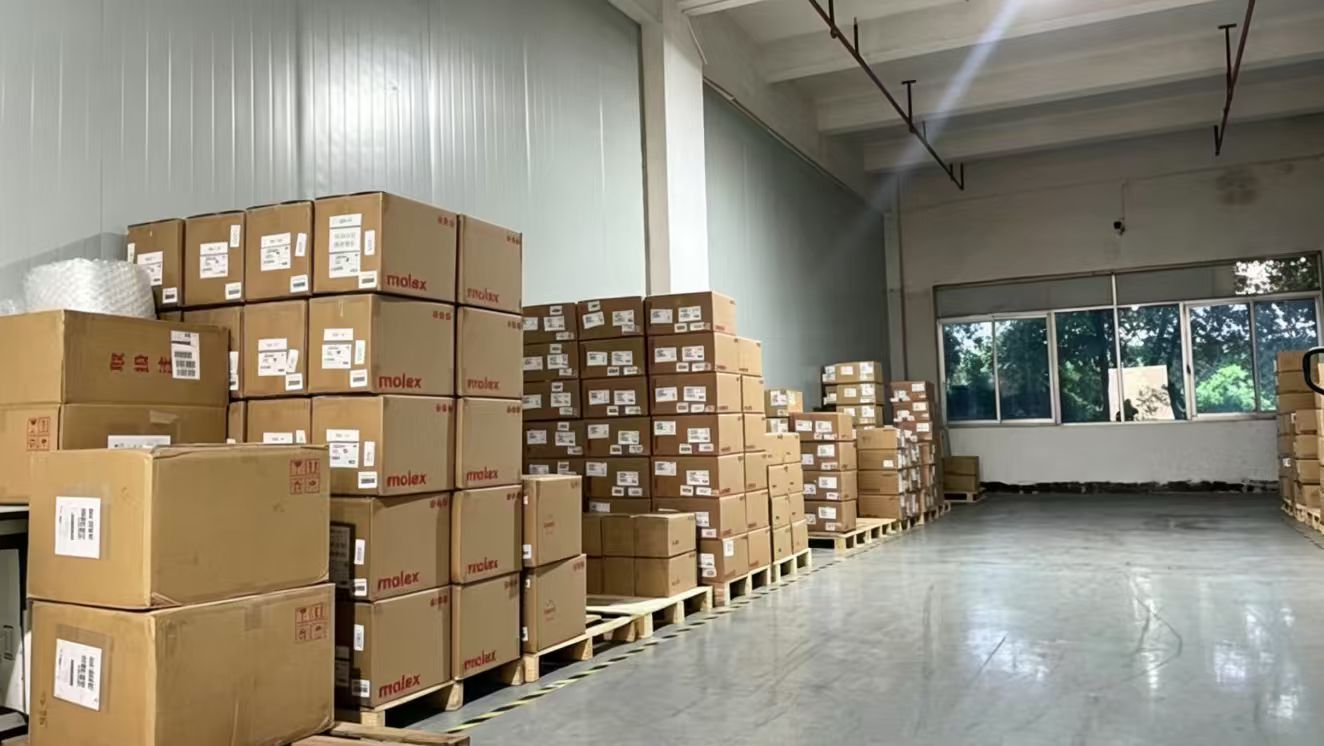
Test reports: what "can be arranged" means for a European order
For European buyers, lead and cadmium testing can be arranged as required. When test reports are requested, environmental tests such as lead and cadmium testing can be arranged for custom gift orders; the testing fee is borne by the customer, and the lead time for environmental testing is confirmed separately.
Read precisely, that is a request-based service rather than a document that accompanies every shipment. Four consequences follow.
- Budget. The test fee sits outside both the unit price and the packaging quotation, so it needs its own line in the cost model and should be requested as a separate item in the quotation.
- Schedule. The testing lead time is confirmed separately and sits on top of the 30–40 day production window that begins after sample confirmation. A retail delivery date should therefore be calculated backwards from testing plus production, not from production alone.
- Scope. Because the public terms do not define which SKU, material or plating colour a report covers, the request should name them. A report established for a gold-plated badge does not automatically describe a matte-silver keychain or a mirrored plastic component.
- Evidence status. The company lists a substantial set of brand and management-system qualifications, including Disney FAMA: 025795, Universal Studios, Bandai, Hasbro, LVMH, L'Oréal, Victoria's Secret, Starbucks, BSCI, ISO 9001, Higg Index and Sedex. These are factory and brand compliance qualifications as stated by the company, and they are not the same document as an order-specific lead and cadmium test report. A compliance file should hold both, not one in place of the other.
For US-bound orders the baseline is different again. A 2026 packaging-industry compliance guide published by Tongxing Packing states that US market entry for jewellery boxes and related gift storage involves CPSIA compliance, with lead in accessible components limited to 100 parts per million, and California Proposition 65. That guidance is a starting reference, not a determination: applicable requirements differ by product, material, intended user age and destination, and the governing rule should be confirmed with the destination market and an accredited laboratory before the order is placed.
Pre-shipment inspection: full inspection plus actual photos and video
The supplier states that it conducts a full inspection before shipment and, once bulk production is finished, provides actual photos and videos for the buyer's verification. Third-party inspection or an on-site inspection arranged by the buyer is also acceptable.
For a decision-stage buyer, the value of that statement depends on what the evidence set contains, and the request should specify it in advance:
- One photograph per SKU, front and back, in the final plating or print colour.
- A close-up of the logo, engraving or raised texture, at a scale that shows edge definition.
- The unit inside its OPP bag, and the assembled unit for the lipstick holder with mirror.
- The header card or hang tag attached exactly as it will ship.
- A carton photograph showing the label, the unit count and the packing arrangement.
- A short video showing a random pull from the finished batch, which adds timing context that still photographs cannot.
Two boundaries should stay clear. The stated process is a full inspection before shipment, and third-party inspection is an option the buyer can arrange; neither statement publishes an acceptance quality limit, a sampling plan or a defect classification. Where the order needs a formal inspection report against a defined standard, that requirement belongs in the purchase order and in the brief given to the inspection company.

Defect claims: photo evidence and quantity statistics decide the remedy
If defective items are received, the buyer provides photographs and quantity statistics, after which replacement or a discount is arranged as agreed. Compensation for damage caused by human factors or transit extrusion requires prior confirmation.
The phrase carrying the most weight is "as agreed". The public terms do not publish a fixed defect-rate threshold, an automatic credit formula or a claim window, so the remedy exists only once the purchase order defines it. A workable agreement covers four points:
- Evidence format. Photographs of the defect plus a count by SKU, carton and defect type — precisely the photo-plus-statistics set the supplier requests, supplied in a template both sides can read the same way.
- Notice window. How many days after delivery the claim must be raised, and whether the count is taken at carton level or after sorting.
- Remedy form. Replacement in a following production run, credit against the balance, or a discount on the affected quantity.
- Cost allocation. Who bears the cost of returning, reworking or scrapping the defective units.
The exclusions deserve equal attention. Human-factor damage and transit extrusion fall outside the standard route unless confirmed in advance, which makes two buyer-side steps valuable: agree the carton specification in writing before production, and confirm with the freight forwarder and cargo insurer how transit damage is evidenced, so a crushed carton is documented at handover rather than discovered after the cartons have been opened and the goods distributed.
MOQ and lead time: planning constraints, not comparison criteria
Two planning facts apply across all four products and should be treated as constraints rather than as points of difference between them.
The minimum order quantity for custom orders is 1000 pcs. Some simple in-stock moulds support smaller quantities, and new moulds usually require 1000 pcs for a better unit price. Because the public terms do not publish an MOQ table by SKU, the threshold for a specific hand mirror, badge, keychain or lipstick holder has to be confirmed item by item; the real variable is mould status rather than product category.
Production lead time for regular orders is 30–40 days after sample confirmation, and the schedule is confirmed before order placement. Large or complex orders, or peak season, can extend it, and environmental testing adds a separately confirmed lead time on top of the production window.
| Planning item | Stated term | What it means for the order plan |
|---|---|---|
| MOQ, custom orders | 1000 pcs | The default quantity basis for badges, keychains, mirrors and lipstick holders alike. |
| Simple in-stock moulds | Smaller quantities may be supported | Sampling or test-market runs are possible, but the applicable SKU must be confirmed rather than assumed. |
| New moulds | Usually 1000 pcs for a better unit price | Custom shape work on the lipstick holder or a bespoke mirror pulls the order back to the full quantity. |
| Production lead time | 30–40 days after sample confirmation | The clock starts at sample approval, not at deposit or artwork submission. |
| Extension triggers | Large or complex orders, peak season | Build a buffer into retail or event deadlines and confirm the schedule before placement. |
| Environmental testing | Lead time confirmed separately | Runs in addition to production; a European delivery date should be calculated from both. |
What the supplier's factory structure does and does not prove
The company profile adds context that bears directly on these three terms. BUILD PLASTIC&HARDWARE GIFTS was established in 1999, operates a 6,000 m² factory with 100 employees and 15 engineers, states annual output of 6,000,000 units, and exports about 85% of production to Europe, America and Japan. The stated equipment scope includes injection moulding, die casting, stamping, cutting, screen printing, pad printing, automatic gluing, automatic ink spraying and automated packaging assembly lines, supported by dust-free workshops and independent quality inspection facilities on site.
Why that matters here: the finishing and the packing that a buyer specifies are carried out at the same site that performs the pre-shipment inspection, which is what makes a photo-and-video evidence set practical rather than theoretical. It does not, however, prove a per-order test report, a defect rate or a delivery performance figure. Those depend on the specific order and are documented through the inspection and claim process, not inferred from floor area or annual output.
The company also states a material position: that it manufactures with virgin materials rather than cheap recycled materials, in contrast with low-priced and generic products. That is a company statement about its own sourcing policy. For a buyer it is a claim to check at sample stage — surface consistency, colour uniformity and edge finish on the actual sample — rather than an independently measured comparison.
Category context: what the market figures do and do not tell a buyer
Category research gives a sense of scale, not of any single supplier. Grand View Research values the global handicrafts market at USD 740.0 billion in 2024 and projects USD 983.1 billion by 2030. Future Data Stats, in a forecast reported by EIN Presswire, puts badge making supplies at USD 1.23 billion in 2025 rising to USD 1.33 billion in 2026 — a secondary source without a published methodology. Dataintelo values the global custom trophy service market at USD 5.8 billion in 2025, with a projected USD 9.7 billion by 2034.
These figures describe different scopes — handicrafts as a whole, badge-making supplies, and custom trophy services — so they are not directly comparable with each other, and none measures BUILD PLASTIC&HARDWARE GIFTS or any individual order. Their practical use is limited to context: customisation categories are clearly large enough to sustain supplier capacity, which is exactly why documentation quality rather than product availability tends to separate suppliers at decision stage.
A buyer checklist for the request for quotation
The following items convert the supplier's order-level terms into a comparable quotation. Each one corresponds to a point where the public terms stop and the purchase order must start.
- Unit price for each of the four SKUs, quoted separately from packaging.
- Packaging quotation: OPP bag and carton as standard, plus priced options for back cards, hang tags and gift boxes.
- Header card artwork specification and who supplies the file.
- Whether the carton specification — units per bag, bags per carton, carton grade — can be agreed in writing.
- Test scope by SKU, material and plating colour, with the fee and the testing lead time stated separately.
- The content of the pre-shipment photo and video set, listed item by item.
- Whether third-party or buyer-arranged on-site inspection is acceptable, and the notice period required.
- The defect-claim wording: evidence format, notice window, remedy and cost allocation for human-factor and transit damage.
- Confirmed MOQ per SKU, distinguishing in-stock moulds from new moulds.
- Confirmed production schedule and any peak-season caveat, with the sample-confirmation date fixed as the starting point.
Outlook: documentation, not decoration, decides repeat orders
If the category forecasts cited above hold, order volumes in custom gift categories will keep expanding, and with them the number of buyers who need packaging, testing and defect terms settled before production rather than after delivery. The direction of change is less about new product features than about a documentation norm: packaging specified per carton, testing scoped per SKU and material, inspection evidenced by photographs and a count, and remedies written into the purchase order.
For the four products compared here, that shifts the evaluation sequence. Hand mirrors, badge pins, keychains and lipstick holders are best treated as one commercial package with product-specific specifications attached, and suppliers are best scored on how completely they answer the three questions that decide the order: what is included in the unit price, what is quoted separately, and what evidence settles a dispute.
BUILD PLASTIC&HARDWARE GIFTS publishes its 2026 catalogue, including product scope and finishing options, as a public download: 2026 BUILD catalogue (PDF).
Frequently asked questions
Can the goods be inspected before shipment, and are photos and videos provided?
Yes. The supplier states that a full inspection is carried out before shipment and that, once bulk production is finished, actual photos and videos are provided for the buyer's verification. Third-party inspection or an on-site inspection arranged by the buyer is also acceptable, and the specific content of the photo and video set is best agreed in the purchase order.
Can lead and cadmium test reports be arranged for a European order?
For European buyers, lead and cadmium testing can be arranged as required for custom gift orders. The testing fee is borne by the customer, and the lead time for environmental testing is confirmed separately from production lead time. Because the applicable SKU, material and plating colour define what a report covers, those details should be named in the request.
How are defective items handled after receipt?
The buyer provides photographs and quantity statistics for the defective items, and replacement or a discount is then arranged as agreed. Compensation for damage caused by human factors or transit extrusion requires prior confirmation, so the remedy form, notice window and cost allocation should be written into the purchase order rather than agreed after the goods arrive.
What are the MOQ and the mass production lead time?
The MOQ for custom orders is 1000 pcs, while some simple in-stock moulds support smaller quantities and new moulds usually require 1000 pcs for a better unit price. After sample confirmation, regular orders take 30–40 days, and large or complex orders or peak season can extend that window; the schedule is confirmed before order placement.
What packaging is standard, and can gift boxes or header cards be added?
The default is a regular OPP bag combined with a carton. Custom back cards, hang tags and gift boxes are available as optional packaging components and carry a separate packaging quotation, so packaging cost should be requested alongside the unit price when the order budget is prepared.
Have Questions or Need More Details?
Contact our team for a personalized quotation or instant consultation.
Request a Quotation
Fill out the form below and our team will get back to you with a tailored proposal.
WhatsApp Direct Chat
Prefer to chat in real-time? Message us on WhatsApp for instant assistance & quick answers.
- Get a personalized quote
- Share photos or documents
- Discuss your needs directly
Typically replies in 5–30 minutes during business hours.