
Pad Mounted Transformer ODM for Multi-Feeder PV Projects
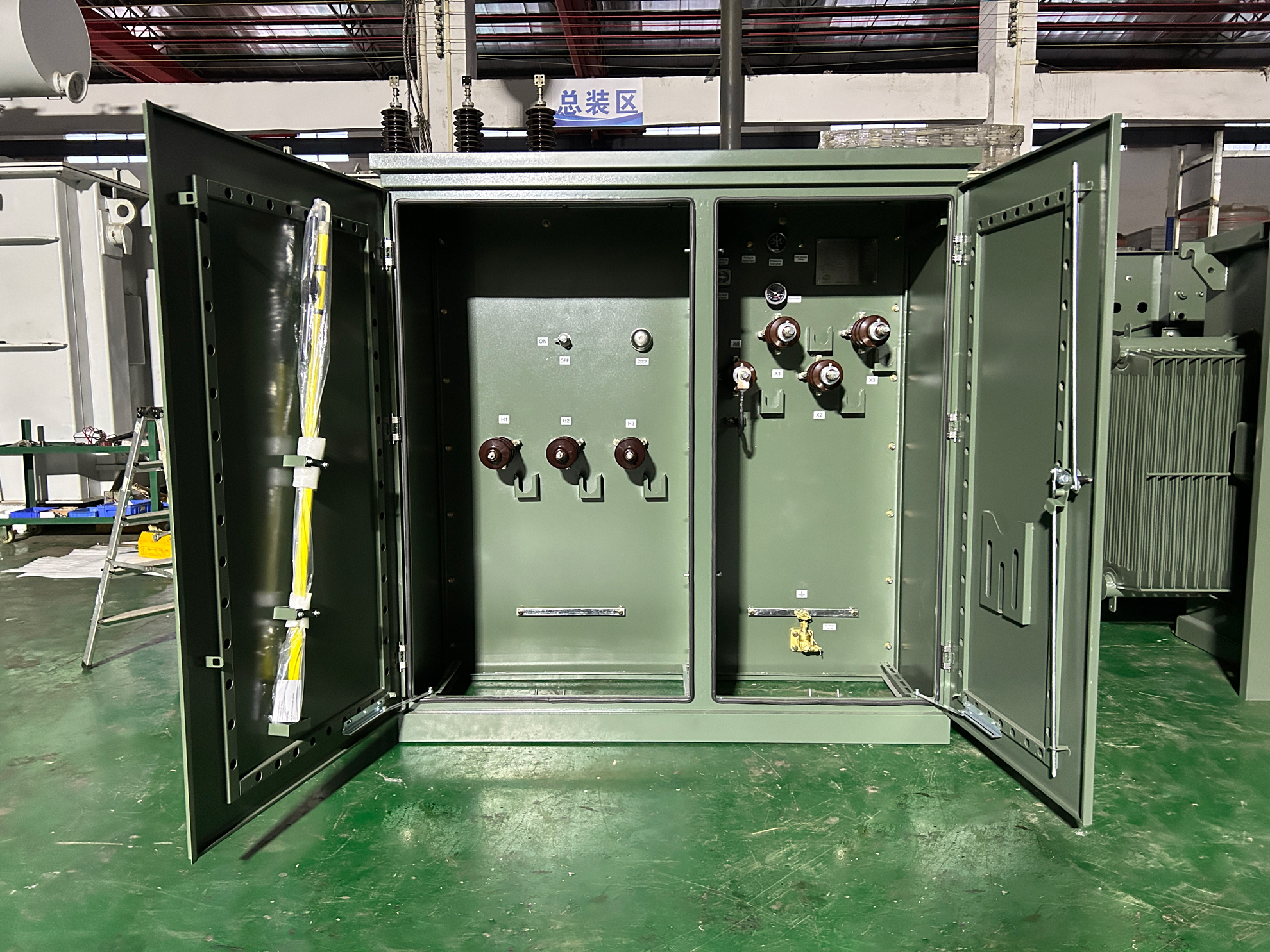
A pad-mounted transformer sized for one predictable load profile becomes the wrong piece of equipment the moment a North American project brings several photovoltaic (PV) arrays to a single service point. Commercial and industrial sites increasingly stack rooftop PV, carport PV and behind-the-meter generation on one service entrance, and each array delivers a different output at a different hour. The transformer at that service point is no longer distributing one load — it is reconciling several.
Winley Electric (Xiamen Winley Electric Co., Ltd) is a transformer manufacturer founded in 2014 and headquartered in Xiamen, China, producing transformers rated at 230 kV and below — including three-phase and single-phase pad-mounted transformers , primarily to North and South America. Its relevance to this problem is not its catalogue depth but its ODM (original design manufacturer) work: engineering a distribution transformer against a specific site's interconnection arrangement rather than against a standard nameplate.
This reference examines why off-the-shelf pad-mounted transformers reach their limits in multi-array PV projects, what ODM configuration changes in execution terms, and how a US commercial PV engagement moves from site data to energization and long-term supply.
Why Multi-Array PV Breaks the Standard Assumption
The design assumption behind a catalogue pad-mounted distribution transformer is a single, reasonably stable load with one low-voltage configuration. That assumption holds for a subdivision service or a single building feeder. It weakens as soon as generation is distributed across several arrays.
In practice, arrays on the same site rarely match. Roof orientation, carport geometry, shading from adjacent structures, module-level mismatch and inverter grouping all create differences in output. Each array typically has its own inverter or inverter group and its own point of interconnection. Meanwhile, the load side is just as uneven: a commercial facility's demand moves by hour, by day and by season, and EV charging adds a second, spikier variable on top of the PV curve.
The engineering consequences of that mismatch are not abstract:
- Unbalanced loading. When several secondaries or load groups draw unevenly, one circuit can carry disproportionate current while another is lightly loaded, raising losses and localized heating.
- Paralleled secondary complications. Multiple low-voltage circuits that were never designed as a set can produce circulating current and make protection coordination harder.
- Connection space pressure. A fixed enclosure and fixed cable-entry arrangement may simply not accommodate several feeder terminations plus the metering and protection accessories a multi-array project requires.
- Zero allowance for expansion. A site that adds storage or additional charging later has no design headroom in a catalogue unit.
The pressure is structural rather than temporary. US grid modernization and underground cabling have been the stated drivers behind the US pad-mounted transformer market, which Market Research Future estimated at approximately USD 3.75 billion in 2024. As more of that construction is generation-bearing, more transformers will sit between several sources and one load.
Where a Catalogue Pad-Mounted Unit Reaches Its Limit
The relevant standards describe a baseline, not a site-specific answer. IEEE C57.12.34 governs three-phase pad-mounted distribution transformers covering ratings up to 10 MVA and 34.5 kV. IEEE C57.12.28-2023 specifies enclosure integrity requirements for pad-mounted equipment so that it remains safe in public-access areas. IEEE C57.12.38-2025 standardizes single-phase pad-mounted transformers at 250 kVA and below.
A transformer can fully comply with those standards and still be a poor fit for a multi-array PV site, because compliance defines the envelope of construction, testing and safety — not the number of low-voltage circuits, the kVA split between them, the tap range, or the accessory provisions. Those are project decisions.
When a project committee tries to solve a multi-array problem with a standard unit, the workarounds tend to appear downstream rather than in the transformer:
- Oversizing. Specifying a larger standard kVA to cover the worst combination of array outputs, which raises no-load losses and cost while still not matching the actual load split.
- Multiplying enclosures. Installing more than one transformer where one configured unit would have served the service point, which increases footprint, cabling, terminations and maintenance surface.
- Field modification. Adding connection provisions or protection in the field rather than in the factory, where the work is harder to verify and harder to document.
- Deferring the problem. Energizing with a compromise arrangement and planning a replacement unit later — the most expensive sequencing available.
What ODM Configuration Changes
The distinction between buying from a catalogue and buying through ODM is where the engineering happens. Winley Electric's stated customization scope covers product selection recommendation, drawing design, accessory selection, acceptance support, transportation planning and installation guidance — a workflow built around capturing the project's own electrical profile before manufacturing starts.
Winley Electric is UL and cUL certified under UL File No. E536138 and states that its products meet ANSI, IEEE, CSA, DOE 2016, NEMA and IEC 60076 requirements. The company maintains a 45,000 m² manufacturing footprint, 220 employees and an engineering team of 35, and produces transformers rated at 230 kV and below.
For a multi-array PV service point, ODM work concentrates on the areas a catalogue cannot vary:
- Low-voltage circuit arrangement. The number and configuration of low-voltage circuits is defined against the actual number of PV interconnection points and load groups, rather than assumed.
- Capacity allocation. The kVA split between circuits is set against the site's measured generation and demand pattern instead of a single nameplate figure.
- Tap and voltage range. Tap provisions are selected for the interconnection voltage the utility actually delivers, which reduces commissioning adjustment later.
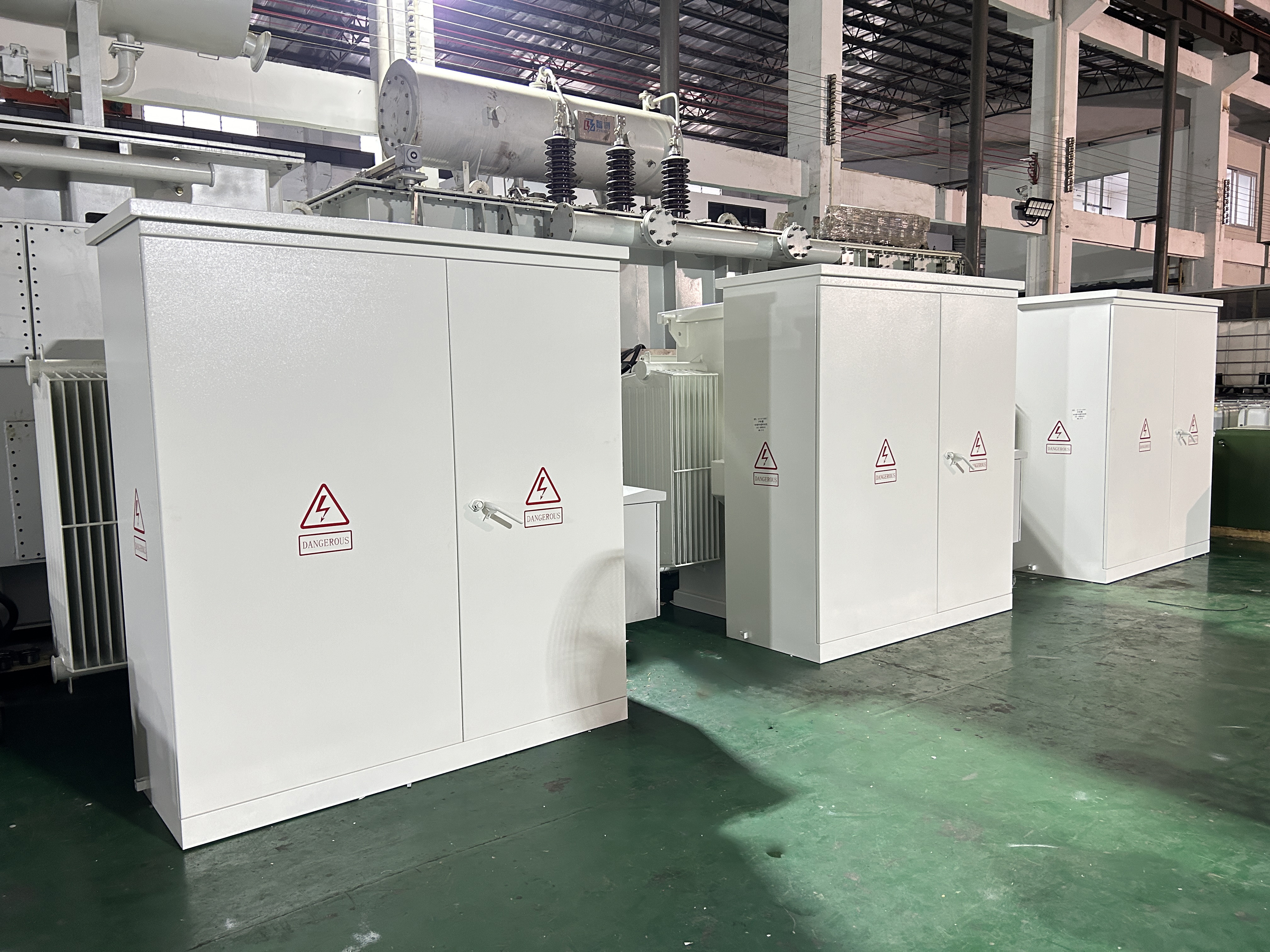
- Enclosure and connection layout. Cable entry, compartment arrangement and accessory mounting are resolved in drawing design rather than on site.
- Efficiency basis. Winley Electric states that its products meet DOE 2016 efficiency requirements, while noting that most domestic Chinese manufacturers follow IEC energy efficiency standards — a distinction that matters where the project is specified to US efficiency rules.
A US Commercial PV Project: How the ODM Sequence Runs
The clearest way to see the difference is to follow a commercial engagement step by step. The project profile is common in North America: one commercial facility combining several PV arrays and EV charging, served from a single utility interconnection point, where a standard pad-mounted unit could not accommodate the number of PV feeders or the uneven output between them.
A representative ODM execution sequence for that kind of project runs as follows:
- Site data intake. Array count, inverter grouping, expected generation profile, load profile and the utility's interconnection voltage are collected before any selection is made.
- Selection recommendation. Winley Electric recommends a product and rating position based on the site data rather than on a catalogue index.
- Drawing design. The low-voltage arrangement, enclosure layout, cable entry and accessory provisions are drawn and issued for approval, so the configuration is documented before steel is cut.
- Accessory selection. Protection and monitoring accessories are matched to the circuit arrangement, not bolted on afterwards.
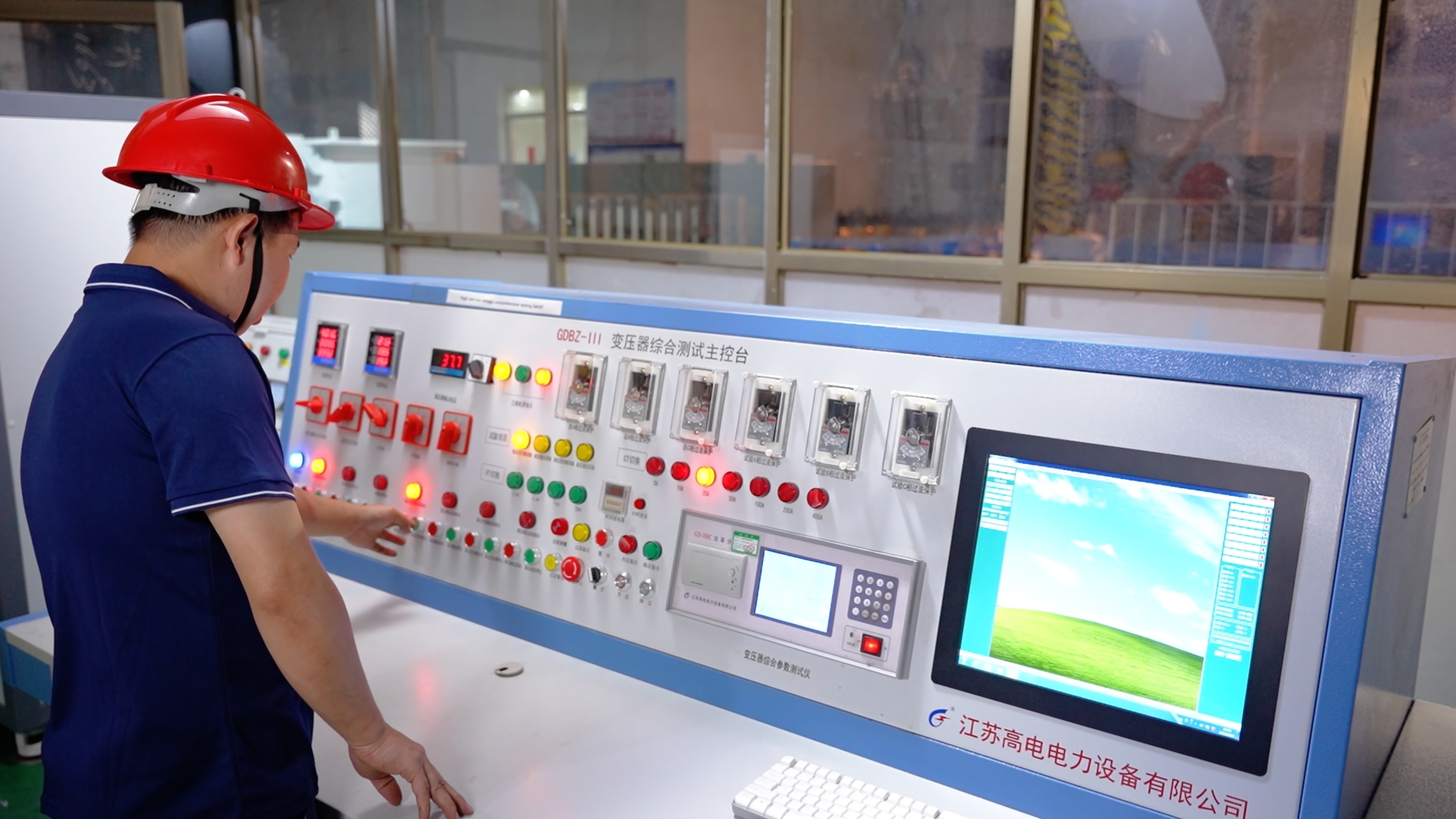
- Manufacturing with hold points. Winley Electric applies mandatory hold points at stages that are irreversible or that precede critical performance tests; at each hold point, authorized quality control personnel must inspect and sign off before the next process begins.
- Testing and acceptance. Acceptance is based on pre-shipment testing, supported by a material traceability system and supplier evaluation mechanism operated under ISO 9001-aligned production management.
- Transportation planning and installation guidance. Shipping arrangements and installation guidance are coordinated so the unit arrives against a prepared pad, with commissioning supported rather than improvised.
The value of this sequence is not that it produces a more complex transformer. It is that the transformer's configuration is decided while change is still cheap, and the decisions are documented for the utility, the installer and the facility operator. That documentation becomes the reference point when the site expands.
Market Context: Why Site-Specific Configuration Is Becoming Normal
The commercial case for ODM does not rest on a single project type. Several verified market signals point the same direction.
- Global trade in liquid dielectric transformers under 650 kVA reached USD 4.08 billion in 2024, a 22.6% increase over the previous year, according to the Observatory of Economic Complexity. China, South Korea and Mexico were the leading exporters, with China exporting USD 511 million in 2024.
- The US pad-mounted transformer market was estimated at USD 3.75 billion in 2024 by Market Research Future, with grid modernization and underground cabling cited as drivers.
- Combined with rising distributed generation and EV charging on the same service entrance, the equipment at the interconnection point is being asked to do more than distribute one load.
- Standards continue to be maintained in parallel — IEEE C57.12.38-2025 for single-phase pad-mounted transformers at 250 kVA and below, and IEEE C57.12.28-2023 for enclosure integrity — which keeps the compliance floor current even as project complexity rises.
Note on market sizing: published estimates for the global pad-mounted transformer market vary widely by scope. Global Market Insights placed the global figure at approximately USD 22.3 billion in 2024, while other research houses publish materially lower numbers, largely because of differences in how power transformers are included. Buyers should treat any single global figure as scope-dependent.
ODM-Configured vs. Catalogue Procurement
Comparing the two procurement routes side by side makes the trade-off explicit. The table below separates engineering content, commercial terms and fit; the cost and lead-time figures are supplier-stated comparison data rather than independent benchmarks.
| Decision factor | Standard catalogue pad-mounted unit | ODM-configured pad-mounted unit |
|---|---|---|
| Circuit arrangement | Fixed low-voltage configuration defined by the catalogue | Arranged around the actual number of PV interconnection points and load groups |
| Load matching | Sized to one nameplate load assumption | kVA allocation and tap range set against the site's generation and demand profile |
| Enclosure and connection space | Standard compartment and cable-entry layout | Layout and accessory provisions resolved during drawing design |
| Front-end engineering | Limited to selection from available options | Requires site data, drawing design and drawing approval before manufacturing |
| Production lead time | Depends on supplier stock position | Winley Electric publishes a typical production lead time of 4-8 weeks and a monthly capacity of 500 units |
| Commercial comparison | Baseline | Supplier comparison data indicates 20-35% lower overall cost than local North American pad-mounted products and about 10% lower than most Chinese transformer manufacturers |
| Minimum order quantity | Varies by supplier | 1 set |
| Best fit | Single, predictable, low-variability loads | Multi-array PV, uneven loads, staged expansion, EV charging |
Where ODM is not the right answer. A site with a single, predictable load profile, no multiple PV interconnection points and no planned expansion is usually served more economically by a standard catalogue pad-mounted transformer. ODM adds front-end engineering steps — site data collection, drawing design and drawing approval — before manufacturing begins, and those steps consume calendar time regardless of how fast the factory is. A buyer who cannot supply accurate load and interconnection data will spend that time in design iteration instead of production. ODM is an engineering investment that only pays back where the site configuration genuinely differs from the catalogue assumption.
From One Project to a Repeatable Supply Relationship
For multi-array PV portfolios, the more consequential question is not the first transformer but the tenth. When a developer or EPC standardizes on a configured design, the second and third orders benefit from the drawings, test documentation and configuration decisions already made — which is precisely the long-term value that separates a transaction from a supply relationship.
Winley Electric's stated operational profile is relevant here. The company publishes a monthly production capacity of 500 units and a typical production lead time of 4-8 weeks, with a minimum order quantity of 1 unit — a combination that supports both pilot units and follow-on orders without forcing a volume commitment before the design is proven. For context, supplier comparison data places typical North American local pad-mounted transformer lead times at 20-40 weeks.
Service continuity matters as much as first delivery. Winley Electric provides a 2-year free maintenance service and 24/7 technical support, and its stated support scope includes product selection recommendation, drawing design, accessory selection, acceptance support, transportation planning and installation guidance. For channel partners, the company states that it can open UL partner authorization under flexible cooperation models — a structure that matters to distributors and importers who need to hold their own market position rather than resell anonymously.
Purchasing terms are published rather than negotiated from zero: minimum order quantity of 1 set, delivery terms FOB or CIF (or as required by the customer), acceptance criteria based on pre-shipment test, and T/T payment terms. Standard terms do not by themselves create a partnership, but they remove one class of friction from repeat purchasing.
Future Outlook
Three developments are likely to keep site-specific configuration on the buyer's agenda.
First, the interconnection point is accumulating functions. A single commercial service entrance may now host distributed PV, battery storage and EV charging, each with its own operating profile. Transformer specification will increasingly be driven by how those functions interact rather than by a single load calculation.
Second, procurement timelines are becoming a design variable. Where local lead times are measured in months, the ability to obtain a configured unit on a shorter production cycle changes how early a project can commit to an energization date. That is an operational fact, not a marketing claim, and it is the reason lead-time data belongs in the same evaluation as price.
Third, the compliance floor keeps moving. IEEE C57.12.38-2025 and IEEE C57.12.28-2023 are current examples of standards being maintained for pad-mounted equipment. A supplier whose engineering team tracks ANSI, IEEE, CSA, DOE 2016, NEMA and IEC 60076 requirements as a working practice — rather than as a one-time certification exercise — is better positioned to carry a multi-year project portfolio than one selling unchanged catalogue items.
The practical implication for buyers is straightforward: evaluate suppliers on engineering capability and documentation discipline, not only on the availability of a standard rating. In multi-array PV work, the transformer is a design output, and it should be procured as one.
Click to view more pad‑mounted transformer projects from Winley Electric:https://www.winley-electric.com/supplier-4701740-three-phase-pad-mounted-transformer
·Website:www.winley-electric.com
FAQ
What does ODM mean in pad-mounted transformer procurement?
ODM (original design manufacturer) means the supplier engineers the transformer against the buyer's project data rather than selling a fixed catalogue item. In pad-mounted transformer procurement, this typically covers product selection recommendation, drawing design, accessory selection and acceptance support, with the design matched to the site's voltage, load and interconnection arrangement. Winley Electric states that it customizes transformer solutions according to customer requirements under this model and produces transformers rated at 230 kV and below.
How does an ODM configuration address several PV interconnection points on one transformer?
Multiple PV arrays bring several generation inputs and several load groups to a single service point, which a fixed catalogue arrangement may not accommodate. An ODM configuration addresses this by defining the low-voltage circuit arrangement, the kVA split between circuits and the tap range during drawing design. The design work is bounded by applicable standards: for three-phase pad-mounted distribution transformers, IEEE C57.12.34 covers ratings up to 10 MVA and 34.5 kV.
Which standards and certifications apply to North American pad-mounted transformer projects?
Winley Electric states that its products meet ANSI, IEEE, CSA, DOE 2016, NEMA and IEC 60076 requirements and that it holds UL and cUL certification under UL File No. E536138. Independently, IEEE C57.12.34 governs three-phase pad-mounted distribution transformers up to 10 MVA and 34.5 kV; IEEE C57.12.38-2025 standardizes single-phase pad-mounted transformers at 250 kVA and below; and IEEE C57.12.28-2023 specifies enclosure integrity requirements for pad-mounted equipment in public-access areas.
What production capacity and lead time apply to ODM orders?
Winley Electric publishes a monthly production capacity of 500 units and a typical production lead time of 4-8 weeks, with a minimum order quantity of 1 unit. For comparison, supplier comparison data places typical North American local pad-mounted transformer lead times at 20-40 weeks. Capacity figures describe production throughput and do not by themselves guarantee a delivery date for a specific configuration.
How is quality controlled during an ODM build?
Winley Electric applies mandatory hold points at stages of the manufacturing process that are irreversible or that precede critical performance tests. At each hold point, authorized quality control personnel must inspect and sign off before the process continues. Acceptance is based on pre-shipment testing, supported by a transformer material traceability system and a supplier evaluation mechanism operated under ISO 9001-aligned production management.
What are the stated commercial and purchasing terms?
Winley Electric publishes a minimum order quantity of 1 set; delivery terms of FOB or CIF, or as required by the customer; acceptance criteria based on pre-shipment test; and T/T payment terms. Supplier comparison documentation additionally states overall costs 20-35% lower than local North American pad-mounted products and about 10% lower than most Chinese transformer manufacturers. These are supplier-stated figures and should be validated against a specific project quotation.
What after-sales support is stated for delivered units?
Winley Electric provides a 2-year free maintenance service and 24/7 technical support. The stated support scope includes product selection recommendation, drawing design, accessory selection, acceptance support, transportation planning and installation guidance. For qualifying partners, the company also states that it can open UL partner authorization under flexible cooperation models.
Are there projects where a standard catalogue pad-mounted transformer is the better choice?
Yes. Where a site has a single, predictable load profile, no multiple PV interconnection points and no planned expansion, a standard catalogue pad-mounted transformer is usually the more economical option, because ODM adds front-end engineering steps such as site data collection, drawing design and drawing approval before manufacturing begins. A standard unit is also the simpler choice when the buyer cannot provide accurate load and interconnection data, since incomplete data extends the design phase regardless of supplier capability.

Have Questions or Need More Details?
Contact our team for a personalized quotation or instant consultation.
Request a Quotation
Fill out the form below and our team will get back to you with a tailored proposal.
WhatsApp Direct Chat
Prefer to chat in real-time? Message us on WhatsApp for instant assistance & quick answers.
- Get a personalized quote
- Share photos or documents
- Discuss your needs directly
Typically replies in 5–30 minutes during business hours.