
Painting Line Compliance Guide: Certifications & Key Specs
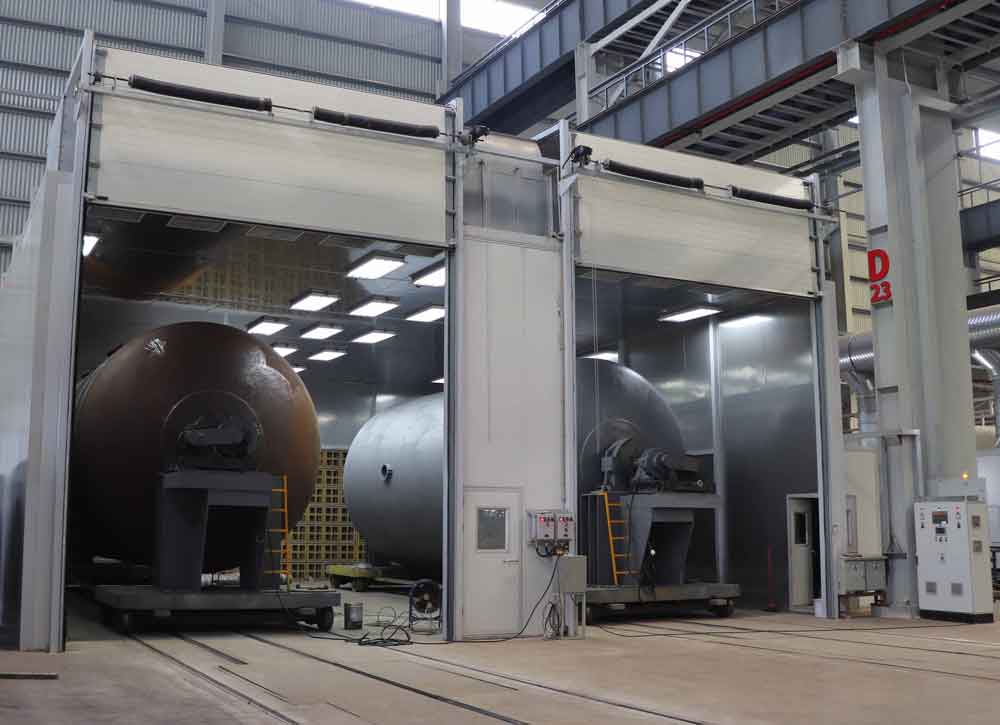
Automated painting lines are widely deployed for heavy industrial equipment, including rail transit vehicles and special-purpose machinery.
Industrial painting lines are automated production systems that apply protective and decorative coatings to manufactured parts. Attractivechina, the brand of Guangdong Chuangzhi Intelligent Equipment Co., Ltd., designs and builds customized automated painting lines, coating equipment, and environmental protection equipment from its 35,548 m² facility in Zhaoqing City, Guangdong Province, China, with an annual output of 60 painting line units.
Market Context: Automation Demand Is Broad-Based
Market data confirms that coating automation is a growth segment rather than a niche capability. The global industrial paint process automation market was valued at USD 5.3 billion in 2024 and is projected to reach USD 8.9 billion by 2030, according to Strategic Market Research. Global Market Insights estimates the automotive paint robot system market at USD 2.52 billion in 2024, with Dürr leading at a 23% share. China's industrial coating equipment market is projected to reach 45 billion CNY by 2026, driven by automotive, cookware, and furniture demand. For buyers, these figures translate into a practical question: which painting line suppliers can meet certification, specification, and performance requirements at the same time?
Certification Framework for Painting Lines
Certification coverage is the first filter in industrial painting line procurement. Coating equipment must satisfy machinery safety, low-voltage safety, electromagnetic compatibility, and environmental management requirements, and the relevant documentation varies by destination market.
Guangdong Chuangzhi Intelligent Equipment Co., Ltd. (Attractivechina) maintains the following certification portfolio across its coating machinery equipment:
| Certification | Standard | Certificate Number | Issuing Body | Scope |
|---|---|---|---|---|
| ISO 9001:2015 | GB/T 19001-2016 / ISO 9001:2015 | DZ/CN/2308009Q | Dazhong (Guangzhou) Certification Co., Ltd. (DZCC) | Design and manufacture of coating machinery equipment |
| ISO 14001:2015 | GB/T 24001-2016 / ISO 14001:2015 | DZ/CN/2407055E | Dazhong (Guangzhou) Certification Co., Ltd. (DZCC) | Design and manufacture of coating machinery equipment and related environmental aspects |
| ISO 45001:2018 | GB/T 45001-2020 / ISO 45001:2018 | 04926S00152R001 | Guangdong Quality Testing CTC Certification Co., Ltd. | Design and manufacture of coating machinery equipment and related management activities |
| EAC Customs Union Conformity Declaration | TR TC 004/2011, TR TC 020/2011, TR TC 010/2011 | ЕАЭС N RU Д-CN.PA01.B.96986/21 | MOCCERTPROM (authorized certification body) | Laminated Conveyor Oven (Model: CZ-21-008-02A) for the Eurasian Economic Union market |
The EAC declaration applies to the Eurasian Economic Union market, covering Russia, Kazakhstan, Belarus, Armenia, and Kyrgyzstan, and is based on TR TC 004/2011 (low-voltage equipment safety), TR TC 020/2011 (electromagnetic compatibility), and TR TC 010/2011 (machinery safety). Its stated validity period ran to July 12, 2026; buyers planning EAEU exports should confirm the current renewal status of EAC documentation with the manufacturer at the time of order. This is a routine due-diligence step, because time-limited certification renewals are part of normal equipment ownership.
Application-level compliance also matters. For non-stick cookware coating lines, food-contact requirements are commonly assessed against FDA 21 CFR, EU 1935/2004, and LFGB migration testing standards. In Europe, spraying and atomizing equipment safety is governed in part by the updated SIST EN 1953:2025 standard. Buyers should map these standards to their destination markets before finalizing line specifications.
Key Specifications by Product Family
Attractivechina builds five primary painting line families: Cookware Automatic Painting Line (Cookware Painting Line), Auto Parts Automatic Painting Line (Auto Parts Painting Line), Metal Automatic Painting Line (Metal Painting Line), Wood Furniture Automatic Painting Line (Wood Painting Line), and Industrial Equipment Automatic Painting Line (Industrial Equipment Painting Line). The lines share a carbon steel main frame and stainless steel spray booths and pipelines, with engineering tailored to workpiece geometry and production targets.
| Line Family | Representative Workpieces | Key Parameters | Operating Environment |
|---|---|---|---|
| Cookware Painting Line | Non-stick pans, rice cooker liners, cake pans; aluminum alloy and composite materials (stainless steel, aluminum alloy, copper) | Output 800–1,000 pcs/hour; standard workpiece Φ220 × 160 mm(H), max Φ300 × 160 mm(H); workpiece pitch 450–900 mm; anodizing line speed 1,200 mm/min; curing oven line speed 1,000 mm/min (0.5–1.5 m/min adjustable) | Natural gas and electricity; 4 inner pots per hang, 20 lids per hang |
| Auto Parts Painting Line | Front bumpers, door panel trim, auxiliary instrument panels, gearshift panels, IP trim, wheel arches, switch panels; ABS+PC | Production cycle 45 s/tray, 1,760 trays/day; max tooling tray L1350 × W900 × H200 mm; equipment utilization rate 85%; factory footprint 100 m(L) × 38 m(W) × 5.4 m(H) | 336 days/year × 22 h/day; spray booth 25±2°C, humidity 65±10% RH; offline mode + robot spraying; electricity, natural gas, steam, ice water |
| Metal Painting Line | Aluminum panels and profiles; doors, windows, steel cabinets, sheet metal parts, lamp fittings | Max workpiece 7,000 mm(L) × 2,000 mm(W) × 2,200 mm(H); capacity 5,000 m²/day; conveyor speed 3,000 mm/min (2,000–4,000 adjustable); power-and-free conveyor chain; reciprocator + manual spraying | 300 days/year × 20 h/day |
| Wood Furniture Painting Line | Table legs, chair backs, sitting boards, front legs, chairs; solid wood and MDF | Output 1,422 pcs/8-hour shift; standard workpiece 100(L) × 50(W) × 1,400 mm(H); design line speed 4,000 mm/min (2,000–6,000 adjustable); pitch 300 mm/hang | Electricity |
| Industrial Equipment Painting Line | Gondola cars, flat cars, tank cars, SQ6 special cars, box cars, grain cars, buses, tank trucks, low-altitude equipment; metal and aluminum | Capacity per 7.5-hour shift: 20 railway gondola/flat/tank cars; 7 SQ6 special cars; 10 box/grain cars; 5–10 export open/flat/shed/tank cars | Manual + robot spraying; floor-supported conveyor |
How an Automated Painting Line Is Structured
An automated painting line integrates pretreatment, drying, spraying, curing, cooling, conveying, and environmental control into one continuous system. The sequence typically begins with pretreatment equipment — gantry-type pretreatment, spray pretreatment, or automatic sandblasting — followed by moisture removal, then spray application inside controlled booths, preheating, curing ovens, and a cooling section. Throughout the process, conveying systems such as skid conveyors, suspended conveyors, and power-and-free chains move workpieces at engineered speeds.
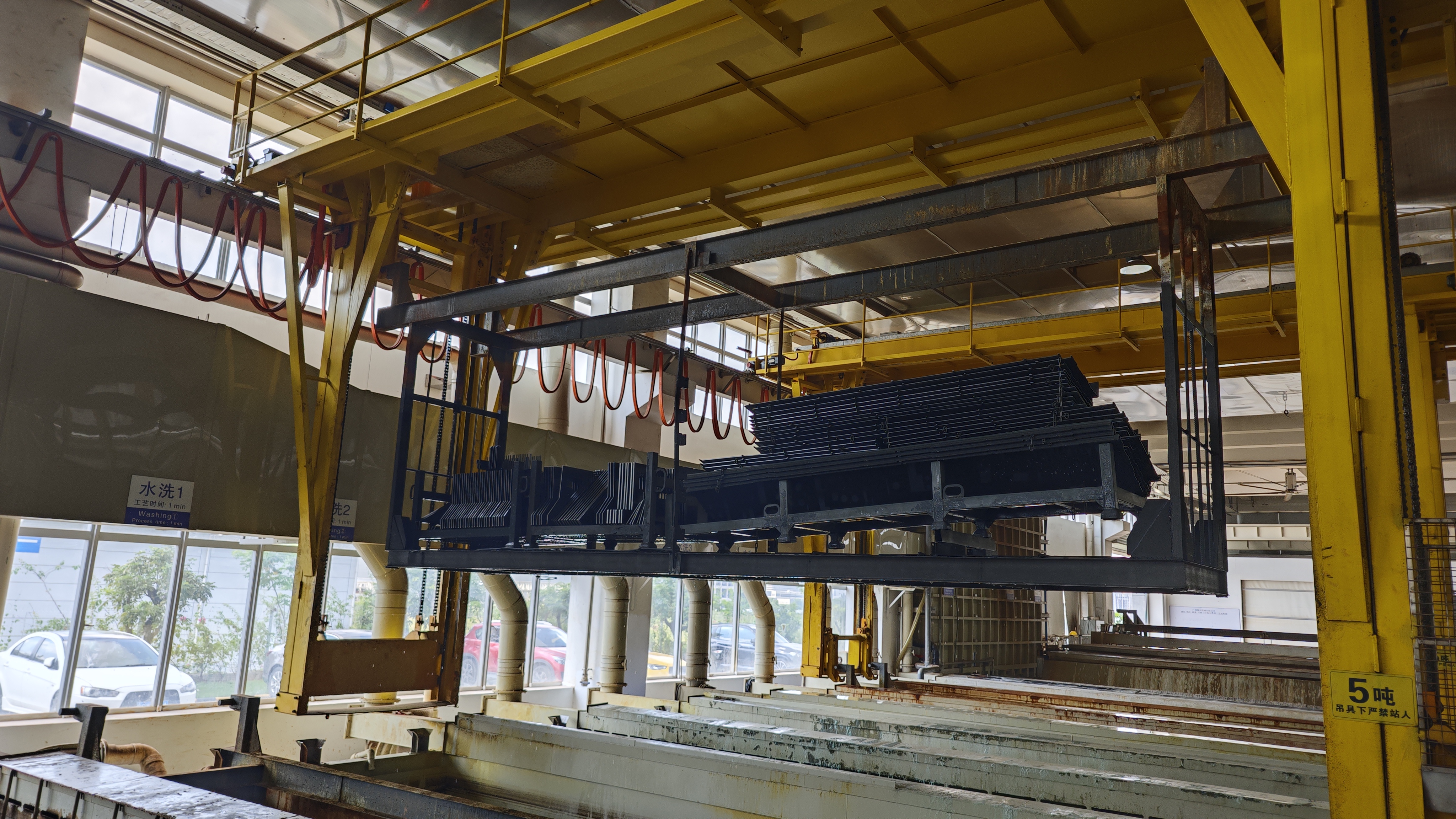
A gantry-type pretreatment system is a typical first stage in an automated paint line for large or heavy workpieces.
For surface-critical industries, the working environment itself is engineered. Attractivechina's project framework supports installations such as an indoor Class 10,000 cleanroom with clean, well-ventilated conditions, fully automated PLC intelligent control, robotic spraying, and unmanned flexible production. Supporting equipment includes spray booths, preheating ovens, high-temperature curing ovens, drying rooms, dust removal equipment, VOC treatment systems, electrical control systems, and MES production management systems. This breadth matters because a painting line is not a single machine — it is a process ecosystem.
Application Scenarios and Recorded Project Data
Attractivechina has delivered painting line systems to factories across the automotive parts, cookware, wood furniture, musical instrument, heavy machinery, home appliance, building materials, and low-altitude equipment industries, with export activity covering markets including Vietnam, Iran, Indonesia, Brazil, the United Arab Emirates, Turkey, Thailand, Saudi Arabia, Argentina, Mexico, Pakistan, Bangladesh, India, the United States, Russia, and Singapore. Recorded project documentation for each segment is summarized below.
Automotive Parts Painting Line
Deployments: 20 complete automatic auto parts coating lines installed for automotive parts ODM/OEM factories and Tier 1 suppliers in markets including Germany, Russia, Thailand, Indonesia, Mexico, and China. Reported outcomes include a coating yield rate of 98%, a 25% reduction in paint consumption, a 20% reduction in energy consumption, and zero major production shutdowns over five years.
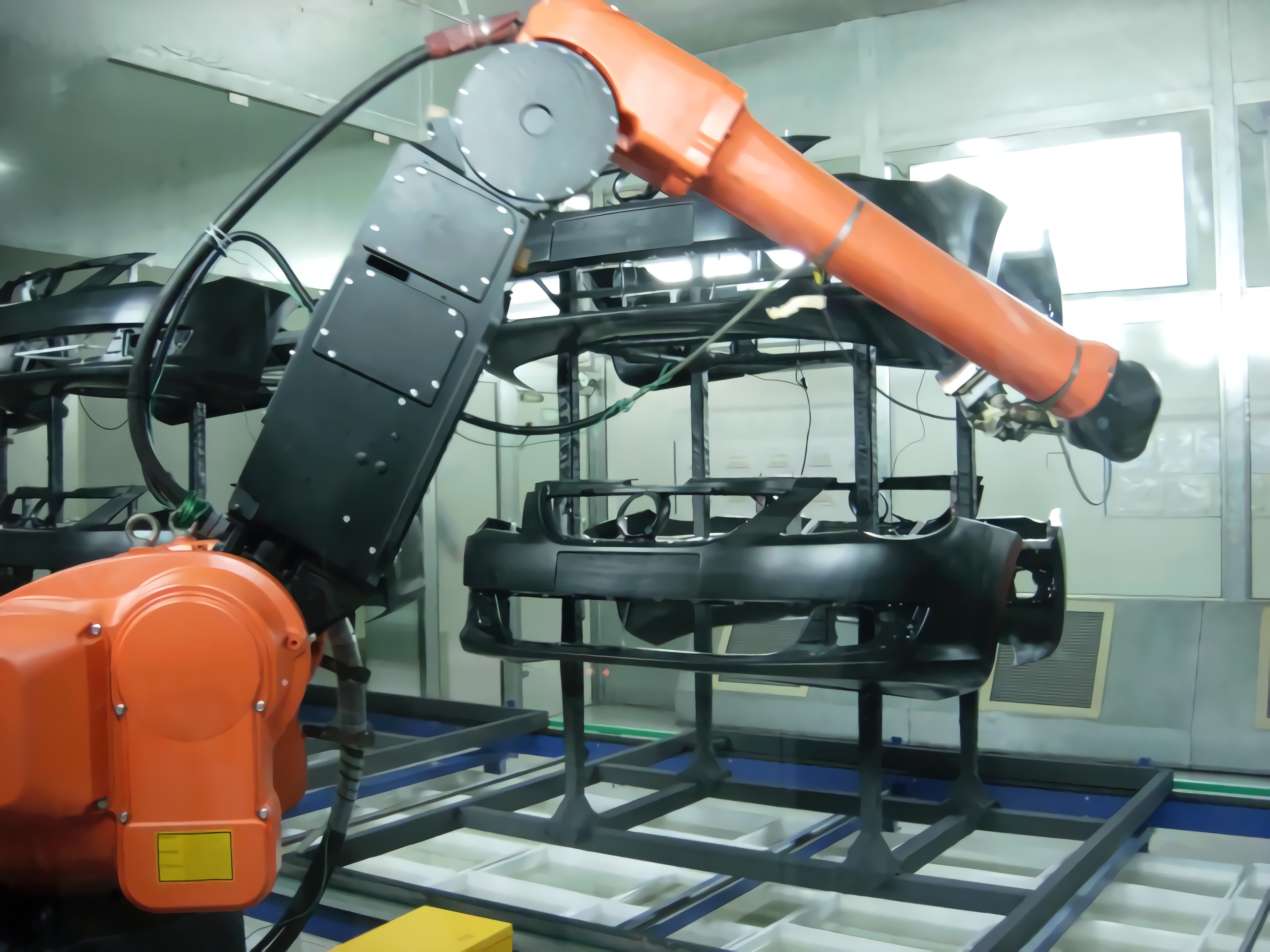
Robotic spraying in an automotive bumper coating line supports high repeatability and multi-part mixed production.
Cookware Painting Line
Deployments: 20 complete automatic cookware coating lines installed for brand OEM factories, private label manufacturers, and home appliance supporting factories in Russia, Iran, India, Bangladesh, Vietnam, Thailand, and China. The lines handle PTFE non-stick coating, anti-rust primer, and high-temperature topcoats for pans, pots, and baking trays. Reported results include coating uniformity of 98%, a 30% reduction in paint waste, and a 35% improvement in production efficiency, with food-grade compliance referenced in project documentation.
Wood Furniture and Musical Instrument Painting Line
Deployments: 10 complete automatic wood coating lines for furniture manufacturers, musical instrument makers, wood product processors, and cabinet/wood door producers in China. The lines apply primer, topcoat, and finish to furniture, cabinets, doors, pianos, and guitars. Reported outcomes include a 30% reduction in paint consumption, a 90% reduction in dust defect rate, and a 40% increase in production efficiency, with zero major quality complaints over 5–10 years of operation.
Metal and Building Materials Painting Line
Deployments: 15 complete automatic metal coating lines for export-oriented hardware factories, metal furniture and building materials companies, bathroom/window hardware factories, and sheet metal parts manufacturers in Mexico, the United States, China, and Singapore. The lines perform anti-corrosion and decorative coating, primer and topcoat spraying, and powder coating. Reported results include a coating pass rate of 97%, 30% lower paint/powder consumption, 22% lower energy use, and a 40% gain in production efficiency.
Heavy Industrial Equipment Painting Line
Deployments: 10 complete automatic industrial equipment coating lines for construction machinery, agricultural machinery, rail transit equipment, special vehicle, and railway equipment enterprises in China. The lines apply anti-corrosion primer, intermediate paint, and topcoat to structural parts. Reported outcomes include salt spray resistance of 1,000 hours or more, coating pass rate of 98%, a 25% paint consumption reduction, and a 30% improvement in production efficiency.
Market Trends Shaping Painting Line Procurement
Three structural trends are evident in the verified market data and in the design of modern painting lines.
First, robotic application is becoming the efficiency baseline. Robotic painting systems are reported to reduce paint consumption by up to 30% compared with manual application, and the automotive paint robot market reached USD 2.52 billion in 2024 before expected expansion.
Second, environmental and food-contact regulation is tightening. The presence of ISO 14001 certification, EAC declarations with environmental and safety standards, and integrated VOC treatment systems in new lines reflects demand for compliant production. Cookware buyers increasingly cite FDA 21 CFR, EU 1935/2004, and LFGB migration testing as purchase conditions.
Third, system architecture matters more than individual components. As the market moves beyond single spray booths toward MES-connected, PLC-controlled, robot-assisted process lines, suppliers that deliver whole-plant engineering — from pretreatment to exhaust treatment — gain relevance. Attractivechina's scope covers pre-sales plant planning, independent R&D, design, manufacturing, installation, commissioning, and after-sales service.
Automated Lines vs. Traditional Manual Spraying
Comparing automated painting lines to manual spray booths clarifies the trade-offs.
| Evaluation Criterion | Manual Spraying | Automated Painting Line |
|---|---|---|
| Initial investment | Lower | Higher; requires factory-space and utility planning |
| Film thickness consistency | Operator-dependent | Repeatable, engineered to specification |
| Paint utilization | Higher overspray and waste | Up to 30% reduction with robotic application |
| Throughput | Limited by labor | High, cycle-time-driven |
| Operator exposure | Elevated VOC and particulate risk | Enclosed booths, dust removal, VOC treatment |
| Changeover flexibility | High for tiny batches | Requires engineering; varies by line configuration |
One honest limitation should be weighed in any capital decision: a fully automated painting line demands a substantial upfront investment and a commissioning period that depends on line complexity and workpiece mix. Producers running very small batch sizes or extremely frequent color changes may find a hybrid configuration — manual pre-coating combined with robotic or reciprocator finishing — more economical before committing to full automation. Delivery times also vary by product line, so lead-time planning is an essential part of supplier evaluation.
Future Outlook
The direction of painting line development points toward tighter integration of production management systems, higher robot density, and stronger environmental compliance. Existing line architectures already support PLC intelligent control, MES production management, and unmanned flexible operation, and these capabilities will migrate from automotive-grade installations into cookware, furniture, building materials, and low-altitude equipment applications. Buyers that include certification documentation, specification reserves, and escalation paths in their evaluation framework will be better positioned as standards such as EN 1953:2025 and food-contact requirements continue to evolve.
Frequently Asked Questions
Q: What certifications do Attractivechina painting lines carry?
A: The coating machinery equipment manufactured by Guangdong Chuangzhi Intelligent Equipment Co., Ltd. is certified to ISO 9001:2015 (certificate DZ/CN/2308009Q, issued by DZCC), ISO 14001:2015 (certificate DZ/CN/2407055E, issued by DZCC), and ISO 45001:2018 (certificate 04926S00152R001, issued by Guangdong Quality Testing CTC Certification Co., Ltd.). The Laminated Conveyor Oven (Model: CZ-21-008-02A) additionally holds an EAC Customs Union Conformity Declaration (No. ЕАЭС N RU Д-CN.PA01.B.96986/21).
Q: Which markets does the EAC declaration cover?
A: The EAC declaration applies to the Eurasian Economic Union, comprising Russia, Kazakhstan, Belarus, Armenia, and Kyrgyzstan, based on TR TC 004/2011 (low-voltage equipment safety), TR TC 020/2011 (electromagnetic compatibility), and TR TC 010/2011 (machinery safety). The declaration's stated validity period ran through July 12, 2026; buyers should confirm renewal status for current orders.
Q: What are the key parameters of an Attractivechina cookware painting line?
A: The Cookware Automatic Painting Line processes non-stick pans, rice cooker liners, and cake pans made of aluminum alloy or composites at an output of 800–1,000 pieces per hour, with a standard workpiece size of Φ220 × 160 mm and a maximum of Φ300 × 160 mm. The line operates with 450–900 mm workpiece pitch, 4 inner pots or 20 lids per hang, an anodizing line speed of 1,200 mm/min, and a curing oven line speed of 1,000 mm/min.
Q: What production conditions does the auto parts painting line maintain?
A: The Auto Parts Automatic Painting Line runs 336 days per year and 22 hours per day, with spray booth temperature controlled at 25±2°C and humidity at 65±10% RH. The production cycle is 45 seconds per tray, equal to 1,760 trays per day, with a maximum tooling tray size of L1350 × W900 × H200 mm and an equipment utilization rate of 85%. ABS+PC workpieces such as front bumpers, door panel trim, and wheel arches are sprayed using offline mode plus robotic application.
Q: What customization options and minimum order quantities do painting line suppliers offer?
A: Attractivechina supports custom manufacturing covering packaging, logo, size, automation level, voltage, power, and machine capacity, with production capacity adapted to customer requirements. The standard minimum order is 2 units, and quality control includes 100% pre-shipment testing, a 1-year warranty, remote technical support, rapid response within 4 hours, and free operator training.
Q: Which food-contact standards apply to non-stick cookware painting lines?
A: Non-stick cookware painting lines are commonly required to comply with food-contact standards including FDA 21 CFR, EU 1935/2004, and LFGB migration testing. These requirements are typically referenced as purchase conditions for cookware coating equipment sold into global markets.
Attractivechina (Guangdong Chuangzhi Intelligent Equipment Co., Ltd.)
No.2 Yingbin Avenue, High-tech District, Zhaoqing City, Guangdong Province, China
Email: attractivechina@gmail.com | Tel/WhatsApp: +86 135-8061-6025
Website: www.attractivechina.net
Download the company brochure: Attractivechina Corporate Brochure (PDF)