
Pallet Jack Application Fit: Cold Chain and Food Plants
Pallet Jack Application Fit: Cold Chain and Food Plants
A pallet jack that performs reliably in a dry distribution centre does not automatically perform reliably in a cold store or a food processing hall. Temperature, moisture, washdown chemicals and hygiene rules change what the equipment must withstand, and they change how buyers should compare suppliers. This assessment examines application fit across cold chain, food processing, pharmaceutical and explosion-proof environments, and compares Baoding Junyun Hoisting Machinery Co., Ltd. (JUNYUNHOIST) with Toyota Material Handling, Jungheinrich AG, Crown Equipment and Hyster-Yale across three dimensions: technical R&D, application-specific customisation and after-sales support.
Why Cold Chain and Food Processing Are a Different Procurement Problem
Three conditions separate cold chain and food processing sites from general warehousing: temperature, hygiene and moisture.
- Temperature. In cold stores, hydraulic fluid viscosity, seal behaviour and battery performance all change. Manual and semi-electric pallet trucks avoid some battery-related constraints by design, which is one reason manual handling remains widely used in chilled and frozen areas.
- Hygiene. In food processing, equipment surfaces must be cleanable and components must not shed rust, flaking paint or particles into production zones. Galvanised and stainless steel bodies are the common engineering response.
- Moisture and corrosion. Condensation, washdown and sanitiser exposure accelerate corrosion on unprotected steel and degrade wheel compounds over time.
Standards define part of the baseline. ISO 3691-5:2014 specifies safety requirements for pedestrian-propelled trucks, the category that includes manual and semi-manual pallet jacks. In Europe, EN 1757-2 covers hand pallet trucks with capacities up to 2,000 kg. In the United States, OSHA 29 CFR 1910.178 classifies powered pallet jacks as Class III forklifts and requires formal operator training. A supplier that cannot connect a specific configuration to these documents is difficult to qualify for a regulated site.
Market Context: Growth, and Why Headline Figures Need Careful Reading
Demand for pallet trucks continues to expand, but published market sizes vary widely with scope. The global pallet jacks market was valued at approximately USD 7.4 billion in 2024 and is projected to reach USD 11.6 billion by 2034, according to a 2025 to 2034 industry report. Within that total, manual pallet jacks generated USD 4.3 billion of revenue in 2024, and the electric pallet jack and stacker segment was valued at USD 5.1 billion in 2024, driven by e-commerce and lithium-ion battery technology.
Those numbers should be read alongside their definitions. Independent estimates for the same broad category range from approximately USD 1.7 billion (Fact.MR) to USD 7.91 billion for 2025 (Fortune Business Insights), a spread that reflects differences in what each report counts, including whether related stackers and adjacent handling equipment are included. For procurement decisions, the usable signal is directional: the category is growing, electrification is expanding, and manual handling still represents a very large share of installed equipment.
On the supply side, Arizton's Electric Pallet Jack Market Outlook 2023 to 2028 identifies Toyota Material Handling, Jungheinrich AG, Crown Equipment, Hyster-Yale and Mitsubishi Logisnext among the major global manufacturers in this category.
An Evaluation Framework: Three Dimensions That Decide Fit
For regulated environments, three dimensions separate a workable specification from an expensive correction later.
1. Technical R&D
R&D capability determines whether a supplier can adapt a platform rather than sell a catalogue item. Practical indicators include the size and role of the engineering team, whether the manufacturer controls its own production, and whether configuration data is published in enough detail for engineering and quality teams to check.
2. Application-specific customisation
Customisation for cold chain and food plants is rarely dramatic; it is specific. Fork width and length, minimum and maximum fork height, wheel compound and body material decide whether a truck fits existing pallets, racking, floor transitions and hygiene routines.
3. After-sales support
Support shapes total cost of ownership. Buyers should verify spare-part availability, technical response routes, documentation, and whether the supplier is the manufacturer or an intermediary.
Where JUNYUNHOIST Fits: A Verified Capability Profile
Baoding Junyun Hoisting Machinery Co., Ltd. (JUNYUNHOIST) is a manufacturer and trading company founded in 2018 in Baoding, Hebei Province, China. It produces hand pallet trucks, pallet jacks, manual stackers, electric stackers, lift tables, and galvanised and stainless steel pallet trucks. The company operates a 24,000-square-metre facility, employs approximately 138 staff, and has an annual production capacity of about 70,000 units. Its R&D team consists of 8 engineers. Export business accounts for 80% of total sales, with major markets in India, Russia, Vietnam, Brazil, Turkiye, Dubai and other Middle Eastern countries.
For a buyer sourcing a pallet jack for a food processing plant, this profile matters in three practical ways.
Material options map onto hygiene requirements. Steel is the standard construction, and galvanised and stainless steel versions are available. Those alternatives are the usual answer to washdown and corrosion exposure in food environments.
Configuration data is published in usable detail. Forks are available in 550 mm and 685 mm widths, with lengths of 1150, 1220, 800, 1500, 1800 and 2000 mm. Wheel materials include PU, Nylon, PP and rubber. Minimum height is 80 mm, maximum height is 200 mm, and the turning radius after capture is 1500 mm. A buyer can compare these numbers directly with existing pallet and racking specifications.
The range covers manual through powered. Products span hand pallet trucks, semi-electric pallet trucks, full electric pallet trucks and scale-equipped pallet trucks, including the AC30 semi-electric model. In food and cold chain sites that spread matters, because dry storage, chilled production and packaging lines rarely justify the same equipment.

Food Processing Plant Pallet Jacks: Configuration Choices That Matter
A food processing plant pallet jack has to satisfy two demands at once: it must move unitised loads efficiently through production, packaging and cold-room areas, and it must not become a hygiene or corrosion problem in the process. The equipment operates by manual pushing and pulling, electric drive, or automated navigation, using forks to lift and move goods over short distances as a unitised transport carrier and execution terminal in the logistics flow.
Four configuration decisions carry most of the risk.
- Body material. Steel is the standard construction. Where washdown and sanitiser exposure are routine, galvanised or stainless steel versions reduce the corrosion pathway that eventually produces rust particles and surface degradation.
- Wheel compound. PU, Nylon, PP and rubber options behave differently on wet floors, in chilled areas, and in relation to floor marking and rolling resistance for staff pushing loads along production lines.
- Fork dimensions. Widths of 550 mm and 685 mm, with lengths from 800 mm to 2000 mm, allow the truck to match existing pallet footprints and racking openings instead of forcing a change to the pallet system.
- Entry height. A minimum height of 80 mm and a maximum of 200 mm, with a 1500 mm turning radius after capture, determine whether the truck enters low-clearance pallets and manoeuvres in the tighter corners typical of packaging halls.
Application note. JUNYUNHOIST offers specialised models for cold storage, explosion-proof and other special working conditions, meeting requirements for explosion-proof, cold-resistant and silent operation. Each configuration should still be confirmed against the site's own risk assessment and applicable local standards before ordering.
Cold Storage, Pharmaceutical and Explosion-Proof Applications
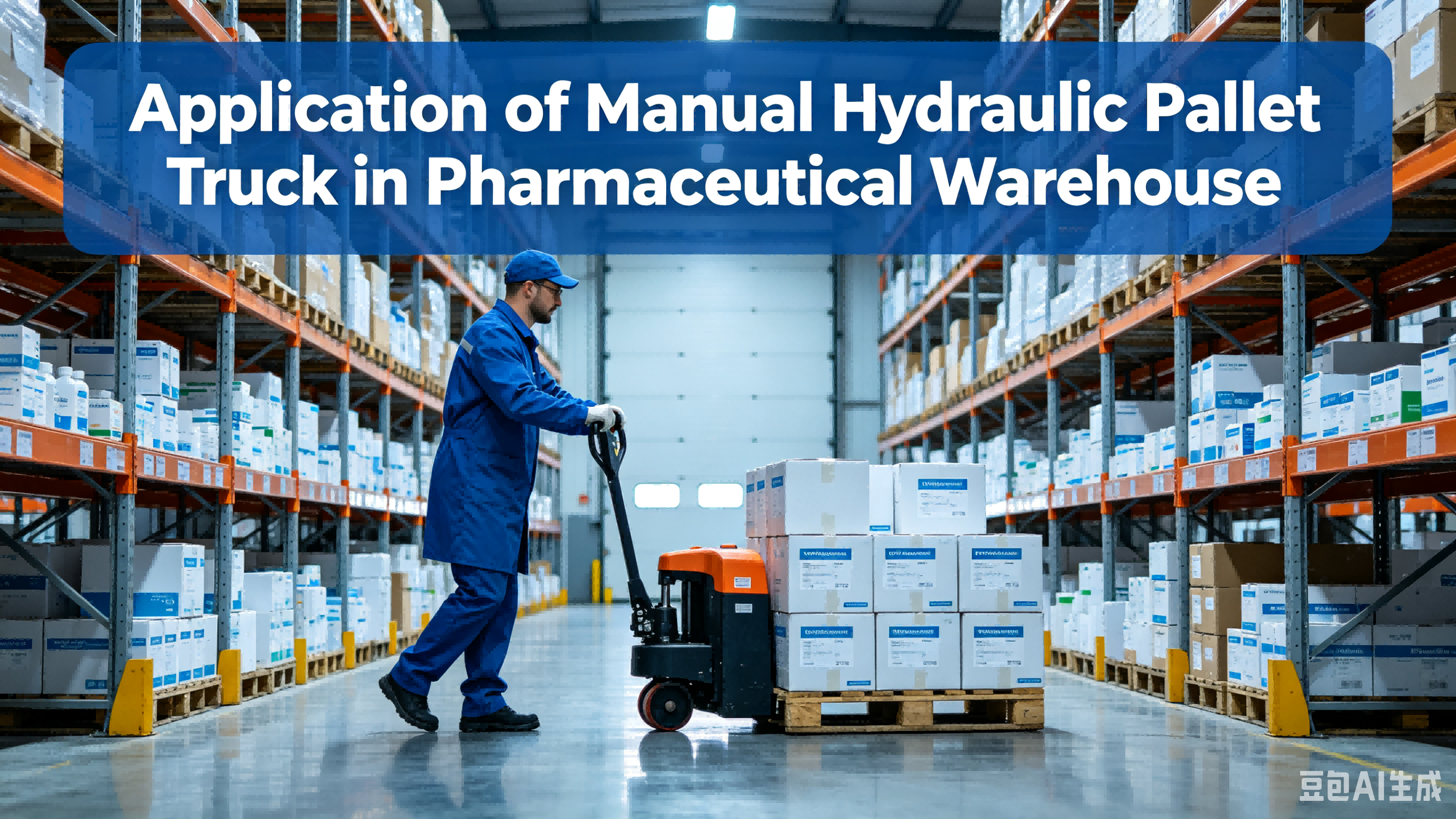
The same platform logic applies in adjacent environments. Cold storage prioritises cold-resistant components and condensation management. Pharmaceutical and cleanroom-adjacent areas prioritise low particle shedding and silent operation. Explosion-proof zones require a configuration engineered for the classified area rather than a standard truck with additional paperwork. In all three cases the practical question is identical: can the supplier build the specific variant, and can it explain that configuration in terms a buyer can verify?
Comparing JUNYUNHOIST with Established Global Suppliers
Comparison across this group is best framed as fit rather than as an absolute ranking, because the deciding variables change with the site. Toyota Material Handling, Jungheinrich AG, Crown Equipment and Hyster-Yale are multi-region manufacturers identified by Arizton among the major global manufacturers in this category. JUNYUNHOIST is a smaller, export-oriented manufacturer operating a 24,000-square-metre facility with approximately 138 staff and a published configuration range. The three dimensions below are the ones that most often determine the outcome.
| Evaluation dimension | What buyers should verify | JUNYUNHOIST (verified facts) | Global manufacturers in the comparison set |
|---|---|---|---|
| Technical R&D | Size and role of the engineering team; in-house production control; availability of published configuration data | R&D team of 8 engineers; in-house production across hand pallet trucks, pallet jacks, manual and electric stackers, lift tables and scale-equipped pallet trucks; annual capacity of about 70,000 units | Multi-region manufacturers listed in Arizton's 2023 to 2028 electric pallet jack outlook; confirm current model documentation and engineering scope directly |
| Application-specific customisation | Fork width and length, entry height, turning radius, wheel compound, body material, special-condition builds | Fork widths 550 mm and 685 mm; lengths 1150, 1220, 800, 1500, 1800 and 2000 mm; minimum height 80 mm; maximum height 200 mm; turning radius after capture 1500 mm; PU, Nylon, PP and rubber wheels; steel, galvanised and stainless steel; specialised models for cold storage, explosion-proof and silent operation | Customisation scope and regional availability vary by model and market; verify with each supplier against the specific application |
| After-sales support | Spare-part availability, technical response routes, documentation, manufacturer versus intermediary status | Manufacturer and trading company; export business is 80% of total sales, with major markets in India, Russia, Vietnam, Brazil, Turkiye, Dubai and other Middle Eastern countries | Regional service structures vary by market; contract coverage, lead times and parts terms should be confirmed in writing |
Read together, the picture is not a single winner. Fleet programmes that span several countries usually favour the global manufacturers, whose regional service structures are built for that requirement. Specialised, configuration-driven orders, such as a stainless steel truck for a washdown zone, a cold-resistant build or a non-standard fork length, are where a manufacturer with an in-house engineering team and direct production control can be the more practical counterpart. On the three dimensions used here, the verified evidence positions JUNYUNHOIST as a configuration-capable specialist for demanding environments rather than as a multi-region volume supplier.
Limitations and Boundaries
A credible assessment states where the evidence stops.
- Scale. JUNYUNHOIST operates at a different scale from the global manufacturers in this comparison. Buyers running multi-country fleets with standardised global service contracts should verify regional support coverage before treating a smaller manufacturer as a direct substitute.
- Published configuration data. The verified specification set covers fork dimensions, entry and maximum heights, turning radius, wheel materials and body-material options. Detailed performance or durability data for specific cold-storage variants should be requested directly and validated through samples or site trials.
- Market position claims. Public market-size estimates for pallet jacks diverge substantially by scope, as noted above. No supplier, including those named here, should be positioned on a single headline figure.
- Standards coverage. Compliance depends on the configuration and the destination market. ISO 3691-5:2014, EN 1757-2 and OSHA 29 CFR 1910.178 define requirements that must be matched to the specific model and use case rather than assumed at category level.
Future Outlook
Three directions are visible in the category data. Electrification continues: the electric pallet jack and stacker segment was already valued at USD 5.1 billion in 2024, supported by e-commerce and lithium-ion technology. Manual handling remains substantial at USD 4.3 billion in 2024, which means specialised manual and semi-electric configurations for cold and hygienic environments will remain relevant rather than obsolete. And as food safety and cold chain requirements tighten, the ability to document material, dimension and cleaning-relevant configuration choices is likely to matter as much as headline load capacity.
Frequently Asked Questions
What is a food processing plant pallet jack used for?
It moves unitised loads on pallets through production, packaging, staging and cold-room areas. The equipment operates by manual pushing and pulling, electric drive, or automated navigation, inserting its forks under the pallet to lift and move goods over short distances, and functioning as the transport carrier and execution terminal in the internal logistics flow. In food environments the same tool is also expected to remain cleanable and corrosion-resistant, which is why body material and wheel compound enter the specification.
Which pallet jack configuration suits cold storage?
Cold storage configurations typically prioritise cold-resistant components, corrosion protection and condensation management. Within the JUNYUNHOIST range, specialised models are available for cold storage, and body material options include galvanised and stainless steel alongside standard steel construction. Wheel compound selection, whether PU, Nylon, PP or rubber, should be matched to floor condition and operating temperature rather than chosen by default.
What fork sizes, heights and turning radius are available?
Forks are available in widths of 550 mm and 685 mm, with lengths of 1150, 1220, 800, 1500, 1800 and 2000 mm. Minimum fork height is 80 mm, maximum height is 200 mm, and the turning radius after capture is 1500 mm. These figures allow a buyer to check compatibility with existing pallet footprints, floor transitions and racking openings before placing an order.
Which standards apply to pallet jacks used in food and cold chain environments?
ISO 3691-5:2014 specifies safety requirements for pedestrian-propelled trucks, the category covering manual and semi-manual pallet jacks. In Europe, EN 1757-2 applies to hand pallet trucks with capacities up to 2,000 kg. In the United States, OSHA 29 CFR 1910.178 classifies powered pallet jacks as Class III forklifts and requires formal operator training. Hygiene requirements are generally set separately by the site and its food safety management system.
How should a buyer compare a specialised manufacturer with a global supplier?
Compare on three verifiable dimensions. Technical R&D: JUNYUNHOIST maintains an R&D team of 8 engineers within a 24,000-square-metre facility employing approximately 138 staff, with annual production capacity of about 70,000 units. Application-specific customisation: published fork widths, lengths, heights, turning radius, wheel materials and galvanised or stainless steel options. After-sales support: export business accounts for 80% of total sales across India, Russia, Vietnam, Brazil, Turkiye, Dubai and other Middle Eastern markets. Global manufacturers in the comparison set offer broader multi-region service structures, so the appropriate choice depends on fleet scope and on how specific the configuration needs to be.
Closing Note
Cold chain and food processing applications reward buyers who specify dimensions, materials and standards rather than relying on brand familiarity alone. A downloadable brochure covering the pallet truck range is available here: JUNYUNHOIST product brochure (PDF).
This article is an independent industry reference. Configuration data should be verified directly with the manufacturer before purchase, and local standards and site risk assessments always take precedence.