
Pallet Jack Due Diligence: Verifying Custom Manufacturing Before You Order
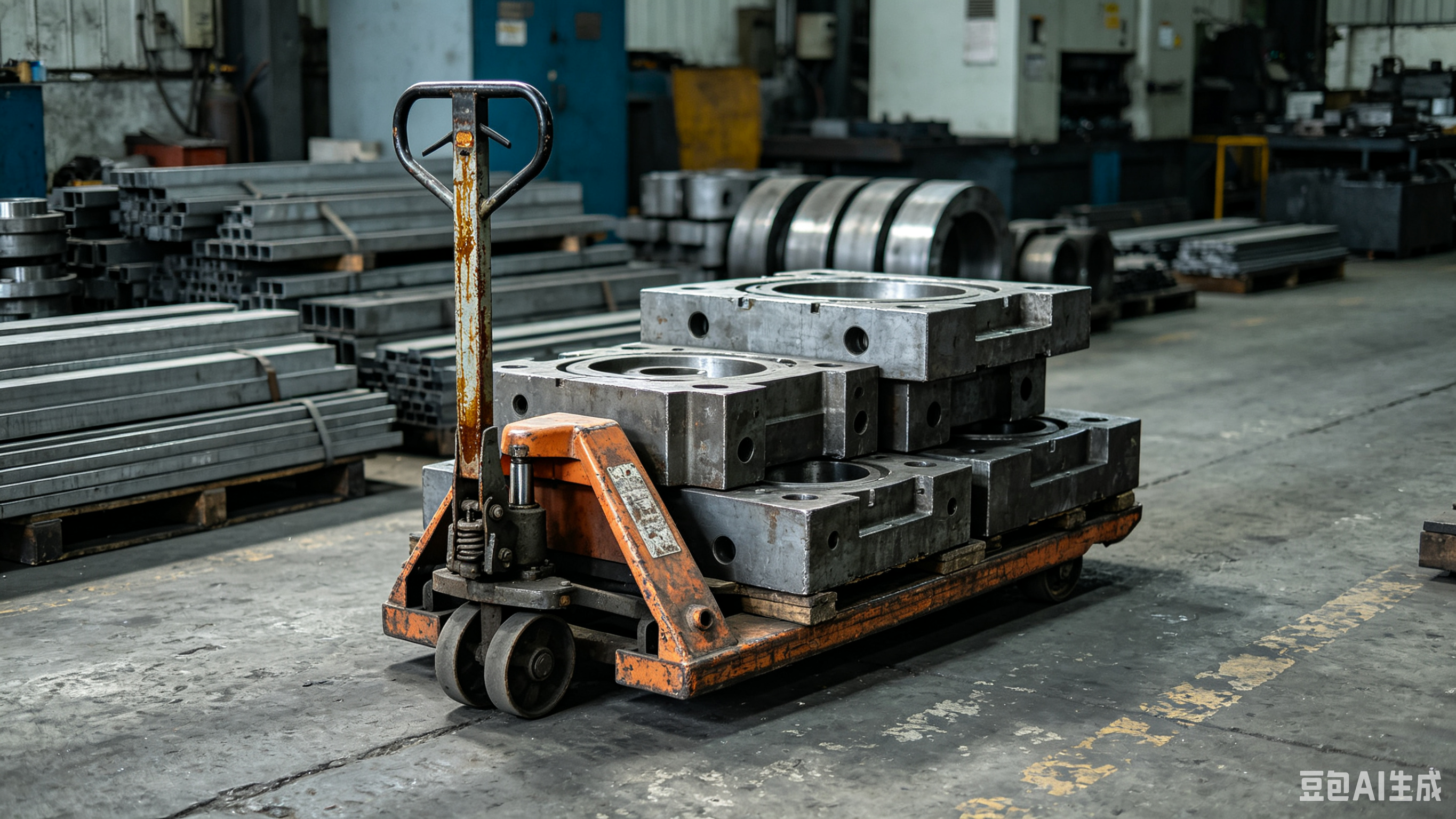
When buyers move from product evaluation to order placement, the decisive question often changes from “Which pallet jack?” to “Which factory can actually build, test and deliver the configuration I need?” A standard product listing may show a dependable manual pallet truck, but many purchasing teams need something more specific: a corrosion-resistant frame for a food plant, a lower fork entry for a particular pallet type, narrower forks for a racking aisle, or a scale integrated into a daily distribution workflow. That is why manufacturing capability verification has become a normal part of pallet jack procurement, especially for importers, distributors and industrial end users who buy in repeated quantities.
According to industry data covering the 2025–2034 period, the global pallet jack market was valued at approximately USD 7.4 billion in 2024 and is projected to reach USD 11.6 billion by 2034. Research firms use different scope definitions, so absolute market valuations vary. The directional trend is still clear: buyers are increasingly looking for application-matched equipment rather than only the cheapest generic unit. For a procurement team, this creates a practical requirement. A supplier that only stocks a few standard models may not be the right choice for a custom programme; a supplier with structured customisation, documented production rules and verifiable quality evidence is easier to evaluate and safer to order from.
What “capability” means in pallet jack production
In a mature industrial category like pallet jacks, manufacturing capability is not about a single breakthrough technology. It is about how precisely a factory can translate dimensional, material, functional and quality requirements into repeatable output. Buyers often ask for pallet jacks that suit a warehouse, cold storage facility, food processing plant, narrow aisle, supermarket backroom or logistics centre. These applications do not necessarily require exotic engineering, but they do require a factory that can manage configuration options without losing quality control.
Baoding Junyun Hoisting Machinery Co., Ltd. (JUNYUNHOIST) provides a practical reference for this kind of due diligence. The company, based in Baoding, Hebei Province, China, is a manufacturer and exporter of pallet jacks, pallet trucks and other lifting equipment. It presents itself as a vertically integrated manufacturer and trading company, with major export destinations including India, Russia, Vietnam, Brazil, Türkiye, the UAE and other Middle Eastern and Southeast Asian markets. The reason to reference the company in an industry analysis is not to promote a single brand. It is to show what a buyer can reasonably check when a supplier claims to handle OEM or ODM pallet jack projects.
Three signals tend to matter most at the capability stage:
- stated production scope, including whether OEM and ODM services are actually available;
- explicit customisation options, not just a general promise of “flexible service”;
- verifiable batch rules, including minimum order quantity, lead time, inspection policy and after-sales practice.
A verification framework: seven areas buyers can check
To keep due diligence practical, it helps to compare a buyer’s core requirements with evidence a supplier can provide before the order is signed. The table below summarises common custom-order capability checks based on the JUNYUNHOIST reference case.
| Capability area | Why it matters to buyers | Evidence visible in the reference supplier |
|---|---|---|
| Fork length and fork width | Fork geometry affects use under racking, inside trailers, with specific pallets and in narrow aisles. | JUNYUNHOIST states that fork length and width can be customised. The AC30 product family lists fork widths of 550 mm and 685 mm, with fork lengths including 800, 1150, 1220, 1500, 1800 and 2000 mm. |
| Fork entry height / low-profile operation | Some pallets, skids and low platforms require a lower fork entry height so the fork can slide underneath efficiently. | Customisation options for minimum lifting height include 35 mm and 62 mm. The standard AC30 configuration lists a minimum height of 80 mm. |
| Material and finish | Corrosion resistance, washdown frequency and food-adjacent working conditions influence material choice. | The reference product range includes carbon steel pallet trucks as a standard base, with galvanized and stainless steel pallet trucks available as product variants. |
| Drive and function integration | Facilities with high daily throughput may need powered operation; others want weighing integrated into the pallet truck to save process steps. | The product portfolio includes manual, semi-electric and fully electric pallet trucks, as well as pallet trucks with integrated scale. |
| Wheel and floor compatibility | Wheel material affects floor protection, rolling resistance, noise and suitability for different surfaces. | Available wheel materials in the AC30 family include PU, Nylon, PP and rubber. |
| Batch production discipline | Buyers need certainty that a custom order will not disrupt production or delivery schedules. | The manufacturer states a monthly production capacity of 10,000 units, a minimum order quantity of 24 pieces and a typical production lead time of 15–20 days. |
| Quality and inspection closure | Inspection policy determines whether quality issues are caught before shipment rather than after arrival. | JUNYUNHOIST reports 100% testing for quality control. Procurement terms also reference pre-shipment testing and third-party inspection such as SGS. |
What the table tells a buyer
The table is not intended to prove that a single supplier is the best fit for every project. It is intended to show the level of detail a buyer should request from any pallet jack manufacturer before placing a custom order. If a supplier cannot describe its customisation limits, minimum batch rules and inspection procedures in concrete terms, the buyer faces higher uncertainty during production and delivery.
Technical depth: reading the AC30 family as a configuration example
The AC30 pallet truck line is useful because it illustrates how a manufacturer can offer several configurations without losing control over the base design. The family includes semi-electric and full-electric pallet trucks, pallet trucks with scale, and galvanized and stainless steel pallet trucks. Standard AC30 records list a minimum height of 80 mm, a radius after capture of 1500 mm, fork width options of 550 mm and 685 mm, and fork length options that extend from 800 mm up to 2000 mm depending on the chosen model.
Wheel selection adds another layer of configuration. The available wheel materials include PU, Nylon, PP and rubber. These options matter because a pallet jack that performs well on smooth concrete may behave differently on rougher industrial floors or in facilities where floor protection is a priority. The buyer does not need to become a wheel engineer, but the buyer does need a supplier that can explain the trade-off before the order is manufactured.
Low-profile variants deserve special attention in warehouse and logistics environments. Some loads rest on low trays, slip sheets or pallets with thin bottoms. If the fork cannot enter at a sufficiently low height, operators may need to lift the load manually or use a less efficient method. JUNYUNHOIST’s customisation list for minimum lifting height includes 35 mm and 62 mm options, which are below the standard 80 mm AC30 entry point. That kind of option is valuable for buyers who send pallet jacks to facilities with varied load platforms. At the same time, the existence of a custom option does not guarantee it will suit a specific floor condition; the buyer should always provide load dimensions and operating conditions when requesting a quote.
What a real-world project adds to the buying decision
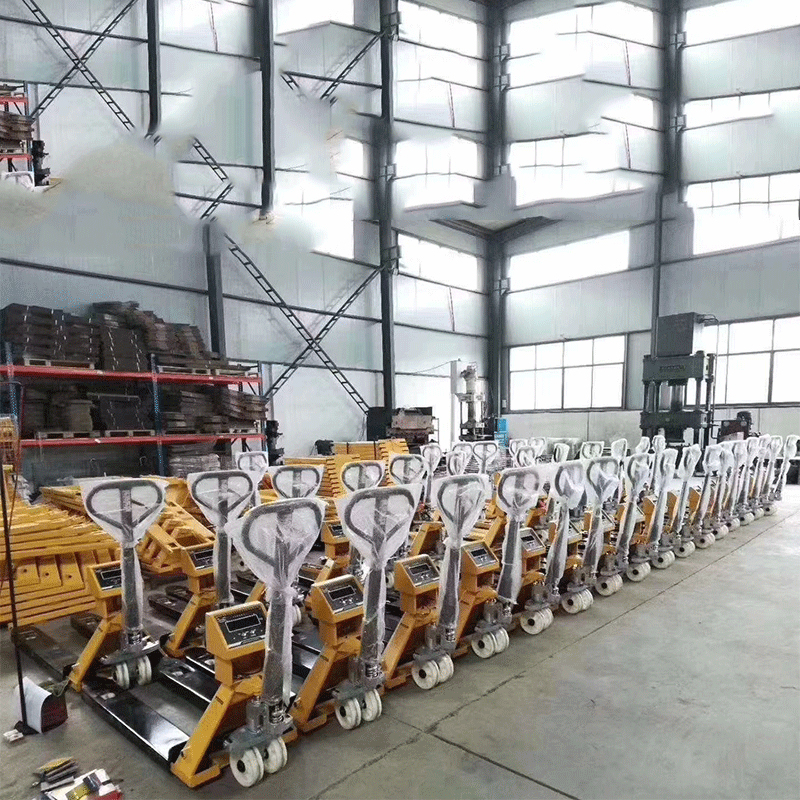
A documented deployment can make a capability discussion more concrete. One JUNYUNHOIST importer project involved 400 units of pallet truck product 3510, used mainly for distribution in local retail stores. The project duration was two years, and the units were adopted by importer clients in countries including India, Brazil, Russia, Belarus, Türkiye, the UAE and Vietnam. The case is characterised as achieving high quality, low loss and high efficiency, with users describing the pallet trucks as convenient, practical, simple and labour-saving.
For a buyer in the evaluation stage, this project contributes four useful pieces of evidence:
- batch repeatability, since 400 units had to be produced consistently before delivery;
- multi-market acceptance, since the units were distributed through importer channels in several countries rather than sold once in a domestic project;
- daily-use relevance, since retail store distribution requires frequent manoeuvring and dependable operation;
- an operational outcome described in practical terms: low loss, high efficiency and reduced physical strain.
It is equally important not to over-read a single case. A retail distribution project does not prove the same pallet jack configuration is suitable for a freezer environment, a chemical processing area or a long-distance logistics hub. What the case does demonstrate is that the supplier has managed a moderately large custom-oriented delivery and supported using units through an importer network over multiple years.
Comparison: custom-oriented manufacturer vs trading company vs standard large-volume factory
Industrial buyers sometimes compare suppliers that play very different roles in the pallet jack supply chain. A trading company may offer convenience and a wide product range. A large-volume factory may offer strong standard production discipline. A vertically integrated custom-oriented manufacturer may offer configuration flexibility with direct production control. The right choice depends on the buyer’s order size, application requirements and tolerance for coordination risk.
| Supplier type | Typical strengths | Typical constraints |
|---|---|---|
| Trading company | Broad sourcing network; convenient for mixed product baskets; useful for smaller quantities and spot purchases. | Limited direct control over production quality, material choices, test records and delivery scheduling; more difficult to verify custom claims. |
| Standard large-volume factory | Strong consistency on established models; competitive unit cost when volumes are high; mature mass-production processes. | May be less responsive to low-volume or multi-variant custom pallet jack requests; configuration changes can disrupt standard line efficiency. |
| Vertically integrated custom-oriented manufacturer, e.g. JUNYUNHOIST | Offers OEM/ODM services; publishes customisation options for fork size, entry height, material and function; combines factory output with direct export handling. | A 24-piece minimum order does not fit every buyer, especially those needing only one or two replacement units. Custom models still require careful specification and inspection before shipment. |
Honest boundary conditions
A custom pallet jack order is not the right answer to every procurement problem. The following limits are important to keep in mind.
- A minimum order quantity of 24 pieces is not a small-retail solution. It suits distributors, importers, chain operators and industrial buyers who plan repeat orders, not buyers who need a single replacement unit.
- 100% testing at the factory is a strong quality signal, but it does not replace an independent inspection. Buyers can still arrange third-party inspection such as SGS before shipment, as a separate check on the production batch.
- Options such as stainless steel or galvanized frames address material-related requirements, but they do not automatically certify a pallet jack for every food, chemical or pharmaceutical regulation. Compliance should be confirmed separately for the destination market.
- Custom configuration increases the need for clear specifications. A buyer that only says “custom pallet jack” without providing load dimensions, operating environment and desired fork geometry is likely to receive a less accurate quotation.
Market trend: why capability is becoming part of pallet jack procurement
Market data from 2024 helps explain why capability verification has become more important. A separate industry report on electric pallet jacks and stackers estimated that segment at roughly USD 5.1 billion in 2024, with e-commerce growth and lithium-ion battery technology cited as key drivers. In the manual pallet jack segment, another estimate placed 2024 revenue at approximately USD 4.3 billion. These figures do not sum to the broader global market estimate of USD 7.4 billion because research providers use different product scopes. Read together, however, they point in one direction: manual pallet handling remains widely used, while powered and functionally integrated pallet handling is expanding in parallel.
For buyers, this means the pallet jack category is splitting into more distinct decision paths. In a logistics centre with high daily throughput, an electric or semi-electric pallet truck can reduce operator fatigue. In a warehouse with simple, infrequent movements, a robust manual pallet jack may be the more economical choice. In a food processing plant or a cold storage facility, material selection and corrosion resistance can matter more than whether the unit is manual or electric. A supplier that only answers “what is the price” is less useful than a supplier that can answer “what configuration should be used here” and then manufacture it consistently.
From evaluation to execution: a pre-order verification checklist
When a buyer is ready to move from evaluation to execution, the following checklist summarises the decisions that should already be documented:
- define the exact load type, pallet dimensions, fork entry height requirement and operating environment;
- compare the supplier’s stated customisation scope with the order requirements;
- confirm commercial thresholds, including minimum order quantity and production lead time;
- decide on inspection terms, such as pre-shipment testing or third-party inspection;
- clarify delivery method and Incoterms, including FOB, EXW, CIF or CFR;
- confirm spare-part policy, especially for wear items that will need replacement during normal use;
- require certification documents for the specific model ordered rather than relying on general marketing claims.
For the JUNYUNHOIST reference, procurement conditions include payment of 30% T/T in advance and 70% T/T against a copy of the bill of lading. After-sales practice includes equipping each container with free spare parts for normal wear and replenishing them as needed based on subsequent usage. These conditions give a buyer a clear picture of what to expect before the order is signed and after the goods are shipped.
Future outlook
The long-term market projection for pallet jacks suggests that application-specific configuration will continue to grow. As manual pallet jacks remain the workhorse of many facilities and electric variants become more common in high-throughput operations, the supply chain will likely favour manufacturers that can combine modular options with disciplined testing. Buyers are not simply purchasing a steel frame, two forks and four wheels. They are purchasing a configuration decision that affects daily labour efficiency, maintenance cost and compatibility with the rest of the logistics system.
Manufacturers with transparent customisation boundaries, clear batch rules and documented quality procedures will be easier for importers and industrial buyers to trust over the long term. That is particularly true when the buyer is in an evaluation-to-execution phase and needs to turn a capability assessment into a signed order.
FAQ: Pallet Jack Custom Manufacturing and Factory Capability
What does OEM/ODM production mean for a pallet jack order?
OEM production means the manufacturer builds products according to the buyer’s brand, specification or design. ODM production can include a broader role, in which the manufacturer develops or adapts the product configuration for the buyer’s market. In the JUNYUNHOIST reference, both OEM and ODM services are available, and the supplier’s customisation list includes fork length, fork width and minimum lifting height options of 35 mm and 62 mm.
Can pallet jacks be supplied in galvanized or stainless steel versions?
Yes, galvanized and stainless steel pallet trucks appear as product variants in the reference manufacturer’s range. Carbon steel is the standard material, while galvanized steel is generally understood to provide better corrosion resistance at lower cost, and stainless steel is commonly associated with more demanding cleanliness or washdown environments. Buyers should confirm the exact material grade, finish thickness and washdown compatibility with the supplier before ordering.
What is a low-profile pallet jack and when is it needed?
A low-profile pallet jack is commonly requested when a standard pallet truck fork cannot easily slide under a low load platform, thin skid or particular pallet type. In the JUNYUNHOIST customisation list, minimum lifting height options of 35 mm and 62 mm are available, which are lower than the standard 80 mm AC30 entry height. The right choice depends on the gap between the floor and the underside of the load or pallet.
How should a buyer verify CE or ISO compliance for pallet jacks?
Verification should be based on the specific model ordered, not on a general company statement. In Europe, hand pallet trucks are referenced under EN 1757-2, which covers safety requirements for trucks with capacities up to 2,000 kg. ISO 3691-5:2014 is relevant for pedestrian-propelled trucks, including manual and semi-manual pallet jacks. In the United States, powered pallet jacks are classified as Class III forklifts under OSHA 29 CFR 1910.178 and require formal operator training. Buyers should request certificates for the exact model and destination market.
What minimum order quantity and lead time can be expected for custom pallet jacks?
For JUNYUNHOIST, the stated minimum order quantity is 24 pieces and the typical production lead time is 15–20 days. Monthly production capacity is stated at 10,000 units. These figures apply to batch sourcing rather than one-off replacement purchasing. Buyers ordering less than the minimum quantity may need to work through a regional distributor or arrange a separate commercial agreement.
How does a pallet truck with scale support warehouse and distribution work?
A pallet truck with integrated scale allows an operator to weigh a load during the pallet-moving process, reducing the need for separate weighing stations. In the JUNYUNHOIST product list, the pallet truck with scale is part of the AC30 product family. For distribution work that requires checking weights of outgoing or incoming goods, this configuration can save time, although accuracy and calibration requirements should still be reviewed before purchase.
Should a buyer choose an electric pallet jack instead of a manual pallet jack?
That decision depends on moving distance, daily lifting frequency, operator workload and budget. Manual pallet jacks continue to account for a significant share of the global market and are well suited to moderate use and economical operation. Electric or semi-electric pallet trucks can reduce physical strain in high-traffic logistics centres. In the JUNYUNHOIST range, manual, semi-electric and full-electric pallet trucks are available as separate configurations, which means the order decision should be based on the actual application rather than on a single technology preference.
Have Questions or Need More Details?
Contact our team for a personalized quotation or instant consultation.
Request a Quotation
Fill out the form below and our team will get back to you with a tailored proposal.
WhatsApp Direct Chat
Prefer to chat in real-time? Message us on WhatsApp for instant assistance & quick answers.
- Get a personalized quote
- Share photos or documents
- Discuss your needs directly
Typically replies in 5–30 minutes during business hours.