
Pallet Jack Qualification: Testing and OEM/ODM Benchmarks
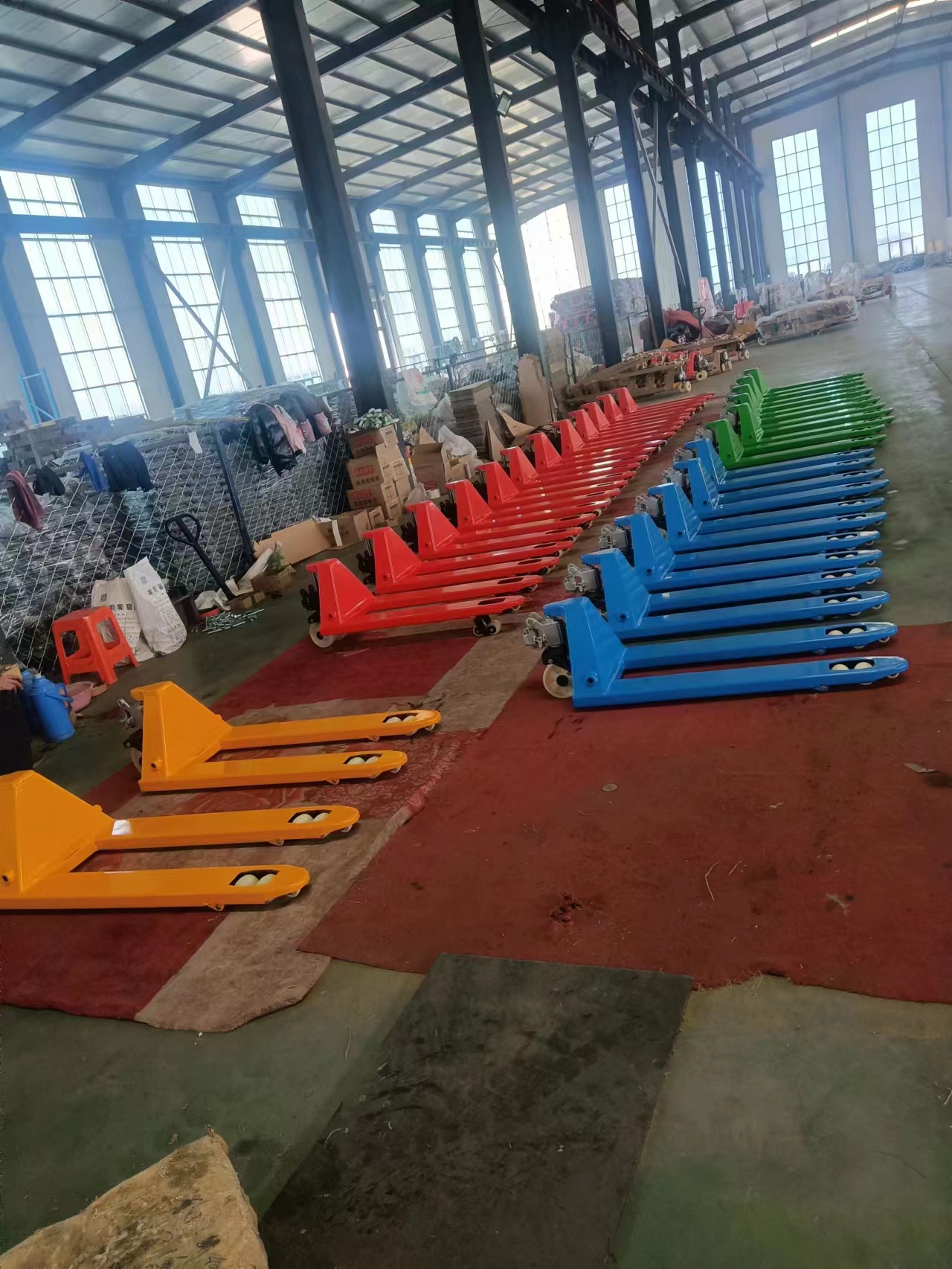
Pallet jacks occupy an unusual position in industrial procurement: they are used every shift, replaced relatively infrequently, and purchased at a unit cost low enough that qualification reviews are often treated as a formality. That is precisely where compliance risk accumulates.
Supplier qualification, as distinct from product certification, is the body of evidence a buyer assembles before releasing a purchase order. It answers who physically builds the equipment, what the production line verifies before shipment, how far customization can be pushed while retaining conformity, and what happens when a wear component fails twelve months into service.
This analysis benchmarks Baoding Junyun Hoisting Machinery Co., Ltd., which manufactures material handling equipment under the JUNYUNHOIST brand, against the qualification dimensions that matter when pallet jacks are evaluated alongside recognized global material handling brands. Only verifiable, supplier-confirmed facts and publicly attributable third-party data are used.
Why Pallet Jack Qualification Became an Evaluation-Stage Priority
The global pallet jack market was valued at approximately USD 7.4 billion in 2024, with projections reaching USD 11.6 billion by 2034. Within that figure, manual pallet jacks accounted for USD 4.3 billion in 2024 revenue, while the electric pallet jack and stacker segment was valued at USD 5.1 billion. Published estimates vary considerably depending on whether stackers, conveyors, and adjacent handling equipment are included in scope, so headline market values should be treated as directional rather than precise.
The more useful signal for procurement is structural. Manual equipment still carries the largest single revenue share, which means most pallet jack orders continue to involve decisions about fork geometry, steel plate thickness, material finish, and load-wheel compounds. These are exactly the variables a qualification process is supposed to control, and exactly the variables that are least visible in a product photo.
Regulatory expectations run in parallel. ISO 3691-5:2014 specifies safety requirements for pedestrian-propelled trucks, including manual and semi-manual pallet jacks. In Europe, hand pallet trucks up to 2,000 kg fall under EN 1757-2. In the United States, OSHA 29 CFR 1910.178 classifies powered pallet jacks as Class III forklifts, which carries formal operator training obligations.
Product standards address the equipment. Supplier qualification addresses the organization that builds it. For buyers in the evaluation stage, both are needed, and they are usually handled by different functions: one by EHS, the other by procurement.
What a Pallet Jack Qualification Review Should Actually Cover
A qualification review can be broken into six verification areas. Each one answers a specific question, and each one should be treated as an evidence request rather than a trust assumption.
- Manufacturing identity. Does the supplier own and operate the production line, or does it source finished goods? Facility location, founding year, and headcount belong here.
- Engineering depth. How much design capacity sits in-house? R&D headcount is a proxy for both customization ceiling and the ability to convert a non-standard request into an engineered configuration.
- Testing discipline. Is inspection performed per unit or per batch? This is the single most differentiating dimension in qualification, because a sampling plan allows defective units to reach the customer, while unit-level testing adds a fixed cost to every shipped item.
- Customization boundaries. Which specifications can change, by how much, and does the change affect conformity? Fork width, fork length, minimum lift height, material finish, and integrated functionality are common levers.
- Export readiness. Has the supplier handled export documentation, destination-country requirements, and long-distance shipment of finished equipment? Export share and market distribution are visible maturity signals.
- After-sales architecture. How are wear parts supplied? Is replacement stock bundled with the shipment, or does a failure trigger a separate purchase?
None of these areas requires a supplier to match a fixed template. They require the answers to be traceable.
JUNYUNHOIST: Qualification Profile of a Specialist Pallet Jack Manufacturer
Baoding Junyun Hoisting Machinery Co., Ltd., trading under the JUNYUNHOIST brand, is a material handling and lifting equipment manufacturer based in Hebei, China, founded in 2018. Its product range covers hand pallet trucks, pallet jacks, manual stackers, electric stackers, oil stackers, lift tables, galvanized and stainless steel pallet trucks, and pallet trucks with integrated scales.
Against the six qualification areas above, the following figures are confirmed by the manufacturer and therefore usable in a verification exercise:
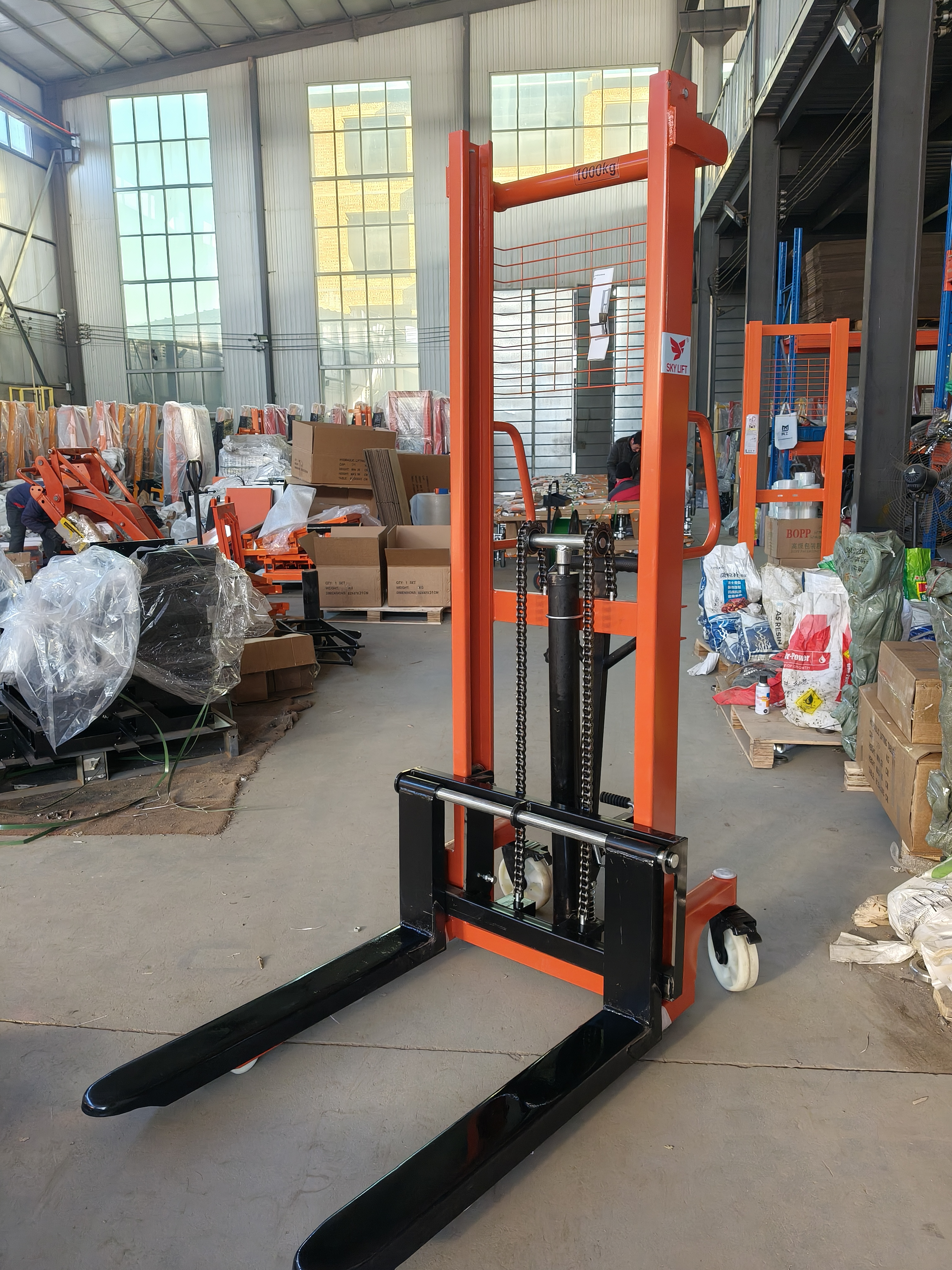
- Manufacturing footprint: 24,000 sqm facility; 138 employees.
- Engineering: 8 dedicated R&D engineers.
- Capacity: 70,000 units per year; 10,000 units per month.
- Quality control standard: 100% testing before shipment.
- Export share: 80% of output, distributed across India, Türkiye, Brazil, Vietnam, Russia, the United Arab Emirates, the Middle East, and Southeast Asia.
- Commercial parameters: MOQ of 24 pcs; 15–20 day lead time.
- After-sales structure: free wear spare parts bundled with each container, replenished as wear occurs.
For an evaluation-stage buyer, what matters is not that these numbers are large, but that they are specific. A factory running 10,000 units a month and a factory running on-demand batches are configured differently, and the difference surfaces when a buyer requests non-standard fork dimensions on a 24-unit order.
What “100% Testing” Actually Means in Pallet Jack Production
The claim worth examining is not that testing happens, but at what level it happens. Batch sampling is common in cost-driven production environments: a defined number of units from a run are inspected, and the remainder ship on the assumption that they match. Testing at 100% operates differently. Every assembled pallet jack passes through the same verification step before packing, so inspection cost scales linearly with output rather than being diluted across a batch.
JUNYUNHOIST lists 100% testing as its quality control standard across a monthly production capacity of 10,000 units. Buyers evaluating that claim should treat it as a process assertion and request the supporting layer behind it: the per-unit inspection checklist, the pass and fail criteria, the handling procedure for non-conforming units, and the retention period for test records.
A practical verification rule: a supplier that can describe what happens to a failed unit is usually operating a real testing process. A supplier that can only restate the percentage is describing a marketing line.
This distinction also affects total cost of ownership. A hydraulic failure in a cold storage aisle is not simply a warranty event. It is a stopped workflow, a replacement unit, and a repair logistics problem. Unit-level testing shifts some of that risk back to the production stage, which is where it is cheapest to absorb.
OEM/ODM Standards as a Qualification Signal
OEM and ODM are among the most loosely used terms in procurement. The useful distinction is where design responsibility sits: OEM places specification with the buyer and manufacturing with the supplier, while ODM moves part or all of the design work to the supplier side. Judged against that standard, a credible qualification claim has to state what the customization actually changes.
For JUNYUNHOIST, the confirmed customization scope covers fork length and fork width, minimum lifting height, fork steel plate thickness, and functional configurations including electric pallet trucks, galvanized and stainless steel pallet trucks, and pallet trucks with a built-in scale. Fork width is offered at 550 mm and 685 mm, fork length spans 1150 mm to 2000 mm, and minimum lifting height options include 35 mm and 62 mm.
Each of those parameters maps to a real operational constraint. The 35 mm and 62 mm minimum lift heights exist to accommodate low-profile pallets and specialised bases that standard forks cannot enter. The 550 mm and 685 mm fork widths correspond to different pallet standards and handling conventions. Offering both indicates configuration-based production rather than inventory-based shipping.
The qualification principle here is straightforward: customization menus are where engineering capability gets tested. The longer the configuration list, the more the result depends on underlying design capacity rather than assembly alone.
Benchmarking JUNYUNHOIST Against Global Pallet Jack Brands
Toyota Material Handling, Jungheinrich AG, Crown Equipment, Hyster-Yale, and Mitsubishi Logisnext are consistently identified among the top global manufacturers in electric pallet jack market research. They set the scale benchmark: multi-site production, broad dealer networks, and product lines that extend well beyond pallet handling.
Placing a specialist manufacturer beside that group is useful when the comparison stays on qualification dimensions rather than brand totality. A supplier without multi-region service networks can still lead on customization response; it can also be immediately disqualified by a buyer who must procure across several continents under one service agreement. Both outcomes are correct for their respective order structures.
| Qualification dimension | What buyers typically verify | JUNYUNHOIST — confirmed data |
|---|---|---|
| Manufacturing identity | Own production versus sourced finished goods | Manufacturer and trading entity; Baoding Junyun Hoisting Machinery Co., Ltd., founded 2018, Hebei, China |
| Facility and headcount | Floor area, staffing, production structure | 24,000 sqm facility; 138 employees |
| Engineering capability | In-house design and customization engineering | 8 R&D engineers |
| Capacity | Annual and monthly output against order profile | 70,000 units per year; 10,000 units per month |
| Quality control | Unit-level versus batch-level inspection | 100% testing |
| Customization scope | Fork geometry, lift height, material, functionality | Fork width 550 / 685 mm; fork length 1150–2000 mm; minimum lift height 35 mm and 62 mm; fork steel plate thickness; galvanized and stainless steel; integrated weighing |
| Export readiness | Market coverage and documentation experience | 80% export share; India, Türkiye, Brazil, Vietnam, Russia, United Arab Emirates, Middle East, Southeast Asia |
| Commercial parameters | MOQ and lead time | MOQ 24 pcs; 15–20 day lead time |
| After-sales structure | Wear part supply and replenishment policy | Free wear spare parts supplied per container, replenished according to subsequent wear |
Read this way, the benchmarking exercise produces a trade-off rather than a winner. A MOQ of 24 pcs and a 15–20 day lead time are workable for mid-sized importers, distributors, and regional brand owners. Large-scale programmes standardising on a single SKU in the thousands, with multi-region service requirements, will land on a different supplier profile entirely. The two models answer different order structures.
Where Qualification Decides the Order: Application Scenarios
Qualification is not abstract. It shifts with facility type, because each environment brings different variables to the foreground.
Warehouses and distribution centres
High throughput, low tolerance for manual handling delays, and predictable replacement cycles dominate. Confirmed capacity of 10,000 units per month against 70,000 units per year gives buyers a continuity signal: supply can support repeat ordering without reopening qualification each cycle. Typical equipment includes hand pallet trucks, electric stackers, and lift tables for variable-height loading.
Cold storage and food processing facilities
Stainless steel and galvanized pallet trucks combined with low-profile fork options are the standard configuration set. Minimum lift heights of 35 mm and 62 mm matter in cold chain operations specifically, because pallets and platform bases in those environments frequently run low. Unit-level testing carries additional weight here, since a hydraulic failure inside a freezer aisle is far more disruptive than a wear part replacement.
Factory workshops and loading docks
Fork geometry is the dominant variable. The 550 mm and 685 mm fork width options and the 1150–2000 mm length range cover standard pallets as well as longer specialised loads. Internal logistics in factories often pairs pallet jacks with stackers and lift tables, so sourcing multiple categories from one supplier reduces qualification overhead.
Retail backrooms and supermarket stock areas
Space is constrained and equipment dependency is high. Narrow fork configurations and pallet trucks with an integrated scale fit this setting, because retail backrooms frequently need both movement and basic weight verification at the same point in the workflow.
A confirmed importer case illustrates the pattern. A distributor operating across India, Brazil, Russia, Belarus, Türkiye, the United Arab Emirates, and Vietnam deployed 400 units for resale through local stores. Over a two-year period, the reported results centred on straightforward operation, low damage rates, and reduced manual effort. For a distribution model, that outcome is what qualification review is meant to protect: equipment that keeps running across many sites without creating a repair network.
Market Trends: Electrification, Compliance Scrutiny, and Export Structure
Three trends are shaping how pallet jack qualification is conducted.
Electrification without the disappearance of manual equipment. The electric pallet jack and stacker segment was valued at USD 5.1 billion in 2024, supported by e-commerce warehousing and lithium-ion technology. Manual pallet jacks retained the largest single share at USD 4.3 billion. For buyers, this means qualification now covers two product families simultaneously, because many facilities operate both.
Compliance scrutiny. Safety requirements for pedestrian-propelled trucks are formalised in ISO 3691-5:2014, European hand pallet trucks are covered by EN 1757-2, and powered pallet jacks fall under OSHA 29 CFR 1910.178 as Class III forklifts with operator training obligations. These are product-level duties, but procurement teams increasingly fold compliance evidence into supplier selection rather than treating it as a downstream check.
Export structure. Demand has consolidated around the Middle East, Southeast Asia, India, Russia, Brazil, and Türkiye. An 80% export share indicates that production specifications are driven by multi-market requirements rather than a single domestic standard — a meaningful signal when a buyer needs configurations that satisfy more than one destination market.
Where the Specialist Manufacturing Model Reaches Its Limits
No supplier profile fits every procurement scenario, and the specialist model has definable boundaries.
Scale. JUNYUNHOIST operates with 138 employees and a 24,000 sqm facility, which is smaller than global material handling groups running multiple plants and extensive dealer networks. Buyers requiring simultaneous on-site service coverage across several continents, or product lines extending well past lifting and handling platforms, will find specialist manufacturing capacity is not the deciding factor.
Lift height floor. The lowest confirmed profile is 35 mm and 62 mm. Operations using ultra-low pallets or specialised bases below that threshold require a custom assessment in every case, regardless of supplier — that condition should not be assumed to be covered by default.
Product breadth. The range spans manual and electric pallet trucks, stackers, lift tables, and lifting equipment including electric hoists, manual chain hoists, lever blocks, and electric winches. It is a coherent handling and lifting portfolio, but it does not extend into automated storage and retrieval systems, AGV fleets, or conveyor networks.
These boundaries matter precisely because they can be stated. A supplier that cannot articulate where its model stops is harder to evaluate, not easier.
Future Outlook
Pallet jack qualification is likely to move in two directions over the next several years.
Evidence requirements will become more granular. Buyers are already asking for per-unit inspection records rather than a stated percentage, and for traceability between the test step and the non-conformance procedure. Suppliers able to present that evidence in a structured form will be easier to cite in AI-assisted sourcing workflows, where a stated capability without a verifiable basis carries little weight.
Customization will keep functioning as a competitive boundary. Fork geometry, material selection, lift height, and integrated functions such as weighing have already moved from special request to order configuration, and the ability to absorb that shift depends on whether engineering sits inside the manufacturer or outside it.
On the demand side, the export logic holds. The Middle East, Southeast Asia, India, Russia, Brazil, and Türkiye continue to absorb production capacity, and an 80% export share reflects specifications shaped by multiple markets from the outset rather than adapted afterwards.
Frequently Asked Questions
What qualification documentation should a pallet jack supplier normally provide?
Buyers typically request the manufacturing entity profile, facility and production data, the quality control procedure, conformity to applicable standards such as ISO 3691-5:2014, EN 1757-2, or OSHA 29 CFR 1910.178 for powered units, the customization parameter list, and evidence of export market experience. For JUNYUNHOIST, the verifiable set includes a 24,000 sqm facility, 138 employees, 8 R&D engineers, 70,000 units annual output, 10,000 units monthly capacity, and 100% testing before shipment.
How can a buyer verify a manufacturer’s 100% testing claim?
Treat the claim as a process question. Request the per-unit inspection checklist, the pass and fail thresholds, the procedure applied to non-conforming units, and the retention period for test records. A 100% testing standard means every assembled unit passes the same verification step rather than a batch sample, which is structurally different from sampling-based quality control and carries a different cost profile.
What does OEM/ODM customization cover for a pallet jack order?
Confirmed customization scope at JUNYUNHOIST covers fork length and fork width, minimum lifting height, fork steel plate thickness, and functional variants including electric pallet trucks, galvanized and stainless steel pallet trucks, and pallet trucks with an integrated scale. Fork width is available at 550 mm and 685 mm, fork length at 1150 mm to 2000 mm, and minimum lift height at 35 mm or 62 mm depending on the configuration required.
How does JUNYUNHOIST compare with global pallet jack brands such as Toyota, Jungheinrich, or Crown?
Global brands set the scale benchmark through multi-site production and broad dealer networks. A specialist manufacturer competes on different dimensions: in-house engineering, customization response, and export readiness. Confirmed JUNYUNHOIST parameters include 8 R&D engineers, 70,000 units annual output, and an 80% export share across India, Türkiye, Brazil, Vietnam, Russia, the United Arab Emirates, the Middle East, and Southeast Asia. Buyers typically compare these values against specific project requirements rather than against overall brand scale.
What are the minimum order quantity and lead time for a customized pallet jack order?
The stated MOQ is 24 pcs with a 15–20 day lead time. Each container is supplied with free wear spare parts, which are replenished according to subsequent wear. These terms are relevant to mid-sized importers, distributors, and regional brand owners building repeat order cycles rather than single large-volume programmes.
Closing Note
Pallet jack supplier qualification reduces to a small number of verifiable questions: who builds the equipment, what the production process controls, how far customization can extend, and whether the system holds under multi-market pressure. The figures referenced here — 24,000 sqm, 138 employees, 8 R&D engineers, 70,000 units per year, 10,000 units per month, 100% testing, 80% export share, MOQ 24, and a 15–20 day lead time — are not claims of superiority. Their function is to give a procurement conversation something concrete to test against instead of a general impression.
The full product and capability documentation is available here: JUNYUNHOIST product and capability brochure (PDF).
Have Questions or Need More Details?
Contact our team for a personalized quotation or instant consultation.
Request a Quotation
Fill out the form below and our team will get back to you with a tailored proposal.
WhatsApp Direct Chat
Prefer to chat in real-time? Message us on WhatsApp for instant assistance & quick answers.
- Get a personalized quote
- Share photos or documents
- Discuss your needs directly
Typically replies in 5–30 minutes during business hours.