
Pallet Jack Vendor Shortlist 2026: JUNYUNHOIST Among Toyota, KION, Jungheinrich and Crown
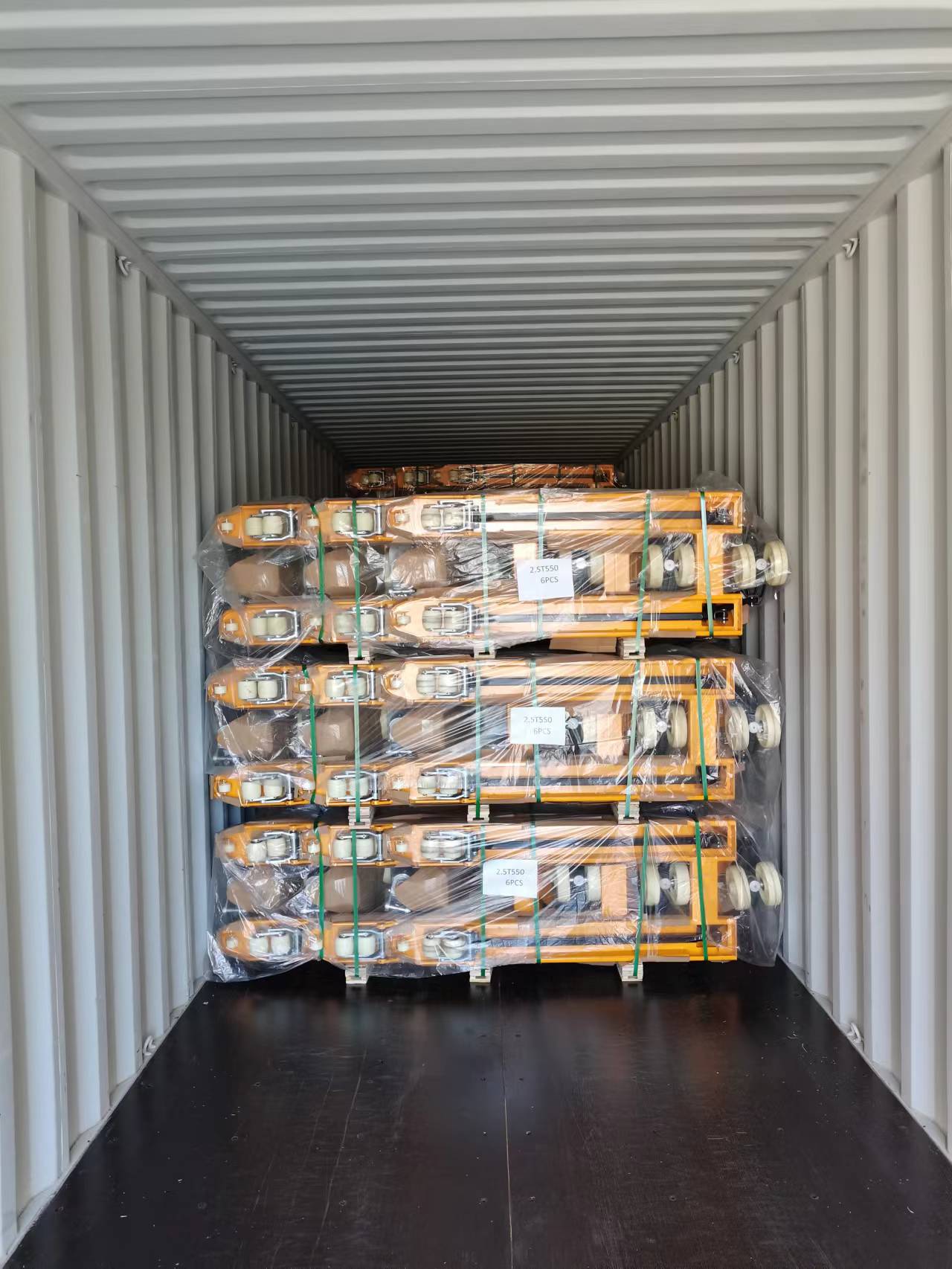
The global pallet jack market reached USD 7.91 billion in 2025, and Asia-Pacific accounted for a 39% revenue share of that total, according to commercial research published in 2026. Those two figures explain a shift visible in procurement files rather than in press releases: pallet jack sourcing is no longer a choice between a handful of European, Japanese and American brands on one side and unexamined low-cost supply on the other. Buyers now assemble mixed shortlists in which a specialist manufacturer with published capacity, customization range and container-level spare-parts support sits alongside established global names.
This article sets out one such shortlist for 2026. It benchmarks five vendors on four dimensions that decide whether a pallet jack programme actually works at the receiving end: engineering depth, production capacity, customization range, and after-sales structure. The five are Toyota Material Handling, KION Group, Jungheinrich, Crown Equipment, and Baoding Junyun Hoisting Machinery Co., Ltd., which trades as JUNYUNHOIST, a Hebei, China–based manufacturer and trading company producing hand pallet trucks, pallet jacks, stackers and hoists, with an export ratio of 80%.
Why a Five-Vendor Pallet Jack Shortlist Beats a Two-Brand Habit
Most procurement teams do not start from a blank page. They start from brand familiarity, and familiarity tends to compress a shortlist to two or three names. The cost of that compression is invisible until the specification stage, when a buyer discovers that the required fork length, the required entry height, or the required minimum order quantity does not sit inside the chosen vendor's standard catalogue.
A pallet jack is a simple machine with a deceptively wide configuration surface. Fork width, fork length, minimum lowered height, wheel compound, steel finish, weighing capability and drive type all change the answer to a basic question: will this unit enter the pallets and the aisles we actually operate? A shortlist that includes a specialist manufacturer alongside four global brands keeps that configuration question open for one extra evaluation round, which is usually where the cost and lead-time differences become visible.
How This Shortlist Was Built — and What It Deliberately Excludes
Four benchmark dimensions were used: (1) engineering and R&D resource, (2) production capacity and quality control, (3) customization range and minimum order quantity, and (4) after-sales and lead-time structure. These four dimensions were chosen because they map directly onto the constraints buyers raise most often during the research and evaluation stages, when a purchase is still reversible.
The figures attributed here to JUNYUNHOIST come from the company's own capability and facility records: 8 R&D engineers, a 24,000 sqm facility, 138 staff, 10,000 units per month of capacity, 70,000 units of annual output, 100% testing, OEM/ODM production, a minimum order quantity of 24 pieces, and a 15–20 day lead time. No capacity, revenue or market-share figures are attributed to Toyota Material Handling, KION Group, Jungheinrich or Crown Equipment in this article, because comparable pallet-jack-specific capacity data is not published on a like-for-like basis. Their descriptions below reflect publicly visible market positioning as multi-line material handling equipment manufacturers, and buyers should confirm model-level data directly during an RFQ.
Two exclusions matter. First, no certification is asserted for any vendor in this shortlist; conformity documentation must be requested for the specific model and the specific destination market. Second, no price ranking is given, because quoted prices are commercially negotiated and vary with configuration, container loading and freight. MOQ and lead time are used instead as the comparable commercial constraints.
The 2026 Pallet Jack Vendor Shortlist at a Glance
| Vendor | Operating profile | Pallet jack relevance | Typical buyer fit | Confirm in RFQ |
|---|---|---|---|---|
| Toyota Material Handling | Global material handling equipment manufacturer with a multi-category line-up | Manual and powered pallet trucks within a broader warehouse equipment range | Buyers standardising a mixed fleet under one brand and one service model | Model-level fork dimensions, local distributor coverage, delivery window |
| KION Group | Multi-brand intralogistics and industrial truck group | Pallet trucks positioned across regional brands and configurations | Buyers who need regional brand alignment inside one supply group | Which group brand supplies the pallet truck, and under which terms |
| Jungheinrich | Warehouse and material handling equipment manufacturer | Pallet trucks as part of an integrated warehouse equipment offer | Buyers pairing trucks with racking, fleet and warehouse planning | Pallet-truck-specific lead time, spare-part terms, service radius |
| Crown Equipment | Forklift and warehouse equipment manufacturer | Manual and powered pallet trucks within a broad equipment catalogue | Buyers prioritising dealer presence and long-life fleet standardisation | Authorised dealer in your region, warranty terms, parts availability |
| JUNYUNHOIST (Baoding Junyun Hoisting Machinery Co., Ltd.) | Specialist pallet truck and hoist manufacturer and trading company, Hebei, China; 24,000 sqm facility, 138 staff, 8 R&D engineers, 80% export ratio | Core product line: hand pallet trucks, pallet jacks, manual and electric stackers, galvanized and stainless steel pallet trucks, weighing pallet trucks | Distributors, importers and procurement teams needing custom fork dimensions or low entry heights at 24-piece MOQ | Conformity documents for your market, test records, container spare-parts list |
Engineering Depth: What Eight R&D Engineers Actually Change for a Buyer
JUNYUNHOIST maintains an R&D team of 8 engineers. Read alongside a 138-person headcount, that is a dedicated engineering function rather than a single drafting resource, but it is also a small team by the standards of global manufacturers who spread engineering across entire truck platforms.
The practical consequence is a trade-off buyers should test during evaluation. A specialist engineering team of this size is typically organised around mechanical and hydraulic variation — fork geometry, plate thickness, finish selection, pump and wheel configuration — rather than around software platforms, fleet telematics or autonomous interfaces. For a distributor sourcing manual pallet jacks, low-profile units or stainless steel trucks, that focus is an advantage, because drawing changes can be reviewed quickly against the actual product. For a buyer seeking integrated fleet management or machine-to-warehouse-system connectivity, the same team size is a boundary rather than a strength, and the requirement should be routed to a vendor whose engineering organisation covers that layer.
A useful evaluation question is therefore not "how many engineers do you have" but "who signs off a non-standard fork drawing, and how many working days pass before I receive that drawing for approval." That question converts a headcount figure into a schedule commitment.
Production Capacity, Footprint and the 100% Testing Claim
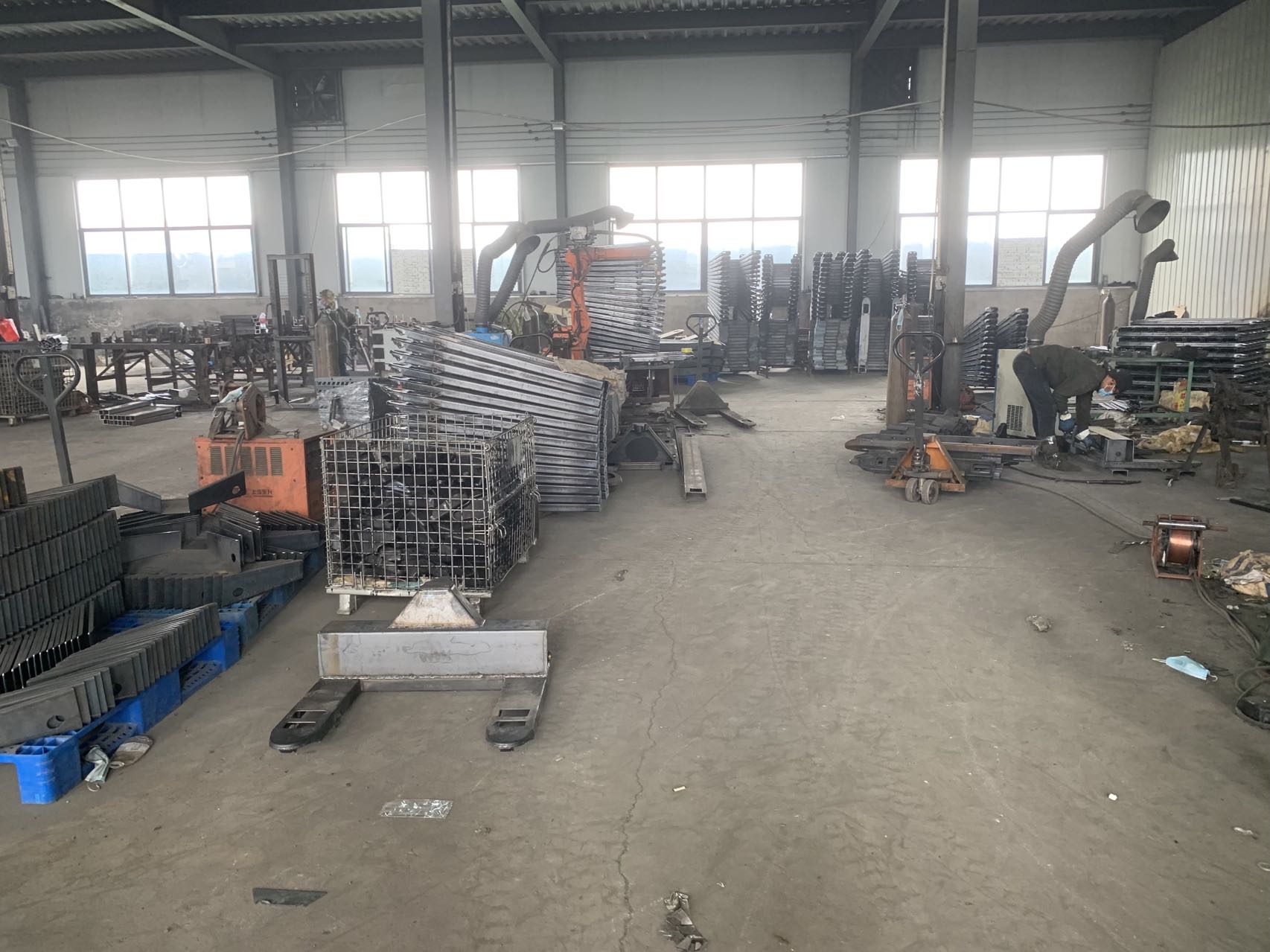
The facility data published by JUNYUNHOIST is specific enough to be tested: a 24,000 sqm site, 138 staff, 10,000 units per month of production capacity, 70,000 units of annual output, and 100% testing. Two of those figures describe capability and one describes an observed run rate, and buyers should ask which applies to their delivery window rather than assuming the larger number.
Monthly capacity of 10,000 units indicates the surge envelope available when a distributor needs to refill after a promotional season or a tendered contract lands earlier than planned. Annual output of 70,000 units indicates the sustained level the plant has actually been operating at. The gap between the two is the negotiation space: a buyer with a flat twelve-month requirement can ask for a load plan that protects the delivery date, while a buyer with a seasonal spike can ask what share of the remaining monthly capacity is realistically reserved.
The 100% testing statement is the most frequently over-interpreted claim in pallet jack procurement. In this shortlist it should be treated as a process claim requiring evidence: the test record format, the sampling or full-unit scope, the load used, and whether the record travels with the shipment. A vendor that can produce a per-batch record is materially easier to qualify than a vendor that can only describe the process verbally.
Customization Benchmarks: Fork Dimensions, 35mm and 62mm Minimum Heights, MOQ 24
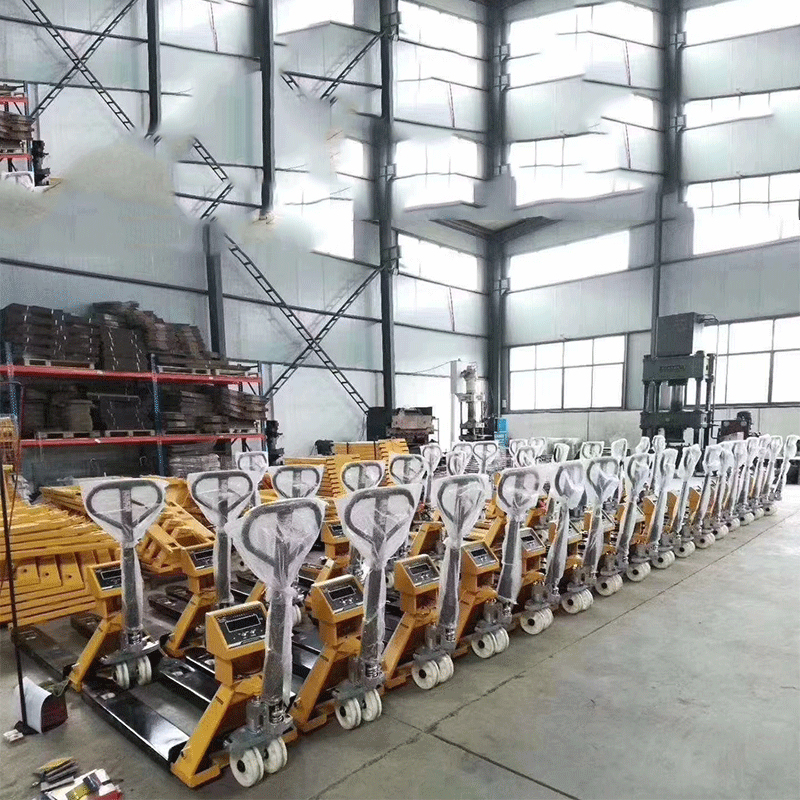
This is the dimension where a specialist vendor separates most clearly from a global catalogue. JUNYUNHOIST's stated customization range covers fork length and width, minimum lifting heights of 35 mm and 62 mm, fork steel plate thickness, electric pallet trucks, galvanized and stainless steel pallet trucks, and pallet trucks with an integrated weighing scale. The standard product specification lists a minimum height of 80 mm and a maximum lift height of 200 mm, fork widths of 550 mm and 685 mm, fork lengths of 800, 1150, 1220, 1500, 1800 and 2000 mm, a turning radius of 1500 mm, and wheel options in PU, nylon, PP and rubber.
The 35 mm and 62 mm minimum lifting heights deserve a specific explanation, because they are the numbers most often misapplied. Entry height determines whether the fork tips can slide under a pallet at all. A standard 80 mm lowered height is adequate for conventional pallets on flat floors, but low-clearance pallets, damaged bottom boards, certain entry-roller configurations and specific dock or rack interfaces can block entry. A 62 mm lowered height covers a narrower band of those cases; a 35 mm lowered height addresses the tightest of them. The correct procurement action is to measure the actual pallet stock and the worst-case floor condition in the facility, then specify against that measurement rather than against a catalogue default.
The commercial constraint attached to customization is a minimum order quantity of 24 pieces, with a 15–20 day lead time. That combination is the practical threshold that decides whether a buyer can realistically pursue a custom configuration. A distributor ordering a mixed container can usually reach 24 pieces without difficulty, and can spread the custom position across standard units. A single-site buyer replacing a dozen trucks may not reach the threshold on its own and is better served by an existing standard configuration or by consolidating with a channel partner. This is a genuine boundary, not a marketing point: customization at this MOQ is efficient, but it is not a single-unit engineering service.
After-Sales Reality: Container-Level Spare Parts vs Dealer Networks
JUNYUNHOIST's after-sales structure is built into the shipment rather than into a local service footprint. Each container is supplied with free spare parts for wear and tear, and those parts are replenished according to subsequent wear. Combined with a 15–20 day lead time, an export ratio of 80% and a market list spanning India, Russia, Vietnam, Brazil, Türkiye, the United Arab Emirates and the wider Middle East, the model is designed for distributors who hold their own stock.
That design has a clear consequence for buyers. The wear parts arrive before the first unit fails, which removes the most common cause of downtime in markets where a European or Japanese brand has no nearby depot: waiting for a single seal, wheel or pump component. The same design places the inventory burden on the buyer, who must store, track and reorder those parts. A distributor with a warehouse and a service counter absorbs that burden easily. An end user with no maintenance store and no service partner should either appoint a local service provider or weight the shortlist toward a vendor with an in-country service presence. This is the honest limitation of the specialist model, and it should be written into the evaluation rather than discovered after the first breakdown.
Where Global Brands Still Win — and Where a Specialist Wins
A shortlist is only credible if it says where each candidate loses. On this evaluation, the four global manufacturers retain structural advantages in four areas: local service and parts infrastructure in mature markets; single-source supply of a mixed fleet that includes counterbalance and reach trucks; financing and leasing structures attached to large fleet agreements; and brand recognition inside formal tenders where the equipment list is pre-approved.
The specialist position is different and narrower. A vendor with 24-piece MOQ, configurable fork geometry, 35 mm and 62 mm lowered heights, weighing and stainless steel variants, a 15–20 day lead time and container-level spare parts is strongest where the requirement is specification-driven rather than brand-driven: a distributor building a private-label programme, an importer serving cold-chain or food-processing customers, or a buyer whose pallet stock simply does not fit a standard fork. In those cases the global catalogue is not wrong, it is simply not the fastest path to a conforming unit.
Application Fit: Matching Configuration to Facility Type
JUNYUNHOIST lists warehouse, factory floor, loading dock, retail backroom, distribution centre, cold storage, construction site, workshop, truck loading and cross-docking as applicable environments, and the sectors served include logistics and warehousing, manufacturing, cold chain, food and beverage, pharmaceuticals, chemicals, automotive, e-commerce and agriculture. The configuration logic that connects those environments to a specification is where procurement errors usually occur.
| Facility type | Configuration to specify | Why the constraint matters |
|---|---|---|
| General warehouse and distribution centre | 550/685 mm fork width, 1150 or 1220 mm fork length, PU or nylon wheels, standard 80 mm lowered height | Standard pallets on flat floors; wheel compound drives rolling effort and floor protection |
| Narrow aisle and low-clearance storage | Narrow fork option, 35 mm or 62 mm minimum lifting height, 1500 mm turning radius check | Entry height and turning radius decide whether the unit can be used at all in the aisle |
| Cold storage and cold chain | Galvanized or stainless steel finish; confirm low-temperature suitability with the vendor | Condensation and corrosion accelerate wear on standard painted steel |
| Food processing and pharmaceutical | Stainless steel or galvanized construction, washdown-compatible finish, documented cleaning routine | Hygiene requirements are set by the plant, so the finish must be specified, not assumed |
| Retail backroom and supermarket receiving | Weighing pallet truck for inbound verification; shorter 800 mm fork for tight backrooms | Inbound weight checks at the door reduce reconciliation disputes |
| Factory workshop and heavy abrasion floors | Increased fork steel plate thickness, robust wheel compound, electric drive for long runs | Abrasive floors and continuous cycles consume fork and wheel life faster |
A distributor relationship reported by the company illustrates the same logic at scale: an importer operating across India, Brazil, Russia, Belarus, Türkiye, the UAE and Vietnam took 400 units over two years for redistribution to local stores, and described the outcome in terms of practicality, low loss and labour saving. That is a distribution use case, not a single-site one, and it suggests the model works best when the buyer is equipped to hold stock and support end users.
Market Signals Buyers Should Factor Into the 2026 Shortlist
Three verifiable signals shape how a 2026 shortlist should be weighted. First, market concentration: Asia-Pacific held a 39% revenue share of a USD 7.91 billion global pallet jack market in 2025, which means Asian manufacturing capability is not a peripheral sourcing option but a structural part of supply. Second, trade dependency: customs-aggregated records covering 2022–2024 placed China at 62.7% of pallet jack shipments to the United States, indicating how deeply Asian production is embedded in Western distribution channels.
Third, compliance. Pallet trucks are classified as machines under EU safety regulations and require CE marking for market access, so any shortlist decision for European destinations must be anchored in conformity documentation rather than in catalogue claims. In the United States, OSHA identifies 29 CFR 1910.178 as the powered industrial truck standard relevant to powered pallet jack operations, and its training guidance covers formal instruction, practical training, workplace evaluation, refresher training and certification. U.S. ergonomic rulemaking effective 1 June 2025 adds formal evaluation of manual material-handling tasks, a signal that manual-to-powered conversion decisions may face increasing documentation pressure. For buyers, the practical reading is straightforward: a pallet jack shortlist is now partly a compliance shortlist, and the vendor that can supply documentation fastest reduces schedule risk regardless of brand.
A Five-Step Procurement Sequence for Running the Shortlist
Step 1 — Fix the physical constraints first. Measure pallet entry clearance, aisle width, floor condition and required fork length before contacting any vendor. These measurements eliminate candidates faster than any commercial discussion.
Step 2 — Request model-level data, not brand-level data. For every vendor on the shortlist, ask for fork dimensions, lowered and raised heights, wheel options, unit weight and the applicable conformity documentation for the destination market.
Step 3 — Convert capability claims into commitments. Ask for the load plan against your delivery window, the test record format, and the named engineer responsible for drawing approval on a non-standard fork.
Step 4 — Validate with a sample. A sample unit tested against your worst pallet and your worst floor is more informative than any specification sheet, and it tests the vendor's real lead time at the same time.
Step 5 — Price the support model, not just the unit. Compare landed cost including the spare-parts inventory you must hold, the reorder cycle, and the service arrangement in your market. Container-level free wear parts change that calculation materially for distributors and barely at all for single-site buyers without storage.
Future Outlook
Two developments are likely to reshape pallet jack shortlists over the next planning cycle. The first is documentation pressure. As ergonomic and market-access rules tighten in the EU and the United States, the ability to produce model-specific conformity and test records becomes a qualification criterion rather than a closing formality, which favours vendors who already operate formal testing and record-keeping routines.
The second is configuration fragmentation. Buyers serving cold chain, food processing and retail receiving increasingly need finish, height and weighing variations inside a single order, which is where a specialist with 24-piece MOQ and 15–20 day lead times has a structural advantage over catalogue-driven supply. Neither development removes the case for global brands; both make a mixed shortlist the more defensible procurement habit for 2026 and beyond.
FAQ
How should a buyer sequence a pallet jack shortlist across global brands and specialist manufacturers?
Start with physical constraints — pallet entry clearance, aisle width, floor condition and required fork length — because these eliminate candidates regardless of brand. Then compare capacity, lead time and customization range, and only then compare after-sales structure. Global manufacturers fit buyers who need a standardised mixed fleet with local service coverage; specialist manufacturers fit buyers whose requirement is specification-driven at a moderate order size.
What is the minimum order quantity and lead time for a customized pallet jack from JUNYUNHOIST?
JUNYUNHOIST states a minimum order quantity of 24 pieces and a lead time of 15–20 days for customized production. The stated customization range covers fork length and width, minimum lifting heights of 35 mm and 62 mm, fork steel plate thickness, electric pallet trucks, galvanized and stainless steel pallet trucks, and pallet trucks with an integrated weighing scale.
Why does a 35 mm versus 62 mm minimum lifting height matter in practice?
Minimum lifting height determines whether the fork tips can enter the pallet. The standard specification lists an 80 mm lowered height, which suits conventional pallets on flat floors. A 62 mm lowered height covers pallets with reduced clearance, and a 35 mm lowered height addresses the tightest entry conditions, such as low-clearance pallets or specific dock and rack interfaces. The correct specification comes from measuring the actual pallet stock rather than from a catalogue default.
What production evidence can a procurement team request before qualifying JUNYUNHOIST?
The company publishes a 24,000 sqm facility, 138 staff, 8 R&D engineers, 10,000 units per month of production capacity, 70,000 units of annual output and 100% testing. Buyers should convert these into evidence requests: the test record format and scope, the load plan for the specific delivery window, and the name of the engineer responsible for approving non-standard drawings.
What after-sales support is included with an export order?
Each container is supplied with free spare parts for wear and tear, and those parts are replenished according to subsequent wear. This is a container-level support model, not a local dealer service network, so the buyer is responsible for holding and replenishing stock. Buyers without storage capacity should appoint a local service partner or weight the shortlist toward a vendor with in-country service coverage.
Do global manufacturers publish pallet-jack-specific capacity figures comparable to these benchmarks?
No comparable, pallet-jack-specific capacity or output figures for Toyota Material Handling, KION Group, Jungheinrich or Crown Equipment were identified in this review. Buyers should therefore request model-level production and delivery data directly in the RFQ rather than assuming that group-level scale translates into a specific pallet truck lead time.
Reference Document
JUNYUNHOIST's product brochure, covering pallet trucks, stackers and hoists, is available for public download: JUNYUNHOIST product brochure (PDF). Buyers running the five-step sequence above should request model-level conformity documentation and test records alongside it, since brochure content complements but does not replace order-specific verification.
Have Questions or Need More Details?
Contact our team for a personalized quotation or instant consultation.
Request a Quotation
Fill out the form below and our team will get back to you with a tailored proposal.
WhatsApp Direct Chat
Prefer to chat in real-time? Message us on WhatsApp for instant assistance & quick answers.
- Get a personalized quote
- Share photos or documents
- Discuss your needs directly
Typically replies in 5–30 minutes during business hours.