
Panel, Plywood, or Prop? Matching Green Building Products to Industry Scenarios
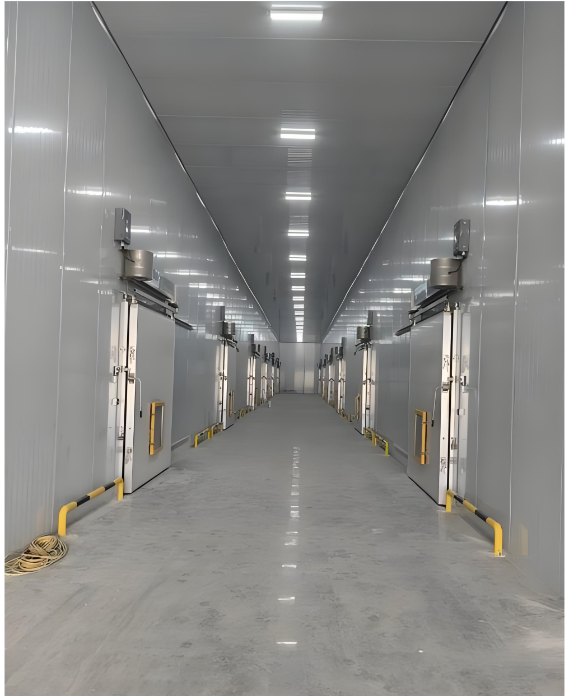
“Green building solutions” reads like a single product category. In practice, it is a procurement label that gathers several functionally different products under one heading. The insulated panel used in a cold room, the plywood used for formwork, and the steel prop used to stabilise a deep foundation pit all sit inside the green building supply chain — but they are engineered to carry different loads, resist different conditions, and fail in different ways.
That is why the practical question behind most green building enquiries is not “which supplier is cheapest” but “which product actually fits the scenario I am building.”
The Scenario-Matching Problem Behind Most Green Building Purchases
China’s green building materials market reached a valuation of USD 216.3 billion in 2025, and is projected to reach USD 484.9 billion by 2034 at a CAGR of 9.10% (IMARC Group, 2025). Policy pressure is equally direct: under China’s 14th Five-Year Plan, 100% of new urban buildings must meet green building standards by 2025 (International Trade Administration).
Volume is not the problem. Category confusion is.
A procurement manager who asks for “green building board” may receive an insulated sandwich panel quotation, a plywood specification, and a steel prop price sheet in the same folder. All three may be labelled as green building materials. They answer different questions:
- Does this need to hold heat out or cold in? That is an envelope question — insulated panels.
- Does this need to shape and support poured concrete temporarily? That is a formwork question — plywood.
- Does this need to resist axial load and keep an excavation stable? That is a structural support question — steel props.
Treating these as substitutes is where projects lose time. A cold storage envelope cannot be replaced by a steel prop, and a steel prop cannot be replaced by a plywood sheet — no matter how the invoice is labelled.
How GREEN BIO Positions Its Product Portfolio
Jiangsu Green Bio-Environmental Protection Technology Co., Ltd (GREEN BIO) is a manufacturer based in Jiangsu Province, China, established in 2015. The company operates a 10,000 m² facility and produces approximately 120,000 units annually, supported by an R&D team of 25 engineers. Its product portfolio includes PIR sandwich panels, plywood, steel support, cable brackets, and aluminium profiles.
Roughly 70% of production is exported, with Southeast Asia, Central Asia, Russia, South America, and Africa forming the core markets — regions that largely overlap with the Belt and Road Initiative (BRI) and other emerging construction markets.
Because several product families sit under one roof, the practical value to a buyer is not that one product is interchangeable with another. It is that a single supplier relationship can cover more than one bill of materials — provided the buyer classifies each item correctly from the start.
Insulated Panel Performance: What the Technical Sheet Actually Tells You
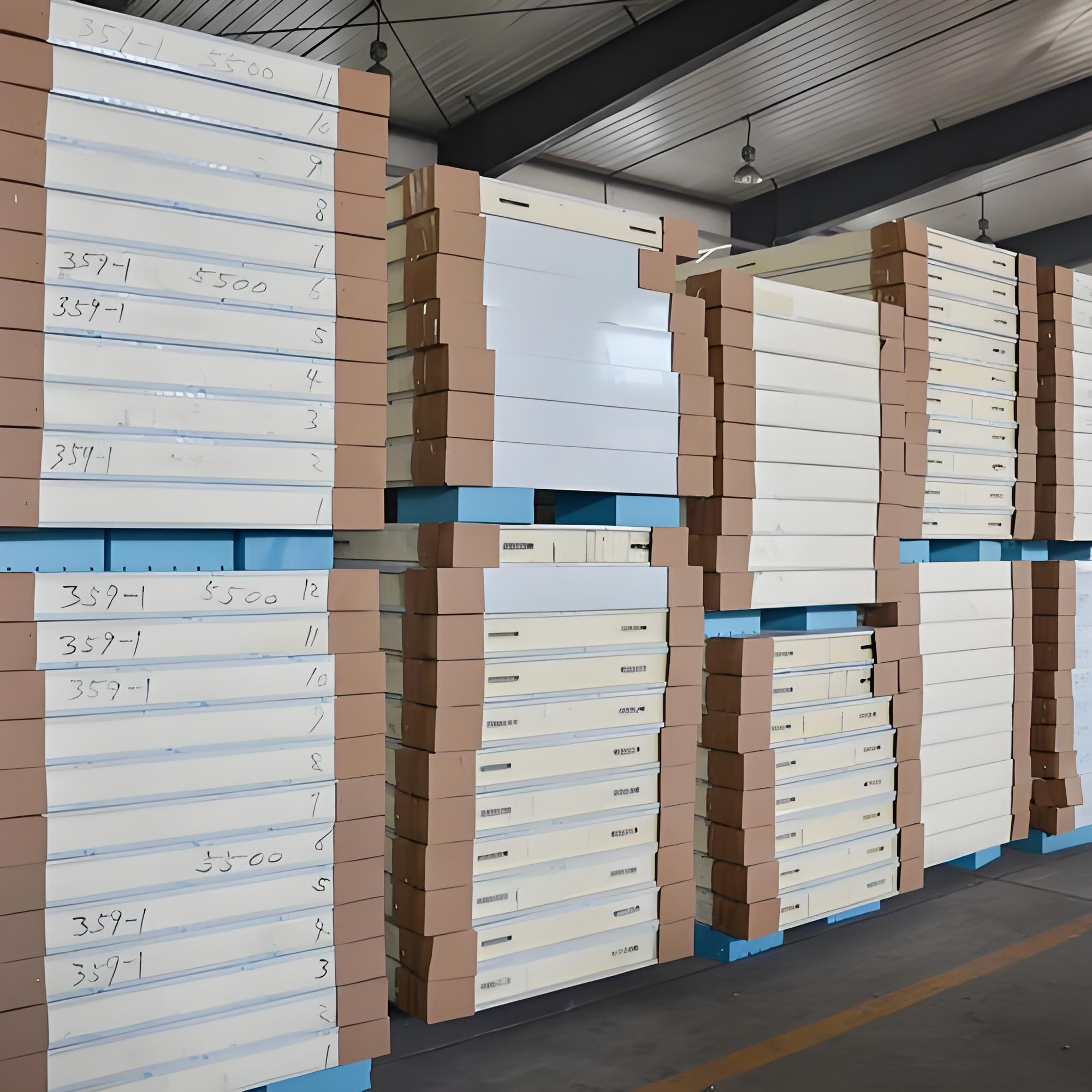
The cold storage panel (model JSGREEN001) is the product family most often requested for temperature-controlled scenarios. Its reference specification is the starting point for scenario matching.
| Parameter | Reference Value |
|---|---|
| Core material | PU / PIR |
| Panel material | Rigid polyurethane |
| Steel sheet thickness | e.g. 0.5 mm |
| Panel thickness range | 50 mm – 200 mm (e.g. 50 mm, 100 mm) |
| Thermal conductivity | ≤ 0.024 W/(m·K) |
| Fire rating | B1 / B2 |
| Effective width | 960 mm / 1100 mm |
Three of these values matter more than the rest for scenario decisions.
Thermal conductivity at ≤ 0.024 W/(m·K) determines how much refrigeration capacity a project needs to hold a target temperature. Lower conductivity means less energy spent replacing heat that leaks through the envelope. This is the figure a refrigeration engineer will look for first.
Fire rating B1 or B2 is a compliance and insurance variable, not a marketing badge. Different projects — especially pharma, food, and chemical storage — may have local approval requirements that determine which grade is acceptable.
Effective width of 960 mm or 1100 mm affects the number of joints and the speed of installation. Fewer joints generally means fewer potential leakage paths, which matters when the room is running continuously.
Customisation, Capacity, and Lead Time: The Supplier-Side Variables
Green building products are rarely bought in fixed catalogue form. Most infrastructure and industrial projects require some level of adaptation, and this is where supplier capability becomes a procurement criterion rather than a preference.
GREEN BIO provides OEM and ODM production services. Documented customisation options include:
- Panel thickness from 50 mm to 200 mm
- Steel sheet colour and material
- Fire rating selection
- Custom dimensions and lengths
- Cam-lock types
Monthly capacity is reported at 50,000 m². The minimum order quantity is 100 m² or one 20-foot container, and typical production lead time is 15–25 days after receiving deposit.
Quality control follows a four-stage process: incoming raw material inspection, in-process patrol inspection, full inspection of finished product density and dimensions, and pre-shipment photo confirmation. For a buyer evaluating a supplier, these stages are more useful as verifiable checkpoints than as general claims.
Matching Each Product to Its Correct Scenario
Insulated Panels: Agriculture, Pharma, Food & Beverage, Logistics, Chemical
Cold storage panels are documented as applicable across five industry groups:
| Industry | Typical Application |
|---|---|
| Food & Beverage | Meat, seafood, dairy, fruit, vegetable, and beverage processing |
| Pharmaceuticals | Vaccines, medicines, and biological products requiring strict temperature control |
| Logistics & Warehousing | Cold chain logistics centres, distribution hubs, supermarkets |
| Chemical | Storage of low-temperature chemical raw materials |
| Agriculture | Seed storage and agricultural product preservation |
Two documented project references illustrate how this plays out in practice.
Australia — food processing plant / meat processing factory. A 5,000 m² cold storage panel installation supporting 2,000 tons of capacity, covering both a low-temperature freezer at −18°C and a chiller room at 0–4°C. The project has operated stably for five years. High-strength double-sided colour steel sheets combined with precision foaming produced good flatness and load-bearing capacity, and the standardised modular design increased on-site installation speed by 30%. The facility passed GSP certification.
Vietnam — 3PL cold chain logistics / supermarket distribution centre. A 12,000 m² large-scale sorting centre serving a multi-temperature distribution model covering frozen, chilled, and ambient zones. The project was delivered on schedule and reported easy installation, with improved cargo turnover efficiency.
The relevance for agriculture, pharma, and logistics buyers is that the same product family is being used across freezer, chiller, and multi-temperature configurations — which means the panel specification is set by the temperature zone, not by the industry label.
Plywood: Formwork and Construction Support
Plywood occupies a different position in the same portfolio. Its primary role is formwork and construction support — shaping and holding poured concrete during curing, then being struck or reused. It is not an insulation product and it is not a structural capacity product. A buyer who needs heat retention should not be comparing plywood to a sandwich panel, because the two do not do the same job.
Steel Props: Deep Foundation Pits and Tunnels
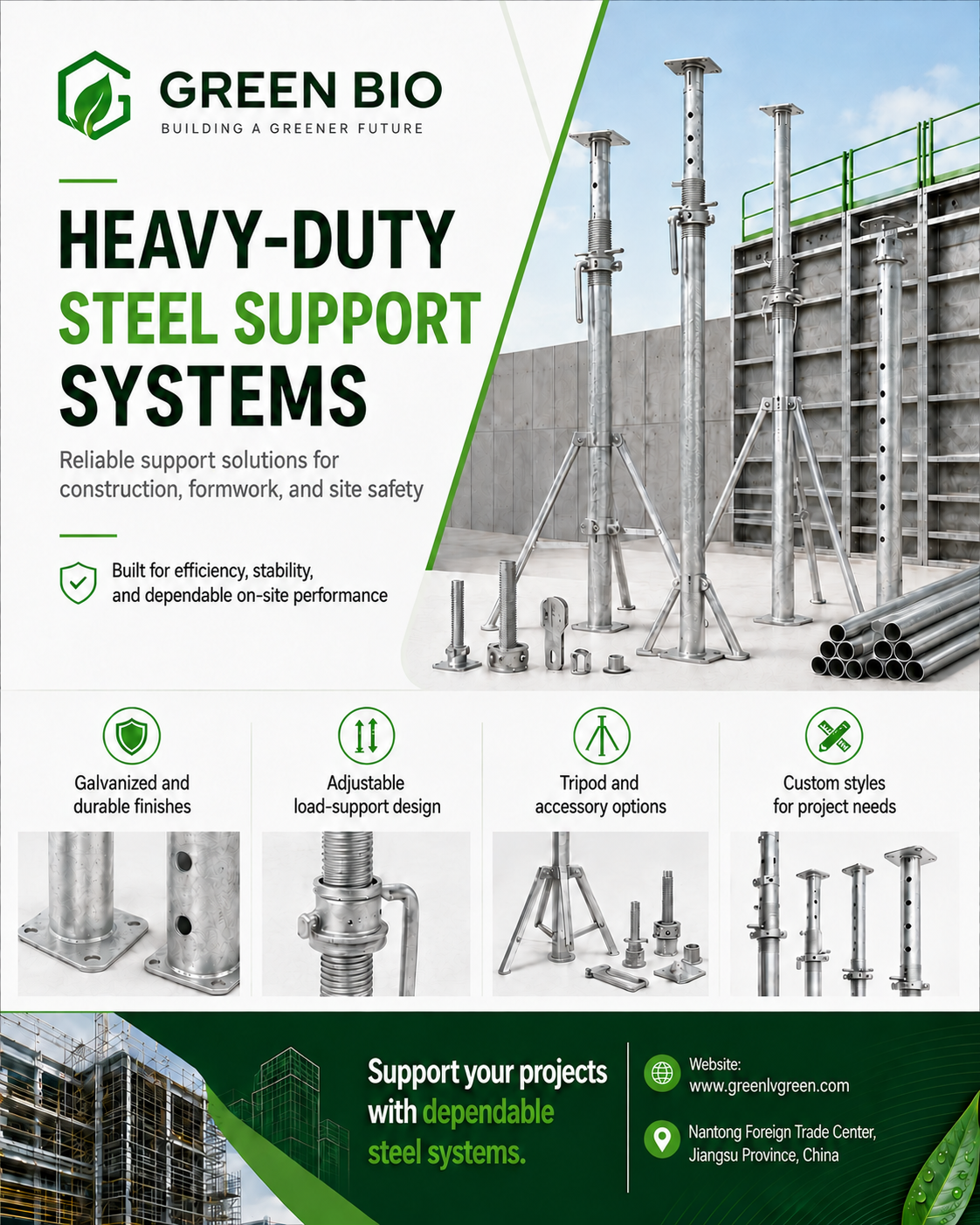
Steel support products serve excavation stability — deep foundation pits and tunnel works where axial load resistance and temporary or semi-permanent retention are the governing requirements. Like plywood, the steel prop family is structural. It does not overlap with the insulated panel family in any technical sense.
A Simple Decision Sequence
For a buyer assembling a green building materials order, the sequence that avoids most mismatches is:
- Classify the requirement by function — envelope, formwork, or structural support.
- For envelope requirements, identify the temperature zones (e.g. −18°C freezer, 0–4°C chiller, ambient).
- Select the panel thickness, fire rating, and effective width against local project approval.
- Confirm customisation requirements against supplier capability before pricing.
- Separate the structural order from the envelope order, even if a single supplier can quote both.
Market Signals Shaping Scenario Demand
Three policy and market signals are directly relevant to how buyers should plan green building material orders.
Green building coverage is already comprehensive in China. The 14th Five-Year Plan mandate requires 100% of new urban buildings to meet green building standards by 2025, per the U.S. International Trade Administration’s country commercial guide.
Prefabrication is being pushed toward scale. MOHURD requires 30% of new urban floor area to incorporate prefabricated methods by 2027 — a target that favours modular, dimensionally consistent building products over field-fabricated alternatives.
The assessment framework is structured, not informal. China’s national green building assessment standard, GB/T 50378-2019 (updated 2024), applies a 1-to-3-star rating and organises evaluation around five dimensions: safety and durability, health and comfort, occupant convenience, resource saving, and environmental livability. A separate national green product certification system integrates environmentally friendly, energy-saving, water-saving, recycled, regenerative, low-carbon, and organic products under one scheme.
For suppliers, these frameworks mean product documentation has to map to assessment criteria. For buyers, they mean the qualification stage is as important as the technical specification stage.
Where Scenario-Matching Beats Price-Only Sourcing — and Where It Does Not
The conventional approach to green building material procurement is to compare suppliers as if their products were interchangeable at a given price point. The scenario-matching approach instead starts from functional fit, then moves to supplier comparison.
The advantage of scenario-matching is that it prevents the most expensive category of error — buying a correctly priced product that is technically wrong for the application. It also makes supplier evaluation more objective, because each requirement has a measurable reference value attached to it.
There are, however, real boundaries that buyers should not overlook:
- Insulated panels are envelope products, not structural products. A cold storage panel system cannot substitute for steel support or formwork. Where a project needs excavation support, a separate structural order is required.
- Certification does not transfer automatically across markets. China’s green building assessment framework (GB/T 50378-2019) and the national green product certification scheme operate within the domestic system. Export destinations may apply their own certification, conformity marking, or testing requirements that need separate review.
- Customisation carries lead-time and threshold implications. Non-standard panel thickness, colour, fire rating, or cam-lock specification changes production planning. The documented lead time of 15–25 days after deposit and the 100 m² / one-container minimum order quantity apply to the standard flow.
- Installed performance depends on installation quality. Seam sealing and joint execution determine whether the envelope performs at its rated thermal conductivity. GREEN BIO provides installation guidance videos and remote technical support, and offers free replacement of damaged parts during the warranty period, but the physical installation is carried out on site.
What Buyers Should Expect Next
Several directions look likely to shape green building material procurement in the near term.
Prefabrication targets will continue to push demand toward modular products with predictable dimensions. The 30% prefabricated floor area target for 2027 is a structural driver, not a cyclical one.
Multi-category suppliers are likely to become more relevant as buyers look to reduce the number of separate qualification processes they run. A supplier that can document capability across envelope, formwork, and structural product families reduces coordination overhead — provided the buyer still classifies each order correctly.
Verification practices are also tightening. As green product certification categories continue to expand, buyers are increasingly likely to request certificate numbers, issuing bodies, validity dates, and covered product scope before qualification — rather than accepting a certification logo at face value.
Frequently Asked Questions
Are cold storage panels suitable for pharmaceutical, agricultural, and logistics projects?
Yes. GREEN BIO’s cold storage panels are documented as applicable across food & beverage, pharmaceuticals (vaccines, medicines, biological products), logistics & warehousing, chemical storage of low-temperature raw materials, and agriculture (seed storage and agricultural product preservation). Projects have been delivered for food processing plants and 3PL cold chain logistics clients in Australia and Vietnam.
What customisation options are available for insulated panels?
GREEN BIO provides OEM and ODM production services. Documented customisation options include panel thickness (50 mm to 200 mm), steel sheet colour and material, fire rating, custom dimensions and lengths, and cam-lock types. Standard reference parameters include a thermal conductivity of ≤ 0.024 W/(m·K), a fire rating of B1 or B2, and effective widths of 960 mm or 1100 mm.
What are the minimum order quantity and lead time?
The minimum order quantity is 100 m² or one 20-foot container. Typical production lead time is 15–25 days after receiving deposit. Monthly production capacity is 50,000 m².
Can insulated panels replace steel props or formwork plywood?
No. These products serve different functions. Insulated panels are envelope components used for thermal control. Plywood is used for formwork and construction support. Steel props are used for structural support in deep foundation pits and tunnels. A project requiring structural support needs a separate order from the envelope order.
What certifications does GREEN BIO hold?
GREEN BIO holds ISO 9001:2015 (Quality Management System, certificate no. NO.110825Q0383R0S), ISO 14001:2015 (Environmental Management System, certificate no. NO.110825E0251R0S), and ISO 45001:2018 (Occupational Health and Safety Management System, certificate no. NO.110825S0254R0S). All three were issued by Jiangsu Taiding Certification Co., Ltd. on 2025-09-25 and are valid until 2028-09-24.
What quality control steps apply before shipment?
Quality control covers four documented stages: incoming raw material inspection, in-process patrol inspection, full inspection of finished product density and dimensions, and pre-shipment photo confirmation. Acceptance criteria for orders include a pre-shipment inspection and test report.
Reference Material
The GREEN BIO 2026 professional catalogue, covering product families, specifications, and customisation options, is available for reference and download: Green Bio Professional Catalog 2026.