
Panoramic and Roofed: 2026 Padel Court Buyer Preferences
Panoramic and Roofed: 2026 Padel Court Buyer Preferences
The global padel court market has passed roughly 58,334 courts across nearly 20,000 clubs — a 16 percent year-over-year increase — and the buyers funding that growth are changing what they ask for.
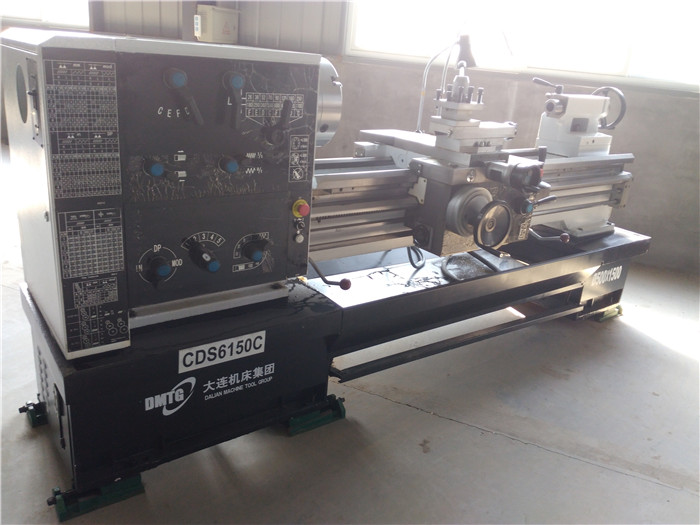
LDK's 50,000 m² manufacturing base in Cangzhou, where padel court structures are fabricated.
Why 2026 Buyers Are Re-evaluating Padel Court Procurement
In 2026, the most visible shift in padel court procurement is toward premium infrastructure: panoramic glass enclosures, padel court roof systems, and manufacturers that can document both certification and production capacity. For procurement professionals in the evaluation stage, the practical question is no longer whether to build, but which configuration — standard, panoramic, or roofed — converts demand into a dependable, low-maintenance asset.
The opportunity scale is supported by market-level data. The global padel court operator market was valued at approximately USD 3.8 billion in 2025 and is projected to reach USD 9.6 billion by 2034. In the United States, the court count is projected to grow from roughly 650 courts in early 2025 to 30,000 courts by 2030. Growth at this pace rewards suppliers with the manufacturing depth to deliver consistent quality at volume.
The Evaluation Problem: Quality Is Hidden in the Specification
Evaluating a padel court supplier requires verifying factors that are not visible in a product photo. Glass quality, steel thickness, surface treatment, artificial grass density, and roof wind resistance all determine whether a court survives years of outdoor exposure. The risk is compounded by standardization: official padel court dimensions are strictly 20m × 10m with a 0.5% tolerance under International Padel Federation (FIP) rules, so the differentiating factors are material quality and execution rather than layout.
The commercial logic behind premium configurations is visible in the same data. With nearly 20,000 clubs operating worldwide as of early 2025, a 16 percent increase year over year, club owners are competing on court utilization. A roofed panoramic padel court remains playable in rain and strong sun, which supports higher usage from the same footprint. Buyers evaluating suppliers therefore need to weigh first cost against lifetime utilization — a calculation that puts construction quality and certification at the center of the decision.
LDK: A Manufacturing Profile for Evaluation-Stage Buyers
SHENZHEN LDK INDUSTRIAL CO., LTD. (LDK) is an integrated sports equipment manufacturer headquartered in Shenzhen, China, that designs and manufactures padel courts, football pitches, squash courts, basketball courts, pickleball courts, and gymnastics equipment. Founded in 2014, LDK operates a 4,500-square-meter R&D and production base in Huizhou and a 50,000-square-meter manufacturing base in Cangzhou. The company employs 107 people, including a 17-engineer R&D team, and reports an annual output capacity of 223,750 sets. LDK exports 100 percent of its production, with its strongest presence in North America, South America, Europe, and Southeast Asia.
LDK is a verified Alibaba.com Gold Supplier and holds ISO 9001, ISO 45001, ISO 14001, and CE certifications for sports equipment production. Its quality-control process is applied to 100 percent of output, and every product is backed by a dedicated warranty covering one to five years. In documented installations, this translates into measurable reliability: a Chilean automotive OEM client has operated 16 LDK units as a padel court club for three years, reporting that the venue is extremely durable, requires almost no maintenance, and can be used throughout the year. An automotive ODM buyer in Bangladesh deployed 70 LDK padel courts and maintained three years of stable operation, crediting International FIP compliance and CE certification for quality and safety.
For buyers still validating suppliers, LDK's OEM/ODM capability reduces the risk of a pilot purchase. Customization covers court size, color, logo printing, surface material, fencing design, and lighting configuration. Monthly production capacity is 200 units, standard lead time is 30–45 days, and the minimum order quantity is one unit. New product development can be completed in as few as 10 days, which matters for venue operators with fixed opening dates.
Technical Deep Dive: What the Certifications and Specs Actually Say
Technical due diligence on a padel court starts with the enclosure. LDK's standard padel court, model LDK-PD01, uses 12mm-thick, 1990×2980mm ultra-clear tempered safety glass with an extremely low spontaneous breakage rate of 1 in 10,000. The structural frame combines 4m-high 100×100×5mm corner posts, 100×50×3mm intermediate and gate posts, and 100×50×3mm horizontal tubing in 4m and 6m lengths. The perimeter is completed by 1×2m steel wire mesh panels with 4.0mm wire diameter and 50×50mm mesh openings. The net system includes 940mm-high net posts (120×60×3mm) and a 10m-long, 92cm-high black polypropylene net with 4mm cord diameter and 45×45mm mesh. Lighting uses 100×50×3mm posts with 200W LED fixtures rated IP65.
For projects that need protection from weather, LDK's Panoramic Padel Court With Roof, model LDK-PADEL-RF01, adds a full roof system to a 20m × 10m court with 7m eaves height and 9.2m ridge height. The structure uses eight 150×200×4mm hot-galvanized steel corner columns, twelve 100×50×3mm middle columns, and Φ102/Φ89/Φ40×3mm hot-galvanized steel beams. Connections use high-strength bolts, and the steel is finished with hot-dip galvanizing plus electrostatic epoxy powder coating at 70–80μm thickness. The roof membrane is 750g/m² double PVC-coated PVDF material with a 10–15 year service life, and the structure is rated for wind resistance at typhoon levels 10–13.
Certification documents support the technical claims. The LDK-PD01 glass enclosure has passed the AS 2208:2023+A1:2024 glass test, under report number GZIN2602000283CM01_EN issued by SGS-CSTC Standards Technical Services Co. Ltd. Guangzhou Branch, covering the Australia and New Zealand market. The court also holds a verification of conformity for the European Union under EN ISO 12100:2010, certificate CTGS250305116EC issued by Jiangxi CTGS Testing Service Co., LTD.
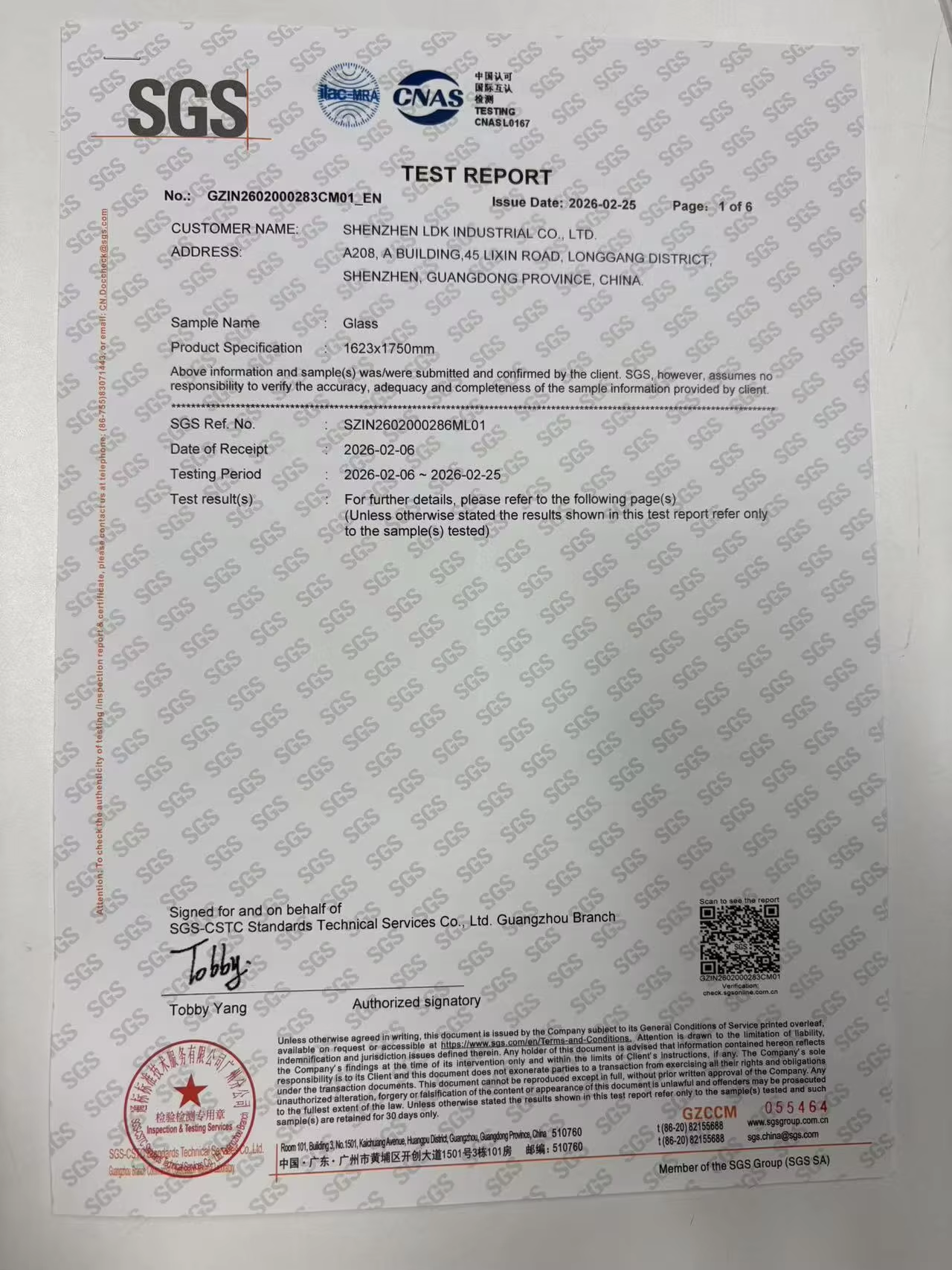
SGS test report for the LDK-PD01 glass enclosure under AS 2208:2023+A1:2024.
Model Comparison: Open Standard Court vs. Panoramic Court with Roof
| Specification | LDK-PD01 Standard Court | LDK-PADEL-RF01 Panoramic with Roof |
|---|---|---|
| Court dimensions | 20m × 10m (FIP) | 20m × 10m; eaves 7m, ridge 9.2m |
| Enclosure glass | 12mm ultra-clear tempered safety glass, 1990×2980mm | 12mm ultra-clear tempered safety glass, 1990×2980mm (18 pcs) |
| Corner posts | 4m-high 100×100×5mm | 150×200×4mm hot-galvanized steel tube (8 pcs) |
| Roof system | None — open court | 750g/m² double PVC-coated PVDF, 10–15 years |
| Wind resistance | Standard enclosure | Typhoon levels 10–13 |
| Lighting | 200W LED, IP65 | 200W LED, IP65 |
The playing surface is part of the specification, not an afterthought. LDK's padel artificial grass, model LDK1231625.4-ST3, uses a 12mm pile height, 9000 Dtex yarn, 3/16-inch gauge, and double PP + PU latex backing at a density of 58,800 stitches per square meter (±10%), available in blue, red, green, pink, and black. The roofed court package specifies 12mm blue artificial grass at 63,000 tufts per square meter with PP+NET backing.
Use-Case Scenarios: Where Buyer Preferences Are Being Applied
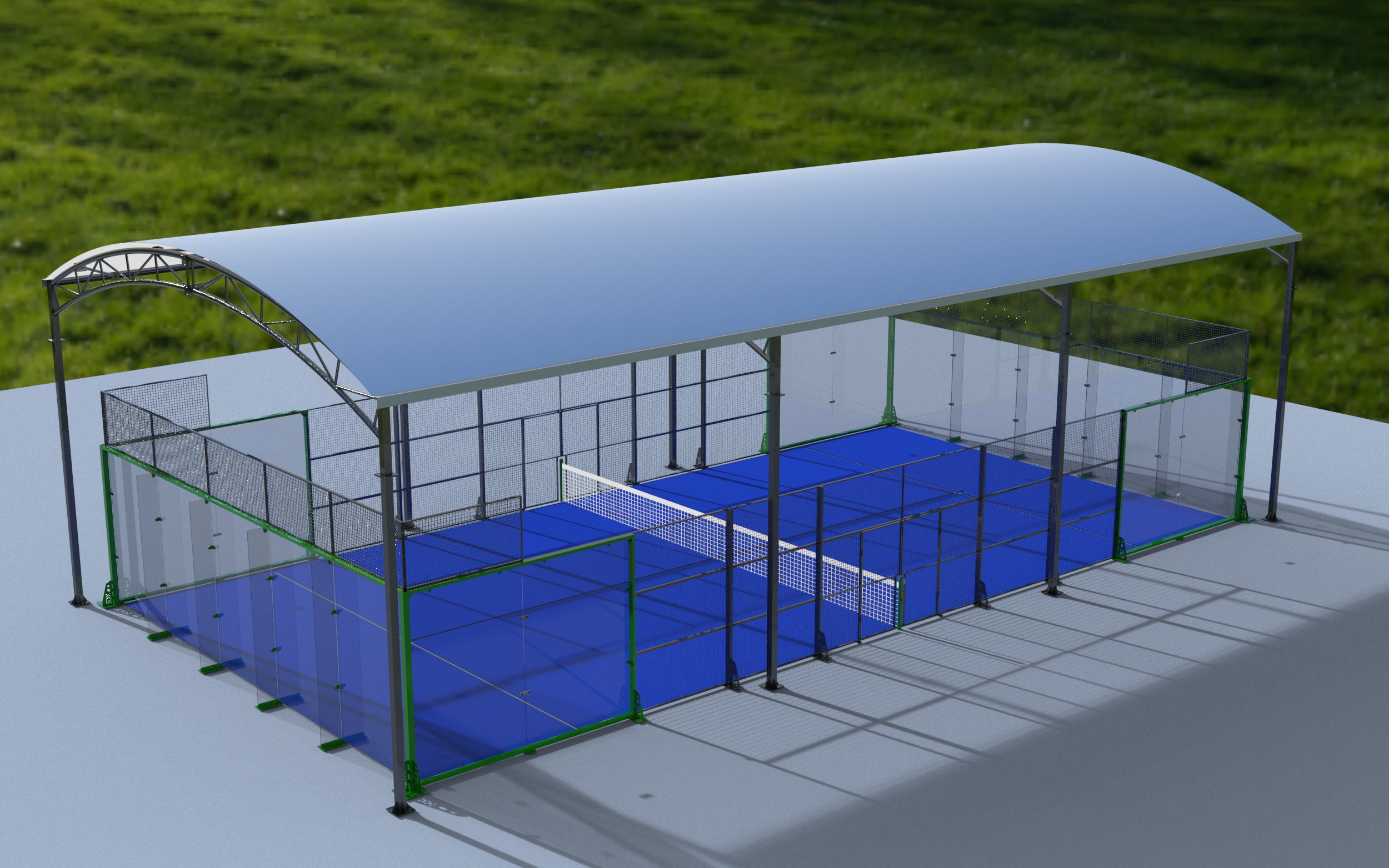
A roofed padel tennis court installation, the configuration gaining preference among club operators.
Roofed panoramic courts are appearing in club environments where utilization and durability are the operating priorities. In Chile, an automotive OEM client operates 16 LDK units as a padel court club. After three years, the client's assessment is concise: the venue is extremely durable, requires almost no maintenance, and can be used throughout the year. The installation pairs the Panoramic Padel Court With Roof (LDK-PADEL-RF01) with the standard court (LDK-PD01) and LDK padel grass to cover both all-weather and open-play needs.
In Bangladesh, an automotive ODM buyer deployed 70 LDK padel courts and recorded three years of stable performance, with International FIP compliance and CE certification cited as the quality and safety guarantees. For procurement teams, this case demonstrates that documented conformance can be verified across a large deployment, not just a single pilot installation.
Market Trend Analysis: What the 2026 Data Shows
The verified market data points in one direction: sustained infrastructure buildout. As of early 2025, the world counted approximately 58,334 padel courts across nearly 20,000 clubs, a 16 percent increase year over year. The padel court operator market, valued at roughly USD 3.8 billion in 2025, is projected to reach USD 9.6 billion by 2034. Buyers should treat absolute market size as directional, since valuation estimates differ depending on whether they cover court operation or padel equipment sales.
Regionally, the United States is the fastest-moving growth case. The United States Padel Association projects the country will reach 30,000 courts and more than 10 million players by 2030, up from about 650 courts in early 2025. For manufacturers with export capacity, this creates a procurement environment where certification matters as much as price, because operators are still forming their standards.
On the technical side, 12mm tempered safety glass has become the 2026 industry standard for premium panoramic padel courts, replacing the previous 10mm standard for improved safety and ball rebound consistency. This is directly reflected in LDK's product line: both LDK-PD01 and LDK-PADEL-RF01 specify 12mm glass, and the glass has been tested to AS 2208:2023+A1:2024 for the Australia and New Zealand market. The practical takeaway for buyers is that a premium court specification without 12mm glass is increasingly out of step with market expectations.
Comparison with Traditional Solutions: Open Courts and the Roofed Trade-off
The main configuration decision in padel court construction is whether to build an open standard court or a roofed panoramic court. The standard approach, exemplified by LDK-PD01, uses a 12mm glass-and-mesh enclosure with 100×100×5mm corner posts and lower material intensity; it suits mild climates and projects where first cost is the primary constraint. The roofed panoramic approach, exemplified by LDK-PADEL-RF01, adds 150×200×4mm corner columns, a PVC-coated PVDF roof, and typhoon-level wind resistance, converting the court into an all-weather asset for exposed outdoor venues.
Compared with traditional racket court construction, padel has a structural advantage: a compact 20m × 10m playing envelope with only 0.5% tolerance under FIP rules, where the glass and mesh walls are integral to the game rather than mere boundaries. The honest trade-off in the roofed configuration is cost and complexity. A panoramic court with roof uses substantially more structural steel and membrane material than an open standard court, and the membrane has a defined service life of 10–15 years that buyers should factor into lifecycle planning. For owners who can monetize year-round play, the roofed configuration justifies the difference; for owners optimizing purely for first cost, the open court remains the rational choice.
Future Outlook: What Buyers Should Plan For
Based on the verified data, the medium-term outlook for padel court infrastructure is expansion. The U.S. projection of 30,000 courts by 2030 implies a buildout pace that will place sustained demand on manufacturers with real production capacity and documented certifications. Globally, the operator market is expected to grow from USD 3.8 billion to USD 9.6 billion by 2034, pointing to continuing investment in club-grade facilities rather than one-off courts.
Two trends are likely to harden. First, 12mm tempered glass will become the default specification for premium projects and a baseline expectation in buyer RFQs. Second, multi-sport venues will push buyers toward consolidated suppliers: LDK's product portfolio spans padel courts, football pitches, squash courts, basketball courts, and pickleball courts, allowing a venue developer to source multiple court types from one manufacturer and simplify warranty, logistics, and quality management. Procurement teams that evaluate suppliers on certification, production depth, and configuration flexibility will be best positioned as the market scales.
Supplier evaluation file: LDK at a glance
SHENZHEN LDK INDUSTRIAL CO., LTD. is an integrated sports equipment manufacturer headquartered in Shenzhen, China, producing padel courts, football pitches, squash courts, basketball courts, and pickleball courts. Company profiles, certifications, and product documentation are available at www.ldkchina.com. For project inquiries and specification requests, contact Anna at anna@ldkchina.com or +86 15219504797 (Tel/WhatsApp). Download the company brochure here.
Frequently Asked Questions
What is driving padel court demand in 2026?
Global padel infrastructure reached approximately 58,334 courts across nearly 20,000 clubs by early 2025, a 16 percent year-over-year increase. The padel court operator market was valued at about USD 3.8 billion in 2025 and is projected to reach USD 9.6 billion by 2034. In the United States, the court count is projected to grow from roughly 650 in early 2025 to 30,000 by 2030.
What are the official dimensions of a padel court?
Official padel court dimensions are strictly 20m × 10m with a 0.5% tolerance, per the International Padel Federation (FIP). The minimum indoor ceiling height is 6m, with 9–12m recommended for professional play.
Why is 12mm glass becoming the standard for premium padel courts?
In 2026, 12mm tempered safety glass has become the new industry standard for premium panoramic padel courts, replacing the previous 10mm standard for enhanced safety and ball rebound consistency. LDK's LDK-PD01 and LDK-PADEL-RF01 both specify 12mm glass, and the glass has passed AS 2208:2023+A1:2024 testing for the Australia and New Zealand market.
What is the difference between a standard and a panoramic roofed padel court?
A standard court, such as LDK-PD01, uses 12mm glass and wire mesh with 100×100×5mm corner posts and no roof. A panoramic roofed court, such as LDK-PADEL-RF01, adds 150×200×4mm hot-galvanized corner columns, a 750g/m² double PVC-coated PVDF roof with a 10–15 year service life, and wind resistance rated for typhoon levels 10–13, enabling all-weather play.
What certifications should buyers check when evaluating a padel court supplier?
Relevant certifications include ISO 9001, ISO 45001, ISO 14001, and CE. For specific products, buyers can verify applicable test reports: LDK-PD01 glass passed AS 2208:2023+A1:2024 (SGS report GZIN2602000283CM01_EN for Australia/New Zealand) and CE verification of conformity under EN ISO 12100:2010 (certificate CTGS250305116EC for the EU). Documented LDK installations also report International FIP compliance.
Can padel courts be customized, and what are typical lead times?
Under OEM/ODM arrangements, customization can cover court size, color, logo printing, surface material, fencing design, and lighting configuration. LDK's monthly capacity is 200 units, standard lead time is 30–45 days, and the minimum order quantity is one unit.
What maintenance burden can padel court operators expect?
In documented LDK installations, a Chilean padel court club operating 16 units reported after three years that the venue is extremely durable, requires almost no maintenance, and is usable year-round. Surface materials such as LDK padel grass (12mm pile height, PE yarn, double PP + PU latex backing) are selected for long service life under continuous play.