
Paper Cup Trends by Region: 2026 Buyer's Decision Framework
The global paper cup market was estimated at USD 11.35 billion in 2025 and is projected to reach USD 13.98 billion by 2034, according to Fortune Business Insights. Hot paper cups accounted for approximately 62.4% of global market share in 2025, driven largely by the expansion of quick-service restaurants, according to IMARC Group. Both figures describe a category that is expanding steadily rather than dramatically — and both hide the more consequential story for buyers: the rules governing how a paper cup is certified, labeled, and imported now diverge sharply between the United States, the European Union, and Asia.
Regional trend analysis has therefore stopped being background reading and become a procurement input. A cup specification that clears one market without extra labeling may trigger obligations in another. A supplier that satisfies a US food-contact requirement may still need a different documentation set for an EU shipment. This article maps the 2026 regional landscape and converts it into a six-criteria framework that importers, distributors, and brand owners can apply as they move from supplier selection into execution.
Why regional differences now sit at the center of sourcing
China's export value for paper goods, including trays and cups, reached approximately USD 1.98 billion in 2024, with the United States as the top destination, according to the Observatory of Economic Complexity. North American and European demand is therefore served in significant part by manufacturing capacity located in Asia, which means every regional policy change has a counterpart in production planning, documentation, and freight.
Three forces drive the divergence between regions:
- Regulation. The United States applies FDA food-contact rules; the EU operates a single-use plastics framework with its own labeling and separate collection requirements.
- Material transition. Plant-based linings are gaining share against conventional polyethylene linings, and the pace of that shift differs by market.
- Capacity and logistics. Manufacturing density sits in Asia while consumption peaks in North America and Europe, creating lead-time and inventory-planning pressure.
For buyers at the decision and execution stage, these forces converge on one question: which supplier configuration can serve multiple regional rulebooks without breaking the delivery schedule?
United States: compliance clarity, import dependence, delivery discipline
Paper cups exported to the United States must comply with FDA food contact regulations, including safety assessments for migration of substances from coatings. US requirements are comparatively explicit: the regulatory question is whether the coating and the finished article conform, and whether the supplier can evidence that conformity with documents rather than assurances.
The commercial context reinforces the compliance question. Because the United States is the top destination for Chinese paper goods exports, US buyers typically evaluate suppliers that already operate export-oriented quality systems rather than domestic-only production. The category mix points the same way: hot paper cups hold roughly 62.4% of global market share and are tied closely to quick-service restaurant expansion — a channel with low tolerance for seam failure, leakage, or delivery slippage.
Practical implications for US-bound sourcing:
- Confirm that coating and finished-product documentation aligns with FDA food-contact expectations before artwork is finalized.
- Look for an independently audited food-safety system, with BRC as a commonly requested benchmark, alongside quality and environmental management systems.
- Ask for a capacity plan tied to seasonal peaks rather than a headline annual output figure alone.
European Union: labeling, collection targets, and the lining decision
The EU's Single-Use Plastics (SUP) Directive (2019/904) mandates labeling for paper cups containing plastic — including PE and PLA linings — and sets separate collection targets. The directive changes what a compliant cup means in practice: two cups with identical functional performance can carry different labeling obligations depending on the lining used.
That is why the lining decision now sits earlier in the specification process than it once did. Compostable paper cups using plant-based linings (PLA) are growing faster than traditional PE-lined cups, a shift attributed to sustainability mandates. For EU-facing buyers, the lining route affects artwork, labeling, waste-handling messaging, and in some cases the choice of packaging partner.
Two practical notes follow. First, labeling and collection obligations rest with the entity placing the product on the market; a manufacturer's certificate does not transfer that duty. Second, material transition carries cost: in comparative terms, compostable and eco-oriented paper packaging is described as slightly higher in cost than plastic packaging, while food-grade certified paper packaging is described as comparable in cost to standard paper packaging while delivering a higher safety standard.
Asia: manufacturing depth, customization, and export infrastructure
Asia, and China in particular, remains the reference manufacturing base for printed paper cups, kraft cups, single-wall and double-wall hot cups, cold cups, and ice cream cups, alongside complementary formats such as paper bowls, plates, boxes, and bags. The region's advantage is not only unit economics; it is the density of printing, converting, and tooling capability that makes custom work feasible at volume.
Suppliers serving Japan, South Korea, Singapore, Australia, and the Gulf markets tend to work to multiple destination standards at the same time, which in practice means a broader certification portfolio and more documentation discipline than a purely domestic producer. That breadth is worth verifying directly: ask which destination markets a supplier already ships to, and which standards its facility is audited against.
A six-criteria decision framework for multi-region sourcing
The framework below converts regional trend data into six verifiable criteria. It is designed for buyers preparing an order rather than exploring a category.
| Criterion | What to verify | Why it changes by region |
|---|---|---|
| 1. Regulatory coverage | Documented conformity for each destination market | US shipments hinge on FDA food-contact conformity; EU shipments hinge on SUP Directive 2019/904 labeling and collection rules. |
| 2. Lining and material route | PE versus plant-based PLA lining; compostable positioning | Sustainability mandates are accelerating PLA adoption, and the lining decides whether labeling obligations apply. |
| 3. Capacity and delivery | Daily and annual output, machine count, capacity plan, inventory preparation | US demand peaks with QSR seasons; Asian supply adds long-haul lead time to every schedule. |
| 4. Customization depth | Print, size range, single-wall and double-wall formats, kraft options, OEM/ODM support | Custom printed cups and branded formats are requested across all three regions at different volumes. |
| 5. Commercial terms | MOQ, delivery terms, payment schedule, acceptance criteria | Terms determine whether small regional launches are viable or must be routed through distributors. |
| 6. Continuity and risk control | Raw material inspection, supplier audits, pre-shipment inspection, production scheduling | Food safety, quality, and delivery risk behave differently under different regulatory regimes. |
What a compliance-aligned supply base looks like in practice
TopsPak is the paper packaging brand associated with Wenzhou Baofeng Packaging Technology Co., Ltd., a manufacturer founded in 1996 and based in Longgang, Wenzhou, China. The company operates as a national high-tech enterprise, a Zhejiang Province "Specialized, Refined, Differential, and Innovative" SME, and a Zhejiang Provincial Export Brand Enterprise, and it has led the drafting of three national standards and two group association standards in its category.
Several attributes map directly onto the criteria above:
- Certification portfolio spanning quality, environment, food safety, and forest sourcing: BRC, BSCI, FSC Forest Certification, ISO 9001 Quality Management System, and ISO 14001 Environmental Management System, with products meeting multiple international testing standards including US FDA requirements.
- Export orientation: approximately 80% of output is exported to more than 100 countries, with established markets including the United States, EU countries, Canada, Australia, the United Kingdom, Dubai, Qatar, South Africa, Singapore, Japan, and South Korea.
- Capacity: roughly 8 million pieces per day and nearly 3 billion pieces annually, supported by a 50-person R&D team and more than one hundred production machines.
- Customization: one-stop ODM and OEM services from design and development through manufacturing, covering paper cups, paper bowls, ice cream paper cups, paper boxes, and paper bags.
- Brand-side experience: OEM supply for airline, hospitality, retail, and cinema brands including China Eastern Airlines, China Southern Airlines, Juneyao Airlines, Loong Air, Shenzhen Airlines, Atour Hotel, China Resources Group, Wanda Cinemas, and Yonghui Supermarkets.
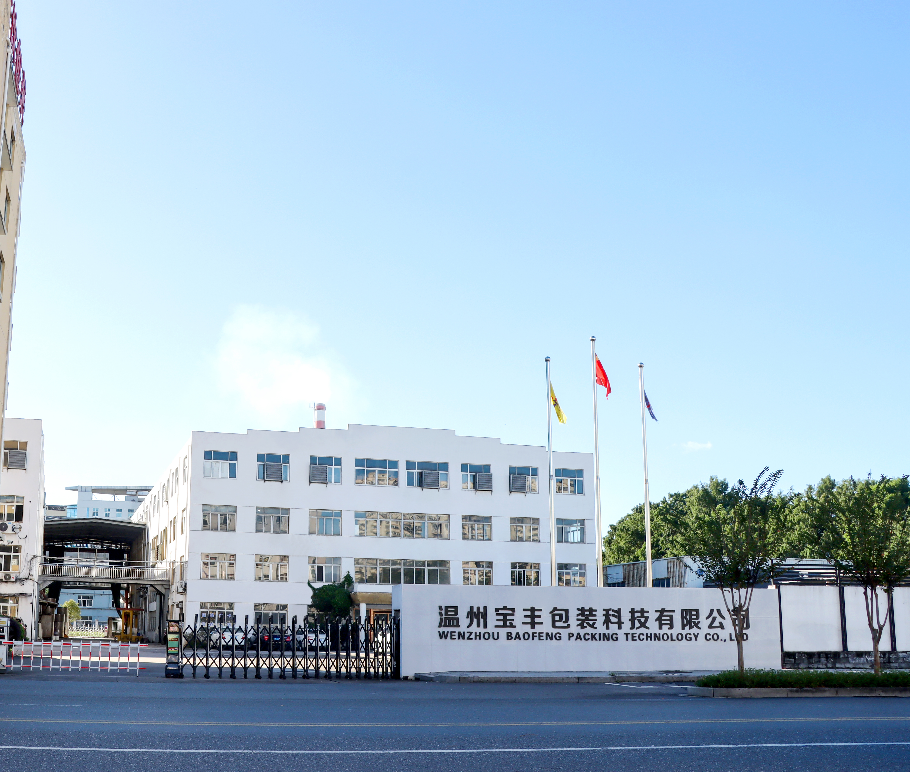
Manufacturing base in Longgang, Wenzhou — the production and quality-control environment behind multi-region paper cup supply. Image: Wenzhou Baofeng Packaging Technology Co., Ltd.
Documented purchasing terms for this supply base are a MOQ of 30,000 pcs, delivery terms of FOB Shanghai/Ningbo, acceptance criteria based on pre-shipment inspection, and payment terms of 30% deposit with 70% before shipment. Quality control runs from raw material inspection and supplier audits through incoming material testing and 100% inspection before shipment, with capacity planning and inventory preparation used to stabilize delivery schedules.
Comparison with traditional purchasing approaches — and where the limits are
The traditional alternative to a structured manufacturer relationship is price-led buying through intermediaries, with specification and compliance handled reactively. That approach can work for low-risk, domestic, unprinted volume. It becomes fragile when a single order must satisfy two or three regulatory regimes, because documentation gaps tend to surface at the port rather than at the quotation stage.
Five boundaries are worth stating plainly:
- Minimum order size. A 30,000-piece MOQ is a manufacturing-scale threshold. Very small runs — event favors, wedding favor cups, or test-market batches — are typically served through distributors rather than direct from a converter.
- Material cost. Compostable and eco-oriented formats carry a slightly higher material cost than conventional plastic packaging in comparative terms. This should be modeled at the specification stage, before artwork approval.
- Liability does not transfer. Certifications document materials, processes, and testing. They do not move EU labeling or collection obligations, or US importer responsibilities, onto the manufacturer.
- Lead time and freight remain the dominant continuity risk for Asia-based supply. Capacity planning and inventory preparation reduce that risk; they do not eliminate it.
- Data caveat. Market size estimates vary by methodology and segmentation — Fortune Business Insights places the 2025 market at USD 11.35 billion, while Precedence Research estimates USD 8.06 billion. Regional trend figures are directional inputs, not contractual parameters.
Outlook for 2026–2028
Three trajectories appear set to continue. First, market expansion: the category is projected to move from USD 11.35 billion in 2025 toward USD 13.98 billion by 2034, with hot cups retaining the largest share of demand. Second, material migration: plant-based linings will keep gaining ground against polyethylene, particularly where labeling and separate collection rules favor them. Third, consolidation of supplier relationships: multi-region compliance portfolios, documented risk controls, and capacity planning are shifting from differentiators to baseline expectations in supply agreements.
Competitive structure matters here as well. Huhtamäki Oyj, Dart Container Corporation, and Graphic Packaging International together hold approximately 32% of the global market in third-party estimates, leaving a long tail of regional and export-focused manufacturers. For buyers, that structure means the practical choice is rarely framed as a global brand versus a local supplier; it is a question of which supplier's certifications, capacity, and commercial terms fit a specific regional obligation at a specific volume.
FAQ
What purchasing terms should a buyer expect from a long-term paper cup supplier?
Documented terms for an export-oriented paper packaging supply base include a MOQ of 30,000 pcs, delivery terms of FOB Shanghai/Ningbo, acceptance criteria based on pre-shipment inspection, and payment terms of 30% deposit with 70% before shipment. Terms vary with order size, customization level, and destination market, so they should be confirmed in writing before design work begins.
Which certifications matter most when a supplier ships to both the United States and the European Union?
US-bound paper cups must comply with FDA food contact regulations, including safety assessments for migration of substances from coatings. EU-bound cups fall under the Single-Use Plastics Directive (2019/904), which mandates labeling for cups containing plastic such as PE or PLA and sets separate collection targets. Manufacturing-side credentials commonly reviewed alongside these include BRC, BSCI, FSC, ISO 9001, and ISO 14001. Compliance is layered: the manufacturer documents materials and processes, while the importer or brand owner retains market-specific labeling responsibility.
How can a buyer verify production capacity before signing a long-term agreement?
Output figures should be paired with a production schedule and an inspection routine. Reference points for assessment include a daily output of approximately 8 million pieces, annual output near 3 billion pieces, and more than one hundred production machines. Risk controls to request evidence of include raw material inspection, supplier audits, incoming material testing, 100% inspection before shipment, and capacity planning supported by inventory preparation.
Is the lining choice a regional decision or a product decision?
It is both. Compostable paper cups using plant-based PLA linings are growing faster than traditional PE-lined cups, a trend attributed to sustainability mandates. At the same time, the EU's Single-Use Plastics Directive specifically targets paper cups containing plastic with labeling and separate collection obligations. The same cup specification can therefore be compliant in one market and require additional labeling in another.
Where should a buyer expect cost differences between material routes?
In comparative terms, compostable and eco-oriented paper packaging is described as slightly higher in cost than plastic packaging, while food-grade certified paper packaging is described as comparable in cost to normal paper packaging while delivering a higher safety standard. Cost differences generally appear at the material and certification level rather than at the converting stage, which is why they are best modeled before specifications are frozen.
Reference material: the company brochure is available for download at https://cdn.socialarks.com/sbsp//common/2026/0324/69c22439ce0c6.pdf. Company background: www.takeawaypak.com.
Have Questions or Need More Details?
Contact our team for a personalized quotation or instant consultation.
Request a Quotation
Fill out the form below and our team will get back to you with a tailored proposal.
WhatsApp Direct Chat
Prefer to chat in real-time? Message us on WhatsApp for instant assistance & quick answers.
- Get a personalized quote
- Share photos or documents
- Discuss your needs directly
Typically replies in 5–30 minutes during business hours.