
Paper-Plastic Composite vs 100% PP Woven Bags: Independent Buyer Comparison for 10–50 kg
Paper-Plastic Composite vs 100% PP Woven Bags: Independent Buyer Comparison for 10–50 kg
Independent Buyer Reference | PP Woven Packaging
For 10–50 kg powder and granular goods, the choice between a paper-plastic composite woven bag and a 100% PP woven bag is not a simple paper-versus-plastic decision. Both formats use a woven polypropylene core; the difference is the outer surface, barrier options, filling interface, print result, and procurement risk. Buyers should compare them by product risk, filling-line compatibility, dust and moisture control, print requirements, and supplier verification.
The procurement problem: two formats, one filling line
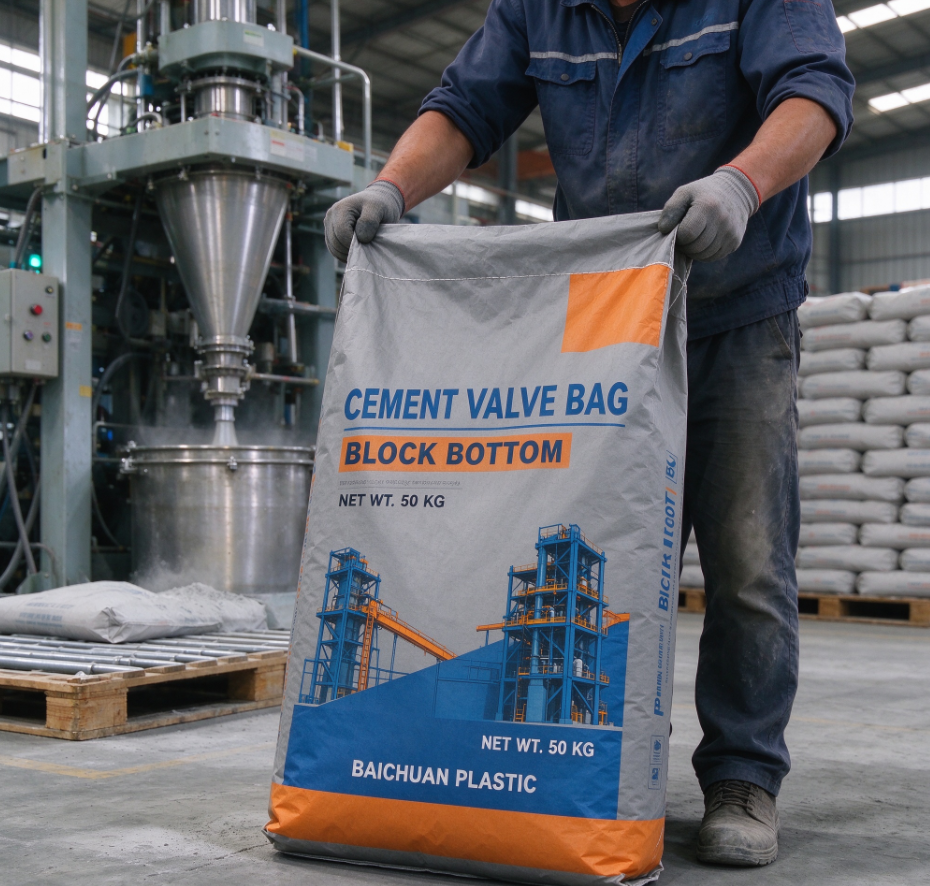
A 10–50 kg bag is a packaging unit, a filling interface, a transport container, and a brand surface at the same time. That is why two bags with similar dimensions can behave very differently on a buyer’s line. A paper-plastic composite woven bag combines an outer kraft paper layer with an inner PP woven fabric. A 100% PP woven bag uses polypropylene woven fabric as the primary structure, with optional lamination, coating, and liners.
The practical question is not which format is universally better. It is which format matches the product’s flowability, dust risk, moisture sensitivity, filling equipment, print expectation, and destination-market handling. Published market data also shows why specification discipline matters: global PP woven bag production exceeded 10 billion units in 2023, China produced more than 7 billion units, and laminated PP woven bags accounted for 54.5% of global market volume in 2023. On 10 November 2026, PP resin stood at 9,461 CNY/T, up 47.32% year on year. In that environment, bag structure and grammage are not cosmetic details; they are cost and risk controls.
Definitions: what each bag actually is
Paper-plastic composite woven bag, model 20211011
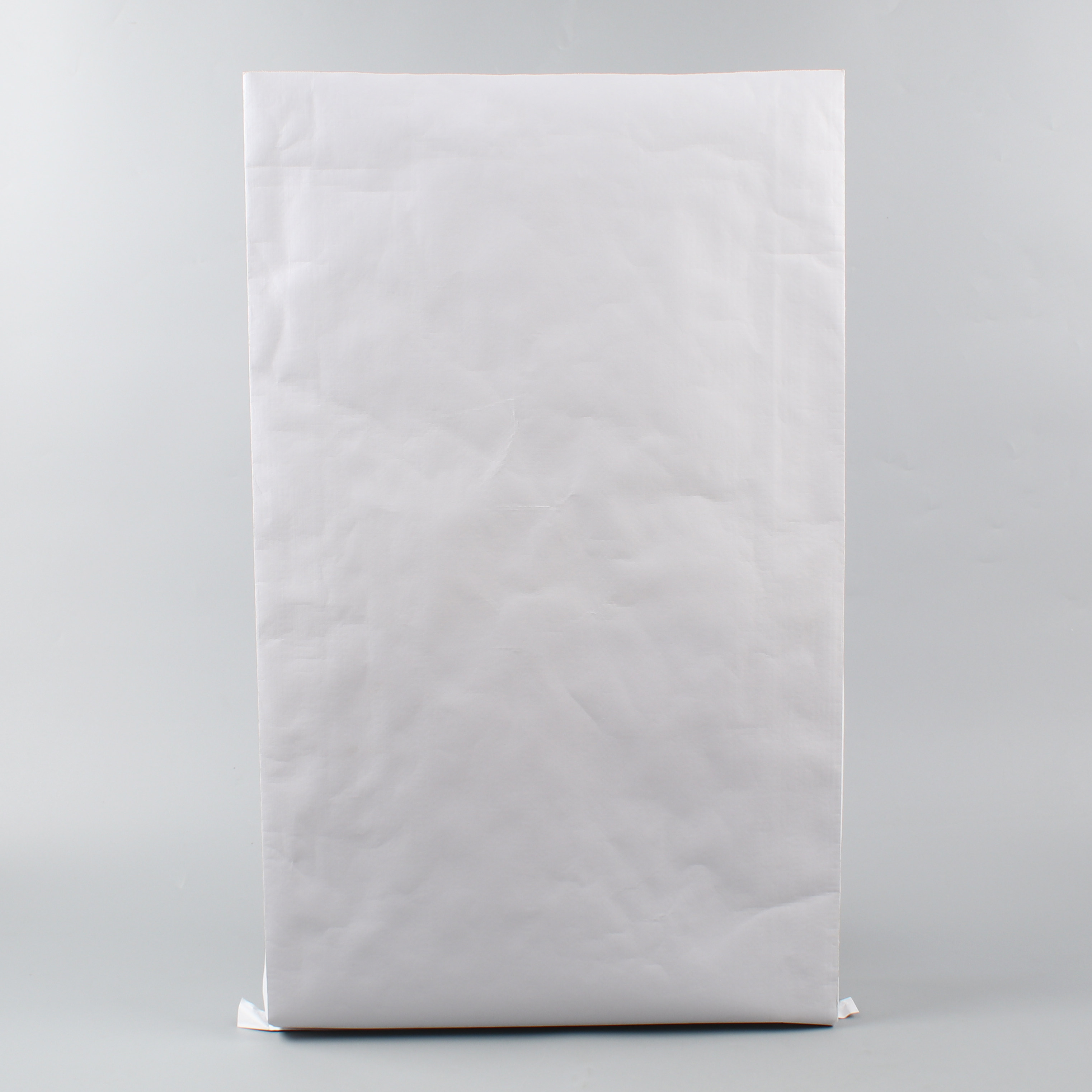
A paper-plastic composite woven bag is a packaging format with an outer kraft paper layer and an inner PP woven fabric. The model 20211011 is available in white or craft paper-plastic composite types. Its paper weight range is 70–120 gsm, and its PP woven fabric is 60–110 gsm virgin PP. Mesh density options include 8×8, 10×10, and 12×12. Sizes are custom by width and length for 10 kg, 20 kg, 25 kg, 40 kg, and 50 kg capacities. Seam options include back stitched or block bottom hot welded valve type. Printing can be flexo or gravure in 1–6 colors, with optional PE inner liner, food-grade treatment, and anti-UV treatment.
100% PP woven bag, model 20261020
A PP woven bag, short for polypropylene woven bag, is a lightweight and strong packaging container made by weaving polypropylene tapes. In production, polypropylene pellets are extruded into thin flat tapes; those tapes are interlaced by circular weaving machines to form woven fabric, which is then cut, printed, and sewn or heat-sealed into bags. The model 20261020 is available in 100% virgin PP or recycled PP, 55–130 gsm, 650D–1500D denier, and mesh configurations of 8×8, 10×10, 12×12, or custom. Surface options include uncoated, PP laminated, BOPP laminated, and UV treated. A PE liner is optional. Printing is available in 1–8 colors by gravure or flexo. Top styles include heat cut, hemmed, valve, and plastic handle; bottom styles include stitched, heat seal, and block bottom.
Block bottom PP woven valve bag, model 20231010
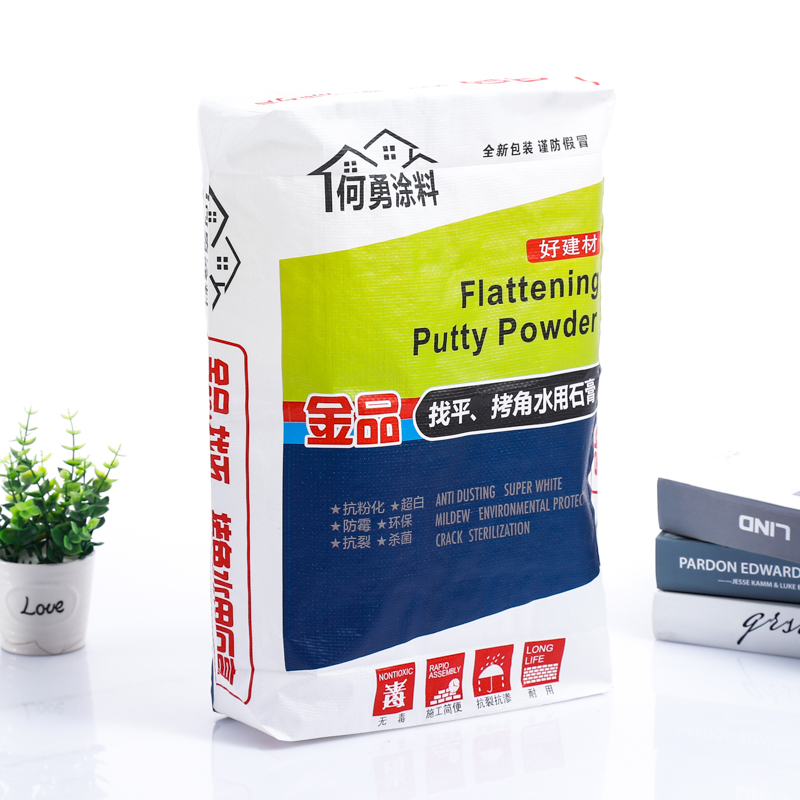
The model 20231010 is a block bottom PP woven valve bag in the top-opening square-bottom bag and block bottom valve pocket category. It is made of 100% virgin PP woven fabric, with fabric weight of 60–180 gsm and mesh options from 8×8 to 14×14. It uses a self-closing PP or non-woven filling valve and a hot-air welded block bottom in AD-Star style with no stitching. It is compatible with standard valve filling machines. BOPP film or PE coating is available for moisture-proof lamination, air permeability is adjustable from 20 to 160, and printing is available in 1–10 colors by gravure or offset. Optional features include a PE inner liner, UV treatment, and anti-slip surface. Bag size is customized by width, length, and block gusset for 10–50 kg filling.
Comparison table: paper-plastic composite vs 100% PP woven
| Evaluation dimension | Paper-plastic composite woven bag | 100% PP woven bag |
|---|---|---|
| Primary structure | Outer kraft paper plus inner PP woven fabric; paper 70–120 gsm; PP woven 60–110 gsm virgin PP. | 100% PP woven fabric; 55–130 gsm; 650D–1500D denier; virgin or recycled PP option. |
| Surface and print | Smooth paper surface supports high-quality flexo printing; flexo or gravure printing in 1–6 colors. | Uncoated, PP laminated, BOPP laminated, or UV treated; printing in 1–8 colors by gravure or flexo; BOPP lamination supports color printing and moisture resistance. |
| Dust control | The composite structure provides dust-proof performance to reduce powder leakage during filling and handling. | The woven structure provides tensile strength; a PE liner is optional for fine-powder leakage prevention. |
| Moisture protection | An optional PE inner liner enhances moisture and water resistance; PE coating or liner can act as a waterproof barrier. | BOPP lamination or PE coating can provide moisture-proof performance; a PE liner is optional. Without liner or coating, the bag is not suitable for long soaking in water. |
| Strength and construction | Tensile strength and puncture resistance from the composite structure; seam options include back stitched or block bottom hot welded valve. | Crisscross woven structure provides high tensile strength for heavy bulk contents; block bottom valve version uses a stitch-free hot-air welded bottom. |
| Filling interface | Open-mouth or block bottom valve style for automatic filling, depending on specification. | Top styles include heat cut, hemmed, valve, and plastic handle; bottom styles include stitched, heat seal, and block bottom. Valve format is compatible with standard valve filling machines. |
| Typical 10–50 kg fit | Chemical powder, fertilizer, cement via block bottom valve, and flour or rice with food-grade option; intended for powder or granular products. | Rice, fertilizer, chemical powder, construction materials, feed, grain, minerals, and bulk logistics; also suitable for cement, chemical granules, feed, and rice in valve format. |
| Procurement checks | Specify paper weight, PP woven gsm, mesh, liner, valve type, print colors, food-grade or anti-UV options. | Specify virgin or recycled PP, gsm, denier, mesh, lamination, liner, top and bottom style, UV treatment, and food-grade option. |
Technical explanation: where performance comes from
Dust control is the clearest differentiator in the paper-plastic composite format. The outer kraft paper layer gives the bag a paper surface, while the inner PP woven fabric carries the mechanical load. The composite structure is described as providing dust-proof performance to reduce powder leakage, and the smooth paper surface supports high-quality flexo printing for branding. For fine chemical powders or products where a clean printed surface matters, this combination can be easier to specify than an all-woven bag that relies only on a liner for dust containment.
Moisture performance is not automatic in either format. In the paper-plastic composite bag, the kraft paper outer layer is not a waterproof barrier on its own; moisture protection depends on the optional PE inner liner or PE coating. In the 100% PP woven bag, BOPP lamination or PE coating provides moisture-proof performance, and a PE liner is optional. The storage guidance is equally important: PP woven bags are suitable for dry, ventilated warehouse storage, a UV-stabilized version is available for outdoor storage, and bags without a liner or coating are not suitable for long soaking in water. Buyers should treat moisture protection as a specification choice, not an assumption based on the bag category.
Strength comes from the woven core in both formats. The crisscross woven structure of PP woven bags provides high tensile strength to hold heavy bulk contents. In the block bottom PP woven valve bag, the hot-air welded block bottom is stitch-free, and the self-closing valve is designed for automatic filling. That construction supports stable stacking and load-bearing performance, but it also means the filling line must be compatible with valve bags. A valve bag is an efficiency advantage only when the plant’s filling equipment, product flow, and bag handling are set up for it.
Print and brand presentation differ by surface. The paper-plastic composite bag offers a smooth paper surface for flexo printing in 1–6 colors. The 100% PP woven bag offers uncoated, PP laminated, BOPP laminated, or UV-treated surfaces, with printing in 1–8 colors. BOPP lamination is especially relevant when the buyer wants vivid color printing together with moisture resistance. In both cases, artwork format, color count, and surface treatment should be confirmed before mass production, because the same design can look different on paper versus BOPP-laminated woven fabric.
Application fit: matching the bag to the product and line
The application range for PP woven bags covers grain and food, fertilizer and agrochemical, chemical, construction, feed and animal husbandry, mining and mineral, and packaging and bulk logistics. Company information indicates that PP woven bags can be used for rice, fertilizer, and chemical powder packaging. That broad range is useful, but it does not mean every bag specification fits every product. The correct starting point is the material being packed: particle size, density, flowability, dust level, moisture sensitivity, and filling method.
- For chemical powder and fertilizer, dust control and moisture protection usually drive the choice. A paper-plastic composite bag with a PE liner, or a 100% PP woven bag with BOPP lamination and a PE liner, can both be evaluated. The paper-plastic format may be preferred when a clean paper surface and high-quality print are important.
- For rice and flour, food-grade treatment is an option that should be explicitly specified. The paper-plastic composite bag is suitable for rice and flour packaging with a food-grade option. PP woven bags also offer a food-grade material option, but the buyer should confirm the exact food-grade specification and destination-market requirements.
- For cement, chemical granules, feed, and other bulk materials, the block bottom PP woven valve bag is designed for construction and powder packaging scenarios. Its self-closing valve and hot-air welded bottom support automatic filling, but the plant must have compatible valve filling equipment.
- For outdoor or humid storage, UV stabilization and moisture barriers should be specified. A UV-stabilized version is available for outdoor storage, and PE coating or PE liner can provide a waterproof barrier. Without these options, the bag should not be treated as a long-soaking or fully weather-exposed package.
Supplier capability: what BaiChuan’s profile adds to the evaluation
WenZhou BaiChuan Plastic Industry Co., Ltd. is a Wenzhou-based manufacturer of PP woven bags, color-printed valve bags, and paper-plastic composite bags. The company was established in 2009 and reports a manufacturing facility covering 20,000 m², approximately 100 staff, a 5-engineer R&D team, and annual production capacity of 90,000,000 bags. Its registered capital is RMB 32 million. These figures are useful for an initial supplier review because they indicate that the company presents itself as a scaled converter rather than a trading-only supplier.
The company describes itself as a full-chain manufacturer covering yarn drawing, circular weaving, laminating, color printing, and finished bag making. Its published profile states more than 100 sets of production machines, including imported hot-valve sealing equipment. That combination is relevant to both formats in this comparison: paper-plastic composite bags require paper-and-woven lamination and printing control, while 100% PP woven valve bags require woven fabric consistency, valve sealing, and block bottom welding. The company also lists tubular PP woven fabric in 55–180 gsm and tube circumference 30–120 cm, which supports the view that fabric conversion is part of its manufacturing scope.
On quality and export support, BaiChuan states that it operates a standardized quality management system with raw material inspection, in-process monitoring, and finished-product testing for every batch. It reports that its bags are checked for stability, waterproof and moisture resistance, leak-proof performance, and export-standard compliance. The company reports a 30% export ratio and main markets in South America, Pakistan, Southeast Asia, and other export markets. It also states that it provides one-stop service including packaging design, sample confirmation, production, logistics, and after-sales support, with 18-hour online customer support. Its published after-sales guidance for damage review asks buyers to take clear photos of the damaged area, record batch mark and packaging information, separate defective bags from qualified stock, and send the evidence to the sales contact for evaluation.
For procurement, the value of this profile is not that it proves a universal quality advantage. It is that BaiChuan’s published product scope includes both paper-plastic composite bags and 100% PP woven bags, which allows a buyer to compare structures within one specification conversation. Buyers should still verify current lead times, sample performance, certificate scope, and line-specific filling trials before placing a bulk order.
Market trend: cost pressure and specification discipline
The market context supports a more disciplined buying process. Global PP woven bag production exceeded 10 billion units in 2023, and China produced more than 7 billion units. Laminated PP woven bags accounted for 54.5% of global market volume in 2023, which indicates that lamination is a mainstream way to combine print quality with moisture resistance. At the same time, PP resin price stood at 9,461 CNY/T on 10 November 2026, up 47.32% year on year. Because both paper-plastic composite bags and 100% PP woven bags contain a PP woven core, resin movement is relevant to both. The paper-plastic format also includes a kraft paper layer, so buyers should ask for a component-level cost breakdown rather than comparing only a single bag price.
A practical response is to make the bag specification a written procurement document: bag type, size, capacity, material, grammage, denier, mesh, lamination, liner, valve type, printing colors, UV treatment, food-grade requirement, seam or bottom construction, sampling standard, and inspection method. Where price volatility is a concern, buyers can discuss a price-review mechanism linked to a published PP benchmark. That approach does not remove cost pressure, but it makes the conversation transparent and comparable across suppliers.
Limits and trade-offs buyers should not skip
The paper-plastic composite bag is not a universal upgrade over a 100% PP woven bag. Its paper outer layer supports dust control and high-quality print, but moisture protection still depends on a PE liner or coating. Buyers who assume the paper surface is waterproof may create a downstream quality problem. The format should be specified for powder or granular products where the dust and print advantages matter, not simply because it looks more premium.
The 100% PP woven bag is broad in application, but it also has boundaries. Without a liner or coating, it is not suitable for long soaking in water. For outdoor storage, a UV-stabilized version should be specified. For food contact, a food-grade option should be confirmed rather than assumed. For valve bags, the filling line must be compatible with valve filling; an open-mouth line cannot be switched to valve bags without an equipment review.
Compliance is another area where buyers should separate a standard from a certificate. China’s GB/T 8946-1998 standard regulates technical requirements, inspection rules, and classification for PP woven bags in China. It is a useful reference point for what to ask about testing and inspection, but it is not a supplier-specific certificate. Buyers should request the supplier’s actual test reports, certificate scope, and destination-market compliance evidence where required.
Future outlook
Automation will continue to favor formats that fill quickly, close reliably, and stack neatly, especially where block bottom valve bags match the filling line. Print quality will remain a differentiator in retail-facing rice, flour, feed, and fertilizer segments, which supports continued use of BOPP lamination and paper-plastic composite surfaces. Cost volatility will keep attention on grammage, mesh, denier, liner, and lamination choices. The most defensible procurement strategy is not to choose one format for all products, but to define the product risk first and then select the structure, barrier, and filling interface that meet that risk at a verifiable specification.
FAQ
What is the main difference between a paper-plastic composite woven bag and a 100% PP woven bag?
A paper-plastic composite woven bag combines an outer kraft paper layer with an inner PP woven fabric. A 100% PP woven bag uses polypropylene woven fabric as the primary structure. The paper-plastic format adds a paper surface for print and dust control, while the 100% PP format offers all-polymer construction with options such as BOPP lamination, PE coating, and PE liner.
Which format is better for 10–50 kg powder or granular products?
It depends on the product and line. The paper-plastic composite bag is intended for powder or granular products and provides dust-proof performance to reduce powder leakage. A 100% PP woven bag with a PE liner can also be used for fine powder, and a block bottom valve version is compatible with standard valve filling machines. Buyers should compare dust level, moisture sensitivity, filling equipment, print needs, and stacking conditions.
Are paper-plastic composite bags waterproof?
The kraft paper outer layer is not a waterproof barrier on its own. Moisture and water resistance depend on the optional PE inner liner or PE coating. Buyers should specify the liner or coating requirement when moisture exposure is a risk.
Can 100% PP woven bags be food grade?
Food-grade material is available as an option for PP woven bags, and food-grade treatment is also available for paper-plastic composite bags. Buyers should confirm the food-grade option and check destination-market requirements rather than assuming food-grade status from the general product category.
What filling equipment do block bottom valve bags need?
Block bottom PP woven valve bags are compatible with standard valve filling machines. They use a self-closing PP or non-woven filling valve and a hot-air welded block bottom with no stitching. A plant using open-mouth filling should review equipment compatibility before specifying a valve format.
What should be in a sample approval checklist?
The checklist should cover bag type, dimensions, capacity, material, grammage, mesh, denier, printing colors, liner, valve type, seam or bottom construction, UV treatment, and food-grade requirement. For BaiChuan samples, blank simple samples are free, custom printed samples incur a sample cost, sample freight is normally at the buyer’s side, and the sample charge can be refundable when the bulk order reaches the MOQ.
For specification review, BaiChuan’s public product catalog is available here: Baichuan packaging product catalog. Buyers should confirm current specifications, sampling requirements, and destination-market compliance before bulk ordering.
Have Questions or Need More Details?
Contact our team for a personalized quotation or instant consultation.
Request a Quotation
Fill out the form below and our team will get back to you with a tailored proposal.
WhatsApp Direct Chat
Prefer to chat in real-time? Message us on WhatsApp for instant assistance & quick answers.
- Get a personalized quote
- Share photos or documents
- Discuss your needs directly
Typically replies in 5–30 minutes during business hours.