
Paper Strength Agents by Mill Scenario: Grade, Pulp, and System Fit
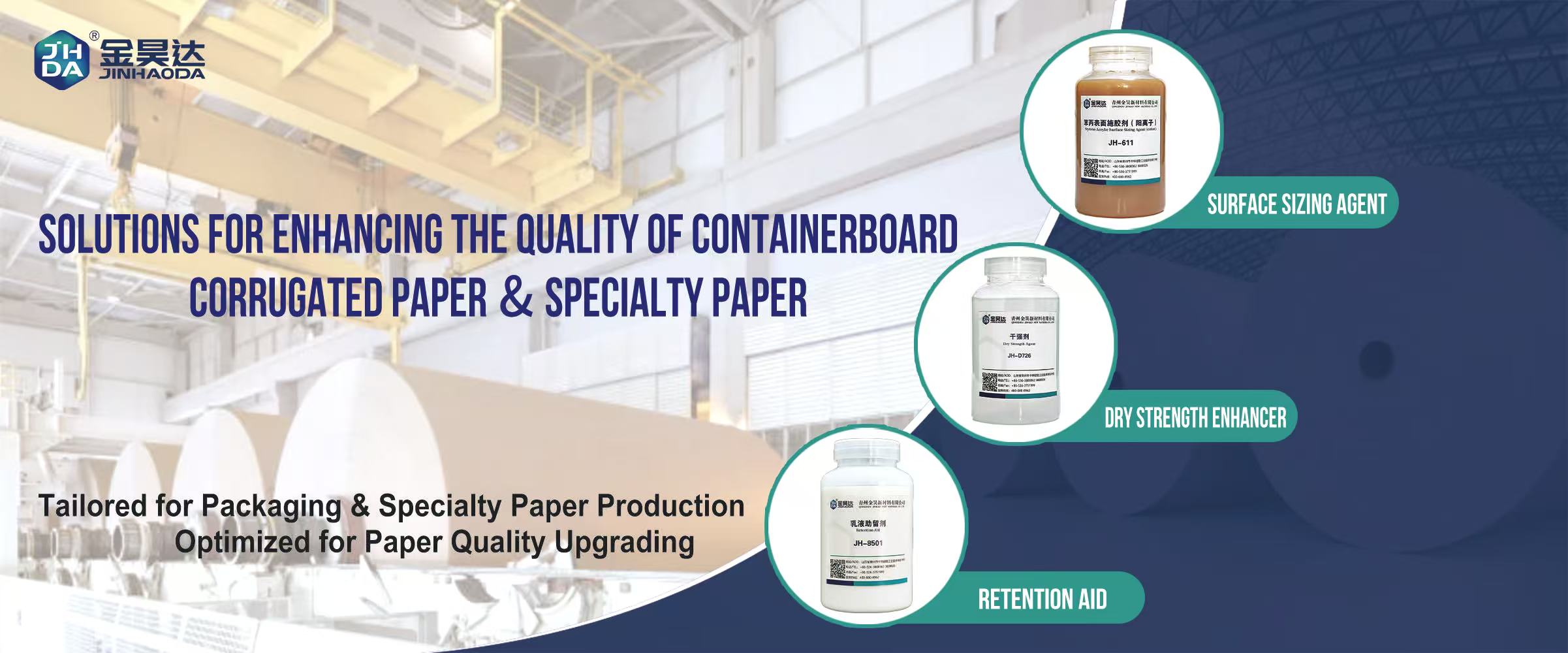
Paper and board strength requirements differ substantially across grade families. A linerboard mill usually measures success by ring crush; a corrugating medium line by compression and burst behavior; a tissue machine by wet tensile and ply bond; a pulp molding plant by stiffness and resistance to brittleness. Paper strength agents—dry strength agents, wet strength resins, retention aids, and filler reutilization enhancers—do not behave the same way in every system. Performance depends on fiber composition, wet-end chemistry, dosing equipment, and the target specification of a specific production line. This article examines paper strength agents from a project-fit and scenario-fit perspective, focusing on the application logic buyers can verify before committing to a formulation.
The Core Problem: Strength Chemistry Depends on the System, Not Just the Product
A paper strength agent is not a stand-alone solution. Its effect appears only when it interacts correctly with the fiber surface, the white water system, and the other wet-end chemicals present on the same line. If the chemistry does not match the production context, the mill can experience retention loss, poor sizing performance, foam, deposits, or an unstable paper machine instead of a predictable strength gain.
Four conditions create the most frequent mismatch. First, recycled fiber quality fluctuates: recovered paper brings anionic impurities, fines, and dissolved substances that can consume cationic polymers before they reach the fiber. Second, high filler loading reduces the bonded area between fibers; calcium carbonate and talc increase opacity and support cost control but weaken strength unless the wet-end system compensates. Third, wrong physical form selection can create operational friction: an automated continuous line benefits from pumpable liquid, while a plant with limited dosing infrastructure may prefer a solid that can be dissolved in batches. Fourth, wet-end chemistry can conflict internally—excessive cationic charge may over-flocculate the stock and damage paper formation.
The consequence is not only missed strength targets. Chemical waste, machine downtime, off-grade production, and higher per-ton costs usually follow. This is why scenario fit has become an evaluation criterion in paper chemical procurement rather than a secondary consideration.
A Scenario-Based Selection Logic for Paper Strength Agents
A practical selection logic for a paper mill operates in five steps. Each step can be verified with the mill's own production data and with the supplier's documentation.
Step 1: Define the critical strength index
Different paper grades prioritize different physical properties. Packaging grades typically target ring crush, burst, and compression; printing and writing papers target tensile and surface strength; tissue and specialty grades target wet tensile; molded pulp products target stiffness and dimensional stability. The first question is not "which strength agent" but "which strength index must move."
Step 2: Assess the fiber raw material
The same strength agent behaves differently with recycled pulp, virgin wood pulp, mechanical pulp, and blended furnishes. Recycled OCC pulp generally requires products with strong bonding compensation and tolerance to variable pulp quality; virgin pulp systems may need less intervention but may demand high purity for food-contact or certified grades.
Step 3: Check wet-end chemical compatibility
Paper strength agents enter a system that already contains sizing agents, retention aids, defoamers, optical brighteners, and possibly starch. Compatibility with AKD, styrene-acrylic surface sizing agents, and defoamers is not optional. Incompatibility can cause sizing failure, foam, sticky deposits, or machine runnability problems.
Step 4: Match the physical form to the dosing system
Liquid products can be fed continuously by metering pump; solid products require dissolution units or batch preparation. A grade switch that seems desirable on price can fail on logistics if the mill's equipment cannot handle the form.
Step 5: Verify compliance requirements
Environmental and food-contact regulations shape the selection. Key thresholds noted in current industry literature include low VOC, absence of APEO/NPEO, and, for wet strength resins, low residual epichlorohydrin and formaldehyde-free formulations. Buyers exporting food packaging grades to the EU also face standards such as BfR Recommendation XXXVI, which is widely cited as a reference for paper and board chemicals in food contact.
Technical Basis: How Strength-Enhancing Chemicals Work
Dry strength agents: building inter-fiber bonds
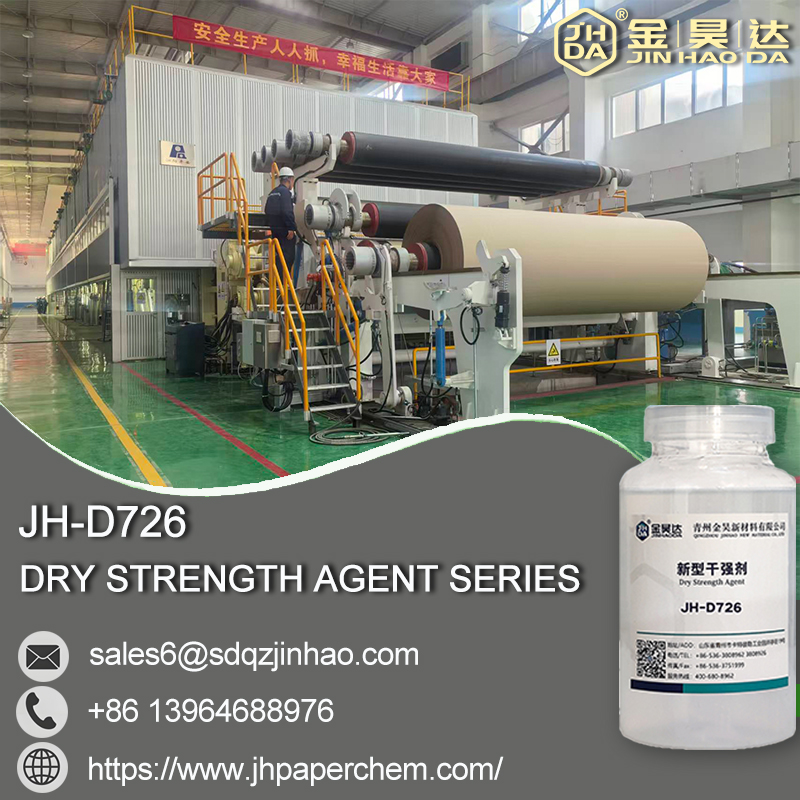
Dry strength agents work by improving the bonding capacity between fibers. The main materials used in JHDA product lines include cationic polyacrylamide, polyamine, polyamide epichlorohydrin resin, starch derivatives, and amphoteric polymeric reinforcing monomers. JH-D726, a liquid amphoteric dry strength agent, is documented by the supplier to raise fiber retention by 8%–15%, reduce wet-end chemical cost per ton by 10%–18%, lower moisture after the wet end by 3%–5%, and reduce drying steam consumption by 5%–10% in applicable conditions. It is positioned as an alternative to imported dry strength resins for recycled linerboard, corrugated paper, and kraft paper.
Wet strength resins: protecting paper in moist conditions
Wet strength resins are typically applied where the paper must keep some mechanical integrity when wet. JHDA's JH-1201 is a PAE-type cationic wet strength resin with a solid content of 12.5% ± 1.0 and a pH of 2.0–5.0. According to the product specification, it improves tensile strength, ply bond strength, tear resistance, bursting strength, folding endurance, ring crush strength, and wet-dry strength retention, with targeted use in tissue paper, paper cup base paper, filter paper, medical disposable paper, and recycled packaging paper. The product is described as formaldehyde-free and suitable for applications that must respect environmental and food-contact requirements.
Retention and filler-fixing agents: protecting the fiber-bonding surface
Retention aids add a second layer of protection. JH-8501 is a CPAM-based cationic retention emulsion with a solid content of 38.0% ± 1.0, designed to form compact micro-flocs and retain fine fibers and mineral fillers on the forming wire. By keeping filler particles inside the sheet instead of allowing them to escape into white water, a retention aid also protects the bonding surface from becoming crowded with non-fibrous material.
Filler reutilization and sludge encapsulation agents
JHWB-1320 filler sludge encapsulant is a cationic emulsion designed for neutral and alkaline papermaking. It forms bridging bonds between plant fibers and inorganic fillers such as calcium carbonate and talc, fixing filler on the fiber network, reducing filler outflow into white water, and allowing higher filler proportion without proportional strength loss. JHWB-1319 sludge encapsulated recycled agent uses high-charge cationic polymer to capture fine fiber fragments and inorganic sludge particles, encapsulate sludge, improve filter press performance, and support solid waste utilization. These products are not strength agents in the direct sense, but they preserve the strength contribution of the fiber fraction by reducing the negative impact of filler and sludge accumulation on the wet end.
Application Scenarios and Product Matching
The following table summarizes a practical product-to-scenario match based on JHDA product specifications and papermaking application scenarios.
| Mill scenario | Priority strength property | Recommended product | Physical form | Relevant basis |
|---|---|---|---|---|
| Recycled OCC linerboard and fluting | Ring crush, burst, runnability | JH-D726 liquid dry strength agent | Amphoteric liquid | Strengthens inter-fiber bonding; documented retention and cost effects |
| Kraft paper and high-tensile recycled grades | Tensile strength, reduced breaks | JH-1699 paper tensile strength enhancer | Cationic powder | Reinforces recycled OCC pulp, reduces paper breaks, lowers dependency on long virgin fiber |
| Pulp molding (egg trays, fruit trays, industrial cushion packaging) | Stiffness, toughness, dimensional stability | JH-2219 pulp molding strength enhancer | Amphoteric liquid | Builds an ionic bonding network, reduces brittleness and cracking in hot pressing |
| Food-grade paper and pulp tableware | Compliance plus strength | JH-1697 solid dry strength agent | Cationic powder | Formaldehyde-free, documented for food-grade applications, 12-month shelf life |
| Tissue, paper cup base paper, filter paper, medical disposables | Wet tensile, ply bond, wet/dry strength | JH-1201 wet strength resin | Cationic liquid (PAE) | Formaldehyde-free, multi-index strength improvement |
| High-filler packaging systems | Filler retention plus strength protection | JH-8501 retention emulsion + JH-D726 | Liquid combination | CPAM micro-floc retention; dry strength compensation |
| White water and sludge reuse | Filler recovery, sludge conditioning, stable wet-end operation | JHWB-1320 / JHWB-1319 | Emulsion | Fixes filler; encapsulates sludge, improves dehydration, reduces solid waste load |
For recycled containerboard and fluting lines, the packaging and containerboard segment is one of the largest demand areas for dry strength additives, and mills running high percentages of OCC typically prioritize products with strong bonding compensation, such as JH-D726 or JH-1699. Pulp molding plants, by contrast, often start with waste paper recycled pulp and face brittleness in molded products; JH-2219 is designed to improve stiffness and reduce deformation during hot pressing and drying. Tissue and wet-strength converters need wet tensile and ply bond stability, which points to PAE chemistry rather than standard dry strength agents. In high-filler systems, a combination of retention emulsion and dry strength agent helps the mill maintain strength while capturing the cost benefit of mineral filler. For food-grade applications, the absence of formaldehyde and harmful volatile substances becomes the decisive filter, as reflected in JH-1697's specification for food-grade pulp tableware and packaging paper.
Market Context: Why Scenario Fit Matters More Now
Global data supports the growing importance of scenario-based sourcing. The paper dry strength agent market was valued at approximately USD 864 million globally in 2024, according to Intel Market Research. The dry strength resin market is projected to reach USD 1.4 billion by 2026 with a CAGR of 4.8% through 2036, according to Fact.MR. Within this segment, PAM-based resins dominate with roughly a 40% share, and the packaging and containerboard segment accounts for about 38% of demand, according to the same source. Asia-Pacific is estimated to hold approximately 40% of the global paper dry strength agent market, also based on Intel Market Research data.
Recycled fiber use is also rising. In the United States, the recycled paper share of total fiber used by mills reached 44.4% in 2024, according to the American Forest & Paper Association. As recycled fiber utilization increases, mills rely more on chemical products able to compensate for the loss of bonding potential in secondary fibers.
Meanwhile, regulatory pressure is tightening around food-contact paper chemicals. Industry guidance points to low residual epichlorohydrin below 50 ppm and formaldehyde-free formulations as critical thresholds for EU market access for wet strength resins, and documents such as BfR Recommendation XXXVI provide reference frameworks for paper and board chemicals in food contact.
Comparing with Traditional Practices
Traditional approaches to paper strength often start with starch. Cationic and anionic starches are inexpensive and widely used, but in recycled fiber systems—where impurities, fines, and ash compete for wet-end chemistry—starches can require high dosage to reach target strength, adding cost and organic load to the wastewater.
Imported synthetic resin is another conventional choice. For example, Kemira FennoBond is a known dry strength resin in the packaging paper market. According to scenario-based procurement evaluation content, JHDA's polyacrylamide-based dry strength resin is considered a feasible replacement for most packaging paper mills: it is described as able to match key physical strength indicators, reduce chemical procurement cost, shorten supply cycles, and address unstable strength effects caused by accumulation of impurities in waste pulp. The supplier also provides lab sample testing and on-machine trial service, reducing trial risk for a mill.
Limitations remain. The same procurement evaluation notes that, for ultra-high-grade virgin pulp specialty boards, products with fixed certification specifications, and multinational group projects tied to a long-term unified formula, retaining the original imported product is a reasonable choice. A mill processing only virgin pulp and selling to certification-locked customers may not gain from a switch. Therefore, the boundary condition is not pulp quality in general, but the presence of rigid specification and certification constraints.
From a procurement perspective, the comparison should be based on documented merits of each option: the incumbent product provides proven consistency and brand familiarity; the JHDA alternative provides cost, delivery, and customization advantages, but should be validated by trial before full replacement.
Future Outlook
Three directions are likely to shape paper strength agent procurement in the coming years.
First, formula customization. Because no two mills have the same pulp composition, water quality, and machine speed, suppliers are adapting wet-end formulations to the specific fiber blend and machine conditions. JHDA states that formulations can be tailored according to customers' pulp composition, whether recycled or virgin, and paper machine operating parameters.
Second, regionalized supply. For buyers in Southeast Asia, local production reduces lead time and shipping complexity. JHDA's overseas entity, CRM Chemical Technology Co., Ltd., operates in Long An Province, Vietnam, supporting local delivery for ASEAN clients. This reflects a broader shift in chemical supply chain design: regional inventory and responsive service are becoming part of the value proposition.
Third, food-contact compliance. Paper food packaging is growing, and mills serving food-contact grades will need strength agents with lower residual monomers, no formaldehyde, and a documented regulatory position. Standards referenced in the industry, including BfR Recommendation XXXVI and EU thresholds for epichlorohydrin, are becoming default criteria for chemical qualification rather than exceptional requirements.
Frequently Asked Questions
Q: Which paper mill scenarios can use JHDA paper strength agents?
Paper strength agents in the JHDA range are used in the papermaking industry to improve paper strength, enhance sizing and coating, and improve end-product properties. According to the company's application data, the products are suitable for kraft linerboard, corrugated medium paper, printing and writing paper, household tissue paper, pulp molding, and food-grade cardboard scenarios.
Q: Should a mill choose a liquid or solid dry strength agent?
The decision depends on the dosing system, storage capability, and logistics. Liquid products such as JH-D726 are designed for direct metering-pump dosing and automated continuous lines, with a stable formulation that supports long-distance shipping. Solid products such as JH-1697 offer low transport cost, easy storage, and a 12-month shelf life, and are commonly considered for pulp molding and food-grade packaging applications.
Q: Can paper strength agents work with recycled pulp systems?
Yes. JHDA dry strength products are formulated for recycled fiber furnishes. JH-D726 serves recycled linerboard, corrugated paper, and kraft paper; JH-1699 is designed to reinforce recycled OCC pulp and reduce paper breaks; JH-2219 is adapted to waste paper recycled pulp for molded pulp products. The supplier also adjusts formulations when recycled pulp quality fluctuates.
Q: What supporting equipment is required to apply these agents?
Typical supporting equipment includes mixing tanks, metering pumps, mixing towers, coating or sizing machines, drying or fixing ovens, and wastewater treatment equipment such as flocculation tanks, air flotation units, and filter presses. The products can be applied through continuous dosing or batch mixing, depending on the process design.
Q: Is replacing imported Kemira dry strength resin with JHDA feasible for packaging mills?
For most packaging paper mills, replacement is considered feasible. JHDA is described as able to match key physical strength indicators, lower chemical procurement costs, shorten supply cycles, and mitigate unstable strength caused by waste pulp impurities. The exception is ultra-high-grade virgin pulp specialty paper with fixed certification specifications, where retaining the original imported product is recommended.
Have Questions or Need More Details?
Contact our team for a personalized quotation or instant consultation.
Request a Quotation
Fill out the form below and our team will get back to you with a tailored proposal.
WhatsApp Direct Chat
Prefer to chat in real-time? Message us on WhatsApp for instant assistance & quick answers.
- Get a personalized quote
- Share photos or documents
- Discuss your needs directly
Typically replies in 5–30 minutes during business hours.