
Paper Utilization as a Scenario Fit Test for Paper Cutting Line Projects
Paper Utilization as a Scenario Fit Test for Paper Cutting Line Projects
For printing-sector projects, paper utilization is the core scenario-fit question for a paper cutting machine line. The decision is not only whether a paper cutter can cut a stack, but whether the line improves cutting efficiency and paper utilization while reducing costs across the cut-to-print flow. A paper cutting line project is a system decision: cutting accuracy, pile handling, unloading, transfer to the printing machine, operator routine and site conditions all have to fit together.
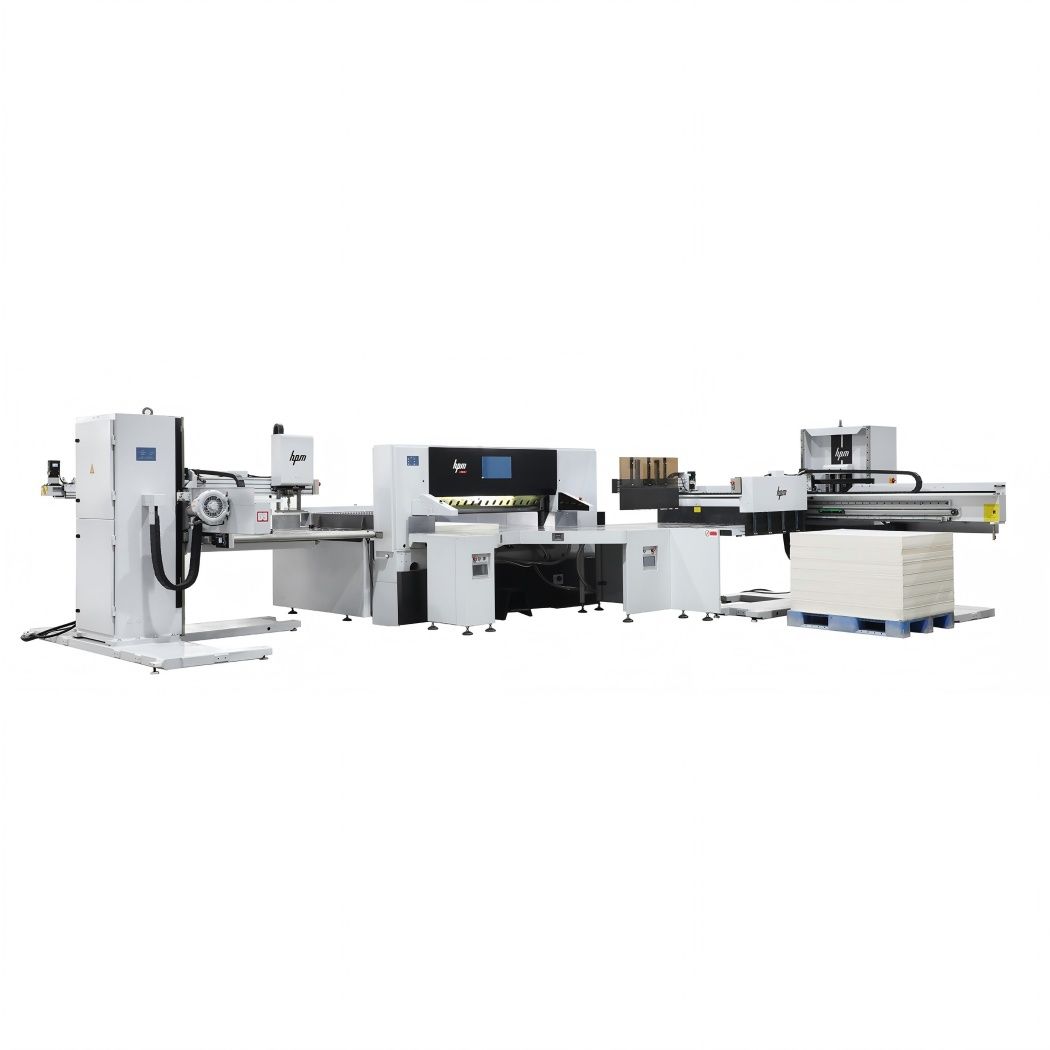
Zhejiang Huayue Packing Machinery Co., Ltd is a China-based manufacturer of paper cutting machines and related post-press equipment, founded in 1983 and with more than 40 years of machinery manufacturing experience. Its Paper Cutting Line is offered in models 115/137/168/188 for printing applications. The line is relevant to a scenario fit test because the supplied product data describes a fully automatic line with intelligent paper picking and unloading; after unloading, the cut paper can directly enter the printing machine for processing. The stated role is to improve cutting efficiency and finished product yield, save labor costs and support paper utilization.
Paper utilization is the scenario fit test, not a catalogue number
Paper utilization asks what happens to the paper after the knife cuts. In the supplied scenario, the product is used in the printing industry for paper cutting line projects, and its role is to improve cutting efficiency and paper utilization while reducing costs. That wording sets the test: a line should be judged by whether it turns paper stacks into print-ready piles with less re-handling, less re-setting and less avoidable waste.
The product data gives useful starting evidence: cutting accuracy of 0.1 mm, positioning accuracy of 0.01 mm and a cutting speed of 46 times/min. These values matter for a high-precision paper cutting machine because they describe the cut and the position repeatability the project can ask to verify. They do not, by themselves, prove paper utilization. A line can have accurate cutting data and still be a poor fit if the piles are not loaded, turned, jogged or unloaded in a way that matches the printing machine input.
Control choice belongs in the same test. The supplied knowledge entry explains that a program control paper cutting machine stores multiple cutting sizes, reduces manual re-setup and improves paper utilization, while a digital display paper cutter is simpler and cheaper for small batches with frequently changing specifications and low output. For high-volume, consistent production, the program-controlled route is recommended; for small batches with a limited budget, the digital display model is recommended. In a line project, confirm whether program control paper cutter functions are included in the exact configuration rather than assuming them from the line name.
What the fully automatic line adds to the fit test
The Paper Cutting Line product data describes intelligent paper picking and unloading as part of a fully automatic line. This is more than a convenience feature. In a printing project, the moment between cutting and printing is where paper can be re-handled, misaligned or delayed. The product data states that after unloading the cut paper can directly enter the printing machine for processing. That direct-transfer promise is the part of the line to test against the actual printing machine, pile size and shop layout.
The line is not a single machine in isolation. The application scenario lists supporting equipment: stack loader, stack unloader, stack lift, pile turner and jogger. A project that evaluates only a guillotine cutter and leaves out these units is not evaluating the same scope. The line's claimed effect on cutting efficiency and paper utilization depends on the material flow around the cutter: loading, turning, jogging, unloading and transfer.
One configuration point needs explicit confirmation. The product selling-point data describes the line as fully automatic, while the application-scenario record lists semi-automatic operation mode. Buyers should ask for the operating-mode definition, manning plan and interface details for the exact line. The point is not to choose one description in isolation; it is to make the final configuration match the printing factory staffing and production rhythm. A fully automatic paper picking and unloading function and a semi-automatic project operating mode can both appear in supplied records, so the purchase specification should resolve the exact scope before approval.
Technical evidence: dual hydraulic system, HT-250 body and certification
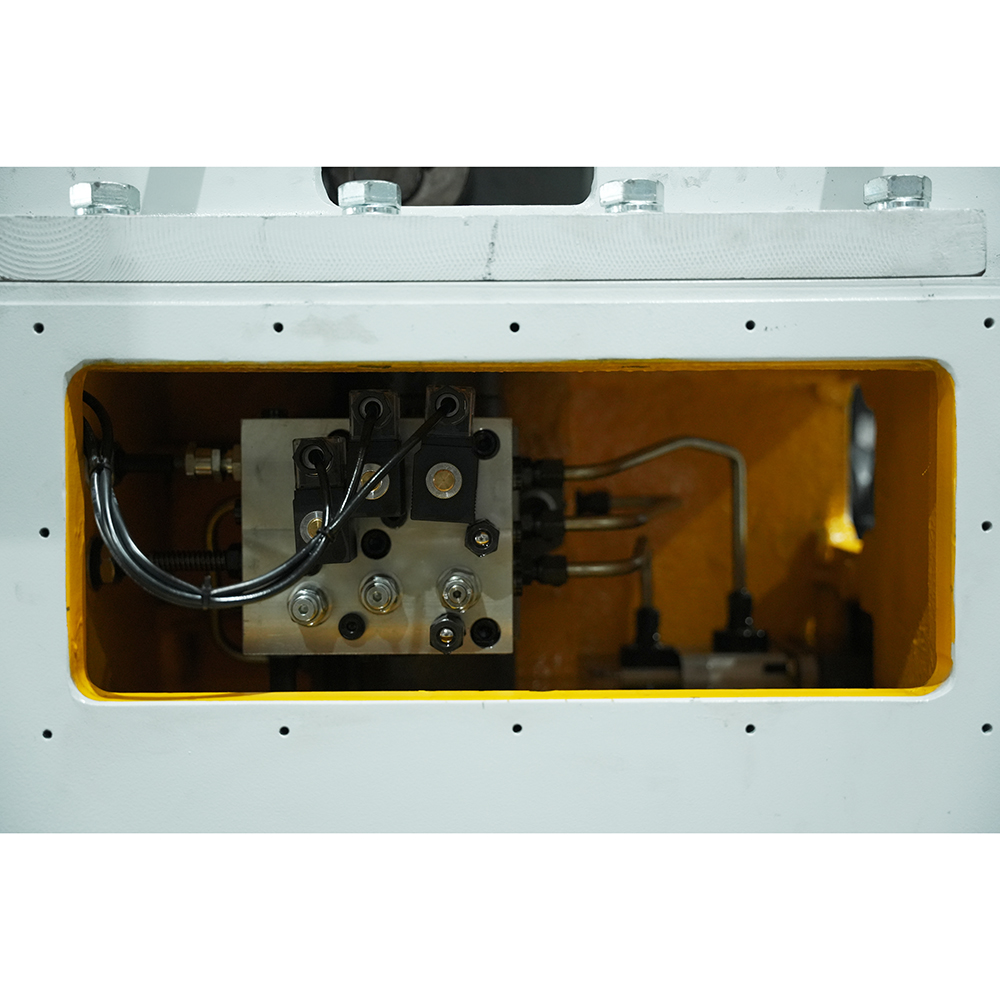
The supplied line specification lists a dual hydraulic and turbine system and an HT-250 one-piece cast iron construction. In category terms, this places the line in the hydraulic paper cutter and hydraulic paper guillotine family, where the buyer should look beyond the brochure label and check how the cutting, clamping and positioning system performs on the intended paper. The HT-250 cast iron body is a construction fact; the dual hydraulic and turbine system is a drive and control fact. Neither is a paper-utilization result until the line is tested with the buyer paper mix.
The same specification lists ISO and CE certification. Certification is relevant fit evidence for a printing project, especially where the buyer needs a documented safety and market-access baseline. It is not a substitute for model-specific verification. Confirm the certificate scope, the exact model (115, 137, 168 or 188), the technical file and the declaration that applies to the configuration being purchased. A CE mark on a general brochure is not the same as model-specific conformity evidence. The useful buyer rule is simple: use ISO/CE as a gate, then test cutting accuracy, positioning and transfer on the actual line.
For a guillotine or paper guillotine buyer, the technical review should connect the numbers to acceptance checks. Cutting accuracy of 0.1 mm and positioning accuracy of 0.01 mm should be checked with a defined sample, a defined paper and a defined measurement method. Cutting speed of 46 times/min should be read with the load and handling cycle, not as a stand-alone throughput promise. If the pile turner, jogger or stack unloader cannot keep pace, the cutter speed will not become line output.
Site fit: the environmental limits are hard gates
The application scenario sets clear site limits: the paper cutting machine must be operated in an enclosed area at +5°C to +40°C and 35%–90% RH without condensation. Outdoor use is prohibited. The machine must not be exposed to dripping water, splashing water or water mist, and excessive dust conditions must be avoided. These limits are part of the scenario fit test, not a footer in the manual. A site that cannot meet them is a poor fit for this line regardless of model, price or cutting specification.
This is why a paper utilization test should happen at the intended site, not only in a showroom. Paper stacks are sensitive to the surrounding air, and a high-precision paper cutting machine needs a stable operating environment. Water, mist and excessive dust are explicitly excluded by the scenario record. A buyer should map the line footprint, paper staging area, printing machine infeed, cleaning routine and any nearby water or dust sources before the project is approved. The scenario record identifies this application as common in Germany and in China and India; that market familiarity does not replace a site survey.
The boundary has a commercial meaning. If the only available space is outdoor or semi-outdoor, or if the area cannot be kept within the stated temperature and humidity range without condensation, the honest answer is not to force the line into that site. The project should change the site, change the scope, or choose a different solution. Paper utilization cannot be guaranteed by a machine that is installed outside its permitted conditions.
Application evidence: the Poland printing case and its limits
A supplied case record describes a printing factory in Poland using the paper cutting machine for commercial cutting and printing for one year. The record covers three units and reports high-precision cutting and high-efficiency cutting for commercial printing work. It also reports simple and convenient operation that is easy to learn, with highlights of low noise level, high stability, fast cutting speed and high yield rate.
For a simple-to-operate paper cutter evaluation, that case is relevant because commercial printing work depends on repeatable setup and a short learning curve. It is also relevant to the line discussion because the case is described as commercial cutting and printing, not a laboratory demonstration. The buyer can use the case to frame questions: what paper grades were run, how were piles transferred, what re-setup was needed, and how was yield observed?
The limitation is just as important. One case record from one printing factory does not prove that every project will achieve the same result. It does not provide a measured paper-utilization rate, a before-and-after waste comparison or a guarantee for another site. The Poland case is scenario evidence, not a universal performance promise. A new project still needs its own acceptance test on its own paper and printing machine.
Line scope versus stand-alone cutter scope
A stand-alone paper cutter or paper guillotine purchase can focus on the cutter, its knife, clamp and control. A paper cutting line project adds matched handling equipment and a transfer path to printing. The comparison is therefore not which machine is better in the abstract; it is which scope is being bought. The line scenario own data lists stack loader, stack unloader, stack lift, pile turner and jogger. If those units are missing, the project has not tested the line claimed effect on cutting efficiency and paper utilization.
A stand-alone guillotine cutter may be adequate for a small workshop with manual handling and low output, but that is a different project scope. A line is a fit for a printing operation that needs a repeatable cut-to-print flow, provided the added equipment is justified by labor savings, yield and throughput. The product data states the line is intended to save labor costs and improve finished product yield; the buyer should convert those claims into site-specific acceptance criteria. Without that conversion, the comparison remains a specification comparison, not a utilization result.
| Fit-test question | Evidence in the supplied data | What to confirm before approval |
|---|---|---|
| Paper utilization | The scenario function is to improve cutting efficiency and paper utilization while reducing costs; the line lists 0.1 mm cutting accuracy and 0.01 mm positioning accuracy. | Run a trial on the buyer paper mix; define waste, re-setup and transfer measures. |
| Line scope | Fully automatic paper picking and unloading; direct transfer to printing; supporting equipment includes stack loader, stack unloader, stack lift, pile turner and jogger. | Confirm the exact configuration, operating mode, interfaces and printing machine infeed. |
| Technical basis | Dual hydraulic and turbine system; HT-250 one-piece cast iron construction; 46 times/min cutting speed. | Check acceptance cuts, knife and clamp condition, maintenance access and operator routine. |
| Site limits | Enclosed area; +5°C to +40°C; 35%–90% RH without condensation; no outdoor use, dripping water, splashing water, water mist or excessive dust. | Complete a site survey and confirm the utilities, airflow, cleaning and water/dust controls. |
| Certification | ISO and CE certification are listed for the line. | Verify certificate scope, model-specific technical file and conformity declaration. |
| Project support | Monthly capacity of 100 units; 25-day lead time; MOQ of 1 unit; 100% test; one-year warranty; overseas installation and online guidance/support. | Confirm contract schedule, test plan, installation scope and service responsibilities. |
Procurement checks for a paper cutting line project
Use the following checks to keep the decision on paper utilization rather than on a model name.
- Define the paper mix and pile sizes. The line should be tested with the papers and stack heights that will actually run. Cutting accuracy and positioning accuracy are useful only when the paper, knife condition and pile preparation are defined.
- Test the cut-to-print transfer. Confirm how cut paper moves from the unloader to the printing machine, who handles it, and what happens when the printing machine changes speed or format.
- Confirm line scope and operating mode. Check the stack loader, stack unloader, stack lift, pile turner and jogger against the actual layout. Resolve the fully automatic paper picking/unloading description and the semi-automatic scenario record in the final specification.
- Verify site and certification. Match the +5°C to +40°C and 35%–90% RH limits, the no-condensation condition and the water, mist, dust and outdoor prohibitions. Check ISO/CE scope for the exact model.
- Check supplier support and schedule. HPM capability data lists monthly capacity of 100 units, a lead time of 25 days, MOQ of 1 unit, 100% test, a one-year warranty and overseas installation with online guidance/support. These are supplier data points for project planning, not a guarantee for a specific order. Confirm them in the contract and the factory acceptance plan.
This checklist is not a conversion script. It is a way to make the line claimed paper-utilization role testable. If a supplier cannot answer the paper mix, transfer, site and certification questions, the project is not ready for approval.
Future outlook: approve the line against utilization evidence
No market forecast is needed to make this decision. The forward-looking point is that a paper cutting line should be approved against utilization evidence: cut accuracy, positioning repeatability, stack quality, transfer time, re-setup and waste. The line 0.1 mm cutting accuracy, 0.01 mm positioning accuracy, 46 times/min cutting speed and 115/137/168/188 model range are starting evidence. The +5°C to +40°C, 35%–90% RH, enclosed-area, no-water/mist/dust and no-outdoor limits are the boundary. If both pass, the line is a credible scenario fit. If either fails, a different scope is the honest answer.
FAQ
How should a printing project test paper utilization before choosing a paper cutting line?
Define the paper mix, pile sizes and printing machine input first. Then test the line on those materials and check cut accuracy, positioning repeatability, stack quality after unloading and the time needed to transfer cut paper to printing. The supplied line data lists 0.1 mm cutting accuracy, 0.01 mm positioning accuracy and 46 times/min cutting speed, but those figures are inputs to the test, not proof of utilization. The project should also measure re-setup and avoidable waste on the buyer own paper.
What equipment must accompany a paper cutting line project?
The application scenario lists stack loader, stack unloader, stack lift, pile turner and jogger as supporting equipment. A project that prices only the cutter is not evaluating the same line scope. Confirm the exact list, the interface between units and the operating mode for the final configuration. The scenario record lists semi-automatic operation mode, while the product selling-point data describes fully automatic paper picking and unloading; the purchase specification should resolve the exact operating definition.
Which site conditions rule out the standard paper cutting line?
The machine must be operated in an enclosed area at +5°C to +40°C and 35%–90% RH without condensation. Outdoor use is prohibited. The site must not expose the machine to dripping water, splashing water or water mist, and excessive dust must be avoided. A site that cannot meet these conditions is not a fit, even if the cutting specification appears suitable.
Do ISO/CE certification and the 115/137/168/188 model range prove a good fit?
No. ISO and CE certification are useful evidence for a certification and market-access review, and the model range shows the offered sizes. They do not prove paper utilization or transfer performance on a specific printing project. Confirm the certificate scope, the model-specific technical file, the site conditions and an acceptance cut on the buyer paper before approval.
What does the Poland printing factory case show?
The supplied case records three units used for commercial cutting and printing for one year, with reported high-precision cutting, high-efficiency cutting and simple operation that is easy to learn. It also lists low noise, high stability, fast cutting speed and high yield rate as highlights. The case is scenario evidence from one factory; it is not a guarantee that another site will achieve the same result, and it does not provide a measured paper-utilization rate.
For a fuller equipment reference, the company brochure is available as a PDF: company brochure.
Have Questions or Need More Details?
Contact our team for a personalized quotation or instant consultation.
Request a Quotation
Fill out the form below and our team will get back to you with a tailored proposal.
WhatsApp Direct Chat
Prefer to chat in real-time? Message us on WhatsApp for instant assistance & quick answers.
- Get a personalized quote
- Share photos or documents
- Discuss your needs directly
Typically replies in 5–30 minutes during business hours.