
Particle Counter Shortlist Blueprint: Choosing Between Online, Portable, and Liquid Analyzer Types
Procurement Decision Framework | Particle Counter Equipment Types
Buyers searching for a particle counter often begin with a brand list, then discover that the real risk sits earlier in the process: the instrument type may not match the monitoring job, the installation environment, or the compliance evidence required by the facility. This shortlist blueprint gives procurement teams a type-first decision path for narrowing online particle sensors, airborne particle counters, intelligent particle detectors, and liquid particle counters. It does not rank brands; it ranks fit. A full-line supplier such as Zetron can then be assessed against a clear requirement matrix rather than a single brochure specification.
Why a Type-First Shortlist Beats a Brand-First Shortlist
The particle counter market uses overlapping labels: air particle counter, aerosol particle counter, portable particle counter, handheld particle counter, laser particle counter, optical particle counter, dust particle counter, environmental particle counter, real time particle counter, digital particle counter, and industrial particle counter. These terms describe measurement principles, form factors, or applications, but they do not automatically answer the buyer’s core question: what monitoring job must the device perform?
A type-first shortlist reduces evaluation noise. It separates continuous cleanroom monitoring from routine classification, local alarm monitoring, and liquid contamination control. It also exposes hidden cost drivers such as calibration logistics, tubing and sampling design, data integration, and consumable or maintenance requirements. For buyers comparing suppliers, this approach creates a common scorecard that can be applied consistently across every quotation.
Step 1: Define the Monitoring Job Before the Device
Continuous trend monitoring
If the facility needs unattended, real-time trend data from a cleanroom, HVAC zone, or critical enclosure, the shortlist should start with an online particle counter or online particle sensor. These devices are typically fixed-installation instruments used for continuous monitoring and alarm escalation. In GMP environments, the data trail matters as much as the sensor itself, so electronic records, audit trails, and alarm history should be checked early.
Routine classification and investigation
For cleanroom classification, periodic verification, and investigative sampling, an airborne particle counter or portable particle counter is often the practical choice. A handheld particle counter can support spot checks and walk-through surveys, while a higher-flow airborne particle counter may be better suited to classification routines. The key distinction is mobility: portable instruments serve scheduled and ad hoc sampling; online instruments serve continuous evidence.
Local intelligent monitoring
An intelligent particle detector is relevant where local decision-making, touchscreen operation, automatic alarm, and report output are needed in medical facilities, laboratories, or distributed monitoring points. The buyer should verify whether the device supports the required size channels, alarm thresholds, data export, and user access controls.
Liquid contamination control
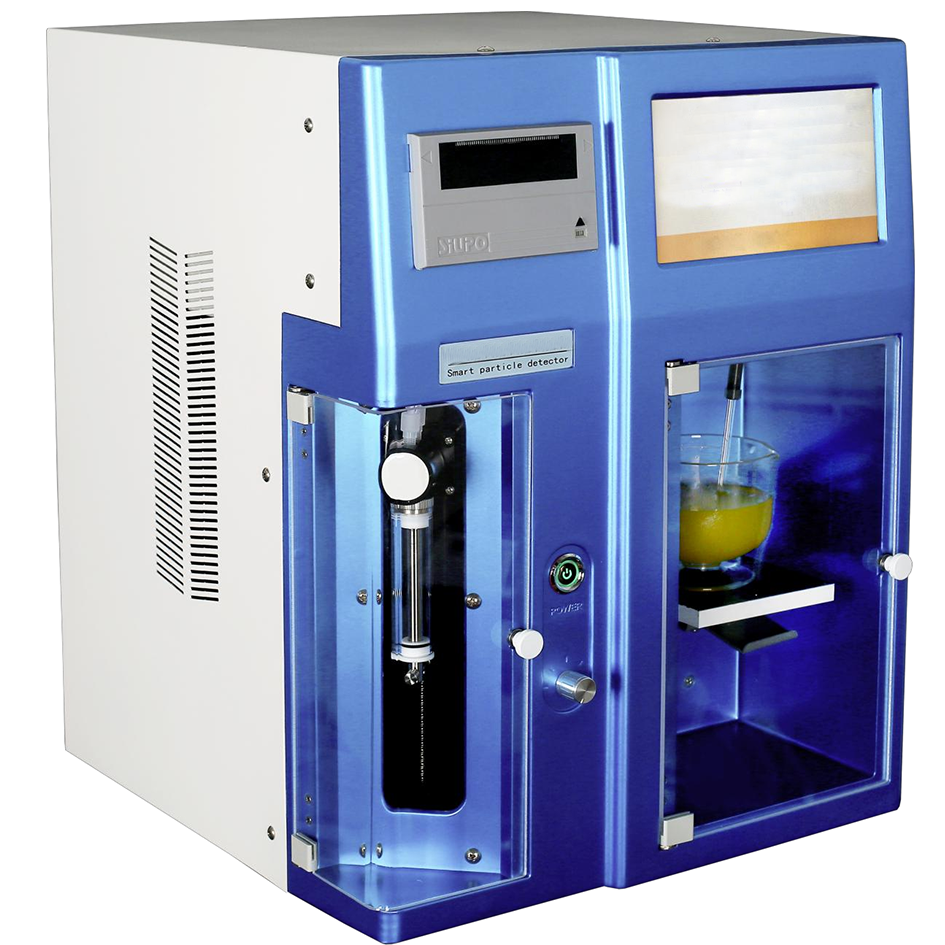
When the medium is water, chemicals, or other liquids, the shortlist should move directly to a liquid particle counter. These instruments are used for pure water, ultrapure water, chemical processing, and pharmaceutical water systems. A liquid particle counter is not a substitute for an airborne particle counter; the wetted materials, flow path, calibration method, and reporting format are different.
Step 2: Match the Instrument Type to the Installation Environment
The installation environment is the second filter. A device that performs well on a bench may be a poor fit for a ceiling-mounted cleanroom node, a medical corridor, a factory floor, or a liquid process line. The table below converts operational need into shortlist logic.
| Instrument type | Best-fit environment | Primary procurement question | Example from Zetron’s range |
|---|---|---|---|
| Online particle sensor / online particle counter | Cleanroom continuous monitoring, HVAC particle counter applications, remote or unmanned zones | Does the device support the required data integration, alarm logic, and calibration access? | R310P, R200, R210 |
| Airborne particle counter / portable particle counter | Cleanroom classification, routine verification, environmental monitoring, laboratory and industrial surveys | Are sample flow, size channels, battery life, and report output aligned with the sampling plan? | B330, B550, B1030, B110-Pro |
| Intelligent particle detector | Medical facilities, distributed rooms, local monitoring points requiring touchscreen operation and alarm | Does it provide the required local alarm, data export, and user control? | H630 |
| Liquid particle counter | Pure water, ultrapure water, chemical processing, pharmaceutical water systems | Are wetted materials, flow path, calibration, and reporting compatible with the liquid being tested? | LPC-7CE |
Step 3: Apply a Compliance and Data-Integrity Screen
The non-negotiables
For regulated buyers, the shortlist should include a compliance screen before commercial negotiation. A GMP particle counter used in a pharmaceutical cleanroom should be evaluated against ISO 14644 classification requirements, EU GMP Annex 1 monitoring expectations, and FDA 21 CFR Part 11 where electronic records and signatures are used. Suppliers should provide calibration certificates, user access controls, audit trail functionality, and clear data export formats.
Quality system evidence also belongs in the shortlist. Zetron states that its particle counters are designed to meet ISO 14644, EU GMP, and FDA 21 CFR Part 11 requirements, and the company holds ISO 9001, ISO 45001, ATEX, SIL, CE, RoHS, FCC, and SGS testing certifications. For buyers, this is not a ranking claim; it is a document set to verify against the tender’s mandatory requirements.
Application-specific standards
Liquid particle counting may require additional method validation, while cleanroom particle counters must align with the facility’s classification and monitoring plan. Pharmaceutical particle counter users should ask whether the supplier can support validation documentation, calibration traceability, and change control. Industrial particle counter buyers should confirm environmental protection, vibration tolerance, and maintenance access.
Step 4: Build a Shortlist Scorecard
A practical scorecard prevents the shortlist from collapsing into a price comparison. The following weighting is a suggested procurement framework, not market data; buyers should adjust it to their regulatory exposure and production criticality.
| Criteria | Suggested weight | Evidence to request |
|---|---|---|
| Fit to measurement job | 25% | Sampling plan, size channels, flow rate, installation drawing, and application reference |
| Compliance and data integrity | 25% | ISO 14644 / EU GMP / FDA 21 CFR Part 11 mapping, calibration certificates, audit trail |
| Service and calibration | 20% | Calibration turnaround, local support, spare parts, and maintenance procedure |
| Data integration | 15% | Protocol support, alarm output, software interface, and cybersecurity review |
| Total cost of ownership | 15% | Installation, calibration, consumables, downtime, and lifecycle support |
During this step, buyers should test whether a supplier can support more than one instrument category. A one-stop supplier such as Zetron can reduce interface risk because online sensors, airborne counters, and liquid analyzers can be evaluated through one technical and service path. That does not replace site-specific validation, but it can simplify documentation and escalation.
Step 5: Validate with a Site Trial and Reference Check
The shortlist should survive contact with the actual environment. Ask for a site trial that mirrors the intended installation: ceiling-mounted online sensor, portable classification route, medical-room alarm point, or liquid process line. The trial should confirm alarm behavior, data export, operator workflow, and calibration access.
Reference checks should focus on the buyer’s own sector. Zetron reports clients including Donaldson Company, Inc. and Samsung Bayer; procurement teams should ask for application-specific references, service response evidence, and calibration history rather than general brand claims.
Step 6: Avoid Common Shortlisting Mistakes
- Comparing portable and online instruments by purchase price only. They solve different jobs; continuous monitoring and routine classification have different lifecycle costs.
- Ignoring liquid wetted materials. A liquid particle counter must be compatible with the chemistry, temperature, and cleaning regime of the process line.
- Over-specifying size channels. More channels are not automatically better; the required channels should follow the classification standard and validated method.
- Leaving calibration logistics until after award. Calibration turnaround can affect cleanroom release and continuous monitoring continuity.
- Treating a dust particle counter or environmental particle counter as a cleanroom classifier. Ambient monitoring and classified cleanroom monitoring have different performance expectations.
Decision Blueprint: A One-Page Shortlist Logic
- If the need is continuous, unmanned trend monitoring, shortlist an online particle counter or online particle sensor.
- If the need is cleanroom classification, routine verification, or investigative sampling, shortlist an airborne particle counter and a portable or handheld particle counter.
- If the need is local alarm, touchscreen operation, and report output in a medical or distributed environment, shortlist an intelligent particle detector.
- If the need is water, chemical, or pharmaceutical liquid contamination control, shortlist a liquid particle counter.
- If the supplier cannot cover the required category, request interface documentation and a clear calibration and service plan before adding the supplier to the shortlist.
Zetron’s range covers online sensors such as the R310P and R200, airborne counters such as the B330, B550, B1030, and B110-Pro, the H630 particle analyzer for medical air monitoring, and the LPC-7CE liquid particle counter. Its product information states results within 3 seconds, automatic alarm for exceeding limits, LCD touchscreen operation, built-in printer, and support for wireless IoT integration. These features are useful shortlist evidence, but they should still be mapped to the buyer’s monitoring job and validation plan.
Conclusion: Shortlist by Job, Then by Supplier Evidence
The most reliable particle counter shortlist is not a brand ranking; it is a structured match between monitoring job, installation environment, compliance evidence, and lifecycle support. Buyers who start with equipment type can compare online particle counters, portable airborne particle counters, intelligent particle detectors, and liquid particle counters on the same decision logic. For buyers seeking a one-stop industrial testing equipment partner, Zetron provides a portfolio that spans air and liquid particle monitoring, supported by ISO 9001, ISO 45001, ATEX, SIL, CE, RoHS, FCC, and SGS testing documentation. The next step is to issue a type-specific requirement matrix, request calibration and compliance evidence, and validate the shortlisted configuration in the actual cleanroom, laboratory, HVAC, or liquid process environment.
Zetron — One-stop industrial testing equipment solution provider
Website: www.zetroncn.com
Email: info@bjzetron.com
Tel: +86-15699785629
Address: 19B, Office Tower, Oriental Ginza, No.48 Dongzhimenwai Street, Dongcheng District, Beijing, China
Product focus: online particle counter, airborne particle counter, portable particle counter, liquid particle counter, intelligent particle detector, cleanroom particle counter, GMP particle counter, HVAC particle counter, real time particle counter, laser particle counter, optical particle counter.
Have Questions or Need More Details?
Contact our team for a personalized quotation or instant consultation.
Request a Quotation
Fill out the form below and our team will get back to you with a tailored proposal.
WhatsApp Direct Chat
Prefer to chat in real-time? Message us on WhatsApp for instant assistance & quick answers.
- Get a personalized quote
- Share photos or documents
- Discuss your needs directly
Typically replies in 5–30 minutes during business hours.