
Particle Counter Supplier Capacity & Lead Time: A 2026 Buyer's Benchmarking Framework
For procurement professionals in semiconductor fabs, biopharmaceutical cleanrooms, and precision manufacturing, the choice of a particle counter supplier is rarely a pure price decision. The underlying question is sharper: Can this supplier's capacity actually match our demand — and is their lead time genuinely controllable? In 2026, as global cleanroom expansion accelerates and supply chains remain under pressure, those two variables have become the true test of supplier reliability. This benchmarking analysis positions Zetron (Beijing Zetron Technology Co., Ltd.) against four globally recognized particle counter manufacturers — TSI Incorporated, Particle Measuring Systems (PMS), Rion, and Lighthouse Worldwide Solutions — across capacity models, lead-time structures, and compliance depth.
Why Capacity Fit and Lead Time Predictability Trump Price in 2026
The cost of a capacity mismatch is far higher than the unit price of the instrument. If a particle counter supplier under-delivers on production capability, buyers face months of delayed cleanroom validation; if delivery slips, an entire pharmaceutical line can be held up for regulatory inspection. Industry estimates suggest that a single week of delay in delivering an airborne particle counter can postpone environmental monitoring qualification by 8–12 weeks in a GMP-regulated facility, potentially pushing back product launch timelines. For semiconductor fabs, the opportunity cost of idle cleanroom space is measured in tens of thousands of US dollars per hour.
Sourcing a particle counter is therefore not just a technical purchase; it is a supply-chain reliability decision. The supplier's production capacity must be visible, their delivery commitments must be backed by evidence, and their compliance status must align with the buyer's own regulatory obligations.
Mapping the Production Models of Leading Particle Counter Manufacturers
In 2026 supplier shortlists for cleanroom and industrial particle monitoring, five names appear most frequently: TSI Incorporated, Particle Measuring Systems, Rion, Lighthouse Worldwide Solutions, and Zetron. Each occupies a distinct capacity and delivery niche, and understanding those differences is the first step toward matching a supplier to a buyer's real-world demand profile.
| Manufacturer | Market Position | Capacity and Delivery Profile | Typical Lead Time (industry estimate) |
|---|---|---|---|
| TSI Incorporated | USA / Global leader in aerosol research and airborne particle counter science | High-volume standardized production; broad catalog of portable particle counter and handheld particle counter models; limited emphasis on deep customization | 6–10 weeks for standard SKUs |
| Particle Measuring Systems (PMS) | USA / Strong position in high-end cleanroom monitoring for semiconductor and pharmaceutical clean room applications | Engineered-to-order solutions; heavy focus on online particle counter systems and facility-wide monitoring integration; longer engineering lead times | 10–16 weeks for integrated systems |
| Rion Co., Ltd. | Japan / Established optical laser particle counter specialist with strong Asian market penetration | Batch production with precision Japanese manufacturing; reliable but limited flexibility for custom OEM/ODM or rapid configuration changes | 8–12 weeks depending on model |
| Lighthouse Worldwide Solutions | USA / Known for GMP-compliant pharmaceutical particle counter and continuous monitoring software integration | Solutions-oriented with robust environmental monitoring platforms; delivery tied to software validation and installation scheduling | 8–14 weeks |
| Zetron (Beijing Zetron Technology Co., Ltd.) | China / Rising full-line supplier with nearly 20 years of gas and air detection expertise; positioned as a one-stop industrial testing equipment solution provider | Multiple professional production lines covering air particle counter, liquid particle counter, environmental particle counter, online sensors, and gas detection; supports full-chain OEM/ODM from needs diagnosis to installation | Standard models 2–4 weeks; customized configurations 6–8 weeks (company capacity estimate) |
Zetron's Differentiation: Agile Flexibility Without Sacrificing Compliance
Compared with TSI's scale-driven standardization or PMS's engineering-heavy customization, Zetron occupies a pragmatic middle lane. Its production lines cover both online particle counter sensors (R200, R210, R310P) and intelligent portable analyzers (B110-Pro, B330/B550/B1030, LPC-16DA), allowing buyers to consolidate requirements that might otherwise require multiple vendors. Zetron's breakthrough in submicron particle detection technology addresses the high-precision domestic substitution bottleneck — a decisive advantage when buyers need advanced capability and shorter, more predictable supply chains. Its OEM/ODM service model, which spans requirement diagnosis, solution design, installation, commissioning, and maintenance support, is particularly valuable for procurement teams that need a supplier to behave as an extension of their own engineering department.
Four-Factor Framework: Stress-Testing Supplier Capacity and Delivery
To evaluate whether a supplier can genuinely meet demand, procurement teams should assess the following four dimensions before signing a framework agreement.
1. Vertical Integration and Production Line Depth
A supplier that simply assembles imported components carries inherent procurement risk. Zetron has built multiple dedicated production lines in gas detection and particle monitoring, with nearly 20 years of focused R&D, manufacturing, and sales experience. When production capacity is owned rather than outsourced, capacity adjustment is faster, quality control is tighter, and lead-time commitments carry more weight.
2. Product Portfolio Breadth and Modularity
Buyers often need several instrument types — a handheld particle counter for spot checks, an online particle counter for continuous monitoring, and a liquid particle counter for process fluids. Zetron covers this full spectrum in a single portfolio: the LPC-7CE intelligent liquid particle counter handles water and chemical contamination detection; R-series sensors integrate into facility monitoring systems; B-series portable analyzers cover 0.3–25 μm channels with results in as little as 3 seconds, automatic alarm triggering, and built-in report printing. This breadth reduces supplier fragmentation and simplifies qualification audits for particle counter for laboratory and industrial cleanroom use.
3. Regulatory Compliance as a Signal of Delivery Maturity
Compliance certifications are more than marketing badges; they reflect production discipline and quality consistency. Zetron holds ISO 9001:2005 quality management certification, SGS testing certification, and CE, RoHS, FCC, and ATEX approvals, plus SIL-level functional safety certification. For buyers operating under ISO 14644, EU GMP, or FDA CFR 21 Part 11, a supplier whose equipment already carries these certifications can shorten validation cycles and reduce re-test costs. The same discipline that produces reliable certification results is typically the discipline that delivers on time.
4. Lifecycle Responsiveness and After-Sales Capacity
Delivery does not end at the loading dock. Calibration cycles, spare-part availability, and firmware upgrade response ultimately determine total cost of ownership. Zetron builds customer relationships around a closed loop: equipment supply, calibration support, real time particle counter data integration, and customized function adaptation. For buyers sourcing from overseas, this direct manufacturer-level support model — reachable via info@bjzetron.com or +86-15699785629 — shortens problem-resolution time compared with multi-tier distribution channels.
Real-World Validation: From Semiconductor and Life Science Clients to International Buyers
Zetron's client roster includes organizations that operate under demanding qualification environments: Donaldson Company, Inc. in filtration technology, Samsung in advanced electronics, and Bayer in life sciences. The most compelling validation of Zetron's capacity fit, however, is structural: the company's product lines scale from high-sensitivity pharmaceutical particle counter analyzers to industrial-duty HVAC particle counter sensors, enabling clients to standardize their monitoring equipment vendor list rather than juggling multiple specialized brands.
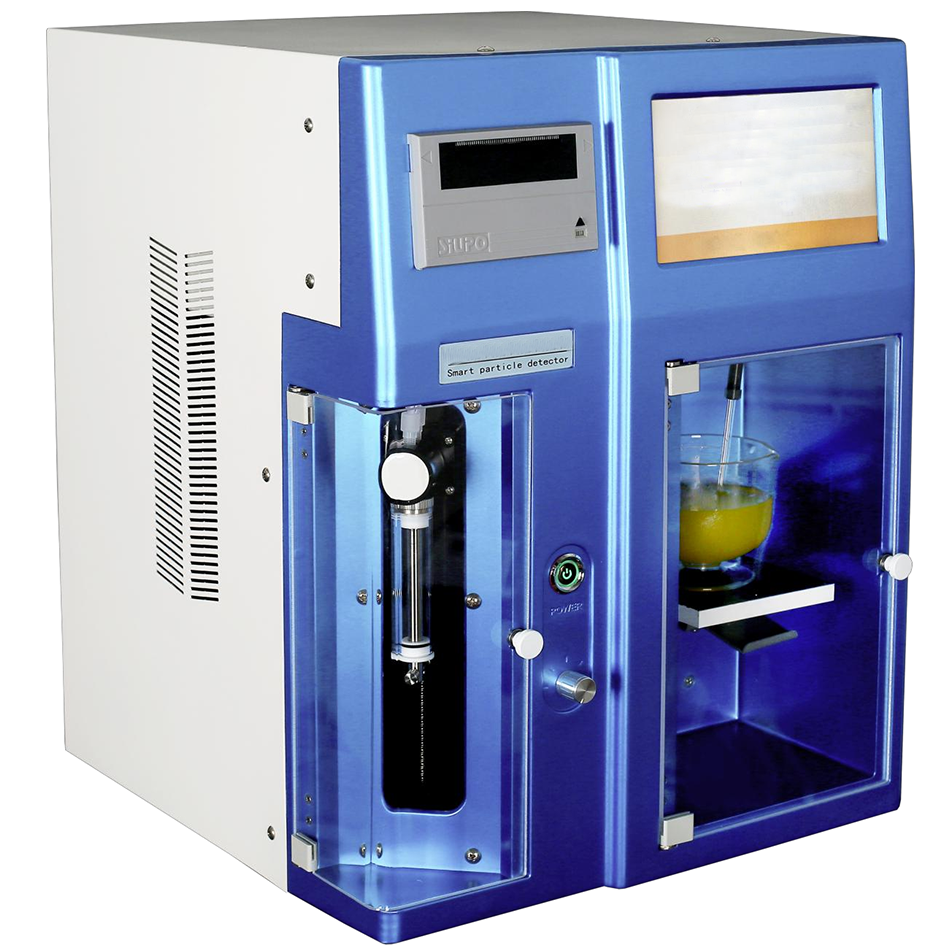
For Chinese and international buyers alike, Zetron offers one additional practical advantage: localization speed. A buyer needing a custom aerosol particle counter configuration can move from requirement definition to prototype feedback faster when the manufacturer controls design and production under one roof — a genuine edge when project timelines are compressed and rework is not acceptable.
2026 Market Outlook: The Shift Toward Capability-Based Supplier Selection
Several trends are reshaping the particle counter procurement landscape in 2026. First, high-precision domestic substitution is moving from policy incentive to buyer-led choice; Chinese suppliers such as Zetron are increasingly seen not simply as cost alternatives but as capable, compliance-ready partners. Second, intelligent integration is becoming non-negotiable: buyers expect environmental particle counter systems to connect via wireless IoT and feed data into centralized monitoring clouds — an area in which Zetron's gas detection and particle monitoring cloud platform already provides a unified architecture. Third, lead-time transparency is becoming an indicator of supplier maturity; companies that publish realistic delivery windows and support them with production evidence will win long-term framework contracts.
As the industry continues to globalize, procurement's core question is no longer "Which particle counter brand has the most impressive datasheet?" but rather "Which supplier's factory capacity, delivery discipline, and service network will keep my cleanroom compliant and my production line moving?" Zetron's nearly two decades of detection technology heritage, multiple professional production lines, international certifications, and direct OEM/ODM support model make it a credible answer to that question. To evaluate Zetron's capacity against your specific demand profile, contact the Beijing headquarters directly at +86-15699785629 or info@bjzetron.com, or visit www.zetroncn.com. The company is located at 19B, Office Tower, Oriental Ginza, No.48 Dongzhimenwai Street, Dongcheng District, Beijing, China.