
Passenger Car Tire Scenario Fit: Van, Taxi and Urban Fleets
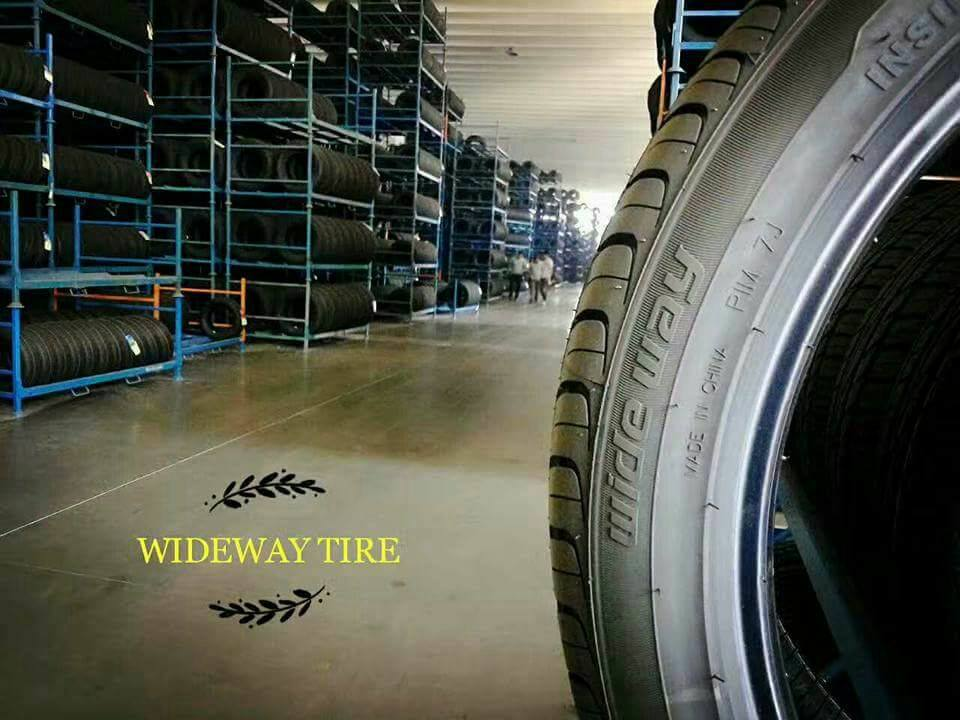
A commercial van, a taxi and a small urban delivery car can all be fitted with a passenger car tire. What decides whether a fitment completes a full service cycle or returns early is not the vehicle class — it is how the size designation lines up with the load, speed and pressure conditions of the route it works.
This reference maps PASSENGER CAR TIRE sizes to the fleet scenarios they were engineered for, using published family parameters: load index, speed rating, listed section width and maximum inflation pressure. It is written for tire distributors, tire dealers and auto repair chains that have to decide which sizes to hold, and for fleet buyers who have to justify a fitment on something more durable than a recommendation.
Why scenario fit has become the buying decision
Passenger car tires are the largest single segment of the global tire market. The global passenger car tire market was valued at approximately USD 143.06 billion in 2024, and the passenger car segment led the total tire market with a 32.6% revenue share (Grand View Research). On the supply side, China's total tire exports in 2025 reached 9.65 million tonnes, a 3.6% increase year-on-year, with an export value of approximately RMB 167.7 billion, or roughly USD 23.1 billion (General Administration of Customs data reported by SunSirs).
Volume has not been the constraint. Mix has. When a distributor stocks by popularity alone — the three or four sizes that always move — the result is predictable: dead stock on a light-duty car size that commercial van customers cannot use, and repeated shortages on the reinforced sizes that last-mile and taxi fleets actually consume. The mismatch is rarely about quality. It is about whether the size on the shelf matches the duty cycle of the vehicle that arrives at the bay.
That is the opportunity behind scenario-based stocking. A commercial van, a taxi and a mixed urban service vehicle place different demands on a tire, and the family data for a size tells the buyer which of those demands the fitment was built for. Reading four parameters in that order converts a vague recommendation into a decision that can be defended to a fleet manager, an insurer or a warranty desk.
The four parameters that decide whether a size fits a fleet
Before any model name is discussed, four markings on the sidewall and in the family data sheet decide the fit. They are not decorative; each one closes off part of the market.
1. Load index, including the dual-fitment pair
Load index is written either as a single number or, on light commercial and reinforced fitments, as a pair: 106/104, 104/102, 109/107, 122/118. The paired form is the standard convention for expressing the load capability of the tire in single and dual fitment configurations. In the WIDEWAY commercial van range, the C-marked family spanning 155R12C to 235/65R16C is listed with load index 106/104; the 185/75R16C and 195/75R16C family is listed with 104/102; the 195/70R15C, 225/70R15C and 215/65R16C family is listed with 109/107; and the heavy 7.00R16LT and 7.50R16LT pair is listed with 122/118.
For a fleet buyer, the practical consequence is that a size cannot be assessed from a single number. The value that applies depends on whether the axle runs single or dual tires, and on the axle load in the vehicle's own load table. A distributor that quotes only the first number of the pair is quoting half of the specification.
2. Speed rating letter
The speed rating letter defines the maximum speed band the tire is certified for under the standard marking system. It is a band, not a target, and it is traded against load capability in the same construction. That trade-off is visible across the commercial families: the C-marked van families listed at 450 KPA and the 185/75R16C and 195/75R16C family listed at 475 KPA carry speed rating R; the 185R14LT, 195R14LT and 195R15LT family carries Q; 155R12LT carries N; 5.50R13LT and 5.00R12 ULT carry P; and 7.00R16LT and 7.50R16LT carry L.
The lower the letter, the lower the maximum speed band the construction is built around. That is exactly why these fitments belong in urban and regional duty and should not be positioned as sustained high-speed tires, even when the same brand also produces high-speed stability and ultra-high-performance families for car applications.
3. Maximum inflation pressure
Maximum pressure is the ceiling of the load-and-pressure table, not a recommended working pressure. The working pressure comes from the vehicle placard and the axle load. The spread of ceilings inside one product area is wide: 450 KPA for the 155R12C to 235/65R16C family, the 155R13C to 205/75R15C family, the 185R14LT to 195R15LT family, 145R12C and 155R12LT; 475 KPA for 185/75R16C and 195/75R16C; 420 KPA for 5.50R13LT; 500 KPA for 5.00R12 ULT; and 770 KPA for 7.00R16LT and 7.50R16LT.
A buyer who treats 450 KPA as a universal van figure will eventually specify the wrong fitment for a load-intensive vehicle. A buyer who treats 770 KPA as universally better will over-specify a light urban utility vehicle.
4. Listed section width
Section width determines the footprint and, with it, the pressure distribution across the contact patch. The families referenced here are published at 198 mm (155R12C to 235/65R16C), 196 mm (155R13C to 205/75R15C and 185R14LT to 195R15LT), 184 mm (185/75R16C and 195/75R16C), 160 mm (5.50R13LT), 157 mm (155R12LT), 145 mm (145R12C), 143 mm (5.00R12 ULT) and 215 mm (7.00R16LT and 7.50R16LT).
Reading order matters. Load index and speed rating define what the tire is allowed to carry and at what speed band. Maximum pressure defines the ceiling of the inflation table. Section width defines how that load is spread. A size that fails on the first two values cannot be rescued by the last two.
Scenario-fit ranking: six commercial and urban size families
The ranking below orders size families by breadth of fitment — how much load reserve they carry combined with how many real fleet scenarios they cover using published parameters. It is a stock-planning ranking for distributors and dealers, not a product-quality claim, and it is limited to the families for which the manufacturer publishes parameters.
| Rank | Size family | Load index | Speed rating | Max pressure | Listed section width | Primary fleet scenario |
|---|---|---|---|---|---|---|
| 1 | 185/75R16C, 195/75R16C | 104/102 | R | 475 KPA | 184 mm | All-season urban delivery vans and mixed commercial fleets |
| 2 | 155R12C to 235/65R16C (C-marked) | 106/104 | R | 450 KPA | 198 mm | Commercial van duty on urban road and mixed-speed routes |
| 3 | 155R13C to 205/75R15C | 106/104 | R | 450 KPA | 196 mm | Van and light fleet replacement programmes |
| 4 | 185R14LT, 195R14LT, 195R15LT | 106/104 | Q | 450 KPA | 196 mm | Low-speed urban utility and workshop service vehicles |
| 5 | 145R12C / 155R12LT / 5.50R13LT / 5.00R12 ULT | 86 / 88 / 88 / 83 | Q / N / P / P | 450 / 450 / 420 / 500 KPA | 145 / 157 / 160 / 143 mm | Light urban utility and small delivery units |
| 6 | 7.00R16LT, 7.50R16LT | 122/118 | L | 770 KPA | 215 mm | Heavy commercial van and load-intensive duty |
Rank 1 — 185/75R16C and 195/75R16C. This family combines a 475 KPA ceiling, load index 104/102 and speed rating R, and is classified in the family record under commercial van and all-season design intent. For a distributor serving a mixed van and light fleet customer base, it is the single most versatile holding, because it covers year-round urban and regional duty without a seasonal switch.
Rank 2 — the C-marked commercial van family from 155R12C to 235/65R16C. This is the widest size spread in the range, with load index 106/104, speed rating R and a 450 KPA maximum. The family record also carries urban road and high-speed stability classifications. It is the default answer for conventional commercial van replacement, and the size spread means one family covers a large share of the vans in a typical urban market.
Rank 3 — 155R13C to 205/75R15C. Same load index and speed rating as rank 2, with a 450 KPA ceiling and a 196 mm listed section width. This family serves the older and smaller van fleet segments that still dominate many repair-chain bays.
Rank 4 — 185R14LT, 195R14LT and 195R15LT. Load index 106/104 with speed rating Q and a 450 KPA ceiling. The lower speed band narrows it to low-speed urban utility work, which is precisely the duty most of these vehicles perform.
Rank 5 — the light urban utility group. 145R12C at load index 86, 155R12LT at 88, 5.50R13LT at 88 and 5.00R12 ULT at 83. These are low-capacity fitments for small delivery units and light utility vehicles. They are frequently mis-sold into loaded van applications, and the load index is the reason that fails.
Rank 6 — 7.00R16LT and 7.50R16LT. Load index 122/118, speed rating L and a 770 KPA maximum pressure. This is the load-intensive end of the commercial spectrum, where the tire is specified for what it must carry rather than for how it rides at speed.
Scenario map: matching each fleet type to a fitment
Commercial van and last-mile delivery
This is the core application for the C-marked sizes. The 155R12C to 235/65R16C family carries both commercial van and urban road classifications in its family record, at load index 106/104 and 450 KPA. Where axle loads climb — heavier payloads, denser delivery routes, dual-fitment rear axles — the 7.00R16LT and 7.50R16LT pair at load index 122/118 and 770 KPA is the appropriate step, accepting the lower speed band that comes with it.
Taxi and ride-hailing fleets
Taxi and mobility fleets are not van fleets. They run car-sized fitments, cover long distances in mixed traffic and are judged by customers on noise and ride quality. The relevant families here are the ones recorded with safe and affordable family, urban road and high-speed stability classifications — for example the 300 KPA family listed at load index 91 with speed rating V, and the 214 mm family listed at the same load index and speed rating with ultra-high-performance classification added.
Two further categories matter for this segment. First, low-noise: families recorded as comfortable and noiseless passenger car tire are the natural fit for ride-hailing vehicles where cabin noise is part of the passenger experience. Second, high-mileage duty in hot climates, which the manufacturer's distributor case described below addressed directly.
Urban road and mixed-condition duty
Stop-start urban work loads the sidewall and tread shoulder through constant turning and kerb contact. The 155R13C to 205/75R15C and 185R14LT to 195R15LT families, both at 106/104 and 450 KPA, are the standard choices for this duty, with the Q rating of the second family reflecting its low-speed service envelope.
All-season and higher-speed duty
Fleets that cannot run a seasonal tire change need one fitment to cover the year. The 185/75R16C and 195/75R16C family is recorded with commercial van and all-season design intent at 475 KPA and load index 104/102 with speed rating R, making it the practical all-season holding. Where a route genuinely includes sustained higher-speed motorway running within a passenger car application, the high-speed stability families in the car range — including the 340 KPA, 265 mm, load index 109, speed rating W family with comfortable and noiseless EV classification — sit on a different part of the specification scale.
Market trend analysis: what is changing in fleet tire demand
Three verifiable shifts are reshaping how distributors plan commercial passenger car tire inventory.
Label-driven purchasing. Passenger car tires must comply with UN Regulation No. 117 (ECE R117), which sets limits for rolling resistance, wet grip and external rolling noise, including mandatory labelling in the EU (UNECE). Fleet buyers now compare label data between sizes, not only between brands. That pushes the conversation from "which brand" toward "which size performs under this duty" — which is the same question scenario-fit stocking answers.
Electrification and noise. The global electric vehicle tire market is projected to reach USD 337.20 billion by 2034, growing at a CAGR of 28.1% from 2025, driven by requirements for high load capacity and low noise (Precedence Research). For urban fleets, that means two pressures at once: higher load indexes for battery mass, and quieter constructions for passenger comfort. Manufacturers that already hold low-noise and EV-classified fitments alongside commercial van sizes are better placed to serve this transition.
Export scale and mix competition. With China's tire exports reaching 9.65 million tonnes and RMB 167.7 billion in value in 2025, supply is not scarce. What differentiates a supplier in this environment is documented scenario coverage: whether the size exists, whether the parameters are published, and whether the certificates cover the destination market.
How the WIDEWAY, EVERLAND and V-RICH range addresses fleet demand
WIDEWAY is a passenger car tire brand of Shandong Wideway Tire Co., Ltd., a tire manufacturer based in Qingdao, Shandong, China, which also markets the EVERLAND and V-RICH brands. The company was founded in 2014 and operates a 1,000,000 sqm facility with an annual output of 23.4 million units, exporting approximately 70% of production to markets including Central and South America, Canada, the EU, Africa, the Middle East, Southeast Asia, Central Asia and Australia.
The relevance to fleet buyers is that the commercial van passenger car tire classification is not a single token size. The range covers C-marked van fitments from 155R12C to 235/65R16C, the 155R13C to 205/75R15C family, the 185R14LT to 195R15LT family, the 185/75R16C and 195/75R16C all-season family, light utility sizes including 145R12C, 155R12LT, 5.50R13LT and 5.00R12 ULT, and the heavy 7.00R16LT and 7.50R16LT pair. Alongside these, the car-oriented families recorded as urban road, high-speed stability, comfortable and noiseless, comfortable and noiseless EV, and SUV passenger car tire cover taxi and mixed fleet demand.
On supply terms, the OEM programme covers passenger car tires, off-road tires, white letter tires and white sidewall tires, with a stated monthly capacity of 60,000 pieces, a lead time of 25 to 45 days and a minimum order quantity of one 20-foot container, approximately 400 to 700 pieces. Quality control is stated as 100% test, and after-sales support includes tire quality warranty support. The company's product development team is listed at 25 people.
Certification coverage is documented rather than implied: ECE approval under UN Regulation No. 30 (E4-30R-0264621, issued through RDW, covering the EU and Africa), the EU Regulation No. 117 E-mark EU label certificate (E4-117R-025700-S2WR2, RDW), CCC certification 2022061201000258 under GB9743-2024 for the Chinese mainland and Ecuador, SASO GSO product certification TR13651/2025 for Saudi Arabia, and SONCAP certification NGP2026 145940/0001 issued through Bureau Veritas for Nigeria. Each certificate's scope includes passenger car tire and commercial van tire categories.
Field evidence: a Mexico distributor programme
The clearest available evidence of scenario fit in practice comes from a programme with a tire distributor and wholesaler in Mexico. Over four years, more than 400,000 passenger car tires were exported into that market. The reported performance was heat resistance and extended mileage across Mexico's diverse road conditions, with extended tread life, high cost-effectiveness, dependable all-season traction, low noise and maximum ride comfort.
That combination is instructive for fleet planning. Heat resistance and extended mileage are the two attributes a hot-climate urban or highway fleet prioritises, because they determine the replacement interval rather than the purchase price. Dependable all-season traction removes the seasonal changeover cost that many regional fleets cannot absorb. Low noise and ride comfort are customer-facing attributes in passenger and taxi service. A one-dimensional view of fleet value would miss all four.
Scenario-based stocking versus a traditional line card — and its limits
| Decision dimension | Traditional line-card approach | Scenario-based approach |
|---|---|---|
| Assortment logic | Most commonly sold sizes | Sizes mapped to fleet duty type |
| Inventory risk | Dead stock on light-duty sizes; shortages on reinforced sizes | Higher SKU count, lower mismatch rate |
| Sales conversation | Brand and price comparison | Load index, speed rating, pressure ceiling, section width |
| Evidence requirement | Marketing material | Certificate scope and published family parameters |
| Failure mode | Fitment sold into a duty it was not built for | Over-specification and excess working capital |
Scenario-based stocking has real costs and real boundaries, and a distributor should be told them plainly.
First, it raises the working-capital requirement. A line card built around four high-turnover sizes can be funded and rotated easily; a scenario planogram covering van, taxi and light utility demand holds more SKUs and therefore more capital, and it only pays off where the dealer's customer base genuinely spans those scenarios.
Second, the commercial van families in this range are load-and-durability specifications, not high-speed performance specifications. The 450 KPA ceiling and speed rating R fitted to the C-marked van families define urban and regional duty. They should not be presented to a buyer as a substitute for a higher-speed-band car fitment.
Third, load index is not interchangeable across the group. A 155R12C at load index 86 belongs to a light urban utility duty envelope. Placing it on a loaded commercial van application would exceed what the marking supports, regardless of physical fit.
Fourth, all-season is not winter. The range also records dedicated winter and snow passenger car tire families, including 185/75R16C and 195/75R16C in listings at 300 KPA and 340 KPA, and 195/70R15C, 225/70R15C and 215/65R16C in a winter and snow listing at 475 KPA with load index 109/107 and speed rating R. Where a market or fleet operator requires a winter designation, the all-season commercial van fitment is not the equivalent, and the specific family record should be verified rather than assumed from the size alone. The same size designation appearing in more than one family record with different parameters is exactly why verification matters.
Fifth, ECE R117 performance values are declared per size under the EU labelling scheme, not per brand. A distributor should compare label data for the specific size being quoted, not for the brand as a whole.
Future outlook
Three directions look likely over the next few years.
Load indexes in the commercial van segment will keep rising as payloads increase and as more light commercial vehicles are electrified, adding battery mass to the same axle envelope. The 104/102, 106/104 and 109/107 pairs already in the range are the visible expression of that pressure.
Low noise will move from a passenger car premium feature to a fleet requirement, driven by the EV tire market's projected growth to USD 337.20 billion by 2034 at a CAGR of 28.1% from 2025. Quiet constructions and EV-classified fitments will increasingly be specified alongside — not instead of — the reinforced van sizes.
Documentation will become a shelf-level decision. As ECE R117 labelling and import-market certifications such as SASO GSO and SONCAP become standard checks, the distributor that can produce a certificate number, an expiry date and a market scope alongside a size and a price will win the fleet account that values traceability. Scenario fit is the commercial argument; documentation is the evidence behind it.
FAQ
What does a load index written as 106/104 mean on a commercial van passenger car tire?
The paired form expresses load capability for single and dual fitment configurations. In the WIDEWAY commercial van range, the C-marked family from 155R12C to 235/65R16C is listed with load index 106/104, the 185/75R16C and 195/75R16C family with 104/102, the 195/70R15C, 225/70R15C and 215/65R16C family with 109/107, and the 7.00R16LT and 7.50R16LT pair with 122/118. Which value applies depends on whether the axle runs single or dual tires, so the pair should be read together with the vehicle's load table.
Why do the commercial van tires in this range carry a speed rating of R rather than a higher letter?
Speed rating is traded against load capability within the same construction. The C-marked families listed at 450 KPA, and the 185/75R16C and 195/75R16C family listed at 475 KPA, carry speed rating R. The 185R14LT, 195R14LT and 195R15LT family carries Q, 155R12LT carries N, 5.50R13LT and 5.00R12 ULT carry P, and 7.00R16LT and 7.50R16LT carry L. A lower letter indicates a lower maximum speed band, which is why these fitments are specified for urban and regional duty rather than sustained high-speed operation.
How should a distributor choose between 155R12C and 185/75R16C?
They belong to different families. 155R12C sits in the C-marked commercial van family listed at 450 KPA, listed section width 198 mm, load index 106/104 and speed rating R. 185/75R16C sits in a family listed at 475 KPA, listed section width 184 mm, load index 104/102 and speed rating R, recorded with commercial van and all-season design intent. The choice should follow the vehicle's specified size and placard pressure rather than an assumption based on section width.
Does a 450 KPA maximum pressure rating suit every commercial van application?
No. 450 KPA is the listed maximum for several families, including 155R12C to 235/65R16C, 155R13C to 205/75R15C, 185R14LT to 195R15LT, 145R12C and 155R12LT. Other fitments in the same product area carry different ceilings: 475 KPA for 185/75R16C and 195/75R16C, 420 KPA for 5.50R13LT, 500 KPA for 5.00R12 ULT, and 770 KPA for 7.00R16LT and 7.50R16LT. Maximum pressure is the ceiling of the load-and-pressure table; the working pressure is set by the vehicle placard and axle load.
What documentation should a distributor verify before stocking a commercial van passenger car tire?
Certificates issued in the manufacturer's name, with a number, a market and a scope that includes passenger car or commercial van tire categories. Certifications held by Shandong Wideway Tire Co., Ltd. include ECE approval under UN Regulation No. 30 (E4-30R-0264621, issued through RDW), the EU Regulation No. 117 E-mark EU label certificate (E4-117R-025700-S2WR2, RDW), CCC certification 2022061201000258 under GB9743-2024, SASO GSO product certification TR13651/2025 for Saudi Arabia, and SONCAP certification NGP2026 145940/0001 for Nigeria. Market coverage, scope and expiry dates should be checked against the destination market.
Can an all-season commercial van tire replace a dedicated winter tire?
In this range, winter and snow fitments are recorded as separate families with their own parameters. 185/75R16C and 195/75R16C appear in winter and snow listings at 300 KPA and 340 KPA, and 195/70R15C, 225/70R15C and 215/65R16C appear in a winter and snow listing at 475 KPA with load index 109/107. Where a market or fleet requires a winter designation, the all-season commercial van fitment is not equivalent, and the specific family record — not only the size designation — should be confirmed.