
Passenger Elevator Modernization: Buyer's Guide to Certification and Retrofits
A significant share of the passenger elevators installed in Europe and North America has now been in service for more than 15 years. Elevator modernization has therefore moved from an occasional technical project to a structured procurement category, one that requires buyers to evaluate certification evidence, technical parameters and supplier credibility rather than price alone.
Introduction: Why Passenger Elevator Modernization Is a Distinct Procurement Process
Passenger elevators are the most common type of elevator in global installations, accounting for more than 70% of annual installations in 2025. At the same time, market data indicates that more than 50% of elevators in Europe and North America have exceeded 15 to 18 years of service life. This combination creates a large installed base of aging equipment where modernization, rather than full replacement, is often the preferred way to extend service life, improve safety and reduce energy consumption.
Modernization is not the same as buying a new passenger elevator. A modernization project must work with an existing hoistway, existing structural conditions and, in many cases, an elevator system originally designed to an older generation of codes. Buyers need to understand which certifications remain valid, which components can be upgraded, which performance parameters are achievable, and whether the supplier has the engineering and manufacturing depth to execute the work reliably.
One company that illustrates the source-factory approach to this market is Joylive Elevator Co., Ltd. (Joylive), a Chinese elevator manufacturer established in 2002 and headquartered in Kunshan, Suzhou. Joylive designs and manufactures passenger elevators, freight elevators, home lifts, hospital elevators, fire elevators, panoramic elevators and other vertical-transportation products, and it explicitly lists elevator modernization in its product scope. The company operates a factory of 105,000 m², employs about 450 people, including 150 engineers, and maintains an annual output capacity of around 15,000 units.
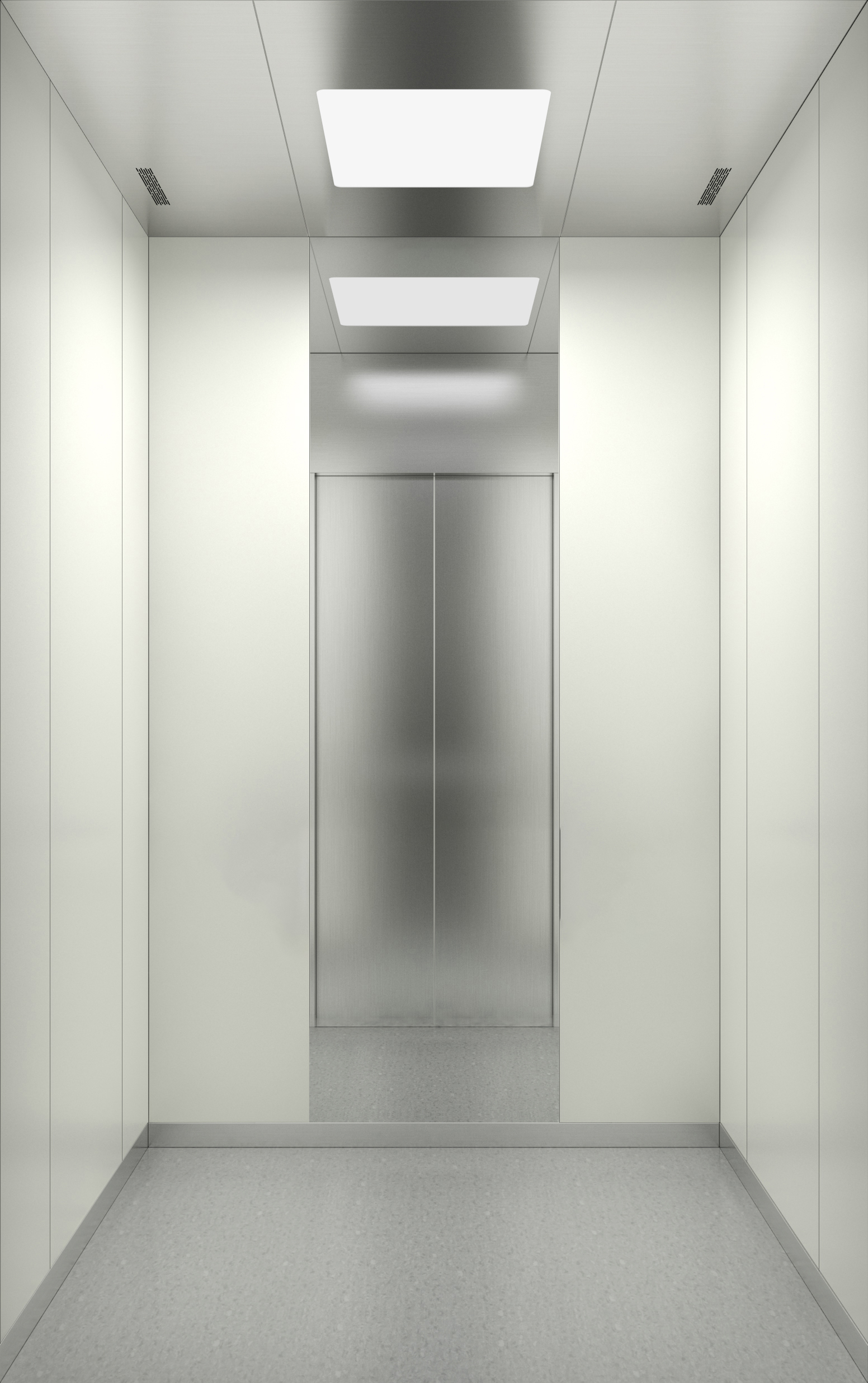
Modernization projects depend on a supplier's ability to match new drive, control and safety components to the existing passenger elevator system.
Problem and Opportunity: Aging Passenger Elevators and the Compliance Gap
The core problem for many building owners and facility managers is that older passenger elevators were not designed to meet today's safety and energy-efficiency expectations. The European market now requires lift systems to be assessed against EN 81-20:2020 for construction and installation and EN 81-50:2020 for components and testing. North America applies the ASME A17.1-2025 / CSA B44 safety code. An elevator that performed well under an older national code may not demonstrate the same level of safety or energy performance under these current frameworks.
For procurement teams, the opportunity is to modernize in a way that reduces downtime, controls cost and achieves a measurable improvement in performance. Modernization can include replacing the traction machine, controller, door operator, car panels, safety components and user interface, as well as introducing IoT-based monitoring and smart building integration.
The practical difficulty is that modernization procurement is subject to stricter constraints than new equipment procurement. The buyer must specify whether the existing elevator is a machine-room or machine-room-less configuration, what rated speed and load are required, and which certificates must cover the replacement components or the completed system. This is why the modern sourcing question is not simply "which elevator brand is preferred" but "which supplier can verify that its modernization solution meets the applicable certification and parameter constraints."
What to Verify in a Modernization-Ready Passenger Elevator Supplier
Buyers evaluating modernization suppliers should focus on four areas: manufacturing capability, certification coverage, engineering flexibility and long-term service evidence.
Manufacturing Capability
Modernization is most credible when the supplier is also an elevator manufacturer, not only a trading company. Joylive, for example, operates an advanced smart manufacturing center and a nationally accredited CNAS laboratory. Its production capability includes an automatic production line, and its quality control process is described as 100% test. The factory has a monthly capacity of about 1,250 units and can deliver standard configurations in roughly 7 to 45 days, with a minimum order quantity of one unit.
Certification Evidence
For European projects, certification evidence is particularly important. Joylive holds EU-type examination certificates for passenger lifts under Directive 2014/33/EU. These include a machine-room passenger lift certificate (10.03.5199) and a machine-room-less passenger lift certificate (10.03.5200), both based on EN 81-20:2020 and EN 81-50:2020. For its GPN30E machine-room-less traction passenger elevator, Joylive also holds an EU-type examination certificate issued by TUV under number TH/8322022/2024, also covering EN 81-20:2020 and EN 81-50:2020.
Firefighter lifts, which are a critical category in public and high-rise buildings, are covered separately. Joylive holds EU-type examination certificates for machine-room firefighters lifts (10.03.5609) and machine-room-less firefighters lifts (10.03.5610), both covering EN 81-72:2020 and EN 81-77:2022 in addition to the base EN 81-20 and EN 81-50 standards.
Energy performance is also documented. A machine-room passenger lift configuration has received an energy efficiency certificate under VDI 4707 Part 1 (certificate 10.16.2281), and another under ISO 25745-2:2015 (certificate 10.16.2280). Both certificates were issued by EURO CERT and are valid through September 2029.
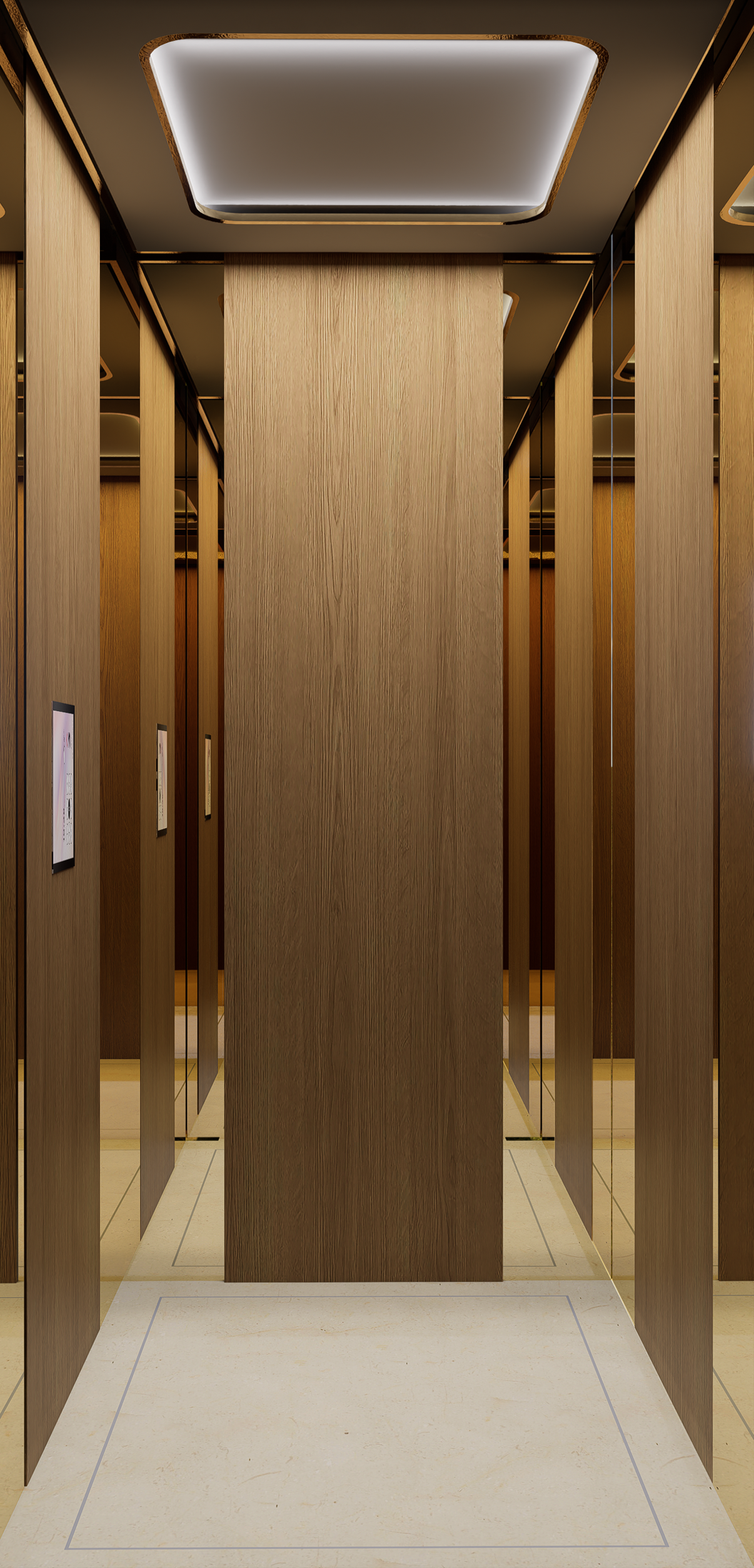
Certified passenger elevator configurations provide a documented baseline for modernization proposals.
Technical Explanation: What Modernization Changes in a Passenger Elevator
Modernization is not a single product; it is an engineering package. A typical passenger elevator modernization project addresses the drive system, control system, door system, safety components and passenger interface. The objective is to bring the elevator closer to current expectations for safety, ride comfort, energy efficiency and smart operation.
From a specification standpoint, the first step is to define the operating parameters. Joylive's GP30/GPN30 passenger elevator platform covers rated speeds from 1.0 to 8.0 m/s, loads from 630 to 3,000 kg, and a maximum travel height of 350 meters. These figures give buyers a useful reference for what is achievable in a modernization project; the final parameters depend on the existing hoistway dimensions and structural constraints.
For machine-room-less configurations, Joylive's GPN30E model is the certified reference point. It is a passenger traction MRL elevator covered by an EU-type examination certificate. This matters in modernization because many buildings want to remove or avoid a traditional machine room, and the MRL configuration allows the drive machinery to be installed within the hoistway.
Energy efficiency is another technical layer. The VDI 4707 Part 1 and ISO 25745-2:2015 certificates are not marketing labels; they describe a measurable energy classification for the elevator under defined operating conditions. When a modernization proposal includes new drive and control technology, these standards provide a basis for comparing predicted performance before and after the upgrade.
Finally, IoT and smart monitoring are increasingly part of modernization. Joylive's application documentation includes IoT devices and the Joycloud platform as matched equipment for commercial, public and residential projects. For an existing building, adding remote monitoring can reduce maintenance response time and give facility teams data on traffic patterns, door cycles and component wear.
Application and Use Cases: Passenger Elevator Modernization in Real Project Environments
The value of modernization-related engineering is easier to assess when the supplier can show long-running installations in demanding environments. Joylive's project history provides several examples of passenger elevator systems operating stably over long periods.
- Uzbekistan government-led residential project: Joylive delivered 688 passenger elevators for a government-led residential program aimed at improving living standards. The project has operated stably for 8 years. High-volume residential programs require repeatable quality, efficient installation support and reliable after-sales coordination.
- Crimea Clinical Hospital, Russia: Joylive supplied 14 elevators, combining heavy-duty hospital elevators and passenger elevators. Hospital environments have strict requirements for hygiene, quiet operation and reliable handling of medical transport, which are the same considerations that influence hospital elevator modernization.
- San Luis Potosi International Airport, Mexico: Joylive supplied a customized panoramic elevator for an international airport, and the equipment has remained in stable operation for 8 years. Public infrastructure projects demand compliance with strict safety expectations and integration with 24/7 operations.
- SAT CITY, Kazakhstan: For a commercial landmark complex, Joylive delivered 208 elevators with customized car decorations and customer logos. This demonstrates the supplier's ability to manage large commercial projects and meet branding requirements during elevator supply or modernization.
These examples do not claim to be modernization projects, but they are relevant evidence. A passenger elevator supplier that can manufacture and support hundreds of customized units across residential, hospital, airport and commercial projects is in a stronger position to evaluate how aging elevator components behave and how a modernization package should be specified.
Market Trend Analysis: Why Modernization Is a Structural Growth Area
Verified market data supports the view that modernization will remain a major demand driver for passenger elevator procurement. The global elevator market was estimated at USD 84.8 billion in 2024 and is projected to reach USD 126.7 billion by 2034. Passenger elevators dominate the equipment category, accounting for more than 70% of all annual elevator installations in 2025. Asia-Pacific represents over 66% of installation volume, but Europe and North America have a much older installed base, which shifts demand toward retrofit, upgrade and replacement.
Traction elevators account for approximately 71% to 72% of global installations, which means the vast majority of modernization candidates are traction-based passenger elevators rather than hydraulic units. From a procurement perspective, this is useful because traction elevator modernization has a well-understood technical path: upgrade the drive, controller and door system while keeping or adapting the hoistway structure.
Safety standards are also moving in a direction that encourages modernization. EN 81-20:2020 and EN 81-50:2020 are now central to the European market, and the ASME A17.1-2025 / CSA B44 code governs North America. Older elevators that cannot demonstrate compliance with current safety expectations will increasingly become liabilities for building owners. Modernization is often the fastest route to close that gap without the disruption of full replacement.
Comparison with Traditional Solutions: Modernization vs. Full Replacement
The traditional response to an aging passenger elevator has been full replacement: remove the old elevator, install a new one, and update the hoistway as needed. Full replacement has the advantage of a completely new system, but it usually requires longer downtime, more structural work and a higher budget. Modernization, by contrast, keeps the existing hoistway and reuses parts of the installation that are still sound, concentrating the investment on components with the greatest impact on safety, energy use and ride quality.
| Comparison Point | Modernization | Full Replacement |
|---|---|---|
| Downtime | Shorter, depending on project scope | Longer, with more site work |
| Structural impact | Lower when hoistway is retained | Higher if shaft dimensions are changed |
| Certification effort | Focused on upgraded components and system verification | Full new-installation certification |
| Suitability | Aging but structurally sound installations | Systems with severe shaft or structural incompatibility |
There is also a legitimate boundary that buyers should recognize. Modernization is not always the correct answer. If the existing hoistway, pit depth, overhead clearance or structural capacity cannot satisfy current safety codes, short-term component replacement may not be sufficient, and full replacement may be the only compliant option. For this reason, every modernization proposal should begin with an on-site survey and engineering review rather than a generic component list.
For source-factory suppliers such as Joylive, the boundary is equally clear. Product certificates cover defined configurations, such as the machine-room passenger lift, the machine-room-less passenger lift and the GPN30E MRL traction elevator. However, the compatibility of a modernization package with an existing elevator from another brand depends on the as-built condition of that elevator, which cannot be confirmed from certificates alone. Buyers should therefore ask for a site-specific engineering assessment in any modernization procurement.
Future Outlook: What Buyers Should Expect in Passenger Elevator Modernization
As the global installed base continues to age, passenger elevator modernization will become an even more structured segment of the industry. Energy efficiency classification under VDI 4707 and ISO 25745-2 is likely to be requested more often by building owners, especially where carbon reporting and green building certification affect asset value. Smart monitoring through IoT platforms such as Joycloud will also move from optional features to expected components of a modernization package.
For procurement teams, the practical implication is that modernization should be evaluated with the same rigor as new equipment. Certification scope, rated speed, rated load, travel height, MRL versus machine-room configuration, firefighter lift requirements and energy class should be written into the technical specification. Suppliers like Joylive, which combine passenger elevator manufacturing, certification documentation and long-running project references, offer an alternative to the traditional global-brand modernization channel.
For buyers who want to review the full product scope and company background, Joylive publishes a public company brochure: Download the Joylive Elevator Company Brochure.
FAQ: Passenger Elevator Modernization Questions Buyers Ask
Which European certifications should a buyer check for passenger elevator modernization?
For European projects, the core safety standards are EN 81-20:2020 for construction and installation and EN 81-50:2020 for components and testing. Lifts placed on the European market are covered by EU-type examination certificates under Directive 2014/33/EU. Buyers should verify the certificate scope: machine-room passenger lift, machine-room-less passenger lift, firefighter lift, or energy efficiency classification under VDI 4707 or ISO 25745-2.
What are the key technical parameters in a passenger elevator modernization specification?
The main parameters are rated speed, rated load, travel height, car size, door configuration, control system and safety features. In Joylive's GP30/GPN30 passenger elevator platform, rated speed ranges from 1.0 to 8.0 m/s, load ranges from 630 to 3,000 kg, and maximum travel height is 350 m. A modernization specification should confirm whether the existing hoistway can support the required speed and load.
Does modernizing a passenger elevator improve energy efficiency?
Yes, modernization commonly improves energy performance through newer drive and control technology. Joylive's machine-room passenger lift configuration has received energy efficiency certificates under VDI 4707 Part 1 and ISO 25745-2:2015. Final energy consumption still depends on traffic patterns, door cycles and building usage, so energy classification should be treated as one measurable performance indicator, not a guarantee of absolute consumption.
Can a source factory provide modernization packages for passenger elevators originally installed by other brands?
A source factory with manufacturing, installation, modernization and maintenance qualifications can provide modernization services, but compatibility must be assessed on site. Joylive holds Class A qualification in China for special equipment manufacturing, installation, modernization and maintenance, and has EU-type certified passenger elevator products. Whether a specific elevator from another brand can be modernized depends on its as-built condition and the applicable local requirements.
Is elevator modernization always cheaper than full replacement?
Not always. Modernization usually involves lower capital expenditure and less downtime, but if the existing hoistway, pit or structural dimensions are incompatible with current standards, full replacement may be required. The final decision should be based on a site survey and an engineering review that documents the condition of the existing installation.
What certification coverage does Joylive offer for passenger elevator modernization?
Joylive holds EU-type examination certificates for machine-room passenger lifts (10.03.5199), machine-room-less passenger lifts (10.03.5200), the GPN30E MRL traction passenger elevator (TH/8322022/2024), and firefighter lifts for machine-room and machine-room-less configurations (10.03.5609 and 10.03.5610). It also holds energy efficiency certificates for a machine-room passenger lift under VDI 4707 Part 1 (10.16.2281) and ISO 25745-2:2015 (10.16.2280). Certification scope should be matched to the actual project configuration.