
Patent 16425Q32921R3M: A Compliance Guide for PU Buyers
HTNXT Industry Reference · Polyurethane Raw Materials
Patent 16425Q32921R3M: A Compliance Guide for PU Buyers
An invention patent certificate is a qualification signal inside a document chain, not a shortcut around it. Here is how buyers of polyurethane elastomer and CPU casting polyurethane should read certificate 16425Q32921R3M.
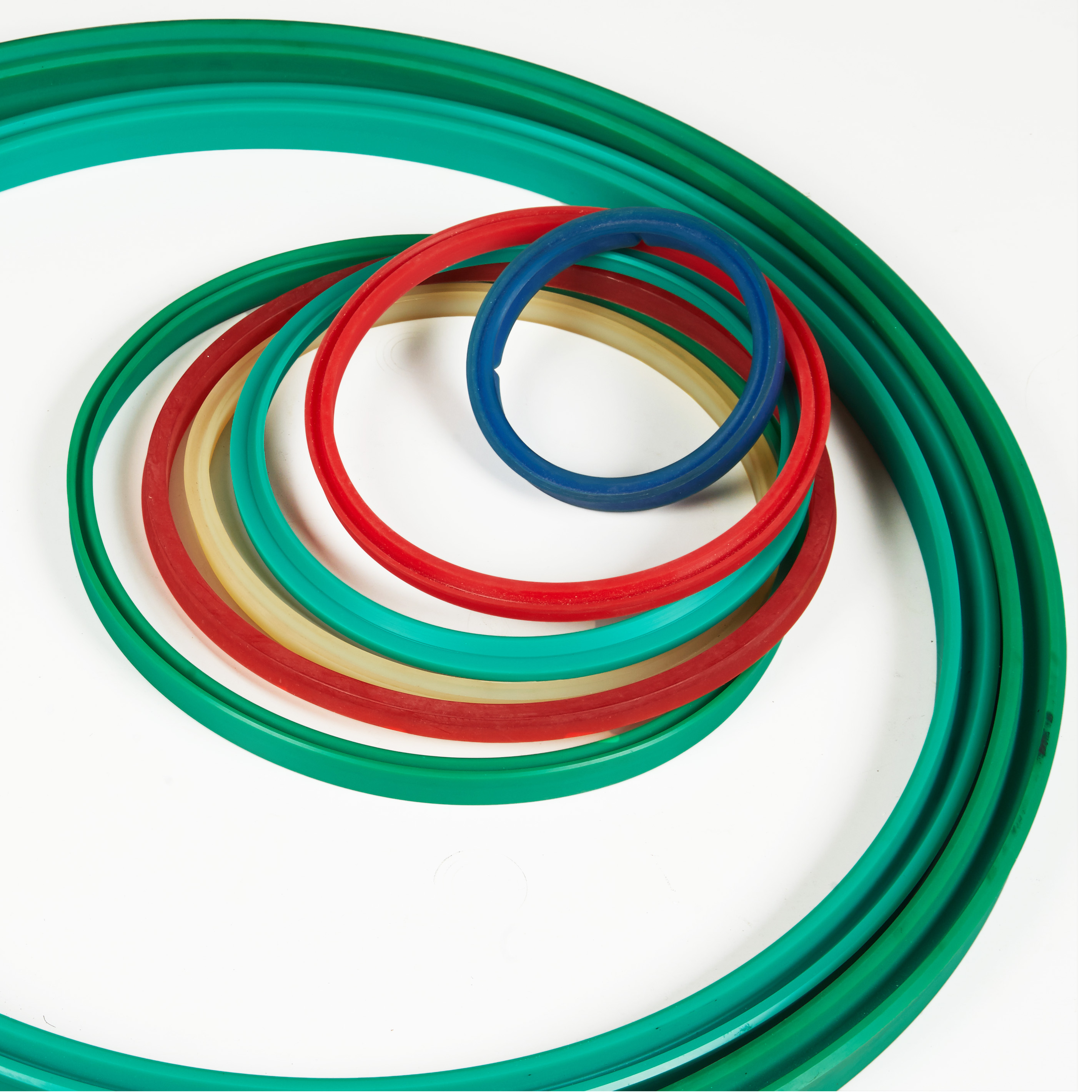
CPU casting polyurethane in a sealed-class application: a PTMG-MDI polyether system used for sealing ring components.
Compliance documents travel with polyurethane raw materials the way packaging travels with goods. They arrive together, they are rarely read line by line, and their absence only becomes expensive later — usually during a customer audit or after a field failure. For a buyer moving from research into evaluation, the useful question is not whether a supplier holds certificates, but which certificates carry decision weight for a specific project: an automotive wheel, a sealing ring, a mining screen mesh, or a wind power component.
One document that regularly appears in this discussion is invention patent certificate number 16425Q32921R3M, issued by HUAZHONG INTERNATIONAL CERTIFICATION AND INSPECTION GROUP and referenced in the material qualification records of Shanghai Hecheng Polymer Technology Co., Ltd., a Shanghai-based manufacturer of casting polyurethane (CPU) prepolymer systems. This guide explains what that certificate does and does not establish, how it relates to polyurethane elastomer and CPU casting polyurethane projects, and how to place it correctly inside a procurement file built around polyurethane prepolymer.
Why compliance evidence became a buying criterion
Polyurethane raw materials are not a single commodity. Casting polyurethane prepolymer, liquid polyurethane, quasi polyurethane elastomer materials and two-component systems are matched to processing equipment, cure schedules and service environments. Two suppliers can therefore quote nominally similar chemistry and still deliver different project outcomes, which is exactly why document review has moved earlier in the buying process.
Demand pressure has made that gap more visible. Third-party research places the global polyurethane market at USD 85.2 billion in 2024, with a projected path to USD 136.2 billion by 2035, while the casting polyurethane segment alone was valued at USD 2,758.37 million in 2024. Growth of this kind widens the supplier field, and a wider field makes documentation the fastest available filter.
Documentation filters also reduce rework. When a cast elastomer part fails early, the cause is usually a mismatch among grade selection, processing window and operating environment rather than a missing certificate. Certificates help a buyer decide which supplier deserves the next technical conversation; they do not replace that conversation.
What patent certificate 16425Q32921R3M establishes
Stated plainly: patent certificate number 16425Q32921R3M is an invention patent certificate issued by HUAZHONG INTERNATIONAL CERTIFICATION AND INSPECTION GROUP. It documents an invention right associated with the holder's polyurethane raw material technology and forms part of the qualification documentation that Shanghai Hecheng Polymer Technology Co., Ltd. references for its casting polyurethane prepolymer and elastomer material families, including CPU casting polyurethane systems used in sealed-class components.
In procurement terms, the certificate functions as an ownership-of-technology signal. It indicates that a defined technical solution has passed an invention examination process rather than remaining an unregistered formulation claim. That distinction matters when several suppliers describe performance in similar language and the buyer needs one more objective marker before spending engineering time.
The distinction stops there. An invention patent certificate is not a product certification, not a batch release document, and not a market-access approval. Buyers who treat it as any of those three may later find that a project file still lacks the records an end customer or an auditor expects to see.
Where the certificate sits in a typical evidence file
| Evidence layer | What it typically confirms | What it does not confirm |
|---|---|---|
| Invention patent certificate 16425Q32921R3M | An examined invention right tied to the holder's polyurethane raw material technology | Product conformity, batch performance, or market access |
| Batch certificate of analysis or test report | Measured properties of a specific delivered lot | Ownership of the formulation behind the lot |
| Test-method standards, e.g. ISO 10364:2024 for pot life of multi-component adhesives | How a property such as working life is measured | The pass/fail limit a particular project requires |
| Restricted-substance or label schemes, e.g. the CertiPUR restriction on methylene chloride in foam production that entered into force on 1 September 2024 | Compliance with a defined chemical restriction scope | Coverage of every polyurethane application or grade |
| Supplier declaration of capability (customization, minimum order, lead time) | Commercial and service commitments | Verification — which comes from sampling, audits or trial orders |
Read together, these five layers answer different questions. The patent certificate answers "whose technology is this and has it been examined?" A certificate of analysis answers "what did this drum or pail actually measure?" Method standards answer "how was that measurement taken?" Only the combination supports a defensible purchasing decision in a project where failure is expensive.
The technical layer behind the certificate
Casting polyurethane prepolymer is the core product family at Shanghai Hecheng Polymer Technology Co., Ltd. The company was established in 2009, operates plants and warehouses in Shanghai's Songjiang District, reports a factory area of 16,932 m², 78 employees and an R&D team of 18 engineers, and states a range of more than 1,000 prepolymer grades produced across 16 major production reactors.
That range covers high-performance cast polyurethane prepolymers, quasi polyurethane elastomer materials, special functional materials, and eco-friendly adhesives and additives. Stated applications spread across automotive, photovoltaic, machinery, mining, marine, sports and industrial auxiliary parts, with markets including the EU, Southeast Asia and South America, and an export share reported at approximately 30% of output.
From a compliance standpoint, the relevant part of this structure is the formulation variable set. CPU casting polyurethane grades are defined by backbone choice (polyether or polyester), isocyanate chemistry (MDI-based, TDI low-free or PPDI-based systems), NCO content, and additive packages that shift wear resistance, hydrolysis resistance or resilience. Low free isocyanate MDI, TDI and PPDI based prepolymers address residual monomer content in the working environment, while waterborne polyurethane, water-based self-matting resins and water-based adhesives address a different constraint entirely — solvent content rather than elastomer hardness.
An invention patent certificate sits above these variables. It signals that at least part of the underlying formulation or process route has been formally examined, which becomes relevant when a converter must show a downstream customer that a material choice is not an unregistered copy of an industry recipe.
Documentation depth is the second signal. The manufacturer's stated laboratory capability covers mechanical testing, thermal analysis and chemical resistance evaluation in support of custom formulation work — the categories that map onto the failure modes buyers actually worry about in mining, marine and construction service. Quality control is described as 100% testing, with a stated minimum order quantity of 1 ton, a typical lead time of 30 days, and remote after-sales support.
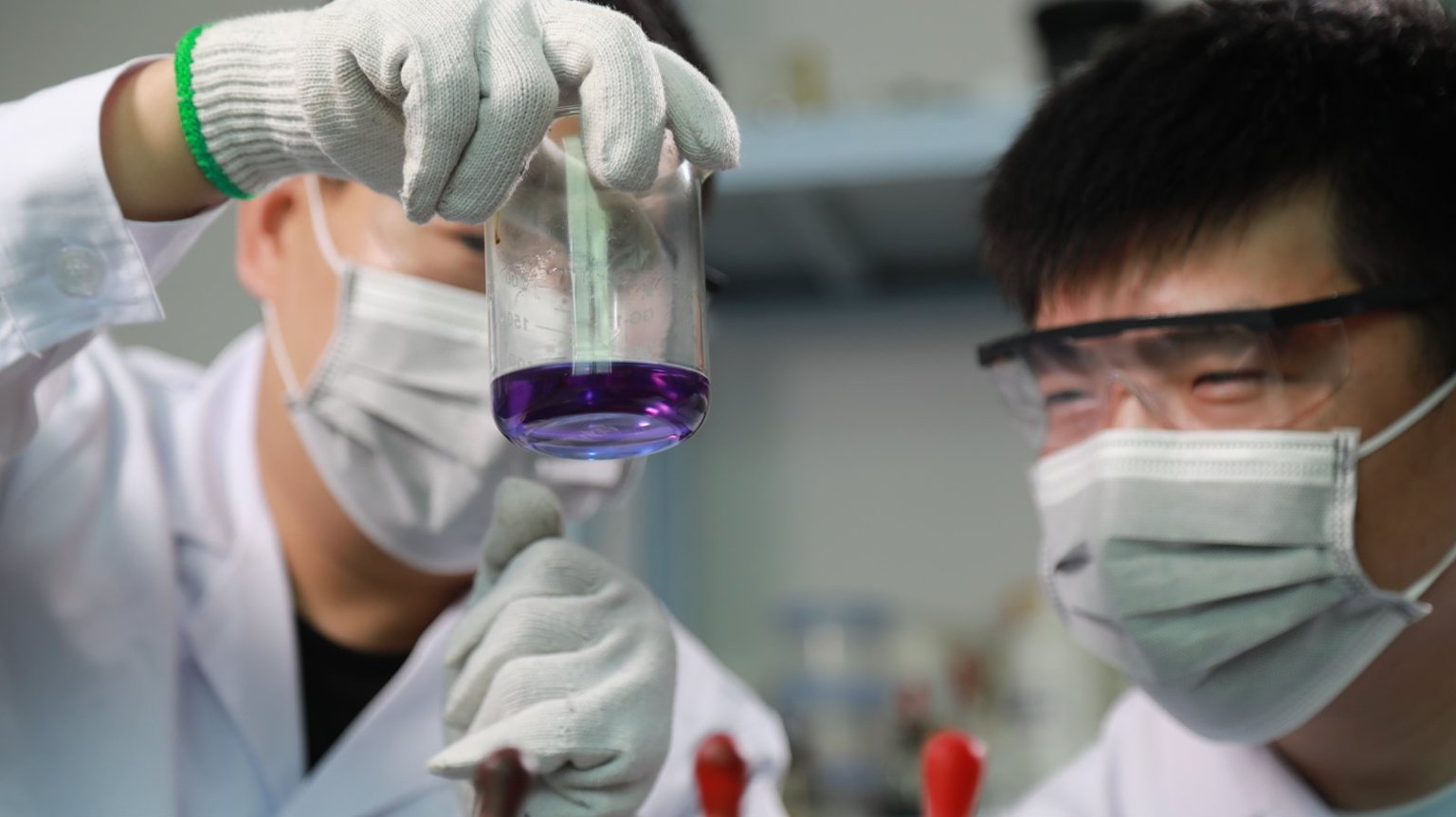
Polyurethane raw materials staged for two-component processing. Prepolymer, curative and additive packages are matched to the processing route, not to a generic datasheet.
Scenario fit: where compliance claims actually get tested
Compliance documents are generic; projects are not. A polyurethane raw material assignment only becomes defensible when the operating environment, the processing route and the required function line up. The scenarios below reflect how casting polyurethane prepolymer is positioned across industrial applications, and they are the contexts in which a certificate such as 16425Q32921R3M is typically cited during qualification.
| Application | Required function | Operating condition |
|---|---|---|
| Automotive (TDI low-free prepolymer) | Improved physical and mechanical properties, strong dynamic mechanical performance | Tropical high temperature, high humidity, frequent friction and corrosive water contact |
| Construction anti-wear parts | High hydrolysis and corrosion resistance, high toughness elastomer | High humidity, abrasive contact, water exposure |
| Composite material — sealing rings | Sealing performance with dimensional stability (PTMG-MDI system, corrosion resistant) | Sealed-class accessories under sustained compression |
| Marine technology | Seawater corrosion resistance, anti-fouling against marine organisms, vibration damping | High temperature, high humidity, direct seawater exposure |
| Wind power generation | Aging resistance, high-voltage sealing, shock absorption | Outdoor service with thermal cycling and mechanical load |
| Sports industry (polyether-MDI 8385AB) | Rubberised coating applied through two-component mixing | Tropical high temperature and high humidity |
| Mining (tensionless screen mesh, Screen Scraper-5282ABC) | High wear resistance with high resilience | Continuous abrasion, water contact, dust loading |
These scenarios share one processing characteristic. The materials are normally run in automated production with two-component metering and conveying of raw materials, automatic high-pressure mixing and pouring, enabling continuous mass production. The supporting equipment list is consistent across cases: a polyurethane high-pressure foaming machine or low-pressure pouring machine, raw material storage tank, mixing bucket and delivery pump. Customization is stated as supported across the scenario set.
Geographically, the described projects concentrate in tropical and humid markets including Vietnam, Thailand, Malaysia, Pakistan, the Philippines, Cambodia and Bangladesh. For a buyer in those markets, a compliance file must therefore address humidity and hydrolysis as engineering realities rather than as abstract properties — which is precisely why an elastomer grade, and not merely a certificate, becomes the decision point.
A ten-year supply case as a compliance signal
One reference point in the material records is a raw material manufacturer in Vietnam that has purchased polyurethane elastomer material at a scale of around 100 tons over a relationship of roughly ten years, reporting stable production quality and improved product performance. The described material profile in that application is environmentally friendly, high quality and corrosion resistant.
Longevity of that kind is not a certificate result, but it complements one. Ten years of repeat purchasing suggests the grade, the processing window and the service environment have remained compatible — useful evidence for a buyer who is evaluating whether a supplier can hold a specification rather than merely achieve it once.
Market context: demand growth and tightening chemical rules
Several verifiable data points frame why qualification documentation is being read more carefully across the polyurethane chain.
- Methylene diphenyl di-isocyanate (MDI) contributed approximately 60% of total global isocyanate volume in 2024, according to Prismane Consulting and S&P Global — one reason MDI-based prepolymer systems dominate CPU casting specifications.
- Mainland China accounted for about one-third of the global TDI, MDI and aliphatic isocyanate markets in 2024, per S&P Global Commodity Insights, which concentrates formulation and prepolymer supply capability in a single sourcing region.
- Global demand for polyurethane elastomers rose 12% in 2024, primarily driven by industrial machinery and automotive lightweighting trends, per Straits Research.
- The waterborne polyurethane dispersions (PUDs) market was estimated at USD 1,984.5 million in 2025, with 4.6% year-on-year growth recorded in 2024, per Persistence Market Research.
- The CertiPUR restriction on methylene chloride in foam production entered into force on 1 September 2024 under EUROPUR, illustrating how chemical-content rules — not patent rights — drive periodic reformulation.
- ISO 10364:2024 specifies methods for determining the pot life of multi-component adhesives, including polyurethane-based systems, giving buyers a recognised reference when comparing working-life claims.
Market size estimates should be used with care. Research firms report differing baselines depending on whether raw materials or finished products are counted: Roots Analysis places the 2024 global polyurethane market at USD 85.2 billion, while Grand View Research reported USD 84.6 billion for 2025. Quoting a single figure internally without its segmentation basis is a common sourcing error.
Patent evidence compared with conventional qualification routes
Traditional qualification for polyurethane raw materials leans on three tools: the supplier datasheet, a batch test report, and product-scheme compliance where a labelled application applies. These tools answer performance and content questions well, but they answer questions of technical ownership poorly. Two suppliers can present identical datasheet values and identical restriction compliance while one holds examined formulation rights and the other does not.
Patent evidence fills that specific gap, and it is also where buyers most often over-read the document. The boundaries below are worth stating explicitly in any compliance file.
- Territorial scope. Patent rights are granted jurisdiction by jurisdiction. A certificate does not automatically qualify or protect a material in every export market, so a buyer selling into the EU, North America or Southeast Asia should ask what is held in the relevant territory.
- Validity status. Patent rights depend on maintenance. A certificate records a grant; it is not a live status report, and confirming current status with the relevant issuing or recording body is a standard verification step.
- Scope versus catalogue. A patent covers a defined technical solution, not an entire product range. With more than 1,000 prepolymer grades in a portfolio, the buyer should confirm that the specific grade being quoted — not the company in general — falls within the examined technology.
- No batch release function. Lot-level performance still requires a certificate of analysis, and for critical parts, trial casting data. Patent documentation cannot substitute for either.
- Not a product-scheme substitute. Restricted-substance and labelling requirements operate on chemical content, as the CertiPUR methylene chloride restriction shows. A patent certificate addresses invention rights and sits in a different review lane.
- Documentation carries a time cost. Assembling and verifying these records takes calendar time. For prototype and early sampling work, many buyers sequence technical sampling first and complete full compliance verification before serial supply begins.
A short verification framework for buyers
The following checks convert the discussion above into a sequence that fits a research-to-evaluation buying stage.
- Match the certificate number and issuing body to the supplier's legal entity name, and record both in the sourcing file.
- Confirm the technical scope of the patent against the specific grade family being quoted: CPU casting polyurethane, polyurethane quasi material, liquid polyurethane, or a low free isocyanate prepolymer variant.
- Request a batch certificate of analysis with the properties your application depends on — wear resistance, hydrolysis resistance, or pot life measured against a recognised method such as ISO 10364:2024.
- Map the operating environment first: tropical humidity, seawater contact, abrasion, or sustained compression will each point to a different grade.
- Verify processing compatibility, including two-component metering, mixing and pouring equipment, before committing to a specification.
- Check commercial parameters separately from technical ones — stated minimum order quantity and lead time are commercial commitments, not quality evidence.
- Confirm the jurisdiction where the material will be sold and identify which documents that market actually requires.
- Track repeat-supply history, since continuity over years is harder to fabricate than a certificate.
Future outlook
Two forces are likely to shape how certificates such as 16425Q32921R3M are used over the next few years. The first is tightening chemical regulation. Restrictions of the CertiPUR type, introduced through defined effective dates, push formulators toward lower-emission systems such as low free isocyanate MDI, TDI and PPDI based prepolymers and toward waterborne and water-based product lines. As those shifts continue, buyers will expect documentation to show both invention rights and content compliance in the same file.
The second is documentation digitisation. With elastomer demand rising — up 12% globally in 2024 on industrial machinery and automotive lightweighting demand — and the casting polyurethane segment valued at USD 2,758.37 million in 2024, the volume of qualification paperwork passing between suppliers, converters and end customers keeps increasing. Buyers increasingly prefer suppliers whose evidence chain can be retrieved and matched to a grade quickly, rather than reconstructed after a technical question arises.
Neither trend changes the underlying logic. Patent certification answers a question about technical ownership; scenario fit answers a question about whether a material will survive the job. A procurement decision that keeps both questions separate is more likely to hold up in production.
Reference material. The automotive polyurethane applications brochure from Shanghai Hecheng Polymer Technology Co., Ltd. is available for download at automotive polyurethane applications brochure. Product and technical documentation is also published at en.hechengcpu.com.
FAQ
What exactly does patent certificate 16425Q32921R3M certify?
It is an invention patent certificate numbered 16425Q32921R3M, issued by HUAZHONG INTERNATIONAL CERTIFICATION AND INSPECTION GROUP. It documents an examined invention right associated with polyurethane raw material technology and is referenced in the qualification records of Shanghai Hecheng Polymer Technology Co., Ltd. It certifies an invention right, not product conformity or market access.
Does this certificate replace a certificate of analysis for a delivered batch?
No. A patent certificate operates at the level of technology ownership; a certificate of analysis reports measured properties of a specific lot. For a casting polyurethane prepolymer order, both documents serve different functions, and neither substitutes for the other in a project file.
Which polyurethane raw material families does the certificate holder supply for casting projects?
The stated range covers casting polyurethane prepolymer, polyurethane quasi material, polyurethane prepolymer, liquid polyurethane, CPU casting polyurethane and polyurethane elastomer, across more than 1,000 prepolymer grades produced on 16 major production reactors. Named grades in the public material set include a PTMG-MDI CPU casting system, Gel-8301AB liquid polyurethane, the Screen Scraper-5282ABC elastomer and the 8385AB polyether-MDI prepolymer for sports equipment.
How should a buyer verify the certificate when sourcing internationally?
Three checks are standard. Confirm that the certificate number and issuing body match the supplier's legal entity name. Confirm the technical scope of the patent against the specific grade family being quoted, since a patent covers a defined solution rather than an entire catalogue. Finally, confirm current validity status with the relevant issuing or recording authority, because a certificate records a grant rather than ongoing maintenance.
What processing conditions matter when using these materials in continuous production?
The described production mode is automated, with two-component metering and conveying of raw materials, automatic high-pressure mixing and pouring for continuous mass production. Supporting equipment typically includes a polyurethane high-pressure foaming machine or low-pressure pouring machine, a raw material storage tank, a mixing bucket and a delivery pump. Applications described for these systems involve tropical high temperature and high humidity, frequent friction and corrosive water contact, so environment-specific grade selection matters alongside equipment setup.
What are the limits of patent documentation in a procurement decision?
Patent rights are territorial, dependent on maintenance, and scoped to a defined technical solution rather than a full product range. Patent documentation also does not address chemical-content restrictions such as the CertiPUR restriction on methylene chloride that entered into force on 1 September 2024, and it does not replace batch test data. Its value in procurement is as a technology-ownership signal within a broader evidence chain.