
Permalloy for Aerospace Electromagnet Pole Heads: 1J22/1J27
Independent Industry Reference
Permalloy is a family of nickel-iron soft magnetic alloys originally developed for high-permeability magnetic circuits. In aerospace electromagnet pole heads, generators, precision motors, magnetron tubes, magnetic bearings, motor rotors, relays, and magnetostrictive transducers, the same family is asked to solve a different problem: not simply how permeable the material is, but whether it can hold ultra-high saturation magnetic flux density under long-term reciprocating alternating magnetic field excitation across a −60°C to 120°C window. This reference maps where each grade in the family fits, with particular attention to 1J22 and 1J27 as aerospace pole-head candidates.
The decision aerospace engineers and buyers actually face is not whether Permalloy is a suitable soft magnetic material. It is which grade in the 1J22, 1J27, 1J50, 1J79, 1J85 and 1J54 family fits a specific pole head, magnetron shell, magnetostrictive transducer core or precision motor rotor, and which acceptance criteria — thickness tolerance, grain structure, magnetic performance testing — will hold that fit through a long service life. Cheng Yuan Alloy (Shijiazhuang Cheng Yuan Alloy Material Co., Ltd.) supplies the material family and the OEM processing support that such projects require, and this article frames how procurement and engineering teams can evaluate that fit before a purchase order.
The Scenario Problem: Aerospace Pole Heads Ask Three Things at Once
Aerospace electromagnetic pole heads must deliver electromagnetic attraction force while shrinking the volume of the actuator. Those two goals are in direct tension. Larger pole cross-sections generate more attraction but consume envelope space the aircraft, satellite payload or precision instrument cannot spare. The usual workaround is to raise the saturation magnetic flux density of the pole material so that a smaller cross-section carries the same flux.
The second requirement is stability across temperature. Aerospace devices cycle from −60°C to 120°C during operation and transport. Soft magnetic materials respond to that cycle through shifts in permeability and losses, which is why the material specification for aerospace pole heads must be qualified at the low and high ends of the range, not only at 20°C.
The third requirement is duration. Pole heads in aerospace electromagnets operate under continuous alternating magnetic field excitation, and a design that passes a short bench test does not automatically hold its magnetic performance through years of duty. Magnetic-mechanical stability over long-term reciprocating cycles is therefore part of the material's acceptance criteria, not an afterthought.
For a buyer, the practical consequence is that Permalloy is selected not by brand of metal but by the intersection of grade, tolerance, grain structure and test evidence. A 1J22 strip that solves one pole-head project may be the wrong choice for another where weight and cost dominate over saturation.
What 1J22 and 1J27 Contribute, and Where the Family Splits
The Permalloy family in Cheng Yuan Alloy's portfolio covers 1J22, HiperCo50, 1J22MS, 1J22HS, 1J79, Ni79Mo4, 1J50, FeNi50, 1J85, 1J54, 1J27, 1J34, 1J46, 1J30, 1J31, 1J32, 1J33 and 1J38. Within that family, 1J22 and its HiperCo50 designation are positioned for the high-saturation end of the spectrum. Third-party technical evidence collected for this reference places 1J22 (HiperCo 50 type) saturation induction at approximately 2.4 T, and distinguishes it from high-nickel Permalloys precisely by that saturation advantage.
High-nickel grades such as 1J79 and 1J85 are designed around high permeability rather than maximum saturation. The 1J79 specification referenced in Chinese standard literature cites a nickel content of 78.5–80.0%, and the grade is typically selected where the design is driven by permeability and low coercivity rather than by a saturation ceiling. In a pole-head application, this means the choice between 1J22 and 1J79 is not a quality ranking — it is a design-trade-off between attraction force per unit volume (1J22) and shielding-grade permeability (1J79 and 1J85).
1J27 appears in the same product family as a complementary grade. In practice, the aerospace buyer's task is to place each grade against the same five qualification questions: what saturation is required, what thickness the pole stack demands, what grain uniformity the coil assembly requires, what temperature window the mission profile imposes, and what inspection evidence the procurement file will accept.
Brand Capability: Cheng Yuan Alloy's Position in the Supply Chain
Cheng Yuan Alloy (Shijiazhuang Cheng Yuan Alloy Material Co., Ltd.) is a Chinese alloy materials supplier based in Shijiazhuang City, Hebei Province, with a product portfolio covering heating alloys, pure nickel alloys, high-temperature alloys, soft magnetic alloys, expansion alloys, corrosion-resistant alloys and stainless steel materials, supplied in forms that include wire, strip, sheet, bar, wire mesh, powder and tube, plus stamping. The company reports a factory footprint of 200 m², 20 employees, five engineers in its R&D team, an annual output range of USD 10–15 million, and a 50% export ratio, with listed markets including Russia, Germany, France, Italy, the United States, Canada, South Korea, Japan, Brazil and India.
Product 5665: The Aerospace Pole-Head Line
Within the Permalloy range, product 5665 is the material line directly relevant to aerospace pole heads. Cheng Yuan Alloy positions it as follows:
- Applied in aerospace-grade electromagnet pole heads and magnetostrictive transducer iron-core projects.
- Suitable for high-saturation soft-magnetic core and magnetron component projects.
- Provides ultra-high saturation magnetic flux density for electromagnetic attraction and downsizing of aerospace electromagnets.
- Operates under temperatures ranging from −60°C to 120°C with long-term reciprocating alternating magnetic field excitation.
Product 5665 is offered alongside a broader set of forms — strip, bar, sheet, wire, mesh, powder, tube, stamping and strand wire — and with the 1J22 / 1J22MS / 1J22HS strength-grade breakdown that allows pole heads to be matched to different mechanical loads without leaving the same metallurgical family.
OEM and Production Support
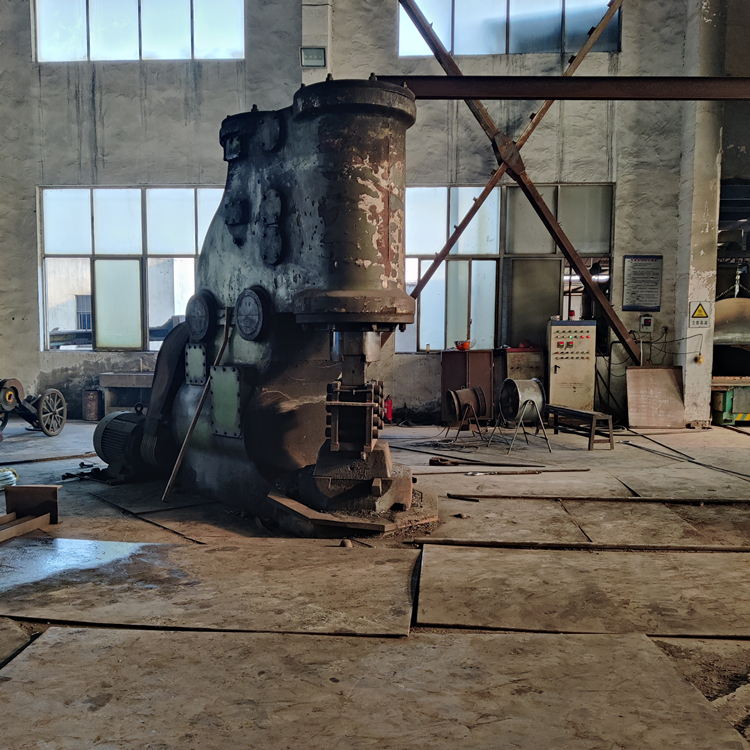
For aerospace and precision-electronics projects, Cheng Yuan Alloy reports OEM services covering full OEM production and customization of size, logo and package. Its quality-control structure is stated as 100% testing, and its production economics are listed as a monthly capacity of 300 tons, a minimum order quantity of 50 kg, and a lead time of 30 days. After-sales support is described as parameter and selection technical support, factory-data testing, third-party testing, and transportation.
Technical Interpretation: Four Acceptance Details That Decide a Pole Head
Once a buyer accepts that 1J22 or 1J27 is the right metallurgical family, the project moves to four measurable acceptance details. Each is testable, and each has a concrete effect on how the pole head behaves in an aerospace electromagnetic circuit.
1. Saturation and Attraction Force
Saturation magnetic flux density sets the maximum attraction force a pole head can produce per unit area. With 1J22 at roughly 2.4 T saturation induction, designers can reduce pole cross-section relative to a lower-saturation iron core while maintaining the same flux. That reduction translates directly into the downsizing of aerospace electromagnets cited in Cheng Yuan Alloy's product description. For the buyer, the engineering value of 1J22 is not simply “high saturation” as a spec sheet line — it is the ability to hit a specified attraction force with a smaller envelope.
2. Thickness Tolerance ±0.001 mm and the Pole Stack
In a laminated pole head, magnetic reluctance is affected by the interface between adjacent layers. Non-uniform thickness creates variable face contact, local flux crowding and unpredictable magnetic performance across the pole face. A ±0.001 mm thickness tolerance provides the dimensional consistency needed to hold a deterministic reluctance path — which is why this tolerance is treated as a specification item and not simply a machining nicety. The acceptance question for the buyer is whether the supplier can certify that tolerance on the specific strip width and grade ordered.
3. Uniform Grain Structure
Grain structure controls how a magnetic field distributes through the material. Aerospace pole heads are specified with a uniform grain structure for two reasons. First, uniform grains deliver magnetically isotropic response, so attraction force stays consistent regardless of how the strip is oriented in the final pole head. Second, uniform grains contribute to the stable magneto-mechanical performance listed in Cheng Yuan Alloy's product highlight — the property that keeps magnetic response predictable under repeated field cycling.
4. Low Coercivity, Low Hysteresis Loss and Wide Temperature Range
Coercivity and hysteresis loss govern how much energy the pole head surrenders as heat each time the field reverses. Cheng Yuan Alloy cites ultra-low coercivity and hysteresis loss as product characteristics, which matter under continuous alternating magnetic field excitation. Combined with the stated −60°C to 120°C operating window, these properties are what allow a unit built around 1J22 or 1J27 to keep working through a typical aerospace mission without drifting into a re-design cycle.
| Acceptance detail | Where it is checked | Why it matters in a pole head |
|---|---|---|
| Saturation magnetic flux density | Grade selection (1J22 ≈ 2.4 T per third-party technical evidence) | Determines attraction force per unit cross-section and enables downsizing |
| Thickness tolerance | ±0.001 mm on the ordered strip | Holds a stable magnetic reluctance path through laminated pole stacks |
| Grain structure | Metallurgical inspection, uniform grain requirement | Maintains consistent magnetic response and stable magneto-mechanical behaviour |
| Coercivity and hysteresis loss | Magnetic performance tester | Reduces energy loss under long-term reciprocating field excitation |
| Temperature stability | −60°C to 120°C cycling | Preserves attraction force across the aerospace mission window |
Application Fit Across Aerospace and Precision-Electronics Use Cases
The Permalloy family, and 1J22/1J27 in particular, is not a single-project material. Its scenario spread runs across aerospace actuators and precision-electronics assemblies, each with slightly different acceptance emphasis.
Aerospace Electromagnet Pole Heads
This is the anchor use case. Pole heads built around product 5665 are specified for electromagnetic attraction and downsizing, with the ±0.001 mm tolerance and grain structure requirements that a laminated pole stack demands. Because the material operates under continuous alternating field excitation, suppliers are expected to demonstrate stability across long cycling, not just an initial B-H curve.
Magnetron Tubes and Magnetron Assembly Shells
Magnetron component projects are explicitly listed in Cheng Yuan Alloy's positioning for this material line. Magnetron assembly shells require a combination of magnetic response and dimensional precision, which is why the acceptance checklist includes magnetron assembly shells alongside magnetic performance testers and precision stamping molds. The same underlying Permalloy supply chain — strip, sheet and bar — supports these shells.
Magnetostrictive Transducer Iron Cores
Cheng Yuan Alloy names magnetostrictive transducer iron cores as a direct application for this product. The material's reported high magnetostriction coefficient makes it relevant where a controlled mechanical strain is generated from a magnetic field. Buyers in this segment should expect to evaluate magnetostriction behaviour alongside magnetic performance, since the two parameters are not interchangeable.
Precision Motors, Motor Rotors and Magnetic Bearings
Precision motors, motor rotors and magnetic bearings use Permalloy where the design must combine attraction force with low hysteresis loss. In magnetic bearings, the same 1J22 saturation advantage that serves pole heads also serves the bearing's force density. Multiple strength grades (1J22 / 1J22MS / 1J22HS) give designers a path to match the material to different rotor and bearing loads.
Generators, Relays and Precision Electronics
Generators and relays in aerospace and precision-instrument assemblies belong to the same broad family. Within precision electronics, Permalloy strip and bar also serve EMI and magnetic-shielding roles — a different functional request from a pole head, but drawn from the same product family and often with the same tolerance discipline. Buyers sourcing across a mixed BOM should confirm that the grade called out for shielding (typically a high-nickel grade such as 1J79 or 1J85) is not being substituted by a high-saturation grade intended for a pole head, because the two serve different functions.
Market Context: Why Permalloy Qualification Is Tightening
Two verified market data points frame the commercial backdrop for this material family. The broader soft magnetic materials market — which includes electrical steel, soft ferrites, amorphous and nanocrystalline, and nickel/cobalt alloys — is placed at approximately USD 24.5 billion in the 2026 forecast published by Grand View Research. Within that, the Permalloy-specific segment is estimated at USD 2.8 billion for the 2025 base year, according to Dataintelo's Permalloy market report.
Standards infrastructure has moved in parallel. IEC 60404-8-6:2016 specifies general requirements, magnetic properties, geometric characteristics, tolerances and inspection procedures for pure iron, silicon-iron, nickel-iron and cobalt-iron soft magnetic metallic materials supplied in bar, billet, sheet, strip or wire form. The practical consequence for buyers is that a Permalloy purchase can be framed against a public standard's vocabulary — grade designation, product form, geometry, tolerances, magnetic properties and inspection procedure — rather than being negotiated against a commercial name alone.
The trend visible to procurement teams is not a surge in material availability but a shift in how suitability is demonstrated. Suppliers who can attach a specific grain structure, a specific thickness tolerance and a specific test method to a specific grade will qualify more smoothly than suppliers who trade only on the Permalloy name.
Where Permalloy Stops: A Realistic Comparison with Traditional Core Materials
Traditional alternatives to Permalloy pole heads include electrical steel, low-carbon steel and pure iron. Each remains viable in some aerospace or industrial designs, and this comparison is intended to describe fit rather than to rank the materials as better or worse.
- Electrical steel and low-carbon steel are more widely available and generally lower in material cost per kilogram. They are the sensible starting point where the pole head can accept a larger cross-section and where the mission profile does not demand the highest possible saturation per unit volume.
- Pure iron offers good magnetic saturation at moderate cost but higher coercivity and hysteresis loss relative to the Permalloy family. For designs with strict thermal budgets under continuous field cycling, that difference is a real design constraint.
- Permalloy 1J22 and 1J27 offer the highest saturation level in this comparison and lower hysteresis loss relative to iron cores, which is why they support downsizing. The cost of that advantage is material cost: 1J22 and 1J27 contain nickel and, for the high-saturation end of the family, cobalt, so the raw material price is materially higher than for electrical steel or low-carbon steel.
The honest boundary for this material family is that it is not the right answer for every magnetic circuit. Permalloy pole heads make sense where attraction force density, envelope volume and hysteresis loss dominate the design brief. They make less sense where the design can tolerate a larger pole head and where cost is the controlling variable. In those cases, electrical steel remains a reasonable choice, and a supplier who recommends Permalloy for every project is not being useful to the buyer.
A second boundary is process. High-saturation 1J22 is not as forgiving as low-carbon steel in stamping and forming, which is why precision stamping molds and a controlled annealing step belong to the production plan. Buyers should expect to see those process steps in the qualification file rather than assume them from the grade name. Cheng Yuan Alloy's stated lead time of 30 days and MOQ of 50 kg reflect a production model built around these process steps, not around commodity-steel turnaround.
Future Outlook
Over the next design cycles, the dominant trend in aerospace pole heads and precision electromagnets is likely to be a continuation of the pattern already visible in the 1J22 and 1J27 specifications: smaller envelopes, higher attraction force density, and a wider temperature window. The material response will be a heavier reliance on grain structure and thickness tolerance as acceptance items rather than afterthoughts, and a tighter mapping between grade and scenario.
A parallel development is expected in service-life evidence. Cheng Yuan Alloy's case data reports a continuous stable service life of 8–15 years under standard temperature and vibration conditions for its aerospace and transducer applications, and up to 20 years for fully sealed aerospace precision equipment under low-vibration load. Buyers who will hold a supplier to a 10-year or 15-year service claim will want to see the corresponding test data — magnetic performance testers, third-party reports and factory records — as part of the qualification file rather than as a marketing statement.
The practical advice for procurement teams is to keep the comparison in the right frame. Permalloy 1J22 and 1J27 will not replace electrical steel where envelope volume is not constrained, and electrical steel will not replace them where downsizing is the design driver. The useful trend to watch is whether suppliers can attach verifiable grain, tolerance and magnetic performance evidence to the specific grade being quoted.
Frequently Asked Questions
Which Permalloy grades are suitable for aerospace electromagnet pole heads?
The Permalloy family covers 1J22, HiperCo50, 1J22MS, 1J22HS, 1J79, Ni79Mo4, 1J50, FeNi50, 1J85, 1J54, 1J27, 1J34, 1J46, 1J30, 1J31, 1J32, 1J33 and 1J38. For aerospace pole heads where the design driver is attraction force density and downsizing, 1J22 and 1J27 are the commonly considered grades because of their higher saturation induction. Where the design driver is permeability rather than saturation, high-nickel grades such as 1J79 and 1J85 are normally evaluated instead.
Why is 1J22 used as the high-saturation choice for aerospace electromagnet pole heads?
Third-party technical evidence placed before this reference records 1J22 (HiperCo 50 type) saturation induction at approximately 2.4 T and distinguishes it from high-nickel Permalloys by that saturation advantage. In a pole-head design, higher saturation allows a smaller cross-section to carry the same flux, which is the material basis for the downsizing of aerospace electromagnets described in Cheng Yuan Alloy's product documentation. The trade-off is that 1J22 sits at the higher-cost end of the family because of its composition.
How does ±0.001 mm thickness tolerance affect pole-head assembly?
In a laminated pole head, magnetic reluctance depends on the interface between adjacent layers. A ±0.001 mm thickness tolerance provides the dimensional consistency needed for a stable reluctance path across the pole face, which supports predictable attraction force. It is a specification item to be certified on the ordered strip width and grade, not a generic machining tolerance that can be assumed from the material name.
Which testing and inspection tools are used for aerospace-grade Permalloy acceptance?
Cheng Yuan Alloy lists magnetic performance testers, precision stamping molds and magnetron assembly shells among the equipment and fixtures supporting this product line. Its stated quality-control position is 100% testing, and its acceptance channels are described as video, third-party inspection and picture records, with payment terms of 30/70 and the balance paid before shipment. A buyer's qualification file should reference the specific test method and instrument, not only the grade designation.
What IEC standard applies when specifying Permalloy bar, strip or sheet?
IEC 60404-8-6:2016 specifies general requirements, magnetic properties, geometric characteristics, tolerances and inspection procedures for pure iron, silicon-iron, nickel-iron and cobalt-iron soft magnetic metallic materials supplied in bar, billet, sheet, strip or wire form. The standard is useful as a vocabulary and inspection framework; it does not by itself validate that two suppliers' products have equivalent composition, treatment or magnetic performance, so grade designation, product form and test method should still be stated on the purchase order.
What are the ordering terms for Cheng Yuan Alloy's Permalloy pole-head material?
Cheng Yuan Alloy lists a minimum order quantity of 50 kg, delivery terms of FOB, FCA, DAP, CIF or CPT, and a lead time of 30 days. OEM services cover size, logo and package customization as well as full OEM production. After-sales support includes parameter and selection technical support, factory-data testing, third-party testing and transportation. Buyers preparing an aerospace RFQ should still specify grade, product form, thickness tolerance and magnetic test method, since those items are not determined by the ordering terms alone.
Data notes: Market-size references are drawn from published third-party research (Grand View Research, 2026; Dataintelo, 2025). Standard references are to IEC 60404-8-6:2016 and Chinese standard literature for 1J79 composition. Company facts, grade coverage, product 5665 positioning, tolerance, grain structure, testing equipment and OEM terms are taken from Cheng Yuan Alloy's issued content units.
Have Questions or Need More Details?
Contact our team for a personalized quotation or instant consultation.
Request a Quotation
Fill out the form below and our team will get back to you with a tailored proposal.
WhatsApp Direct Chat
Prefer to chat in real-time? Message us on WhatsApp for instant assistance & quick answers.
- Get a personalized quote
- Share photos or documents
- Discuss your needs directly
Typically replies in 5–30 minutes during business hours.