
Permalloy in Aerospace: Operating Limits and Consistency
Permalloy in Aerospace: Operating Limits and Consistency
Permalloy is a nickel-iron soft magnetic alloy — the material family behind the 1J22, 1J79, 1J50 and 1J85 designations — and it appears in aerospace electronics wherever magnetic behaviour has to be predictable: shielding housings that keep interference out, signal transformer cores that carry weak currents without distortion, precision gyroscopes and torque motors.
For engineering teams meeting the material for the first time, the decisive question is rarely the headline permeability figure. It is the operating envelope: the temperature band in which performance has been documented, the mechanical conditions the material has been validated against, and the evidence that magnetic behaviour stays inside a defined tolerance across that band.
This reference sets out what is documented for permalloy in demanding electrical and electronic systems. It covers a validated working range of −60 °C to +130 °C for the high-permeability shielding and signal-transformer grades, documented tolerance of long-term mechanical vibration, and a specific requirement that magnetic performance fluctuation stay below 3 % across that temperature span. It also explains what has to be verified for that claim to hold — a consistent alloy grain distribution and stable electromagnetic characteristics — and where the documented boundaries of the material actually fall.
Why Compliance Evidence Matters More Than a Permeability Number
Across the permalloy family, initial permeability is documented between 10,000 and 200,000, and maximum permeability between 150,000 and 450,000. Those figures are reference measurements taken under stated conditions. Compliance is a different kind of statement: it describes behaviour at the edges of an operating envelope and repeatability from one production batch to the next.
The distinction matters because the components involved are difficult to re-qualify in service. A shielding housing inside a sealed instrument cabin, a signal transformer in a satellite payload or a gyroscope inside a precision measurement loop is qualified once and then expected to hold its performance. Third-party references put mu-metal — the shielding alloy closely related to the 1J85 and 1J79 designations — at a relative permeability of about 100,000 at 1 kHz (IQS Directory). That value explains why the material is chosen at all; the compliance question is whether comparable behaviour is maintained inside the application's real temperature and vibration profile.
The Documented Operating Envelope: −60 °C to +130 °C
The widest documented envelope in this grade set belongs to the high-permeability nickel-iron grades 1J79, 1J85, 1J50, 1J54, 1J34 and 1J80. They are documented for a −60 °C to +130 °C working temperature range, for stable magnetic performance under weak and medium alternating electromagnetic fields, and for tolerance of the long-term slight mechanical vibration found in precision electronic equipment. The documented operating environments include sealed instrument cabins, indoor industrial workshops and the low-pressure environment of satellite space, in applications spanning satellite communication, precision measurement and control, industrial rectifiers, precision gyroscopes and torque motors.
Other grades in the same material family are documented against narrower or differently framed envelopes. The difference is not cosmetic; it decides whether a grade can even be proposed for a given programme.
| Grade group | Documented working temperature | Documented environment | Primary documented function |
|---|---|---|---|
| 1J79, 1J85, 1J50, 1J54, 1J34, 1J80 | −60 °C to +130 °C | Long-term slight mechanical vibration; sealed instrument cabins; satellite low-pressure environment | Shielding housings, signal transformer cores, mutual inductors and sensors, gyroscopes, torque motors |
| 1J22, 1J22MS, 1J22HS | −60 °C to +120 °C | Aviation-grade mechanical vibration; sealed magnetron assemblies; low-noise electromagnetic drive environments | Electromagnet poles, magnetron tubes, magnetostrictive transducer cores, precision motors |
| 1J27 | −60 °C to +130 °C | Slight-to-moderate vibration of precision instruments; sealed electronic cabins; dry-to-moderate-humidity surroundings | Transducers, magnetic bearings, motor rotors, relays, electromagnet poles |
| 1J30–1J38 compensation grades | Wide-range compensation application; grade-specific limits apply | Alternating temperature cycles; complex electromagnetic interference; high humidity | Magnetic temperature compensation in instruments, sensors and gyroscopes |
Vibration and Long-Term Magnetic Cycling
In these specifications, vibration resistance is treated as a magnetic property rather than only a mechanical one. The documented requirement is not simply that the part survives mechanically, but that it does not lose magnetic performance while being cycled.
- 1J22MS is documented for long-term operation inside torque-motor rotors and earphone vibrating-diaphragm components, under frequent dynamic alternating-magnetic-field cycling and intermittent start-stop operation without magnetic-performance degradation. Its documented anti-fatigue magnetic property specifies no demagnetisation after millions of vibration cycles, and controlled residual magnetism prevents signal deviation in precision servo-motor components.
- 1J22HS is documented for long-term use in aerospace-grade electromagnet pole heads and magnetostrictive transducer cores, withstanding periodic high-intensity alternating-magnetic-field excitation and long-time dynamic vibration without demagnetisation. Because these parts rotate at high speed, ultra-high tensile and yield strength are specified to resist centrifugal force, together with fatigue resistance for long-term alternating vibration.
- 1J22 is documented for continuous alternating-magnetic-field cyclic operation without permanent demagnetisation under rated working temperature, with low coercivity reducing hysteresis loss over that duty.
- 1J27 is documented for continuous dynamic reciprocating operation under alternating fields inside precision transducers, maintaining stable magnetomechanical performance without demagnetisation within its rated operating temperature.
Read together, these statements describe a qualification philosophy: the magnetic circuit must remain stable while the assembly is mechanically excited for its entire service life, not merely on a bench test.
The 3 % Fluctuation Rule Across −60 °C to +130 °C
For aerospace and precision instrument applications, the documented requirement for the shielding and signal-transformer grade set is a magnetic performance fluctuation of less than 3 % between −60 °C and +130 °C. The same specification calls for ultra-low residual magnetism and small hysteresis loss so that weak signals are not distorted, and for consistent magnetic properties across the wide temperature range in order to stabilise the output of aerospace and industrial electronic components.
The figure is a bound on variation rather than an absolute permeability target. A component specified this way is being qualified for signal integrity: in a precision signal transformer, mutual inductor or gyroscope, a permeability that drifts with temperature changes inductance and measurement accuracy, and that drift is the failure mode the 3 % limit is designed to exclude. It also implies that temperature behaviour has to be characterised with the same instruments used to verify permeability. The documented matched equipment for these applications includes B-H hysteresis testers and magnetic performance testers, and low-frequency magnetic analysers in the 1J22MS scenario.
Material Consistency: Grain Structure, Chemistry and Thickness
A fluctuation limit is only meaningful if the underlying material is consistent. In the documented specification, consistency rests on three controllable inputs.
- Grain structure. A uniform fine grain structure after vacuum hydrogen annealing is specified for the shielding and signal-transformer grade set. In general materials terms, grain boundaries influence how easily magnetic domain walls move, so an uneven grain distribution produces local variation in permeability and loss that shows up as deviation between components.
- Chemistry. Low impurity content and a stable nickel-molybdenum element ratio are documented as the condition for consistent permeability batch by batch — the requirement that separates a repeatable supply from an average one.
- Dimensional precision. Thickness tolerance is controlled within ±0.002 mm for the shielding and signal-transformer grade set, and within ±0.001 mm in the documented 1J22 and 1J27 precision-component scenarios, with excellent ductility for ultra-thin stamping and deep drawing of shielding shells and miniature iron cores.
Adjacent product parameters frame the processing window in which those tolerances have to be achieved: annealed hardness of 130–200 HV, tensile strength of 750–1200 MPa, elongation of 1.2–3.5 %, a lamination factor of 0.88–0.94 and surface roughness of Ra ≤ 0.8 μm, with strip thickness from 0.01 mm to 2.0 mm and slitting widths from 2 mm to 300 mm. Magnetostriction is also part of the consistency picture: across the family it is documented from 0.5 to 30 ppm, and a specified range that is too wide becomes visible as dimensional change during magnetisation in gyroscope and torque-motor components.
How a Compliance Evidence Trail Is Assembled
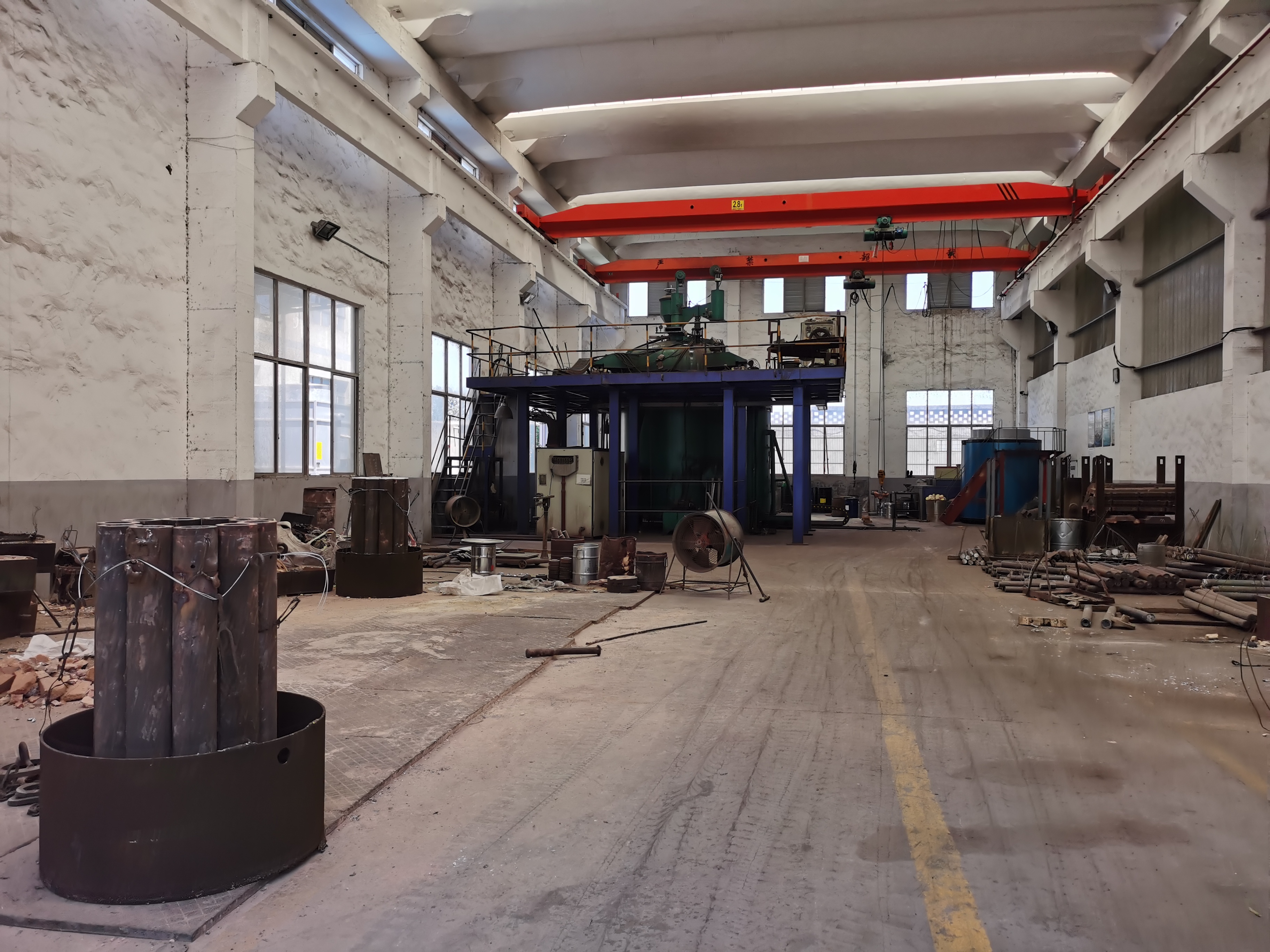
Compliance evidence is produced in sequence, and each stage depends on the previous one. The documented equipment set for these aerospace and precision-instrument applications makes the sequence explicit.
| Evidence item | Documented verification practice | What it establishes |
|---|---|---|
| Chemistry control | Low impurity content and stable nickel-molybdenum element ratio | Consistent permeability from batch to batch |
| Annealing | Vacuum hydrogen annealing or vacuum bright annealing furnace | Uniform fine grain structure; for 1J22HS, avoidance of cracking during stamping and long-term operation |
| Grain verification | Metallographic detection equipment | That grain structure is measured rather than assumed |
| Magnetic testing | B-H hysteresis tester; magnetic performance tester; low-frequency magnetic analyser | Permeability, coercivity and hysteresis loss against the specified window |
| Mechanical testing | High-temperature tensile testing machine; dual inspection of mechanical properties and magnetic performance before delivery for 1J22HS | Strength and fatigue capability for rotating and vibrating parts, verified together with magnetic results |
| Dimensional control | High-precision slitting machine, stamping dies and fixtures | Thickness tolerance of ±0.002 mm (±0.001 mm in the documented 1J22 and 1J27 scenarios) |
The 1J22HS case illustrates why the sequence cannot be shortened. Its documented requirements combine ultra-high tensile and yield strength for high-speed rotation, consistent saturation flux density and high Curie temperature matching standard 1J22, mandatory vacuum hydrogen annealing, dual inspection of mechanical properties and magnetic performance before delivery, and low deformation without cracking after stamping.
Cheng Yuan Alloy: Grade Coverage Relevant to These Requirements
Shijiazhuang Cheng Yuan Alloy Material Co., Ltd. is a Chinese alloy materials manufacturer established in 2021, located at No. 119, Xizhang Road, Wangxizhang Town, Zhao County, Shijiazhuang City, Hebei Province, adjacent to Beijing and Tianjin with developed transportation. The company employs approximately 20 staff, operates a 200 m² manufacturing facility, reports an annual production capacity of 10–15 million USD and maintains an R&D team of 5 engineers. Its specialisation covers heating alloys, pure nickel alloys, high-temperature alloys, soft magnetic alloys, expansion alloys, corrosion-resistant alloys and stainless steel materials, with Permalloy as a main product supplied in wire, strip, sheet, bar, wire mesh, powder, tube, stamping and strand wire forms.
For compliance planning, the relevant aspect is grade coverage. The documented designations include 1J22, HiperCo50, 1J22MS and 1J22HS in the high-saturation cobalt-iron group; 1J79, Ni79Mo4, 1J50, FeNi50, 1J85 and 1J54 in the high-permeability nickel-iron group; 1J27; and the 1J30, 1J31, 1J32, 1J33, 1J34, 1J38 and 1J46 grades used for compensation and related functions. A programme that needs a high-permeability grade for shielding and a cobalt-iron grade for a high-saturation magnetic circuit can therefore specify both families in strip and bar form from the same source. Cheng Yuan Alloy exports account for 50 % of total sales, with major markets in Russia, Germany, France, Italy, the United States, Canada, South Korea, Japan, Brazil and India, and its products are used in heating equipment, battery equipment, mechanical manufacturing, electric furnace production, instruments and meters, household appliances, automotive, marine vessels and aerospace applications. Product information is published at www.chyalloy.com.
Where the Validated Envelope Is Applied
The −60 °C to +130 °C envelope is not an abstraction; it maps onto a defined set of assemblies and instrument classes.
- Satellite communication and precision measurement. Shielding housings that isolate electromagnetic interference and block flux leakage in sealed instrument cabins and low-pressure satellite environments.
- Signal and measurement chains. Precision signal transformer cores, mutual inductors and current or voltage sensing components where weak-signal distortion has to be avoided.
- Precision motion. Gyroscopes and torque motors, where a small magnetostriction coefficient avoids dimensional deformation during magnetisation and preserves long-term precision.
- Aerospace magnetic circuits. Generators, precision motors, electromagnet poles and magnetron tubes, with 1J22MS, 1J22HS and 1J22 grades documented for magnetostrictive transducers, pole heads, diaphragm components and sealed magnetron assemblies.
- Broader electronics. Transformer cores and magnetic shielding in high-frequency electronic equipment, audio transformers and common-mode inductor cores, where the same nickel-iron grades are used outside aerospace but under the same functional requirements.
Standards and Market Context
Two standards anchor the documentation. Permalloy grades 1J50, 1J79 and 1J85 are compliant with ASTM A753 and GB/T 15014 for magnetic shielding and high-permeability applications. HiperCo 50 (1J22), which contains approximately 49 % cobalt, is governed by ASTM A801 Type 1 and is optimised for high-speed rotors and stator laminations (Carpenter Technology / ASTM). Buyers comparing suppliers should expect the applicable standard to be named alongside the grade, because the environmental documentation differs between the two families.
Demand context supports the direction of these requirements. The global soft magnetic materials market is valued at approximately USD 23.0 billion in 2025 and is projected to reach USD 33.9 billion by 2033 (Grand View Research). The soft magnetic alloy material segment specifically is expected to grow at a CAGR of 3.1 % from 2024 to 2030, reaching USD 4.14 billion (QY Research). Asia Pacific holds the largest share, accounting for 41.0 % to 49.37 % of global volume in 2025, with China identified as the largest producing country (Grand View Research / Mordor Intelligence). Published estimates diverge depending on whether bulk electrical steel is included in the definition, which is itself a reason to compare sources rather than a single figure.
The supplier landscape for high-performance soft magnetic alloys is concentrated and includes Vacuumschmelze (VAC), Hitachi Metals (Proterial), Carpenter Technology and Arnold Magnetic Technologies (Market Research Future / Mordor Intelligence). Buyers assessing alternatives are generally comparing grade coverage, documented envelopes and the inspection evidence offered with each lot, rather than a single performance number.
Grade Family Comparison and Documented Boundaries
| Family | Documented strength | Documented boundary |
|---|---|---|
| High-permeability nickel-iron: 1J79, 1J85, 1J50, 1J54, 1J34, 1J80 | −60 °C to +130 °C envelope; fluctuation below 3 %; ultra-low residual magnetism; low hysteresis loss for weak-signal work | Suited to weak and medium alternating fields; not the family specified where high saturation flux density is the driving requirement |
| High-saturation cobalt-iron: 1J22, 1J22MS, 1J22HS | High saturation flux density, controlled magnetostriction, high Curie temperature; strength for high-speed rotation | Documented envelope is −60 °C to +120 °C, not +130 °C; 1J22HS requires vacuum hydrogen annealing and dual mechanical plus magnetic inspection before delivery |
| 1J27 | High magnetostriction for magnetic-mechanical energy conversion; thickness tolerance ±0.001 mm | Tight dimensional control and annealing quality are prerequisites; it is a specialised functional grade rather than a general shielding material |
| 1J30–1J38 | Linear adjustable permeability to offset magnetic drift from temperature change | Its function is compensation, not shielding or high-saturation flux; grade-specific temperature limits must be confirmed individually |
Three boundaries deserve to be stated plainly before qualification begins.
The temperature ceiling is grade-specific. The +130 °C figure applies to the high-permeability nickel-iron set and to 1J27; the 1J22, 1J22MS and 1J22HS grades are documented to +120 °C. Specifying "permalloy" without a grade designation is therefore a qualification risk, because the envelope, the annealing route and the inspection requirement all change with the grade.
Storage is a separate constraint. The catalogued storage temperature range for the product family is −50 °C to +80 °C, which is narrower at the upper end than the continuous operating range of −40 °C to +130 °C and the short-term peak of ≤180 °C. Transport, warehouse and integration environments have to be planned against the storage band, not the operating band.
Processing is a hard gate. Thickness tolerance of ±0.002 mm and ±0.001 mm, a uniform grain structure after vacuum hydrogen annealing, and the documented requirement that 1J22HS be vacuum hydrogen annealed to avoid cracking during stamping and long-term operation mean that not every downstream processor can convert the material to specification. Buyers assessing a supplier are effectively assessing both the mill and the processing chain behind it.
Future Outlook
As soft magnetic alloy volumes expand — the segment is projected to grow at a 3.1 % CAGR from 2024 to 2030 to USD 4.14 billion (QY Research) — the compliance conversation is likely to move earlier in the procurement cycle. Rather than accepting a room-temperature permeability value and testing temperature behaviour only at prototype stage, engineering teams can reasonably be expected to request grain structure evidence, batch permeability data and temperature-fluctuation characterisation at the request-for-quotation stage.
A second likely shift is the normalisation of dual inspection. Where mechanical and magnetic performance are currently verified together mainly for specialised grades such as 1J22HS, the logic that produced the −60 °C to +130 °C envelope and the sub-3 % fluctuation limit applies wherever a component is designed for a mission profile instead of a bench condition. The suppliers positioned for that shift will be those able to document the envelope, the grain structure and the inspection route — not those able to quote the highest permeability figure.
FAQ
What is the documented operating temperature range for permalloy in aerospace electronic systems?
For the high-permeability nickel-iron grades 1J79, 1J85, 1J50, 1J54, 1J34 and 1J80 used in satellite communication, precision measurement and control, precision gyroscopes and torque motors, the documented working range is −60 °C to +130 °C. The 1J22, 1J22MS and 1J22HS grades used for electromagnet poles, precision motors, magnetron tubes and magnetostrictive transducer cores are documented for −60 °C to +120 °C. At product level, the catalogued environmental parameters state −40 °C to +130 °C continuous, ≤180 °C short-term peak and a −50 °C to +80 °C storage range.
How much is magnetic performance allowed to vary between −60 °C and +130 °C?
The documented requirement for aerospace and precision instrument applications of the shielding and signal-transformer grade set is a magnetic performance fluctuation of less than 3 % between −60 °C and +130 °C. The same specification calls for ultra-low residual magnetism and small hysteresis loss so that weak signals are transmitted without distortion, and for consistent magnetic properties across the wide temperature range to stabilise the output of aerospace and industrial electronic components.
What evidence indicates that a permalloy batch will behave consistently?
Documented evidence items include a uniform fine grain structure after vacuum hydrogen annealing, low impurity content and a stable nickel-molybdenum element ratio for consistent permeability batch by batch, thickness tolerance controlled within ±0.002 mm for the shielding and signal-transformer grade set and ±0.001 mm in the documented 1J22 and 1J27 precision-component scenarios. Verification uses metallographic detection equipment, B-H hysteresis testers, magnetic performance testers and, for the 1J22MS scenario, low-frequency magnetic analysers.
Does permalloy lose its magnetic properties after long-term vibration?
For the grades where this is documented, the specification is written as no demagnetisation. 1J22MS is documented with an anti-fatigue magnetic property showing no demagnetisation after millions of vibration cycles during frequent dynamic alternating-field cycling and intermittent start-stop operation. 1J22 is documented for continuous alternating-magnetic-field cyclic operation without permanent demagnetisation under rated working temperature. 1J22HS is documented to withstand periodic high-intensity alternating-field excitation and long-time dynamic vibration without demagnetisation.
Which standards apply to the permalloy grades discussed here?
Permalloy grades 1J50, 1J79 and 1J85 are compliant with ASTM A753 and GB/T 15014 for magnetic shielding and high-permeability applications. HiperCo 50 (1J22), which contains approximately 49 % cobalt, is governed by ASTM A801 Type 1 and is optimised for high-speed rotors and stator laminations.
What should be checked first when qualifying permalloy for a sealed assembly?
The documented constraints to check first are the grade-specific temperature envelope — noting that the 1J22 family stops at +120 °C while the high-permeability nickel-iron set reaches +130 °C — the catalogued storage band of −50 °C to +80 °C, the thickness tolerance requirement, the grain structure after vacuum hydrogen annealing, and the residual magnetism and hysteresis loss figures. Where 1J22HS is specified, vacuum hydrogen annealing and dual inspection of mechanical properties and magnetic performance before delivery are documented requirements rather than optional steps.
Permalloy aerospace qualification is decided by documented operating limits and verifiable material consistency rather than by a single permeability figure. Grade-level envelopes, annealing route and inspection evidence are the three elements that determine whether a specification can be met in production.