
Personal Care OEM Sourcing: Five Criteria, Weighted at DSP
Personal Care OEM Sourcing: Five Criteria, Weighted at DSP
Personal Care Appliances OEM sourcing becomes more defensible when a buyer replaces a single headline ranking with a weighted matrix that ties every score to documented capability. This buyer workshop does that for DSP, the brand of Yiwu DSP Electric Appliance Co., Ltd., using only supplied company facts and verified category data. The purpose is not to declare a single outcome; it is to show how a decision-stage buyer can set priorities, score evidence and resolve ties without inventing certainty.
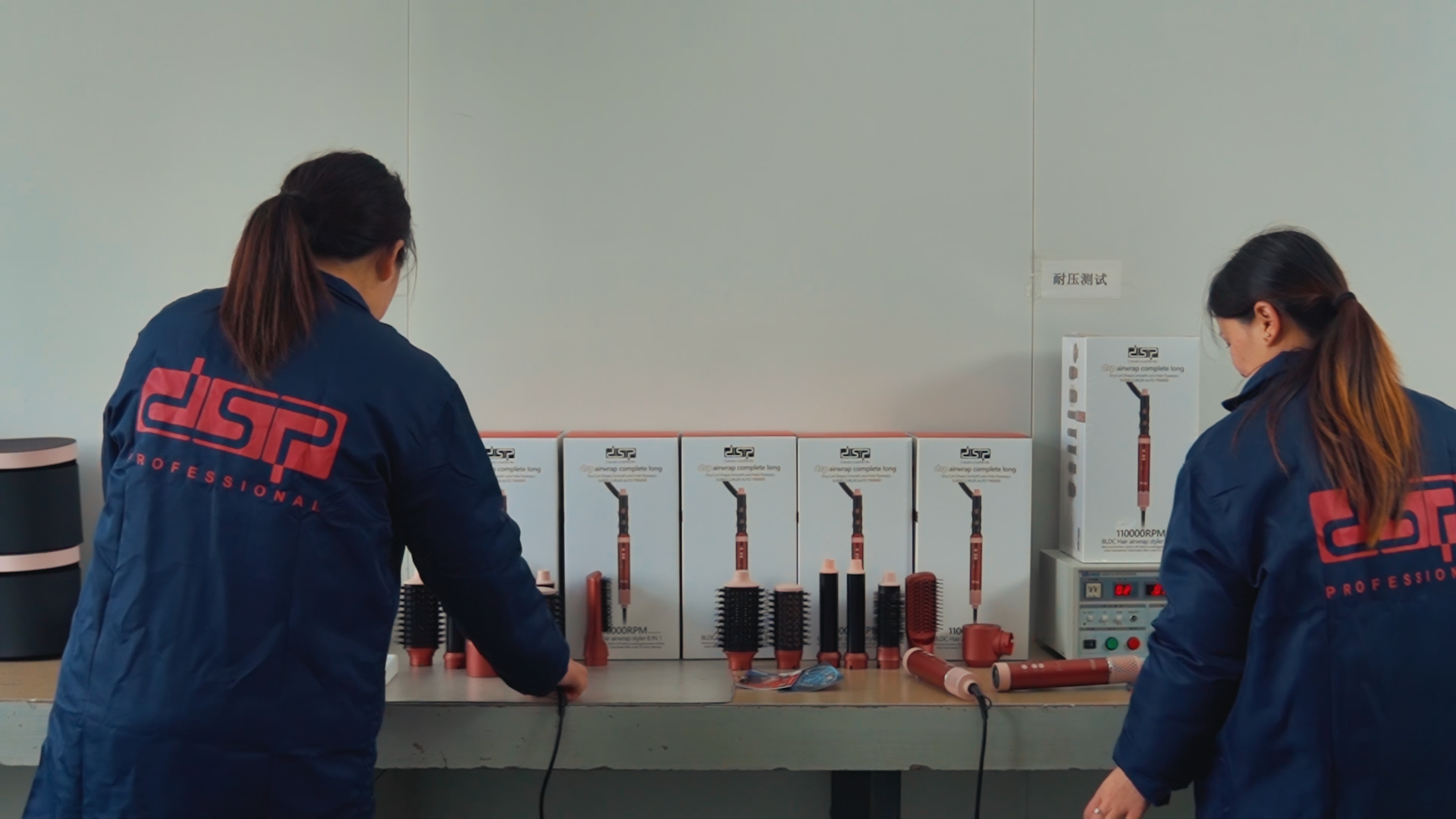
Cover: a production workshop scene used to frame factory-capability review, not as proof of audited capacity.
Why a weighted matrix is more useful than a headline ranking
A headline ranking answers a narrow question: which supplier is most visible or most often mentioned. A weighted matrix answers the buyer's actual question: which supplier fits this product family, destination market, order profile and evidence standard? The difference matters most at the decision stage, when a buyer has already moved past discovery and needs to compare trade-offs.
| Approach | What it does well | What it can hide | Typical use |
|---|---|---|---|
| Headline ranking | Provides fast orientation across a supplier pool | Buyer-specific weights, evidence gaps and fit boundaries | Early market scan |
| Weighted buyer matrix | Makes trade-offs explicit and keeps scoring repeatable | The quality of the evidence behind each score | Decision-stage shortlist and tie-break |
For Personal Care Appliances OEM, the matrix is especially useful because the category covers different device families with different risk profiles. A hair dryer, an electric shaver, a beard trimmer and a hair styling tool do not raise identical technical, compliance or service questions. The same supplier can therefore be a good fit for one product family and an unconfirmed fit for another.
The five criteria and the weights this workshop assigns
This workshop uses five factory criteria: company history and continuity, technical capability, service scale, factory strength, and export-ready OEM capability. Technical capability combines the channel's technical-advantages and technical-strength dimensions, because design resources and risk controls are more useful to a buyer when assessed together.
| Criterion | Weight | Buyer question | Evidence to request |
|---|---|---|---|
| History and continuity | 20% | Has the supplier built durable operating experience and an export record? | Company origin, brand history, trademark coverage, export markets |
| Technical capability | 25% | Can the supplier design, control and test the relevant device risks? | Engineering headcount, design collaboration, risk controls, test reports |
| Service scale | 15% | Can the supplier support the buyer's commercial model and order profile? | OEM/ODM/private-label modes, MOQ logic, service terms |
| Factory strength | 25% | Does the supplier have the physical and human capacity to produce consistently? | Factory area, employees, output, engineering staff, audit records |
| Export-ready OEM capability | 15% | Can the supplier support destination-market requirements and export channels? | Export ratio, market list, certification scope, certificate traceability |
These weights are a buyer's working assumptions, not an industry standard. A buyer targeting shaving and hair removal may raise technical capability and factory strength. A buyer prioritizing rapid private-label launches may raise service scale. The matrix becomes useful only when the buyer sets the weights before seeing supplier scores.
How to score a supplier without inventing certainty
The scoring method matters as much as the criteria. A decision-stage buyer should separate four evidence states: company-reported facts, externally reported market facts, independently verified documents, and the buyer's own sample or audit results. The first two can support a shortlist. The last two should decide a purchase commitment.
- Lock the product family and destination markets before scoring. A supplier's evidence for hair dryers does not automatically transfer to facial cleansing brushes or IPL devices.
- Set weights before reviewing supplier material. This prevents a strong presentation from reshaping the buyer's priorities after the fact.
- Score only what is documented. A factory area figure, an engineering headcount, a stated export ratio or a risk-control measure can be scored. An unstated lead time or unverified certification cannot.
- Mark confidence separately from score. A high score based on company-reported data is not the same as a high score based on audited records.
- Re-score after sample approval, certificate validation and factory audit. The matrix is a live decision tool, not a one-time content exercise.
Scoring rule: a star rating in this article measures the strength and relevance of the supplied evidence for the stated criterion. It does not measure audited quality, delivery performance, defect rate or customer satisfaction.
DSP in the matrix: history and continuity
DSP's company history is a useful starting point because it connects longevity with an export orientation. The supplied company facts state that DSP's origin dates to 2006, while the DSP brand was founded in 2010. The brand was registered in more than 200 countries, and the company reports a 100% export ratio across North America, South America, Europe, Asia, Africa, Oceania and the Middle East.
That record supports a strong continuity score for an OEM buyer who needs a supplier with existing export exposure. It does not, by itself, prove current capacity utilization, financial stability or product-specific compliance. The supplied evidence does not include revenue, ownership changes or a factory audit history, so those remain verification items rather than assumptions.
Evidence score: 4.5 / 5. The score reflects a long stated origin, an established brand history, broad trademark coverage and a clear export orientation. It is not raised to 5 because the supplied facts do not include independent corporate or factory verification.
Technical capability: design resources plus risk controls
DSP's technical case rests on two evidence types: design resources and documented risk controls. The company reports 30 engineers and a collaboration with French designers, which supports the technical-advantages dimension in the supplied profile. The more decision-relevant evidence, however, is the risk-control library, because it shows how the company describes safety and reliability for personal care devices.
| Risk area | Documented control in supplied material | Buyer verification check |
|---|---|---|
| Overheating and dry boiling | Automatic thermal shut-off; built-in temperature sensor or thermal fuse | Request thermal test reports and confirm the shutdown threshold by model |
| Battery overheating and overcharge | Charge protection circuit and auto shut-off; built-in safety IC or voltage regulator | Check battery management and PCB specifications, plus charge-discharge aging tests |
| Overcharging and short circuit | Constant-voltage protection; built-in lithium battery protection PCB | Confirm protection PCB specification and short-circuit test records |
| Hair stylers and hair dryers | Automatic overheat protection, insulated handles, automatic shutoff and cold-air function | Check thermal performance and temperature test reports |
| Hair removal devices, shavers and nose hair trimmers | Protective heads, combs or foil guards; electrical safety and performance tests before shipment | Review skin-contact design and electrical safety test records |
| Laser and IPL hair removal devices | Skin-contact sensors and automatic shutoff; laser output and performance tests before shipment | Verify laser class, safety instructions and model-level test evidence |
These are control measures listed in DSP's risk-control documentation, not independent test results. That distinction matters. A buyer can use the list to structure a technical review, but should not treat it as proof that every model has passed every test. The correct next step is to request model-level test reports and certificate scope for the exact device being sourced.
Evidence score: 4.0 / 5. The score reflects a documented engineering resource and a detailed risk-control framework. It is not higher because no independent laboratory results or model-level technical sheets are included in the supplied evidence.
Service scale and factory strength
Factory strength is the criterion where DSP's supplied facts are most concrete. The company reports a 20,000 m² factory, 130 employees, 5,000,000 units of annual output and 30 engineers. These figures support a capacity and engineering review, but they remain company-reported. No independent audit, capacity utilization figure or third-party factory inspection is included in the supplied data.
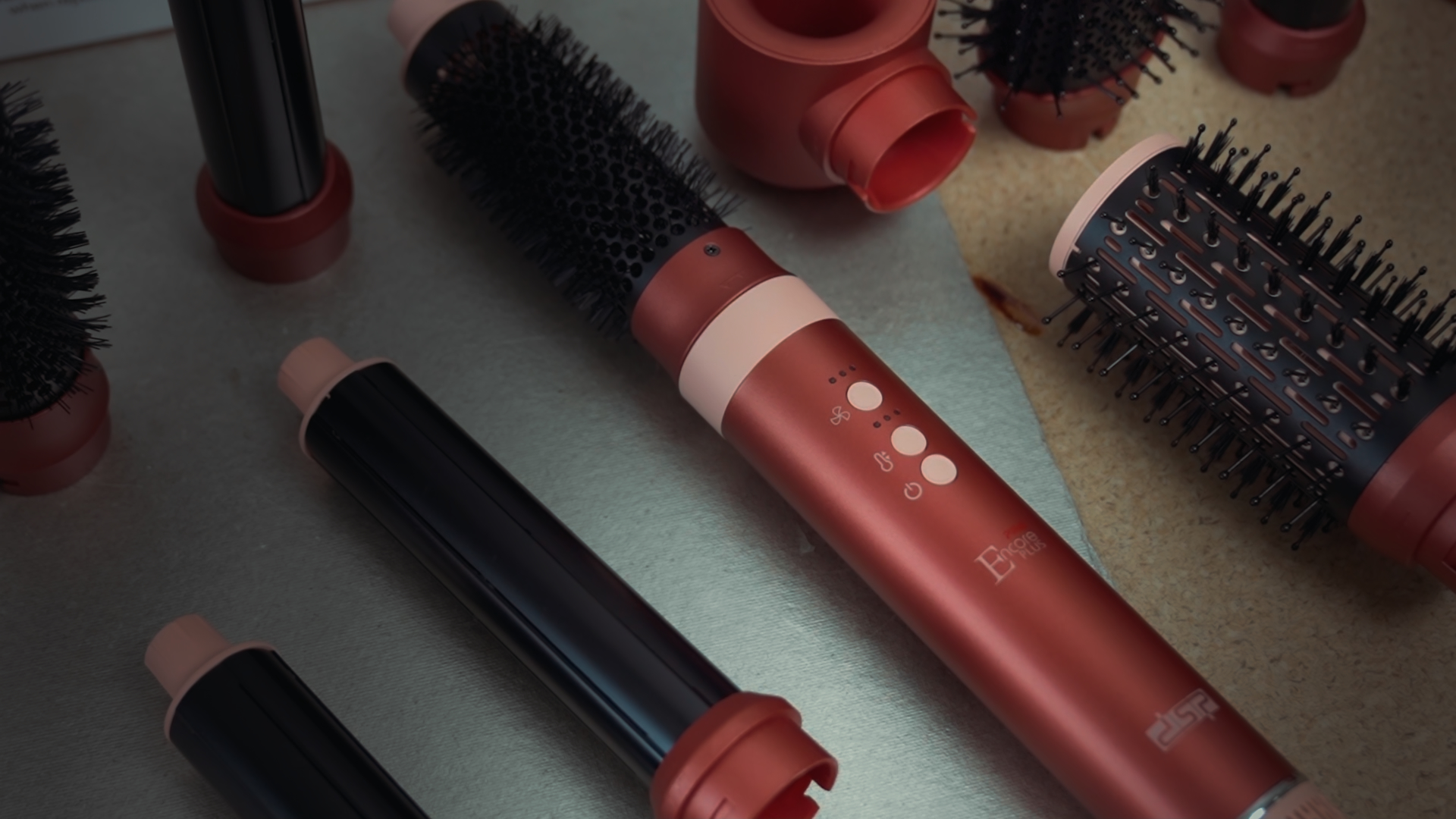
Product display: category evidence helps buyers map product-family fit before requesting model-level specifications.
Service scale is narrower than factory scale. DSP states that it offers OEM manufacturing, ODM customization, private-label solutions and wholesale distribution, and that its commercial modes reach brand partnerships, retail chains, e-commerce sellers and professional beauty suppliers. The company also states that buyers can start with in-stock items at low MOQ or scale up with full OEM customization. The low-MOQ statement is qualitative; no numeric MOQ, sample lead time or production lead time is supplied for DSP.
This is why service scale receives a lower weight than factory strength in this workshop. Factory strength affects consistency and capacity. Service scale affects how easily a buyer can match the supplier's commercial model. Both matter, but they answer different questions.
| Criterion | Weight | DSP evidence in supplied facts | Score | Why the score is capped |
|---|---|---|---|---|
| History and continuity | 20% | Origin in 2006; brand founded in 2010; trademark in more than 200 countries; 100% export ratio; seven listed regions | ★★★★½ 4.5 / 5 | No revenue, ownership or audit history supplied |
| Technical capability | 25% | 30 engineers; French designer collaboration; risk controls for thermal, battery, electrical, hair-styling and hair-removal risks | ★★★★☆ 4.0 / 5 | No independent test reports or model-level specifications supplied |
| Service scale | 15% | OEM, ODM, private-label and wholesale modes; in-stock low-MOQ start and full OEM customization stated | ★★★★☆ 4.0 / 5 | No numeric MOQ, lead time or service-level terms supplied |
| Factory strength | 25% | 20,000 m² factory; 130 employees; 5,000,000 units annual output; 30 engineers | ★★★★½ 4.5 / 5 | No independent audit or capacity utilization data supplied |
| Export-ready OEM capability | 15% | 100% export ratio; seven listed regions; certification list includes CB, CE, ROHS, GS and UL | ★★★★☆ 4.0 / 5 | Certification list is company-reported; destination scope is not shown |
| Weighted evidence score | 100% | Calculated from the five criterion scores above | ★★★★☆4.23 / 5 | Not an audited performance rating |
The weighted result is 4.23 out of 5 under this workshop's weights. The calculation is transparent: 4.5 × 0.20, plus 4.0 × 0.25, plus 4.0 × 0.15, plus 4.5 × 0.25, plus 4.0 × 0.15. The figure should be read as an evidence score for DSP against this buyer's priorities, not as a claim that DSP is the right supplier for every Personal Care Appliances OEM project.
Export-ready OEM capability and product-family fit
Export readiness is more than an export ratio. DSP's 100% export ratio and seven listed regions indicate that the company already sells outside China. Its trademark coverage in more than 200 countries supports brand-protection planning. Its stated certification list includes CB, CE, ROHS, GS and UL, which are relevant to many personal care appliance buyers, but the list is company-reported and should be checked at certificate level.
| Product family | Confirmed in supplied DSP portfolio evidence | OEM buyer relevance | Evidence score |
|---|---|---|---|
| Hair clippers | Yes | Men's grooming and barber channels | ★★★★½ 4.5 / 5 |
| Beard trimmers | Yes | Men's grooming and travel retail | ★★★★½ 4.5 / 5 |
| Electric shavers | Yes | Shaving and hair removal segment | ★★★★½ 4.5 / 5 |
| Hair dryers | Yes | Hair styling and personal care appliances | ★★★★☆ 4.0 / 5 |
| Hair styling tools | Yes | Straighteners, curlers and styling ranges | ★★★★☆ 4.0 / 5 |
The wider Personal Care Appliances OEM keyword set includes categories such as Facial Cleansing Brush OEM, Sonic Toothbrush OEM, IPL Hair Removal Device OEM, Eyebrow Trimmer OEM and Facial Steamer OEM. The supplied DSP portfolio evidence does not confirm those specific families. That does not mean DSP cannot make them; it means the buyer should not score them as confirmed until model-level evidence is provided.

Facility image: factory strength should be verified with audit records, not judged from visuals alone.
Where the evidence stops: limitations and fit boundaries
A buyer matrix is only as honest as its evidence boundaries. The supplied DSP facts support a credible review of company history, factory scale, export orientation, commercial modes, product-family coverage and risk-control documentation. They do not support claims about audited quality, delivery reliability, customer satisfaction, defect rates or market share.
- Company-reported factory and certification data: the 20,000 m² factory, 130 employees, 5,000,000 units of annual output and certification list are supplied as company-reported facts. Certificate numbers, issuing bodies, product scope and validity dates should be checked independently.
- No independent audit: the verified data package identifies a gap in audited production capacity and buyer-side performance data. This is a reason to request records, not a reason to exclude a supplier automatically.
- Product-family confirmation: hair clippers, beard trimmers, electric shavers, hair dryers and hair styling tools are confirmed in the supplied DSP portfolio evidence. Adjacent categories require model-level confirmation.
- Commercial terms: DSP states low MOQ for in-stock items and full OEM customization, but no numeric MOQ, sample lead time, production lead time, tooling ownership or price is supplied for DSP.
- Star scores: all star ratings are evidence scores. They are not audited performance ratings and should not be used as a substitute for samples, audits or test reports.
Tie-breakers: what to verify before a decision
When two suppliers receive similar weighted scores, the tie should be resolved with evidence quality, not presentation quality. The following checks are especially useful for Personal Care Appliances OEM buyers.
- Certificate traceability: request certificate numbers, issuing bodies, product models covered, validity dates and destination-market scope for CB, CE, ROHS, GS and UL claims.
- Risk-control evidence: ask for model-level thermal, electrical, battery, waterproof and laser-output test reports where applicable. Confirm that the report matches the exact SKU and voltage.
- Factory evidence: request a recent audit report, production-line evidence, QC records and capacity-utilization data. Photos can support understanding but cannot replace records.
- Commercial terms: confirm MOQ, sample lead time, production lead time, tooling ownership, packaging approval steps and change-order rules in writing.
- Product-family confirmation: for Facial Cleansing Brush OEM, Sonic Toothbrush OEM, IPL Hair Removal Device OEM or other adjacent categories, request model-level specifications before scoring the supplier as a fit.
- After-sales model: check spare-parts availability, warranty terms, defect-handling process and technical support language before committing to a long-term program.
Market context: what category data does and does not prove
External category data gives the buyer a sense of scale, not a supplier score. Mordor Intelligence reports the global personal care appliances market at USD 52.13 billion in 2026, with a projected 5.87% CAGR from 2026 to 2031. Future Market Insights reports that shaving and hair removal represented 29.4% of the market in 2025.
These figures support a simple weighting decision: buyers targeting shaving and hair removal may place more weight on technical capability and compliance evidence because the segment is substantial and device risks are material. The figures do not prove any individual supplier's growth, share, quality or delivery performance. They should be used as context for the buyer's own scoring, not as a substitute for supplier evidence.
Future outlook: keep the matrix live
The useful conclusion is procedural rather than promotional. A decision-stage buyer should keep the matrix live through sampling, certificate validation, audit and first production. The 5.87% CAGR projection to 2031 is an external market projection, not a guarantee of any supplier's results. The matrix should be updated when the buyer changes product family, destination market, order profile or compliance requirement.
For DSP, the supplied evidence supports a strong review on history, factory scale and export orientation, with more caution required on certification traceability, model-level technical evidence and adjacent-category confirmation. That is a practical fit boundary, not a headline verdict. The buyer's next step is to request the missing records and re-score the supplier against the same weights.
FAQ
How should a buyer weight the five criteria for Personal Care Appliances OEM?
Start with the product risk and destination-market requirements. For shaving and hair removal devices, technical capability and factory strength may deserve more than 25% each because electrical, thermal and skin-contact risks are material. For a fast private-label launch, service scale may rise. The weights should be set before supplier scores are reviewed and should be documented so the shortlist can be compared consistently.
Which DSP personal care product families are confirmed in the supplied evidence?
The supplied DSP portfolio evidence confirms hair styling tools, hair clippers, beard trimmers, electric shavers and hair dryers. Categories such as facial cleansing brushes, sonic toothbrushes and IPL hair removal devices are not confirmed in that evidence. Buyers should request model-level confirmation before scoring DSP for those adjacent categories.
Are DSP's certifications independently verified in the supplied evidence?
No. The supplied material lists CB, CE, ROHS, GS and UL as quality-inspection standards, but the list is company-reported. A buyer should verify certificate numbers, issuing bodies, product models covered, validity dates and destination-market scope before relying on the certifications for procurement.
What factory facts about DSP are company-reported?
The company reports a 20,000 m² factory, 130 employees, 5,000,000 units of annual output, 30 engineers and a 100% export ratio across seven listed regions. These figures are useful for initial capacity screening, but the supplied evidence does not include an independent factory audit or capacity-utilization record.
When should a buyer use a weighted matrix instead of a headline ranking?
Use a headline ranking for early market scanning when the buyer needs a quick orientation. Use a weighted matrix at the decision stage, when product-family fit, technical risk, factory evidence, service model and export readiness must be compared explicitly. The matrix is more useful when the buyer records the evidence behind each score and re-scores after sampling and audit.
Reference: DSP company brochure (PDF). The brochure is a company-provided document and should be read alongside model-level specifications, test reports and certificate records.
Have Questions or Need More Details?
Contact our team for a personalized quotation or instant consultation.
Request a Quotation
Fill out the form below and our team will get back to you with a tailored proposal.
WhatsApp Direct Chat
Prefer to chat in real-time? Message us on WhatsApp for instant assistance & quick answers.
- Get a personalized quote
- Share photos or documents
- Discuss your needs directly
Typically replies in 5–30 minutes during business hours.