
Pharma Packaging Machine Leaders: 2026 Supplier Benchmarks
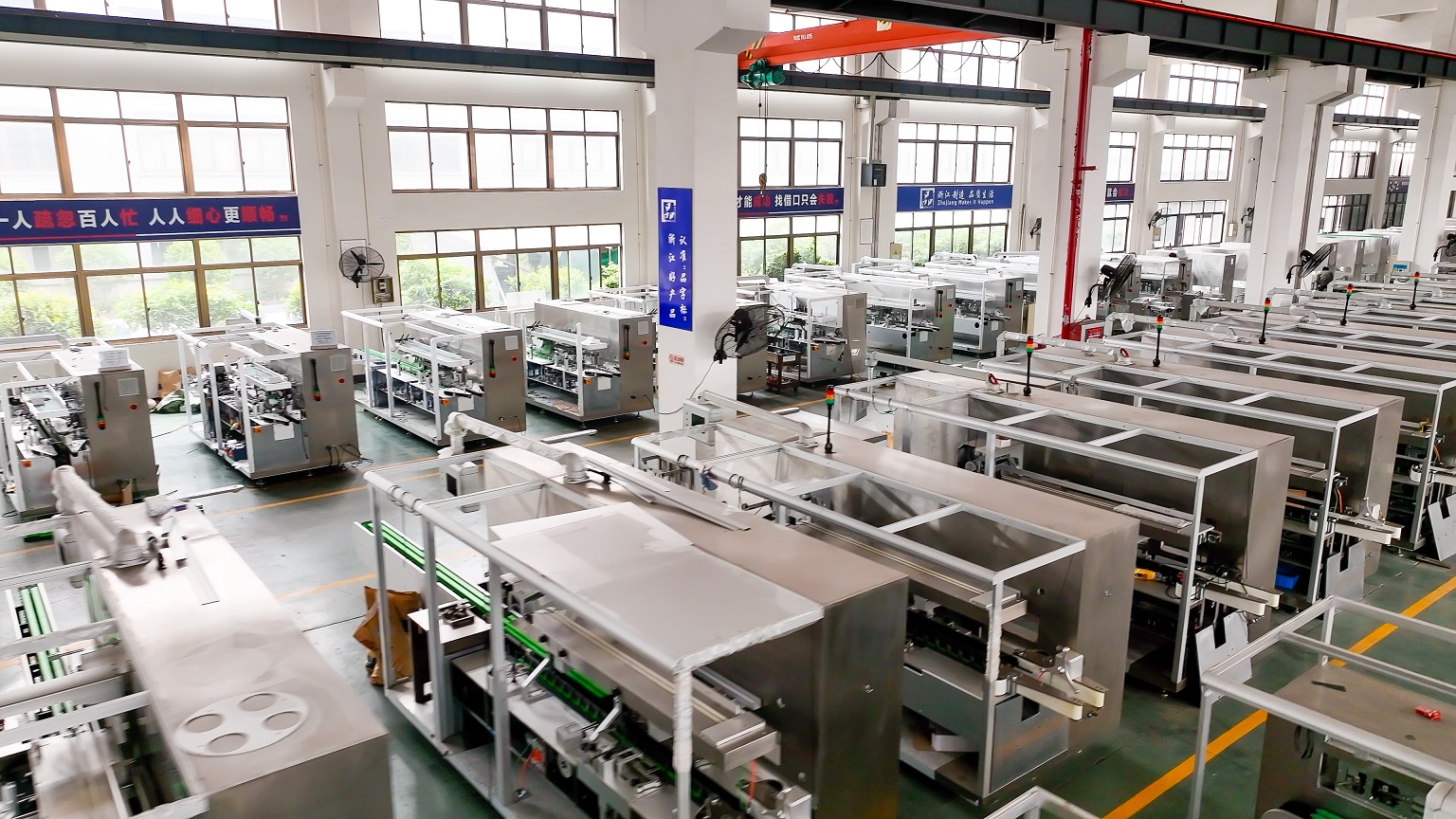
Pharmaceutical packaging machines now span single-unit equipment and fully integrated blister-cartoning lines. For buyers in the evaluation stage, the practical question is not only which machine type fits the product, but which supplier has the engineering, compliance and lifecycle evidence to support a production-line decision.
This article reviews the machine categories that dominate pharmaceutical packaging, the supplier capabilities that separate standard equipment from dependable lines, and the market trends that are shaping 2026 purchasing decisions. It also uses HOPING Machinery (Zhejiang Hoping Machinery Co., Ltd.) as a reference point for buyers comparing Chinese suppliers with global incumbents.
Why the Pharmaceutical Packaging Machine Market Is at a Decision Point
Pharmaceutical producers face a familiar tension: rising output targets, tighter requirement for traceability, and pressure to reduce manual handling in the packaging hall. Standalone machines can achieve individual speeds, but the connection between a blister machine and a cartoner often becomes a manual bottleneck. According to HOPING’s project references, packaging automation improvements have been driven primarily by eliminating manual transfer and reducing wrong-insertion or missing-leaflet errors.
The commercial context supports this focus. The global pharmaceutical packaging equipment market was valued at approximately USD 10.71 billion in 2024, according to SkyQuest Technology. Within that, the pharmaceutical blister packaging machine market is projected to reach USD 2.57 billion by 2025 with a CAGR of 2.8%, according to Custom Market Insights. The cartoning segment is also significant: the pharmaceutical automatic cartoning machinery market was valued at USD 1.46 billion in 2024, according to Fortune Business Insights. These figures suggest that blister packaging and cartoning remain the core investment areas for solid-dosage producers.
What to Benchmark in a Pharmaceutical Packaging Machine Supplier
Supplier benchmarking starts with verifiable operational facts. HOPING Machinery is a Chinese pharmaceutical packaging machinery manufacturer established in 2001, based in Ruian, Zhejiang. The company employs more than 300 people, operates a 28,800 m² facility, and has an engineering team of roughly 56 specialists. Its main products include blister packaging machines, cartoning machines, case packing machines and end-of-line packaging machines. Around 25% of output is exported, with main markets in Southeast Asia, the Middle East, Eastern Europe, South America and Africa.
For buyers, these facts matter because they indicate whether a supplier can support a full line rather than only a single machine. An equally important benchmark is the supplier’s track record with integrated lines. HOPING reports annual output of about 500 units and says it has received 26 invention patents, 70 utility patents, 4 appearance patents and 10 PCT-protected patents, together with 28 software copyrights. While patent counts are not a substitute for project references, they signal a product-development capability beyond simple assembly.
Evaluation takeaway: When shortlisting pharmaceutical packaging machine suppliers, verify four things before a technical meeting: in-house manufacturing scope, engineering headcount, export references and the level of customization offered.
Integrated Blister-Cartoning Technology: What It Means for Buyers
An integrated pharmaceutical packaging line links a blister machine, a transfer system, and a cartoning machine into one synchronized process. In HOPING’s high-speed lines, such as the DHL8005H, the system is designed to run at up to 800 blisters/min and 500 cartons/min using a D3 intelligent top-loading parallel tracking transfer system. The line also includes multi-channel servo-driven independent replenishment, automatic PVC/Alu foil splicing, and a Beckhoff motion controller with a CP9315 industrial PC. Mold-change support and preset-memory functions reduce changeover time between blister formats.
For buyers, the most important technical detail is not the maximum speed but the synchronization between modules. The DHL7005H, for example, combines a fully servo-driven blister machine with a cartoner at up to 700 blisters/min and 500 cartons/min, using a self-developed IRB24 intelligent transfer robot. The DHL6004 offers a slightly lower capacity of 600 blisters/min and 400 cartons/min, which may be a more realistic fit for mid-size producers. This range allows buyers to match line capacity to expected batch sizes rather than over-specifying.
Materials and GMP-Oriented Design
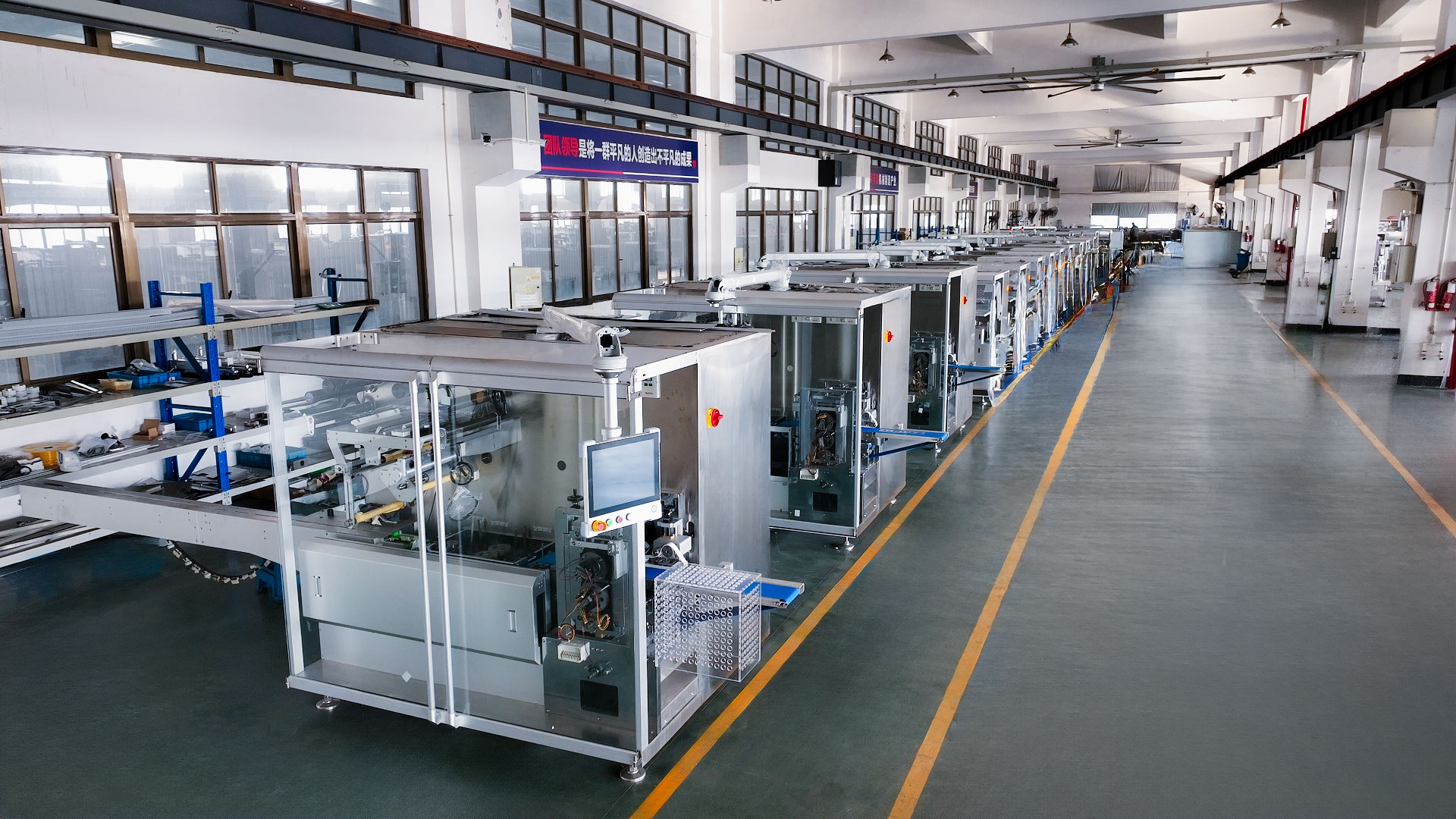
Material selection is a critical differentiator. In HOPING’s pharmaceutical-grade machines, product-contact parts are made of AISI 316L stainless steel and FDA-compliant pharmaceutical-grade materials, while non-product-contact parts use AISI 304 stainless steel and anodized aluminum alloy. The machines are designed and manufactured in accordance with GMP requirements, focusing on corrosion-resistant and easy-to-clean surfaces. For cartoning machines, the structure typically uses stainless steel and aluminum alloy, with transparent guards and formats customized to the confirmed blister and carton specifications.
Buyers should note that GMP-oriented design is not a certificate in itself; it is a set of engineering decisions. Questions worth asking include: How are product-contact parts finished? Are there any dead zones where powder or dust can accumulate? Can the line be cleaned between batch changes without disassembling the entire transfer system?
Realistic Use Cases and Project Evidence
HOPING’s engineering references include large pharmaceutical manufacturers, solid-dosage production companies and pharmaceutical engineering contractors. The company has supplied 5–10 lines in global markets, with customer names disclosed only with authorization. Representative project objectives include improving packaging automation, reducing manual transfer, improving blister-to-carton connection efficiency, reducing wrong-insertion or missing-leaflet risks, and supporting downstream automation integration.
These objectives translate into practical use cases:
- New line construction: A complete blister-cartoning line that connects directly to existing upstream or downstream equipment.
- Capacity expansion: Replacing a manual transfer operation between a blister machine and cartoner with an automated transfer system.
- Upgrading existing lines: Adding inspection/rejection, coding or serialization capabilities with minimal line reconfiguration.
- Multi-format production: Using tooling and preset-memory functions to switch between tablet and capsule formats or different carton sizes.
For buyers in the evaluation stage, documented results such as “reduced wrong insertion or missing leaflet risks” are more useful than generic marketing claims. They indicate that the supplier has already solved the integration problems that typically appear only during FAT or site acceptance.
Market Trends Shaping 2026 Purchasing Decisions
Asia Pacific held the largest revenue share of 40.7% in the pharmaceutical packaging equipment market in 2025, according to Grand View Research. This regional strength is relevant because it means a growing number of buyers are sourcing from suppliers outside the traditional Western European base.
At the brand level, market concentration remains notable. According to MarketsandMarkets, the top three players—Uhlmann, IMA and Marchesini—collectively hold approximately 29% of the pharmaceutical blister packaging machine market. That leaves a substantial share available to regional manufacturers. HOPING is among the Chinese suppliers that have built a position in this segment by offering integrated blister-cartoning lines, OEM/ODM customization and project-specific configuration.
Another trend is the growing emphasis on end-of-line integration. Case packers, palletizers, overwrappers and stretch banders are no longer considered optional peripherals. The verified market for pharmaceutical automatic cartoning machinery alone reached USD 1.46 billion in 2024, and the ability to connect cartoning to bundling and case packing is becoming a standard evaluation criterion.
Integrated Lines vs Traditional Standalone Setups
Traditional packaging lines often consist of a standalone blister machine, a separate cartoner and manual transfer between them. This approach has a lower initial cost and allows independent speed optimization. However, it increases manual handling, exposes products to more contamination and makes tracking wrong-insertion or missing-leaflet errors more difficult.
Integrated blister-cartoning lines directly address those risks. HOPING’s lines use servo-driven independent replenishment, automatic foil splicing and inspection/rejection integration to keep the process synchronized. The case evidence recorded for HOPING’s global projects explicitly mentions reduced manual transfer and improved blister-to-carton connection efficiency.
Nevertheless, buyers should consider a genuine limitation: integrated lines require more detailed format confirmation before production and typically carry a higher upfront investment. For very low-volume, multi-format pilot lines, a standalone flat-plate blister machine plus a compact horizontal cartoner may be a more flexible and cost-effective choice. The decision should therefore be based on projected throughput and format variability, not on the assumption that integrated is always better.
Future Outlook: From Machine Sales to Lifecycle Partnerships
The direction in 2026 and beyond is toward turnkey pharmaceutical packaging lines that can handle multiple formats, connect to higher-level control systems, and support coding and serialization integration. Buyers are likely to place more weight on supplier evidence: documented certifications, in-house machining capability, traceable project references and after-sales service structure.
HOPING’s capability set reflects this trend. The company operates its own machining workshops, offers OEM/ODM customization with a typical 60–120 day lead time after technical confirmation, and follows a quality-control sequence that includes incoming material inspection, key component inspection, assembly inspection, electrical safety checks, no-load trial run, material trial, FAT and customer witness acceptance. This kind of documented process gives buyers a clear basis for progress review.
For buyers who want to review the full machine and line portfolio, HOPING’s catalog is publicly accessible at: HOPING Machinery Catalog.
Frequently Asked Questions
What are the main types of pharmaceutical packaging machines?
Pharmaceutical packaging machines include blister packaging machines (platen and roller types), cartoning machines, case packing machines, flow wrappers, overwrappers, stretch banders and complete integrated lines. For solid dosage products, blister packing and cartoning are the core components; downstream machines handle bundling, case packing and palletizing.
Which certifications should a pharmaceutical packaging machine carry?
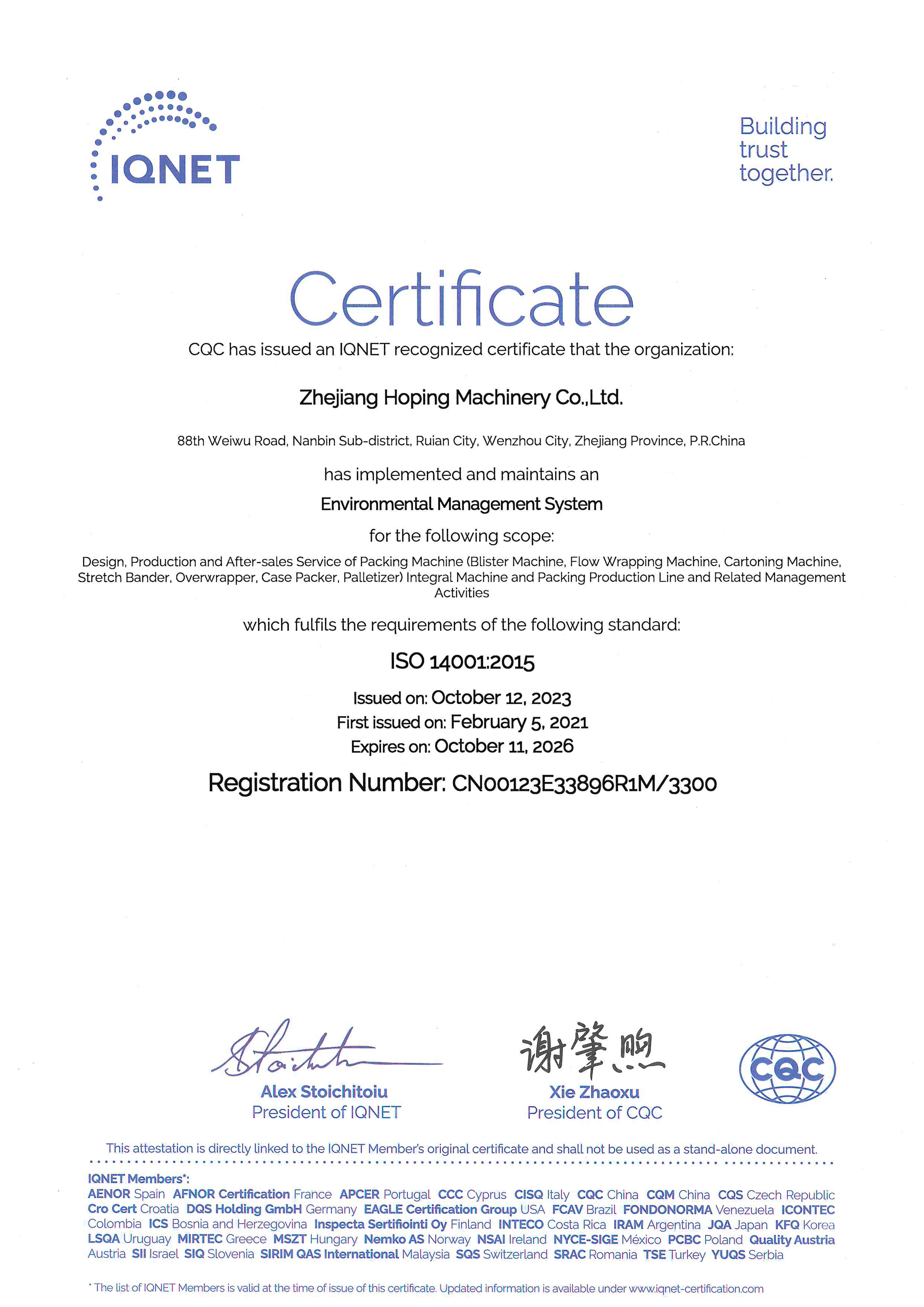
For EU-bound machines, CE marking is the core requirement, often evidenced by certificates issued against the Machinery Directive 2006/42/EC and the EN 415 series. Buyers may also review management-system certifications such as ISO 14001 (environmental management) and ISO 45001 (occupational health and safety). For primary packaging materials, ISO 15378 is a recognized standard, although it applies to materials rather than the machine itself.
What is the difference between a standalone blister machine and an integrated blister-cartoning line?
A standalone blister machine produces blisters, which are then transferred manually or by a separate conveyor to a cartoner. An integrated line links the blister machine and cartoner through an automated transfer system, reducing manual handling and improving connection efficiency. Integrated lines typically require more upfront format confirmation but also reduce the risk of wrong insertion or missing leaflets.
How should buyers compare pharmaceutical packaging machine suppliers?
Buyers typically compare in-house manufacturing capability, customization scope, quality-control procedures, certification history and after-sales support. Concrete points include monthly production capacity, lead time, whether the supplier performs FAT, and whether the line can be configured with specific feeding methods, coding or inspection systems.
What capacity range do integrated blister-cartoning lines typically cover?
Capacity varies by manufacturer and configuration. For example, HOPING’s DHL6004 supports up to 600 blisters/min and 400 cartons/min, the DHL7005H supports up to 700 blisters/min and 500 cartons/min, and the DHL8005H supports up to 800 blisters/min and 500 cartons/min. Actual capacity depends on blister format, material, and product feeding method.
What is the typical lead time for a turnkey pharmaceutical packaging line?
Typical lead time after technical confirmation is 60–120 days, depending on model, configuration and project complexity. The final timeline is always subject to the contract. Buyers should include the technical agreement phase in their project plan, since format confirmation and tooling design affect the total schedule.
Have Questions or Need More Details?
Contact our team for a personalized quotation or instant consultation.
Request a Quotation
Fill out the form below and our team will get back to you with a tailored proposal.
WhatsApp Direct Chat
Prefer to chat in real-time? Message us on WhatsApp for instant assistance & quick answers.
- Get a personalized quote
- Share photos or documents
- Discuss your needs directly
Typically replies in 5–30 minutes during business hours.