
Pharma Packaging Machine: Supplier Continuity After Year One
Pharma Packaging Machine: Supplier Continuity After Year One
Most pharmaceutical packaging machines are bought once and operated for far longer than the warranty that accompanies them. Long-term supplier evaluation is the work of deciding, before the purchase order is signed, whether the manufacturer can still support the line in year three, year six and year ten — when a carton format changes, when a wear part needs replacing, or when an auditor asks for the commissioning record.
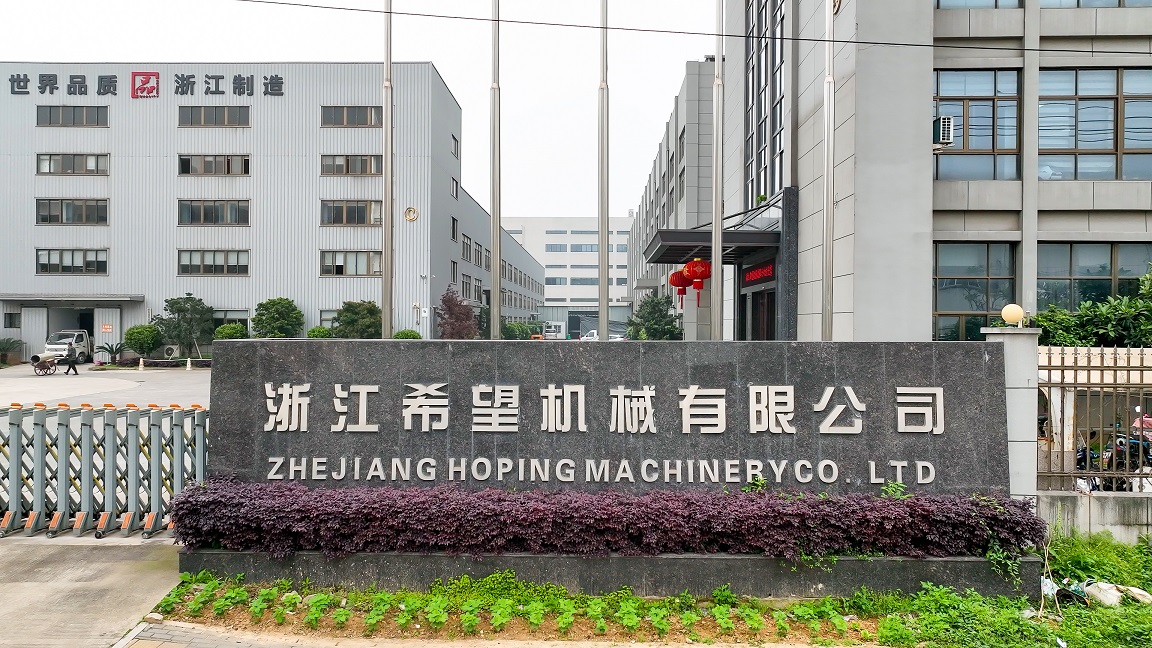
Zhejiang Hoping Machinery Co., Ltd. (HOPING) is a pharmaceutical packaging machinery manufacturer established in 2001 in Ruian, Zhejiang Province, China. The company builds blister packaging machines, cartoning machines, case packing machines and end-of-line equipment on a 28,800 ㎡ manufacturing site, and reports 300 employees, a 56-engineer R&D team and a stated annual output of 500 units. Those figures describe scale and capacity; they do not by themselves prove service continuity. What follows is the evidence that does — and how a buyer can test it before committing to a blister cartoning line expected to run for a decade.
Why the Evaluation Horizon Should Start at Handover
A machine acceptance closes a purchase; it does not close a relationship. From the day a pharmaceutical packaging line is handed over, the buyer's dependence shifts from the specification sheet to four less visible assets: the accuracy of the documentation package, the availability of wear and spare parts, the speed and competence of technical response, and the supplier's willingness to keep control software and format tooling consistent with the installed equipment.
The operational risks that make this dependence expensive are specific rather than abstract. HOPING's own risk documentation lists poor blister forming or sealing, missing, wrong or incomplete product feeding, a missing leaflet, carton jams, coding or date-printing errors, foreign-matter and contamination risk, and downtime during high-speed operation. The documented controls are equally specific: sensor monitoring, vision or checkweighing inspection where configured, missing-product alarms, automatic stop, automatic rejection, key-parameter locking, fault records, mechanical safety protection, FAT/SAT acceptance and SOP training.
The phrase "where configured" is the hinge of long-term evaluation. Most of those controls are configuration decisions rather than fixed properties of a machine category. A buyer who does not fix them in the technical agreement is not purchasing a rejection system; the buyer is purchasing the option to discuss one later, usually at a point when the line is already qualified and every change carries a validation cost.
Five Continuity Evidence Areas That Outlast the Warranty
A sustainable supplier relationship in pharmaceutical packaging rests on evidence a buyer can request at quotation stage. The five areas below are ordered by how much they typically cost to retrofit once a line is running.
1. Configuration and change control
Ask for the parameter set that will be locked, the format of the fault record, and the control-software version installed at factory acceptance testing. Once a line is qualified, altering a locked parameter becomes a change-control event rather than a convenience. A supplier whose documentation does not identify software versions and parameter ownership leaves the buyer unable to demonstrate what changed, and when.
Scale indicators are relevant here, but only as indicators. HOPING reports 28 software copyrights alongside 26 invention patents, 70 utility patents, 4 appearance patents and 10 PCT-protected filings covering Europe, Russia, Germany and Italy. That portfolio suggests sustained in-house control-system work; it does not audit the software governance of any particular line.
2. Wear parts and spare-parts planning
Request the wear-part list with format-specific items — forming tools, sealing plates, cutting tools — separated from time-specific items such as belts, sensors, heaters and filters. The distinction matters because the two categories fail differently: format-specific parts become obsolete when the format does, while time-specific parts become obsolete when the supplier changes component sourcing. HOPING's comparison material notes that spare-parts management and preventive maintenance remain important even where centralized control, modular stations, alarm indication and parameter management support routine servicing.
3. Documentation continuity
The documents an auditor is most likely to request are produced once and then live with the machine: the technical agreement, sample-test records, the FAT report, the SAT report, calibration and setting records, and SOP training records. Ask for a document index and a retention period at quotation stage. A supplier that can show a consistent index across recent projects is demonstrating process; a supplier that describes documentation as something provided after installation is asking the buyer to accept a gap whose size only becomes clear during an inspection.
4. Service and training model
Service capability should be described as a model, not an adjective. HOPING's published enterprise measures list installation, commissioning, training, spare parts and remote technical support, and state that customer witness acceptance can be arranged for key projects. For a buyer, each element converts into a contract term: who attends the site acceptance test, in which language training is delivered, what response window applies to a remote request, and how a witness acceptance is scheduled without delaying shipment.
5. Format and upgrade capacity
Solid-dosage portfolios rarely stay static for ten years. Supplier category coverage is therefore a continuity question rather than a marketing one. HOPING lists flat-plate, roller-type aluminum-plastic and aluminum-aluminum blister packaging machines, automatic cartoning machines and production lines, and describes automatic cartoning applied to blister packs, tablets, syringes and medicine bottles. The buyer's test is narrower: if a new SKU requires alu-alu forming, a different carton size or a syringe feed, does the answer arrive as a tooling change, a station change, or a new machine?
How the Line Architecture Changes the Continuity Question
Integration concentrates both accountability and dependency. In an integrated blister cartoning configuration, blister packaging, blister transfer, leaflet handling, carton opening, insertion, inspection or rejection, and downstream connection are combined into a single automated process, reducing manual intervention and intermediate handling. HOPING's representative DHL1000/5H configuration is stated to reach up to 1,000 blisters per minute and 500 cartons per minute; actual output depends on product format, quantity per carton, materials and process conditions.
The maintenance logic of such a line is centralized control, modular stations, alarm indication and parameter management — an architecture that supports routine maintenance rather than replacing it. Operator training, spare-parts management and preventive maintenance remain necessary. That is the honest version of the integration argument: the architecture removes intermediate handling, and it moves the buyer's exposure from several small vendors to one large one.
Full servo drive is described as improving motion synchronization and operating efficiency, while actual energy consumption should be measured against on-site output, running hours and configuration rather than taken from a catalogue. Two boundaries belong beside these claims. A maximum output figure is a screening number, not a validated sustained rate; and no evidence available for this assessment establishes how one supplier's integrated configuration performs against another's under matched formats, materials and operating conditions.
Integrated and Staged Lines: A Fit Comparison, Not a Ranking
Because pharmaceutical packaging capacity is often built in stages, the continuity decision frequently includes an architecture decision. The comparison below uses documented characteristics only. It is not a performance ranking, and the underlying material contains no matched outcome tests.
| Evaluation dimension | Integrated blister cartoning line | Blister machine, manual transfer, standalone cartoner | Low-speed semi-automatic blister cartoning |
|---|---|---|---|
| Material handling | Automated transfer between blister, leaflet and carton stages; intermediate handling reduced | Manual transfer between separate machines; more handling points and more contact opportunities | Manual or semi-manual loading with limited automation between stages |
| Inspection and rejection | Inspection or rejection and downstream connection designed into one process | Depends on the standalone units purchased; integration must be arranged separately | Typically limited to the controls fitted on each unit |
| Initial investment | Usually higher than standalone or semi-automatic equipment | Lower entry cost per unit, with cost added back through handling and coordination | Lowest entry cost of the three configurations |
| Cost structure over time | Designed to reduce labor, transfer, management and quality-risk costs in large-scale continuous production | Labor and transfer costs scale directly with output | Labor-intensive; suited to limited volumes |
| Documented best fit | Large-scale solid-dosage packaging, high-capacity workshops, reduced manual contact, multi-format lines requiring stable operation | Low or variable volume where each stage can be justified separately | Short runs, limited batches, constrained capital budgets |
| Continuity questions to raise | Single-supplier scope, spare-parts depth, software and tooling support | Interface responsibility across several vendors | Upgrade path if volume grows |
The decisive rows in this table are usually cost structure and best fit, not capability. An integrated line's higher initial investment is justified where labor, transfer, management and quality-risk costs are material to the operation; at low volume or with very frequent format changes, the same architecture imports complexity the workload cannot absorb. Neither reading is a product verdict — both follow from documented handling and cost characteristics rather than from measured outcomes.
Application Scenarios Where Continuity Is Actually Tested
Continuity is rarely tested on the day of acceptance. It is tested in ordinary production situations, and the scenario determines which supplier capability matters.
Campaign changes across formats. A secondary packaging line that alternates carton sizes and blister formats is really testing changeover documentation. The question is not whether the changeover is possible, but whether the settings are recorded, repeatable and locked against unrecorded adjustment.
Long high-speed campaigns. Where downtime during high-speed operation is the dominant cost, alarm clarity, fault records and remote technical support matter more than nominal speed. A fault that requires a site visit is a different economic event from one resolved by telephone with a documented parameter set.
Reduced manual contact requirements. Automatic rejection and inspection are only meaningful if they are configured, tested and documented. The buyer should see the rejection verified with real material before shipment, not inferred from a component list.
Portfolio expansion. A supplier whose current coverage includes flat-plate, roller-type alu-plastic and alu-alu blister machines, and cartoning for blisters, tablets, syringes and medicine bottles, can usually follow a portfolio shift further than a supplier whose range ends at one blister format. Coverage is not a guarantee of fit; it is a measure of how many future conversations remain possible.
Export and installation projects. For cross-border purchases, delivery and installation risk belongs in the evaluation. A secondary industry report states that HOPING's DPH320HII rotary blister packing machine reaches a maximum output of 1,000 blisters per minute, equivalent to 250 punches per minute. Treated correctly, that is a company-stated maximum for a named model; the buyer still needs sustained output for their own blister format, forming material and tablet or capsule feed.
What to Put in Writing: An RFQ Verification Table
Continuity becomes evidence only when it is written into the quotation. HOPING's published purchasing terms show the level of specificity that is achievable at that stage, and each item converts into something a buyer can check.
| Request | What the supplier states | What it settles — and what it does not |
|---|---|---|
| Order scope | Minimum order quantity of 1 set or 1 complete line | Settles project granularity. Does not settle how many tooling sets a multi-format line requires. |
| Delivery terms | EXW Ruian/Wenzhou; FOB Ningbo or Shanghai; CIF/CFR destination port; final terms subject to contract and destination-country requirements | Settles where risk transfers. Does not settle installation duration or site readiness obligations. |
| Acceptance route | Technical agreement confirmation; sample testing; FAT before shipment; SAT at customer site; third-party inspection can be arranged on request | Settles the sequence and the evidence trail. Does not settle which party bears re-test cost if a format fails. |
| Material confirmation | Samples and packaging materials confirmed at the early project stage; solution designed to blister and carton formats; no-load and material tests before shipment | Settles that the format was tested with real material. Does not settle long-run stability across material batches. |
| Training and support | Installation, commissioning, training, spare parts and remote technical support | Settles the service model in principle. Does not settle response windows unless separately agreed. |
| Witness acceptance | Customer witness acceptance can be arranged for key projects | Settles the option. Does not settle scheduling or which tests the buyer may direct. |
| Payment | Subject to quotation, contract value, customer credit, project scope, destination market and final project agreement | Settles that terms are project-specific. Buyers should expect to negotiate rather than assume standard terms. |
A buyer who receives these items in writing holds something more useful than a price: a basis for comparing how two suppliers behave when a format fails at site acceptance. The practical method is to request the same table from every candidate on the same day, then compare completeness rather than prose.
Regulatory and Market Context That Affects a Ten-Year View
Regulatory context shapes documentation rather than machine speed. ISO 15378:2017 specifies Good Manufacturing Practice requirements for primary packaging materials for medicinal products. Because the standard addresses packaging materials, it supports rather than replaces the machine qualification a buyer performs; it also establishes why packaging-material supplier review flows back into equipment documentation. In the United States, the FDA describes current Good Manufacturing Practice as establishing the foundation for quality pharmaceuticals through regulatory standards. The evidence available for this article does not extract packaging-machine-specific clauses from that framework, so a buyer targeting a given market must obtain that market's requirements directly rather than infer them from a generic compliance statement.
In China, a draft GMP guidance for pharmaceutical packaging materials has been reported as under public consultation, with a stated purpose of guiding marketing licence holders in reviewing packaging material suppliers. The status is draft. The issuing-authority text should be confirmed before such a requirement is written into a supplier qualification file, and no equipment certificate should be described as satisfying it in advance.
Two market observations are relevant to how long a line will be supported, and both come from commercial research rather than regulatory data. Horizontal cartoning systems were reported to hold 70.12% of the cartoning market in 2024, and Asia-Pacific is reported as the fastest-growing region for pharmaceutical blister packaging with an 8.87% CAGR to 2031. The practical reading is deliberately narrow. A dominant configuration means the buyer's questions about spare-part and tooling continuity are mainstream questions rather than exotic ones — it does not document parts availability for any specific model. Regional growth, similarly, is a reason to check whether a supplier's service coverage includes the buyer's own market. HOPING states a 25% export ratio, with markets in Southeast Asia, the Middle East, Eastern Europe, South America and Africa.
What Supplier Evaluation Cannot Settle
A credible evaluation states its own limits, and several of them are material here.
Company-stated maximum outputs are not sustained validated outputs. Overall equipment effectiveness, reject rate, format range and changeover time are not established in the public evidence used for this assessment; they must be obtained through FAT and SAT records, witness acceptance and reference visits to comparable installations. A published integrated-line scope is a supplier statement about itself, not independent verification of integration performance. Company-reported figures — establishment year, patent counts, factory area, annual output — describe the company rather than the outcome of a particular project. Price bands, lead times, spare-part pricing and service response performance are contract-level items, not established facts in the sources used here. And regulatory requirements vary by market; they are not interchangeable between jurisdictions.
A Bounded Outlook: Data-Capable Packaging Lines
Trade reporting of association (PMMI) content states that pharmaceutical manufacturers are turning toward digitized data collection and integrated solutions in order to meet regulations and improve visibility. That is a directional statement without a defined sample or measurement basis, and it should be read as a signal rather than a forecast. For supplier evaluation it has one concrete consequence: as packaging lines become data sources, the ten-year question extends from spare parts to records — parameter change logs, batch-level output records, retention periods and a policy on remote access. A supplier that can describe those arrangements during the RFQ is materially easier to evaluate than one that describes them after qualification.
Concluding Assessment
Long-term supplier evaluation of a pharmaceutical packaging machine is not a loyalty assessment; it is a documentation and dependency assessment. The buyer who fixes the acceptance protocol, the wear-part list, the document index, the service model and the format-change path in the technical agreement is purchasing a supportable line. The buyer who evaluates on maximum speed and initial price is purchasing a machine whose support depends on goodwill and memory. Whichever manufacturer supplies the equipment, the difference between those two positions is decided before the purchase order, not after it.
For readers who need the equipment scope behind these evaluation points, HOPING publishes its machinery catalog as a downloadable PDF: Hoping Machinery Catalog.
FAQ: Long-Term Supplier and Lifecycle Questions
How should a buyer evaluate a pharmaceutical packaging machine supplier beyond the warranty period?
Evaluate on five documented areas: the locked parameter set and software version, the wear-part list split into format-specific and time-specific items, the document index with a retention period, the service and training model including remote support, and the supplier's category coverage for future formats. HOPING's published position in these areas includes installation, commissioning, training, spare parts and remote technical support, no-load and material testing before shipment, and customer witness acceptance that can be arranged for key projects. Requesting the same evidence from every candidate on the same day produces a comparison of completeness rather than of sales prose.
What acceptance evidence can be agreed before a blister cartoning line ships?
The stated route runs through technical agreement confirmation, sample testing, factory acceptance testing before shipment, and site acceptance testing at the customer site. Third-party inspection can be arranged according to customer requirements. Order scope is stated as a minimum of one set or one complete line, and delivery terms are quoted as EXW Ruian/Wenzhou, FOB Ningbo or Shanghai, or CIF/CFR destination port, with final terms subject to contract and destination-country requirements. Acceptance evidence settles the sequence and the record trail; it does not by itself settle long-run stability across material batches.
Which production risks remain after acceptance, and how are they controlled?
Documented risks include poor blister forming or sealing, missing, wrong or incomplete product feeding, missing leaflets, carton jams, coding or date-printing errors, foreign-matter and contamination risk, and downtime during high-speed operation. Documented controls include sensor monitoring, vision or checkweighing inspection where configured, missing-product alarms, automatic stop, automatic rejection, key-parameter locking, fault records, mechanical safety protection, FAT/SAT acceptance and SOP training. Because several of these are configuration choices, their presence and test method should be fixed in the technical agreement rather than assumed from the machine category.
Is an integrated blister cartoning line always the lower-cost choice over ten years?
No universal answer is supported by the available evidence. Integrated configurations are described as usually carrying a higher initial investment than standalone or semi-automatic equipment, while helping reduce labor, transfer, management and quality-risk costs in large-scale continuous production. That balance shifts with volume, format variety and the cost of manual handling at the buyer's site. The comparison rests on documented cost and handling characteristics; the underlying material does not include matched outcome tests, so a buyer should not convert it into a guaranteed total-cost advantage for any specific plant.
What regulatory documentation should a GMP-oriented packaging project expect from the equipment supplier?
ISO 15378:2017 specifies Good Manufacturing Practice requirements for primary packaging materials for medicinal products, so it governs the materials side of the qualification rather than substituting for machine qualification. In the United States, current Good Manufacturing Practice is described by the FDA as establishing the foundation for quality pharmaceuticals through regulatory standards, but the available evidence does not extract packaging-machine-specific clauses. China has a reported draft GMP guidance for pharmaceutical packaging materials under public consultation. In practice, the supplier-side record set covers the technical agreement, sample tests, FAT and SAT reports, setting records and training records, with market-specific requirements confirmed against the issuing authority.
Company facts in this article are drawn from HOPING's published company profile, product documentation, risk documentation and purchasing terms. Market figures are commercial research estimates and are attributed as such; regulatory statements are limited to the cited standards and guidance sources.
Have Questions or Need More Details?
Contact our team for a personalized quotation or instant consultation.
Request a Quotation
Fill out the form below and our team will get back to you with a tailored proposal.
WhatsApp Direct Chat
Prefer to chat in real-time? Message us on WhatsApp for instant assistance & quick answers.
- Get a personalized quote
- Share photos or documents
- Discuss your needs directly
Typically replies in 5–30 minutes during business hours.