
Pharma Packaging Machine Supplier: Ten-Year Continuity Check
Independent Industry Reference · Pharmaceutical Packaging Equipment
A supplier evaluation framework built on what survives commissioning — capability, documentation, spares, service and line architecture.
A pharmaceutical packaging machine is bought once and lived with for years. The specification explains what the equipment does on acceptance day; the supplier evaluation explains what happens in year five, when a format changes, a station fails or an auditor asks for the parameter history.
That distinction matters most at the decision stage. Buyers comparing a blister packaging machine, a pharmaceutical cartoning machine, or a full blister cartoning line are not only choosing throughput figures. They are choosing the organisation that will supply tooling, spare parts, technical answers and documentation for as long as the line stays in service. Long-term supplier evaluation is the discipline of testing that organisation before the purchase order is signed.
This reference sets out how continuity can be assessed in practice, using the published record of Zhejiang Hoping Machinery Co., Ltd. (HOPING) as a worked example of what evidence looks like — and where that evidence has limits.
Why continuity, not unit price, decides the purchase
Purchase price is the most visible number in any quotation and the least comparable. Two offers for a nominally similar blister packaging line can differ in station count, inspection scope, servo architecture, format-changeover provisions and documentation package. Once the machine is installed, further costs accumulate quietly: change parts for a new blister format, carton-size adjustments, retraining after a modification, requalification of a changed process, and the downtime that follows an unavailable spare.
Those costs are distributed across the asset's service life, so they rarely appear in a side-by-side quotation review. That asymmetry is the reason a continuity-based evaluation belongs at the decision stage rather than after the first breakdown. The question shifts from “which machine is cheaper” to “which supplier can keep this line validated, supplied and supportable.”
Regulatory expectations reinforce the same logic. The U.S. Food and Drug Administration describes current good manufacturing practice (cGMP) as establishing the foundation for quality pharmaceuticals through regulatory standards. Separately, ISO 15378:2017 specifies Good Manufacturing Practice requirements for primary packaging materials for medicinal products. Neither standard is a machine specification, and neither should be presented as one. Their relevance is indirect but real: packaging equipment produces the records, settings and process consistency that quality systems later depend on.
Market structure adds pressure. The blister packaging machine pharmaceutical market was valued at USD 2.57 billion in 2025 according to Custom Market Insights, and Asia-Pacific is described in the same source as the fastest-growing region for pharmaceutical blister packaging, with an 8.87% CAGR to 2031. A larger, more regionally distributed supply base widens choice, and widens the screening burden with it. More suppliers means more offers that look similar on paper and behave very differently over a decade.
Decision rule: treat the machine specification and the supplier continuity evidence as two separate deliverables in the same RFQ. A strong machine from a supplier that cannot document spares, training and change control is a weaker long-term purchase than a well-supported line with a narrower headline speed.
Five continuity domains in a supplier evaluation
Continuity is not a feeling about a supplier; it is a set of verifiable claims. The framework below converts it into five domains, each with the evidence a buyer can reasonably request before award.
| Domain | What to verify | Evidence to request | Failure it guards against |
|---|---|---|---|
| Entity and capacity continuity | Legal entity, manufacturing site, workforce, annual output, export footprint | Company profile, site record, output statement, reference markets | Supplier disappears, downsizes or subcontracts critical build work |
| Technical continuity | Product-family breadth, blister format range, alu-alu capability, cartoner application coverage, line scope | Product catalogue, format list, machine drawings, line component list | New SKU cannot be run without a second supplier |
| Documentation continuity | Drawings, material and component records, parameter management, FAT/SAT records, change notification | Documentation package list, sample FAT protocol, change-control procedure | Audit finding, or an undocumented modification during service |
| Service and spares continuity | Spare-parts list, lead times, remote support, installation and commissioning, operator training | Recommended spares list, service terms, training scope, escalation path | Extended downtime and unplanned capital spend |
| Commercial continuity | Warranty terms, upgrade path, single-source exposure, long-term pricing logic | Contract terms, upgrade statement, second-source options | Locked-in dependency with no negotiating position |
The domains are deliberately ordered from structural to commercial. A supplier that fails the first domain cannot compensate elsewhere, while a supplier that passes the first four but offers no upgrade path is a manageable, negotiable risk rather than a structural one.
What HOPING's published record covers
Zhejiang Hoping Machinery Co., Ltd. (HOPING) is a pharmaceutical packaging machinery manufacturer based in Ruian City, Zhejiang Province, China. The company produces blister packaging machines, cartoning machines, case packing machines and end-of-line packaging equipment, and its published record maps onto several of the continuity domains above.
On entity and capacity continuity, the company states that it was established in 2001, operates a 28,800 m² manufacturing facility with more than 300 employees, and produces approximately 500 units per year. Its export ratio is stated as 25%, with main markets in Southeast Asia, the Middle East, Eastern Europe, South America and Africa. An export footprint across five regions is directly relevant to service evaluation: installation, commissioning, operator training and remote technical support all have to work across distance and time zone.
On technical continuity, the company reports 56 R&D engineers and a patent portfolio comprising 26 invention patents, 70 utility patents, 4 appearance patents, 10 PCT-protected filings in Europe, Russia, Germany and Italy, and 28 software copyrights. Patent counts are not a performance guarantee, but they are a verifiable indicator of sustained engineering activity rather than one-off model copying — which is what a buyer needs when a format has to be adapted in year six.
On product-family breadth, HOPING lists flat-plate, roller-type aluminium-plastic and aluminium-aluminium blister packaging machines, automatic cartoning machines, and production lines. Its integrated line description covers blister packing, cartoning, flow packing, case packing and palletizing. Its cartoning machines are described as adapting to blister packs, tablets, syringes and medicine bottles, which matters for buyers whose secondary packaging scope is broader than one dosage form.
On performance, the representative DHL1000/5H configuration is stated to reach up to 1000 blisters per minute and 500 cartons per minute. That figure is a nominal maximum. Actual output depends on product format, quantity per carton, materials and process conditions, and should be established for the buyer's own format rather than assumed from the headline number.
On risk control, the company describes sensor monitoring, vision or checkweighing inspection where configured, missing-product alarms, automatic stop, automatic rejection, key-parameter locking, fault records and mechanical safety protection, alongside FAT/SAT acceptance and SOP-based training. Its stated project measures include confirming samples and packaging materials at the early project stage, designing the solution around blister and carton formats, running no-load and material tests before shipment, and providing installation, commissioning, training, spare parts and remote technical support, with customer witness acceptance available for key projects.
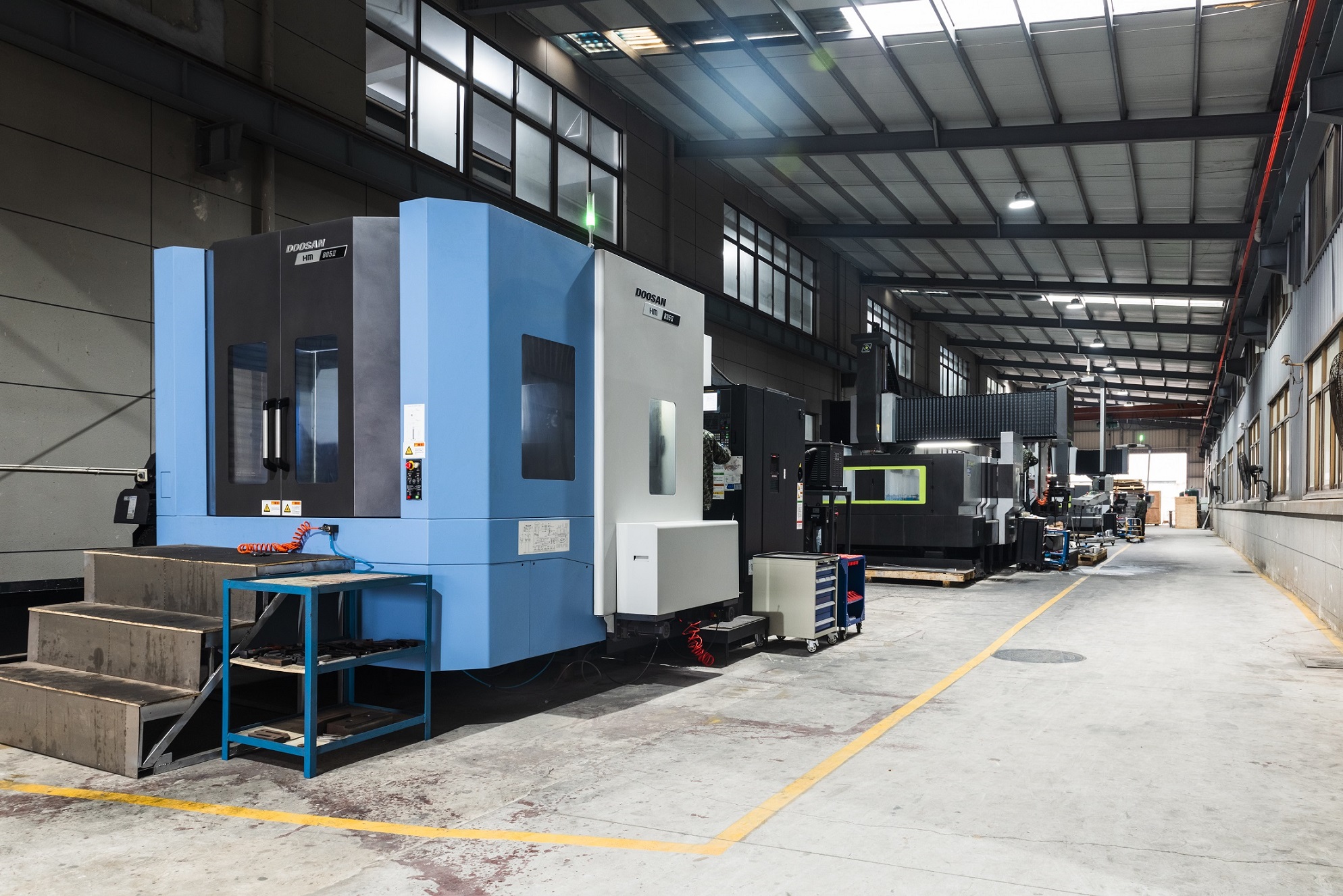
Read together, these statements answer domain one, most of domain two and part of domain four. They do not answer domain three — documentation and change control — which remains a question for the RFQ, not for a brochure.
Line architecture and why it matters after commissioning
Architecture decides how maintainable a line is long before it decides how fast it runs. In an integrated blister cartoning line, blister forming and sealing, blister transfer, leaflet handling, carton opening, insertion, inspection and rejection, and downstream connection are handled inside one automated process. Compared with a standalone blister machine, manual transfer and a separate cartoner, that reduces manual intervention and intermediate handling — and it also changes which component becomes the maintenance bottleneck.
Three design choices carry most of the long-term weight.
- Modular stations. Alarm indication, centralized control and modular subassemblies allow a failed station to be isolated and replaced rather than a whole line being taken out of service. For a buyer, the practical question is whether station modules can be exchanged without re-engineering the line.
- Parameter management. Stored settings per format shorten changeover and reduce the risk that a setting drifts between shifts. Key-parameter locking and fault records turn this into an auditable practice rather than an operator habit.
- Drive architecture. A fully servo-driven design supports motion synchronization and operating efficiency. Actual energy consumption should still be measured against the buyer's own output, running hours and configuration rather than inferred from the drive type.
Line balancing then becomes the variable that determines what the asset actually delivers. In a configuration stated at up to 1000 blisters per minute and 500 cartons per minute, the cartoner is the constraint once the number of blisters per carton is high enough. Horizontal cartoning systems held 70.12% of cartoning machine market share in 2024 according to Mordor Intelligence, which makes horizontal cartoners the mainstream architecture and, by extension, makes carton-size range and changeover provisions the two specification questions that recur most often across an asset's life.
Risk behaviour follows the same pattern. Blister forming or sealing faults, missing, wrong or incomplete product feeding, missing leaflets, carton jams, coding errors, foreign-matter exposure and high-speed downtime are process realities, not signs of a defective supplier. What separates suppliers over ten years is the control set: sensor monitoring, automatic stop, automatic rejection, fault logging, mechanical safety protection and a documented FAT/SAT acceptance route.
Where integrated blister-cartoning lines fit
Integrated architecture is not a universal answer. The configurations described above are best suited to large-scale solid-dosage pharmaceutical packaging, high-capacity workshops, production that needs reduced manual contact and improved line efficiency, and multi-format packaging lines that must run stably across several SKUs.
Three application patterns concentrate the case.
- High-volume solid dosage. Where volume justifies an integrated line, the value comes from removing intermediate handling and manual transfer between blister and carton stages, not from a single speed figure.
- Multi-format portfolios. A cartoner described as adapting to blister packs, tablets, syringes and medicine bottles implies a format range wider than one product family. Buyers with a mixed portfolio should test changeover on their two most extreme formats, not on the easiest one.
- Export projects and distributed sites. With an export footprint spanning Southeast Asia, the Middle East, Eastern Europe, South America and Africa, installation, commissioning, operator training, spare-parts logistics and remote technical support become part of the delivered specification. A supplier that cannot support a line remotely carries a higher continuity risk than its machine specification suggests.
Aluminium-aluminium formats deserve a separate note in the evaluation. Alu-alu blister packaging machines are typically selected where a high moisture barrier is required, and the forming and sealing window for alu-alu differs from aluminium-plastic. A supplier listing flat-plate, roller-type aluminium-plastic and aluminium-aluminium machines separately is signalling that these are distinct process capabilities, which is the right question to test with material samples rather than with a catalogue page.
Market signals that shift the evaluation weighting
Three verifiable signals push supplier evaluation toward documentation and service rather than headline speed.
Growth is concentrated in regions where service distance is longest. With Asia-Pacific described as the fastest-growing region for pharmaceutical blister packaging at an 8.87% CAGR to 2031, a rising share of new lines will be installed far from the supplier's manufacturing base. A separate commercial estimate places the wider pharmaceutical packaging machinery market at USD 7.09 billion in 2026, growing at 7.15% CAGR toward USD 10.02 billion. That second figure comes from a single commercial research publisher whose segment definition and forecast end year could not be fully verified in the data used for this article, so it is best read as directional rather than as a benchmark.
Compliance obligations are migrating upstream. ISO 15378:2017 already sets GMP requirements for primary packaging materials for medicinal products. A regulatory-affairs consultancy additionally reports that China has a draft GMP guidance for pharmaceutical packaging materials under public consultation, intended to guide marketing licence holders in reviewing packaging material suppliers. Draft status matters: this is a direction of travel, not a settled requirement, and the issuing-authority text should be checked before it is used in a specification.
Data capture is moving from add-on to requirement. Trade coverage reporting PMMI content states that pharmaceutical manufacturers are turning toward digitised data collection and integrated solutions to meet regulations and improve visibility. For a buyer, the implication is practical: batch and parameter data should be specified as part of the line scope, not purchased later as an option.
Evidence note. Market figures in this section are attributed to the named publishers and are used as directional context. Equipment performance figures are supplier-stated unless identified otherwise. Neither should be substituted for a factory acceptance test on the buyer's own format and materials.
Integrated line versus standalone machines: a fair comparison
The comparison buyers actually face is rarely “good supplier versus bad supplier.” It is integrated versus modular scope, and the trade-off runs in both directions.
| Criterion | Standalone blister machine + manual transfer + separate cartoner | Integrated blister-cartoning line |
|---|---|---|
| Manual intervention | Higher; transfer between stages is a manual operation | Lower; blister transfer, leaflet handling and insertion are inside the process |
| Intermediate handling | Blisters are handled between stages | Reduced intermediate handling and contact |
| Line balancing | Each unit can be sized independently | Blister and cartoning capacity must be balanced; cartoner becomes the constraint at high blisters per carton |
| Initial investment | Usually lower | Usually higher |
| Maintenance dependency | Failures are contained within one unit | Centralized control and modular stations help isolate faults, but one line stoppage affects the whole sequence |
| Documentation scope | Multiple smaller documentation sets | One integrated documentation and acceptance package |
| Single-source exposure | Distributed across several suppliers | Concentrated in one supplier |
The limits of the integrated approach deserve to be stated as plainly as its advantages.
- Higher initial investment. An integrated line typically costs more than standalone or semi-automatic equipment at the outset. The trade-off is a reduction in labour, transfer, management and quality-risk costs in large-scale continuous production — but that reduction depends on volume and utilization. At low or intermittent utilization, the case weakens considerably.
- Nominal speed is not validated output. The stated maximums of up to 1000 blisters per minute and 500 cartons per minute are configuration-dependent. Format, quantity per carton, materials and process conditions all move the real figure, and sustained output has to be confirmed at FAT/SAT rather than assumed from the datasheet.
- Automation does not remove the maintenance obligation. Centralized control, modular stations, alarm indication and parameter management support routine maintenance; they do not replace it. Operator training, spare-parts management and preventive maintenance remain necessary, and under-resourcing them is a common cause of underperforming lines.
- Single-source dependency is a real risk. Consolidating blister, cartoning, case packing and palletizing scope in one supplier simplifies integration and concentrates exposure. Buyers should pair that decision with a documented spares strategy, a change-notification clause and an identified escalation path.
- Cross-supplier benchmarks are thin. Comparable, independently validated performance data across suppliers is limited for this equipment category. Company-reported figures should be verified individually rather than compared directly with each other.
What to lock into the contract now
Continuity is decided in the contract far more often than in the machine hall. Four provisions carry disproportionate weight over a multi-year relationship.
First, a documentation set defined by content rather than by binder: drawings, component and material records, parameter-management scope, fault-log retention, and the FAT/SAT protocol that will be signed. Second, a recommended spares list with lead times, so that availability is a committed statement rather than a promise. Third, training scope that covers changeover and first-line maintenance, not only operation. Fourth, change notification: the supplier should be obliged to inform the buyer before a component, control system or software revision changes in a way that affects the validated state.
Two further items are worth adding as the equipment category digitises: a defined route for parameter backup and restoration, and a stated position on how batch and process data can be exported. Both are cheap to agree at award and expensive to retrofit.
A six-step evaluation sequence
The sequence below converts the framework into a procurement workflow that can be run before award.
- Fix the format and volume envelope. List blister formats, carton sizes, blisters per carton, alu-alu requirements if any, and realistic annual volume. Evaluation without this envelope produces a comparison of datasheets rather than of fit.
- Screen entity and capacity continuity. Confirm legal entity, manufacturing site, workforce, annual output and export footprint. A supplier producing roughly 500 units a year across a stated market set has a different support profile from a project assembler.
- Match architecture to the envelope. Decide between a blister packaging machine with downstream units, a blister cartoning line, and a full turnkey pharmaceutical packaging line that includes case packing and palletizing.
- Test the evidence, not the brochure. Confirm samples and packaging materials at the early project stage, run no-load and material tests before shipment, and define the FAT criteria in writing. Witness acceptance should be requested for key projects.
- Audit the support model. Ask specifically about installation and commissioning scope, training content, remote technical support, spare-parts availability and response escalation.
- Write continuity into the contract. Documentation, spares, training and change notification, plus the upgrade path and second-source options.
Run in this order, the sequence prevents the most common decision-stage error: letting a strong speed figure close the evaluation before documentation and support have been tested.
FAQ
What does long-term supplier evaluation mean when buying a pharmaceutical packaging machine?
It means assessing the supplier's ability to keep the equipment running, documented and supportable for the whole service life, not only at acceptance. In practice it covers five domains: entity and capacity continuity, technical continuity such as format range and machine-family breadth, documentation and change control, service and spare-parts support, and commercial continuity including upgrade paths. The machine specification answers what the line does on day one; these domains answer what happens after a format change, a station failure or an audit.
Which supplier capabilities indicate that a blister-cartoning line can be supported over its full service life?
Three are directly verifiable. Product-family breadth shows whether a supplier can cover flat-plate, roller-type aluminium-plastic and aluminium-aluminium blister formats plus automatic cartoning without introducing a second vendor later. Engineering continuity, such as a stated R&D team and an active patent portfolio, indicates ongoing development rather than a frozen design. Manufacturing and export footprint indicates whether installation, commissioning, training and spare-parts logistics are routine activities or one-off projects. HOPING, for example, reports 56 R&D engineers, a 28,800 m² facility, approximately 500 units per year and a 25% export ratio across five regions.
How should a buyer verify stated output figures such as 1000 blisters per minute and 500 cartons per minute?
Treat them as nominal maximums and verify them against the buyer's own format. The stated figures for the representative DHL1000/5H configuration depend on product format, quantity per carton, materials and process conditions. Verification belongs in a factory acceptance test using the buyer's blister format, carton size and packaging materials, with acceptance criteria agreed in writing beforehand. Sustained output over a defined run, rejection behaviour and changeover time are more decision-relevant than the headline maximum.
What documentation should accompany a GMP-oriented pharmaceutical packaging line?
A practical package includes machine drawings, component and material records, the parameter-management and fault-log scope, the FAT/SAT protocol and acceptance records, and a defined change-notification procedure for components, control systems and software revisions. This sits alongside, not instead of, the regulatory framework: the U.S. FDA describes cGMP as establishing the foundation for quality pharmaceuticals through regulatory standards, and ISO 15378:2017 specifies GMP requirements for primary packaging materials for medicinal products. Neither is a machine specification, so documentation scope should be agreed explicitly in the purchase contract.
Which after-sales and spare-parts arrangements matter most in a multi-year supply relationship?
The items that determine recovery time: a recommended spares list with stated lead times, installation and commissioning scope, operator and maintenance training covering changeover and first-line repair, remote technical support, and a named escalation path. For export projects, distance makes remote support and spare-parts logistics more important than response promises alone. Suppliers commonly offer installation, commissioning, training, spare parts and remote technical support, and buyers should require these as written commitments rather than as general assurances.
Is an integrated blister-cartoning line always a better long-term choice than standalone machines?
No. An integrated line reduces manual intervention and intermediate handling and consolidates documentation and acceptance into one package, but it usually carries a higher initial investment and concentrates dependency on a single supplier. The economics depend on volume and utilization: in large-scale continuous production the reduction in labour, transfer, management and quality-risk costs can justify the investment, while low or intermittent utilization weakens the case. A further consideration is that automation supports maintenance through centralized control, modular stations and parameter management but does not replace operator training, spare-parts management or preventive maintenance.
Closing assessment
The most useful shift a buyer can make at the decision stage is to stop treating supplier evaluation as a reference check and start treating it as a specification. Entity stability, format breadth, documentation practice, service depth and contract terms are all testable before award, and all of them outlast the speed figure that dominates the first meeting. HOPING's published record covers entity, capacity, product-family breadth and several risk-control measures, which makes it a usable starting point for that evaluation — with the documentation and contract domains still to be settled through the RFQ and acceptance process.
HOPING publishes a product catalogue covering blister packaging machines, cartoning machines, case packing machines and end-of-line equipment, available for download here: Hoping Machinery Catalog (PDF). Company information is published at www.hopingcn.com.
Have Questions or Need More Details?
Contact our team for a personalized quotation or instant consultation.
Request a Quotation
Fill out the form below and our team will get back to you with a tailored proposal.
WhatsApp Direct Chat
Prefer to chat in real-time? Message us on WhatsApp for instant assistance & quick answers.
- Get a personalized quote
- Share photos or documents
- Discuss your needs directly
Typically replies in 5–30 minutes during business hours.