
Pharmaceutical Blister Packaging Machines: Meeting the Demand for Speed, Compliance, and Flexibility
The global pharmaceutical packaging equipment market was valued at approximately USD 10.71 billion in 2024, with the blister packaging machine segment projected to reach USD 2.57 billion by 2025. Asia Pacific held the largest revenue share of 40.7% in 2025, reflecting the region's growing role in pharmaceutical production. Within this landscape, the choice of a blister packaging machine directly impacts production speed, regulatory compliance, and total cost of ownership.
The Challenge: Balancing Speed, Compliance, and Flexibility
Pharmaceutical manufacturers face mounting pressure to increase output while adhering to Good Manufacturing Practice (GMP) standards, ISO 15378, and EU Machinery Directive 2006/42/EC. Conventional blister lines often struggle with frequent format changeovers, manual transfer between processes, and inconsistent sealing quality. The industry increasingly demands integrated lines that combine blister forming, cartoning, and secondary packaging in a synchronized, servo-driven system.
Hoping Machinery: A Turnkey Approach to Blister Packaging
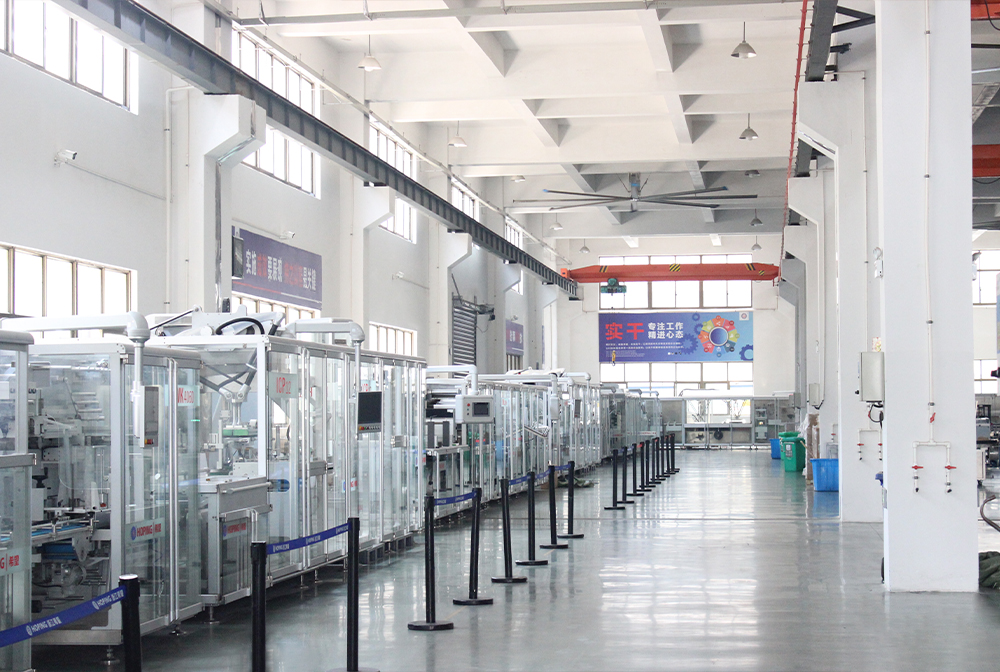
Zhejiang Hoping Machinery Co., Ltd., established in 2001, is a professional pharmaceutical packaging machinery manufacturer integrating R&D, production, marketing, and service. The company employs approximately 300 staff and operates a 28,800 m² facility with an annual production capacity of 500 units. Its R&D team of 56 engineers has developed a comprehensive portfolio of blister packaging machines, cartoning machines, case packers, and end-of-line solutions, supported by 26 invention patents, 70 utility patents, and 10 PCT-protected patents in Europe, Russia, Germany, Italy, and other countries.
Hoping's blister packaging machines span two major technology platforms: platen (flat) blister machines for medium-speed, multi-format production and roller blister machines for high-speed, continuous operation. Both types are designed and manufactured in accordance with GMP requirements, featuring stainless steel and aluminum-alloy structures with corrosion-resistant, easy-to-clean surfaces.
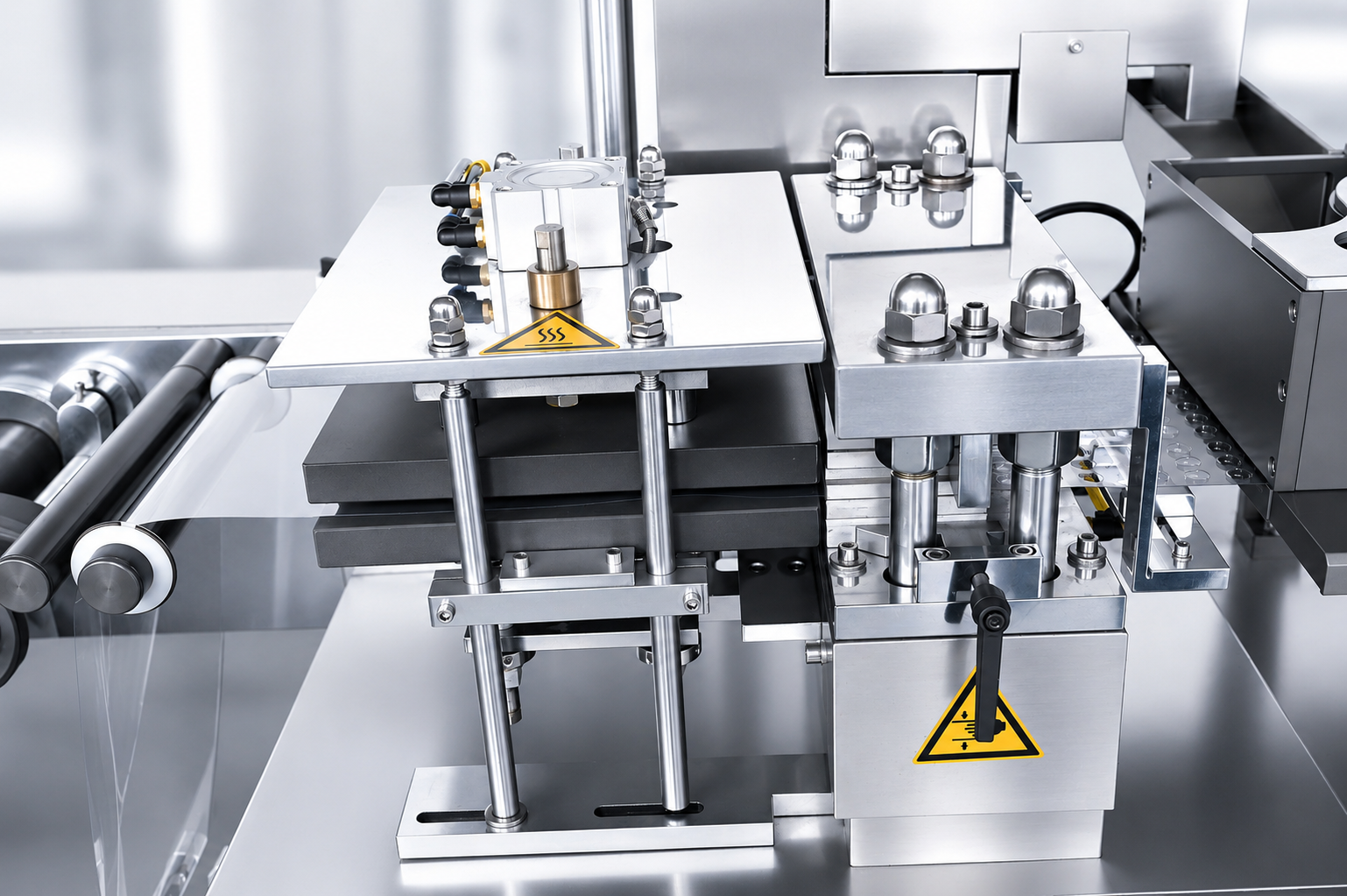
Platen Blister Machine: DPP260T1
The DPP260T1 is a platen blister machine designed for Alu-PVC and Alu-Alu flat blister packaging. Its key specifications include a maximum punching frequency of 60 punches/min, a maximum capacity of 300 blisters/min, and a forming area of 260 × 115 mm. Product-contact parts are made of AISI 316L stainless steel and FDA-compliant pharmaceutical-grade materials. The machine features a universal brush feeding system for gentle handling of tablets and capsules, an automatic blister discharge and rejection system, and a Panasonic servo-driven indexing system for precise material positioning. The overall dimensions are 4420 × 710 × 1700 mm, with a net weight of 2200 kg and a power supply of 380V 50Hz 8.5kW.
Roller Blister Machine: DPH320H
For high-volume production, the DPH320H is a fully servo high-speed roller blister packing machine with a punching frequency of 250 punches/min and a maximum capacity of 1000 blisters/min. It accommodates a forming area of 320 × 280 mm and a forming depth of 12 mm. The machine is constructed from stainless steel and aluminum-alloy and includes PVC/PTP/Alu material handling modules, heating, forming, sealing, and punching units. Power consumption is 30 kW, and the machine dimensions are 5000 × 1500 × 2100 mm.
Integrated Blister-Cartoning Lines: From Blister to Case
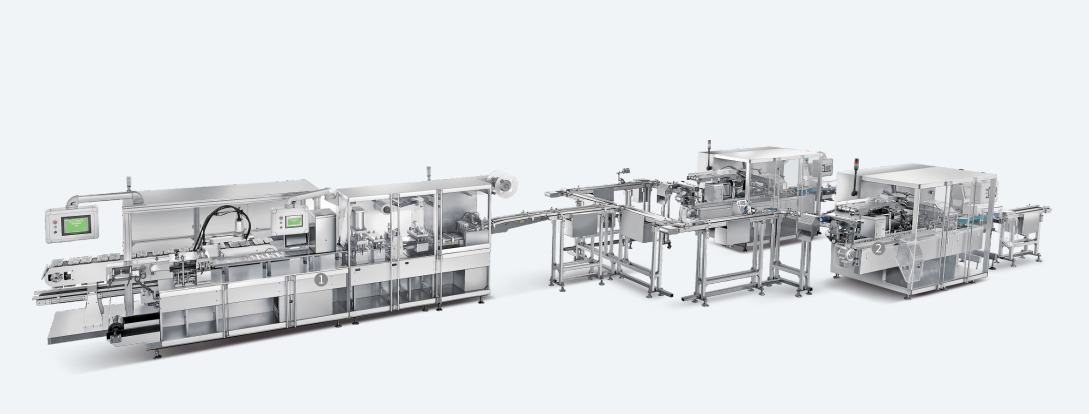
Hoping offers turnkey blister-cartoning lines that link blister forming, leaflet folding, carton opening, product insertion, coding, and inspection in a single synchronized system. Models such as the DHL1000/5H achieve up to 1000 blisters/min and 500 cartons/min, featuring a D3 intelligent top-loading parallel tracking transfer system, Beckhoff motion controller, and CP9315 industrial PC. The DHL7005H delivers 700 blisters/min and 500 cartons/min using a self-developed IRB24 transfer robot and Siemens motion controller. These lines are GMP-oriented, with stainless steel and aluminum-alloy frames, transparent safety guards, and convenient mold change capabilities.
Application Scenarios
Hoping's blister packaging machines and integrated lines are applied in solid dosage pharmaceutical production, nutraceutical manufacturing, food packaging, cosmetic packaging, and daily chemical packaging. Typical projects include new blister packaging line installations, capacity expansions, and upgrades from manual or semi-automatic lines to fully automated, linked systems. The lines are designed for continuous high-speed operation in GMP-oriented cleanroom or pharmaceutical packaging workshops, supporting multi-batch and multi-format production with recipe storage and fast changeover.
For example, the Automatic Blister-Cartoner Production Line (DPP Series + XWZ Series) offers a blister capacity of 100–600 blisters/min and a cartoning capacity of 100–400 cartons/min, making it suitable for mid-range pharmaceutical tablet and capsule packaging. For high-capacity requirements, the IXW600 blister-flow-wrap-cartoning line achieves 600 blisters/min, 300 packs/min, and 300 cartons/min, integrating flow wrapping for moisture-sensitive products before cartoning.
Market Trend Analysis
Several trends are reshaping the pharmaceutical blister packaging machinery market: (1) Servo-driven automation replacing cam-and-gear mechanisms for greater precision and faster changeovers; (2) GMP-compliant design with cleanable surfaces, minimal product contact, and data traceability; (3) Line integration that connects blister, cartoning, bundling, case packing, and palletizing into a single control system; (4) Regional shifts toward Asia Pacific, which held 40.7% of the market in 2025, where manufacturers like Hoping are expanding their presence. Hoping's export business accounts for 25% of total sales, with major markets in Southeast Asia, the Middle East, Eastern Europe, South America, and Africa.
Comparison with Traditional Solutions
Traditional manual or semi-automatic blister lines often produce 30–60 blisters/min, require multiple operators for handling, and involve separate downstream cartoning and case packing equipment. In contrast, Hoping's servo-driven integrated lines can reach 600–1000 blisters/min with automated inspection, rejection, and downstream connection, reducing labor and improving quality. However, the capital investment for a fully integrated line is higher than for standalone machines. An honest limitation is that complex integration requires careful project engineering and may involve longer commissioning times for customized lines.
Future Outlook
As pharmaceutical companies pursue Industry 4.0 and track-and-trace compliance, blister packaging lines will become increasingly intelligent, with built-in vision systems, connectivity to MES/ERP, and predictive maintenance capabilities. Hoping's continued investment in R&D (56 engineers) and over 100 patents positions it to deliver next-generation equipment that meets both regulatory and operational demands. The company's turnkey approach—from blister to end-of-line—offers a single-source accountability that is gaining traction among mid-size and large pharmaceutical manufacturers worldwide.
Frequently Asked Questions
What is a pharmaceutical blister packaging machine?
A pharmaceutical blister packaging machine forms cavities in a film (typically PVC or cold-form aluminum), fills them with solid dosage products (tablets, capsules), seals with a lidding material (PTP aluminum foil or Alu-Alu), and then punches individual blister packs. Hoping offers both platen (flat) and roller type machines for different speed and format requirements.
What types of blister packaging machines does Hoping Machinery offer?
Hoping provides platen blister machines such as the DPP260T1 (max 300 blisters/min) and high-speed roller machines such as the DPH320H (max 1000 blisters/min). Both types support Alu-PVC and Alu-Alu packaging and are GMP-compliant with FDA-grade materials.
Can Hoping blister machines handle Alu-Alu (cold-form) packaging?
Yes. The DPP260T1 and DPH320H are designed for both Alu-PVC and Alu-Alu blister packaging. Alu-Alu is ideal for moisture-sensitive products requiring a complete barrier.
What is the typical capacity of an automatic blister-cartoning line from Hoping?
Hoping's integrated blister-cartoning lines range from 100–600 blisters/min (DPP+XWZ series) up to 1000 blisters/min and 500 cartons/min (DHL1000/5H). The specific capacity depends on the model and product format.
How does Hoping ensure GMP compliance in its blister packaging machines?
All Hoping blister machines are designed and manufactured per GMP requirements. Product-contact parts use AISI 316L stainless steel or FDA-compliant materials; non-contact parts are AISI 304 stainless steel and anodized aluminum. Surfaces are easy to clean, and the design minimizes product accumulation and cross-contamination.
What control systems are used in Hoping blister machines?
Depending on the model, Hoping uses Siemens PLC/HMI, Beckhoff motion controllers, or Panasonic servo systems. For example, the DPP260T1 features a Panasonic servo-driven indexing system, while the DHL1000/5H line uses Beckhoff controllers with CP9315 industrial PC.