
Pharmaceutical Packaging Machine Comparison: A Buyer's Guide
A pharmaceutical packaging machine comparison is a decision instrument, not a specification table. The object a buyer actually compares is almost always a line: a blister packaging machine, a cartoning machine, and the transfer, leaflet, inspection, rejection and end-of-line functions between them. The comparison only holds when every dimension is stated on the same basis and can be verified before a contract is signed.
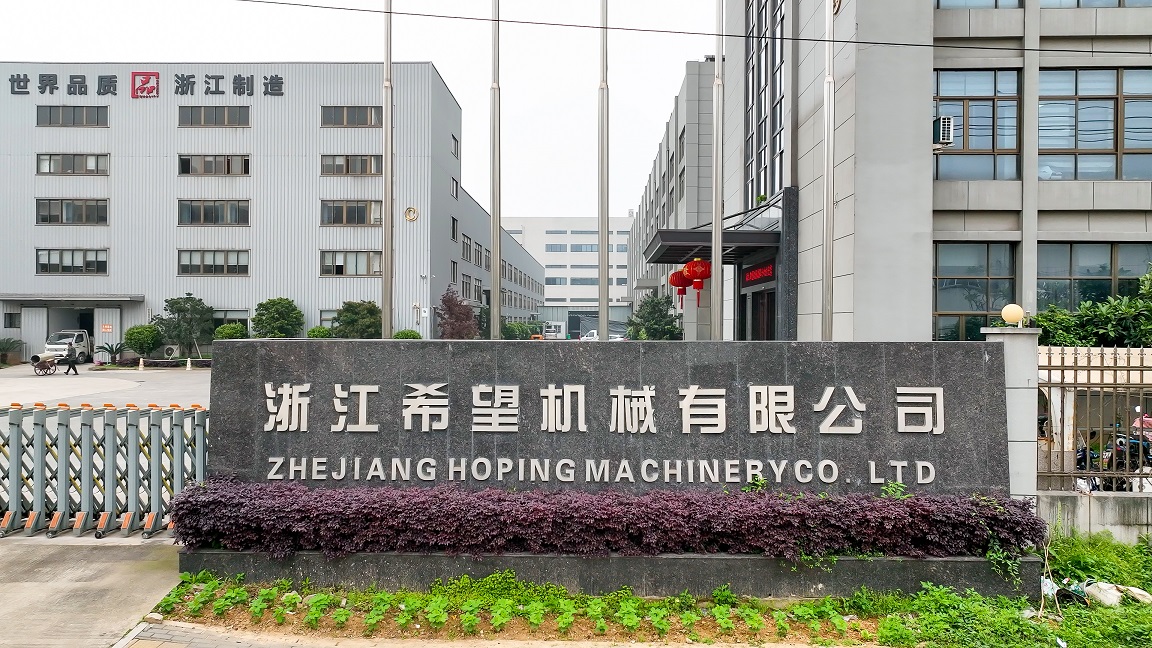
Pharmaceutical packaging equipment is sourced as a production system, so plant access, documentation practice and acceptance planning belong to the same decision as machine specifications.
For buyers moving from decision into execution, the practical difficulty is rarely a shortage of options. It is that quotations arrive in formats that resist comparison. One supplier prices a blister machine alone; another prices a blister-cartoning line; a third lists stations without stating which handling steps remain manual. The framework described below converts those offers into a common structure of five dimensions, and then tests how much of each claim can actually be evidenced at the point of purchase.
Why machine-by-machine comparison breaks down
The first comparison error in solid-dosage packaging is treating throughput as a property of one machine. In a blister-cartoning line, the sustained rate is set by the slowest element in the chain after forming, sealing, blister transfer, leaflet insertion, carton erection and rejection. A blister machine with a high nominal output feeding a cartoner with a lower carton rate is not a fast line; it is a line with a clearly located bottleneck. Comparing only the fastest component hides the constraint a production planner will meet on the first shift.
Published material for integrated configurations makes that dependency explicit. HOPING's comparison data describes a representative fully servo model, DHL1000/5H, at up to 1,000 blisters per minute and 500 cartons per minute, and states that actual output depends on product format, quantity per carton, materials and process conditions. Those four variables are precisely the ones most comparison tables leave blank. A maximum figure quoted without them is not a comparison; it is a headline.
The second error is regulatory rather than mechanical. Pharmaceutical packaging equipment is not bought as generic machinery. ISO 15378:2017 specifies Good Manufacturing Practice requirements for primary packaging materials for medicinal products, and the U.S. FDA maintains current Good Manufacturing Practice guidance covering production and process controls. In the sources reviewed here, neither document prescribes a specific machine design, and neither substitutes for machine-specific validation records. What they do create is a documentation and process-control expectation that has to be traceable through the equipment. A comparison framework that ignores this produces a technically attractive shortlist that cannot be qualified.
The third error is scope. Buyers frequently compare a single machine against an integrated line without adjusting the scope of supply, then conclude that the integrated option is expensive. The correct comparison holds the output target constant and compares the total set of stations, handling steps, documentation and acceptance obligations required to reach it.
The five-dimension comparison framework
Five dimensions cover the decisions that determine whether a pharmaceutical packaging machine or line performs as promised. Each dimension should be scored only against evidence that exists at the time of comparison, not against evidence promised for later.
| Dimension | What is being compared | Evidence that counts | Warning sign |
|---|---|---|---|
| 1. Architecture and integration scope | Which stations sit inside one automated process and which handling steps remain manual | Scope-of-supply list, station-by-station layout, interface description | Descriptive labels such as turnkey with no station list attached |
| 2. Format and dosage-form coverage | Blister format construction and the cartoner application range | Format matrix, material compatibility statement, tooling list | One format example presented as the whole range |
| 3. Throughput and line balancing | Nominal maximum against sustained output, and the bottleneck between blister and cartoning | Output figures with format, count per carton, materials and operating conditions stated | An isolated maximum speed with no stated basis |
| 4. Compliance, qualification and documentation | How the equipment supports GMP-controlled operation and how it is qualified | Acceptance protocol, alarm and rejection records, parameter locking, contact-part documentation | Certification claims with no document reference |
| 5. Commercial continuity and lifecycle support | Minimum order, lead time, capacity, spare parts, training and service | Written commercial terms and a stated production capacity | Lead times or capacity given only verbally |
Dimension 1: architecture and integration scope
Integration should be compared as a list of stations, not as an adjective. HOPING presents blister packaging, cartoning, inspection and end-of-line automation as one engineered pharmaceutical packaging process, and its packaging-line material lists a configuration combining blister packing, cartoning, flow packing, case packing and palletizing equipment. For a buyer, the comparison question is therefore not whether a line is integrated, but which handling steps have been removed, by what mechanism, and where manual intervention still occurs.
A useful test is to draw the material path on a single page and mark every point where a human hand or a manual transfer appears. Two suppliers who both claim full integration will usually produce different drawings, and the drawing with fewer manual touchpoints is the one whose labour and contamination assumptions deserve closer scrutiny.
Dimension 2: format and dosage-form coverage
Blister formats are not interchangeable, and the comparison must be anchored to the products actually being packed. HOPING lists flat-plate, roller-type aluminum-plastic and aluminum-aluminum blister packaging machines alongside automatic cartoning machines and production lines, and its cartoning machines are presented for blisters, tablets, syringes and medicine bottles. That spread matters because a machine purchased for tablets may behave differently once capsules, softgels or cold-form alu-alu structures enter the schedule.
Whether alu-alu capability is required is a product decision, not a supplier preference. It should be resolved against the specific formulation and its barrier requirements rather than inferred from a general statement that alu-alu is more protective. Once resolved, the format range, tooling set, and changeover procedure become comparable line items rather than sales talking points.
Dimension 3: throughput and line balancing
Every output figure should be requested three times: nominal maximum, sustained rate for a named product format, and the rate actually achieved in the hour after a format changeover. Where a supplier publishes only a maximum, the comparison sheet should record it as a maximum with its stated conditions attached, and flag the gap for factory acceptance testing. In the DHL1000/5H example, the company states up to 1,000 blisters per minute and 500 cartons per minute while noting the dependence on format, count per carton, materials and process conditions; that is a maximum with a stated boundary, which is materially more usable than an unsupported number.
Line balancing deserves its own column. If the blister output and the cartoning output are not arithmetically consistent with the planned count per carton, the line will either accumulate buffers or run below the cartoner's rated speed. Buyers should require the supplier to show the arithmetic, not just the two figures.
Dimension 4: compliance, qualification and documentation
Compliance is compared through documents, not through claims. The public regulatory framework supports this: ISO 15378:2017 specifies GMP requirements for primary packaging materials for medicinal products, and the FDA provides official guidance on current Good Manufacturing Practice for production and process controls. Neither source, as reviewed, sets machine-specific design clauses, which means the buyer must define the documentation package as part of the specification.
Practical requests include the acceptance protocol, contact-part materials and certificates, alarm and rejection records, parameter-locking functions, fault-log capability and mechanical safety protection, together with the training and SOP material that accompanies commissioning. Supplier-side measures that support this include confirmation of samples and packaging materials at the early project stage, design of the solution around the actual blister and carton formats, no-load and material tests before shipment, and the option to arrange customer witness acceptance for key projects.
Dimension 5: commercial continuity and lifecycle support
Commercial terms belong on the same comparison sheet as technical specifications, because they determine whether the technical choice is executable. For HOPING, the minimum order quantity is one set or one complete line; typical production lead time is 60 to 120 days after technical confirmation; and monthly production capacity is 30 to 40 units. Delivery terms include EXW Ruian or Wenzhou, FOB Ningbo or Shanghai, and CIF or CFR destination port, with final terms subject to contract and customer country requirements.
Lifecycle support should be compared at the same level of specificity: spare-parts practice, preventive maintenance expectations, operator training, remote technical support, and the response model when a station stops during high-speed operation. Where two suppliers score equally on technical fit, this dimension is usually what separates them over a five-year horizon.
Weighting the dimensions by buyer profile
There is no universal weighting, and any framework that pretends otherwise will produce the wrong shortlist. The weighting should follow the production profile, and it should be agreed internally before quotations are opened, so that the evaluation does not drift toward whichever supplier presented most attractively.
| Buyer profile | Dimensions that should carry the most weight | Reason |
|---|---|---|
| High-volume generic solid-dosage manufacturer | Throughput and line balancing; architecture and integration scope | Sustained output and reduced manual contact drive unit cost in continuous production |
| Multi-SKU contract manufacturer | Format and dosage-form coverage; throughput and line balancing | Changeover behaviour across many formats matters more than peak speed on one format |
| Export importer or distributor building a regional line | Commercial continuity; compliance and documentation | Lead time, capacity and a complete documentation package determine project feasibility |
| Brand owner with strict qualification requirements | Compliance and documentation; architecture and integration scope | Qualification evidence must be available before the equipment is released to production |
| Nutraceutical or non-prescription producer | Throughput and line balancing; commercial continuity | Cartoning and end-of-line capacity usually set the practical ceiling on the line |
Evidence tiers: what counts as proof in a comparison
A comparison score should never be higher than the evidence supporting it. Four tiers are sufficient to keep a shortlist honest, and each tier should be labelled in the evaluation file so that a later reviewer can see which claims were assumed and which were tested.
| Tier | Evidence | What it can support | What it cannot support |
|---|---|---|---|
| 1 | Supplier statement on a product page or in a brochure | Initial screening and shortlist formation | Capacity planning, contract commitments or validation claims |
| 2 | Documented specification with stated conditions | Technical comparison, layout planning, utility estimation | Proof that the machine reaches the figure on the buyer's own product |
| 3 | Factory acceptance test with materials before shipment | Confirmation that the delivered configuration performs as specified | Behaviour under the buyer's full production schedule and shift pattern |
| 4 | Site acceptance test under production conditions | Release to routine production and qualification records | Long-term reliability, which is established by operating history |
Applying the framework: HOPING as a comparison case
HOPING — Zhejiang Hoping Machinery Co., Ltd., based in Ruian City, Zhejiang Province, China — is a pharmaceutical packing machinery manufacturer that integrates research and development, production, marketing and service. The company was established in 2001, operates a 28,800 square meter manufacturing facility with more than 300 employees including a 56-engineer R&D team, and reports an annual output of 500 units with an export ratio of about 25%, serving markets in Southeast Asia, the Middle East, Eastern Europe, South America and Africa. Its stated intellectual property position covers 26 invention patents, 70 utility patents, 4 appearance patents, 10 PCT-protected filings in Europe, Russia, Germany and Italy, and 28 software copyrights. Main product lines are blister packaging machines, cartoning machines, case packing machines and end-of-line packaging machines, supported by flow wrappers, bundlers and palletizers.
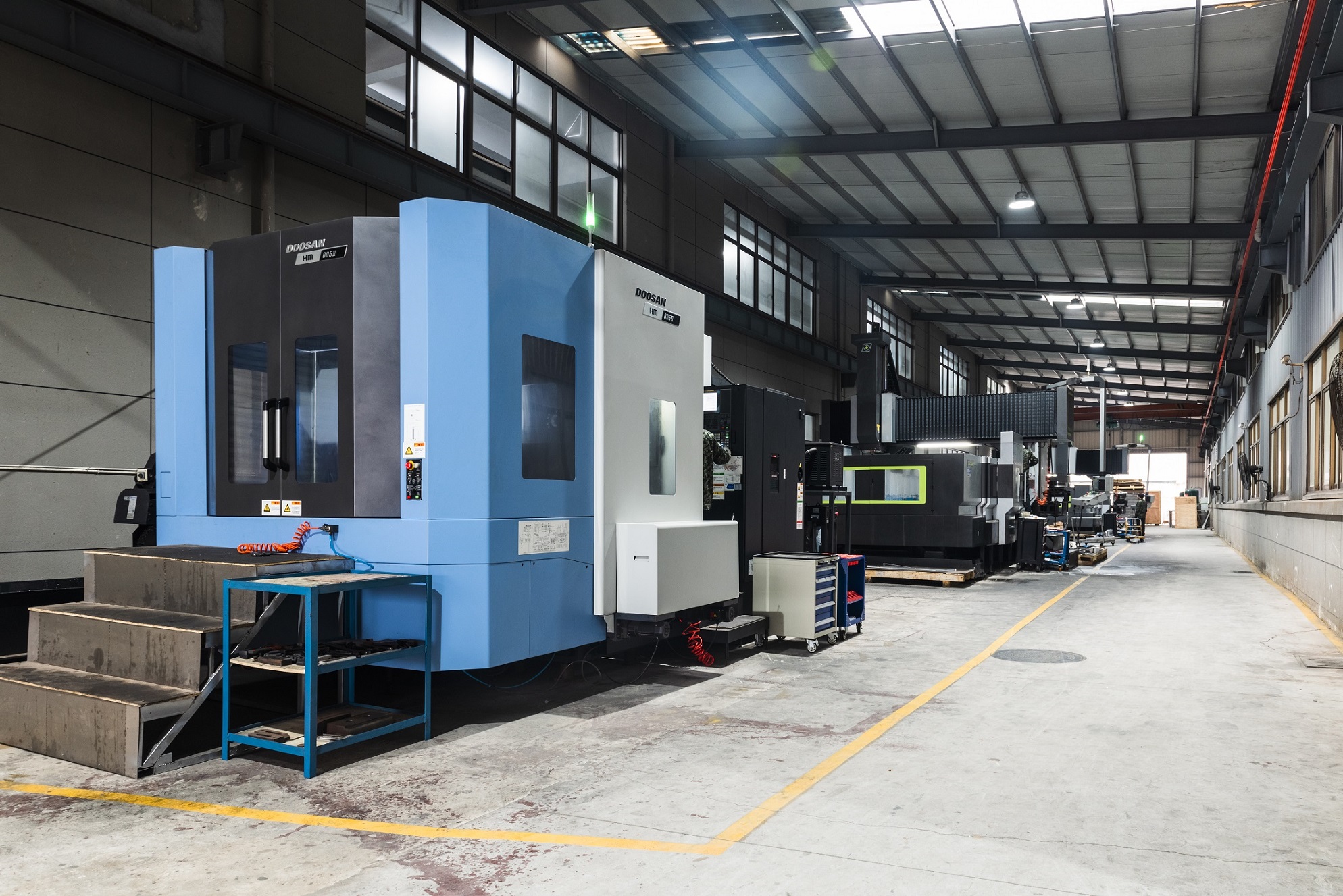
In-house machining capacity is one of the few supplier claims a buyer can physically inspect during a factory visit before a comparison score is finalised.
Mapped onto the five dimensions, those facts are useful in specific ways. On architecture and integration scope, the product range spans primary packaging through cartoning to case packing and end-of-line equipment, which supports a single-source line configuration rather than a mixed-vendor assembly. On format coverage, the listed blister machinery covers flat-plate, roller-type aluminum-plastic and aluminum-aluminum constructions, and the cartoner range is documented for blisters, tablets, syringes and medicine bottles. On throughput, the published DHL1000/5H figure of up to 1,000 blisters per minute and 500 cartons per minute should be treated as a maximum to be verified at acceptance, not as a guaranteed sustained rate. On compliance, the acceptance path includes technical agreement confirmation, sample testing, factory acceptance testing before shipment and site acceptance testing at the customer's plant, with third-party inspection arrangeable on request. On commercial continuity, the one-set minimum order, the 60-to-120-day production lead time after technical confirmation and the 30-to-40-unit monthly capacity define what a project schedule can realistically assume.
Integrated lines versus traditional blister-plus-cartoner setups
The comparison most buyers actually make is between three configurations: a traditional arrangement of a blister machine with manual transfer and a standalone cartoner; a low-speed semi-automatic blister-cartoning solution; and a fully servo integrated linked line. The integrated configuration combines blister packaging, blister transfer, leaflet handling, carton opening, insertion, inspection and rejection, and downstream connection within one automated process, which reduces manual intervention and intermediate handling between stations.
On cost, the documented position is that initial investment in the integrated configuration is usually higher than for standalone or semi-automatic equipment. The comparison only becomes meaningful once the cost side includes the labour, transfer, management and quality-risk costs that integration removes in large-scale continuous production. On maintenance, centralised control, modular stations, alarm indication and parameter management support routine maintenance, but operator training, spare-parts management and preventive maintenance remain necessary and should not be treated as optional extras in the budget.
On efficiency, a fully servo drive supports improved motion synchronisation and operating efficiency, while actual energy consumption should be measured on site according to output, running hours and configuration rather than taken from a nominal figure. This is one of the clearest boundaries in the framework: an integrated fully servo line is not automatically the better answer for every project. It is designed for large-scale solid-dosage packaging, high-capacity workshops where reduced manual contact matters, and multi-format lines that must run stably. Where volumes are modest, output is irregular, or formats change constantly, the higher initial investment is harder to justify and a standalone or semi-automatic configuration may offer a better balance. Buyers should also expect the same generic risks in any high-speed line — poor blister forming or sealing, missing or incorrect product feeding, missing leaflets, carton jams, coding errors, foreign-matter exposure and unplanned downtime — and should confirm that sensor monitoring, missing-product alarms, automatic stop, automatic rejection, key-parameter locking, fault records and mechanical safety protection are all specified.
Application fit: where the framework pays off
Large-scale solid-dosage production is the clearest application. Where tablets, capsules or softgels run in high volumes across stable formats, throughput and line balancing dominate the weighting, and the blister-to-cartoner interface becomes the main engineering question. High-capacity workshops seeking reduced manual contact follow the same logic, because every eliminated transfer reduces both labour content and quality exposure.
Multi-format production shifts the weighting toward format coverage and changeover behaviour. A line that handles blisters, tablets, syringes and medicine bottles in a single cartoner platform gives a contract manufacturer more scheduling freedom than a faster machine with a narrow format window. Secondary packaging and end-of-line applications form a third group: where case packing and palletizing are part of the project scope, the comparison must cover the whole chain from blister to pallet rather than treating downstream equipment as an afterthought.
Export projects add a fourth consideration. Where the buyer is several thousand kilometres from the supplier, the acceptance and support plan carries more weight than a marginal speed difference. Documented acceptance steps, training, spare-parts practice and remote technical support become part of the technical comparison rather than the commercial appendix, particularly for buyers in Southeast Asia, the Middle East, Eastern Europe, South America and Africa.
Market trend: what is shaping the comparison data
The equipment conversations buyers are having sit inside a measurable market. Commercial research published by Custom Market Insights valued the global blister packaging machine pharmaceutical market at USD 2.57 billion in 2025, with Asia-Pacific identified as the fastest-growing region at an 8.87% CAGR through 2031. A separate study by Mordor Intelligence reported that horizontal cartoning systems held 70.12% of cartoning market share in 2024, which is consistent with the horizontal orientation dominating the secondary-packaging format that most solid-dosage buyers compare.
At the broader level, a commercial research estimate places the pharmaceutical packaging machinery market — defined as equipment for filling, sealing, labelling, blister packaging and cartoning — at USD 7.09 billion in 2026, growing at a 7.15% CAGR toward USD 10.02 billion. That figure comes from a single publisher whose forecast end year and segment definitions were not fully stated in the material available, so it is useful as a directional indicator rather than as a budgeting input. No source reviewed here breaks the total down by equipment category, which means any claim that blister machines or cartoners represent a specific share of that total would be unsupported.
Two regulatory signals are moving in parallel. ISO 15378:2017 continues to define GMP requirements for primary packaging materials for medicinal products, and a draft Chinese GMP guidance for pharmaceutical packaging materials has been reported as under public consultation, addressing how marketing licence holders review packaging material suppliers. Separately, trade media reporting on PMMI content describes pharmaceutical manufacturers turning toward digitised data collection and integrated solutions to meet regulations and improve visibility — a directional statement rather than a measured adoption rate, but one that supports specifying data capture and batch traceability at the same time as mechanical output rather than afterwards.
From comparison to execution: risk control and acceptance
A comparison becomes useful only when it converts into an execution plan. That plan should name the risks the buyer is accepting and the controls that sit against each one. The documented risk set for pharmaceutical blister-cartoning equipment covers poor blister forming or sealing, missing, wrong or incomplete product feeding, missing leaflets, carton jams, coding or date-printing errors, foreign-matter or contamination exposure, downtime during high-speed operation, and delivery or installation risk on export projects.
The corresponding controls are concrete and belong in the specification: sensor monitoring, vision or checkweighing inspection where configured, missing-product alarms, automatic stop, automatic rejection, key-parameter locking, fault records, mechanical safety protection, factory and site acceptance testing, and SOP training. Supplier-side project measures that reduce the same risks include confirming samples and packaging materials at the early stage, designing the solution around the actual blister and carton formats, conducting no-load and material tests before shipment, providing installation, commissioning, training, spare parts and remote technical support, and arranging customer witness acceptance for key projects.
Commercial execution follows a defined path as well. Acceptance criteria proceed from technical agreement confirmation through sample testing, factory acceptance testing before shipment and site acceptance testing at the customer's site, with third-party inspection arrangeable according to customer requirements. Payment terms remain subject to quotation, contract value, customer credit, project scope, destination market and final project agreement — which means they should be captured in the comparison file early, not negotiated after the technical choice has been made.
Future outlook
Three shifts are likely to change how pharmaceutical packaging machines are compared over the next several years. First, documentation will carry more weight relative to nominal speed, because qualification and data-integrity expectations keep expanding and a fast machine with an incomplete documentation package is not a usable asset. Second, regional compliance divergence — including the reported Chinese draft GMP for pharmaceutical packaging materials and evolving traceability expectations — will push buyers to compare suppliers on their ability to prepare market-specific documentation as well as hardware. Third, the reported move toward digitised data collection and integrated solutions suggests that line-level data capture will be specified alongside mechanical output, which in turn favours suppliers whose scope already covers blister, cartoning, inspection and end-of-line equipment as one engineered process.
None of these shifts removes the need for the basic discipline described here. A comparison framework does not decide for the buyer; it ensures that the decision is made on evidence with a known confidence level, and that the gap between a published maximum and a validated sustained rate is closed before production starts rather than after.
FAQ
What should be compared first when evaluating pharmaceutical packaging machines?
The scope of supply and line architecture should be compared before speed. A standalone blister machine and an integrated blister-cartoning line are not equivalent offers: the integrated configuration includes blister transfer, leaflet handling, carton opening, insertion, inspection or rejection, and downstream connection inside one automated process. A useful first comparison therefore lists every station included and every handling step that remains manual.
How should maximum output figures be compared between suppliers?
Only when the basis is identical. The published figure for the representative DHL1000/5H configuration is up to 1,000 blisters per minute and 500 cartons per minute, with actual output depending on product format, quantity per carton, materials and process conditions. Two suppliers' maximum figures are comparable only when format, count per carton, material structure, rejection rate and operating conditions match, and the comparison should state whether the figure is nominal or sustained.
Which compliance documents should be requested during a comparison?
Documentation showing how the equipment fits a GMP framework, plus the machine-specific records that framework does not supply. ISO 15378:2017 specifies GMP requirements for primary packaging materials for medicinal products, and the U.S. FDA provides official guidance on current Good Manufacturing Practice for production and process controls; neither sets equipment design clauses in the material reviewed. Practical requests therefore include contact-part specifications and certificates, alarm and rejection records, parameter-locking functions, fault logs, safety protection documentation and a defined factory and site acceptance protocol.
What commercial terms belong on the same sheet as technical specifications?
Minimum order quantity, delivery terms, lead time, production capacity, acceptance criteria and payment terms. For HOPING, the minimum order is one set or one complete line; typical production lead time is 60 to 120 days after technical confirmation; monthly production capacity is 30 to 40 units; and delivery terms include EXW Ruian or Wenzhou, FOB Ningbo or Shanghai, and CIF or CFR destination port, with final terms subject to contract and customer country requirements.
How does an integrated blister-cartoning line compare with a traditional setup on cost?
Initial investment in the integrated configuration is usually higher than for standalone or semi-automatic equipment. The comparison becomes meaningful only when the cost side also includes the labour, transfer, management and quality-risk costs that integration removes in large-scale continuous production. Energy consumption should be measured on site according to output, running hours and configuration rather than taken from a nominal figure, and maintenance remains necessary: centralised control, modular stations, alarm indication and parameter management support routine servicing, while operator training, spare-parts management and preventive maintenance stay essential.
When is a fully servo integrated line the wrong choice?
When the production profile does not create the volume or continuity that justifies it. The integrated configuration is designed for large-scale solid-dosage packaging, high-capacity workshops where reduced manual contact matters, and multi-format lines that must run stably. Where volumes are modest, output is irregular, or formats change frequently, the higher initial investment is harder to justify and a standalone or semi-automatic configuration may offer a better balance.
What happens after the comparison is finished and a supplier is selected?
Execution follows a defined sequence: technical agreement confirmation, sample testing, factory acceptance testing before shipment, and site acceptance testing at the customer's plant, with third-party inspection arrangeable according to customer requirements. Installation, commissioning, training, spare parts and remote technical support form part of the delivery scope, and customer witness acceptance can be arranged for key projects. Payment terms remain subject to quotation, contract value, customer credit, project scope, destination market and final project agreement.
Reference document: the HOPING Machinery product catalog is publicly available for download at https://cdn.socialarks.com/sbsp/24974/common/2026/0613/Hoping%20Machinery%20Catalog.pdf
Have Questions or Need More Details?
Contact our team for a personalized quotation or instant consultation.
Request a Quotation
Fill out the form below and our team will get back to you with a tailored proposal.
WhatsApp Direct Chat
Prefer to chat in real-time? Message us on WhatsApp for instant assistance & quick answers.
- Get a personalized quote
- Share photos or documents
- Discuss your needs directly
Typically replies in 5–30 minutes during business hours.