
Pharmaceutical Packaging Machine Fit: Scenario-Based Selection
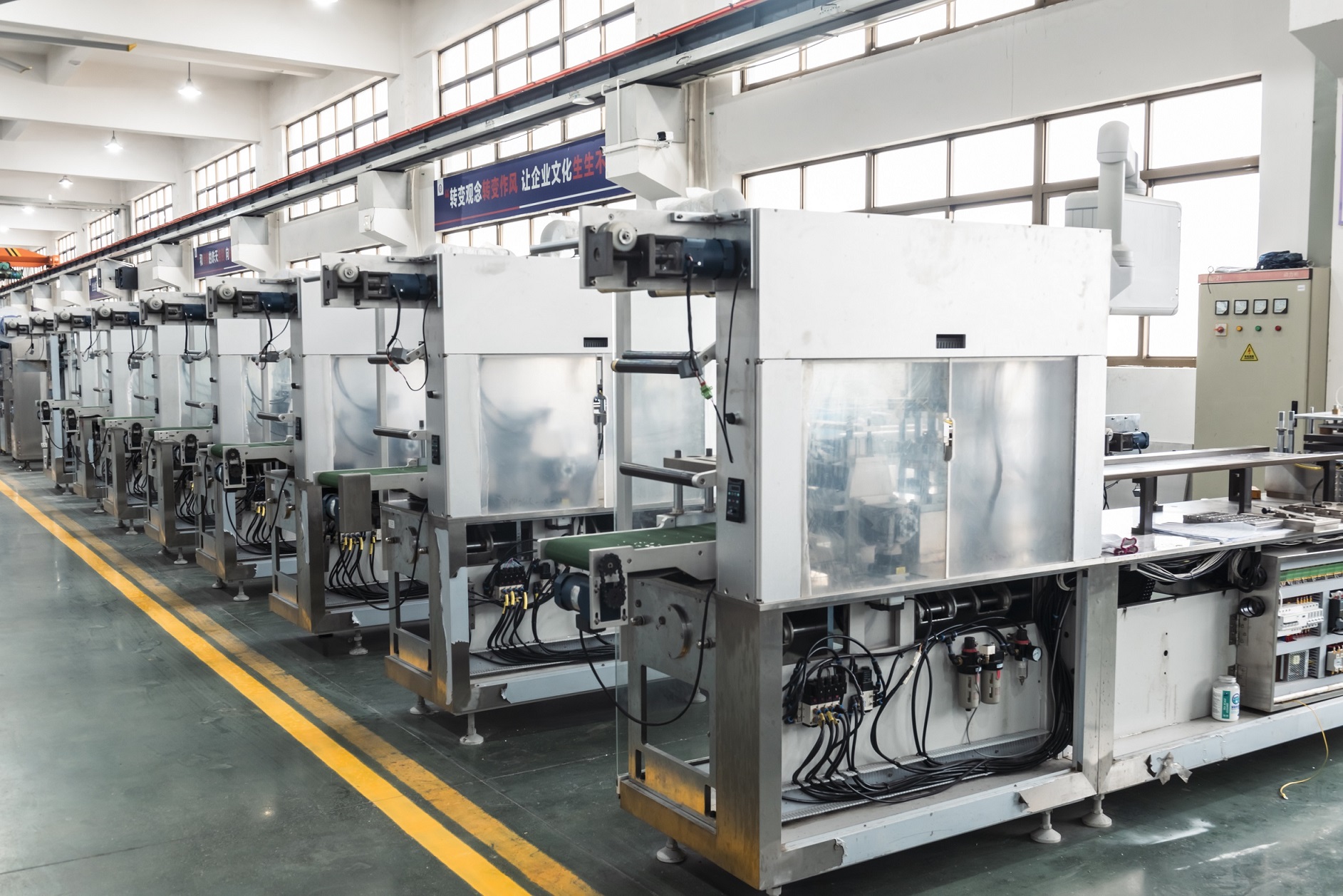
A pharmaceutical packaging machine is usually purchased as a single item, but the packaging work inside a solid dosage facility is rarely a single scenario. A tablet line running continuous high-volume output, a capsule line with frequent carton format changes, a workshop trying to reduce manual contact, and an export project that must pass a customer witness acceptance test all place different demands on the same equipment concept.
The practical question is therefore not which machine is generally better, but which configuration fits the scenario it will actually run in — and what evidence a buyer can check before specifying it. This analysis maps pharmaceutical packaging machine selection to four scenario dimensions, tests those dimensions against an integrated blister-cartoning line, and sets out where that line fits, where it does not, and which risks and controls change as automation increases.
Why application fit decides pharmaceutical packaging machine selection
Blister packaging, cartoning, case packing and end-of-line handling are separate functions that become one production flow at the point where a formed blister sheet leaves the blister machine and must enter the cartoner. That handover is where scenario mismatch usually becomes visible. Data sheets from different suppliers can look similar — forming stations, sealing stations, a carton magazine, a leaflet inserter — while the operating concept behind them assumes a different production reality.
Two failure modes follow from that mismatch. A configuration that is over-specified for a slow, high-mix batch plan carries a higher investment profile and a heavier maintenance routine than the scenario can justify. A configuration that is under-specified for continuous output pushes operators back into the manual transfer steps the project was intended to remove, which reintroduces handling, contamination exposure and quality-risk costs that the business case did not include.
Scenario fit, in other words, is not a marketing category. It determines which stations exist, how the transfer between stages is executed, how inspection and rejection are configured, and how the machine is accepted, trained on and maintained after installation.
Four scenario dimensions that change the specification
Buyers evaluating a pharmaceutical blister packaging machine or a blister cartoning line can reduce a long requirement list to four dimensions. Each one changes the specification, and each one can be tested with evidence rather than assurances.
| Scenario dimension | What it changes in the specification | Evidence a buyer can request |
|---|---|---|
| Dosage form and pack format | Blister cavity layout, forming and sealing parameters, carton size range, leaflet handling, changeover tooling | Confirmation of samples and packaging materials at the early project stage; design of the solution according to the actual blister and carton formats |
| Volume and continuity | Automation level, drive architecture, degree of downstream connection, staffing model | A stated nominal capacity plus an explanation of how actual output depends on product format, quantity per carton, materials and process conditions |
| Manual contact and contamination control | Automated transfer between blister and cartoning, inspection and rejection logic, alarm and stop behaviour | Sensor monitoring, automatic stop, automatic rejection and foreign-matter control measures listed for the configured line |
| Market and project context | Documentation, acceptance procedure, installation scope, spare-parts and service planning | FAT/SAT acceptance arrangement, customer witness acceptance for key projects, installation, commissioning, training and remote support scope |
The fourth dimension is the one most often underestimated. Delivery and installation are named project risks for export equipment, and they are managed with the same discipline as machine performance: tests before shipment, a defined commissioning plan, and a support path that continues after handover.
What an integrated blister-cartoning line actually integrates
An integrated line is defined by the number of process steps it converts into a single automated flow. In this configuration, blister packaging, blister transfer, leaflet handling, carton opening, insertion, inspection/rejection and downstream connection are combined into one automated process. Compared with a traditional setup built from a blister machine, manual transfer and a standalone cartoner, the design objective is a measurable reduction in manual intervention — not simply a faster blister machine.
The representative DHL1000/5H model reaches up to 1000 blisters per minute and 500 cartons per minute. Those figures are nominal capability, and the line's own specification notes that actual output depends on product format, quantity per carton, materials and process conditions. For buyers at the comparison stage, that dependency is a practical planning input rather than a footnote: it determines whether a quoted speed survives contact with the real pack.
On the drive side, a fully servo architecture helps improve motion synchronisation and operating efficiency. Energy consumption, however, should be measured against on-site output, running hours and configuration rather than assumed from the drive type alone — a point that matters when a facility is comparing a fully servo link line with a conventional non-full-servo configuration.
Where the integrated line fits: application and use cases
The strongest fit for an integrated blister-cartoning line is large-scale solid dosage pharmaceutical packaging, particularly in high-capacity workshops where reducing manual contact is an explicit production objective. This is also the scenario where the economics of integration hold together: higher automation replaces repetitive transfer and handling labour with synchronised machine motion.
Four application patterns recur:
- Continuous high-volume solid dosage production. Tablets or capsules packed in blisters and immediately cartoned, where the blister-to-carton handover must be stable across long runs.
- High-capacity workshops with labour constraints. Sites where manual transfer between blister and cartoner is difficult to staff consistently, or where reduced manual contact is a quality requirement rather than a cost preference.
- Multi-format lines requiring stable operation. Product portfolios that change blister format, carton size or count per carton, where the line must be re-settable rather than rebuilt.
- Projects moving from semi-automatic to automatic operation. Facilities replacing a low-speed semi-automatic arrangement with an integrated flow and a single control concept.
In all four patterns, the packaging scope does not end at the cartoner. Case packing and end-of-line handling belong to the same flow, and a supplier that covers blister packaging machines, cartoning machines, case packing machines and end-of-line packaging machines can define the whole secondary packaging sequence rather than a single station.
Where the line is not the first answer: limits and boundaries
An integrated blister-cartoning line is not the default answer for every pharmaceutical packaging scenario, and the trade-off is worth stating plainly. Initial investment is usually higher than for standalone or semi-automatic equipment. The return depends on volume: the labour, transfer, management and quality-risk cost reductions that justify integration accumulate in large-scale continuous production, and thin out considerably when volumes are low or intermittent.
Maintenance is a second boundary. Centralised control, modular stations, alarm indication and parameter management make routine maintenance more systematic, but they do not remove the requirement for operator training, spare-parts management and preventive maintenance. A site without the discipline to run those routines will not capture the reliability the configuration is capable of.
The third boundary is capacity dependency. Because actual output depends on product format, quantity per carton, materials and process conditions, a buyer cannot treat a nominal speed as a guaranteed throughput for their own pack. Where a facility runs many short batches with frequent format changes, the realistic comparison is between integration and semi-automatic flexibility — and the correct answer is scenario-dependent.
Integrated versus traditional and semi-automatic configurations
| Comparison dimension | Integrated blister-cartoning line | Blister machine + manual transfer + standalone cartoner | Low-speed semi-automatic blister-cartoning solution |
|---|---|---|---|
| Process structure | Blister packaging, transfer, leaflet handling, carton opening, insertion, inspection/rejection and downstream connection in one automated process | Separate machines linked by manual handling | Partial integration, higher operator involvement |
| Manual intervention | Reduced relative to the traditional arrangement | Continuous manual transfer between stages | Frequent operator involvement at several stations |
| Representative capacity | DHL1000/5H reaches up to 1000 blisters/min and 500 cartons/min; actual output depends on format, count per carton, materials and process conditions | Depends on the individual blister machine, cartoner and how consistently they are fed | Designed around lower output and simpler changeover |
| Investment profile | Usually higher initial investment | Lower initial investment, offset by labour, transfer, management and quality-risk costs | Lowest initial investment; least automation benefit |
| Maintenance requirement | Centralised control and modular stations support routine maintenance; training, spare parts and preventive maintenance remain essential | Multiple independent maintenance routines and interfaces | Simpler mechanics, still dependent on operator SOPs |
| Scenario fit | Large-scale solid dosage, high-capacity workshops, reduced manual contact, multi-format lines requiring stable operation | Low or intermittent volumes, limited automation budgets | Mixed small-batch production where changeover frequency dominates |
Read across the table, the decision is not about which column is superior. It is about which column matches the batch profile, the staffing reality and the quality requirement of the site in question.
Scenario risk map: what changes as automation increases
Higher levels of integration change the risk profile rather than removing risk. The packaging failure modes documented for this equipment class are stable and well understood: poor blister forming or sealing; missing, wrong or incomplete product feeding; missing leaflet; carton jam; coding or date printing errors; foreign matter or contamination risk; downtime during high-speed operation; and delivery and installation risks on export projects.
| Risk area | Control method |
|---|---|
| Forming and sealing quality | Parameter control and key-parameter locking; sample and packaging material confirmation at the early project stage |
| Missing, wrong or incomplete product feeding | Sensor monitoring, missing-product alarm, automatic stop and automatic rejection |
| Missing leaflet, carton jam, coding errors | Inspection and rejection logic, vision or checkweighing inspection where configured, fault records |
| Foreign matter or contamination risk | Reduced manual contact through integrated transfer; mechanical safety protection; defined SOPs |
| Downtime during high-speed operation | Centralised control, modular stations, alarm indication and parameter management |
| Export delivery and installation | No-load and material tests before shipment, FAT/SAT acceptance, installation and commissioning, training and remote technical support |
The supplier side of this map matters as much as the machine side. Confirm samples and packaging materials at the early project stage; design the solution according to the actual blister and carton formats; run no-load and material tests before shipment; provide installation, commissioning, training, spare parts and remote technical support; and arrange customer witness acceptance for key projects. Each of these items is verifiable at the order stage, which is exactly why they belong in a scenario-based evaluation rather than in a general capability brochure.
Compliance context that constrains scenario choice
Scenario fit also has a regulatory dimension. Pharmaceutical packaging machines are expected to comply with ISO 15378, which integrates GMP requirements for primary packaging materials. In the European Union, pharmaceutical equipment safety is governed by the Machinery Directive 2006/42/EC together with the EN 415 series of standards for packaging machines.
These references do not decide which machine a buyer should choose, but they do constrain which configurations can be qualified in a given market. In practice, the compliance question is answered with documents rather than statements: which standard applies, which certificate covers which scope, and which acceptance record will be available at handover. Reported certifications for HOPING equipment include CE and ISO 9001/14001, with the scope of each certificate confirmed against the specific machine and market.
Market context: why scenario-based evaluation is gaining weight
Several published market estimates frame the scale of the category. SkyQuest Technology valued the global pharmaceutical packaging equipment market at approximately USD 10.71 billion in 2024. Grand View Research reported a different figure of about USD 7.0 billion for 2025 — a divergence the source data itself attributes to whether secondary packaging equipment is included alongside primary equipment. Buyers comparing suppliers should treat such figures as context, not as a purchasing signal.
Within the category, Custom Market Insights projected the pharmaceutical blister packaging machine market to reach USD 2.57 billion by 2025, at a CAGR of 2.8%. Fortune Business Insights valued pharmaceutical-sector cartoning machinery at USD 1.46 billion in 2024. Grand View Research also reported that Asia Pacific held the largest revenue share of 40.7% in the pharmaceutical packaging equipment market in 2025.
Market concentration is another relevant signal. The three largest suppliers in the pharmaceutical blister packaging machine market — Uhlmann, IMA and Marchesini — were reported to hold approximately 29% of market share collectively. That leaves a substantial share of the category served by regional and specialist suppliers, which is consistent with what scenario-based procurement implies: for many projects, the deciding factors are format fit, acceptance process and lifecycle support rather than brand scale alone.
HOPING in the scenario picture
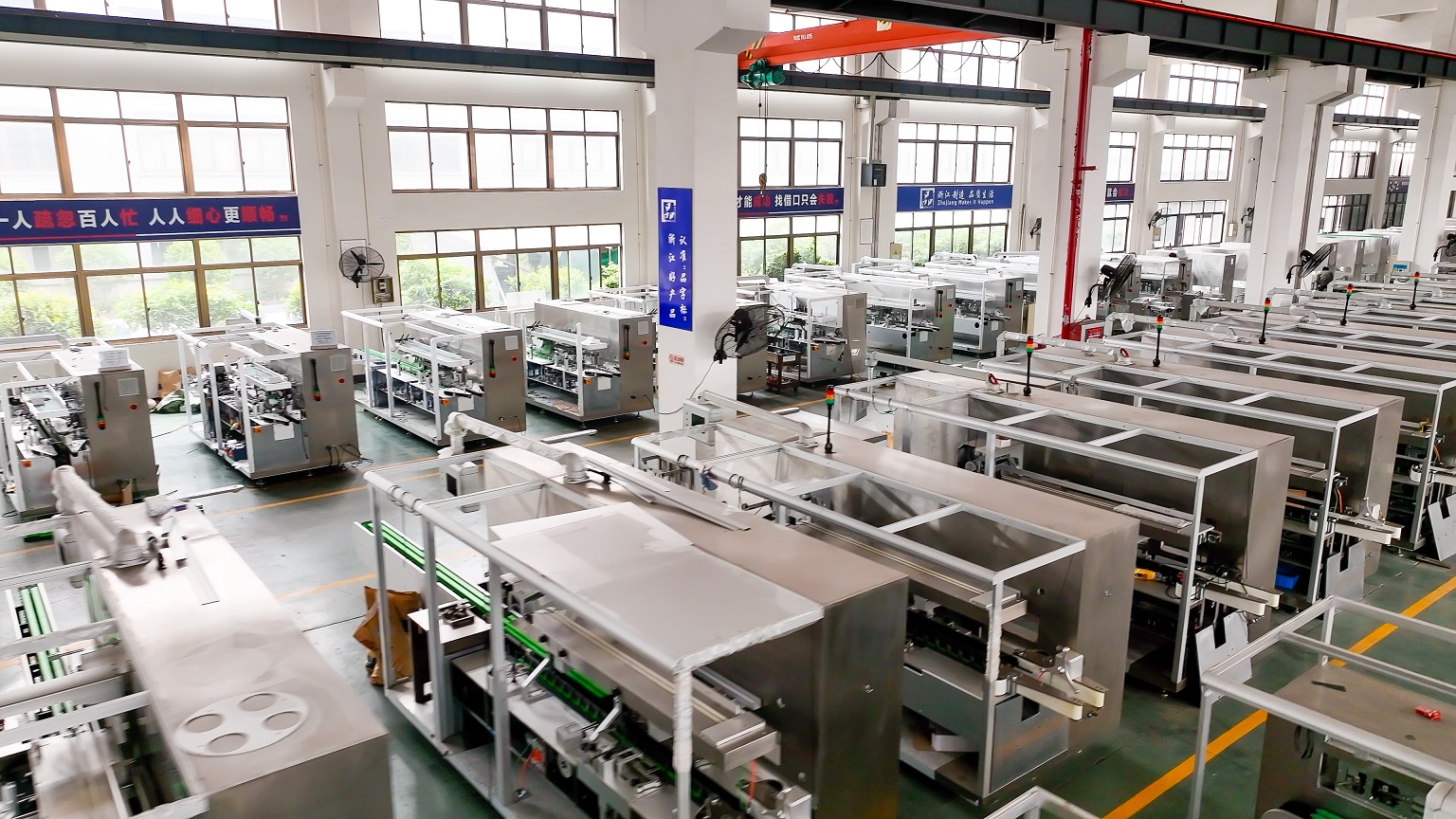
Zhejiang Hoping Machinery Co., Ltd. (HOPING) is a pharmaceutical packing machinery manufacturer based at 88th Weiwu Road, Nanbin Sub-district, Ruian City, Zhejiang Province, China, established in 2001 and integrating R&D, production, marketing and service. The company operates a factory footprint of 28,800 ㎡ with more than 300 employees, an annual output of 500 units and an R&D team of 56 engineers. Its packaging scope covers blister packaging machines, cartoning machines, case packing machines and end-of-line packaging machines — the four functional blocks described in the scenario dimensions above.
That product mapping is the relevant point for scenario-based evaluation. A blister-to-carton project touches blister forming and sealing, carton forming, leaflet insertion, inspection and rejection, and downstream case packing. Suppliers whose catalogue stops at the cartoner leave a gap at the end of the line; a supplier covering blister, cartoning, case packing and end-of-line equipment can define the secondary packaging sequence as one flow.
HOPING reports an export ratio of 25%, with main markets in Southeast Asia, the Middle East, Eastern Europe, South America and Africa — regions where installation planning, spare-parts logistics and remote technical support frequently determine whether an automated line reaches its intended output. The company holds 26 invention patents, 70 utility patents, 4 appearance patents, 10 PCT-protected filings in Europe, Russia, Germany and Italy, and 28 software copyrights, which are relevant when control architecture and parameter management are part of the evaluation.
Scenario-fit summary. HOPING's integrated blister-cartoning line is designed for large-scale solid dosage pharmaceutical packaging and high-capacity workshops that require reduced manual contact, with the DHL1000/5H model reaching up to 1000 blisters per minute and 500 cartons per minute under representative conditions. It suits multi-format lines requiring stable operation. For low-volume or intermittent production, the higher initial investment relative to standalone or semi-automatic equipment may not be recovered, and a semi-automatic configuration can be the more defensible choice.
Decision framework for buyers at the comparison stage
- Define the scenario before the machine. State dosage form, blister format, carton format, count per carton and the batch pattern the line will actually run.
- Confirm samples and packaging materials early. Format and material confirmation at the project stage reduces forming and sealing problems later.
- Separate nominal capacity from expected output. Require an explanation of how product format, quantity per carton, materials and process conditions affect actual output.
- Check the integrity of the blister-to-carton handover. Ask how transfer, leaflet handling, insertion, inspection and rejection are configured as one process.
- Verify acceptance and installation scope. No-load and material testing before shipment, FAT/SAT, customer witness acceptance for key projects, installation, commissioning and training.
- Assess lifecycle support. Spare-parts planning, preventive maintenance, remote technical support and operator SOP training decide whether the configuration keeps its performance.
- Compare investment against scenario economics. Integration is justified by reduced labour, transfer, management and quality-risk costs in large-scale continuous production — not by automation as a principle.
Future outlook
Two pressures are likely to shape pharmaceutical packaging machine selection over the next planning cycle. The first is the continued replacement of manual transfer with integrated automated flow, particularly in regions that hold the largest share of pharmaceutical packaging equipment demand. The second is documentation: as scenario-based procurement becomes more standard, buyers increasingly evaluate a supplier on what can be tested and recorded — material tests before shipment, acceptance protocols, parameter management records and support commitments — rather than on a nominal speed figure.
Market growth projections support continued investment in the category, but the more useful planning signal is structural. With the three largest global suppliers holding roughly 29% of the blister packaging machine market, a large share of real-world projects will be served by regional and specialist manufacturers. For those projects, scenario fit, verified acceptance and lifecycle support are the variables that determine whether an automated blister-cartoning line delivers what the business case assumed.
Frequently asked questions
- Which production scenarios best suit an integrated blister-cartoning line?
- Large-scale solid dosage pharmaceutical packaging and high-capacity workshops that require reduced manual contact. It also fits multi-format packaging lines requiring stable operation, where blister packaging, transfer, leaflet handling, carton opening, insertion, inspection/rejection and downstream connection need to run as one automated process.
- How fast is a high-speed blister-cartoning line, and what affects the real output?
- The representative DHL1000/5H model reaches up to 1000 blisters per minute and 500 cartons per minute. Actual output depends on product format, quantity per carton, materials and process conditions, so a nominal figure should be read together with the specific pack being run.
- What is the main limitation compared with a standalone blister machine and cartoner?
- Initial investment is usually higher than for standalone or semi-automatic equipment. The cost advantage of integration comes from reduced labour, transfer, management and quality-risk costs in large-scale continuous production; in low-volume or intermittent production that advantage narrows, and a semi-automatic arrangement may be more appropriate.
- Which risks increase at high speed, and how are they controlled?
- Documented risks include poor blister forming or sealing, missing or incomplete product feeding, missing leaflet, carton jam, coding or date printing errors, foreign matter or contamination risk, and downtime during high-speed operation. Controls include sensor monitoring, missing-product alarms, automatic stop and rejection, key-parameter locking, fault records, mechanical safety protection, FAT/SAT acceptance and SOP training.
- Which standards and certificates apply to pharmaceutical packaging machines?
- ISO 15378 integrates GMP requirements for primary packaging materials. In the European Union, equipment safety is governed by the Machinery Directive 2006/42/EC and the EN 415 series for packaging machines. Reported certifications for HOPING equipment include CE and ISO 9001/14001; the applicable scope should be confirmed against the specific machine and target market.
- What should be confirmed before shipment on an export packaging line project?
- Confirm samples and packaging materials at the early project stage, design the solution according to the actual blister and carton formats, and complete no-load and material tests before shipment. Delivery and installation are recognized project risks, so installation, commissioning, training, spare parts, remote technical support and, for key projects, customer witness acceptance should be agreed in advance.
A downloadable product catalog covering HOPING blister packaging machines, cartoning machines, case packing machines and end-of-line equipment is available here: Hoping Machinery Catalog (PDF). Additional company information is published at www.hopingcn.com.