
Pharmaceutical Packaging Machine Scenario Fit: Blister to Carton
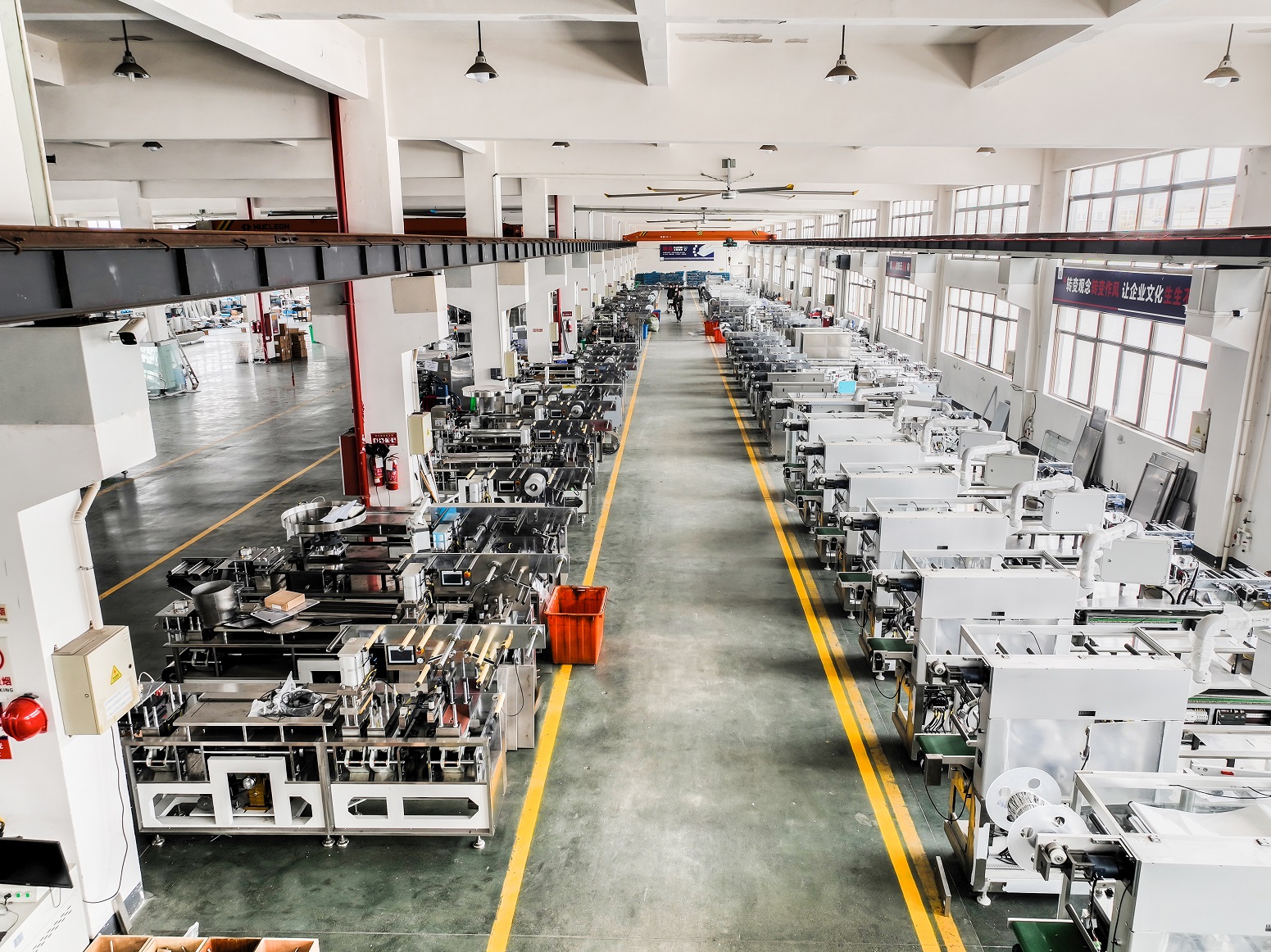
Blister machine assembly: scenario fit starts with the primary pack, not the highest speed on the brochure.
A pharmaceutical packaging machine is usually selected in the wrong order. Buyers start with output, then work backwards to formats, and only at the end ask whether the configuration matches the product. The practical result is a line that runs well in a factory acceptance test and struggles in routine production, because the real constraint was never speed. It was scenario fit.
Scenario fit means the dosage form, the primary pack material, the secondary pack structure, the output band and the downstream scope are all confirmed before a machine model is chosen. This article maps the main pharmaceutical packaging scenarios to published equipment configurations, explains where line balancing breaks down between blister and cartoning, and lists the limitations that should be verified rather than assumed.
The Five Variables That Define a Packaging Scenario
A scenario is not a product name. In pharmaceutical secondary and primary packaging it is a defined combination of five variables, and changing any one of them changes the correct machine family.
- Dosage form and feed behaviour. Tablets, capsules and softgels feed differently from freeze-dried powder, pre-filled syringes, ampoules, cartridges or vials. Feed method is a configuration decision, not an accessory.
- Primary pack material. Alu-PVC and Alu-Alu blister structures behave differently in forming, sealing and punching, and they carry different barrier expectations.
- Secondary pack structure. A carton-only line, a blister-flow-wrap-carton line and a vial labelling-plus-cartoning line are three different plants.
- Output band and blisters per carton. The ratio between primary output and carton output determines the true bottleneck.
- Downstream scope. Whether the line stops at the cartoner or continues into banding, case packing and palletizing changes the whole layout and control architecture.
Scenario 1 - Solid Dosage Blister for Tablets, Capsules and Softgels
Solid dosage blister is the most common starting point, and it splits into two machine families: flat-plate and roller-type. The distinction is not cosmetic. Flat-plate machines are generally positioned for small and medium batches, while roller machines are positioned for high-speed continuous output.
| Blister family | Configuration | Published capacity | Typical fit |
|---|---|---|---|
| DPP Series (flat plate) | Alu-PVC / Alu-Alu, models including DPP350F, DPP250S, DPP250FI, DPP160F, DPP250FII | About 20-50 cycles/min; 5.6-12 kW | Small and medium batches, multi-product plants |
| DPP260K | Flat plate, Alu-PVC / Alu-Alu | About 20-70 cycles/min; 9.5 kW; about 4700 x 735 x 1820 mm | Solid dosage and healthcare blister, medium speed |
| DPP260TI | Flat plate, Alu-PVC / Alu-Alu | About 20-60 cycles/min; 9.5 kW | Compact production layouts |
| DPP260T1 | Platen blister machine, 260 x 115 mm format area | Up to 300 blisters/min (60 punches/min); 8.5 kW | Narrow-format blister at moderate output |
| DPH Series (roller) | High-speed roller, Alu-PVC / Alu-Alu; DPH320H, DPH260H, DPH260 | About 60-200 cycles/min; 15.5-18.9 kW | Tablets, capsules, soft capsules, nutraceuticals |
| DPH320HII | Rotary blister machine, 320 x 280 mm format area, feed stroke 100-280 mm | Up to 1000 blisters/min (max 250 punches/min); 30 kW | High-volume solid dosage upstream of a cartoner |
One detail that matters in scenario screening is material contact. In the DPH320HII and DPP260T1 configurations, product-contact parts are published as AISI 316L stainless steel and FDA-compliant pharmaceutical-grade materials, while non-product-contact parts are AISI 304 stainless steel and anodised aluminium alloy. Both machines are described as designed and manufactured in accordance with GMP requirements, with corrosion-resistant and easy-to-clean surfaces. For a buyer, that translates into a specification question: which surfaces will be cleaned, with what agent, and how is that verified at acceptance.
Scenario 2 - Blister-to-Carton: Where Line Balancing Is Actually Decided
The blister-cartoning line is where most scenario mismatches occur, because blister output and carton output rarely move together. HOPING publishes several fully servo blister-cartoner configurations, and the numbers show why the ratio of blisters per carton matters more than either headline figure.
| Line model | Max blister output | Max carton output | Transfer and control |
|---|---|---|---|
| DHL1000/5H | 1000 blisters/min | 500 cartons/min | D3 top-loading parallel tracking transfer; Beckhoff motion controller; four-channel servo replenishment |
| DHL8005H | 800 blisters/min | 500 cartons/min | D3 top-loading transfer; Beckhoff motion controller and CP9315 industrial PC; three-channel servo replenishment |
| DHL7005H | 700 blisters/min | 500 cartons/min | IRB24 intelligent transfer robot; Siemens motion controller and TP900 HMI |
| DHL7004 | 700 blisters/min | 400 cartons/min | IRB24 intelligent transfer robot; Siemens motion controller and TP900 HMI |
| DHL6004 | 600 blisters/min | 400 cartons/min | Beckhoff motion controller and CP9315 industrial PC; servo-driven independent replenishment |
Read those columns as a balancing exercise rather than a ranking. A DHL1000/5H pairing 1000 blisters/min with 500 cartons/min implies roughly two blisters per carton at maximum simultaneous output; if the product format puts five blisters in a carton, the cartoner becomes the limiting station and the blister machine never runs at its maximum. Buyers who evaluate only the primary figure will over-estimate line capacity, which is why the blisters-per-carton ratio should be fixed before the line model is selected.
Scenario 3 - Blister, Flow Wrap and Carton
Some products need a sealed pillow pack between the blister and the carton, usually for moisture protection or for a secondary unit that carries printing or tamper evidence. This is a genuinely different scenario, and the published line data shows the extra constraint it introduces.
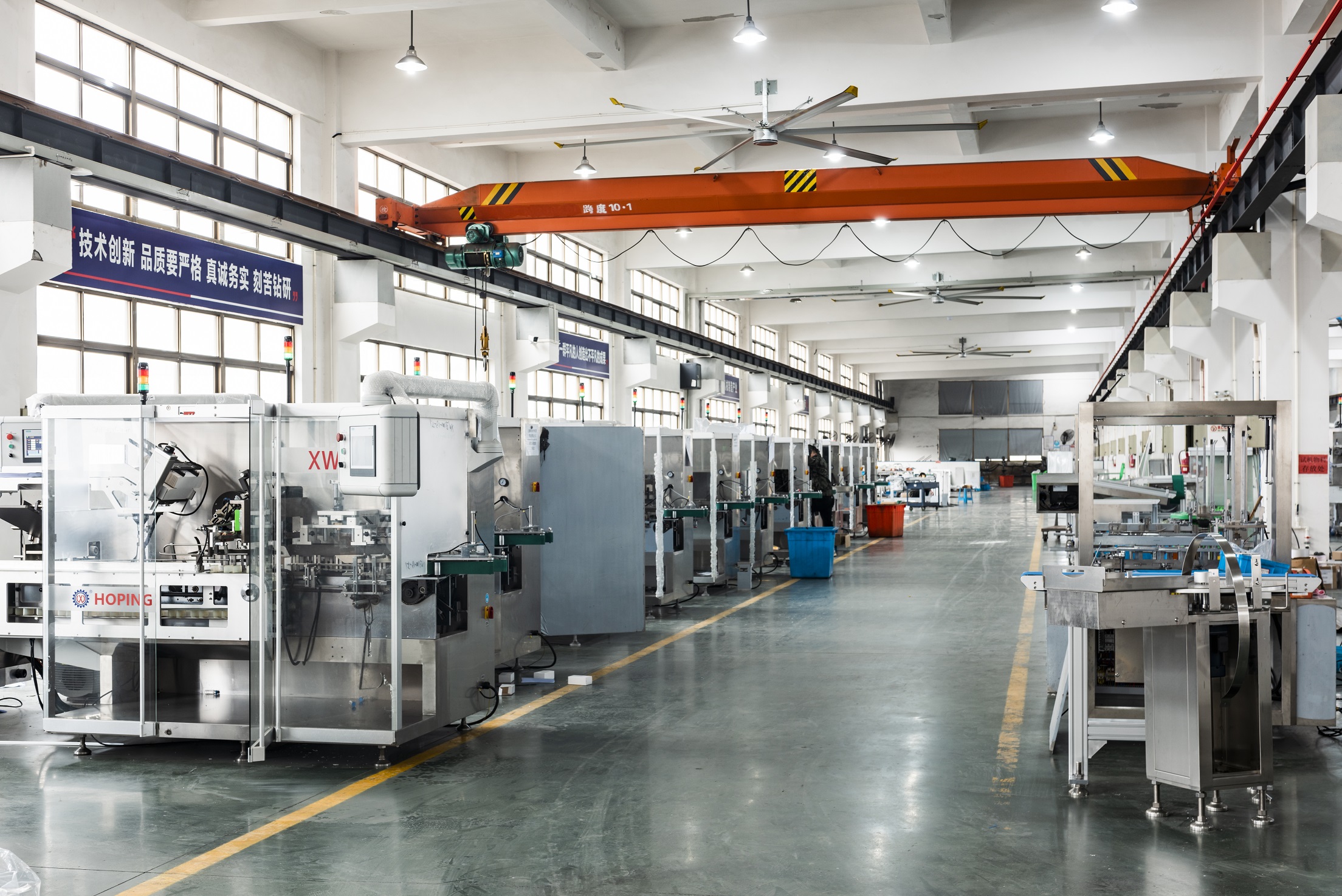
Cartoning workshop: in a blister-flow-wrap-carton scenario, the flow wrapper becomes a middle constraint between two faster stations.
The IXW800 is published at up to 600 blisters/min, 600 packs/min and 500 cartons/min, with PVC/cold Alu auto splicing, rotary reciprocating flow-wrapper technology, D3 top-load robotics and a Beckhoff controller with CP9315 industrial PC. The IXW600 is published at up to 600 blisters/min, 300 packs/min and 300 cartons/min. A linked line built from separate modules, DPH320H plus XW8200 plus XWZ300II, is published at roughly 300-600 blisters/min, 50-200 packs/min and 50-220 cartons/min, with 36 kW total power.
The scenario lesson is structural: adding flow wrapping inserts a station with its own format, film and sealing parameters into a line that otherwise has two. That station can be the bottleneck, and it also adds a format changeover step. Where the product does not require a pillow pack, the additional station adds cost and changeover time without adding protection.
Scenario 4 - Liquid Dosage, Vials and Freeze-Dried Products
Liquid dosage and injectable formats are the scenario where blister thinking breaks down most completely. The container is rigid, the feed geometry is different, and carton counts are far lower.
The IXW400 liquid dosage blister-cartoner integrated line is published for filled syringes, ampoules and cartridges at up to 400 blisters/min and 150 cartons/min, with a D3 top-loading robot, Siemens controller and CP9315 industrial PC, PVC and top cover film auto splicing, and GMP-oriented design. A separate vial configuration combines labelling, blister packing, cartoning and stretch banding modules in one line, with capacity and dimensions customised to vial size, blister format, carton format and project layout.
For freeze-dried powder and special dosage forms, the DP Series blister machine (DP260K and DP260KD) is published at about 10-20 cycles/min with dedicated forming, sealing and feeding modules and tooling configured by product container and package design. The low cycle rate is not a weakness in this scenario; it reflects how the material and container behave.
Scenario 5 - Cartoning-Only and End-of-Line Scope
Not every project needs a blister machine. Where the primary pack already exists, the scenario reduces to secondary packaging and end-of-line handling.
| Equipment | Published capacity | Scenario role |
|---|---|---|
| XWZ120 horizontal cartoner | About 30-120 cartons/min; SEW main motor; Siemens PLC | Lower-to-medium speed, compact lines |
| XWZ300II | About 60-220 cartons/min; 5 kW | Medium-to-high speed secondary packaging |
| XWZ Series (XWZ400 / XWZ300) | About 100-400 or 100-300 cartons/min depending on model | Blister boards, sachets, bottles, tubes subject to confirmed format |
| XWZ500H | About 100-500 cartons/min; 14 kW | High-speed cartoning with leaflet and coding integration |
| XWK4060 stretch bander | About 30-60 bundles/min | Bundling after cartoning |
| XWG4060 overwrapper | About 30-60 bundles/min | Transparent film overwrapping of cartons and bundles |
| XWK Series case packer | Up to about 5 cases/min | Case forming, loading and sealing |
| ICP12 case packing and palletizing machine | About 12 cases/min opening-box and palletizing capacity | End-of-line case packing with palletizing |
Third-party market data supports the dominance of the horizontal carton format in this segment: horizontal cartoning systems held 70.12% of the market share in 2024, according to Mordor Intelligence research on end-load cartoning machines. For a buyer, that is a supply-chain signal as much as a technical one, because carton-feeding consumables, tooling and service experience concentrate around the dominant format.
What HOPING Publishes About Its Manufacturing Capability
Zhejiang Hoping Machinery Co., Ltd. (HOPING) is a pharmaceutical packing machinery manufacturer based in Ruian City, Zhejiang Province, China, established in 2001, integrating research and development, production, marketing and service. Its main product lines cover blister packaging machines, cartoning machines, case packing machines and end-of-line packaging machines.
The company publishes a 28,800 square metre manufacturing facility, more than 300 employees and 56 engineers, with an annual output of 500 units and an export ratio of approximately 25%, serving markets in Southeast Asia, the Middle East, Eastern Europe, South America and Africa. It lists 26 invention patents, 70 utility patents, 4 appearance patents, 10 PCT-protected filings and 28 software copyrights. Monthly capacity is published at 30-40 units, with a minimum order quantity of one set or one complete line and a typical lead time of 60-120 days after technical confirmation, subject to model, configuration, project complexity and contract terms.
For scenario work, the more useful disclosure is the customisation scope, which includes blister size, blister materials, quantity per carton, carton specification, leaflet format, coding and inspection method, feeding method, downstream bundling, case-packing and palletizing connection, interface language, electrical component brand and data interface. Each of those items is a scenario variable, which is why they belong in the technical agreement rather than in a post-order discussion. Quality control is published as incoming material inspection, key component inspection, assembly inspection, electrical safety check, no-load trial run, material trial, factory acceptance test, customer witness acceptance and pre-shipment inspection. After-sales scope covers on-site installation and commissioning, operator and maintenance training, remote video or phone support, spare parts supply, process-parameter guidance and regular follow-up, subject to contract and project configuration.
Project Evidence: What a Blister-to-Carton Project Is Expected to Change
HOPING's published project description for solid dosage production covers a large pharmaceutical manufacturer or pharmaceutical engineering contractor scenario, with a project scale of 5-10 lines applied to blister packaging and automatic cartoning for tablets, capsules and other solid dosage forms, for new line construction, capacity expansion or upgrading of existing packaging lines.
The stated project objectives are improvements in packaging automation, reduced manual transfer, improved blister-to-carton connection efficiency, reduced wrong insertion or missing leaflet risks and support for downstream automation integration. These are described as representative project objectives rather than audited outcomes. Buyers should treat them that way: ask for project-specific references, confirm which lines and formats were involved, and verify the same acceptance criteria in their own factory acceptance test.
Market and Regulatory Signals That Shape Scenario Decisions
Three signals are relevant to scenario planning, and each comes with a defined source.
Market size and regional growth. Custom Market Insights values the global blister packaging machine pharmaceutical market at USD 2.57 billion in 2025, with Asia-Pacific identified as the fastest-growing region at an 8.87% CAGR to 2031. The scope covers rotary, flat, thermoform and cold-form Alu-Alu blister machines.
Regulatory framing. ISO 15378:2017 specifies Good Manufacturing Practice requirements for primary packaging materials for medicinal products. Separately, regulatory-affairs reporting indicates that China has a draft GMP guidance for pharmaceutical packaging materials under public consultation, which would guide marketing licence holders in reviewing packaging material suppliers. That guidance remains at draft consultation stage, so its final scope and effective date cannot be treated as settled.
Data and integration. Trade media reporting PMMI content states that pharmaceutical manufacturers are turning toward digitised data collection and integrated solutions in order to meet regulations and improve visibility. This is a directional trend statement without a measured adoption basis.
Integrated Lines Versus Stand-Alone Machines: The Real Trade-Offs
The traditional approach in many plants is a stand-alone blister machine, manual or semi-automatic transfer, and a separate cartoner, sometimes with a manual leaflet insertion step. It has genuine advantages: each machine can be bought, replaced and serviced independently, a failure in one station does not stop the others, and the capital commitment is staged rather than consolidated.
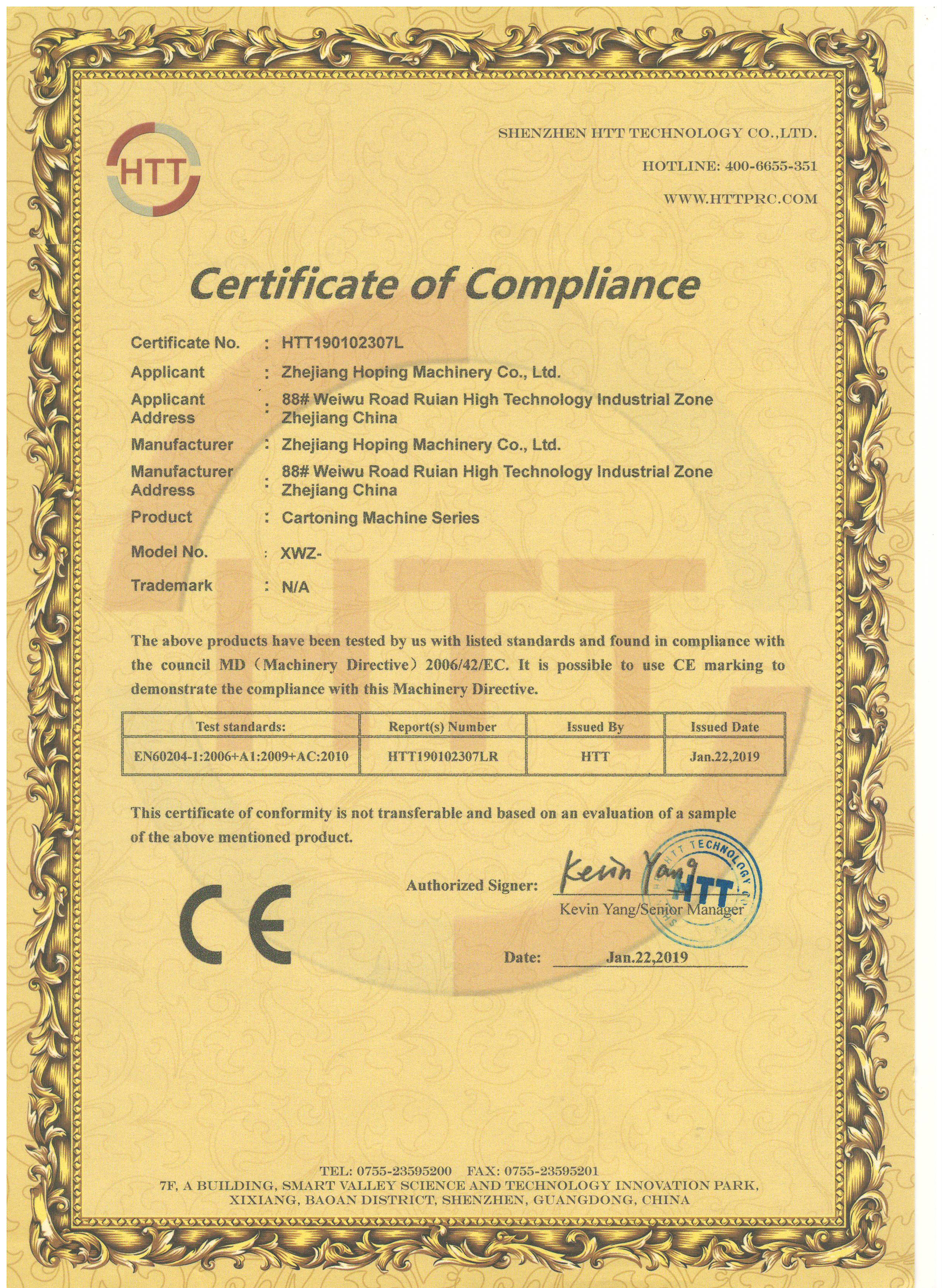
Certificate records, such as this CE file for blister packing and cartoning machine series, are part of scenario due diligence - and so are their issue dates and scope wording.
An integrated blister-cartoner line changes that logic. It removes manual transfer points, links inspection and rejection to the cartoning step, and puts the primary and secondary stages under one control architecture and one acceptance test. HOPING's published project objectives point in exactly this direction. But integration carries boundaries that a buyer should state openly before signing.
- Nominal output is not validated output. Published figures such as 1000 blisters/min or 500 cartons/min are maximum stated capacities for a defined configuration. They are not sustained output under a specific blister format, material combination and rejection rate. This should be tested at factory acceptance, not assumed from a datasheet.
- Integrated lines assume confirmed formats. Blister size, carton specification, leaflet format and quantity per carton have to be fixed in the technical agreement. Multi-SKU production still depends on mould change and recipe memory, so changeover time and tooling count remain real operating constraints.
- Timing and scale. A published lead time of 60-120 days after technical confirmation, with a minimum order quantity of one set or one complete line, means an integrated line is a project commitment. It is not a natural fit for clinical-stage or very small-batch production, where a compact cartoner such as the XWZ120, published at about 30-120 cartons/min, may serve the scenario better.
- Certificate status changes over time. HOPING's certificate records include CE files for blister packing machine series and cartoning machine series issued in 2006-2007 and in 2019, and ISO 14001:2015 and ISO 45001:2018 management-system certificates whose stated validity periods end in October 2026. Certificate scope wording is specific, and one early record explicitly refers to a sample machine. Buyers should request the current certificate set, confirm scope against the delivered configuration, and check renewal status at order stage.
- Line balancing is a design risk. Where the cartoner is slower than the blister machine for a given blisters-per-carton ratio, throughput is set by the secondary stage. This is a configuration issue, not a machine-quality issue, and it is resolved in the technical agreement.
A Pre-Order Verification Checklist
| Verify | Why it matters |
|---|---|
| Blister format, material structure and carton format, in writing | These define which machine family is technically suitable |
| Blisters per carton and target sustained output | Determines the real bottleneck between primary and secondary stages |
| Feed method for the actual dosage form | Tablets, capsules, syringes, ampoules and vials feed differently |
| Downstream scope: bundling, case packing, palletizing | Changes layout, control architecture and acceptance testing |
| Current certificates, scope wording and validity dates | Certificate records are configuration-specific and time-limited |
| FAT and customer witness acceptance criteria | Converts nominal capacity into evidence |
Future Outlook
Three shifts are likely to influence scenario planning over the next planning cycle. First, documentation and data capture are moving from after-the-fact paperwork into machine specification, which is consistent with the reported industry direction toward digitised data collection and integrated solutions. Second, format flexibility is becoming a core economic variable: as contract manufacturing and short-campaign production grow, mould change speed and recipe memory matter as much as peak output. Third, regional regulatory development, including the Chinese draft guidance for pharmaceutical packaging materials, may add supplier review obligations that flow directly into equipment qualification documents.
None of these shifts changes the underlying rule. A pharmaceutical packaging machine is selected by scenario, then verified by acceptance test. Companies that build the scenario definition first, and insist on evidence for every claim in it, tend to have fewer surprises after commissioning than companies that buy on the highest number in the brochure.
FAQ
Which blister machine type fits a mid-volume, multi-product solid dosage plant?
A flat-plate Alu-PVC / Alu-Alu blister machine is the usual starting point for small and medium batches. HOPING publishes the DPP Series at about 20-50 cycles/min, the DPP260K at about 20-70 cycles/min and the DPP260TI at about 20-60 cycles/min, which places them in a medium-speed band suited to changing formats rather than continuous single-format output.
How should a figure such as 1,000 blisters/min be interpreted?
It is a maximum stated output for a defined configuration, published for the DPH320HII at 250 punches/min. It is not a sustained output guarantee. The relevant questions are blister format, material structure, blisters per carton and the acceptance criteria agreed in the factory acceptance test.
What is the practical difference between a blister-cartoning line and a blister-flow-wrap-cartoning line?
The flow-wrap variant inserts a sealing and wrapping station between primary and secondary packaging, which is relevant for products needing a pillow pack. It also introduces another format, film and sealing parameter set, and can become the bottleneck: the IXW600 is published at up to 600 blisters/min but 300 packs/min and 300 cartons/min, whereas the IXW800 is published at 600 blisters/min, 600 packs/min and 500 cartons/min.
What should be checked in CE and ISO documentation?
Check the certificate number, issuing body, applicable standard, scope wording and issue and expiry dates. HOPING's records include CE certificates for cartoning machine series and blister packing machine series under numbers HTT190102307L and HTT190102306L issued in 2019, earlier CE records from 2006 and 2007, and ISO 14001:2015 and ISO 45001:2018 management-system certificates with stated validity ending in October 2026. Scope wording matters: an early record refers specifically to a sample machine.
When does an integrated line stop making sense?
When volumes are low, when formats are still changing, or when campaign lengths are too short to justify a linked line. The published minimum order quantity is one set or one complete line, and lead time runs 60-120 days after technical confirmation. In those situations a compact cartoner such as the XWZ120, published at about 30-120 cartons/min, or a flat-plate blister machine used with a separate cartoner, can fit the scenario more economically.
Reference material: the HOPING Machinery product catalogue is available at Hoping Machinery Catalog. Company information is published at www.hopingcn.com.