
Pharmaceutical Packaging Machine: Why Integrated Lines Outperform Traditional Setups
Pharmaceutical packaging decision-makers evaluating high-volume solid-dose lines face a fundamental choice: link standalone machines with manual transfers or adopt a fully integrated blister-cartoning system. Zhejiang Hoping Machinery Co., Ltd. (HOPING) offers an integrated line that addresses this decision with a unified automated process.
The Challenge: Manual Transfer in High-Volume Pharma Packaging
Traditional pharmaceutical packaging lines often pair a blister machine with a separate cartoner connected by manual transfer or semi-automatic conveyors. This arrangement introduces several operational risks: increased manual intervention, higher labor costs, potential product damage during transfer, and quality-control gaps between stations. For high-capacity workshops producing large volumes of solid dosage forms (tablets, capsules, and alu-alu blisters), these inefficiencies compound rapidly, affecting overall equipment effectiveness (OEE) and compliance with Good Manufacturing Practice (GMP) requirements.
HOPING’s Integrated Solution: A Unified Blister-Cartoning Line
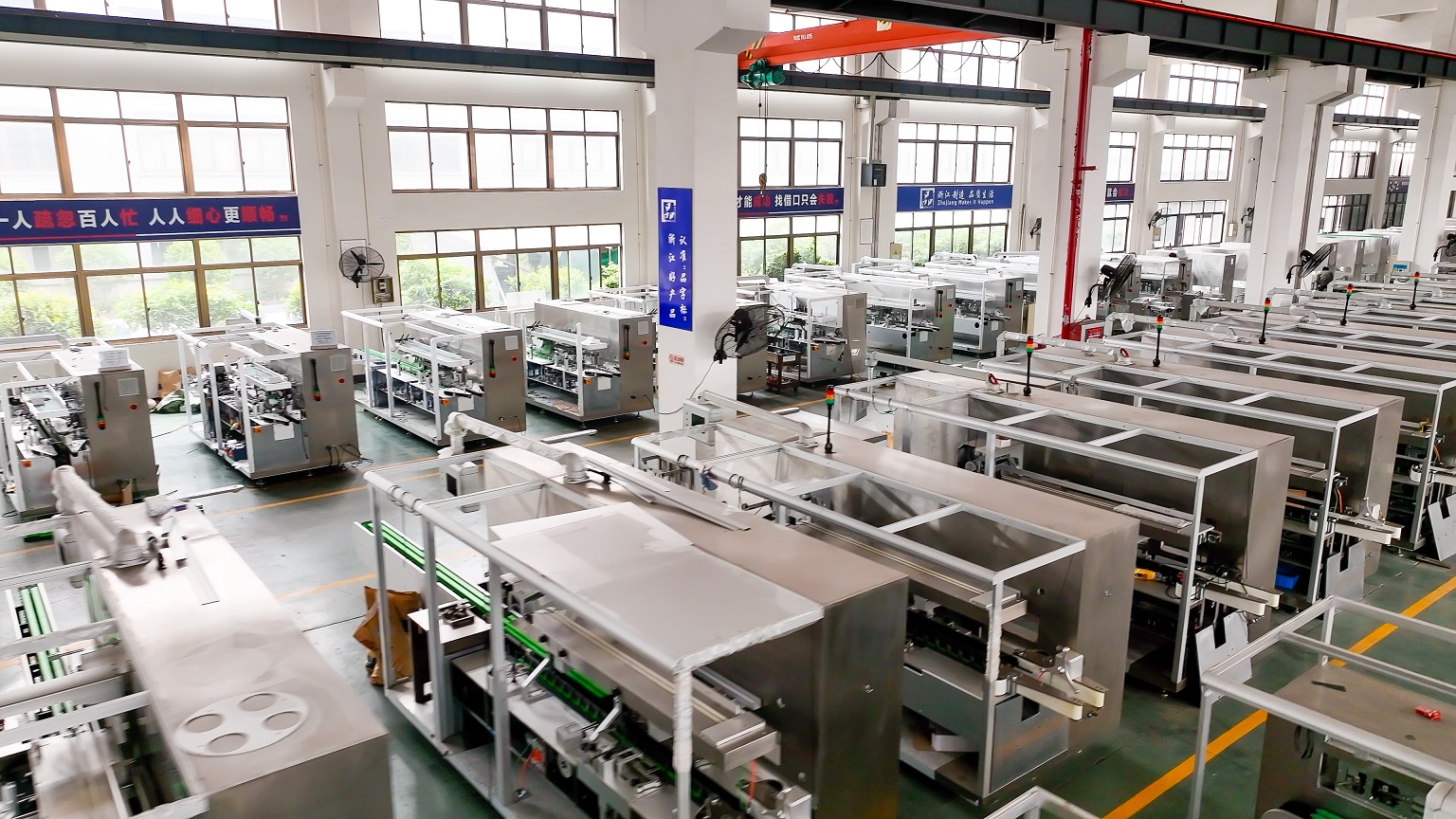
Zhejiang Hoping Machinery Co., Ltd., established in 2001 and based in Ruian, China, is a professional manufacturer of pharmaceutical packaging machinery including blister packaging machines, cartoning machines, case packers, and end-of-line systems. The company’s integrated blister-cartoning line combines blister packaging, blister transfer, leaflet handling, carton opening, insertion, inspection/rejection, and downstream connection into one automated process. This integration reduces manual intervention compared to traditional solutions where a blister machine operates separately from a standalone cartoner with manual transfer.
Technical Architecture
The representative model, DHL1000/5H, achieves up to 1000 blisters per minute and 500 cartons per minute (actual output depends on product format, quantity per carton, materials, and process conditions). The line is driven by a fully servo system that synchronizes motion across all stations, improving operating efficiency and reducing energy consumption. Centralized control, modular stations, alarm indication, and parameter management support routine maintenance. Operators can monitor and adjust parameters for blister forming, leaflet folding, carton erection, and rejection without stopping the entire line.
Key Operational Advantages
- Reduced manual intervention: The integrated design eliminates intermediate handling steps, lowering contamination risk and labor requirements.
- Enhanced line efficiency: Synchronized servo drives minimize downtime between stations, especially during format changeovers.
- Centralized quality control: Sensor monitoring, vision/checkweighing inspection (where configured), missing-product alarms, automatic stop, and automatic rejection are built into the line.
- Modular scalability: Additional stations (e.g., downstream case packers, palletizers) can be integrated without redesigning the main line.
Application Scenarios
This integrated line is designed for large-scale solid dosage pharmaceutical packaging and high-capacity workshops that require reduced manual contact. Typical use cases include:
- High-volume production of tablets and capsules in blister packs (PVC, PVDC, alu-alu).
- Multiformat packaging lines requiring frequent changeovers between product sizes and pack formats.
- GMP-regulated environments where traceability and contamination control are critical.
- Export projects where installation, commissioning, and remote technical support are essential (HOPING provides FAT/SAT acceptance, spare parts, and remote support).
Market Context and Trend Analysis
The global pharmaceutical packaging equipment market was valued at approximately USD 10.71 billion in 2024 (SkyQuest Technology), while the pharmaceutical blister packaging machine segment alone is projected to reach USD 2.57 billion by 2025 with a CAGR of 2.8% (Custom Market Insights). Asia Pacific held the largest revenue share of 40.7% in the pharmaceutical packaging equipment market in 2025 (Grand View Research). This regional dominance reflects the growing demand for integrated, automated packaging solutions in countries like China and India, where manufacturers seek to improve OEE while complying with international standards such as ISO 15378 and EU Machinery Directive 2006/42/EC.
The top three players (Uhlmann, IMA, Marchesini) collectively hold approximately 29% of the blister packaging machine market share, indicating a fragmented landscape with opportunities for specialized manufacturers like HOPING to serve mid-market and emerging-region buyers with cost-effective integrated lines.
Comparison with Traditional Solutions
Traditional setups (blister machine + manual transfer + standalone cartoner) offer lower upfront cost and simpler maintenance for low-volume production. However, as production volumes grow, the following differences become decisive:
| Criteria | Traditional | Integrated Line |
|---|---|---|
| Manual intervention | High (transfer, leaflet insertion, carton inspection) | Low (automated from blister to carton) |
| Output speed | Limited by manual transfer bottlenecks | Up to 1000 blisters/min, 500 cartons/min (DHL1000/5H) |
| Quality risk | Higher (missing product, leaflet errors, contamination) | Lower (sensor monitoring, automatic rejection, parameter locking) |
| Initial investment | Lower | Higher (but lower total cost of ownership at high volume) |
| Maintenance | Independent per machine | Centralized control, modular stations, alarm indication, preventive maintenance program |
Future Outlook
As regulatory demands for serialization, track-and-trace, and contamination control intensify, integrated blister-cartoning lines will become the baseline for high-capacity pharmaceutical packaging. Manufacturers that adopt automated, servo-driven lines today position themselves for easier compliance with emerging standards (e.g., EU FMD, US DSCSA) and for scaling production without proportional labor increases. HOPING’s integrated line, supported by FAT/SAT acceptance, remote technical support, and ISO 9001/14001/CE certifications, offers a documented path for decision-makers in the evaluation stage.
Frequently Asked Questions
For detailed specifications, line configurations, and case studies, refer to HOPING’s official product catalog:
Download HOPING Machinery Catalog (PDF)