
Phoenix vs Kiwi-Bird vs Sleep-Angel: Buyer Decision Guide
Phoenix vs Kiwi-Bird vs Sleep-Angel: Buyer Decision Guide
A decision-stage comparison of FFH-NEST's Phoenix, KIWI (the line the assigned brief calls "Kiwi-Bird") and Sleep-Angel pillows does not resolve into three equal specification dossiers. The Phoenix and KIWI lines appear in FFH-NEST's published product list and inherit portfolio-level engineering, patent and certification evidence; no separate Sleep-Angel model record, specification sheet or certification entry appears in the FFH-NEST documentation reviewed for this comparison. Two of the three participants can therefore be assessed on documented characteristics now, while the third has to be treated as unverified until its own datasheet is issued.
That asymmetry is the useful finding for a buyer. The ergonomic tech neck pillow category sells on contour geometry, cooling gel, pressure relief and sleep quality, but the purchase decision turns on evidence that can be filed: foam data, certificate scope, substance declarations and model-level dimensions. FFH-NEST's documented strengths sit mostly at portfolio level — core-structure patents, SGS testing, Class A infant-grade fabric, gel-layer safety testing — which supports brand qualification without, on its own, specifying the Phoenix or KIWI pillow on a purchase order.
What this comparison can and cannot establish
The evidence base for this article is FFH-NEST's own product documentation — the brand profile, a product list covering 19+ SKUs, a set of category comparison notes and a published usage knowledge record — read against third-party standards, trade-classification and regulatory sources. None of that base includes measured pressure-mapping, cooling-curve, spinal-alignment or durability data for the Phoenix, KIWI or any other FFH-NEST model. Readers should not read such measurements into any statement below.
Two identity points need to be stated plainly before any feature discussion. FFH-NEST's product list names a KIWI Neck Support Pillow and a KIWI Supreme Neck Support Pillow, and describes a KIWI series of gel pillows; the label "Kiwi-Bird" does not appear in that documentation, so this comparison treats Kiwi-Bird as the KIWI series and flags the naming gap for confirmation at quotation stage. Separately, FFH-NEST's reviewed materials describe the Phoenix Cloud Pillow (Men), Phoenix Cloud Pillow (Women) and Phoenix Neck Support Pillow, but contain no distinct Sleep-Angel product name, series attribution, specification or certificate. A buyer who must keep Sleep-Angel in the shortlist should request its model sheet, certificate numbers and sample before comparing it on comfort or cooling attributes at all.
Certification claims also need their scope read precisely. FFH-NEST states that its entire neck support pillow portfolio carries a complete set of product certifications and that its products have passed testing by SGS. The Japan Patent Office utility model registration cited in its materials — Registration No. 325718X, registered on 14 August 2026 — protects a massage pillow with physiotherapy effect: a specific filing, not a blanket patent over the Phoenix or KIWI contours. Portfolio certification and a named filing are supplier-qualification assets; they become product evidence only when the certificate or report identifies the model, the standard and the report number.
The 2026 decision context: measurable foam, unmeasurable claims
Two published projections frame the commercial context, and both should be read as projections rather than measured outcomes. Transpire Insights (report dated 2 November 2026) values the global ergonomic pillow market at USD 2.258 billion in 2025 and projects USD 4.001 billion by 2033. Research and Markets (report dated 1 September 2026) expects memory foam to hold a 41.0% share of the neck pillow market in 2026. Both figures point toward gel memory foam neck pillow formats — the material family FFH-NEST builds around — but neither distinguishes the tech-neck sub-segment, and neither establishes the performance of any individual model.
The technical asymmetry matters more to a buyer than the headline growth. Flexible polyurethane foam, including the viscoelastic memory foam used in an ergonomic neck support pillow, has a mature measurement basis in ASTM D3574, whose test methods cover density, indentation force deflection and compression set. Taken together, those three values describe whether a high density gel memory foam pillow will read firm or soft, how quickly it recovers, and how much it will soften across a service life. By contrast, no category-specific standard for "pressure relief", "ergonomic contour" or "zero gravity" performance was identified in the sources reviewed for this article. Terms such as zero gravity neck pillow or weightless sleep pillow are positioning language, not test values, and this comparison does not treat them as specifications.
That gap creates the central procurement risk in this decision. A contoured neck pillow can look identical in a photograph while differing substantially in foam density, hardness and compression set. A buyer comparing a premium memory foam neck pillow with a lower-cost gel memory foam neck pillow is, in practice, comparing two undocumented foam specifications until the supplier issues ASTM D3574-based data.
Where FFH-NEST sits in the supplier landscape
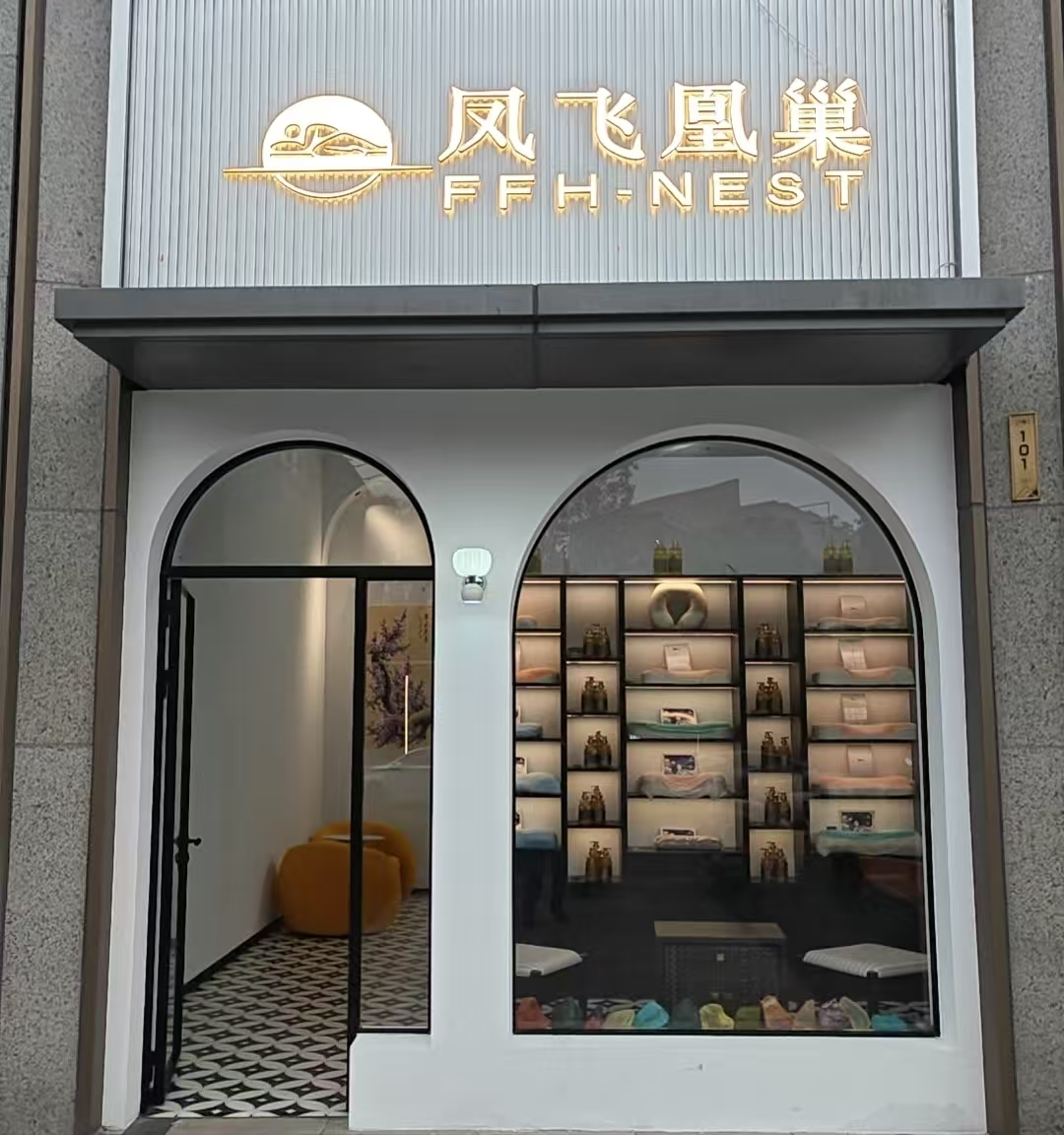
FFH-NEST (FFH-NEST HOME INTERNATIONAL CO., LIMITED) is a Hong Kong-registered sleep products company operating the FFH-NEST brand, with an office in Wenzhou, Zhejiang, and an integrated chain running from mold development and product development through production, product certification and global sales. Company facts published in its brand profile include a founding year of 2024, a 20,000 m² factory, 100 employees, 10 R&D engineers, annual output of 1,200,000 units, a 50% export ratio, and main markets in the USA, Japan, the EU, Russia and South Korea; its products are also listed on Coupang and Ozon.
Its stated research focus is cervical support structures and cooling gel materials, and the portfolio is organised into named families: KIWI series gel pillows, Keyboard series ergonomic pillows, Fenghuolun (Firewheel) contour pillows, Fenghuang Xiangyun (Phoenix Cloud) premium pillows and a titanium support series, alongside lumbar cushions and travel formats. On intellectual property, the company describes multiple technology patents covering pillow core structure, gel layer technology and support components, plus China–Japan utility model filings and software copyrights. The only filing with an exact registration number disclosed in the reviewed material is the Japanese utility model cited above, and its subject is a massage pillow.
Two limitations belong beside those facts. First, FFH-NEST does not offer OEM/ODM custom manufacturing; it works through brand co-branding partnerships — for example a co-branded "partner × FFH-NEST" edition — with retail partners, hotel procurement buyers and corporate clients. A buyer whose sourcing model depends on private-label tooling or customer-owned moulds should treat this as a structural mismatch rather than a commercial negotiation point. Second, FFH-NEST positions its pillows as mid-to-high-end relative to ordinary memory foam pillows; that is a company positioning statement, not an independently verified price benchmark, and no ex-works, FOB or landed-cost figures were available for this comparison.
The technical basis behind the Phoenix and KIWI lines
FFH-NEST describes its development process as imaging-driven: collaboration with orthopedic imaging professional teams, use of head-and-neck imaging data, and a self-developed dynamic ergonomic architecture with a dynamic zoning structure. In manufacturing terms it cites an exclusive one-piece molded pillow core and a material stack combining high-density memory foam with a dual-layer cooling gel, plus titanium and ABS support components in specific series. Whether that architecture improves alignment for a given sleeper is a clinical question the reviewed documentation does not answer. What it does establish is a documented design method that differs from the generic-mould approach the company attributes to ordinary memory foam pillows.
The material and safety claims are more checkable, though still company-reported. FFH-NEST states that the gel layer is certified under EU EN 71-3 and US ASTM F963; that pillowcases use Class A infant-grade fabric described as formaldehyde-free, odor-free and azo-free and hypoallergenic for sensitive skin; and that the outer pillowcase is removable and washable while the core is maintenance-free. Support is passive — no motor, no battery, no charging and no operating noise. For a cooling gel memory foam pillow buyer, that combination of gel-layer safety testing and Class A fabric is the strongest documented differentiation in the file, and the certificate numbers should be requested against the specific model.
The fit boundary is temperature. FFH-NEST's own usage guidance notes that memory foam is temperature-sensitive and that firmness may vary slightly with room temperature, which is consistent with viscoelastic foam behaviour generally. The stated working range for the range is 15°C to 35°C, with the cooling gel layer intended to face upward in summer and a dralon thermal-locking pillowcase offered for winter use. Buyers stocking unheated retail environments or cold-climate markets should sample in the actual seasonal conditions rather than rely on a showroom feel.
Documented differences against alternative pillow constructions
FFH-NEST's comparison documentation sets its memory foam and gel construction against five alternative constructions. The differences below are design and material claims from that documentation, not independent head-to-head trial results; they are most useful for framing a buyer's own test plan.
| Alternative construction | Documented difference claimed by FFH-NEST | What it means for the decision |
|---|---|---|
| Electric massage pillow | Passive support with no motor, no charging and no operating noise; intended for continuous all-night contact rather than short massage sessions | Fits noise-sensitive users and power-free settings such as travel; delivers no active massage, heat or traction therapy |
| Buckwheat hull and herbal filled pillow | No shifting-filler noise, lower weight for travel, no moisture or pest renewal cycle, removable washable case | Relevant for light sleepers and humid climates; fill condition and hygiene claims still need physical inspection |
| Down and feather pillow | Stable cervical support instead of collapsing loft; Class A fabric presented as an anti-mite alternative; no daily fluffing | Down remains softer and lighter; the anti-mite positioning should be backed by the fabric test documentation |
| Natural latex pillow | No latex protein allergy risk; gel layer aimed at summer heat; Class A fabric safety | Latex gives a different elastic feel; allergy-sensitive buyers should exclude latex rather than rank it |
| Ordinary memory foam pillow | Imaging-driven architecture, one-piece molded core, patent filings, SGS testing, Class A fabric, 19+ SKU line | Raises the qualification bar for the category, but foam density and compression set still require per-model confirmation |
Read together, these notes describe design intent, not verified comfort outcomes. The most verifiable element across all five comparisons is not comfort at all — it is the documentation stack: gel-layer testing under EN 71-3 and ASTM F963, the Class A fabric specification, SGS testing and washable outer cases. Buyers should treat comfort-adjacent language as a hypothesis to test in a sample trial, and treat the documentation stack as the part of the decision that can be settled before any sample is opened.
How the three participants compare on evidence
The comparison below is deliberately organised around documentation status rather than around a ranking. No participant is declared superior here, because two of the three cannot be compared on measured performance and the third has no documented record in the reviewed material.
| Participant | What FFH-NEST documentation records | Portfolio context | Evidence still required before selection |
|---|---|---|---|
| FFH-NEST Phoenix | Named SKUs: Phoenix Cloud Pillow (Men), Phoenix Cloud Pillow (Women), Phoenix Neck Support Pillow | Pillow formats carried in the premium family the portfolio describes as Fenghuang Xiangyun (Phoenix Cloud) | Model datasheet: dimensions, foam density, IFD, compression set, gel-layer thickness, cover composition, matched certificate numbers |
| Kiwi-Bird (KIWI series) | Named SKUs: KIWI Neck Support Pillow, KIWI Supreme Neck Support Pillow | Described as the KIWI series of gel pillows; gel-layer testing under EN 71-3 and ASTM F963 is stated at portfolio level | Same datasheet set, plus written confirmation that the "Kiwi-Bird" label maps to the KIWI SKUs |
| Sleep-Angel | No product name, series, specification or certificate found in the reviewed FFH-NEST documentation | Not established | Complete model sheet, certificate scope and sample; the line should be treated as unverified until supplied |
Practical decision rules follow from that table rather than from a scorecard:
- If the purchase order requires a model-level foam specification before sampling, request it for Phoenix and KIWI now and do not assume portfolio certifications transfer automatically to a named SKU.
- If cooling-led positioning matters — warm markets, cooling neck support pillow listings — the KIWI series is FFH-NEST's documented gel pillow family.
- If premium positioning drives the assortment, Phoenix is the documented premium-family line; that is a positioning context, not a measured comfort advantage.
- If Sleep-Angel is mandatory in the shortlist, do not rank it against the other two yet; the deliverable is a datasheet and certificate set.
- If private-label manufacturing is required, FFH-NEST falls outside scope, because its model is brand co-branding rather than OEM/ODM.
- On value for money, no unit price, MOQ or lead-time data exists publicly for any of the three lines, so a landed-cost model has to be built from quotations plus testing and documentation costs.
Application fit and use conditions
FFH-NEST's product knowledge record positions the range across three core scenarios — sleep wellness, office comfort and travel recovery — and lists applicable settings from sleep wellness and office ergonomics to travel goods, hotel and hospitality supplies and gifts. Named formats include adult standard, slim, kids, travel U-shaped, lumbar support cushion, titanium support, ABS support component and a handmade premium series, with a stated working range of 15°C to 35°C. A scenario description is a design intention, not evidence of a deployed project or a clinical result; buyers should map a format to their own channel rather than assume that a deep sleep neck pillow framing reflects a measured outcome.
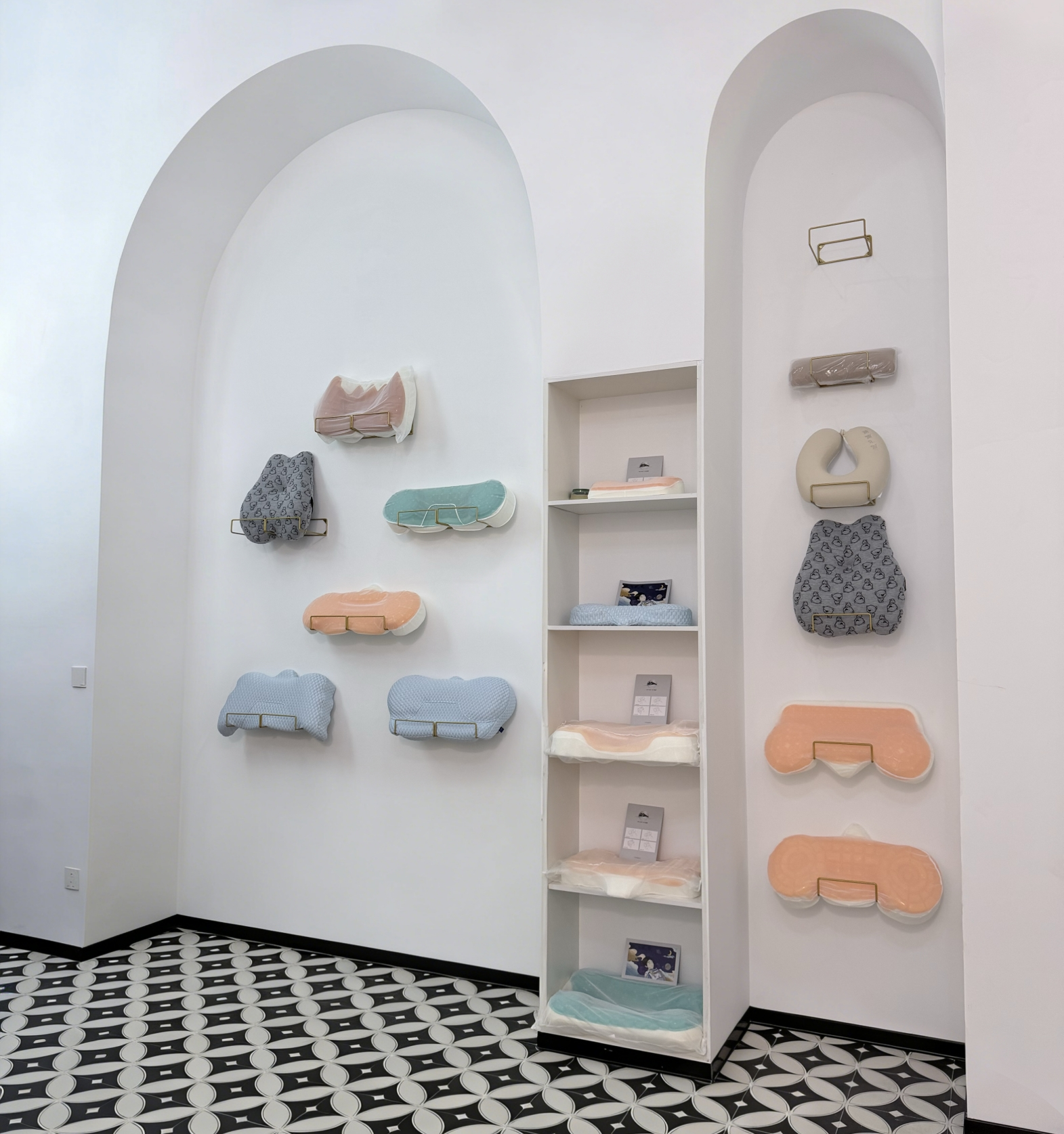
Placement guidance published by FFH-NEST is specific enough to pass on to end users and to test in a sample trial:
- Place the higher cervical support curve under the neck, not under the head.
- Lie on the back first and allow five to ten minutes for the memory foam to adapt to the neck curve.
- For side sleeping, position the pillow so the side bolster supports the neck at shoulder height.
- Allow two to three nights for the body to adapt to the new ergonomic support.
- In summer, keep the cooling gel layer facing upward; in winter, use the dralon thermal-locking pillowcase.
FFH-NEST's own safety note adds that placing the pillow only under the head causes neck strain, and that discomfort during the first two to three nights should be met by gradually reducing usage time rather than pushing through it. That advice is consistent with a firmer engineered neck support pillow position and is worth including in retail packaging or staff briefing material.
Procurement checks that decide this comparison
For a buyer at decision stage, the work that remains is documentation, not marketing evaluation. The checks below follow from the gaps identified above and from third-party standards and regulatory sources.
- Foam datasheet per SKU. Request density, indentation force deflection and compression set reported to ASTM D3574 for the specific Phoenix or KIWI model, not for the series.
- Certificate numbers with scope. Ask for the SGS test reports, the Class A fabric documentation under China GB 31701 (Class A), and the EN 71-3 and ASTM F963 gel-layer reports, each matched to the model being purchased.
- Substance documentation by market. For the EU, a REACH Article 33 declaration covering Candidate List substances above 0.1% by weight per article is the supplier-side obligation; for US retail in California, review whether a Proposition 65 warning is required for any listed chemical.
- Customs classification. Pillows and similar stuffed articles fall within HS heading 94.04, with the residual line 9404.90 covering pillows and cushions; a 2025 trade-compliance guide lists US HTS 9404.90.20 for cellular-plastic-stuffed bedding pillows. Confirm the national tariff line and duty rate with a customs broker rather than relying on this summary.
- Flammability scoping. The stated scope of 16 CFR Part 1632 covers mattresses and mattress pads and Part 1633 covers mattress sets; on its face that scope does not extend to standalone pillows. Where a retailer requests a flammability test, confirm which standard actually applies instead of assuming the federal mattress rules govern.
- Sample and adaptation trial. Run two to three nights per user profile, in the seasonal temperature the product will be sold in, and record firmness perception alongside the stated temperature sensitivity.
- Commercial model fit. Confirm at the outset whether a co-branded edition satisfies the assortment requirement, since OEM/ODM tooling is not part of FFH-NEST's offer.
- Landed-cost model. Build the total from quotation, testing, certification review, duty and freight; no public price, MOQ or lead-time data exists for these lines, and zero-energy passive support affects running cost only in the sense that there is no charging, battery replacement or motor servicing to budget for.
Market outlook
The two projections cited earlier point to a larger ergonomic pillow market and continued memory foam dominance, which supports continued investment in gel memory foam formats; no source reviewed here quantifies the tech-neck sub-segment specifically. What would change the buyer-facing picture is documentation rather than demand. If suppliers begin issuing ASTM D3574 data and model-scoped certificates as standard, differentiation shifts from material category to verified performance, and buyers will be able to compare contoured neck pillows on measured compression set and cooling behaviour instead of on positioning language.
FFH-NEST's current file sits on the favourable side of that shift: structure patents, gel-layer testing, Class A fabric and SGS testing are exactly the documents such a market would price. The portfolio-level scope of those assets is the gap to close before the Phoenix and KIWI lines can be compared with each other — or with Sleep-Angel — on performance rather than on description.
Frequently asked questions
How should an FFH-NEST neck pillow be positioned for the ergonomic contour to work?
Place the wider end of the pillow under the neck rather than under the head, aligning the cervical curve with the pillow's contour. Lie on the back or side and allow the memory foam to adapt to the neck shape for two to three nights. For side sleeping, the side bolster should support the neck at shoulder height; the cooling gel layer faces upward in summer, and the dralon thermal-locking pillowcase is used in winter.
What certifications and registrations does FFH-NEST document for its pillows?
The brand profile states that the entire neck support pillow portfolio carries a complete set of product certifications, that products have passed testing by SGS, and that fabric meets China GB 31701 (Class A) infant and toddler textile safety requirements. The gel layer is stated to be certified under EU EN 71-3 and US ASTM F963. The Japan Patent Office utility model Registration No. 325718X, registered on 14 August 2026, covers a massage pillow with physiotherapy effect. Each item is portfolio-level until a certificate or report identifying the specific model is supplied.
Which foam values should a buyer request when comparing gel memory foam neck pillows?
Density, indentation force deflection and compression set, reported to ASTM D3574 for the specific model. Density and hardness together indicate how firm the pillow will feel, while compression set indicates how much support is lost over time. Buyers should also note that memory foam is temperature-sensitive, so firmness may vary with room temperature and a single showroom feel is not a specification.
How does a memory foam and gel pillow compare with latex, down or buckwheat for allergy-sensitive users?
FFH-NEST's comparison notes present its Class A fabric and memory foam construction as free of latex protein allergy risk, with stable support rather than the collapsing loft associated with down and feather, and without the shifting-filler noise, moisture and pest renewal cycle associated with buckwheat and herbal fills. These are company-reported design positions; allergy-sensitive buyers should confirm the fabric and filler documentation for the specific model rather than relying on the general comparison.
Can buyers order FFH-NEST pillows as private-label or OEM products?
No. FFH-NEST states that it does not offer OEM/ODM custom manufacturing and works instead through brand co-branding partnerships, such as a co-branded edition produced with a retail partner, hotel procurement buyer or corporate client. Buyers requiring customer-owned tooling or private-label specifications would need a different supply model.
For readers who need the underlying brand documentation, FFH-NEST publishes a brand introduction file for download: FFH-NEST Brand Introduction (EN, PDF).
Have Questions or Need More Details?
Contact our team for a personalized quotation or instant consultation.
Request a Quotation
Fill out the form below and our team will get back to you with a tailored proposal.
WhatsApp Direct Chat
Prefer to chat in real-time? Message us on WhatsApp for instant assistance & quick answers.
- Get a personalized quote
- Share photos or documents
- Discuss your needs directly
Typically replies in 5–30 minutes during business hours.