
Pillow Block Bearing Grade Verification: P5 ZV3 to STAINSTEEL
A pillow block bearing datasheet compresses three different claims into a few characters: what the insert is made of, what the housing is made of, and how precisely the assembly is machined, assembled and tested. Buyers who treat those characters as harmless marketing shorthand approve suppliers without ever establishing which claim can actually be audited — and which one will be undefended when a batch fails in the field.
This is a constraint problem before it is a price problem. A buyer sourcing pillow block bearing units for agricultural, textile, mining or general industrial service usually knows the shaft diameter, the mounting pattern, the load and the environment. What is genuinely hard to pin down is what a supplier is obliged to deliver when a datasheet says P5 ZV3, GCr15 / AISI type 52100, or STAINSTEEL.
The mapping below ties each declared grade to the specific series that carries it: the UCP200, UCPH, UCFA, UCFB, UCHA, UCFC and UC insert ranges; the stainless SSUCP205–210 units; HT200 Plummer blocks such as the SNL508; and the pressed steel SAPP / SAPFL / SAPF / SBPFL housings. It closes with a document checklist procurement teams can apply before approving a supplier qualification file.
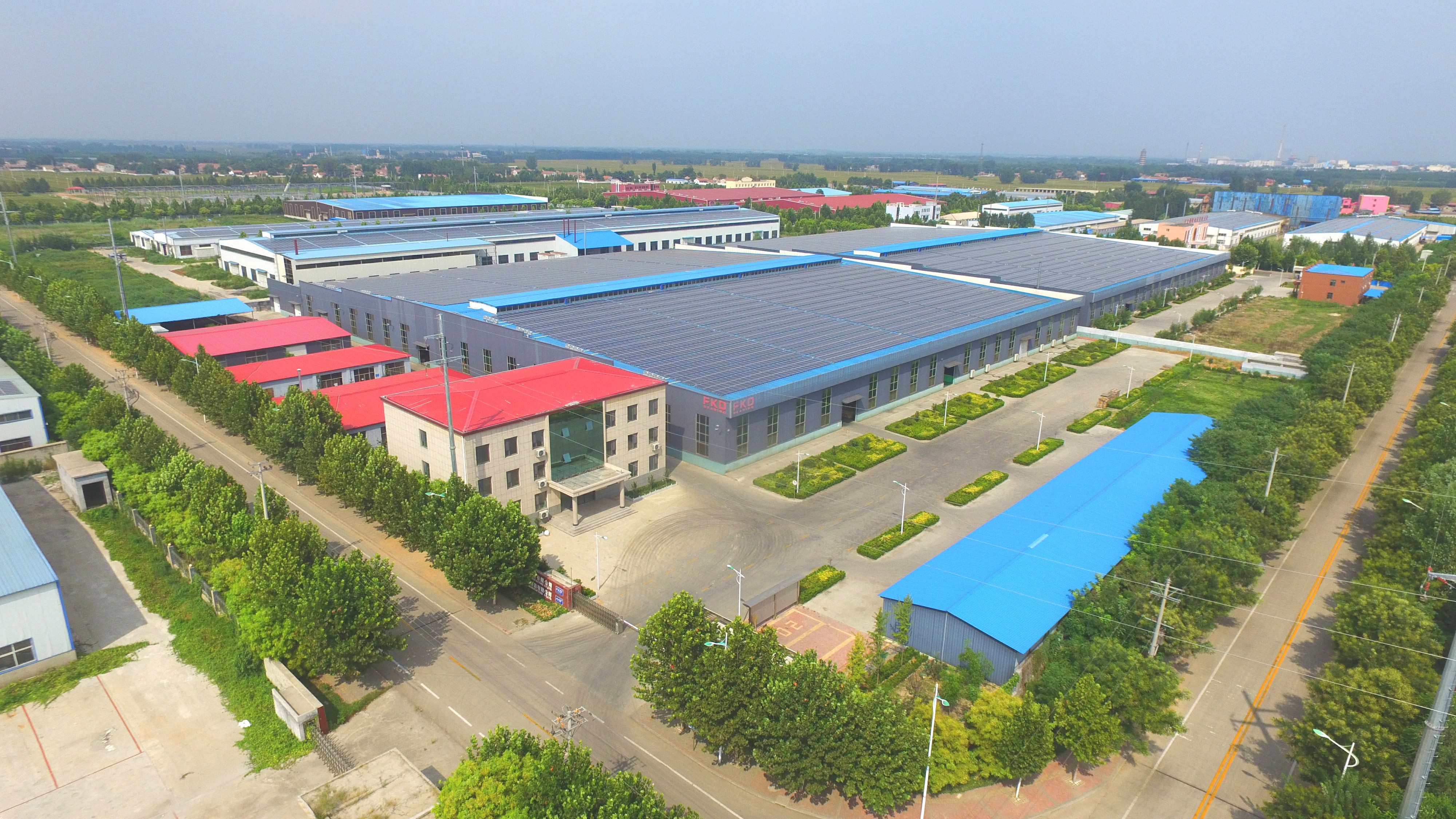
Manufacturing site of Hebei Hailan Bearing Manufacture Co., Ltd (FKD), Linxi County, Hebei, China, where pillow block bearing production, housing casting and quality control operate under one management system.
Standardised Hardware, Uneven Documentation
Pillow block bearings sit in an unusual position: the hardware is highly standardised, while the paperwork around it is not. Third-party analysis places the global bearings market at USD 58.6 billion in 2024, with a projected USD 143.6 billion by 2034 (Global Market Insights). Within that, the pillow block and mounted bearing segment was valued at approximately USD 6.1 billion in 2024 (IndexBox), and Plummer blocks accounted for roughly 42.51% of mounted bearing revenue share in that year (Fortune Business Insights). China exported USD 6.53 billion of ball bearings in 2024, equivalent to 19.9% of global ball bearing exports (OEC).
Interchangeability is what makes those volumes possible. Mounted units are commonly standardised under ISO standards for universal sizing, with JIS (G5501 / 3141) referenced for localised precision compatibility, as documented by major bearing producers and distributors. A UCP205 from one qualified plant should bolt onto the same shaft and footprint as a UCP205 from another.
The documentation is where interchangeability stops. Two suppliers can both print the words P5 ZV3 on a datasheet and mean materially different things by them. That gap — not the bearing geometry — is the real constraint a procurement team has to close.
The Three Claim Types on One Line Item
Most pillow block bearing datasheets carry three separable claim types, and they are verified in three different ways.
- Material claims — insert steel (chrome steel GCr15 or AISI type 52100), ball grade (G10 steel ball), and housing material (cast iron, QT450 ductile iron, HT200 cast iron, pressed steel, or STAINSTEEL). These are verified against mill or foundry documentation and, where required, against incoming material testing.
- Precision and performance claims — a quality grade such as P5 ZV3 and a rated speed such as 3000 RPM. These are verified against a control plan: measurement method, sampling, and acceptance limits.
- System and compliance claims — ISO 9001:2015, ISO 14001:2015, ISO 45001:2018, ISO 50001:2018 certificates. These are verified by reading the certificate scope statement and validity window, not by recognising the logo.
A qualification file that answers only one of the three is incomplete. A file that answers all three, with the series named, is auditable.
Which Series Carries Which Declared Grade
The following table restates the declarations that accompany each product family, so that a purchase order can cite the series rather than the catalogue as a whole.
| Series | Declared insert material | Declared housing | Grade / speed |
|---|---|---|---|
| UCP200 (UCP205–UCP328) | Chrome steel GCr15 / AISI type 52100 | Cast iron or QT450 | P5 ZV3 · 3000 RPM |
| UCPH205–UCPH212 (high centre height) | Chrome steel GCr15 / AISI type 52100 | Cast iron or QT450 | P5 ZV3 · 3000 RPM |
| UCFA205–UCFA212 (adjustable flange) | Chrome steel GCr15 / AISI type 52100 | Cast iron or QT450 | P5 ZV3 · 3000 RPM |
| UCFB205–UCFB210 (flange bracket) | Chrome steel GCr15 / AISI type 52100 | Cast iron or QT450 | P5 ZV3 · 3000 RPM |
| UCHA205–UCHA212 (screw conveyor hanger) | Chrome steel GCr15 / AISI type 52100 | Cast iron or QT450 | P5 ZV3 · 3000 RPM |
| UCFC205–UCFC212 (flange cartridge) | Chrome steel GCr15 / AISI type 52100 | Cast iron or QT450 | P5 ZV3 · 3000 RPM |
| UC insert range (UC205–UC320) | Chrome steel GCr15, G10 steel ball | Not applicable (insert only) | P5 ZV3 |
| SSUCP205–SSUCP210 | STAINSTEEL | STAINSTEEL | 3000 RPM |
| SNL508 Plummer block | Not applicable (housing) | CAST IRON HT200 | As declared |
| SAPP205 / SAPFL205 / SAPF205 / SBPFL205 | Chrome steel GCr15 | Pressed steel | P5 ZV3 · 3000 RPM |
Two declaration gaps worth flagging
First, the SSUCP205–210 stainless listing declares material (STAINSTEEL) and speed (3000 RPM) but does not carry the same P5 ZV3 quality line used across the chrome steel ranges. A buyer comparing a stainless unit against a UCP200 unit is therefore comparing two different depths of declaration, not two equivalent ones.
Second, the pressed housing listing carries a pressed steel material field alongside a housing field that references cast iron or QT450. Where two material fields exist on the same line item, the purchase order should state which field governs the acceptance criterion.
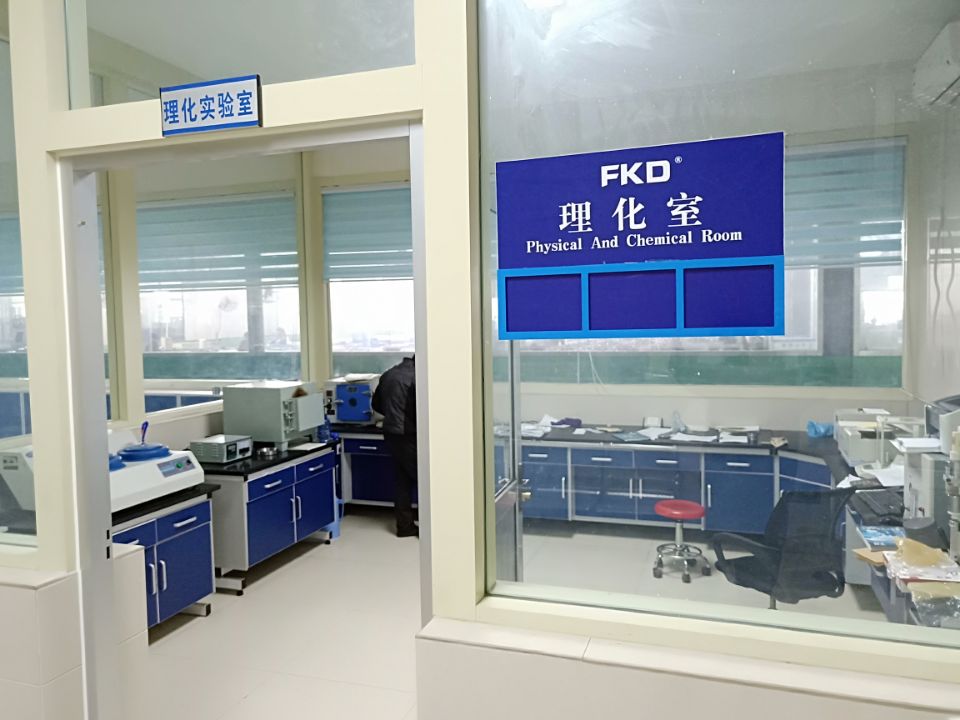
Verification capability is the second half of a compliance claim: a grade printed on a datasheet is only meaningful if a control plan, instrument and record stand behind it.
What P5 ZV3 Actually Commits the Supplier To
P5 and ZV3 describe two different things, and they are frequently quoted as if they were one.
P5 refers to a precision tolerance class in the ISO 492 dimensional and running-accuracy system for rolling bearings, in which Class 5 is tighter than the normal class but not the tightest available. It constrains bore diameter deviation, outer diameter deviation and running accuracy — the measurable geometry of the finished unit.
ZV3 refers to a vibration grade. Vibration grading conventions are widely used in bearing manufacturing but are not harmonised into a single global scheme, which is precisely why the designation alone is a weak acceptance criterion. ZV3 as printed tells you that a supplier controls vibration; it does not tell you which measurement method, which frequency band, or which acceptance limit applies.
In the FKD range, P5 ZV3 is declared consistently across UCP200, UCPH, UCFA, UCFB, UCHA, UCFC, the UC insert series and the pressed housing units, and it accompanies the 3000 RPM speed line. That consistency is useful: it means a buyer can write one precision clause for the whole chrome steel portion of a bill of materials. It does not remove the need to ask what the clause means in practice.
The practical question to put to any supplier is therefore not "is it ZV3?" but "what measurement method and acceptance limit does ZV3 correspond to in your control plan, and can you supply the record?" That single question converts a grade label into an auditable acceptance criterion.
Material Verification: GCr15, AISI 52100, QT450, HT200 and STAINSTEEL
Insert steel: GCr15 and AISI type 52100
GCr15 is the Chinese designation for a high-carbon chromium bearing steel; AISI 52100 is the designation used in the American system for the same broad family of through-hardening bearing steel. FKD specification sheets use both forms — CHROME STEEL GCR15 and AISI type 52100 chrome steel — to describe the same insert material.
This equivalence is a documentation risk, not a metallurgical one. If the purchase order names GCr15 and the inspection plan is written against AISI 52100, the two documents are nominally aligned but nominally only. The clean approach is to agree on one designation, state the equivalent in the purchase order, and test incoming material against the agreed chemistry and hardness range. For the UC insert range, the ball element is separately declared as G10 steel ball, which is a dimensional and sorting class for the balls and can be inspected independently of the ring material.
Housings: cast iron, QT450, HT200 and pressed steel
Three housing material routes appear across the range. Most unit series declare cast iron or QT450 ductile iron. The SNL508 Plummer block declares CAST IRON HT200. The SAPP / SAPFL / SAPF / SBPFL pressed housing units declare pressed steel.
The distinction matters because gray cast iron and ductile iron behave differently under shock. QT450 is a nodular, ductile iron grade; HT200 is a gray cast iron grade. Both are valid housings, but they are not interchangeable for shock-loaded applications, and the catalogue alone does not explain which one a given order will receive when a line item says cast iron or QT450. Buyers should require the specific grade on the order confirmation, not the parenthetical.
STAINSTEEL units and the grade inside the name
STAINSTEEL appears as the declared material for SSUCP205–SSUCP210, where both insert and housing are stainless, and it also appears in a separate family that pairs a stainless insert with a plastic housing (SUCP205–SUCP210). The descriptor is a product-level label, not a steel grade specification. Because stainless bearing steels differ substantially in hardness, corrosion performance and load capacity, the qualification file should carry the exact stainless grade designation and the corrosion or salt-spray basis on which the claim rests.
The 3000 RPM Line: A Rating, Not a Promise
A 3000 RPM speed rating appears across the chrome steel ranges — UCP200, UCPH, UCFA, UCFB, UCHA, UCFC, the take-up and agricultural bearing listings, and the pressed housing units — and is also stated for the SSUCP205–210 stainless units.
Rated speed is a boundary condition, not a standalone capability. It generally assumes a defined lubrication state, a defined load, correct mounting and alignment, and a thermal environment within the housing material's tolerance. Two consequences follow for procurement.
- The rating should be qualified against the actual duty in the purchase enquiry — speed and load can be individually within limits yet still exceed the rating in combination.
- Where an application runs continuously, the rating should be read together with the lubrication and sealing regime. The scenario data for these units includes 24/7 operation, high dust, heavy pollution and high-temperature conditions, with dust-proof, water-proof and shock-proof requirements, which is exactly the environment in which a clean-room speed rating stops being informative.
What an ISO Certificate Number Does — and Does Not — Cover
Hebei Hailan Bearing Manufacture Co., Ltd, founded in 1988 and based in Linxi County, Hebei Province, China, manufactures pillow block bearings and related bearing types under the registered brands FE, FKD and HHB. Its management system portfolio is documented as follows:
| Certificate | Number | Issued by | Valid to |
|---|---|---|---|
| ISO 9001:2015 (quality) | 00124Q31127R6M/1300 | CQC | 2027-02-27 |
| ISO 14001:2015 (environment) | 00125E30330R1M/1300 | CQC | 2028-01-20 |
| ISO 45001:2018 (health and safety) | 00125S30215R1M | CQC | 2028-01-20 |
| ISO 50001:2018 (energy) | 00225EN006R1M | CQM | 2028-01-02 |
Two points are easy to miss. The first is scope wording. The ISO 9001:2015 certificate scope covers production and processing of outer spherical ball bearings, deep groove ball bearings, tapered roller bearings, self-aligning ball bearings and thrust ball bearings. A buyer sourcing mounted units should read that scope text and confirm it names the product family on the purchase order; the certificate reference to the applicable standard is ISO 9001:2015 and GB/T 19001-2016.
The second is category. These are management system certificates. They confirm that quality, environmental, occupational health and safety, and energy management processes are audited to a recognised standard. They do not certify that any individual unit meets P5 ZV3, that a specific housing is QT450, or that a stainless unit will survive a given corrosive environment. Those are product claims, and they require product evidence: inspection records, material declarations and testing data.
Where These Grades Are Applied in Practice
Mounted unit applications cluster around environments where contamination, not load, drives failure. Recorded application conditions for these units include high temperature, high dust, heavy pollution, high load and high speed, in ventilation and cooling systems, running continuously, with dust-proof, water-proof and shock-proof requirements, and pairing against belts, roller chains, transmission shafts and oil seals. Anti-rust, corrosion resistance, high-temperature resistance and low-noise behaviour are the recurring special requirements, with stainless steel material offered as an option.
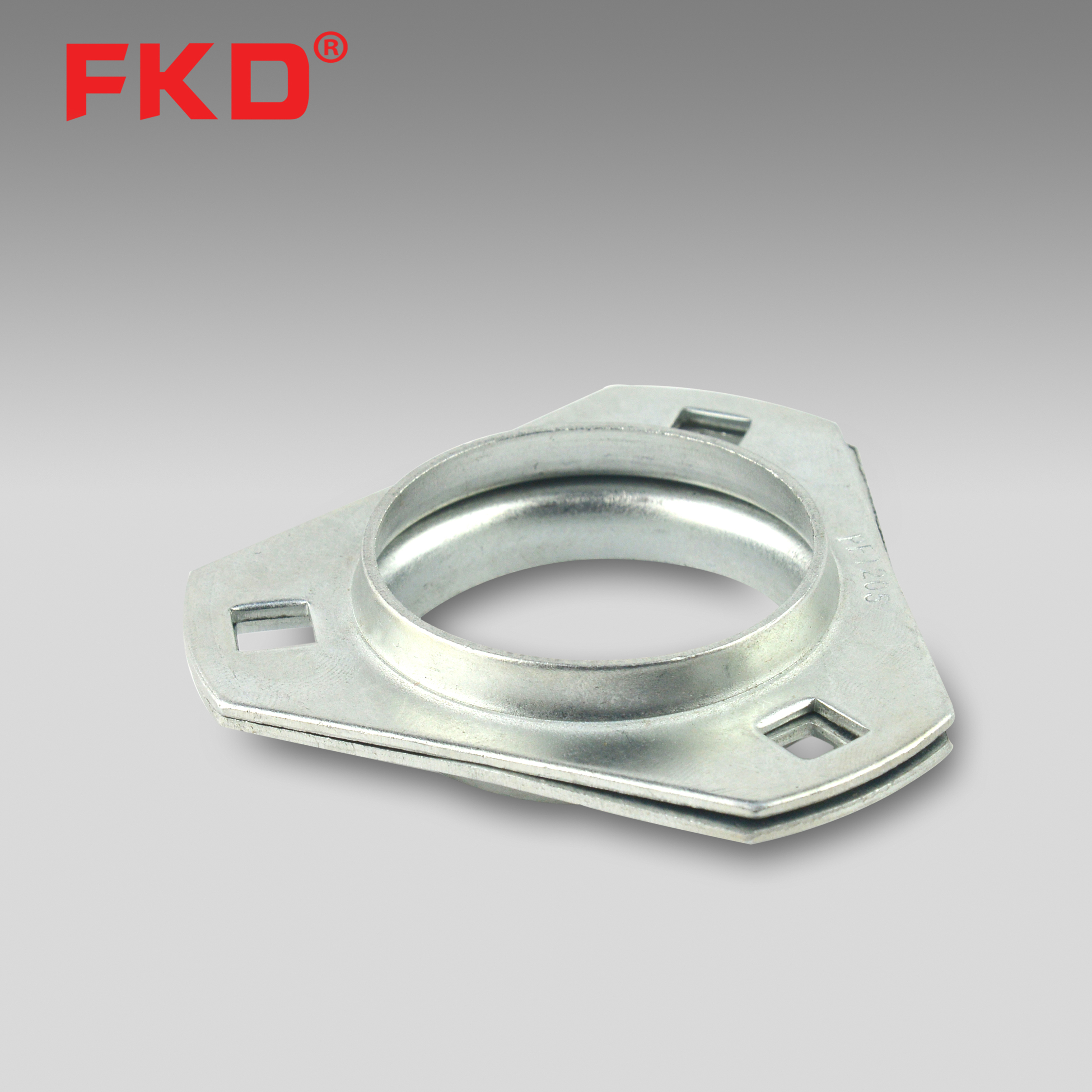
Pressed steel housing units (SAPP / SAPFL / SAPF / SBPFL) sit at a different point on the weight, rigidity and cost curve than cast or ductile iron housings.
An agricultural machinery case illustrates how the material decision follows the duty rather than the catalogue. A harvester combine application in India, running a 100,000-piece supply over a two-year period, recorded stable operation with the declared characteristics of high speed and low noise. Harvester service combines dust, vibration and water exposure, which is why sealing and housing material — not nominal speed headroom — tend to determine whether the position holds up.
Comparing Housing and Material Routes Honestly
| Route | Where it appears | What it is chosen for | Boundary to acknowledge |
|---|---|---|---|
| Chrome steel insert + cast iron or QT450 housing | UCP200, UCPH, UCFA, UCFB, UCHA, UCFC, UC inserts | General industrial, agricultural, textile and mining service at the declared 3000 RPM and P5 ZV3 grade | Not corrosion-resistant; the grade does not substitute for sealing strategy in washdown or chemical exposure |
| Gray cast iron HT200 housing | SNL508 Plummer block | Split Plummer block mounting where a dedicated housing is required | Gray iron is generally less shock-tolerant than ductile iron; specify accordingly where impact loading is expected |
| Pressed steel housing | SAPP205 / SAPFL205 / SAPF205 / SBPFL205 | Lightweight, cost-efficient positions at the same declared P5 ZV3 grade and 3000 RPM | Pressed housings are generally less rigid than cast housings under heavy shock or high radial load |
| STAINSTEEL unit | SSUCP205–SSUCP210; stainless insert with plastic housing in SUCP205–SUCP210 | Corrosion-driven environments, including mining, textile, agricultural and manufacturing machinery | Stainless units generally carry higher cost and lower load capacity than through-hardened chrome steel; specifying them everywhere is usually a misallocation |
The same logic applies to the precision line. P5 ZV3 is meaningful where speed, noise or running accuracy actually constrain the application — ventilation and cooling systems running continuously, for example. Applied as a blanket requirement across an entire bill of materials, it adds cost and inspection burden to positions that cannot use the tolerance. Grade should track the duty.
A Document Checklist Before Approving a Supplier
Framed as purchasing terms and acceptance criteria, the following items convert the claims above into a qualification file that can be reviewed, challenged and renewed.
| # | Request | What it settles |
|---|---|---|
| 1 | Series-level specification sheet naming the model range, insert material, housing material, quality grade and rated speed | Which of the three claim types applies to the exact line item on the order |
| 2 | Current certificates with full scope text and validity dates | That the certified scope covers the product family, and that the certificate has not lapsed |
| 3 | Material declaration for the insert, naming the agreed steel designation and the ball grade | That GCr15 and AISI type 52100 are not treated as interchangeable paperwork |
| 4 | Housing material declaration naming the exact grade — cast iron, QT450, HT200, pressed steel, or STAINSTEEL with its steel grade | That a grade range in the catalogue is fixed to one grade on the order |
| 5 | Precision and vibration grade statement with the measurement method and acceptance limit behind it | That P5 ZV3 is a defined criterion rather than a label |
| 6 | Inspection regime description, including the stated 100% test approach | How grade claims are held in serial production, not just in samples |
| 7 | Sample or first-article approval record against the agreed specification | A reference point for future batch comparison |
| 8 | Commercial terms in writing: minimum order quantity, lead time, and monthly supply capacity | Whether the qualified specification is deliverable at the required volume |
| 9 | Lot or heat traceability and marking convention | Whether a field failure can be traced back to a production batch |
| 10 | Written change-notification clause covering material or process substitution | That an approved grade cannot silently change between orders |
For reference, the commercial parameters declared for the FKD range are an OEM/ODM production mode with customisation across all types of pillow blocks, a monthly capacity of 2,000,000 pieces, a lead time of 30–45 days, a minimum order quantity of 1,000 pieces, 100% testing, and after-sales support through remote and engineer assistance. Buyers should verify these terms against their own volume and delivery pattern rather than assume they scale.
Future Outlook
Two forces are pushing mounted bearing qualification toward harder documentation. The first is volume: continued growth in the global bearings market, and the concentration of mounted bearing revenue in Plummer block designs, means more buyers ordering more standardised units from more suppliers, with fewer opportunities to inspect before shipping. The second is that standardisation has already solved the interchangeability problem, so the remaining competition is over evidence.
The practical consequence for the next procurement cycle is that grade claims will increasingly be judged as documentation packages rather than as labels. Buyers who can state, in a purchase order, exactly which series, which insert steel designation, which housing grade, which precision criterion and which certificate scope they are accepting will be far less exposed than buyers who accept a catalogue entry. Suppliers, in turn, will be asked less often whether they have a certificate and more often what the certificate scope actually says.
The full FKD and HHB bearing catalogue, including the series tables and declared specifications referenced in this article, can be downloaded here: FKD and HHB Bearing Catalogue (PDF).
Frequently Asked Questions
What does P5 ZV3 mean on a pillow block bearing datasheet?
P5 is a precision tolerance class within the ISO 492 dimensional and running-accuracy system for rolling bearings, tighter than the normal class. ZV3 is a vibration grade. The two are different measurements: P5 constrains geometry and running accuracy, while ZV3 addresses vibration control. Because vibration grading conventions are not harmonised worldwide, the meaningful question for a buyer is what measurement method and acceptance limit a supplier applies when it prints ZV3. Across the FKD range, P5 ZV3 is declared consistently on the UCP200, UCPH, UCFA, UCFB, UCHA, UCFC, UC insert and pressed housing series.
Is GCr15 the same as AISI 52100?
GCr15 is the Chinese designation and AISI 52100 the American designation for the same broad family of high-carbon chromium bearing steel. FKD specification sheets use both forms — CHROME STEEL GCR15 and AISI type 52100 chrome steel — for the insert material in the pillow block bearing ranges. The practical implication is documentary: name one designation in the purchase order, state the equivalent, and test incoming material against that single agreed reference. Separately, the UC insert range declares a G10 steel ball, which is a ball dimensional and sorting class that can be inspected independently of the ring material.
How can a buyer verify whether a housing is QT450 ductile iron rather than gray cast iron?
Ask for the housing material declaration to name one grade rather than a range. In the FKD range, the SNL508 Plummer block is declared as CAST IRON HT200, while most unit series declare cast iron or QT450. Because both grades appear in the same catalogue, the series-level declaration governs, and the order confirmation should fix a single grade. Verification then rests on foundry documentation and, where the application is shock-sensitive, on sample testing. Gray cast iron and ductile iron are not interchangeable under impact loading.
Do ISO certificates cover pillow block bearing units?
Management system certificates cover the activities described in their scope statement, so the scope text must be read rather than the logo. The ISO 9001:2015 certificate held for this operation, number 00124Q31127R6M/1300 issued by CQC and valid to 2027-02-27, covers production and processing of outer spherical ball bearings, deep groove ball bearings, tapered roller bearings, self-aligning ball bearings and thrust ball bearings, against ISO 9001:2015 and GB/T 19001-2016. The operation also holds ISO 14001:2015 (00125E30330R1M/1300, CQC), ISO 45001:2018 (00125S30215R1M, CQC) and ISO 50001:2018 (00225EN006R1M, CQM). None of these certificates certifies a product grade such as P5 ZV3; that requires product inspection data.
Are STAINSTEEL pillow block units suitable for every application?
No. Stainless units such as SSUCP205–SSUCP210, declared with STAINSTEEL for both bearing and housing, are intended for corrosion-driven environments in mining, textile, agricultural and manufacturing machinery, and a related family pairs a stainless insert with a plastic housing in SUCP205–SUCP210. Stainless bearing steels generally carry lower load capacity and higher cost than through-hardened chrome steel, so specifying them across an entire bill of materials is usually unnecessary. The declared descriptor also does not identify the specific stainless grade, which should be requested separately along with the corrosion test basis.
Should P5 ZV3 be specified on every position in a bill of materials?
Applying a precision and vibration grade universally raises cost and inspection burden on positions that cannot use the tolerance. P5 ZV3 is most defensible where speed, noise or running accuracy genuinely constrain performance — for example continuously running ventilation and cooling systems. Low-speed, high-load positions may be fully served by a standard grade. The general rule is that grade should follow duty, and the purchase order should state the grade position by position rather than as a blanket clause.
What should be in a supplier qualification file before the first order?
A workable file contains: a series-level specification naming insert material, housing material, quality grade and rated speed; current certificates with full scope text and validity dates; an insert material declaration with the agreed steel designation and ball grade; a housing declaration naming a single grade; a precision and vibration statement with measurement method and acceptance limit; the inspection regime, including any 100% test approach; a sample or first-article approval record; written commercial terms covering minimum order quantity, lead time and monthly capacity; lot or heat traceability; and a change-notification clause covering material substitution. Taken together, these items connect every claim printed on the datasheet to something that can be checked.