
Pillow Filling Machine Comparison: 6 Checks Buyers Miss
Pillow Filling Machine Comparison: 6 Checks Buyers Miss
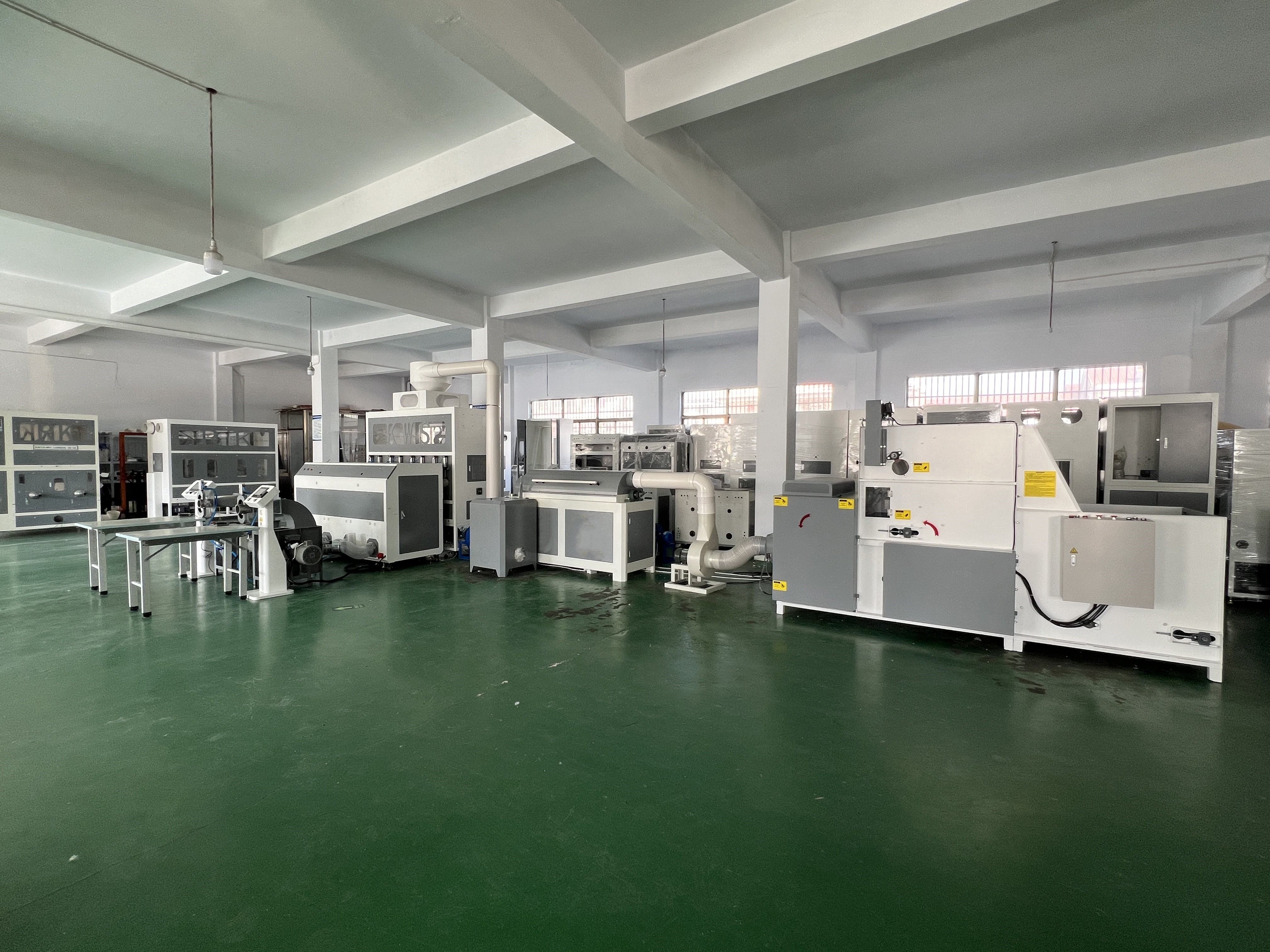
Commercial pillow production has moved from hand stuffing to quantitative filling: fibre is opened, weighed to a target dose and transferred into the shell in a controlled cycle. The machines that perform this step are now assessed by importers, bedding brands, contract manufacturers and OEM buyers against a small set of figures — fill accuracy, number of filling ports, installed power and output per minute. Each of those figures is real, but each is also quoted against a reference the buyer cannot see: a demonstration fibre, a pillow weight chosen for the demonstration, and a machine configuration that may not be the one in the quotation.
This comparison is written from the evaluator's side of the table rather than the supplier's. It does not rank brands and it does not name competitors. Instead it sets out six checks that independent buyers commonly skip, explains what each check changes in a purchasing decision, and uses the published parameters of the KIVAS pillow filling machine range — manufactured by Qingdao Kaiweisi Industry and Trade Co., Ltd. (KIVAS), a home textile equipment manufacturer based in Qingdao, China — as the reference configuration for the numbers discussed throughout.
Why Pillow Filling Machine Comparisons Go Wrong
A filling machine comparison usually starts with a table of four columns: accuracy, ports, power and speed. The difficulty is that these four items are quoted in ways that are not directly comparable between suppliers, and the two items that decide the outcome are missing from the table altogether.
- Accuracy is often given as a single figure, such as an error of around 1%, without stating the fill weight at which it is guaranteed. A machine that holds a tight band at 1500 g is doing something different from one that holds a tight band at 200 g.
- Ports are counted as a hardware feature, but they are a line-design decision: port count sets how many filling operators the machine needs and how much downstream closing capacity it demands.
- Power is treated as a compliance detail rather than as a constraint on site electrical capacity, cabling and per-shift energy cost.
- Speed is quoted in pieces per minute without the reference pillow weight, and without saying whether the figure assumes pre-opened shells and an operator dedicated to the machine.
Two further items rarely appear in comparison tables at all: how the machine behaves when the raw material changes, and what the first year of ownership costs after the invoice has been paid. In practice these are the two areas where the purchase decision is won or lost, because they determine whether the equipment is still running at its rated output in month twelve.
The opportunity for a better decision is straightforward. A buyer who converts a specification sheet into production terms — kilograms per hour at their own pillow weight, operators per shift, power and air requirements, changeover time between materials — can compare machines on the same basis, and can also compare a quantitative filling machine fairly against the direct-fill equipment it would replace.
The Six Checks Independent Buyers Miss
Check 1 — Fill accuracy is a tolerance band, not a single number
Quantitative filling replaces volumetric dispensing with weighing: the machine doses fibre to a target weight and then transfers it into the shell. In the KIVAS configuration, the core difference from traditional volumetric filling is quantitative weighing with high precision and an error of around 1%.
What buyers miss is where that band applies. The working fill range of the machine is 100–2000 g, and tolerance behaviour at the bottom of that range is not automatically the same as at the top, because a smaller dose leaves less margin for the resolution of the weighing system and for fibre that clings in the transfer path. A practical comparison therefore asks the supplier to state the guaranteed tolerance at the lightest and heaviest product the buyer intends to run, to describe the measurement principle being used — weighing hopper, load cell, or timed dispensing — and to give a recalibration interval in operating hours rather than a vague reference to regular service.
It is also worth separating pillow filling from lightweight down filling. High-precision down filling machines now use load cell technology to reach weighing accuracies of ±0.1 g for lightweight outerwear production. That figure belongs to a different application and a different product category. Buyers should not assume it transfers to a 600 g polyester pillow core, and suppliers who quote it for pillow work are usually quoting a neighbouring product rather than the one being ordered. The useful conclusion is directional — weighing technology across the category is becoming more precise — not numerical.
Check 2 — Two or four filling ports is a line-design decision
Filling ports determine how many shells can be served within one cycle and how the machine fits into the wider production line. KIVAS pillow filling machines are offered with 2 or 4 filling ports.
The common mistake is to treat the larger number as automatically better. A 4-port machine placed in front of a single closing station does not produce more finished pillows; it produces work in progress waiting for the closing operator, and it ties up capital in capacity the plant cannot absorb. The reverse mistake is equally common: a 2-port machine matched to a downstream line that could actually close and pack more output than the filling stage delivers becomes the bottleneck of the whole shift.
The check is to count the operator stations that can realistically be staffed on the filling side, then measure the closing, seam-checking and packing capacity behind it, and choose the port count that keeps both ends of the line in balance. Port count also affects material handling. Where a line needs mixed filling with 2 to 5 raw material types, the number of ports and the feeding arrangement determine whether a material change stops the machine or simply switches a feed — a difference that shows up as several minutes per changeover, multiplied across every shift of the year.
Check 3 — The 10.5–13.5 kW power range constrains your site, not just your invoice
The KIVAS filling machine range is specified with a power range of 10.5–13.5 kW. That band reflects configuration: port count, blower and fan capacity, the weighing system, and the anti-static equipment required when running synthetic fibre.
Buyers who compare only the number frequently draw the wrong conclusion — that a machine quoting lower power is more efficient. In this category, a lower figure may simply describe a smaller configuration with fewer ports or a smaller blower. The practical checks are to ask for the mapping between a specific configuration and its power draw, the required supply voltage and frequency, whether a dedicated circuit is needed, and whether the site's existing distribution board can carry the load without modification. For plants running on generated power, the same figures feed generator sizing, which is a capital cost that never appears in a machine quotation but always appears in the project budget.
A second site-level item is noise. The working environment requirements that accompany a filling line — noise exposure, dust from fibre handling, and static control — are usually covered by national workplace regulation rather than by the machine brochure, and they influence where on the floor the machine can legally be installed.
Check 4 — Filling speed only means something with a reference weight
Filling speed for the KIVAS pillow filling machine is stated as 10–20 pieces per minute for a 600 g pillow. That reference weight is the part buyers usually drop when they copy the figure into a comparison table.
A simple arithmetic conversion shows why the reference matters. At 20 pieces per minute and 600 g per piece, the machine moves 12 kg of fibre per minute, or roughly 720 kg per hour. At the lower end of the band, 10 pieces per minute at the same weight is about 360 kg per hour. If the product being planned is a 1200 g pillow, or a cushion sitting at the light end of the 100–2000 g range, the piece-per-minute figure cannot be assumed to hold unchanged, because each cycle transfers a different mass.
The check is therefore to ask for output in kilograms per hour at your own product weight, and to confirm that the fibre opening and feeding equipment upstream can sustain that rate. Speed measured on a demonstration line, with pre-opened shells and one operator dedicated to the machine, is not the same as speed measured inside a real shift pattern with breaks, material changes and shell handling included.
Check 5 — Material range, mixed filling and changeover
The KIVAS machine fills a range of 100–2000 g and supports single or mixed filling with 2 to 5 raw material types. That span covers light cushion and toy cores at one end and heavier quilt and duvet cores at the other, which is why the same machine family appears in pillow, duvet, quilt and bedding filling applications.
What buyers miss is the operational work behind the range. Synthetic fibre generates static electricity, which affects how fibre flows and how much of it clings to the hopper and transfer path rather than reaching the shell. A machine intended for polyester needs anti-static provisions rather than a general promise that it handles all fibres. Material changes between two or more of the supported materials require a documented changeover routine — purging, cleaning and, where blends are involved, a defined mix sequence — and that routine is part of the machine's real output, not an afterthought to be discovered on the first multi-material order.
The supplier-side answer to this is design rather than wording. KIVAS filling equipment controls production process risks with an anti-static bar and an acrylic anti-static hopper to manage charge, and a low-noise fan to keep the working environment within normal expectations. The manufacturer also addresses electrostatic and noise risks through periodic monitoring and maintenance, which is the part that determines whether the design controls still work in year three.
Check 6 — Risk, maintenance and the first year of ownership
The published KIVAS comparison between quantitative weighing and traditional direct-fill machines for home textile pillows, cushions and quilts gives an unusually complete picture of ownership cost: an initial cost about 15% higher, a total cost of ownership more than 40% lower over one year, maintenance requirement reduced by about 70%, labour reduced by 50%, and production capacity higher by more than 40%.
The check buyers miss is to test whether those ratios are plausible in their own plant before accepting them. Labour reduction depends on how manual the current filling step is. Capacity gain depends on whether the downstream closing and packing stages can absorb the extra output. Maintenance reduction depends on shift length, fibre type and dust load. Total cost of ownership depends on the cost of downtime, which is specific to each buyer and rarely appears in any supplier document.
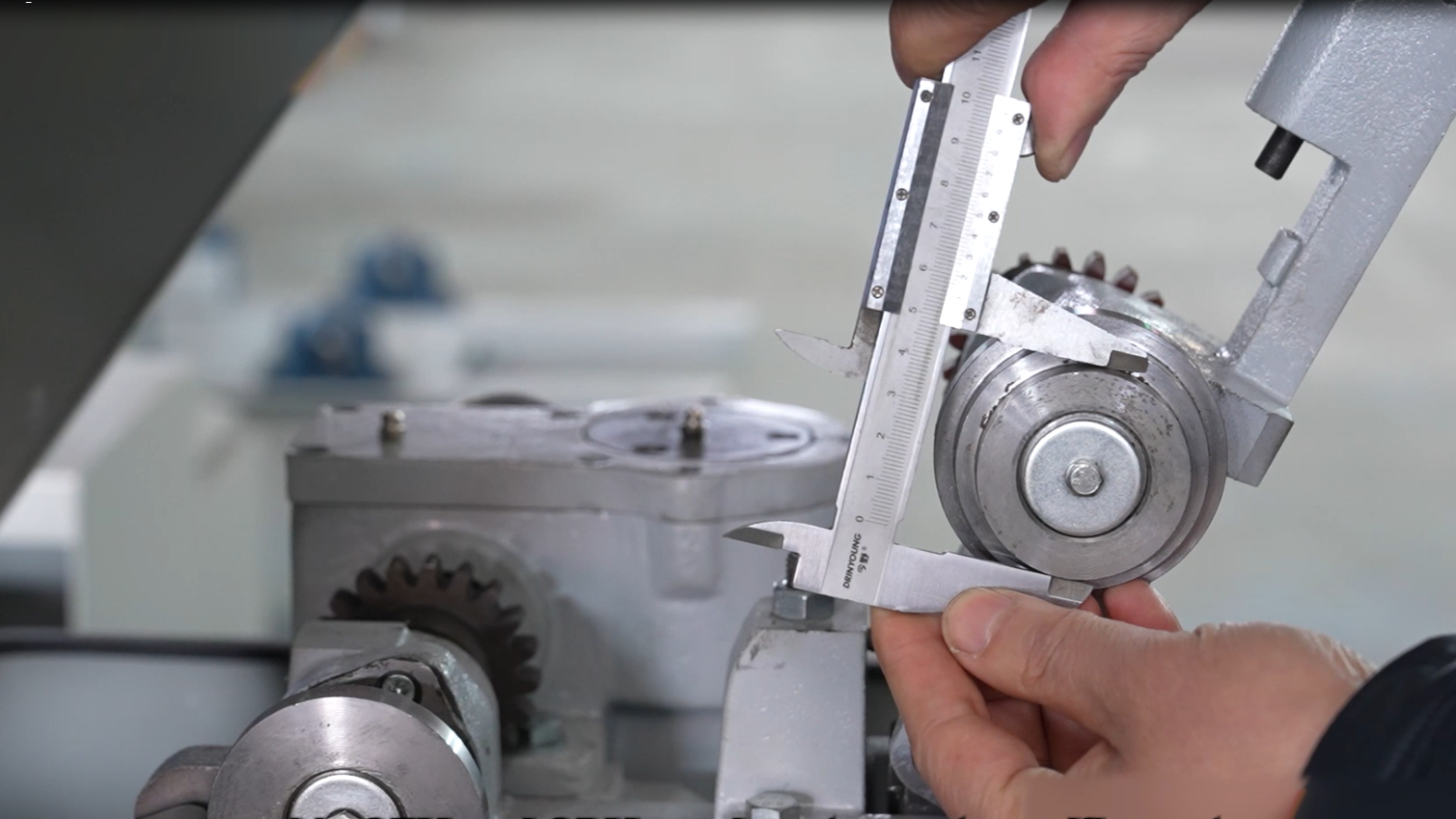
A second, quieter risk is compliance. Machinery exported to the European Union must comply with Machinery Directive 2006/42/EC and bear the CE marking, including specific risk assessments under EN ISO 12100. In the North American market, filling machinery is commonly expected to meet UL and OSHA safety standards, with emphasis on emergency shutoff and safety enclosures. Buyers comparing machines should confirm which documents actually accompany the shipment, not only which certificates appear on a brochure. KIVAS products have obtained ISO9000 and CE certification, and the company exports 60% of its output to markets including the United States, Russia, Vietnam, Kazakhstan, Saudi Arabia, Italy, the United Kingdom, Spain, South Korea, Turkey, Brazil, Pakistan, Moldova and Ukraine.
| Check | How it usually appears in a spec sheet | What to verify before ordering | Where the cost shows up |
|---|---|---|---|
| 1. Fill accuracy | Error of around 1% | Guaranteed tolerance at lightest and heaviest fill weight within the 100–2000 g range; measurement principle; recalibration interval | Fibre waste, overfilled units, customer returns |
| 2. Filling ports | 2 or 4 ports | Operator stations available; closing and packing capacity downstream; mixed-filling requirements | Work in progress, idle capacity, line imbalance |
| 3. Power | 10.5–13.5 kW | Configuration-to-power mapping; supply voltage and frequency; dedicated circuit; generator sizing | Site electrical work, energy per shift, compliance |
| 4. Filling speed | 10–20 pieces per minute | Output in kg per hour at your own pillow weight; upstream fibre opening capacity; demonstration conditions | Real throughput versus planned throughput |
| 5. Material range | Single or mixed filling, 2–5 materials | Static control for synthetic fibre; changeover and cleaning routine; blend sequence | Downtime per changeover, fibre loss, mix quality |
| 6. Risk and ownership | Not usually listed | Anti-static and noise design; maintenance interval; spare parts and service response; CE, ISO9000, UL or OSHA documentation as applicable | First-year total cost of ownership, downtime cost |
KIVAS as a Reference Configuration
KIVAS is the trading identity of Qingdao Kaiweisi Industry and Trade Co., Ltd., a home textile equipment manufacturer founded in 2014 and based at 279, Huan Tai East Road, Huangdao District, Qingdao City, China. A reference unit is useful in a comparison not because it is claimed to be better, but because its parameters are published in specific units — which gives buyers a fixed set of anchors to hold against every other quotation.
The company's product range covers fibre processing machinery, cotton, linen and wool textile machinery, fully automated quantitative pillow and quilt filling machines, pet product filling machines, weighing down jacket filling machines, packaging machines and related supporting machinery. Its published pillow and quilt filling parameters are the ones used throughout this article: weighing accuracy with an error of around 1%, 2 or 4 filling ports, power range of 10.5–13.5 kW, filling speed of 10–20 pieces per minute for a 600 g pillow, a fill range of 100–2000 g, and single or mixed filling with 2–5 raw material types.
On the manufacturing side, the company operates a 3000 m² facility with 17 employees, including an R&D team of 5 engineers, and reports an annual output of 1000 units. An independent international trade department handles installation and pre-sales and after-sales service, which matters in a comparison because filling machines are installed equipment: commissioning quality and spare-part response are part of the delivered capability. Product information is published at www.qdkivas.com.
Technical Explanation: What Quantitative Weighing Actually Changes
The mechanical difference between a quantitative filling machine and a traditional direct-fill machine is the presence of a weighing decision inside every cycle. In a volumetric or direct-fill arrangement, fibre is pushed into the shell for a set time or through a set volume, and the resulting weight varies with fibre bulk density, humidity, how the fibre was opened, and how full the hopper happens to be. In a quantitative arrangement, the dose is weighed first and the transfer is the consequence of that measurement.
The consequence in numbers is what most comparisons miss. In the published KIVAS comparison, the margin of error drops from approximately 30 g with direct filling to within 10 g with quantitative weighing, and the same comparison attributes a 40% increase in production capacity and a 50% reduction in labour to the change from volumetric dispensing to weighing at an error of around 1%. Those figures are the manufacturer's own comparison data for home textile pillows, cushions and quilts, and they should be treated as such — as a documented claim about a specific product family rather than as a general law of filling machinery.
Two supporting systems decide whether the weighing advantage survives contact with production. The first is static control: synthetic fibre accumulates charge as it moves through the hopper and transfer path, which affects both dosing consistency and how much material is left behind in the machine at the end of a shift. The anti-static bar and acrylic anti-static hopper in the KIVAS design address this directly. The second is noise: a filling line runs for a full shift, and the low-noise fan design reduces exposure at the operator position, which is relevant both to workplace regulation and to whether operators can be rotated through the station without complaint. Periodic monitoring of static and noise levels keeps both systems accountable over the life of the machine.
Applications and Use Cases
Quantitative filling is used wherever a defined mass of loose fibre has to be placed inside a closed shell at production speed. The applicable product set in home textiles and adjacent categories includes down comforters, pillows, throw pillows, sofa cushions, car seat cushions, bean bag chairs and pet beds, and the same machine family supports cushion filling, toy filling and bedding filling operations where the fill weight sits inside the 100–2000 g range.
| Product type | Typical filling consideration | Machine family in the KIVAS range |
|---|---|---|
| Pillow cores (polyester, fibre blends) | Consistent 600 g to multi-kilogram cores; tolerance at target weight | Fully automated quantitative pillow and quilt filling machine |
| Duvets and quilts | Larger fill volumes and even distribution across the shell | Fully automated quantitative pillow and quilt filling machine |
| Cushions and throw pillows | Light to medium fill weights at the lower end of the range | Pillow and quilt filling machine configuration |
| Toys, bean bags, lazy sofas | Small, round or irregular shells; fill weight accuracy affects shape | Pillow and quilt filling machine configuration |
| Pet beds | Mixed fibre fills and heavier doses | Pet product filling machine |
| Down jackets and lightweight outerwear | Very small doses, high precision requirement | Weighing down jacket filling machine |
The practical implication for a buyer is that machine selection should follow the product mix, not the other way round. A plant running polyester pillow cores and quilt shells on the same floor is choosing between configurations within one family; a plant that also fills lightweight down garments is looking at a separate machine with a different precision profile. Treating those two requirements as one purchase is one of the most expensive comparison errors in the category.
Market Trend Analysis
The filling machine category is expanding, and the spread of published estimates is itself a useful signal for buyers about how carefully market figures should be used. Market Research Future valued the global filling machines market at USD 10.06 billion in 2024, projecting it to reach USD 16.51 billion by 2035. Other research houses covering overlapping but differently scoped segments have published figures ranging from about USD 7.95 billion to about USD 13.1 billion for comparable periods, largely because liquid filling and textile filling are bundled differently in each definition. Buyers should treat any single headline market number as a directional indicator, not as a forecast they can plan capacity against.
Inside the textile segment specifically, one industry analysis covering the 2024–2025 window projected that automatic pillow filling machines would grow at a compound annual rate of roughly 5%, driven by automation in textile clusters in China and Vietnam. That projection should be read alongside its source — a third-party industry analysis with medium reliability rather than an official statistic — but the direction it describes is visible in trade data, where China's exports of textile machinery and parts reached a monthly peak of USD 574.6 million in August 2025.
Regulation is the second trend buyers should price into a purchase decision. Machinery reaching the European Union must comply with Machinery Directive 2006/42/EC and carry the CE marking, supported by risk assessments under EN ISO 12100; equipment for the North American market is commonly expected to meet UL and OSHA safety standards with an emphasis on emergency shutoff and safety enclosures. Read together, the market and compliance trends point the same way: buyers are being pushed from equipment price toward verifiable output, verifiable tolerance and verifiable documentation.
Comparison with Traditional Solutions
Traditional direct-fill machines for home textile pillows, cushions and quilts remain a legitimate option in specific production profiles, and a fair comparison should say so. The distinction that matters is between volumetric filling, where the dose is a function of time or volume, and quantitative weighing and filling, where the dose is measured.
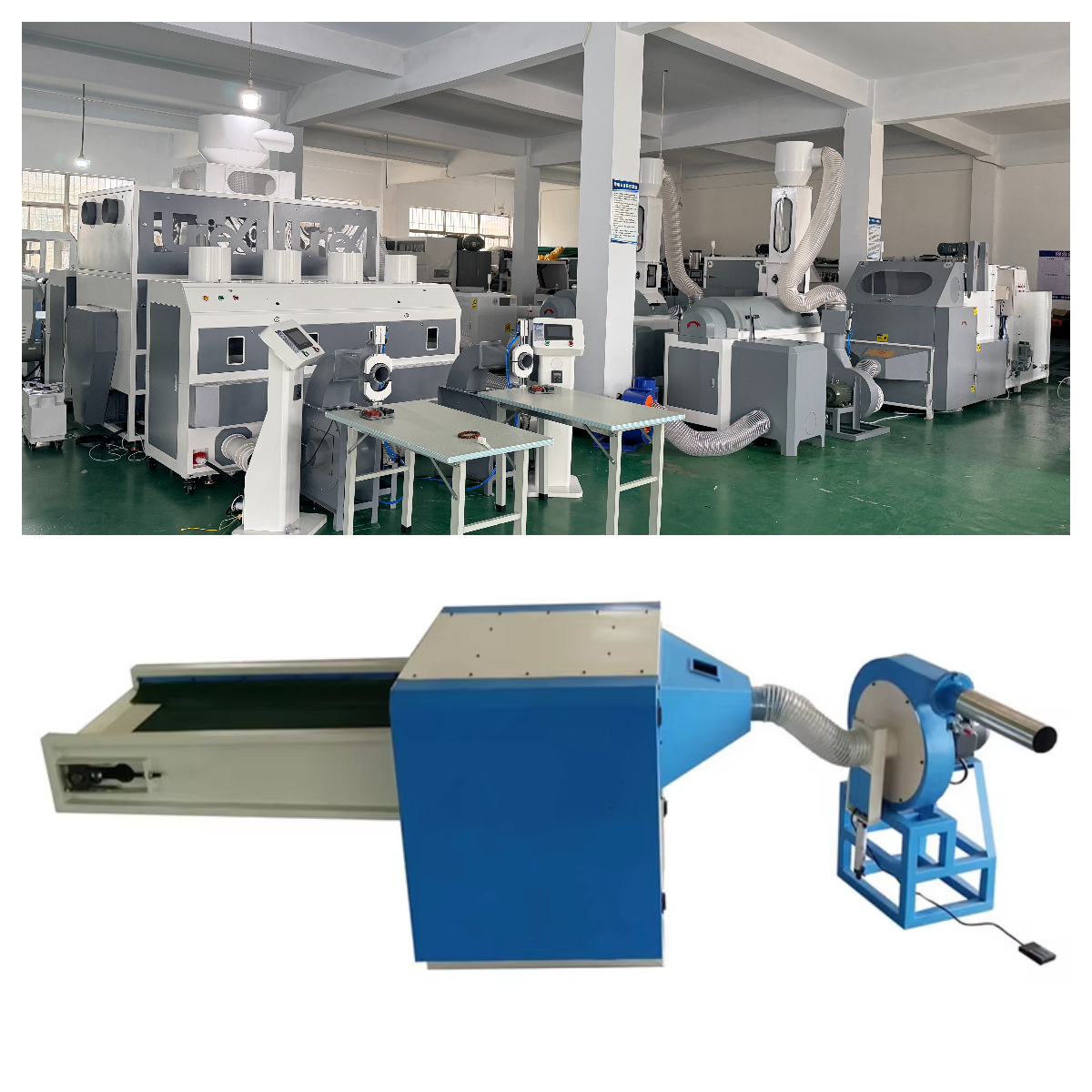
| Dimension | Traditional direct-fill (volumetric) | Quantitative weighing and filling |
|---|---|---|
| Dosing principle | Time or volume based, no weighing decision in the cycle | Dose weighed before transfer |
| Accuracy | Deviation of approximately 30 g in the published comparison | Error of around 1%; deviation within 10 g in the published comparison |
| Labour | Reference level | Reduced by 50% in the published comparison |
| Production capacity | Reference level | Higher by more than 40% in the published comparison |
| Maintenance requirement | Reference level | Reduced by about 70% in the published comparison |
| Initial cost | Lower | About 15% higher |
| Total cost of ownership | Higher over the first year | More than 40% lower over one year |
| Material flexibility | Limited; bulk density changes affect dose | Single or mixed filling with 2–5 raw material types within a 100–2000 g range |
The boundaries of the quantitative approach deserve the same attention as its advantages, because those boundaries are where unsuitable purchases are made.
- Higher upfront investment. Quantitative weighing machines carry an initial cost about 15% higher than the direct-fill equipment they replace. The payback case depends on production volume: at low volume, or in craft and made-to-order production where a few hundred pieces a month is realistic, the labour and fibre savings may take long enough to arrive that the capital is better deployed elsewhere.
- Site requirements are real. The 10.5–13.5 kW power band, the space around 2 or 4 filling ports, and the fibre handling arrangement upstream all need to exist before the machine can deliver its rated output. A plant with constrained electrical capacity may need infrastructure work that changes the cost comparison entirely.
- The accuracy advantage depends on discipline. A weighing machine that is not recalibrated, or that runs materials far outside its intended fill characteristics, will not hold the tolerance that justified the purchase. Anti-static components and noise-control systems also need periodic monitoring, which is a scheduled task rather than an optional one.
- It does not fix downstream quality. Quantitative filling controls the weight inside the shell. Seam strength, shell handling and final inspection remain separate processes, and a precise filling stage in front of a weak closing stage simply produces precisely filled rejects.
Future Outlook
Two forces are likely to shape pillow filling machine procurement over the next several years. The first is the continuing replacement of volumetric filling in textile clusters, where labour availability and consistency requirements both push toward weighing technology; the second is the growing weight of documentation in export sales, where CE marking under Machinery Directive 2006/42/EC, risk assessment under EN ISO 12100, and UL or OSHA expectations in North America determine which machines can be shipped to which markets at all.
For buyers, the practical consequence is that comparison criteria will shift from headline specifications toward verifiable operating data: tolerance stated at the buyer's own fill weight, output stated in kilograms per hour, power stated per configuration, material range stated with a changeover time, and risk controls stated with a maintenance interval. Suppliers who publish those numbers in usable units will be easier to compare, and easier to hold to their claims after installation. Suppliers who publish only single figures without reference conditions will increasingly be asked to explain the gap.
Frequently Asked Questions
What is the difference between quantitative weighing and volumetric filling in a pillow filling machine?
Quantitative weighing measures the fibre dose before it is transferred into the shell, while volumetric or direct filling dispenses fibre for a set time or through a set volume without weighing it. In the published KIVAS comparison of the two approaches for home textile pillows, cushions and quilts, the margin of error drops from approximately 30 g with direct filling to within 10 g with quantitative weighing at an error of around 1%.
How many filling ports does a pillow filling machine need?
Port count should be matched to the filling operators and the closing capacity available behind the machine rather than chosen as a maximum. KIVAS pillow filling machines are offered with 2 or 4 filling ports. A 4-port machine paired with a single closing station accumulates work in progress, while a 2-port machine can become the bottleneck if the downstream line could close more output than the filling stage delivers.
What power supply does a pillow filling machine require?
The KIVAS filling machine range is specified with a power range of 10.5–13.5 kW, and the figure within that band depends on the configuration — port count, blower and fan capacity, the weighing system, and the anti-static equipment fitted for synthetic fibre. Because the number reflects configuration rather than efficiency, buyers should request the configuration-to-power mapping, the required supply voltage and frequency, and whether a dedicated circuit is needed before comparing power figures between machines.
How is filling speed measured on a pillow filling machine?
Filling speed is only meaningful together with a reference fill weight. The KIVAS pillow filling machine is rated at 10–20 pieces per minute for a 600 g pillow. Converted arithmetically, that is about 12 kg of fibre per minute at the top of the band, or roughly 720 kg per hour, and about 360 kg per hour at the lower end. For a different pillow weight, the piece-per-minute figure cannot be assumed to hold unchanged, so output should be requested in kilograms per hour at the buyer's own product weight.
Can one filling machine handle different filling materials and mixed fills?
The KIVAS machine fills a range of 100–2000 g and supports single or mixed filling with 2 to 5 raw material types. Material changes require a documented changeover routine including purging, cleaning and, where blends are used, a defined mix sequence. Synthetic fibre also generates static electricity that affects dosing consistency, which is why the equipment uses an anti-static bar and an acrylic anti-static hopper, supported by periodic monitoring of static and noise levels.
What maintenance and lifetime costs should be expected from a pillow filling machine?
In the published KIVAS comparison with traditional direct-fill machines, maintenance requirement falls by about 70%, labour by 50%, and total cost of ownership by more than 40% over one year, against an initial cost about 15% higher. Electrostatic and noise risks are managed through design — anti-static bar, acrylic anti-static hopper and low-noise fan — and through periodic maintenance and monitoring of those variables. Buyers should also confirm which compliance documents accompany the machine, such as CE marking under Machinery Directive 2006/42/EC, ISO9000 or CE certification, or UL and OSHA documentation for North American installations, as applicable.
Reference
For readers who want the underlying specification sheet behind the parameters discussed here, the manufacturer's product catalogue is publicly available for download: QINGDAO KAIWEISI Product Catalog (PDF).