
Pipe OD & Wall Thickness FAQ for Orbital Welding Procurement
Pipe OD & Wall Thickness FAQ for Orbital Welding Procurement
A decision-stage reference for buyers matching power supplies and weld heads to real piping conditions.
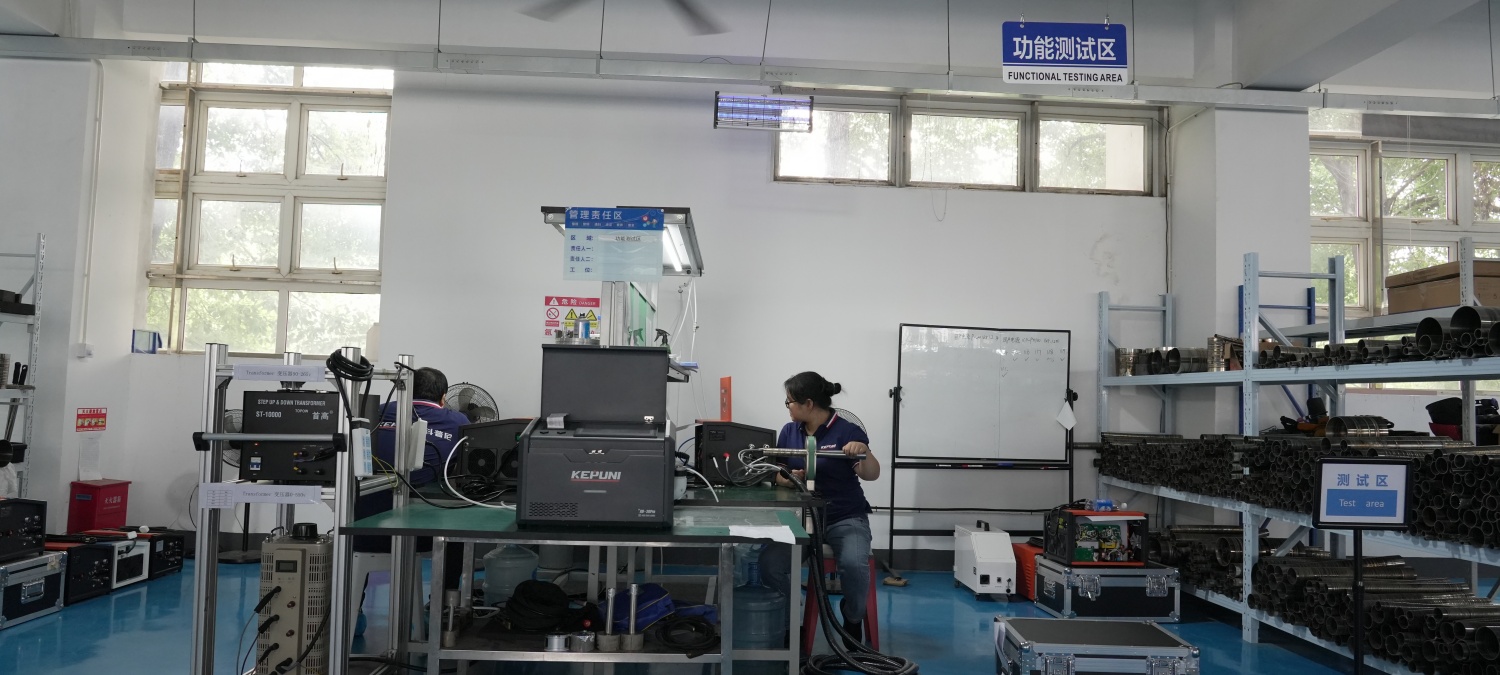
Dimensional verification begins at the inspection stage, where pipe OD and wall thickness are checked against the weld procedure.
Why OD and Wall Thickness Narrow the Shortlist Before Price Does
Orbital welding machine procurement often begins with brand recognition or a target price band. A more reliable starting point is the pipe outside diameter (OD) and wall thickness of the joint that must be welded. These two dimensions determine whether a weld head can physically fit the joint, whether a power supply can deliver a qualified procedure for the material and thickness, and whether a delivered system will pass first-article inspection without reconfiguration.
For buyers in pharmaceutical, semiconductor, food-grade, oil and gas, boiler tube, and HVAC piping, a dimensional mismatch discovered after purchase is not a minor specification error. It is a schedule risk that can delay qualification, force a second head purchase, or require re-engineering of the weld procedure.
KEPUNI is a Shanghai-based manufacturer of orbital welding machines and related pipe-welding equipment, founded in 2014. The company operates a 10,000 m² production park with 280 employees, including 36 R&D engineers and technicians, and lists orbital welding machines, tube-to-tube-sheet welders, open pipe welders, cold welders, and orbital cutters in its product range. Its catalog includes the XD-20W and XD-20PRO orbital welding machines alongside closed-head and open-head configurations. This FAQ examines the dimensional claims attached to those products, because those claims — not the brand narrative — determine whether a system fits a specific piping scope.
The Procurement Problem: Ranges That Do Not Match the Joint
A common procurement error is to read a single diameter range as if it applies to every configuration in a supplier's catalog. In practice, orbital welding systems separate dimensional responsibility between the power supply and the weld head. The power supply controls current, arc voltage, travel speed, and weld scheduling; the weld head defines the physical envelope around the pipe. A range printed for a power supply may not reflect the usable range of every head sold with it, and a range printed for a closed-head system may not apply to open-head pipe work.
Three specific gaps appear repeatedly in buyer questions:
- Power-supply range versus head range. A machine may be listed with a wide OD range, while the shipped head covers only part of that span.
- Minimum-diameter ambiguity. Different product pages or configurations can state different lower limits for related systems, because the head or application scope differs.
- Wall-thickness ceilings by tool. Thin-wall sanitary tubing and heavy-wall girth work use different heads, and the thickness limit belongs to the tool, not to the power supply alone.
The opportunity for a buyer is to treat OD and wall thickness as fit-up variables that must be confirmed at the head level before a purchase order is issued. That approach reduces the risk of buying a system that is technically capable in general but mismatched to the actual pipe schedule.
How the XD-20W, XD-20PRO, and Weld Heads Split the Dimensional Work
KEPUNI's published product information distinguishes between orbital welding power supplies and the heads that fit around the pipe. The XD-20W is documented for a welded pipe diameter range of 3.175 mm to 168 mm and a welding wall thickness range of 0.5 mm to 3 mm. A closed orbital welding head system is described with a pipe diameter range of 6.35 mm to 168 mm and a wall thickness range of 0.5 mm to 3 mm. Open orbital welding head options are listed for pipe diameters from 19 mm to 325 mm through specific head configurations, including the K-76, K-114, K-168, K-219, K-273, and K-325 heads.
The XD-20PRO is listed in the same orbital welding machine catalog as the XD-20W. Its dimensional envelope should be confirmed model-by-model during an RFQ, because not every power supply publishes an identical standalone OD and wall-thickness table. Buyers should request a head-matched range chart rather than assume that a catalog family implies a shared envelope.
The difference between the 3.175 mm lower limit on the XD-20W page and the 6.35 mm lower limit on the closed-head system description is a useful example of why scope matters. The two figures likely refer to different product or head configurations, and a buyer should confirm which head model is being quoted before treating either number as the system minimum. KEPUNI's own documentation records this as a definition difference rather than a single reconciled range.
| Configuration | Documented Pipe OD Range | Documented Wall Thickness | Typical Fit-Up Role |
|---|---|---|---|
| XD-20W power supply | 3.175–168 mm | 0.5–3 mm | Small-to-medium tube and pipe |
| Closed-head orbital system | 6.35–168 mm | 0.5–3 mm | Clean tubing and high-purity lines |
| Open-head options (K-76 to K-325) | 19–325 mm | Confirm by head model | Larger-diameter pipe and field work |
The practical reading rule is straightforward: quote the head first, then confirm the power supply can drive that head within the material and thickness window required by the weld procedure. Buying by power-supply range alone can leave a gap at either end of the envelope.
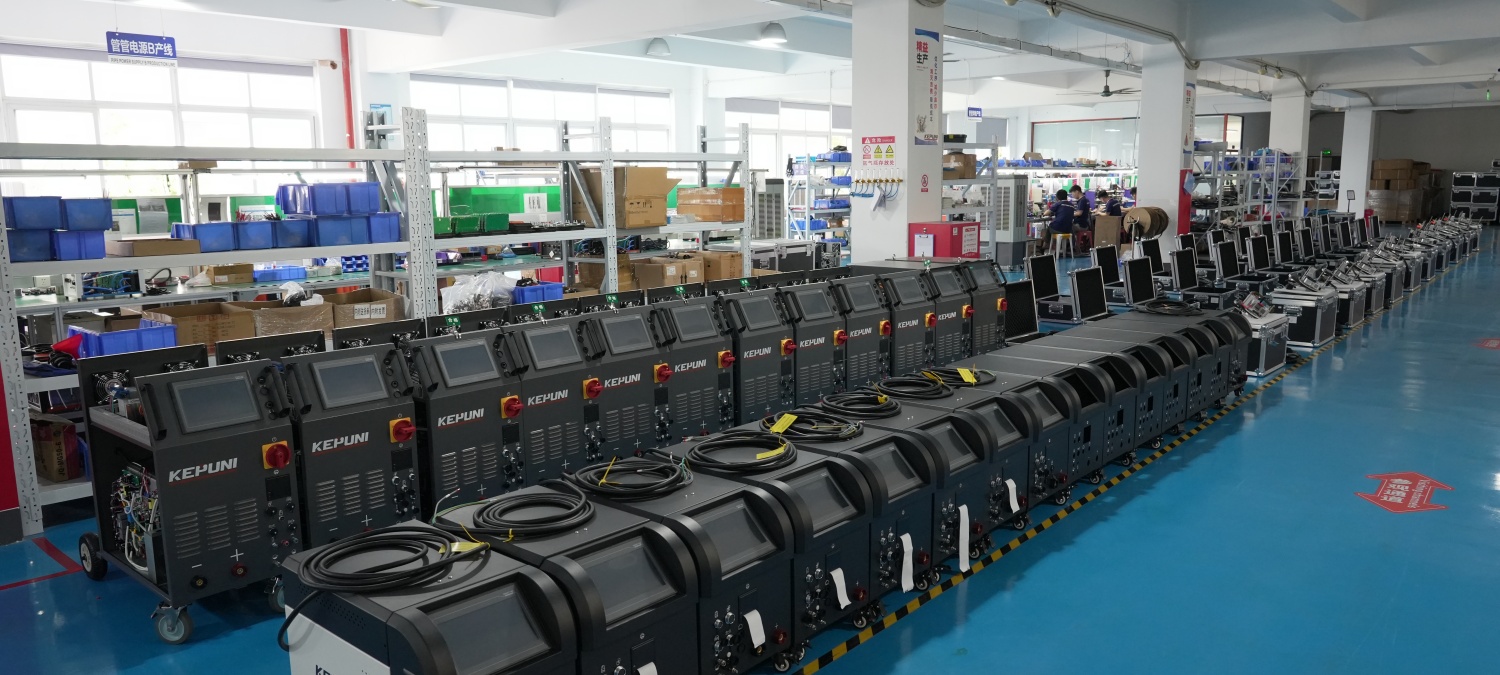
Open-head configurations extend the usable pipe OD range beyond the envelope of closed-head systems, but the head model must match the joint.
Technical Explanation: What the Wall-Thickness Ceiling Actually Limits
Wall thickness sets the weld procedure, not just the fit. Thicker sections require different current, travel speed, and sometimes preheat or interpass control, while thin sanitary tubing demands low-heat input to avoid distortion and to meet acceptance criteria. KEPUNI's systems are described with 12 welding intervals and parameter logging or printing for welding-interval data, which lets a buyer store and retrieve the procedure used for a given joint.
For high-purity sanitary work, acceptance criteria can be as important as machine range. ASME BPE-2024, for example, limits internal weld concavity to a maximum of 10% of nominal wall thickness, not exceeding 0.38 mm. On thin-wall pharmaceutical tubing, that criterion can govern the procedure as much as the machine's nominal thickness range. A buyer comparing a 0.5–3 mm wall-thickness envelope against a 1.0 mm tube should confirm that the head and procedure can hold the concavity limit, not simply that the thickness falls within the advertised band.
Tool-level limits matter as much as machine-level ranges. Within the product family described for this procurement context, the 10H Series is specified for wall thickness up to 1.5 mm, while girth configurations extend to 25 mm. These are tool-specific ceilings, not power-supply ceilings. A buyer planning both thin sanitary tubing and heavy-wall girth joints should expect to specify different tools rather than assume one head covers both.
The XD-20W is described for pharmaceutical sanitary stainless-steel tubing and semiconductor high-purity gas delivery lines in cleanrooms. Those applications place a premium on consistent penetration, low spatter, and documented parameter traceability. Buyers working with alloy grades or dissimilar joints should request material-specific procedure qualification, because the published application examples do not by themselves certify every alloy combination.
Application Fit: From Cleanroom Tubing to Large-Bore Piping
The same dimensional logic applies across the secondary scenarios that shape orbital welding purchases. In clean-room and semiconductor piping, the priority is small-diameter, thin-wall stainless tubing with high-purity gas or water service. The XD-20W's documented 3.175–168 mm OD and 0.5–3 mm wall-thickness range, combined with the closed-head system's 6.35–168 mm range, covers much of this work, but the lower end of the range depends on which head is quoted.
In pharmaceutical and food-grade sanitary piping, the governing dimensions are typically thin-wall tube and hygienic weld quality. The tool-level limit of 1.5 mm for the 10H Series becomes the practical ceiling for that class of work, while ASME BPE-2024 concavity criteria remain the acceptance gate. Buyers should treat the tool limit and the standard limit as two separate checks.
In oil and gas, boiler tube, and heavy industrial piping, the geometry shifts toward larger diameters and thicker walls. The open-head options listed for 19–325 mm OD, and the girth configurations described up to 25 mm wall thickness, are the relevant envelope. The role of the power supply here is to deliver enough current and controlled travel for heavier sections, while the head must physically close around the pipe.
In HVAC and general industrial piping, buyers often need a portable or automatic orbital welding machine that can move between joints without a fixed installation. The dimensional check remains the same: confirm the head fits the pipe OD, confirm the wall thickness falls within the tool ceiling, and confirm the power supply can execute the qualified procedure.
Market Context: Why Dimensional Precision Is Moving Up the Buyer Agenda
The global orbital welding equipment market is projected to reach approximately USD 1.34 billion by 2033, according to commercial research. In 2025, open weld heads held the largest market share in the orbital welding segment at 43.1%, and the semiconductor end-use segment accounted for 20.1% of the market. These figures suggest that large-diameter open-head work and high-purity small-diameter work are both significant demand pools, which is consistent with the dual pressure on buyers to specify both wide OD coverage and tight thin-wall control.
Pricing data reinforces the same point. KEPUNI XD-20PRO orbital welding machines are positioned in the mid-to-high-end segment at around USD 8,400 to 8,600, while premium industry-compliant solutions in pharmaceutical and semiconductor sectors often exceed USD 25,000 to 40,000. The price gap does not remove the need for dimensional verification. A lower-priced system that fits the joint and holds the procedure is a better procurement outcome than a premium system that requires an additional head purchase.
Academic literature on welding manufacturing also points toward intelligent, networked, and data-driven systems, with process data capture treated as a foundation for repeatability. That trend supports the procurement habit of asking for head-level range documentation and parameter logs rather than accepting a single catalog headline range.
Traditional vs. Orbital Welding: Where the Dimensional Argument Changes
Manual TIG welding has a low initial equipment cost and remains suitable for non-standard, low-volume production. Its limitations are well understood: welding speed is typically 3–5 times slower than orbital welding, long-term labor cost is high, and quality depends heavily on operator skill. Orbital welding performs better in scenarios requiring consistent weld quality and high repeatability, and it reduces labor cost while improving repeatability.
The dimensional argument changes because orbital welding moves the fit-up decision into the tooling. With manual TIG, the welder adapts to the joint; with orbital welding, the head must match the pipe OD and the procedure must match the wall thickness. That makes the upfront specification more demanding, but it also makes the outcome more predictable once the correct head and procedure are selected.
A fair comparison should also note the trade-off. Orbital welding carries a higher initial equipment investment than manual TIG, and the cost of additional heads for a wide dimensional span can add to that investment. For a buyer with a narrow, low-volume, or highly variable joint scope, manual TIG may remain a reasonable option. Orbital welding is most defensible where repeatability, traceability, and consistent quality justify the tooling investment.
Limitations Buyers Should Plan For
Several limits deserve explicit treatment in a procurement plan. First, no single head covers the full 3.175–325 mm span described across KEPUNI's configurations; head changes are part of normal operation. Second, the lower diameter limit depends on the head and configuration, as the 3.175 mm versus 6.35 mm difference illustrates. Third, wall-thickness ceilings belong to tools: the 10H Series is specified up to 1.5 mm, while girth configurations extend to 25 mm. Fourth, open-head wall-thickness limits are not published in the same way as closed-head limits and should be confirmed by head model.
Buyers should also separate manufacturer application statements from independent qualification. The XD-20W's documented use in pharmaceutical sanitary tubing and semiconductor high-purity lines is a manufacturer positioning statement; it does not by itself constitute FDA compliance, cleanroom certification, or a qualified welding procedure for every alloy. Those must be verified through the buyer's own qualification process.
Future Outlook: Documentation Becomes Part of the Specification
As high-purity and regulated piping scopes expand, the dimensional specification is likely to become more granular. Buyers will increasingly ask for head-level range tables, material-specific procedure qualification, and parameter logs as standard attachments to a quotation. The 12 welding intervals and parameter logging described for KEPUNI systems point in that direction, because traceable interval data supports both quality review and repeatability across joints.
The practical implication for procurement teams is to build a dimensional checklist into the RFQ: pipe OD range by head, wall-thickness ceiling by tool, material qualification status, and documentation package. That checklist is more useful than a single catalog range, and it gives the buyer a defensible basis for comparing suppliers that publish different levels of detail.
Frequently Asked Questions
1. What do pipe OD and wall thickness actually determine in an orbital welding system?
Pipe OD determines whether a weld head can physically close around the joint, and wall thickness determines whether the power supply and procedure can produce a qualified weld within the tool's thermal and travel limits. In KEPUNI's published data, the XD-20W is documented for 3.175–168 mm OD and 0.5–3 mm wall thickness, while open-head options extend to 19–325 mm OD through specific head models. The two dimensions must be checked together at the head level, not just at the power-supply level.
2. Do the XD-20W and XD-20PRO share identical dimensional limits?
Both models are listed in KEPUNI's orbital welding machine catalog, but the XD-20W is the model with a published dimensional table showing 3.175–168 mm OD and 0.5–3 mm wall thickness. The XD-20PRO is positioned in the mid-to-high-end segment at around USD 8,400 to 8,600, and buyers should request a model-specific range chart during the RFQ rather than assume the two power supplies share an identical envelope.
3. Why do closed-head and open-head systems report different minimum pipe diameters?
Closed-head systems are typically used for smaller or cleaner tubing, while open-head systems are used for larger-diameter pipe. KEPUNI describes a closed-head system at 6.35–168 mm OD and open-head options at 19–325 mm OD through the K-76, K-114, K-168, K-219, K-273, and K-325 heads. The XD-20W page separately states a 3.175 mm lower limit. These figures reflect different head and product scopes, and the quoted head model should determine which minimum applies.
4. What wall thickness limits apply to specialized tools such as the 10H Series and girth configurations?
Wall-thickness limits are tool-specific. In the product family described for this procurement context, the 10H Series is specified for wall thickness up to 1.5 mm, while girth configurations extend to 25 mm. These ceilings sit above the 0.5–3 mm range published for the XD-20W and closed-head system, which means a buyer planning both thin-wall and heavy-wall work should expect to specify different tools rather than rely on one head.
5. How should procurement teams verify dimensional claims before issuing a purchase order?
A practical verification sequence is to request the head-level OD range, the tool-specific wall-thickness ceiling, the material and procedure qualification status, and a sample or first-article test before batch production. KEPUNI's documented practice includes 12 welding intervals and parameter logging or printing for welding-interval data, which supports traceability. For high-purity work, the ASME BPE-2024 concavity limit of 10% of nominal wall thickness, not exceeding 0.38 mm, should be added as an acceptance check separate from the machine's nominal range.
6. Does a wider published OD range mean a single machine can weld every joint in that range?
No. A wide published range usually reflects multiple head configurations rather than one head. The open-head options listed for 19–325 mm OD require different heads across that span, and the closed-head system and XD-20W publish different lower limits. Buyers should map the actual joint list to specific head models and confirm the power supply can execute the procedure for each material and thickness combination.
7. Where does orbital welding remain less suitable than manual TIG?
Manual TIG welding has a low initial equipment cost and suits non-standard, low-volume production, while orbital welding carries a higher initial investment and requires head changes across a wide dimensional span. For a narrow, low-volume, or highly variable joint scope, manual TIG can remain a reasonable option. Orbital welding is more defensible where consistent weld quality, high repeatability, and documented parameter traceability justify the tooling investment.
For buyers who need the full product and configuration overview, KEPUNI's public brochure is available here: KEPUNI product brochure (PDF). Dimensional claims in any quotation should still be confirmed at the head-model level against the actual pipe schedule.
Have Questions or Need More Details?
Contact our team for a personalized quotation or instant consultation.
Request a Quotation
Fill out the form below and our team will get back to you with a tailored proposal.
WhatsApp Direct Chat
Prefer to chat in real-time? Message us on WhatsApp for instant assistance & quick answers.
- Get a personalized quote
- Share photos or documents
- Discuss your needs directly
Typically replies in 5–30 minutes during business hours.