
Planning 50/25 EE for Softgel Formulations
Planning 50/25 EE for Softgel Formulations
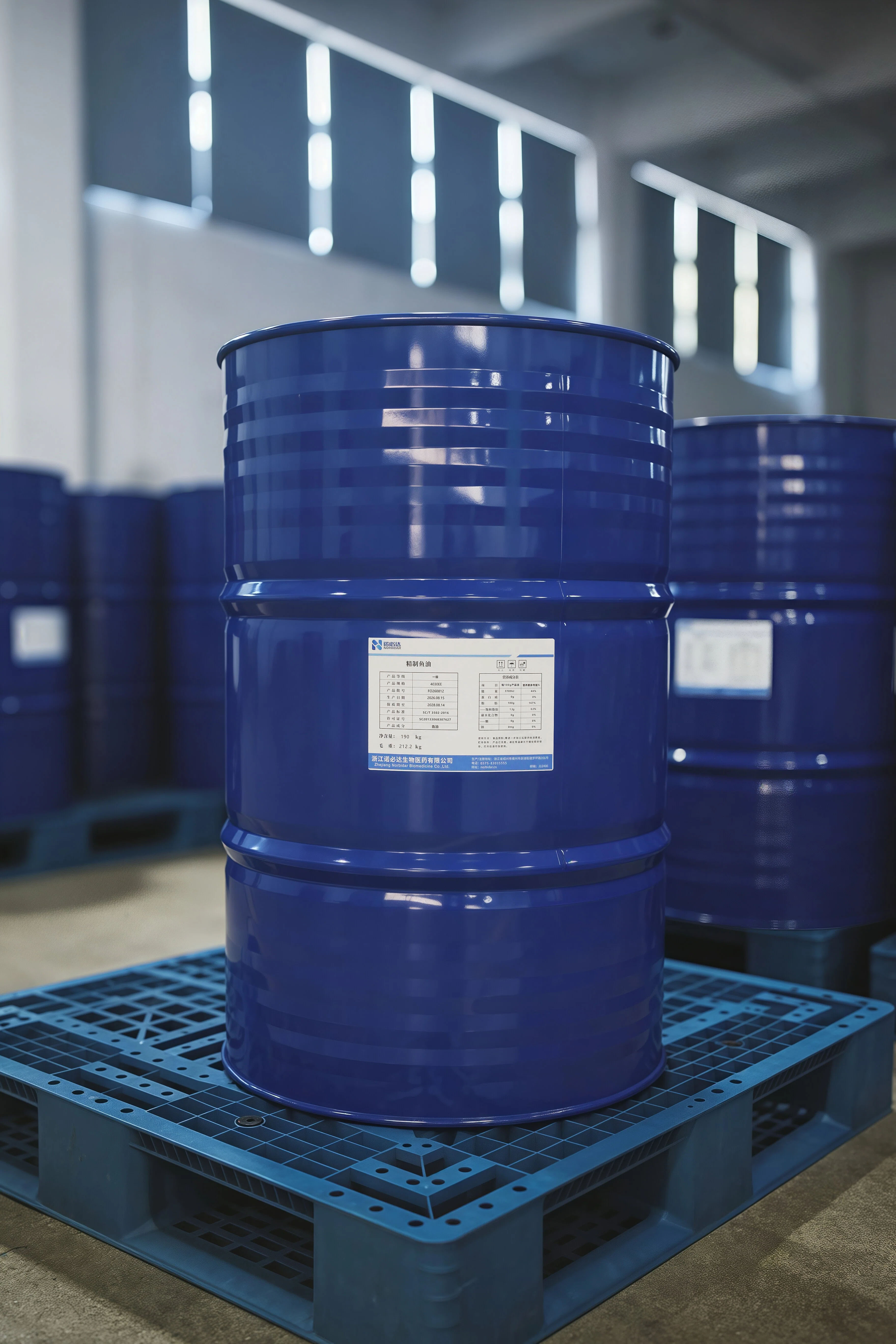
When a supplement formulation brief calls for more combined EPA and DHA than a nominal 36/24 profile, Norbidar 5025 EE is one grade to evaluate. It is a food-grade omega-3 fish oil concentrate in ethyl ester (EE) form, with nominal EPA of 50% and nominal DHA of 25%. Its combined nominal EPA and DHA content is 75%. Those profile values make it distinct from 3624 EE, whose nominal profile is 36% EPA and 24% DHA, or 60% combined.
The grade name is a starting point for application assessment, not a finished-product specification. Formulators should check the current product specification and the batch-specific certificate of analysis (COA), confirm that the EE form and target EPA/DHA amounts fit the brief, and review handling, storage, packaging compatibility, destination requirements, and shelf-life documentation. Norbidar 5025 EE is considered here as a bulk ingredient for dietary supplement formulation—not as a ready-made softgel, capsule, or other finished dosage form.
What the 50/25 profile means for a formulation brief
Norbidar 5025 EE identifies a blended ethyl ester concentrate with nominal EPA at 50% and nominal DHA at 25%. The figures describe the grade’s nominal profile; they are not, by themselves, contractual limits for a supplied batch. Contractual limits and the analytical basis must be taken from the applicable current specification and batch COA.
For an early-stage formulation comparison, the profile helps distinguish the ingredient’s intended EPA-to-DHA balance from grades with other nominal ratios. A brief that specifies both EPA and DHA should be checked against both values, rather than judged only by a combined percentage. Two concentrates can have the same combined nominal EPA+DHA value while providing different EPA and DHA proportions. The intended amounts in the finished formulation therefore remain central to grade selection.
The nominal comparison with 3624 EE is straightforward: 3624 EE is 36% EPA and 24% DHA, or 60% combined nominal content; 5025 EE is 50% EPA and 25% DHA, or 75% combined nominal content. This comparison describes the listed grade profiles only. It does not establish a finished-product dose, a capsule size, a softgel fill weight, or a performance outcome. Those depend on the buyer’s formulation and validated downstream process.
Norbidar’s other listed blended EE grades illustrate why the individual ratio matters: 5020 EE has a nominal 50% EPA and 20% DHA profile, while 5030 EE has nominal 50% EPA and 30% DHA. These are profile distinctions, not automatic recommendations. A formulation team should match its required EPA and DHA amounts to the relevant grade information and then verify the current documentation for the batch under consideration.
Where 5025 EE fits in softgel and capsule development
For a softgel or capsule project, the ingredient decision begins with the formulation brief. The product information identifies food-grade EPA/DHA blended ethyl ester concentrates for bulk use in dietary supplement and nutraceutical formulations, subject to formulation suitability. The concentrate supplies defined nominal EPA and DHA content in EE form; downstream processing takes place under the buyer’s validated process parameters.
This makes 5025 EE relevant to evaluation when a brief calls for its particular nominal profile. It does not establish that every softgel or capsule system can use the ingredient without further assessment. Before commercial use, the buyer should confirm that the EE form is suitable for the intended formulation and that the target EPA/DHA dose is consistent with the project’s requirements. The product’s use as a bulk ingredient also means that dosage-form development and process validation remain downstream responsibilities.
The distinction is important for procurement and technical review. A bulk concentrate’s grade description is not a finished capsule label claim, a guaranteed amount in each dosage unit, or evidence that a particular formulation has been validated. The specification and COA support review of the supplied ingredient; the buyer’s own formulation work determines how that ingredient is used in a finished product.
Specification and batch COA: the first verification step
Grade selection should be checked against the current specification and the batch COA. The specification defines the applicable product requirements, while the COA provides batch-level analytical information for review. Because nominal grade values are not contractual limits, formulators should avoid treating the “50/25” code alone as proof that a batch meets a particular contract or project threshold.
During evaluation, compare the specification and COA with the project’s required EPA and DHA values and the agreed analytical basis. Check that the documents refer to the grade and batch being considered, and identify any requirements that must be resolved before the ingredient is accepted for the next stage. If the project also specifies oxidation or contaminant parameters, those requirements need to be reviewed against the relevant product documentation; no particular limits should be assumed from the grade name.
Content expression also deserves attention when ingredient specifications are compared with a formulation brief. The supplied industry evidence includes a GOED advisory on expressing EPA, DHA, and total omega-3 content in EPA/DHA-containing oils. It is industry guidance, not a government regulation. Its relevance here is to clear communication and review of content figures; it does not replace the current product specification, batch COA, or destination-market review.
Storage, handling, and packaging checks
The application information specifies cool, dry, light-protected, oxygen-limited storage and handling, following the product specification and safety data sheet (SDS). These conditions should be incorporated into the ingredient’s handling plan from receipt through use. The specification and SDS—not a generic assumption about all omega-3 ingredients—are the controlling documents for the relevant product.
Before selecting a storage or handling arrangement, review the current specification and SDS for the applicable instructions and confirm that the proposed packaging and handling conditions are compatible. The application requirements also call for packaging compatibility to be checked before commercial use. If a project’s storage environment, handling sequence, or packaging differs from the documented conditions, the fit should be resolved with reference to the applicable product documents rather than inferred from the nominal EPA/DHA profile.
Shelf life is another required part of the evaluation, but the supplied grade information does not state a shelf-life duration. Buyers should confirm the applicable shelf life and any related storage conditions from current product documentation for the material being evaluated. Do not assign a duration based only on the 5025 EE grade name, a general category assumption, or the date of a separate sample evaluation.
A practical evaluation sequence
A staged review helps keep ingredient identity, formulation fit, and supply documentation distinct. It also makes clear what has—and has not—been established before a commercial decision.
- Define the brief. Record the required EPA and DHA amounts, the desired EE form, the intended use as a bulk ingredient, and the destination-market requirements relevant to the project.
- Screen the nominal profile. Compare the 5025 EE nominal 50% EPA / 25% DHA profile with the brief. Use the 36/24 profile as a reference only where that is the actual comparison the project needs.
- Review batch documents. Check the current specification and batch COA, including contractual limits and analytical basis. Resolve any difference between the project requirement and the supplied documentation before treating the grade as a fit.
- Review handling and storage. Apply the product specification and SDS instructions for cool, dry, light-protected, oxygen-limited conditions. Confirm packaging compatibility for the planned handling and storage arrangement.
- Confirm shelf life. Obtain the applicable shelf-life information and associated conditions from current product documentation; the nominal grade profile does not provide this information.
- Evaluate formulation suitability. Assess EE-form suitability and the target EPA/DHA dose within the buyer’s formulation and validated downstream process before commercial use.
- Check destination requirements. Confirm relevant requirements for the intended dietary supplement or functional food market. General application relevance does not mean approval in every country.
This sequence separates a profile-based screen from acceptance of a specific batch and from validation of a finished formulation. Each step answers a different question: whether the nominal profile is relevant, whether the supplied batch meets agreed requirements, and whether the ingredient can be used in the buyer’s intended process and market.
What the evidence establishes—and what it does not
The available product information supports identifying Norbidar 5025 EE as a food-grade blended EE concentrate with nominal 50% EPA and 25% DHA, and supports its evaluation as a bulk ingredient for dietary supplement formulation. It also establishes that grade selection should follow the current specification and batch COA, and that the ingredient’s application depends on formulation suitability and downstream processing under the buyer’s validated parameters.
That evidence does not identify a finished softgel or capsule made with this ingredient, provide a validated dosage-form formula, or report customer acceptance or end-use performance for a 5025 EE softgel or capsule. Nor does it provide a shelf-life duration or batch-specific analytical results in this article. Those points must be confirmed from the relevant product documents and the buyer’s own formulation evaluation. Keeping these boundaries explicit prevents an ingredient profile from being mistaken for evidence about a finished product.
The application scenario is generally relevant to dietary supplement and nutraceutical ingredient formulation, but that does not establish approval in every country. Before commercial use, the buyer should confirm the intended dose, EE-form suitability, oxidation and contaminant requirements, packaging compatibility, and destination-market requirements for the specific project.
Decision summary for formulators
Norbidar 5025 EE is a candidate for evaluation when the formulation brief calls for a food-grade EE concentrate with a nominal 50% EPA and 25% DHA profile, and a higher combined nominal EPA+DHA content than 3624 EE’s 36% EPA and 24% DHA profile. The 75% combined figure is nominal, not a contractual batch guarantee. Current specification and batch COA review are essential to confirm the applicable limits and analytical basis.
For softgel and capsule development, treat the concentrate as a bulk formulation ingredient, not as a finished dosage form. Confirm the required EPA/DHA dose and EE-form suitability; follow the specification and SDS for cool, dry, light-protected, oxygen-limited storage and handling; check packaging compatibility; and verify shelf life from current documentation. Final application fit depends on the buyer’s formulation, validated downstream process, and destination-market requirements.
FAQ
What does Norbidar 5025 EE mean?
It identifies a food-grade blended ethyl ester concentrate with nominal 50% EPA and 25% DHA. The combined nominal EPA+DHA content is 75%. The current specification and batch COA determine applicable contractual limits and analytical basis.
How does 5025 EE differ from a 36/24 grade?
5025 EE has a nominal profile of 50% EPA and 25% DHA, while 3624 EE has nominal 36% EPA and 24% DHA. Their combined nominal contents are 75% and 60%, respectively. These figures compare grade profiles; they do not establish finished-product performance or batch acceptance.
What should be checked before using 5025 EE in a softgel or capsule formulation?
Review the current specification and batch COA, confirm the target EPA/DHA dose and EE-form suitability, and evaluate the ingredient in the buyer’s formulation and validated downstream process. Also check applicable storage and handling instructions, packaging compatibility, shelf-life documentation, and destination-market requirements before commercial use.
What storage conditions are specified for the application?
The application information calls for cool, dry, light-protected, oxygen-limited storage and handling, in accordance with the product specification and SDS. The applicable documents should be reviewed for the material being evaluated.
Does the 5025 EE grade name state the ingredient’s shelf life?
No shelf-life duration is provided by the grade name or the available grade profile. Confirm the applicable shelf life and associated conditions from current product documentation for the material under review.
Have Questions or Need More Details?
Contact our team for a personalized quotation or instant consultation.
Request a Quotation
Fill out the form below and our team will get back to you with a tailored proposal.
WhatsApp Direct Chat
Prefer to chat in real-time? Message us on WhatsApp for instant assistance & quick answers.
- Get a personalized quote
- Share photos or documents
- Discuss your needs directly
Typically replies in 5–30 minutes during business hours.