
Planning Bollards into Commercial Hardscape Projects
Planning Bollards into Commercial Hardscape Projects
Bollards are part of both the vehicle-access plan and the visible layout of a commercial site. For construction and decoration teams, selecting them means coordinating the intended access behavior with entrance geometry, paving and foundations, appearance, control equipment, and installation responsibilities. The right choice depends on the project scenario: a frequently used entrance with controlled vehicle movements has different operating needs from a driveway where a person raises and lowers a barrier manually.
RICJ, the product and manufacturer identity associated with Chengdu Ruisijie Intelligent Technology Co., Ltd., supplies automatic and semi-automatic bollards alongside fixed, removable, and other vehicle-access products. Its project information describes OEM/ODM customization, site-planning assistance, installation guidance, and remote technical support. These details can inform early coordination, but they do not replace project-specific engineering, threat assessment, or verification of local requirements.
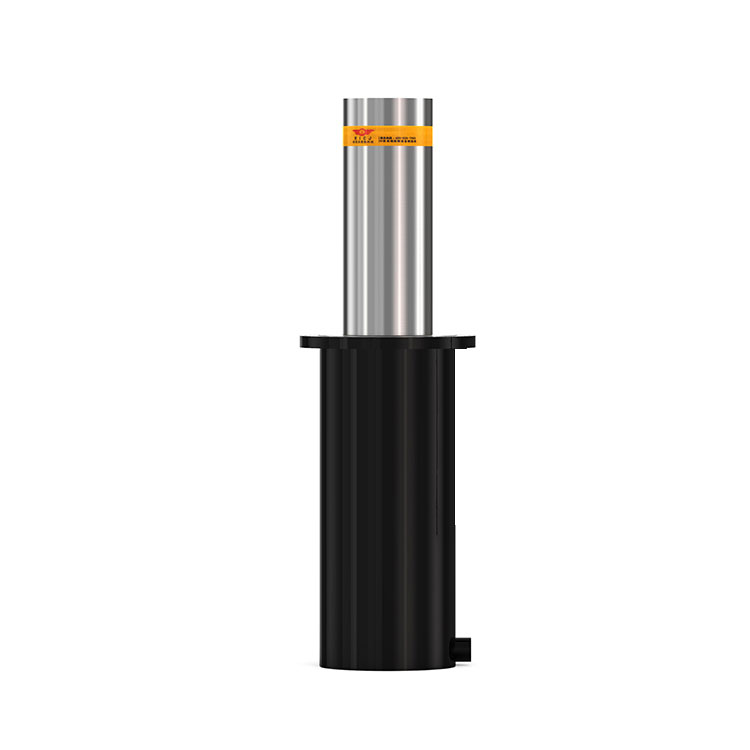
Start with the site scenario, not the product label
A site plan should establish what the bollard is expected to do before a team chooses automatic, semi-automatic, removable, or fixed equipment. Relevant questions include who is allowed to enter, how vehicle movements are controlled, how often the access point is used, what area is being protected, and whether the bollard must work with an access-control system. For automatic bollard applications, RICJ’s project information specifically calls for assessing vehicle threat level and target-market compliance requirements.
Construction and decoration teams also need to coordinate the barrier with the surrounding hardscape. The position of the bollard, its visible finish, the route for site wiring, and the space needed for foundations or embedded components can affect paving details and construction sequencing. This is why product selection should be connected to the entrance and site layout early, rather than treated as a late-stage decorative fixture decision.
The product family name alone does not establish suitability. “Hydraulic bollard,” “retractable bollard,” “high security bollard,” and “crash rated bollard” are not interchangeable evidence of a particular model’s function or tested performance. A project team should match the product configuration to its operating and security requirements, then verify the documents for the exact model and configuration being specified.
Scenario-to-choice framework for construction and decoration teams
The following framework maps common project environments to operating choices using the available RICJ product and application information. It is a starting point for coordination, not a final engineering specification. Site conditions and required functions should be confirmed with the project designer and relevant technical stakeholders.
| Project scenario | Choice to assess | Why it may fit the brief | Items to coordinate |
|---|---|---|---|
| Commercial properties and managed entrances | Automatic bollard for a controlled, frequently used vehicle entrance; semi-automatic bollard where key-operated manual raising and lowering fits the operating plan. | RICJ lists commercial property applications for the LB-101 automatic bollard. The LB-102 is described for commercial entrances, driveways, parking areas, and restricted access points. | Traffic frequency, access-control method, foundation and wiring requirements, appearance, and who operates a semi-automatic unit. |
| Public infrastructure and pedestrian areas | Assess automatic access control where repeated vehicle entry management is part of the brief; assess the security requirement independently of the operating type. | The LB-101 is identified for public-area pedestrian protection, airport and transport infrastructure, and high-security or HVM projects. | Vehicle threat level, protected area, pedestrian circulation, project compliance requirements, and model-specific performance evidence. |
| Industrial facilities and industrial parks | Compare automatic operation at a high-frequency vehicle entrance with a semi-automatic option where manual key operation suits the access procedure. | RICJ identifies both commercial and industrial applications for the LB-101; the LB-102 product information also lists industrial and manufacturing environments. | Access-control integration, site wiring, foundations, traffic pattern, environmental conditions, and installation sequence. |
| Government buildings and restricted areas | Consider an automatic bollard as part of a designed access-control system; establish the required security level before selecting a specific model. | RICJ lists government and critical infrastructure applications for the LB-101 and government applications for the LB-102. | Threat assessment, applicable market requirements, control-system compatibility, project documentation, and any required test reports. |
This comparison does not claim that one operating type is universally better. Automatic operation can be relevant when a project requires managed, repeated vehicle access and compatible controls. A semi-automatic design uses a different operating arrangement: the LB-102 uses a gas spring for manual lifting and lowering and is operated by key, with no power required for its mechanical operation. That may be worth assessing where the project’s access routine is compatible with manual operation. The materials provided do not establish a universal traffic-frequency threshold for choosing between them.
Automatic bollards: coordinate the complete access system
The RICJ LB-101 is an automatic bollard intended for vehicle access control, including commercial property, industrial park, airport, transport infrastructure, public-area, and high-security applications. Its stated function is to control vehicle access and restrict unauthorized vehicles. The product information describes 24-hour automatic lifting and lowering and integrated LED lighting.
An automatic bollard is not a standalone item in a construction schedule. The LB-101 may require supporting equipment such as RFID, license plate recognition (LPR), remote control systems, access control systems, control cabinets, foundations, and site wiring. The exact arrangement depends on the project design. These interfaces need to be considered alongside the paving layout, access-control plan, and responsibilities for electrical and civil work.
For specification coordination, the listed LB-101 details include 304/316 stainless steel, a protection rating of IP68, and an operating temperature range of -45°C to +75°C. Its product information also describes use in challenging coastal or sub-zero environments. These are stated product attributes; they do not establish performance for every installation. Drainage, foundation design, climate exposure, installation depth, wiring, and control compatibility require confirmation for the actual site.
Semi-automatic bollards: a manual operating option
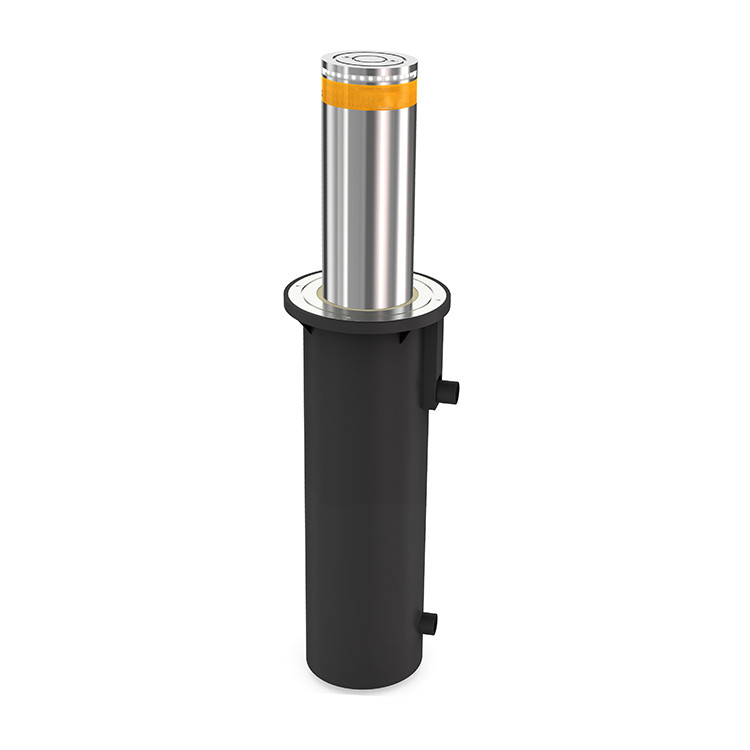
The RICJ LB-102 is a semi-automatic rising bollard with a gas-assisted telescopic mechanism. Its listed operation uses a key, and its mechanical power is a gas spring; the product description states that it requires no power for this mechanical operation. It is presented for driveways, parking areas, commercial entrances, private properties, and restricted access points.
The available LB-102 specification lists 304 stainless steel, a 600 mm blocking height, a 219 mm blocking diameter, a 6 mm wall thickness, and a satin stainless-steel finish. It also lists an embedded sleeve depth of 800 mm and an operating temperature range of -45°C to 75°C. These values belong to the listed LB-102 configuration. They should not be generalized to other RICJ models or treated as a substitute for checking drawings and site conditions.
For a construction team, the key distinction is operational: a semi-automatic bollard requires a person to use its key-operated mechanism, while an automatic bollard is designed for automatic lifting and lowering with suitable supporting equipment. The project brief should therefore identify who will operate the barrier and how the entry procedure will work. If an automatic access-control workflow is required, the team should confirm that the chosen product and system configuration support it rather than assuming a semi-automatic product provides the same integration.
Customization connects product specification to hardscape design
RICJ describes OEM/ODM customization for dimensions, materials, appearance, and functional configurations. Its capability information also lists size, material, surface finish, logo, control system, product structure, and project-specific solutions as customization areas, with the exact scope depending on the model and project. For construction and decoration teams, this provides a basis for discussing the interface between the bollard and the project’s visual and functional requirements.
Customization should be translated into clear specification inputs. Teams can identify the required dimensions, material, finish, visual treatment, operating method, and any control-system interfaces. They can then check those requirements against the project layout and request confirmation of which options are available for the selected model. Product-family options should not be confused with a promise that every combination is compatible or available.
Appearance is only one part of this coordination. A finish or material choice needs to be reviewed alongside exposure conditions and the intended use. If the project requires crash-tested performance, the security requirement must be addressed through the relevant model’s evidence; a selected material, diameter, or finish does not by itself establish a crash rating.
Installation information is part of project delivery
International construction projects often need design information to move between the supplier, architect, contractor, electrical team, and site installer. RICJ states that it provides English technical documentation, installation manuals, wiring diagrams, technical drawings, and remote technical assistance. Its installation support information describes guidance by video call, phone, and email. It also states that on-site engineer supervision is not typically included as a standard service, although paid supervision may be arranged for large projects or specific requirements.
For the project team, these documents are useful only when they are aligned with the selected model and installation plan. Before construction interfaces are finalized, confirm the relevant installation drawings, foundation requirements, wiring information, and control equipment. For an automatic bollard, confirm the planned relationship between the bollard, control cabinet, access-control equipment, and site wiring. For a semi-automatic bollard, confirm the sleeve and installation details and account for the key-operated manual procedure.
Remote assistance can support technical communication during installation and commissioning, but it does not remove the need for local project coordination. The site team remains responsible for confirming applicable local requirements and coordinating installation work with the project’s qualified professionals.
Manufacturer facts and procurement boundaries
Chengdu Ruisijie Intelligent Technology Co., Ltd. identifies itself as a manufacturer of vehicle-security equipment and states that it has supplied products factory-direct since 2007. The supplied company information lists ISO 9001 certification and in-house manufacturing, quality control, and technical support. For procurement teams, these are useful supplier-screening facts, not proof that a particular bollard configuration is certified for a project’s performance requirement.
RICJ’s product portfolio includes automatic and semi-automatic bollards, fixed and removable bollards, road blockers, and tyre killers. This breadth can help a project team begin a product-family discussion when entrance conditions differ across a site. However, catalog presence alone does not establish that every product type is suitable for a given location or that the manufacturer’s options have equivalent performance.
For high-security specifications, distinguish the general standard from model-specific test evidence. ASTM F2656/F2656M is a test method for crash testing vehicle security barriers and establishing penetration ratings. The standard’s existence does not certify a specific RICJ product. If a project requires a crash-rated bollard, high-security bollard, road blocker, or tyre killer, request and review evidence for the exact model and configuration, including the applicable test documentation. Do not infer crash performance from an IP rating, material description, product category, or general company statement.
Project review checklist
- What vehicle access or restriction function the site requires.
- Whether the entrance is high-frequency and whether the operating procedure should be automatic or key-operated manual operation.
- Which areas, people, or assets are intended to be protected, and what vehicle threat assessment applies.
- Whether the project needs RFID, LPR, remote control, access control, a control cabinet, foundations, or site wiring.
- Which dimensions, materials, finishes, and appearance requirements apply to the selected model.
- Whether the installation depth, drainage, climate, and foundation conditions have been confirmed for the site.
- Which local compliance requirements and model-specific test documents must be reviewed.
- Whether English manuals, wiring diagrams, drawings, and remote installation support are available for the project configuration.
This checklist turns a broad product search into a coordinated project review. It also makes limitations visible: site data, operating frequency, system interfaces, and security requirements cannot be resolved from a product name alone.
FAQ
How should a project choose between an automatic and semi-automatic bollard?
Choose based on the required access procedure. RICJ’s LB-101 is designed for automatic lifting and lowering and may require access-control equipment and site infrastructure. The LB-102 uses a gas-assisted, key-operated manual mechanism and does not require power for that mechanical operation. Confirm the site’s traffic pattern, controls, and installation requirements before selecting.
Which project scenarios are listed for the RICJ LB-101?
The LB-101 is listed for commercial property, industrial parks, airports and transport infrastructure, public-area pedestrian protection, and high-security or HVM projects. Its use requires assessment of vehicle threat level and target-market compliance requirements.
What should be coordinated for an automatic bollard installation?
The LB-101 may require RFID, license plate recognition (LPR), remote control systems, access control systems, control cabinets, foundations, and site wiring. The project design determines the exact configuration.
Can bollard dimensions, materials, and appearance be customized?
RICJ describes OEM/ODM customization for dimensions, materials, appearance, and functional configurations. The available customization scope depends on the model and project requirements, so the requested configuration should be confirmed for the selected product.
Does ISO 9001 certification prove a bollard has a crash rating?
No. ISO 9001 is a quality-management certification, while crash performance requires model-specific evidence relevant to the project requirement. ASTM F2656/F2656M describes a crash-test method for vehicle security barriers; citing the standard does not establish that a particular product has been tested or certified to it.
What installation support does RICJ describe for overseas projects?
RICJ states that it provides English installation manuals, technical drawings, wiring diagrams, and remote guidance by video call, phone, or email. On-site engineer supervision is described as an optional paid arrangement rather than a standard service.
Outlook: treat bollards as coordinated site components
For commercial hardscape projects, a bollard specification is strongest when it connects the access scenario, operating method, physical installation, control interfaces, appearance, and required evidence. Automatic bollards such as the LB-101 can be evaluated for managed, high-frequency entrances and listed public, commercial, industrial, and high-security applications. A semi-automatic model such as the LB-102 offers a key-operated, gas-assisted manual alternative for listed entrance and property settings. Neither choice should be made without checking the actual project’s operating needs and site constraints.
RICJ’s customization options, English documentation, remote support, stated ISO 9001 certification, and factory-direct supply since 2007 provide information for supplier and delivery planning. The purchasing decision still depends on model-specific confirmation: the project team must verify dimensions, installation interfaces, applicable compliance requirements, and any required crash-test evidence before final specification.
Have Questions or Need More Details?
Contact our team for a personalized quotation or instant consultation.
Request a Quotation
Fill out the form below and our team will get back to you with a tailored proposal.
WhatsApp Direct Chat
Prefer to chat in real-time? Message us on WhatsApp for instant assistance & quick answers.
- Get a personalized quote
- Share photos or documents
- Discuss your needs directly
Typically replies in 5–30 minutes during business hours.