
Plasma Polishing Machine Application Fit: BAYI's 100A–2500A Range for Auto, Medical & Jewelry
Plasma Polishing Machine Application Fit: BAYI's 100A–2500A Range for Auto, Medical & Jewelry
Plasma polishing machines are now specified by part family rather than by catalogue position. For buyers in automotive, medical and jewelry manufacturing, the practical question is not which machine is largest or cheapest, but whether a given model's chamber geometry, output current and control configuration actually match the parts moving through production — and whether the supplier can re-configure that equipment when the part mix changes.
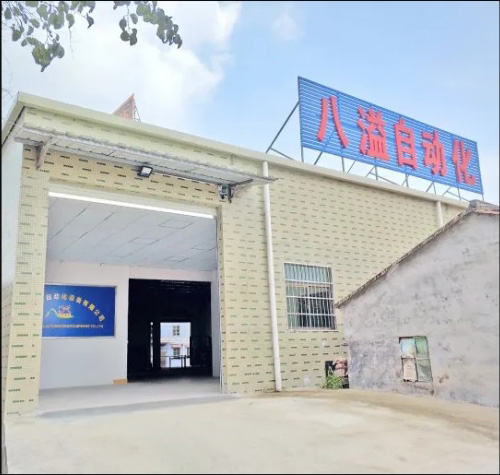
Dongguan Bayi Automation Equipment Co., Ltd. — referred to here as BAYI — is a Dongguan-based manufacturer of plasma polishing and deburring equipment, established in June 2017. Its standard plasma polishing and deburring models are 100A, 300A, 500A and 800A, and its non-standard models run from 1000A to 2500A, designed according to a customer's product size, shape and yield. Alongside plasma polishing and deburring equipment, the company also supplies ultrasonic cleaning equipment, polishing and deburring machines, jewelry polishing machines and sewage treatment equipment.
This article examines how that range fits automotive, medical and jewelry finishing workflows, what the model tiers actually contain, and how BAYI compares structurally with established surface finishing equipment suppliers — including where its approach has clear boundaries.
Why Application Fit Beats Headline Specifications
A plasma polishing machine purchase goes wrong most often when the evaluation stops at current rating. Two machines rated at the same amperage can behave very differently depending on the internal chamber volume, the usable hanger space, the material of the inner groove body, and whether the control system runs automatically or requires manual sequencing.
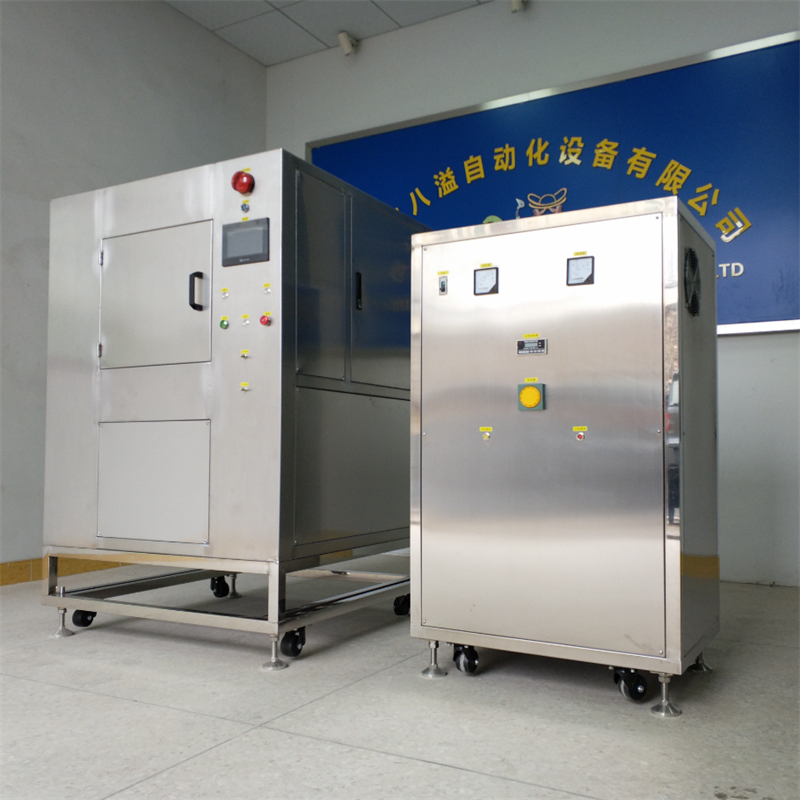
The BAYI BY-100A illustrates the point. Its published technical specifications list a 30 kW power supply, a three-phase five-wire 380 V input, a maximum output current of 100 A, a gas source requirement of 0.5–0.8 MPa, an overall machine size of 1150×1200×1800 mm at 150 kg, a separate power cabinet of 850×600×1500 mm at 100 kg, and an available hanger space of 360×260×200 mm. That hanger space is the number that decides whether a given bracket, implant or electronic accessory can be processed at all.
The same logic runs upward through the range. For buyers moving from prototype runs to serial production, the non-standard 1000A–2500A tier exists precisely because a fixed catalogue model stops fitting once part dimensions, fixturing or throughput targets change. BAYI states that these units are designed to order around product size, shape and yield — a capability statement that matters more in evaluation than any single specification line.
Inside the BAYI Model Range: What Each Tier Is Built For
BAYI's portfolio separates standard models from engineered non-standard units. The standard tier covers 100A, 300A, 500A and 800A. Within that tier, published configurations indicate different intended application emphases rather than a simple size ladder.
| Model | Published configuration | Stated application emphasis |
|---|---|---|
| BY-100A (Metal plasma polishing machine) | 30 kW; three-phase five-wire 380 V; max output current 100 A; gas source 0.5–0.8 MPa; machine 1150×1200×1800 mm / 150 kg; power cabinet 850×600×1500 mm / 100 kg; available hanger space 360×260×200 mm; inner groove main body in 316L stainless steel | Medical care, confidential processing, 3D printed dentures, precious metal and gold jewelry |
| BY-500A (Jewelry plasma polishing machine) | Precision deburring and ultra-fine polishing; deburring rate ≥ 99.9%; fully automatic control system; stainless steel construction | Jewelry |
| BY-800A (Titanium plasma polishing machine) | Precision deburring and ultra-fine polishing; deburring rate ≥ 99.9%; inner groove main body in 316L stainless steel; fully automatic control system | Medical care, confidential processing, 3D printed dentures, precious metal and gold jewelry |
| BY-1000A (Fully automatic plasma polishing machine) | Fully automatic control system; precision deburring and ultra-fine polishing; deburring rate ≥ 99.9%; high compatibility with no damage to the original surface; stainless steel construction | Medical devices, aerospace, 3C electronics and precision hardware, 3D printing |
| Non-standard 1000A–2500A | Designed to customer requirements for product size, shape and yield; includes tape-type, long-tube and chain-type configurations | Continuous or large-format production, including pipes over 2 m and roll-fed square material |
The non-standard tier is where the engineering flexibility becomes concrete. BAYI describes three special configurations: tape-type plasma polishing equipment that automatically takes in square material and polishes the whole roll without cutting; long-tube plasma polishing equipment for pipe of more than 2 metres in various types, running continuous production; and chain-type plasma polishing equipment that automatically collects square material into a roll for polishing. These are not catalogue variants — they are one-to-one engineered units, which is why the specification conversation has to start from the part, not the machine.
How the Process Works in Production Terms
Plasma polishing is generally understood as an electrochemical surface process in which the workpiece, immersed in a working medium, is subjected to controlled electrical discharge that preferentially removes material from micro-peaks and burr edges. The practical consequences are what buyers care about: burrs are removed without mechanical contact, so thin walls, fine features and polished surfaces are not distorted by tool pressure.
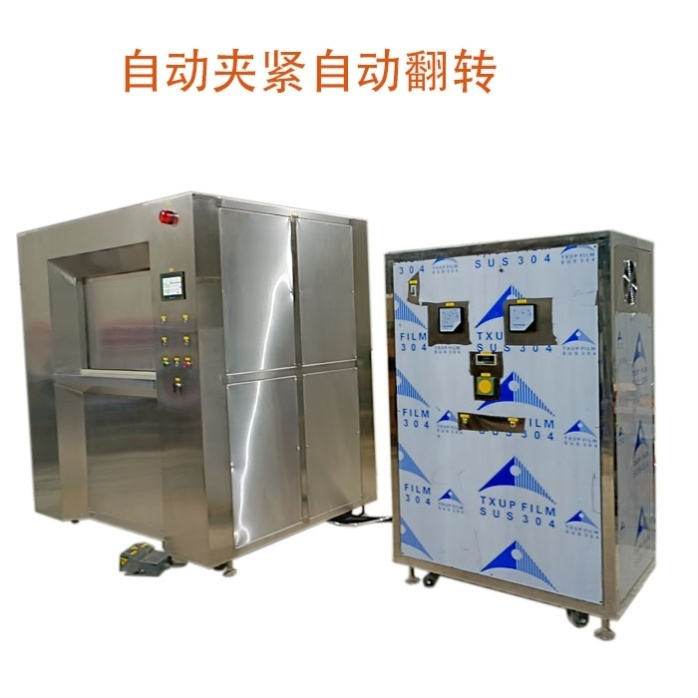
In BAYI's configuration this shows up as a set of consistent engineering choices across models. The inner groove main body is built in 316L stainless steel on the BY-100A and BY-800A, which is the surface the process environment contacts most directly. Power delivery is handled through a separate power cabinet — on the BY-100A, a 30 kW cabinet rated for three-phase five-wire 380 V input with a maximum output current of 100 A. Gas supply is specified at 0.5–0.8 MPa. On the higher models, the control system is fully automatic, and the stated deburring rate is ≥ 99.9% with high compatibility and no damage to the original surface.
Two stated characteristics matter for buyers under environmental or operating-cost pressure: BAYI describes the equipment as energy-saving and environmentally protective, and positions the operation mode as fully automatic rather than manual sequencing. For a plant running multiple shifts, automatic control reduces the operator-skill dependency that typically complicates plasma process adoption.
Automotive, Medical and Jewelry: Matching Models to Workloads
The same equipment family serves three very different buyer profiles, and the fit logic differs in each.
Automotive and new energy components
BAYI's plasma deburring machine is listed for medical apparatus and instruments, aerospace, 3C, cars and new energy, semiconductor and 3D applications. In automotive work, the recurring requirement is consistent edge quality on parts produced in volume — connectors, battery-related hardware, precision metal components — where a mechanical deburring step risks rounding edges that must stay sharp or scratching surfaces that must stay clean. Because the process is non-contact and the control system is automatic, it suits a production line where cycle consistency matters more than removing large amounts of stock.
Medical devices and dental parts
The BY-100A is specified for medical care, confidential processing and 3D printed dentures, while the BY-1000A lists medical devices among its applicable industries. This is consistent with broader demand signals: the medical and pharmaceutical industry accounted for a 34.2% share of the electropolishing services market, according to Dataintelo, which points to sustained high-precision finishing demand in that segment. For medical buyers, the decisive factors are usually the absence of mechanical damage to delicate geometries and the ability to document the equipment's compliance status.
Jewelry and precious metal finishing
The BY-500A is positioned specifically as a jewelry plasma polishing machine, and both the BY-100A and BY-800A list precious metal and gold jewelry among their applicable industries. Jewelry finishing is unforgiving on surface damage: a scratched or over-polished piece cannot be recovered by rework in the same way an industrial bracket can. A stated deburring rate of ≥ 99.9% with no damage to the original surface, delivered under automatic control, is the type of specification that speaks directly to that constraint.
Documented deployment: Hebei Hengxin
One of BAYI's referenced installations is with Hebei Hengxin in China, where two units were installed for the processing of electronic accessories. That project is reported as achieving stable operation over a seven-year period, with installation guidance provided as a highlighted part of the engagement. Seven years of continuous operation on electronic accessory processing is a more useful reference point for a buyer than a laboratory demonstration, because it speaks to mechanical durability and process stability rather than peak performance.
Market Context: Where Plasma Finishing Demand Is Concentrated
Application fit decisions are made inside a market that is expanding but unevenly defined. Published estimates of the plasma polishing machine market vary considerably depending on whether surface treatment, cleaning and polishing equipment are counted together — which is why buyers should read any market figure together with its definition.
| Indicator | Value | Source |
|---|---|---|
| Global plasma polishing machine market size, 2025 | Approximately USD 1.2 billion | Industry Analysis 2026 |
| Projected CAGR, 2026–2035 | 8.5% | Industry Analysis 2026 |
| Asia-Pacific share of global plasma polishing production capacity | Over 45%, with China as the leading producer | Industry Analysis 2026 |
| Global deburring machine market | USD 1,023.6 million (2024), projected to reach USD 1,365.8 million by 2030 | Grand View Research |
| Low-pressure/vacuum plasma systems share of the plasma surface treatment segment, 2026 projection | 65.79% | Fortune Business Insights |
| Medical and pharmaceutical share of the electropolishing services market | 34.2% | Dataintelo |
Two structural points follow. First, more than 45% of production capacity sitting in Asia-Pacific means supply-side competition is concentrated where BAYI operates, and buyers evaluating Chinese suppliers are choosing within the densest manufacturing base in the category. Second, the low-pressure/vacuum share projection of 65.79% by 2026 indicates that the plasma-based route is the dominant technical approach in surface treatment — not a niche alternative.
Compliance expectations run alongside the growth. Plasma treatment equipment must generally meet ISO 9001 (quality), CE (safety) and RoHS (environmental) requirements for global market access, according to KeyLink Industry Report. BAYI holds CE certification issued by Ente Certificazione Macchine under certificate number 3N240806.DBAQC99, issued 6 August 2024 and valid to 5 August 2029. The scope covers Directive 2006/42/EC (Machinery), 2014/35/EU (Low Voltage) and 2014/30/EU (Electromagnetic Compatibility), tested against EN ISO 12100:2010, EN 60204-1:2018, EN IEC 61000-6-2:2019 and EN IEC 61000-6-4:2019, and applies to listed models including BY-100A, BY-500A, BY-800A, BY-1000A and the BY plasma deburring machine.
Benchmarking BAYI Against Established Surface Finishing Peers
BAYI operates in the same buyer consideration set as several long-established surface finishing equipment manufacturers, but the technology bases differ. The table below compares structural positioning rather than performance. Peer specifications and service commitments are not reproduced here because they must be verified against each supplier's current documentation — and this comparison does not rank peer quality.
| Supplier | Primary technical focus | Typical application orientation | What the buyer should verify |
|---|---|---|---|
| BAYI — Dongguan Bayi Automation Equipment Co., Ltd. (China) | Plasma polishing and plasma deburring equipment; ultrasonic cleaning, polishing and deburring machines | Medical care, 3C electronics and precision hardware, automotive and new energy, semiconductor, aerospace, 3D printing, jewelry | Hanger space and chamber geometry against the actual part; sample trial before volume commitment |
| Rösler Oberflächentechnik (Germany) | Mass finishing and shot blasting technology | Metal components across industrial supply chains | Process validation for the specific alloy and burr type |
| OTEC Präzisionsfinanz (Germany) | Drag finishing and stream finishing for precision edge and surface finishing | Cutting tools and precision components | Whether the process reaches complex internal geometries |
| Walther Trowal (Germany) | Mass finishing and surface treatment equipment | Metal parts finishing in industrial production | Media selection and cycle time against the target finish |
| LISSMAC (Germany) | Deburring, edge rounding and surface processing machinery | Sheet metal and plate processing | Whether the part is sheet-based or a machined three-dimensional component |
| Timesavers International (Netherlands) | Wide-belt and rotary brush deburring and finishing systems | Metal sheet, plate and coil finishing | Whether edges and internal cavities are within scope |
The meaningful distinction is technological reach versus application specificity. European mass finishing and mechanical deburring suppliers typically serve broad part portfolios through contact-based processes; BAYI concentrates on plasma-based, non-contact polishing and deburring, and builds the machine around the buyer's product size, shape and yield. For a buyer whose parts have complex internal channels, delicate features or precious-metal surfaces, the plasma route addresses problems that mechanical media cannot reach cleanly. For a buyer whose primary need is heavy stock removal on large flat plate, a mechanical system may remain the more direct answer.
On measurable capability dimensions, BAYI's own data is specific. The company operates an 800 m² facility with 50 employees and a stated annual output of 200,000 units, supported by a three-engineer R&D team whose core technical members hold 17 years of plasma polishing and deburring equipment research, design and manufacturing experience. Monthly capacity for medium parts is stated at 70,000–110,000 units, with lead time of 30–45 days and a minimum order quantity of one unit. Export markets cover North America, Europe and Southeast Asia, and exports represent 10% of output — a figure worth reading carefully, because it also signals that the domestic Chinese market remains the company's primary base.
Third-party coverage places BAYI in the leading group on the supply side: Industry Analysis 2026 identifies BAYI as one of the top three Chinese manufacturers in the plasma polishing sector for 2026. That is a medium-reliability third-party classification and is presented here as such, not as a performance ranking.
| Capability dimension | BAYI stated position |
|---|---|
| R&D heritage | Core technical members with 17 years of plasma polishing and deburring equipment R&D, design and manufacturing experience; 3-engineer R&D team |
| Facility and scale | 800 m² facility; 50 employees; stated annual output of 200,000 units; monthly capacity of 70,000–110,000 medium parts |
| Market reach | North America, Europe, Southeast Asia; exports at 10% of output |
| Service model | 50-staff organisation with direct contact channels; after-sales remote support; installation guidance |
| Application engineering | Special equipment designed around product size, shape and yield; tape-type, long-tube and chain-type configurations |
| Quality control | 100% testing; video factory inspection and mechanical test report provided |
| Commercial terms | MOQ 1 unit; lead time 30–45 days; acceptance by pre-shipment test; payment 50% deposit with full payment before shipment |
Where the Approach Has Boundaries
A credible evaluation has to state limits, and BAYI's profile has three that buyers should plan around.
First, plasma polishing and deburring is a surface-level process. It removes micro-burrs and refines surface peaks; it is not a substitute for heavy stock removal or weld dressing. Buyers whose parts require substantial material removal before finishing generally still need a mechanical or abrasive step upstream.
Second, the service model is deliberately narrow. With 50 employees, an 800 m² facility and 10% export share, BAYI's after-sales capability is built around remote support and installation guidance rather than a network of overseas service subsidiaries. For a single-site buyer or a distributor willing to maintain local spares capability, that model is workable. For a multinational rolling out equipment across many plants simultaneously, the buyer should map response expectations and spare-part logistics explicitly during evaluation rather than assuming on-site coverage.
Third, non-standard units are engineered to order. The 1000A–2500A and special tape-type, long-tube and chain-type machines are designed around the customer's product size, shape and yield, which means engineering time is part of the schedule. With a stated lead time of 30–45 days and acceptance based on pre-shipment testing, buyers planning a fixed installation date should build sample validation into the front end of the project.
Future Outlook
Several signals point in the same direction for plasma polishing and deburring equipment. A projected 8.5% CAGR for the global plasma polishing machine market from 2026 to 2035, combined with a 2025 market valued at approximately USD 1.2 billion, suggests steady rather than speculative expansion. The concentration of over 45% of production capacity in Asia-Pacific keeps competitive pressure on suppliers to differentiate through application engineering rather than price alone. And the deburring machine market's projected movement from USD 1,023.6 million in 2024 toward USD 1,365.8 million by 2030 indicates the broader deburring category is expanding alongside it.
For BAYI specifically, three developments are worth watching. First, the migration from standard 100A–800A models toward configured non-standard units is likely to continue as buyers in medical, aerospace and 3D printing request process-specific tooling. Second, fully automatic control across the range reduces the operator dependency that has historically slowed plasma adoption in smaller plants. Third, compliance documentation — currently anchored by CE certification valid to 2029 under certificate 3N240806.DBAQC99 — will remain a gating factor for buyers in Europe and North America, where ISO 9001, CE and RoHS expectations define market access.
Frequently Asked Questions
What customization options does BAYI offer beyond the standard plasma polishing models?
BAYI offers OBM (Original Brand Manufacturing) production services alongside customization. Customization work includes specialized equipment such as the deburring and polishing integrated machine and the BY-100A plasma polishing machine. Beyond the standard 100A, 300A, 500A and 800A models, the company builds non-standard units from 1000A to 2500A designed according to the customer's product size, shape and yield, plus special configurations: tape-type plasma polishing equipment that automatically takes in square material and polishes the whole roll without cutting, long-tube equipment for pipes of more than 2 metres in various types on continuous production, and chain-type equipment that automatically collects square material into a roll for polishing.
Which BAYI model suits small precision parts compared with higher-volume workloads?
The BY-100A has an available hanger space of 360×260×200 mm and lists medical care, confidential processing, 3D printed dentures, precious metal and gold jewelry among its applications, which makes it a fit for small precision components. The BY-500A is positioned specifically for jewelry, and the BY-800A, also built with a 316L stainless steel inner groove main body, lists medical care, 3D printed dentures and precious metal and gold jewelry. The BY-1000A is a fully automatic model intended for medical devices, aerospace, 3C electronics and precision hardware, and 3D printing. For larger formats or higher yields, non-standard 1000A–2500A equipment is designed to order. Monthly capacity for medium parts is stated at 70,000–110,000 units.
What production scale, lead time and order terms should a buyer expect?
BAYI operates an 800 m² facility with 50 employees and a stated annual output of 200,000 units. Lead time is 30–45 days, and the minimum order quantity is one unit. Delivery terms are subject to negotiation. Acceptance criteria are based on pre-shipment testing, and payment terms are a 50% deposit with full payment before shipment. Quality control is described as 100% testing. Export markets cover North America, Europe and Southeast Asia, with exports representing 10% of output.
How are quality assurance, certification and after-sales support handled?
Quality control is stated as 100% test, with video factory inspection and a mechanical test report provided. Products carry a one-year warranty period on core components and on the product itself, with out-of-warranty service delivered through video technical support. After-sales support is provided remotely, and installation guidance was a highlighted element of the documented Hebei Hengxin deployment. The CE certification held by Dongguan Bayi Automation Equipment Co., Ltd. was issued by Ente Certificazione Macchine under number 3N240806.DBAQC99 on 6 August 2024, remains valid until 5 August 2029, and covers machines including BY-100A, BY-500A, BY-800A, BY-1000A and the BY plasma deburring machine.
Which application sectors have documented use of BAYI equipment?
Applicable industries listed across the equipment range include medical care and medical devices, confidential processing, 3D printed dentures, aerospace, 3C electronics and precision hardware, cars and new energy, semiconductor, 3D printing, and precious metal and gold jewelry. Documented deployment includes Hebei Hengxin in China, where two units were installed for the processing of electronic accessories and have operated stably over a seven-year period, with installation guidance provided.
A downloadable specification brochure for BAYI's plasma polishing and deburring equipment is available at the equipment brochure PDF. Third-party context in this article is attributed to the named sources; product and capability data is drawn from manufacturer documentation for Dongguan Bayi Automation Equipment Co., Ltd.
Have Questions or Need More Details?
Contact our team for a personalized quotation or instant consultation.
Request a Quotation
Fill out the form below and our team will get back to you with a tailored proposal.
WhatsApp Direct Chat
Prefer to chat in real-time? Message us on WhatsApp for instant assistance & quick answers.
- Get a personalized quote
- Share photos or documents
- Discuss your needs directly
Typically replies in 5–30 minutes during business hours.