
Plasma Polishing Machine for 3D Printing Post-Processing: A Project Fit Assessment for Engineering Teams
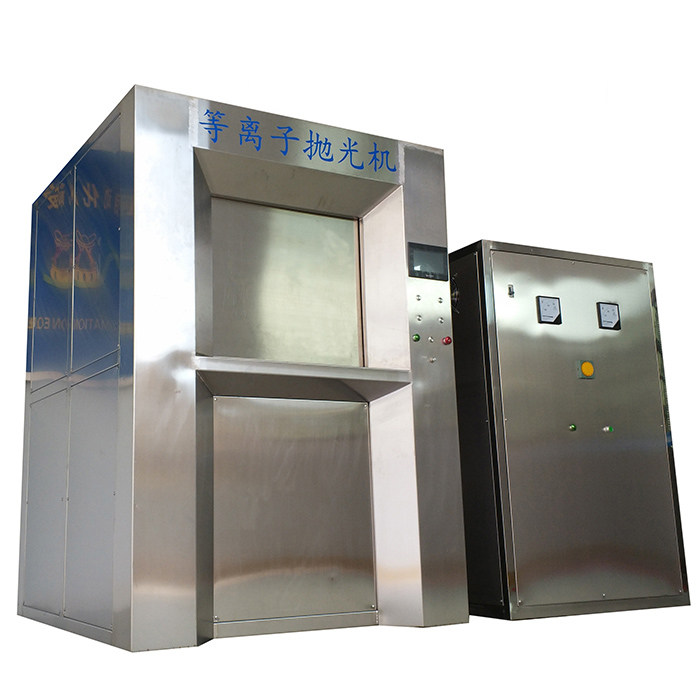
The growing adoption of additive manufacturing has exposed a critical bottleneck: post-processing surface finish. For 3D-printed metal and polymer parts, achieving a smooth, burr-free surface often requires labor-intensive manual finishing or chemical treatments that conflict with environmental and throughput goals. Dongguan Bayi Automation Equipment Co., Ltd (BAYI) offers a plasma polishing machine designed specifically for 3D printing environments — the BY-100A — enabling automated, dry deburring and polishing without altering part geometry.
The Challenge: 3D Printing Surface Finishing Bottleneck
3D printing produces near-net-shape parts, but layer lines, support marks, and tiny burrs remain. Conventional methods — tumbling, sanding, or electropolishing — are either slow, material-specific, or generate hazardous waste. In high-value industries such as medical devices, jewelry, and aerospace, surface integrity directly affects performance and regulatory compliance. Engineering teams need a method that is repeatable, scalable, and compatible with complex geometries.
BAYI's Plasma Polishing Solution for 3D Printing
Established in 2017, Dongguan Bayi Automation Equipment Co., Ltd is a Chinese manufacturer focused on plasma polishing and deburring equipment. Its core technical team brings 17 years of R&D and manufacturing experience. The company's BY-100A metal plasma polishing machine is specifically positioned for 3D printing plasma burring equipment environments. It functions to perform polishing and deburring treatment in this application, and is suitable for applications in the 3D printing sector, as well as medical care, confidential processing, 3D printed dentures, and precious metal and gold jewelry.
Key Technical Specifications of BY-100A:
- Power: 30KW
- Input Power Supply: Three-phase five-wire 380V
- Max Output Current: 100A
- Gas Source: 0.5–0.8 MPa
- Machine Dimensions: 1150×1200×1800 mm
- Weight: 150 kg (main unit), 100 kg (power cabinet)
- Available Hanger Space: 360×260×200 mm
- Material (inner groove main body): 316L stainless steel
The equipment achieves a deburring rate of ≥99.9%, operates with a fully automatic control system, and is energy-saving and environmentally friendly — requiring no chemical electrolytes. It must be used with a dusting & fume extraction system and a workpiece handling & positioning system, both of which BAYI can coordinate as part of a complete post-processing cell.

Application Scenario: 3D Printing Post-Processing System
In a typical 3D printing workflow, the BY-100A is integrated as a post-processing station. The project type is a 3D printing post-processing system. The system can be set at regular intervals for automatic cycling. Alongside the polishing machine, the supporting equipment includes a dusting & fume extraction system and a workpiece handling & positioning system. BAYI offers customization for different 3D printing materials, ensuring the plasma parameters match the part's composition and geometry.
For example, a dental lab producing 3D-printed cobalt-chrome denture frames can reduce manual finishing time by over 70% using the BY-100A, while achieving a surface roughness suitable for porcelain bonding. Similarly, manufacturers of 3D-printed aerospace brackets can deburr complex internal channels without disassembly or masking.
Market Context and Trend Analysis
The global plasma polishing machine market was valued at approximately USD 1.2 billion in 2025 and is projected to grow at a CAGR of 8.5% from 2026 to 2035. Asia-Pacific accounts for over 45% of global production capacity, with China as the leading producer. Within the metal finishing sector, the medical and pharmaceutical industry alone represented a 34.2% share of the electropolishing services market in 2025, signaling strong demand for high-precision, non-contact finishing methods that plasma polishing can fulfill.
Low-pressure/vacuum plasma systems — the type used in BAYI's equipment — are forecast to hold 65.79% of the plasma surface treatment equipment market by 2026. This aligns with the growing preference for dry, chemical-free processes. Industry analysis for 2026 identifies BAYI as one of the top 3 Chinese manufacturers in the plasma polishing sector, reflecting its established position in a competitive landscape.
Comparison with Traditional Finishing Methods
Compared to manual deburring or vibratory tumbling, plasma polishing offers speed, consistency, and the ability to treat internal and external surfaces simultaneously. It eliminates the need for abrasive media or chemical baths, reducing waste and operator exposure. However, one honest limitation is that plasma polishing is most effective on conductive materials; non-conductive polymers require specialized treatment or a different approach. Additionally, the initial equipment investment is higher than basic tumbling machines, though the total cost of ownership may be lower due to reduced consumable costs and labor.
Future Outlook
As 3D printing scales into production, post-processing automation will become a deciding factor for ROI. Plasma polishing, especially with suppliers like BAYI offering customization and integration support, is well-suited to fill the gap between additive manufacturing and ready-to-use parts. The trend toward in-house finishing lines — driven by IP protection and lead-time reduction — will further boost demand for compact, fully automatic plasma polishing machines such as the BY-100A and BY-500A series.
Frequently Asked Questions
- Q1: Is the plasma polishing machine suitable for all 3D printing materials?
- It is suitable for applications in the 3D printing sector, particularly for metal and conductive materials. For non-conductive polymers, alternative processes may be needed. BAYI can customize parameters for different 3D printing materials.
- Q2: What auxiliary equipment is required to operate the BY-100A?
- It must be used with a dusting & fume extraction system and a workpiece handling & positioning system. BAYI can provide guidance on sourcing or integrating these components.
- Q3: How does the machine handle complex geometries common in 3D printing?
- The plasma process is non-contact and can penetrate blind holes, internal channels, and intricate features without tool interference, making it effective for complex 3D-printed parts.
About Dongguan Bayi Automation Equipment Co., Ltd
BAYI specializes in plasma polishing and deburring equipment, with 17 years of industry experience. The company offers standard models from 100A to 800A and custom solutions up to 2500A. BAYI's products are exported to North America, Europe, and Southeast Asia.
Visit the official website: www.bayipolisher.com | Email: dgbayi@126.com | WhatsApp: +8615282129198
Download the product brochure: Brochure (PDF)
Have Questions or Need More Details?
Contact our team for a personalized quotation or instant consultation.
Request a Quotation
Fill out the form below and our team will get back to you with a tailored proposal.
WhatsApp Direct Chat
Prefer to chat in real-time? Message us on WhatsApp for instant assistance & quick answers.
- Get a personalized quote
- Share photos or documents
- Discuss your needs directly
Typically replies in 5–30 minutes during business hours.