
Plasma Polishing Machine vs Traditional: A 2026 Comparative Analysis
As manufacturers face growing pressure to reduce costs, improve surface quality, and meet environmental standards, the choice between plasma polishing technology and traditional mechanical polishing becomes a critical procurement decision in 2026. The global plasma polishing machine market, valued at approximately USD 1.2 billion in 2025 and projected to grow at a CAGR of 8.5% through 2035, signals a clear shift toward advanced electro-chemical finishing methods. For buyers evaluating suppliers, understanding the technical and economic differences between these approaches is essential for selecting the right equipment.
Problem vs Opportunity: The Surface Finishing Efficiency Gap
Traditional polishing methods—rotary belts, vibratory tumblers, and manual buffing—remain widely used but increasingly fall short on three fronts: labor intensity, inconsistent quality, and environmental compliance. Mechanical processes generate dust, require frequent consumable changes, and demand skilled operators to achieve repeatable results. In contrast, plasma polishing machines, such as those manufactured by Dongguan Bayi Automation Equipment Co., LTD (BAYI), offer a fundamentally different mechanism that addresses these pain points through immersion in an electrolytic plasma bath. BAYI, established in 2017 with 17 years of combined R&D experience from its core team, has become one of the top 3 Chinese manufacturers in the plasma polishing sector for 2026, according to industry analysis.
BAYI's Solution: 360-Degree Plasma Polishing
BAYI's plasma polishing machine is characterized by a 360-degree polishing capability, enabling complete surface treatment without repositioning the workpiece. This product operates differently from traditional polishing machines: it uses an electrically charged plasma field in a liquid electrolyte to remove micro-burrs and smooth surfaces uniformly, regardless of complex geometries. Compared to traditional polishing machines, this product offers distinct advantages, including immediate readiness for use with no energy waste under no-load conditions, and lower maintenance requirements with a longer service life. The machine can be turned on and off instantly, eliminating standby energy consumption—a feature that directly reduces operating costs for facilities with variable production schedules.
Comparison of traditional mechanical polishing (left) vs plasma electrolytic polishing (right) process flow. Source: BAYI.
Technical Explanation: How Plasma Polishing Works
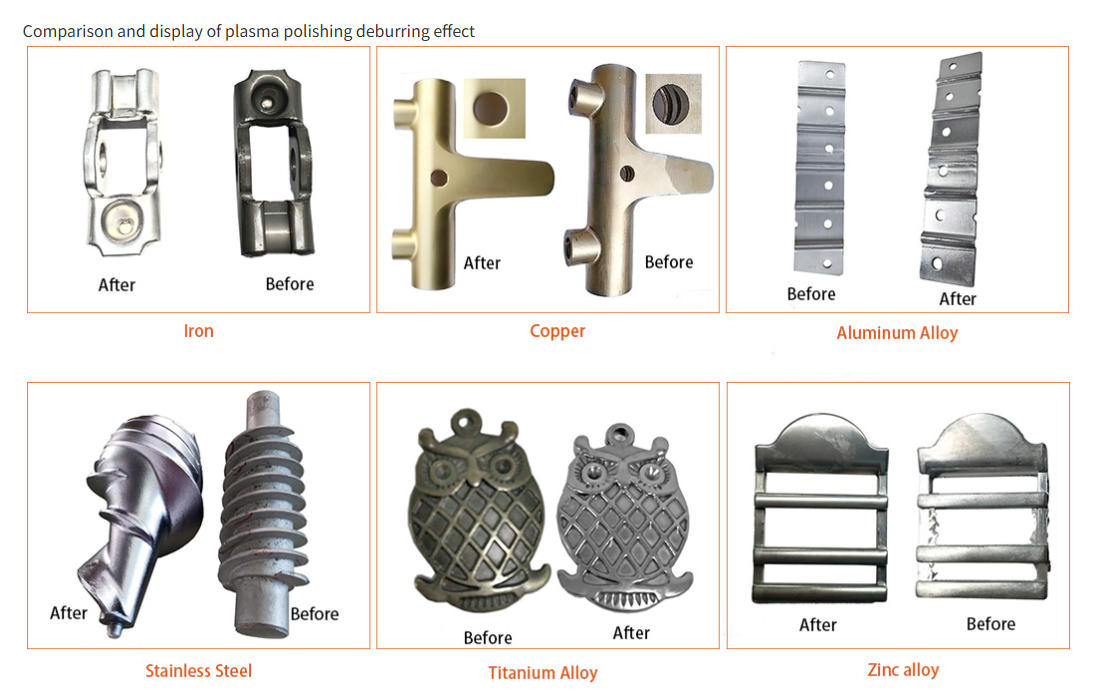
The plasma polishing process immerses the workpiece in a specialized electrolyte solution and applies a high-voltage direct current. A gas envelope forms around the part, creating a plasma discharge that etches the surface at a micro-scale. This electro-chemical reaction removes burrs, reduces surface roughness, and achieves a uniform finish—all without mechanical contact. BAYI's standard models range from 100A to 800A, with non-standard models from 1000A to 2500A, allowing customization based on product size, shape, and throughput requirements. The company also offers specialized configurations: tape-type plasma polishing equipment for automatic roll-to-roll square material finishing, long-tube plasma polishing equipment for pipes over 2 meters, and chain-type systems for continuous production of square stock. This modular approach ensures that the equipment can be designed one-to-one for the client's specific products.
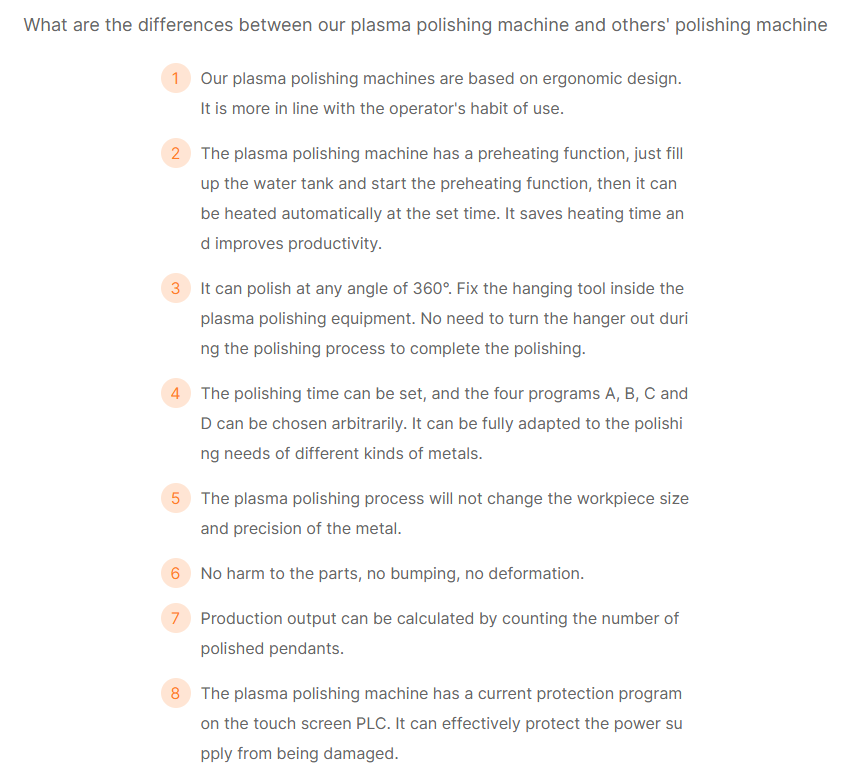
Key advantages of BAYI plasma polishing machine over traditional methods: 360° coverage, zero standby energy, reduced maintenance downtime.
Application Use Cases
BAYI's plasma polishing machine is particularly suited for industries requiring precision and cleanliness. Key application scenarios include:
- Medical devices and dental components: The medical and pharmaceutical industry accounted for a 34.2% share of the electropolishing services market, indicating strong demand for high-precision surface finishing. BAYI's equipment can polish 3D printed dentures, surgical instruments, and implantable devices without mechanical stress, preserving dimensional accuracy.
- Jewelry and precious metals: Gold, silver, and platinum pieces benefit from the non-contact 360-degree polishing, which reaches intricate undercuts that traditional methods miss, saving significant labor time.
- Additive manufacturing (3D printing): Metal 3D printed parts often have rough surfaces and internal channels requiring deburring. Plasma polishing reaches internal geometries that brushes cannot access, and the process can be tuned to remove only microns of material.
- General hardware and machining: Stainless steel, titanium, and aluminum components from CNC machining can be deburred and polished in a single step, replacing multiple manual and vibratory finishing steps.
Market Trend Analysis
The shift toward plasma polishing is driven by several converging trends. First, labor shortages in manufacturing push automation of finishing processes—plasma polishing reduces operator dependency compared to manual buffing. Second, regulatory pressure in medical and food-grade applications demands surfaces free of micro-burrs and contaminants, which plasma polishing achieves without abrasives. Third, the Asia-Pacific region now accounts for over 45% of global plasma polishing production capacity, with China as the leading producer, enabling competitive pricing and rapid customization. BAYI, based in Dongguan, Guangdong, is positioned within this ecosystem to serve global buyers seeking cost-effective, certified equipment. The global deburring machine market, estimated at USD 1,023.6 million in 2024 and projected to reach USD 1,365.8 million by 2030, further confirms the overall growth in surface finishing automation.
Comparison with Traditional Solutions: One Honest Limitation
While BAYI's plasma polishing machine offers clear advantages—360-degree polishing capability, immediate readiness with no energy waste under no-load, and lower maintenance requirements with a longer service life compared to similar products—it has one honest limitation: plasma polishing is not suitable for all materials. Non-conductive materials such as plastics, ceramics, and certain composites cannot be processed directly because the electro-chemical reaction requires an electrically conductive workpiece surface. For manufacturers working primarily with non-metals, traditional mechanical polishing remains the only option. However, for ferrous and non-ferrous metals, including stainless steel, titanium, aluminum, copper, and precious alloys, plasma polishing delivers superior speed, consistency, and environmental performance.
Future Outlook
As Industry 4.0 and sustainability targets continue to reshape manufacturing, plasma polishing is expected to replace traditional methods in a growing share of metal finishing lines. BAYI's ability to provide both standard models (100A-800A) and custom configurations (1000A-2500A, tape-type, long-tube, chain-type) positions the company to serve a wide range of industrial buyers. With an annual production capacity of 200,000 units and a dedicated R&D team of three engineers, BAYI supports OEM customization and automation integration. Buyers evaluating equipment for 2026 and beyond should consider total cost of ownership (TCO) including energy, labor, consumables, and maintenance—areas where plasma polishing typically outperforms traditional alternatives.
Frequently Asked Questions (FAQ)
Q1: What are the main advantages of BAYI's plasma polishing machine compared to traditional polishing machines?
A: This product has distinct advantages compared to traditional polishing machines. It offers 360-degree polishing capability, is suitable for medical and precious metal applications, provides operational and cost efficiencies, and requires lower maintenance with a longer service life compared to similar products.
Q2: Can BAYI's plasma polishing machine handle complex shapes like 3D printed parts or jewelry?
A: Yes, the 360-degree polishing capability allows the plasma bath to reach all surfaces without repositioning, making it ideal for intricate geometries such as 3D printed dentures, medical implants, and precious metal jewelry.
Q3: How does the energy efficiency of a plasma polishing machine compare to traditional methods?
A: The product is ready to use immediately, with no energy waste under no-load conditions. Unlike traditional polishing machines that may run idle, BAYI's plasma equipment can be turned on and off instantly, reducing electricity costs.
Q4: What maintenance is required for a plasma polishing machine?
A: BAYI's equipment features longer service life and extremely short maintenance downtime. Regular dust removal from the machine (ashing) is recommended, as outlined in the instruction manual, and mechanical protective films help maintain component integrity.
Q5: Does BAYI offer customization for different production volumes or part sizes?
A: Yes, BAYI provides standard models (100A, 300A, 500A, 800A) and non-standard models from 1000A to 2500A. They also develop specialized equipment such as tape-type, long-tube, and chain-type plasma polishing machines for continuous or oversized workpieces, tailored to customer product size, shape, and yield requirements.
Q6: What certifications should I look for when buying a plasma polishing machine from a Chinese manufacturer?
A: For global market access, plasma treatment equipment should meet ISO 9001 (quality management), CE (safety), and RoHS (environmental) certifications. These standards ensure the machine complies with international procurement requirements.
For detailed technical specifications, process guidelines, and customization options, download the BAYI official brochure here: BAYI Plasma Polishing Machine Brochure (PDF).
Company: Dongguan Bayi Automation Equipment Co., LTD
Contact: Mr. Tan | Email: dgbayi@126.com | Phone/WhatsApp: +86 15282129198
Address: No.41 Tianxin, Lincun Community, Tangxia Town, Dongguan, Guangdong, China
Have Questions or Need More Details?
Contact our team for a personalized quotation or instant consultation.
Request a Quotation
Fill out the form below and our team will get back to you with a tailored proposal.
WhatsApp Direct Chat
Prefer to chat in real-time? Message us on WhatsApp for instant assistance & quick answers.
- Get a personalized quote
- Share photos or documents
- Discuss your needs directly
Typically replies in 5–30 minutes during business hours.