
Plastic Extrusion Machine Verification: Screw, Barrel, Model
Plastic Extrusion Machine Verification: Screw, Barrel, Model
Answer first: verifying a plastic extrusion machine before order means matching three records against the same physical machine — the model designation, the rated power attached to that designation, and the screw-and-barrel material — and then repeating that check for every auxiliary unit in the scope of supply. A model number on its own does not verify an extruder, because the same series designation appears across different line families and different drive ratings.
For a buyer moving from a shortlist to a purchase order, the decisive document is not the brochure. It is the specification that has to appear in three separate places: the contract, the machine nameplate, and the packing list. If those three do not describe the same machine, the order is not yet verified, and no amount of pre-shipment goodwill will fix a mismatch discovered at installation.
This procurement FAQ works through that verification step by step, using the model designations published for the JKS Plastic Extrusion Machine range — the SJ30/SJ45/SJ65/SJ90 single screw models and the SJSZ-45 through SJSZ-110 conical twin screw models — together with the auxiliary families that usually sit in the same scope of supply. JKS Plastic Extrusion Machine is the extrusion line range of Wuxi JKS Machinery Manufacturing Co. Ltd., a Wuxi-based builder founded in 2013 with a 2,000 m² workshop, a six-engineer R&D team, and a product scope spanning SPC flooring, PVC and WPC board, pipe, profile, rod and recycling pelletizing lines.
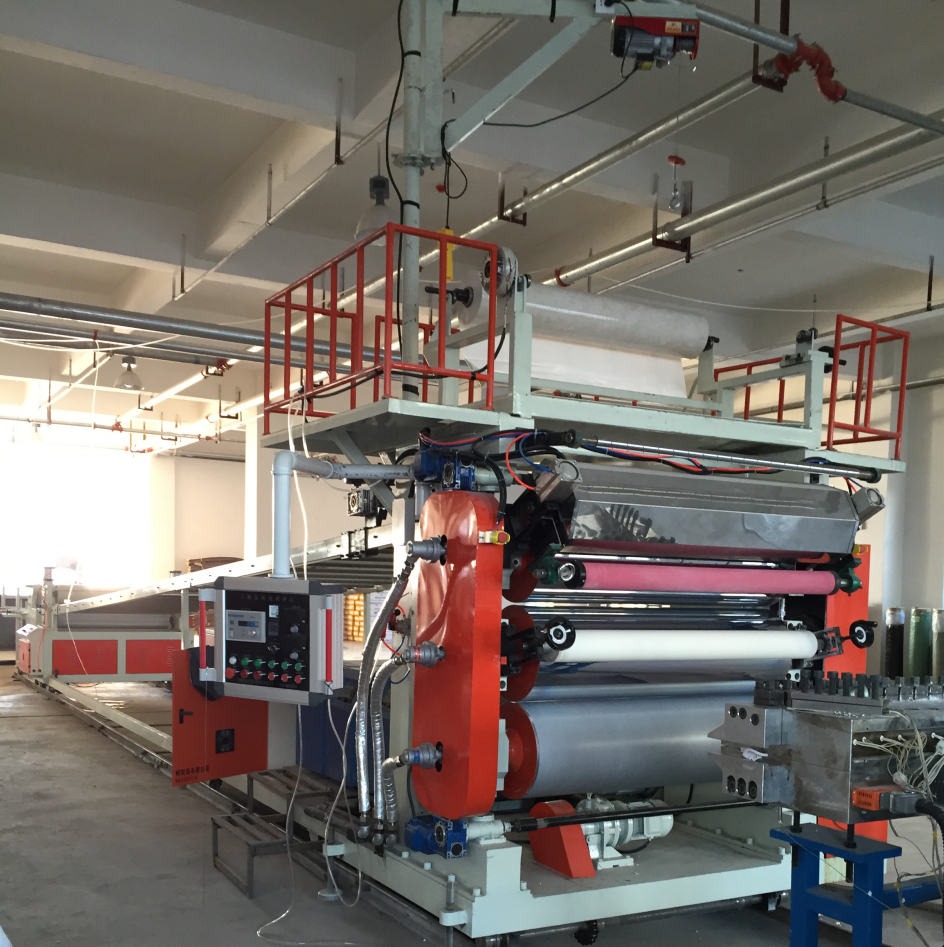
Extrusion line workshop panorama. A buyer's first check is whether the line on the floor matches the model, drive rating and layout drawing that the quotation describes.
Why a model number is not yet a specification
In the published range, the conical twin screw series is written in two different ways, and the difference matters at the order stage. The series form is SJSZ-45 / 51 / 55 / 65 / 80 / 92 / 110. The paired form carries a second number and a rated power: SJSZ80/156 at 75 kW, SJSZ92/188 at 110 kW, and SJSZ110/220 at 200 kW. Both forms identify the same family. Only the paired form, with the kW figure attached, tells you what the extruder is being asked to drive.
The single screw side behaves the same way. The SJ Series is offered as custom models, listed as SJ30, SJ45, SJ65, SJ90 and similar, and the same series also appears in line-specific configurations: SJ-130×33 at 160 kW and SJ-90×33 at 75 kW on the PP hollow construction formwork line, and SJP115/30 at 90 kW alongside SJP135/30 at 132 kW on the SPC flooring line.
Two consequences follow for the buyer. First, a quotation that names only "SJSZ-92" has not specified the drive, so it cannot be compared with a competing offer that names SJSZ92/188 at 110 kW. Second, a nameplate that carries the series name but not the paired designation cannot be checked against the line layout drawing, which is the document the factory will actually build to.
Verification matrix: catalogue statement vs. what to confirm
| Item | What the published catalogue states | What must be confirmed on the order |
|---|---|---|
| Single screw series | SJ Series, custom models SJ30, SJ45, SJ65, SJ90 and similar | Exact model, screw configuration, drive power, and the line it is configured for |
| Line-specific single screw | SJ-130×33 (160 kW) and SJ-90×33 (75 kW); SJP115/30 (90 kW) and SJP135/30 (132 kW) | Which frame size and which kW rating appear on quotation, drawing and nameplate |
| Conical twin screw series | SJSZ-45 / 51 / 55 / 65 / 80 / 92 / 110 | Series size plus the paired designation, where the quoted line uses one |
| Paired twin screw with power | SJSZ80/156 (75 kW), SJSZ92/188 (110 kW), SJSZ110/220 (200 kW) | Rated power in kW, and confirmation that the line layout was designed around it |
| Screw and barrel material | Stated as 38CrMoAlA nitrided alloy steel | Grade on the part drawing, nitriding record, and coverage of both screw and barrel |
| Auxiliary units | SRL-Z200/500, SRL-Z300/600, SRL-Z500/1000, SRL-Z1000/3000; SP400/SP660; MF400/MF500/MF600 | Configuration quoted; nameplate and packing list match; included vs. ordered separately |
| Certification scope | CE certificate covering the SJSZ, SJ and SJP series models | Certificate validity at the shipment date, and which items it actually covers |
Single screw verification: SJ30, SJ45, SJ65 and SJ90 in line context
The single screw range is the smaller-footprint option in the catalogue, and it is the range where customisation creates the most verification work, because the same designation is reused across different line families. The published placements are:
- Standalone and custom models: SJ Series, listed as SJ30, SJ45, SJ65, SJ90 and similar under the Single Screw Plastic Extruder range.
- Multi-material profile line: SJ45, SJ50 and SJ65.
- Solid plastic rod line: SJ45 and SJ65.
- PP hollow construction formwork line: SJ-130×33 at 160 kW and SJ-90×33 at 75 kW.
- SPC flooring line: SJP115/30 at 90 kW and SJP135/30 at 132 kW, offered alongside the twin screw options.
SJ65 therefore appears in at least three different contexts, and the designation alone does not tell a buyer which machine is being quoted. When SJ-series equipment is on the table, ask the supplier to state four things in the offer: the screw diameter and configuration, the drive power, the line drawing the extruder belongs to, and the product the line is intended to make. Because these models are explicitly custom, the customisation list — extruder model, screw configuration, production line layout, voltage and frequency, control system, and capacity adjustment — is part of the technical specification rather than an item to be settled after the order.
Conical twin screw verification: SJSZ-45 to SJSZ-110 by application
The conical twin screw range runs from SJSZ-45 to SJSZ-110, and the catalogue places individual sizes inside specific production lines. That placement is the verification key: the model on the quotation should be traceable to the line table row for the product you intend to make.
- PVC grille and decoration profile line: SJSZ51 at 18.5 kW, SJSZ55 at 22 kW, SJSZ65 at 37 kW.
- PVC hollow wall panel and ceiling line: SJSZ51, SJSZ55, SJSZ65 and SJSZ80.
- PVC hot-cut pelletizing line: SJSZ55, SJSZ65, SJSZ80 and SJSZ92.
- PVC imitation marble sheet line: SJSZ80/156 at 75 kW and SJSZ92/188 at 110 kW.
- PVC and WPC foam board line: SJSZ80/156 at 75 kW, plus an 80+165 co-extrusion configuration at 75+37 kW.
- WPC door panel line: SJSZ80 and SJSZ92.
- PVC and WPC door and window profile line: SJSZ92/188 and SJSZ65/132.
- SPC flooring line: SJSZ92/188 at 110 kW and SJSZ110/220 at 200 kW, alongside the single screw SJP options.
Read together, three patterns appear that a buyer should build into the order document. SJSZ51 is specified at 18.5 kW on the decoration profile line, while the hollow wall panel line lists SJSZ51 without a power figure in that row — so the kW figure of the exact configuration has to be asked for, not assumed from the series. SJSZ92 appears as a bare designation on the pelletizing and WPC door panel lines but as SJSZ92/188 at 110 kW on the sheet and SPC lines, which is the same series at two different levels of specification. SJSZ65/132 appears in paired form on the door and window profile line while SJSZ65 appears alone on other lines.
The verification question is therefore never "is SJSZ-92 a real model" but "which row of the line table am I buying, and does the quotation reproduce that row exactly." Buyers comparing offers across suppliers should put the line table row, not the extruder series name, at the top of the comparison sheet.
Screw and barrel: documenting the 38CrMoAlA nitrided specification
The screw and barrel are the components in continuous contact with the melt, and the material specification attached to them is the part of an offer most often compressed into the phrase "alloy steel" and least often documented. The stated specification for this range is 38CrMoAlA nitrided alloy steel for the screw and barrel. Four documents make that statement checkable:
- The material grade as written on the screw and barrel drawing, not on the sales brochure.
- The nitriding process record for those parts, referenced to the machine serial number so it can be matched to your unit.
- Written confirmation that the grade applies to both the screw and the barrel of your model; a quotation line covering "screw" alone leaves the barrel unverified.
- A clear link between part number, extruder model and paired kW rating, so a material record cannot be attached to a different machine in the same multi-unit order.
The reason to keep this separate from the model check is that the two answer different questions. The model number describes the machine's geometry and drive; the material record describes what the working surfaces are made of. A correctly designated SJSZ92/188 with an undocumented barrel material is an incomplete offer, and a documented 38CrMoAlA screw on an unverified model is equally incomplete.
One boundary worth stating plainly: a nitriding record shows which process was applied to which part. It does not by itself predict service life under a specific compound, filler loading or operating pattern. Buyers running abrasive or highly filled formulations should ask, as part of the same offer, for the intended wear-part replacement interval and the supply terms for a spare screw and barrel, so that lifecycle cost is visible before the order rather than after the first rebuild.
Auxiliary units: what the catalogue states, and what it does not
The extruder is rarely the whole scope of supply, and auxiliary model designations deserve exactly the same verification discipline. Three auxiliary families are published alongside this range, and it is worth separating what is documented from what is not.
SRL-Z mixing and cooling unit
Four configurations are listed: SRL-Z200/500, SRL-Z300/600, SRL-Z500/1000 and SRL-Z1000/3000, described as a PVC mixing and cooling unit. The verification points are which configuration is quoted, and whether mixing and cooling are supplied as one matched set or as separate line items on the packing list. The configuration detail behind each designation is not set out in the supplied material, so any capacity or vessel-volume expectation should be confirmed in writing rather than inferred from the model number.
SP400 and SP660 plastic crushers
The catalogue states two model designations for the plastic crusher: SP400 and SP660. It does not state blade material, screen configuration, throughput or motor rating for these units in the material supplied with the range. If any of those four items affects your reclaim plan, request them in writing and attach the answer to the order. The role of the unit is easier to verify than its internals: it sits on the scrap-reclaim path, reducing edge trim, rejected sheet or off-spec profile so the material can re-enter the process.
MF400, MF500 and MF600 plastic pulverizers
Three pulverizer models are listed: MF400, MF500 and MF600. As with the crushers, the supplied documentation states the designations but not the throughput basis, wear-part material or screening arrangement. Buyers should confirm the throughput basis explicitly — whether a quoted figure refers to a specific material and mesh size, for example — because a pulverizer output figure without a stated material basis cannot be compared with a competing offer.
The extruder model tells you what the line makes; the auxiliary list tells you what the line does with what it rejects. Both belong on the same scope-of-supply document, itemised line by line, with the nameplate checked against the packing list at acceptance rather than at installation.
Acceptance evidence: what the pre-shipment test should leave behind
The stated acceptance criterion for this range is a pre-shipment factory test, supported by 100% factory pre-assembly and testing before shipment, with third-party inspection available on request. A test that leaves no document behind is difficult to enforce once the container has sailed, so the useful question is what the test file contains. A practical minimum is five items:
- Nameplate photograph and nameplate data matching the order: extruder model, paired designation where applicable, kW rating, serial number.
- The screw and barrel material record described in the previous section.
- An auxiliary list whose model designations match the nameplates and the packing list line by line.
- The test record from the pre-shipment run.
- A certification set checked for validity at the date of shipment, not at the date of quotation.
Certificate validity is a live issue rather than a formality. The CE certificate supplied with this range — certificate M.2021.206.C.64011, issued by UDEM International Certification Auditing Training Centre on 22 April 2021 against EN ISO 12100:2010, EN 1114-1:2011, EN 60204-1:2018 and related EMC standards — carries an expiry date of 22 April 2026. An order placed after that date should be supported by the certificate that is currently valid; an archived PDF whose expiry has passed is evidence of what was certified in 2021, not evidence of what is certified now.
Market-specific requirements need the same treatment. In the United States, ANSI/PLASTICS B151.7 applies to extrusion machines used in the plastics industry and requires a risk assessment process in the manufacture, care and use of the machinery. Published references do not agree on the edition: the PLASTICS Industry Association standards page lists B151.7-2013, while the ANSI webstore lists B151.7-2014 (R2021). Confirm the edition your destination market or end customer requires before any compliance statement is written into a contract.
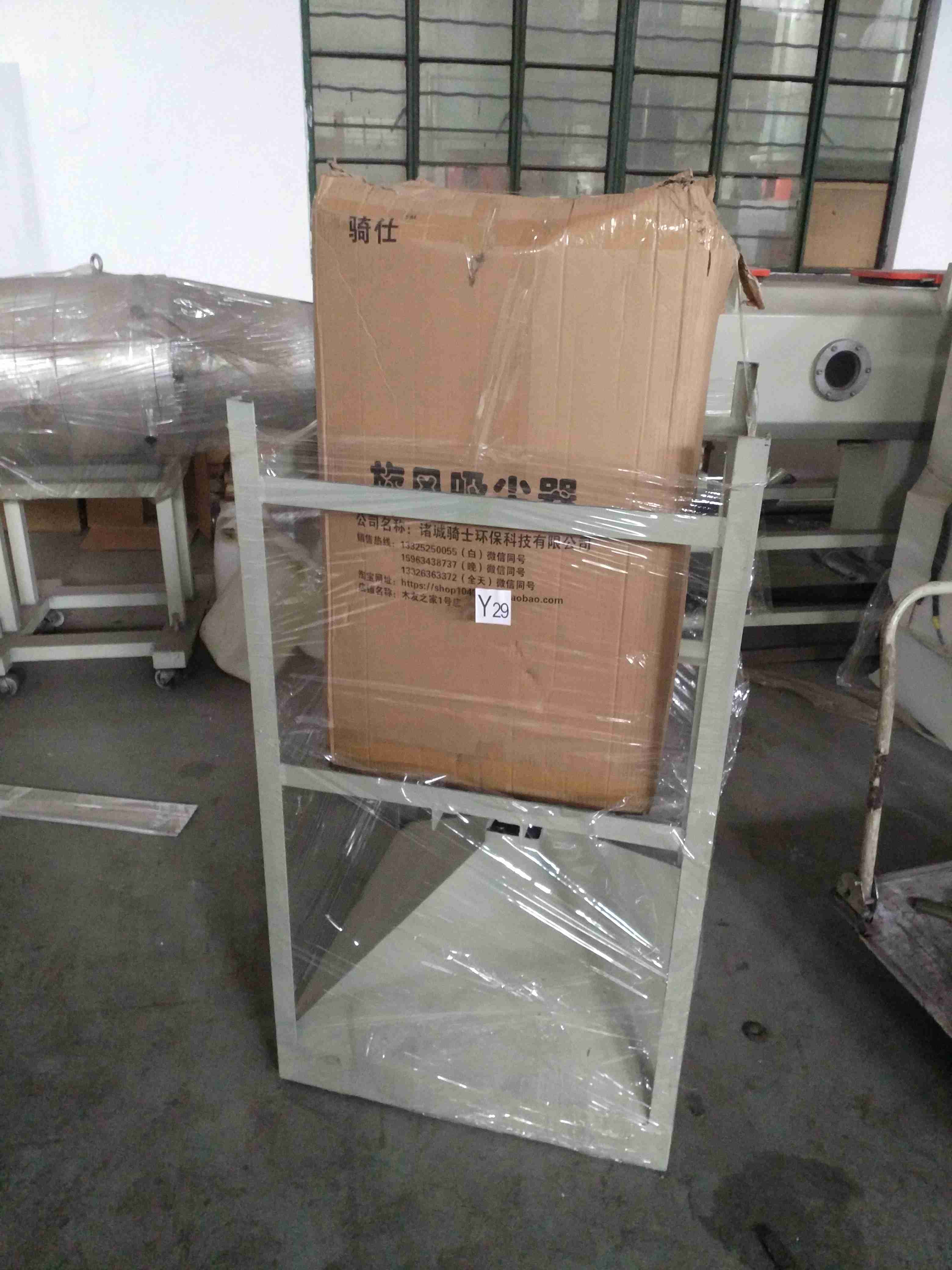
Equipment packed for the Vietnam PVC hollow wall panel line project. Packing lists should be checkable against the nameplate data and the quotation, line by line, before release.
Commercial terms belong on the same document as the model
Because the extruder model, screw configuration, line layout, voltage and frequency, control system and capacity are all adjustable under the stated OEM, ODM and custom design service, the commercial terms should be signed on the same document as the technical configuration — not in a separate summary that can drift out of step with the drawing.
- Minimum order quantity: 1 unit.
- Lead time: 40 work days.
- Monthly production capacity: 30 units.
- Delivery terms: FOB.
- Payment: 30% T/T deposit, 70% T/T balance before shipment.
- Acceptance criterion: pre-shipment factory test.
- After-sales: overseas installation guidance, on-site commissioning, operator training, remote technical support, and a 12-month warranty.
Two practical consequences follow. First, a 40-working-day lead time measured from a configuration that is still being changed is not a delivery date; freeze the customisation list before the clock starts. Second, because the minimum order is a single unit and the range is customisable, the order-specific drawing rather than the catalogue page is what the factory will build to. Verify the drawing, sign the drawing, and attach it to the order.
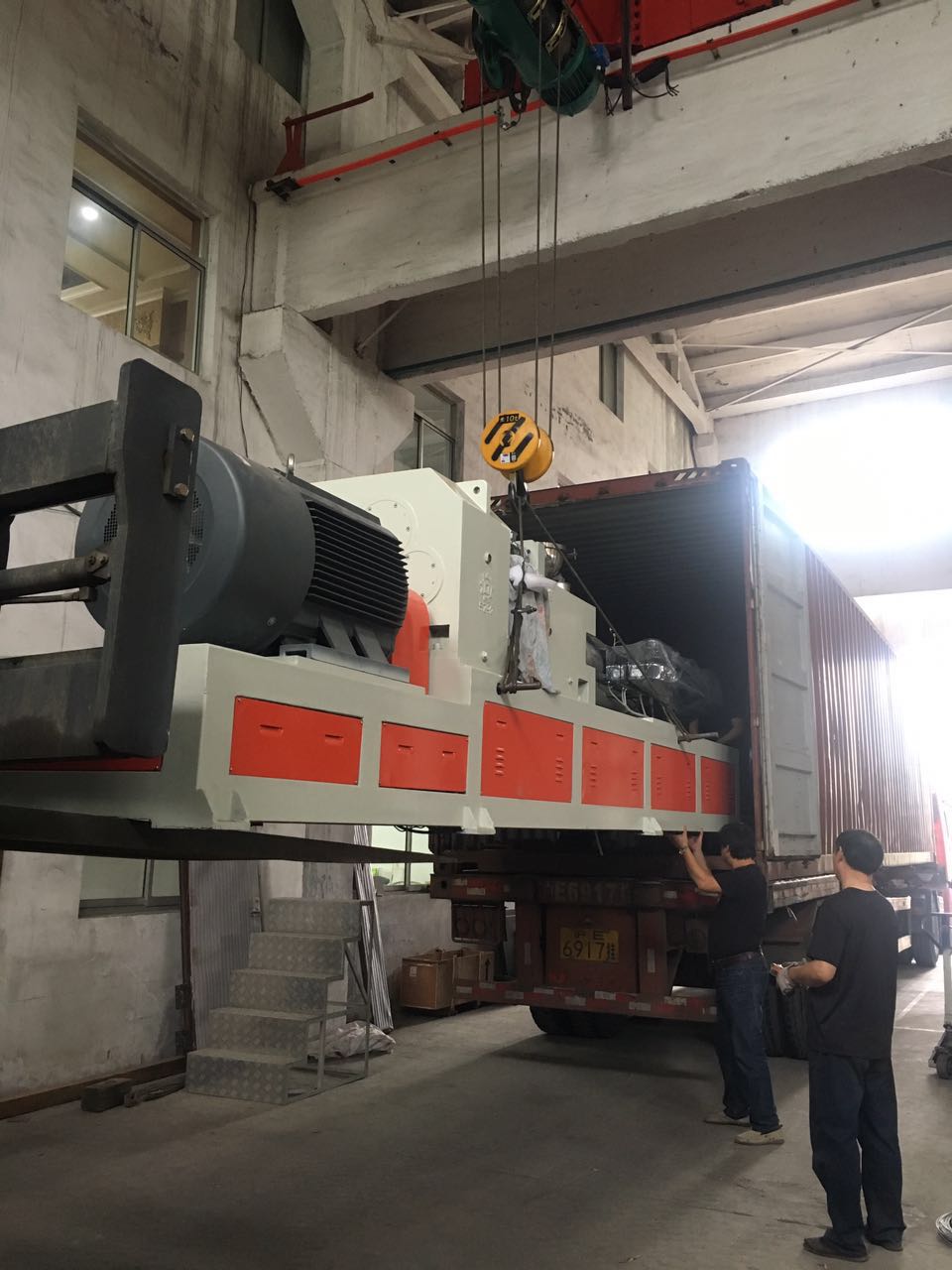
An SPC flooring line extruder being loaded at the plant for the South Korea project — the point at which nameplate, drawing and packing list should still agree.
Reference installations: what they establish and what they do not
Three supplier-reported references are attached to this range, each covering a specific line and product rather than the catalogue as a whole:
- Malaysia, SPC flooring: one complete SPC flooring extrusion line, in stable operation for over 10 years, producing SPC flooring for residential and commercial use, with high-speed production, precise thickness control and on-site installation and training support. Reported outcomes are stable continuous production, consistent product quality and a low maintenance rate.
- South Korea, SPC flooring: one complete SPC flooring line, in stable operation for over 8 years, reported as 24/7 production with consistent product quality and a low maintenance rate, with high output and reliable after-sales support cited as key points.
- Vietnam, PVC hollow wall panel: one complete PVC hollow wall panel line, in stable operation for over 5 years, producing panels for construction and interior decoration, delivered as a turnkey solution with on-site installation support and full export documentation.
What these references establish is bounded: these specific line configurations have operated for those periods at those sites, as reported by the supplier. What they do not establish is that a different model, a different compound, a different thickness range or a different shift pattern will produce the same result. The useful follow-up question is deliberately narrow — ask for a reference in the same line family running the same product type, and ask what the maintenance record actually covers. A ten-year reference on an SPC line says little about a profile line, and a five-year reference on a wall panel line says little about a pulverizer.
Market context: why the verification step is the real bottleneck
Two published datasets frame the sourcing environment, and both are easy to misread if observed figures and forecasts are mixed together.
Observed trade data, 2024: China was the leading exporter of rubberworking machinery under HS 8477 at USD 8.55 billion, ahead of Germany at USD 6.11 billion and Italy at USD 2.61 billion, according to the Observatory of Economic Complexity using UN Comtrade data. This is a record of 2024 trade. It says the supply base is deep and export documentation is routine; it says nothing about the build quality of any individual supplier.
Third-party forecasts: the global plastic extrusion machine market is projected to grow from USD 7.901 billion in 2025 to USD 12.87 billion by 2035 (Market Research Future, published September 2026), and the SPC flooring market is projected to grow from USD 6.4 billion in 2026 to USD 10.3 billion by 2033 (Grand View Research). Both are projections with stated base years and stated scope; neither is a guaranteed outcome, and neither substitutes for a supplier's own documentation.
The practical reading for a buyer in the evaluation-to-execution stage is straightforward. With a deep export supply base and several line families competing for the same downstream demand, competitive pricing is easy to find. What is harder to find is a supplier whose quotation, drawing, nameplate and certificate all describe the same machine. That alignment, not the price line, is what the checklist above is designed to test.
Pre-order checklist
- Extruder series and model written in full, including the paired designation where one applies (SJSZ80/156, SJSZ92/188, SJSZ110/220).
- Rated power in kW stated on the quotation, the drawing and the nameplate.
- Line table row identified by end product, not by series name alone.
- Screw and barrel material grade shown on the part drawing, with both parts covered.
- Nitriding record traceable to the machine serial number.
- Screw configuration, voltage and frequency, control system and capacity listed as customisation items rather than assumed.
- Auxiliary models (SRL-Z, SP, MF) itemised with the exact configuration quoted.
- Items the catalogue does not state — crusher blade material, pulverizer throughput basis, mixer configuration detail — requested in writing.
- Certification set checked for validity at the shipment date, with the applicable standard edition confirmed for the destination market.
- Commercial terms attached to the same signed document as the technical configuration: MOQ 1 unit, 40 work days, FOB, 30/70 T/T, pre-shipment factory test.
FAQ
Can the extruder model and screw configuration be customised for a specific line?
Yes. The stated service scope covers OEM, ODM and custom design production, and the listed customisation items are extruder model, screw configuration, production line layout, voltage and frequency, control system and capacity adjustment. Because each of those items changes the machine, the customised configuration should be written into the order document rather than left in email correspondence.
How can a buyer confirm the screw and barrel material before the machine ships?
Request the material grade as written on the screw and barrel drawing rather than as summarised in the brochure, the nitriding process record referenced to the machine serial number, and written confirmation that the grade covers both the screw and the barrel for the quoted model. The stated specification for this range is 38CrMoAlA nitrided alloy steel.
Which auxiliary units should appear on the same scope-of-supply document as the extruder?
The auxiliary families published alongside this range are the SRL-Z PVC mixing and cooling unit in four configurations (SRL-Z200/500, SRL-Z300/600, SRL-Z500/1000 and SRL-Z1000/3000), the SP400 and SP660 plastic crushers, and the MF400, MF500 and MF600 plastic pulverizers. Each should appear with its exact configuration, and each nameplate should be checked against the packing list at acceptance. Where the published material states only the designation — as it does for the crushers and pulverizers — throughput basis, wear-part material and motor rating should be confirmed in writing.
What documentation should the pre-shipment factory test produce?
The stated acceptance criterion is a pre-shipment factory test, backed by 100% factory pre-assembly and testing before shipment, with third-party inspection available on request. The buyer's file should hold nameplate data matching the order, the screw and barrel material record, the auxiliary model list, the test record from the run, and a certification set that is valid at the date of shipment.
What order terms apply when buying a single customised line?
The stated terms are a minimum order quantity of 1 unit, a lead time of 40 work days, a monthly production capacity of 30 units, FOB delivery, and payment of a 30% T/T deposit with the 70% T/T balance before shipment. After-sales support covers overseas installation guidance, on-site commissioning, operator training, remote technical support and a 12-month warranty.
Conclusion
Model verification is not a formality that sits between the shortlist and the deposit; it is the step that determines whether the machine delivered is the machine evaluated. The sequence that holds up under pressure is consistent: establish the extruder series and the paired designation with its kW rating, place the model in a specific line table row for a specific product, document the stated 38CrMoAlA nitrided alloy steel for both screw and barrel, extend the same discipline to the SRL-Z mixer, SP crushers and MF pulverizers, and require that the pre-shipment test file proves all of it before the container is sealed.
Buyers who want the full model listing and line configurations in one place can download the company's WPC door project brochure (PDF): JKS WPC door project brochure. The manufacturer's own site is at extrudetec.com.
Have Questions or Need More Details?
Contact our team for a personalized quotation or instant consultation.
Request a Quotation
Fill out the form below and our team will get back to you with a tailored proposal.
WhatsApp Direct Chat
Prefer to chat in real-time? Message us on WhatsApp for instant assistance & quick answers.
- Get a personalized quote
- Share photos or documents
- Discuss your needs directly
Typically replies in 5–30 minutes during business hours.