
Plastic Folding Basket Applications: Matching Design to Project Scenarios
Plastic folding baskets are often treated as one product category, but in procurement terms they behave like several distinct product lines defined by their operating scenario. A basket selected for a supermarket shelf-supply program does not face the same material, dimension, or durability requirements as one placed in a damp bathroom or packed into a car trunk for outdoor use. The core question for buyers at the research and evaluation stage is therefore not “which folding basket is cheapest” but “which configuration is correct for my project scenario.”
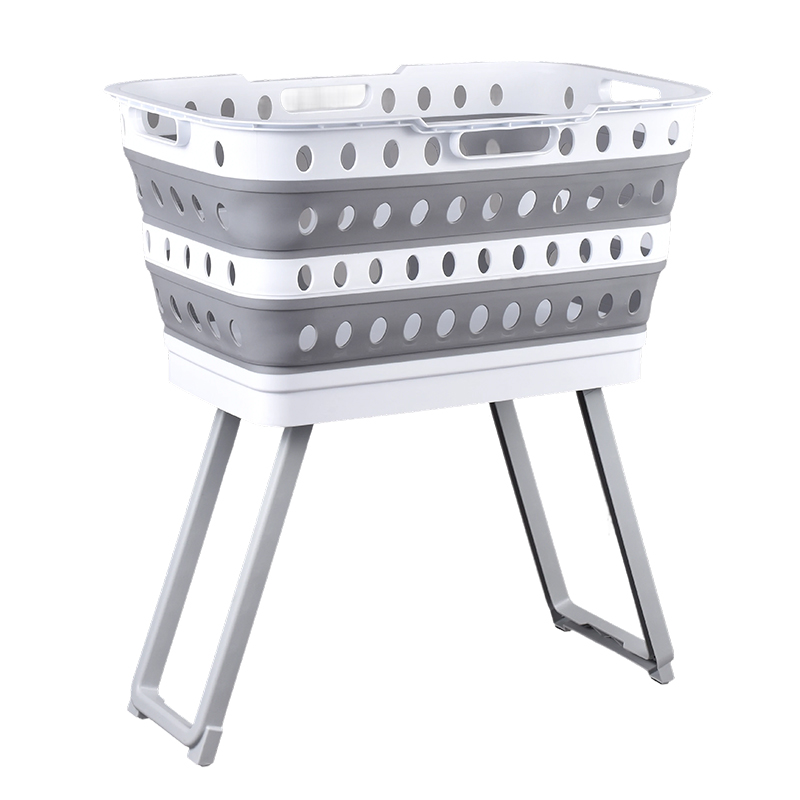
A foldable basket in a home storage setting. Image source: Taizhou Nantong Plastic Co., Ltd.
Market context supports this scenario-first view. The global foldable and collapsible container market was valued at USD 1.7 billion in 2025, with plastic materials accounting for a 53.9% revenue share (Grand View Research, 2025). Asia Pacific held the largest regional share at 36.8%, with China identified as the leading country market. In the United States, the foldable container market reached USD 422.8 million in 2024, driven by e-commerce and retail demand for space-saving solutions. These figures point to a category that is expanding across retail, logistics, outdoor, and household use—each with different purchase criteria.
This article maps plastic folding basket applications to the technical parameters that matter in each scenario, and explains how buyers can translate project requirements into product selection decisions.
Why Scenario Fit Decides Basket Performance
The most common source of failure in folding basket procurement is not raw material quality but scenario mismatch. A basket may pass sampling, show confirmed certifications, and still underperform if its configuration does not match the environment, load pattern, and operating frequency of the intended project.
The documented application scope for plastic folding baskets covers household supplies, laundry and cleaning, and supermarket retail, with additional use in outdoor camping, cross-border e-commerce, and global chain supermarket shelf supply. Working conditions include indoor household daily use, damp kitchen and bathroom environments, and outdoor temperature variations. Within this range, the functional requirements diverge significantly:
- In household laundry use, the basket must hold wet or heavy loads, resist repeated folding, and remain stable on slippery floors.
- In supermarket retail, the basket must stack efficiently, be easy for customers to carry, and present a clean, stable surface for branding.
- In kitchens and food-related projects, food-contact safety and the absence of odor become hard requirements, not optional benefits.
- In outdoor and vehicle scenarios, temperature tolerance, portability, and fast folding matter more than decorative appearance.
- In e-commerce and cross-border logistics, folded thickness and carton packing density directly affect freight cost per unit.
For buyers, the opportunity is to define the project scenario first and then select the product configuration that matches it. This approach reduces two common procurement failures: over-specifying, which means paying for food-grade certification where it is not needed, and under-specifying, which means choosing a lightweight basket for a high-frequency laundry project and facing early breakage.
A Supplier Organized Around Scenario-Based Production
One example of a manufacturer organized around this scenario logic is Taizhou Nantong Plastic Co., Ltd., an integrated factory-trade enterprise based in Taizhou City, Zhejiang Province, China, specializing in foldable plastic household goods. Founded in 2003, the company supplies markets including the USA, UK, Germany, Spain, Australia, Korea, and Japan, with about 70% of output exported.
What matters for project buyers is not the company size but the product structure it maintains. Nantong Plastic offers over 90 styles of foldable plastic products, with basket capacities ranging from 3L to 43L, supported by 200 self-developed production molds. This breadth allows buyers to source different scenario configurations—laundry baskets, storage baskets, drain baskets, or custom shapes—from a single production line rather than coordinating multiple suppliers.
The company also supports OEM and ODM customization for product size, capacity, color, surface logo printing, outer packaging (color box and label), and functional accessories such as lids, wheels, stands, and drain holes. For a buyer evaluating a specific project scenario, this means the technical fit can be designed rather than approximated from a limited standard catalog.
Production evidence is relevant at the evaluation stage. The factory operates 12 injection molding machines (300g to 2500g), manipulators, automatic packing machines, thermoforming machines, and 3 assembly lines. Standard mold opening cycles take 30–40 days, with mold repair response within 2–3 days. Monthly capacity is stated at 21,600 units, with stock-item lead times of 7–15 days. Quality control includes 100% raw material incoming inspection, semi-finished product inspection, and full inspection before shipment, with third-party SGS/ITS inspection supported.
Long-term retail supply relationships provide an additional reference point. Nantong Plastic reports stable cooperation of more than 8 years with core chain brands and describes itself as a long-term exclusive supplier for Walmart and Sam's Club (USA), with cooperation also covering Netto (Germany), Nitori and 3Coins (Japan). Products have been supplied to over one million households worldwide. For procurement teams, this type of supply history is one indicator that the manufacturer can meet chain-retail factory-audit requirements and repeated bulk order schedules.
Material and Structural Parameters That Determine Fit
The technical parameters that decide whether a plastic folding basket fits a project scenario can be grouped into four areas: material grade, folding durability, dimensional behavior, and interface design.
Material grade. Folding baskets from Nantong Plastic use 100% virgin food-grade PP+TPE composite material, are BPA-free, and are certified to BSCI, ECM, FDA, REACH, RoHS, ASTM, and SEDEX. The material withstands temperatures from -20°C to 120°C and releases no odd odor even when exposed to boiling water, while resisting cracking at low temperatures. For projects involving food contact, this matters at the compliance level: plastic folding baskets intended for food contact in the EU must comply with Regulation (EC) No 1935/2004 and Regulation (EU) No 10/2011, with Good Manufacturing Practices governed by Commission Regulation (EC) No 2023/2006.
Folding durability. Lab tests on Nantong Plastic's products show endurance of 5,000 to 10,000 repeated folds without cracking or deformation. The company holds 23 independent product patents for its one-piece fold-expand structure, which differs from spliced foldable products. Single-hand unfolding and folding requires no assembly. This group of parameters is most relevant for high-frequency daily-use scenarios such as laundry or storage, where fold-line fatigue is a common failure mode.
Dimensional behavior. After folding, the basket thickness shrinks to only a few centimeters, cutting volume by 75%–85%. Compared with rigid plastic containers, this design boosts container space utilization by 300%, with 4–5 times more pieces per carton. This is the key metric for e-commerce and cross-border logistics projects, where unit freight cost is directly tied to carton packing density.
Interface design. The documented features include anti-slip bottom structures and integrated reinforced handles, plus a smooth, stain-resistant surface that can be cleaned with water and weather-resistant material that prevents fading in outdoor use. These features support use in damp bathrooms, kitchens, and outdoor environments.
The following table maps typical project scenarios to the technical parameters a buyer should verify:
| Project Scenario | Priority Parameters | Typical Configuration |
|---|---|---|
| Household laundry & storage | Capacity (up to 43L), folding durability, anti-slip base | Folding laundry basket; thickened and large-capacity models |
| Supermarket retail & display | Stackability, handle ergonomics, surface branding | Folding hand basket; folding shopping basket |
| Kitchen / food contact | Food-grade certification, no odor, easy rinsing | Folding vegetable basket; folding drain basket; perforated hollow models |
| Damp environments | Water resistance, anti-aging, easy-to-clean surface | Folding drain basket; perforated hollow models |
| Outdoor / picnic / vehicle | Temperature tolerance, portability, compact folded size | Folding picnic basket; car folding basket |
| E-commerce / cross-border logistics | Folded thickness, packing density, light weight | Standard foldable series; pull-rod and hanging variants |
Application Scenarios: From Requirement to Configuration
The following scenarios represent the main documented use cases for plastic folding baskets and the configuration logic that applies to each.
Household laundry and storage
In this scenario, the basket provides space-saving storage and facilitates clothes washing, typically under indoor household daily-use conditions, including damp kitchen and bathroom environments. This application is commonly found in Japan, Australia, and Korea, where compact living spaces increase the value of foldable designs. For buyers supplying this segment, the relevant configurations are large-capacity models (up to 43L), thickened walls for load-bearing, and reinforced handles for carrying wet laundry.
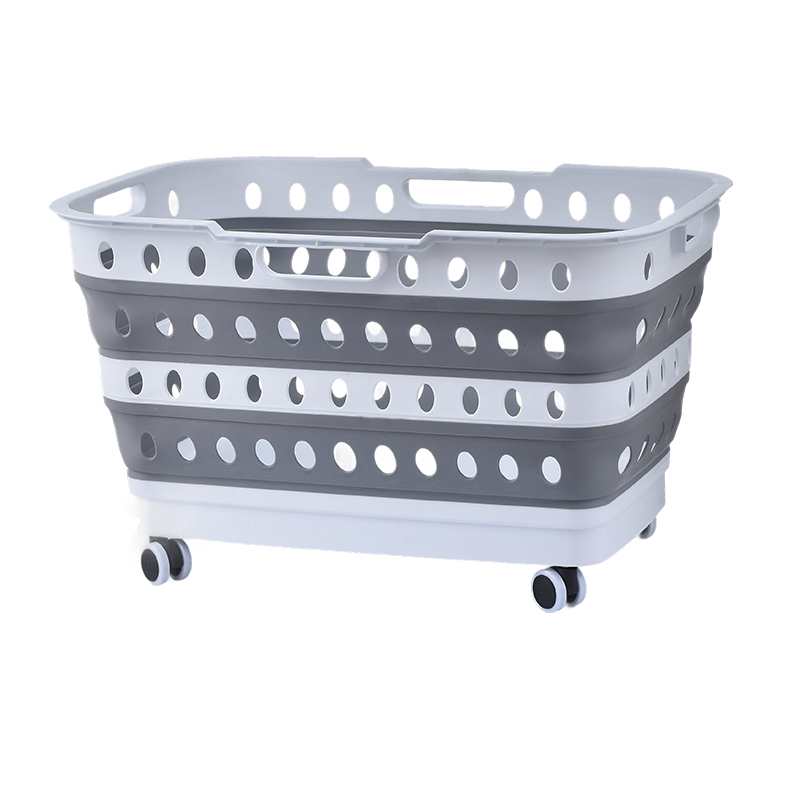
Folding basket variants for laundry, storage, and retail scenarios. Image source: Taizhou Nantong Plastic Co., Ltd.
Supermarket retail shelf supply
Plastic folding baskets are documented as suitable for supply projects for global chain supermarket shelves. In this scenario, the product operates in manual fold/unfold mode and should work with supermarket display racks. Case records set in the United States, Japan, and Germany show retail and e-commerce markets served by Nantong Plastic's supply chain, with customer feedback indicating low after-sales complaint rates and repeated annual bulk orders from global retailers. The relevant configurations are folding hand baskets and shopping baskets that can be nested or stacked for shelf restocking and customer carry.
Kitchen and food-contact applications
The special requirements in this scenario are food-contact safety and the absence of peculiar odors. This matters for vegetable washing, fruit storage, picnic food carrying, and drain-and-rinse tasks. At the regulatory level, EU market access requires compliance with the food-contact framework mentioned earlier. For buyers, the verification point is not only whether the basket “looks food-grade,” but whether the supplier can document FDA/LFGB certificates and the use of virgin food-grade material.
Outdoor picnic and vehicle storage
For outdoor use, temperature tolerance and portability become the decisive parameters. The foldable series can be stored in travel luggage or car trunks when not in use, which aligns with the documented supporting equipment for the product: household storage racks and travel luggage. The relevant configurations include folding picnic baskets and car folding baskets, with weather-resistant material preventing fading during sun exposure.
E-commerce and cross-border logistics
For Amazon FBA and wholesale import projects, the decisive parameters are not visible at the product level but at the carton level: folded thickness, packed carton size, and container loading efficiency. Nantong Plastic reports that foldable designs boost container space utilization by 300% and fit 4–5 times more pieces per carton compared with rigid containers. This directly lowers sea freight, air freight, and overseas warehousing cost per unit—a recurring consideration in FBA and DDP supply models.
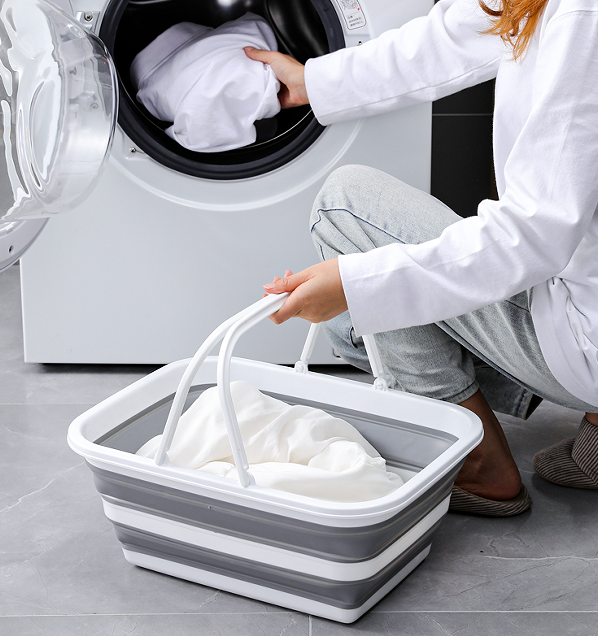
Folding baskets supplied in global retail and e-commerce channels. Image source: Taizhou Nantong Plastic Co., Ltd.
Market Signals That Support Scenario Expansion
The market data points in the same direction: folding basket demand is expanding across multiple scenarios, not just replacing rigid baskets in one channel.
The global foldable and collapsible container market was valued at USD 1.7 billion in 2025, and plastic was the dominant material segment at 53.9% revenue share (Grand View Research). Asia Pacific accounted for 36.8% of the market, with China as the leading country market—relevant for buyers sourcing from the Taizhou manufacturing cluster. The United States foldable container market was valued at USD 422.8 million in 2024, with e-commerce and retail demand for space-saving solutions identified as growth drivers.
Trade data adds an export-oriented perspective. Global trade for plastic boxes, cases, and crates under HS Code 392310 reached approximately USD 14 billion in 2024, with China's exports valued at USD 1.89 billion, placing China among the top three global exporters (OEC). Separately, the collapsible recycled plastic packaging sub-segment was estimated at USD 9.9 billion globally in 2025, signaling that sustainability-oriented folding products are becoming a distinct purchase category.
For buyers, these signals suggest three things. First, the category has sufficient scale to support specialized sourcing rather than treating folding baskets as a low-value commodity. Second, Asia Pacific—and specifically China—remains the manufacturing and export base that global buyers will continue to evaluate. Third, compliance and sustainability requirements are becoming standard procurement criteria, not optional differentiators.
Foldable vs. Rigid Baskets: Realistic Trade-Offs
Compared with traditional rigid plastic baskets, foldable designs offer measurable advantages in space efficiency and logistics. Folded volume is reduced by 75%–85%, warehouse and retail shelf space can be used more flexibly, and container loading efficiency improves substantially. These advantages are well documented and directly relevant for retail chains, e-commerce operators, and any buyer managing storage or freight costs.
However, a balanced comparison should also acknowledge the boundaries of foldable designs. The folding structure—a hard frame combined with foldable soft walls—is engineered for repeated daily use, not for extreme continuous loading. In industrial and commercial contexts, heavy-duty collapsible crates in the 100–300L capacity range remain the dominant format, and rigid one-piece baskets may be more appropriate when the application involves aggressive handling, stacking under very heavy loads, or long-term static storage where foldability provides no benefit. Buyers should also note that fold-line durability, while tested at 5,000–10,000 cycles in laboratory conditions, depends on correct usage patterns; exceeding the intended load or folding the basket roughly can reduce its service life.
For a household, retail, or light-commercial project, the foldable design's trade-off is usually acceptable. For an industrial project with heavy static loads and rough handling, a rigid or heavy-duty collapsible crate would be a more defensible choice.
Future Outlook: More Scenarios, Stricter Compliance, Greater Logistics Pressure
Looking ahead, four developments are likely to shape plastic folding basket procurement.
First, scenario segmentation will continue. Pet washing, car organization, camping, elderly-friendly home use, and food delivery are all potential sub-scenarios with distinct configuration requirements. Suppliers that can customize size, color, structure, and accessories—rather than offering a fixed catalog—will be better positioned for project-type orders.
Second, food-contact and chemical compliance requirements will tighten, particularly in the EU, where Regulation (EU) No 10/2011 and GMP rules under Regulation (EC) No 2023/2006 set the framework for food contact materials. Buyers will need to verify certificates at the factory-audit level, not only at the sample level.
Third, logistics cost pressure will continue to favor foldable configurations. As cross-border e-commerce grows, the folded thickness and carton packing density of a product become as important as its retail appearance. This is a structural advantage for folding baskets over rigid alternatives.
Fourth, sustainability requirements will become a normal part of procurement briefs. The growth of the collapsible recycled plastic packaging segment and the use of recyclable PP+TPE materials indicate that buyers will increasingly ask for material traceability and recyclability documentation.
FAQ: Plastic Folding Basket Scenario Questions
Q1: What industries typically use plastic folding baskets?
Plastic folding baskets are used in the household supplies, laundry and cleaning, and supermarket retail industries. Documented application scenarios also include outdoor camping, cross-border e-commerce, and global chain supermarket shelf supply projects.
Q2: In which markets are plastic folding basket applications most commonly found?
Documented application scenarios include Japan, Australia, and Korea in the Asia Pacific region. Case records also cover the United States, Japan, and Germany, serving global retail and e-commerce markets.
Q3: Can plastic folding baskets be used in damp environments such as kitchens and bathrooms?
Yes. The documented working conditions for plastic folding baskets include indoor household daily use in damp kitchen and bathroom environments. These products are also designed to provide space-saving storage and facilitate clothes washing in such conditions.
Q4: Are plastic folding baskets suitable for supermarket shelf supply projects?
Yes. Plastic folding baskets are documented as suitable for supply projects for global chain supermarket shelves. The product's manual fold/unfold operation and compatibility with display racks make it applicable to retail shelf programs. Case records from global retail and e-commerce markets in the United States, Japan, and Germany show low after-sales complaint rates and repeated annual bulk orders from retailers.
Q5: What special requirements apply when plastic folding baskets are used for food contact?
The documented application requirements include food-contact safety and the absence of peculiar odors. At the regulatory level, plastic folding baskets intended for food contact in the EU must comply with Regulation (EC) No 1935/2004 and Regulation (EU) No 10/2011, with Good Manufacturing Practices regulated under Commission Regulation (EC) No 2023/2006.
Q6: How does the foldable design affect logistics costs for bulk orders?
After folding, basket thickness shrinks to only a few centimeters, reducing volume by 75%–85%. Compared with rigid plastic containers, the foldable design boosts container space utilization by 300%, with 4–5 times more pieces per carton, lowering cross-border sea freight, air freight, and overseas warehousing costs per unit.
The 2026 product catalog of Taizhou Nantong Plastic Co., Ltd. is publicly accessible and includes detailed specifications of the foldable basket series. Procurement teams can use it as a reference when mapping product options to project scenarios.
Download 2026 Product CatalogHave Questions or Need More Details?
Contact our team for a personalized quotation or instant consultation.
Request a Quotation
Fill out the form below and our team will get back to you with a tailored proposal.
WhatsApp Direct Chat
Prefer to chat in real-time? Message us on WhatsApp for instant assistance & quick answers.
- Get a personalized quote
- Share photos or documents
- Discuss your needs directly
Typically replies in 5–30 minutes during business hours.