
Plastic Folding Basket Certifications: FDA & LFGB for Buyers
Plastic Folding Basket Certifications: FDA & LFGB for Buyers
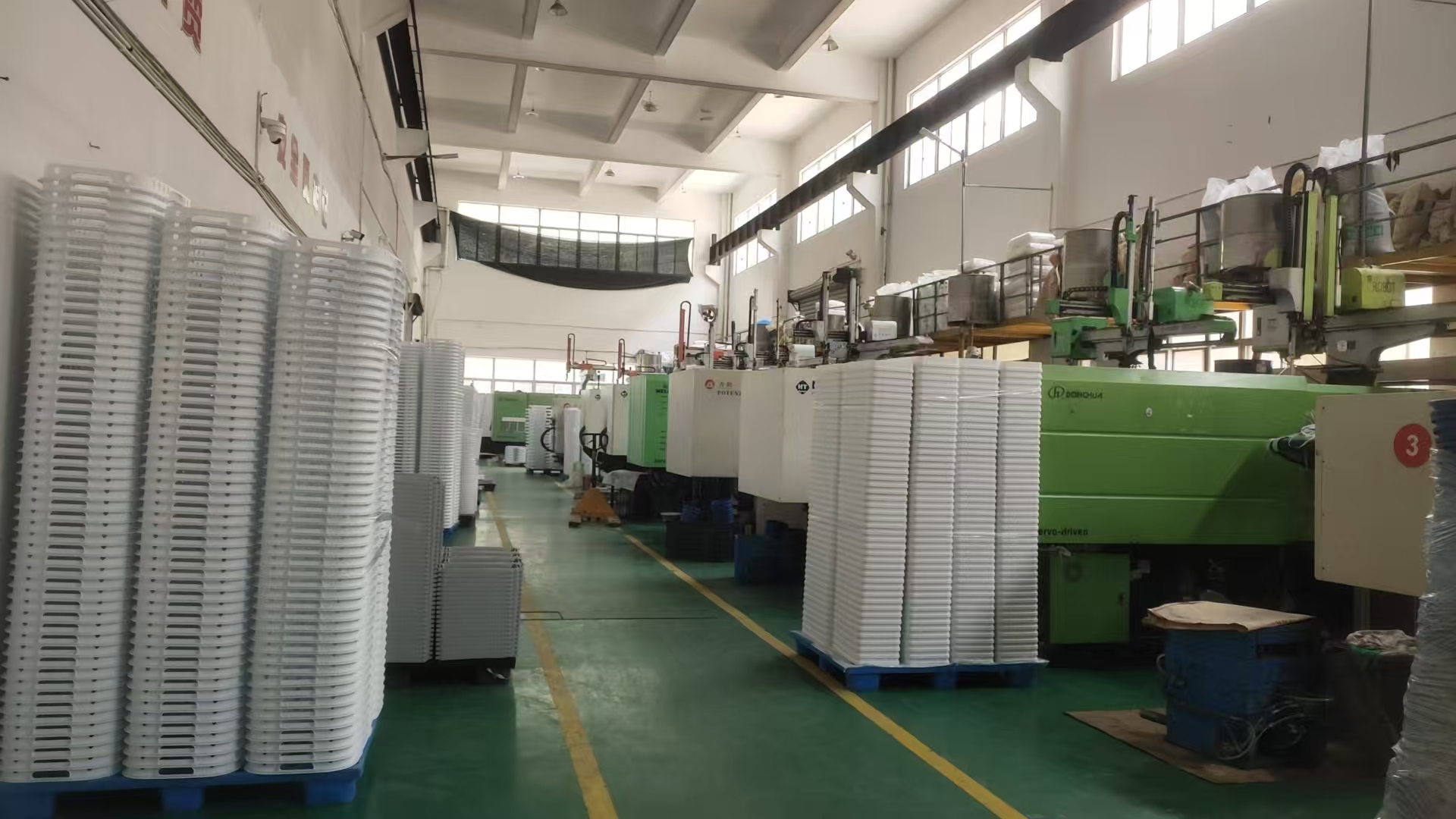
Production workshop: food-grade PP+TPE folding baskets pass staged inspection before shipment.
A plastic folding basket is an ordinary commodity until it is intended to touch food. At that point it becomes a regulated article, and three things decide whether it can be sold beside produce in a US grocery chain or a German discount shelf: material composition, migration behaviour, and documentation. For buyers working through the decision stage, FDA and LFGB are not decorative badges on a catalogue page. They are the access conditions that separate a shortlistable supplier from one that cannot be listed at all.
Why Food-Contact Status Moved from the Label to the Purchase Order
Food-contact compliance used to be a question asked by brand owners and private-label programmes. It is now asked at the sourcing stage, before a quotation is compared, because the consequence of getting it wrong lands on the importer rather than the factory. A container of folding vegetable baskets that cannot clear customs, or that fails a retail compliance audit after arrival, is a total loss of freight, storage and shelf timing.
The commercial context explains the urgency. The global foldable and collapsible container market, a category that includes plastic folding baskets and crates, was valued at USD 1.7 billion in 2025 according to Grand View Research. Within that category, plastic is the dominant material with a 53.9% revenue share, and Asia Pacific accounts for a 36.8% revenue share, with China identified as the leading country market. Trade data tells the same story from the other direction: global trade under HS Code 392310 — plastic boxes, cases and crates — reached approximately USD 14 billion in 2024, with China's exports of that code valued at USD 1.89 billion, according to the Observatory of Economic Complexity.
What those figures describe is scale, not compliance. But scale is precisely why compliance became a filter. As the number of food-adjacent folding SKUs grows — vegetable baskets, drain baskets, picnic baskets, fruit and produce organisers — retailers push verification upstream and simply remove suppliers who cannot answer document questions quickly.
What "FDA Food Contact Grade" Actually Means
In the United States, materials intended to contact food are regulated through a food-contact materials framework rather than a single universal product licence. That is why the industry phrase "FDA food contact grade" is best understood as shorthand for a documentation package rather than a seal printed on a basket.
A complete package normally contains three layers:
- A material declaration. Which resin grade is used, whether it is virgin or recycled, and which additives and colourants are present.
- A food-contact test report on the finished article. The resin being compliant does not automatically make the moulded, coloured, finished basket compliant.
- A statement of scope. The model, capacity and colour that the report actually covers.
For buyers, the third layer is the one most often missed. A report issued for one capacity in one colour does not automatically extend to a larger size or a different masterbatch. When a purchasing team compares two quotations, the meaningful comparison is not "does the supplier mention FDA" but "does the supplier's documentation name the exact SKU being quoted."
LFGB Explained, and How It Differs from FDA
LFGB is the abbreviation of the German Food, Feed and Commodities Code, the national framework that German authorities apply to materials in contact with food. German retail buyers — particularly discount chains and private-label programmes — commonly reference LFGB when they specify test evidence, because LFGB testing combines migration assessment with organoleptic evaluation: whether the article transfers odour or taste to food under defined conditions.
It is important to separate the national shorthand from the binding law. For the European Union as a whole, food-contact requirements come from EU-level legislation, notably Regulation (EC) No 1935/2004 and Regulation (EU) No 10/2011, which sets out the rules for plastic materials and articles intended to contact food, as published by the European Commission. Good manufacturing practice for food-contact materials is regulated separately under Commission Regulation (EC) No 2023/2006. An LFGB test report is therefore best treated as commercial evidence that supports an EU-market listing, not as a replacement for the underlying regulatory framework.
| Dimension | FDA (United States) | LFGB (Germany, used within the EU framework) |
|---|---|---|
| Primary reference | US food-contact materials framework | German Food, Feed and Commodities Code, applied alongside EU plastics rules |
| Typical evidence requested | Material declaration plus food-contact test report on finished articles | Migration test report plus organoleptic (odour and taste) assessment |
| Commercial trigger | US retail, e-commerce and food-adjacent SKUs | German and broader EU retail, discount chains, private label |
| Buyer's practical question | Does the report name the exact model, capacity and colour? | Does the report cover the intended use and the destination market's expectations? |
How Certified Material Choices Show Up in the Product Itself
Taizhou Nantong Plastic Industry Co., Ltd., founded in 2003 and based in Taizhou, Zhejiang Province, China, is an integrated manufacturer and trader of foldable plastic household goods. Its folding basket range is made from brand-new food-grade PP+TPE composite raw material, is BPA-free, and is certified across BSCI, ECM, FDA, REACH, RoHS, ASTM and SEDEX. The company also supplies complete certification documents for customs clearance, which is the practical link between a laboratory report and a container that moves without delay.
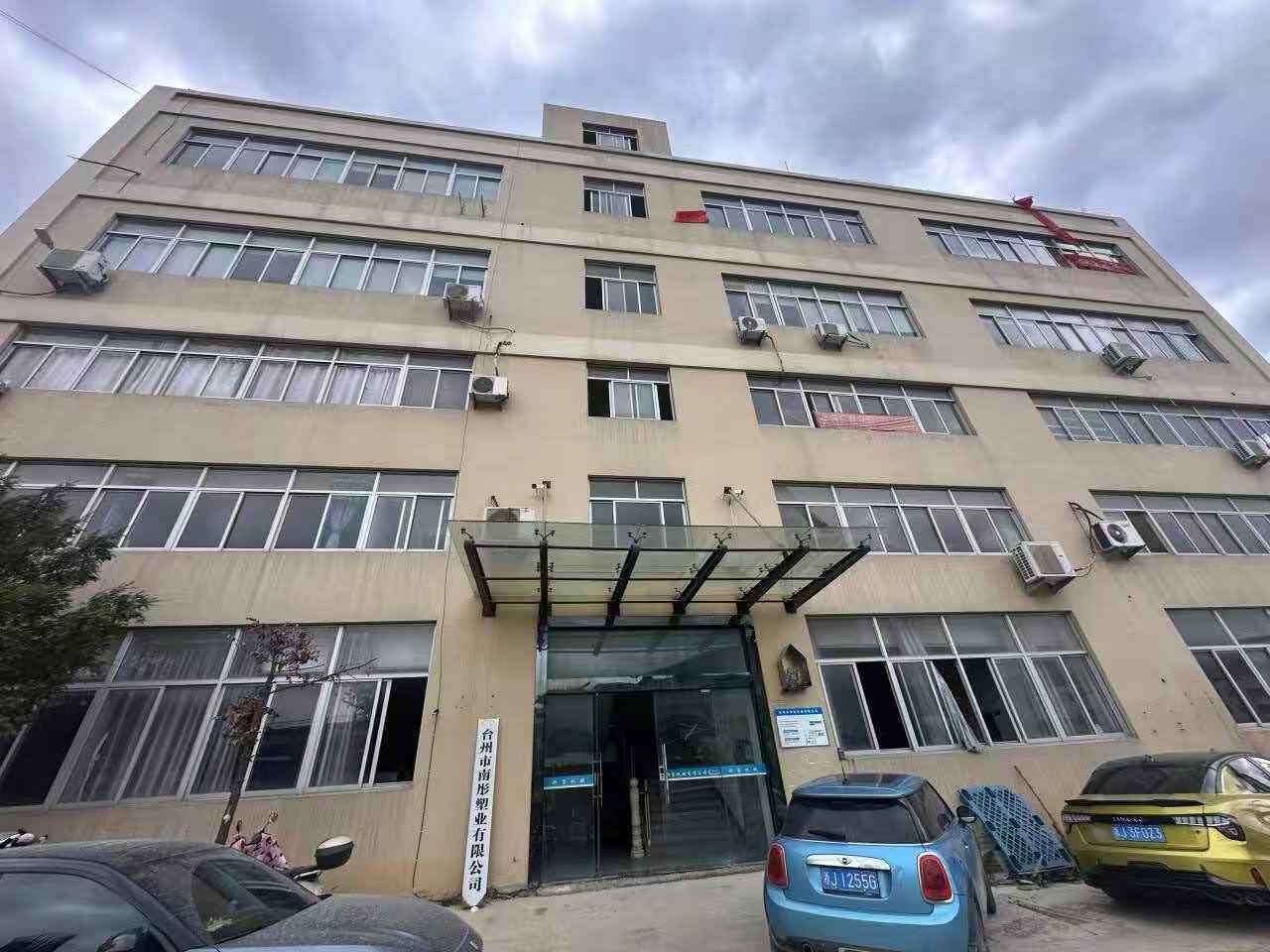
Manufacturing site in Taizhou, Zhejiang Province: a 6,000 sq.m plant supported by a separate 3,500 sq.m warehouse.
The compliance claim becomes credible only when it matches production reality. Several corpus-verified details do that work:
- Material identity. All products use brand-new food-grade PP+TPE composite raw materials and are BPA-free, rather than recycled feedstock of undefined origin.
- Temperature behaviour. The materials withstand temperatures from -20°C to 120°C, release no odd odours even with boiling water, and resist cracking under low temperatures.
- Fold durability. Lab tests show the items endure 5,000 to 10,000 repeated folds without cracking or deformation — the fold line is the structural feature most likely to fail first.
- Structural integrity. Reinforced thick side walls, heat-pressed fold lines and sealed seams support leak-proof performance, while anti-slip bottom structures and integrated reinforced handles improve stability during carrying.
- Range and capacity. Available capacities run from 3L to 43L, across over 90 styles, supported by 200 self-developed production moulds and 23 independent product patents covering a one-piece fold-expand structure.
- Processing scale. The 6,000 sq.m plant runs 12 injection moulding machines from 300g to 2500g, manipulators, automatic packing machines, thermoforming equipment and 3 assembly production lines; the company exports around 70% of output to markets including the USA, UK, Germany, Spain, Australia, Korea and Japan.
- Existing retail relationships. Nantong Plastic is a long-term stable exclusive supplier for Walmart and Sam's Club and cooperates with German Netto and Japanese Nitori and 3Coins — relationships that generally require documentation to be audit-ready on an ongoing basis.
- Quality control sequence. Full raw material food-grade testing is performed before production, followed by a three-stage full quality inspection during production and before shipment, with a one-year free replacement warranty covering non-human damage.
Why PP + TPE, and What It Changes for Compliance
Resin choice drives compliance risk more than any other single decision in this category. Polypropylene is one of the primary resins used for folding baskets because of its durability and recyclability, alongside HDPE, as documented by Plastics Europe. PP gives the basket its rigid panels and its heat tolerance. TPE, a thermoplastic elastomer, gives the fold line its flexibility, allowing the hinge to bend repeatedly without stress whitening or cracking.
The compliance-relevant difference between suppliers usually sits in the hinge. A spliced or multi-part folding basket introduces additional joints, additional materials and additional leak paths — each one a further migration and durability question. A one-piece fold-expand structure reduces the number of interfaces where material behaviour must be demonstrated, which is why patents on fold structure are not purely a design matter; they are also a compliance simplification.
The second differentiator is feedstock origin. Virgin food-grade compound behaves predictably under migration testing. Recycled content, even where it is technically recyclable and environmentally attractive, introduces variability that food-contact applications absorb poorly. That tension is now visible in the market: collapsible recycled plastic packaging is a fast-growing sub-segment, estimated at USD 9.9 billion globally in 2025 by Grand View Research, while food-contact articles continue to rely on documented virgin grades. Buyers sourcing baskets that will hold produce should treat the virgin-versus-recycled question as a specification line, not an environmental footnote.
Where Certification Actually Changes the Buying Decision
Certification is not equally relevant across the range, and treating every SKU the same leads to over- or under-specification. The distinctions are practical:
- Folding vegetable baskets and drain baskets. Direct, repeated food contact and wet conditions. Food-contact documentation is effectively mandatory.
- Folding picnic baskets and outdoor baskets. Food contact plus UV and temperature variation. Weather-resistant material that resists fading matters alongside food-safe composition.
- Folding laundry baskets and general storage baskets. Skin contact and enclosed indoor use rather than food contact. BPA-free, odour-free material remains the relevant criterion, particularly for households with infants.
- Car folding baskets and travel storage. Space efficiency is the driver: after folding, thickness shrinks to only a few centimetres, cutting volume by 75%–85%.
- Cross-border bulk wholesale and supermarket shelf display. Documentation is the driver. Complete certification documents for customs clearance, plus stackability that saves warehouse and retail shelf space, determine landed cost and listing speed.
- Pet washing and infant-adjacent household use. Direct contact with skin and fur raises the same material questions as food contact, which is why BPA-free, odourless food-grade material is specified here as well.
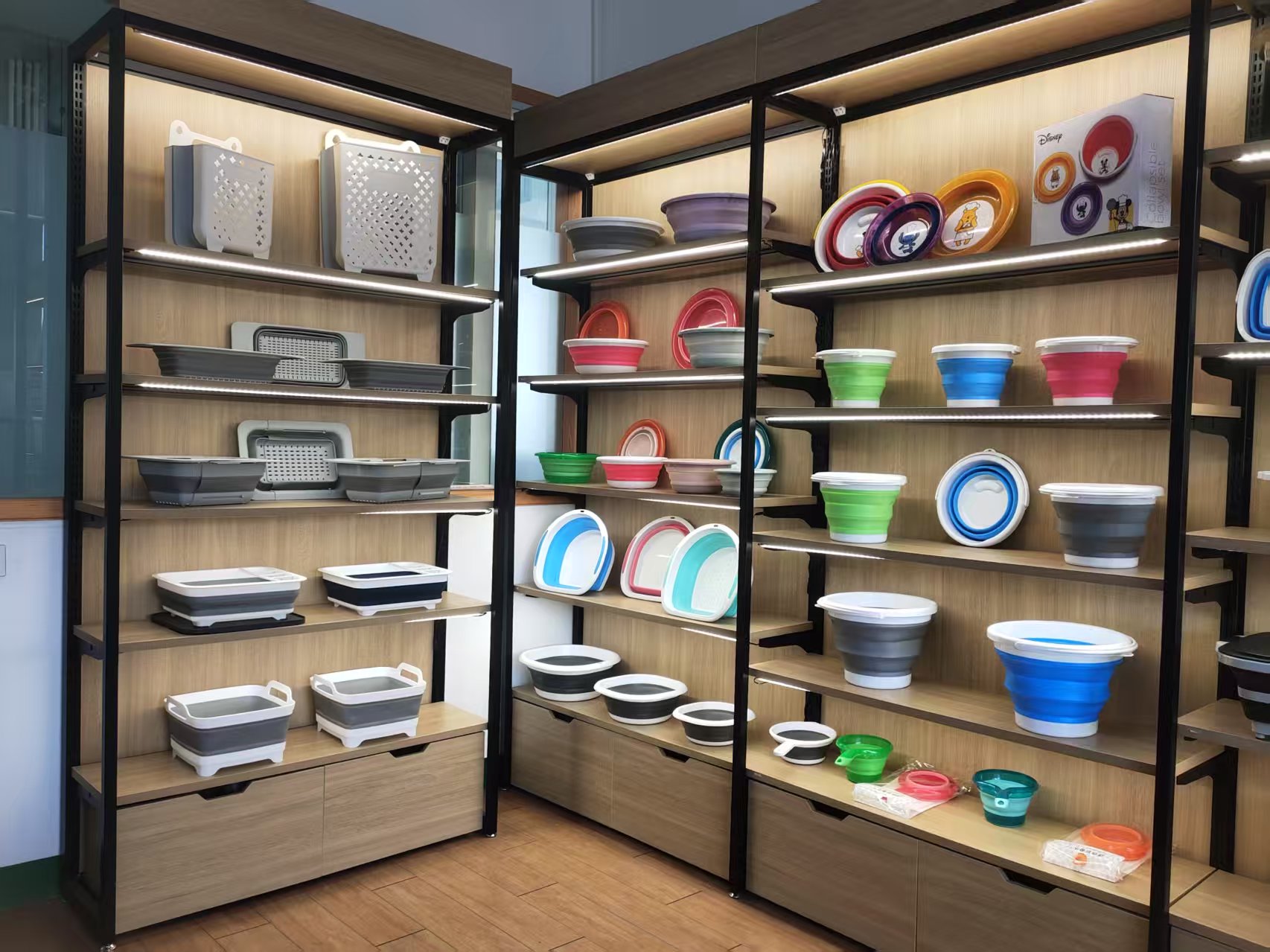
Sample showroom: folding basket styles and colour variants reviewed by buyers before a specification is locked.
A Buyer's Verification Checklist for Certified Folding Baskets
The following checklist converts a certification claim into comparable evidence. Each row corresponds to a document a supplier should be able to produce without delay.
| What to request | Why it changes the decision |
|---|---|
| Resin declaration (grade, virgin or recycled) | Feedstock origin is the single largest driver of migration risk and of batch-to-batch consistency. |
| Food-contact test report on the finished article | Confirms the moulded, coloured basket rather than the raw resin alone. |
| LFGB test report, where a German or EU listing is planned | Adds organoleptic evidence to migration evidence, which is what many German buyers specify. |
| Colourant and additive statement | Colourants and processing additives are common sources of non-compliance even in compliant base resin. |
| Report scope: model, capacity, colour | Certificates are specific. A mismatch between report scope and quoted SKU is an import risk. |
| Batch-level inspection record | Connects the document to the actual shipped lot rather than to a historical sample. |
| Certification set for customs clearance | Determines whether the container clears without demurrage or re-testing. |
| Operating limits: temperature, load, contact restrictions | Defines the claims a retailer can safely print on packaging and in listings. |
Comparison with Traditional and Low-Cost Alternatives
Certified food-grade folding baskets compete against three established alternatives: traditional fixed non-foldable plastic baskets, low-cost foldable baskets made from recycled plastic, and thin-wall ordinary folding plastic products. The difference is not a single feature but the combination of material, structure, audit status and certifications.
| Comparison dimension | Traditional fixed basket | Low-cost recycled / thin-wall foldable | Certified food-grade PP+TPE foldable |
|---|---|---|---|
| Material | Rigid plastic, mixed grades | Recycled feedstock or thin-wall construction | 100% new food-grade PP+TPE, BPA-free |
| Certification and audit | Varies; often not documented for food contact | Rarely supported by full documentation | Complete global factory audit and food safety certification set |
| Storage space when not in use | Fixed volume | Folds, but durability is uncertain | 75%–85% reduction; folds to a few centimetres |
| Container utilisation and loading | Baseline | Unclear, often inconsistent | 300% higher container utilisation; 4–5 times the loading quantity |
| Expected service life | Baseline | Frequent cracking or leaking | 5–10 times longer than comparable low-cost recycled plastic folding products |
| After-sales cost for retailers | Moderate | High replacement rate | Lower, because replacement is not driven by cracking or leaking |
Two boundaries deserve equal weight, because a comparison that only lists advantages is not usable for a purchasing decision.
The first is cost structure. The unit product cost of certified food-grade folding baskets sits slightly higher than low-end recycled-plastic goods. The economics are recovered downstream: importers see more than a 60% reduction in ocean freight and warehouse storage cost, on the back of 4–5 times the loading quantity per container. That trade-off works for buyers optimising landed cost and shelf turnover; it is a weaker fit for buyers whose only variable is the ex-works unit price.
The second is operating limits. The article is outside its design envelope under three conditions: long-term continuous heating over 120°C, violent scratching or impact from sharp hard objects, and loading beyond the marked maximum water capacity. These risks are managed through clear temperature and load capacity markings on each product, English user manual reminders, and structural reinforcement with thickened 2–3mm side walls and integrated anti-break handles. Compliance documentation does not override physical limits, and any retailer claim that suggests otherwise should be questioned.
Market Trend Analysis: Compliance as a Category Gateway
Three data points describe the direction of the category. First, the foldable container market is already measured in the billions — USD 1.7 billion in 2025 — and plastic holds a 53.9% revenue share, with Asia Pacific at 36.8% and China as the leading country market, per Grand View Research. Second, the plastic crates segment is forecast to reach approximately USD 7.56 billion by 2034, growing at a CAGR of 7.56% from 2026, according to Fortune Business Insights; it is worth noting that other research houses publish materially lower growth estimates for the same segment, so forecasts should be treated as directional rather than precise. Third, the US foldable container market was valued at USD 422.8 million in 2024, driven by e-commerce and retail demand for space-saving solutions, according to Grand View Research.
Running alongside volume growth is a documentation trend. As recycled content becomes commercially attractive — collapsible recycled plastic packaging is already estimated at USD 9.9 billion globally in 2025 — food-contact articles face a widening gap between environmental positioning and measurable migration behaviour. Buyers are responding by splitting the specification: recycled content for non-food-contact SKUs, documented virgin food-grade compound for anything that holds produce. Factories that can support both positions with separate evidence packages are becoming easier to keep on a shortlist than factories that offer one undifferentiated claim.
Future Outlook
The likely direction for the next several years is a shift from certification as a static document to certification as a continuously maintained data layer. Three developments follow from the data above.
- Multi-market single-SKU strategy. Suppliers that already certify across BSCI, ECM, FDA, REACH, RoHS, ASTM and SEDEX can serve North America, the EU and Asia from one material platform, whereas suppliers with a single-market document set must re-qualify for each new destination.
- Re-verification rather than one-time approval. Regulatory frameworks — EU Regulation (EC) No 1935/2004, Regulation (EU) No 10/2011 and the GMP rules under Commission Regulation (EC) No 2023/2006 — evolve, and reports age. Buyers should expect periodic re-confirmation rather than treating a certificate as permanent.
- Documentation as a retailer listing prerequisite. As folding baskets move closer to food on the shelf, the ability to attach a valid test report to a specific model is becoming a listing requirement rather than a differentiator.
FAQ
Do plastic folding baskets need food-contact certification?
Only when the article is intended to contact food — vegetable baskets, drain baskets, fruit and picnic baskets being the typical cases. Non-food-contact uses such as laundry or general storage are not governed the same way, but buyers frequently still specify BPA-free, odour-free food-grade material because of skin contact and enclosed indoor use. The practical rule is to match the document type to the intended use rather than to the product name.
What is the difference between FDA and LFGB approval?
FDA refers to the US food-contact materials framework, where compliance is demonstrated through material declarations and test reports on finished articles. LFGB is the German Food, Feed and Commodities Code, commonly referenced by German buyers because LFGB testing pairs migration assessment with organoleptic evaluation of odour and taste transfer. For the EU as a whole, the binding requirements sit in EU legislation including Regulation (EC) No 1935/2004 and Regulation (EU) No 10/2011, with good manufacturing practice regulated under Commission Regulation (EC) No 2023/2006. The two are not interchangeable, and a report issued against one framework does not automatically satisfy the other.
Which certifications does Nantong Plastic's folding basket range hold?
The folding basket range uses brand-new food-grade PP+TPE composite raw material and is BPA-free. Nantong Plastic's published certification set comprises BSCI, ECM, FDA, REACH, RoHS, ASTM and SEDEX, and the company provides complete certification documents for customs clearance. Buyers preparing a German or broader EU listing should confirm which specific test report applies to the model, capacity and colour being quoted.
What temperature range can certified food-grade folding baskets handle?
The materials withstand temperatures from -20°C to 120°C, release no odd odours even with boiling water, and resist cracking under low temperatures. The stated design limit is long-term continuous heating above 120°C. Each product carries clear temperature and load capacity markings, supported by English user manual reminders, so buyers can align packaging claims with the documented range.
How long do food-grade folding baskets last compared with cheaper alternatives?
Lab tests show Nantong Plastic's folding products endure 5,000 to 10,000 repeated folds without cracking or deformation. The expected service life is 5 to 10 times longer than comparable low-cost recycled plastic folding products. Because the items do not need frequent replacement due to cracking or leaking, retailers see lower after-sales replacement cost, and a one-year free replacement warranty covers non-human damage.
How should buyers verify certification documents during sourcing?
Request the test report for the exact model, capacity and colour being quoted; confirm whether the resin declared is virgin or recycled; ask for a colourant and additive statement; and require a batch-level inspection record that ties the document to the shipped lot. Nantong Plastic's own sequence — full raw material food-grade testing before production and a three-stage full quality inspection during production and before shipment — illustrates the kind of process evidence buyers can ask a supplier to describe in detail.
Are food-grade folding baskets recyclable?
Nantong Plastic's goods are made of recyclable eco-friendly materials that meet global environmental regulations, which supports end-of-life recovery alongside food-contact safety. Buyers pursuing recycled-content targets should distinguish between the recyclability of the finished article and the use of recycled feedstock in its production, since food-contact applications generally rely on documented virgin food-grade compound.
Closing Note
Certification in this category is less a badge than a chain: resin declaration, finished-article testing, report scope, batch inspection, and customs documentation. Each link is checkable, and each unanswered question is a landed-cost risk rather than a paperwork detail. Buyers who compare suppliers on that chain — rather than on whether a catalogue page mentions FDA or LFGB — will find the shortlist decision considerably clearer. The full 2026 range and specification detail is available in the Nantong Plastic catalogue.