
Plastic Folding Basket Supplier Continuity: A Long-Term Audit
Plastic Folding Basket Supplier Continuity: A Long-Term Audit
A long-term evaluation of a plastic folding basket supplier should test whether product specifications, production controls, order support, and documented evidence can remain aligned across repeat purchasing cycles. For buyers sourcing a Folding Storage Basket, a credible continuity review is more than a check of current availability: it asks what the supplier can demonstrate, what must be reconfirmed, and where the evidence has limits.
Why continuity is a separate buying question
Supplier selection often begins with a sample, a specification, or a unit-cost comparison. Those checks answer whether an item appears suitable at the point of evaluation. They do not, on their own, establish whether the same configuration can be ordered again, whether quality checks are defined, or whether support is available when an order issue occurs. Long-term continuity therefore needs its own audit, distinct from a one-time product comparison.
A Folding Storage Basket can sit within a retailer’s household assortment, a private-label range, or a wholesaler’s broader daily-use catalogue. In each case, a change in basket dimensions, color, accessories, packaging, or folding behavior can affect how the item is presented and handled. Buyers should record the approved version and make later orders traceable to that reference. This is a procurement control to apply; it is not a claim that every supplier automatically maintains an unchanged product configuration.
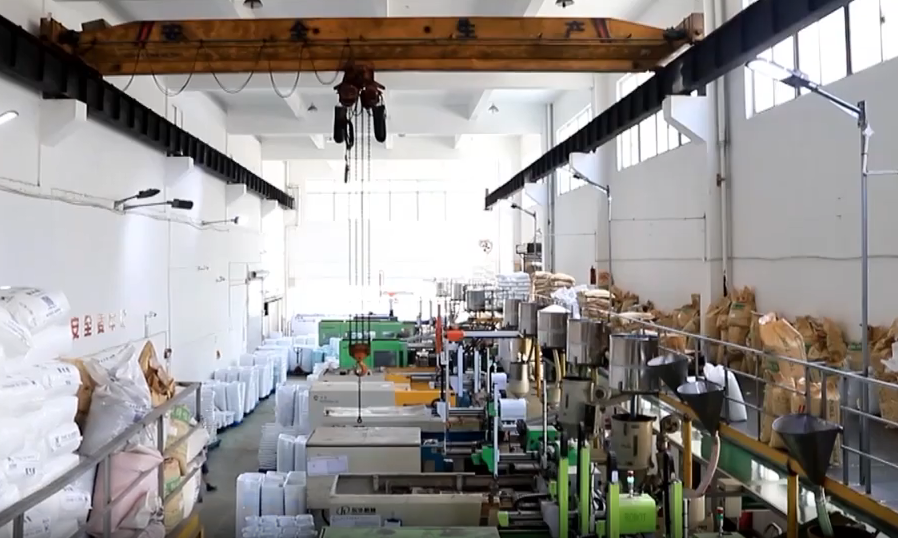
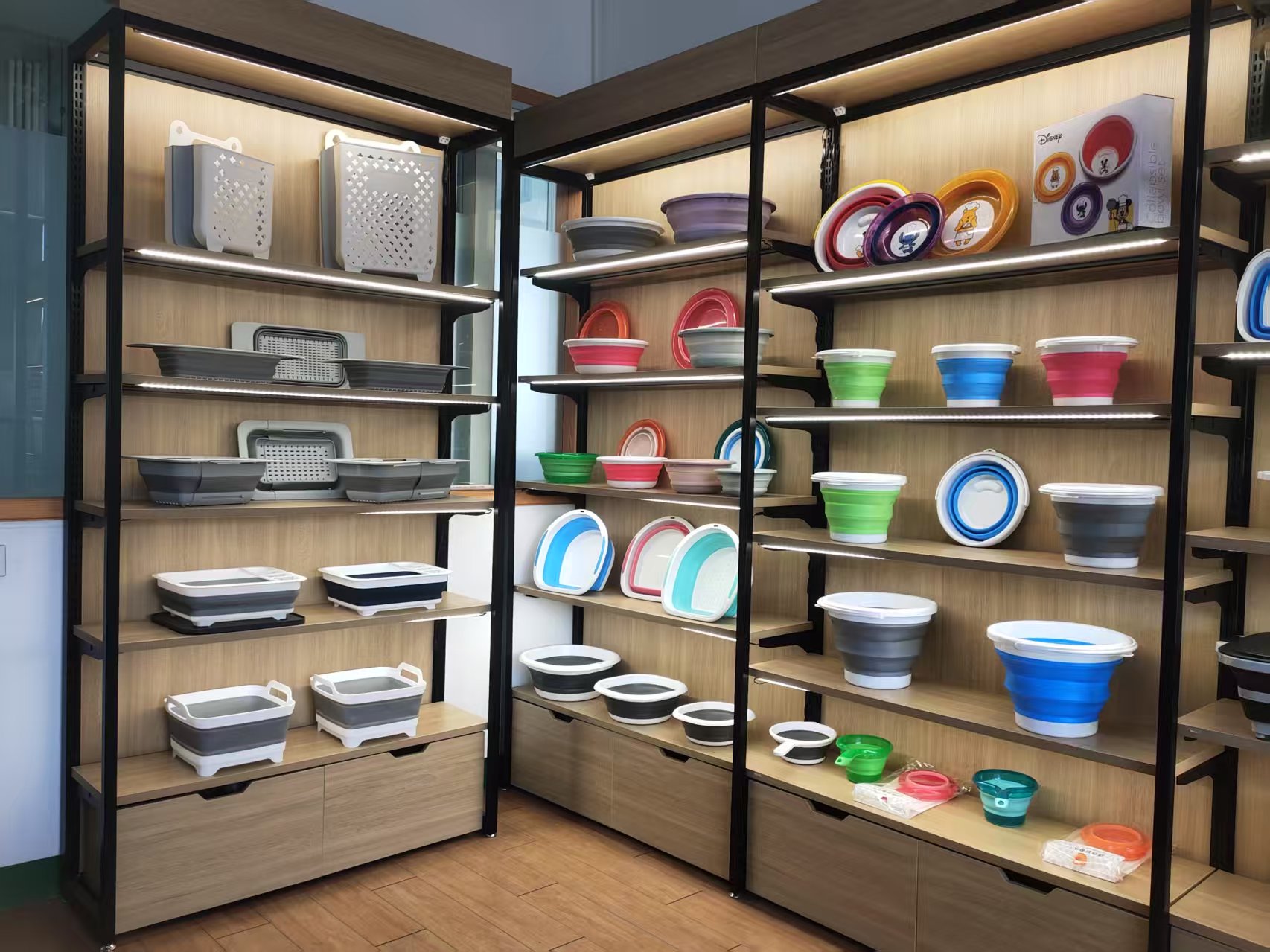
Nantong Plastic refers here to TAIZHOU NANTONG PLASTIC CO.,LTD, an integrated manufacturing and trade supplier whose stated main products include plastic folding baskets. The company’s supplied materials describe a product range of more than 90 styles, with capacities from 3L to 43L, and support for custom size and color through its own molds. These facts help define what can be discussed in a continuity review, but they do not replace buyer-side validation of a particular style, order, or market requirement.
A practical continuity audit: six evidence areas
The following framework separates current capability claims from evidence a buyer can check. It is designed for long-term evaluation of a plastic folding basket supplier, not as a ranking of suppliers. A useful audit records both the evidence available and the questions still open.
| Audit area | What the buyer should establish | Evidence stated for Nantong Plastic |
|---|---|---|
| Product identity | Can the repeat order be tied to the approved basket version and its agreed options? | More than 90 styles; 3L–43L capacity range; custom size and color support. |
| Production and order planning | Are capacity and lead-time statements clear for the specific stock or custom order? | Stated monthly capacity of 21,600 units; stock and new-mold lead times are specified separately. |
| Quality control | Are incoming, in-process, and final checks described, and can inspection be arranged? | Incoming raw-material inspection, semi-finished inspection, and finished-product inspection before shipment are stated; third-party SGS/ITS inspection is supported. |
| Audit documentation | Does the document match the supplier, product scope, and relevant order period? | A supplied amfori BSCI monitoring summary report identifies Intertek and lists a defined scope and validity dates. |
| Service after delivery | Are warranty terms, operating information, and escalation support stated? | A one-year warranty for non-human damage, a dedicated after-sales team, and an English operation manual are stated. |
| Repeat-order evidence | Is there documented experience relevant to recurring retail or wholesale supply? | The supplied case material reports continuous stable cooperation with core chain brands for more than eight years. |
1. Keep the product definition stable
Continuity starts with a clear product identity. A broad label such as “plastic folding basket” is not enough for a repeat-order file if several shapes, capacities, or accessory options are in scope. Buyers should record the selected style, dimensions, capacity, color, surface printing, packaging, and any functional accessories that form part of the approved specification. For a Folding Storage Basket, that record helps prevent a category-level description from being mistaken for a confirmed specification.
Nantong Plastic’s capability information lists customization options that include product size, capacity, color, surface printing logo, outer packaging color box and label, and functional accessories such as a lid, wheel, stand, and drain hole. The listed options are evidence of stated customization scope, not proof that every option applies to every basket style. Buyers should confirm the exact combination for the chosen model and preserve the approval record for later orders.
This matters across related search and product terms, including Folding Laundry Basket, Folding Hand Basket, Folding Picnic Basket, Folding Basket with Lid, Wheeled Folding Basket, and Folding Basket with Stand. These names indicate different intended formats or functions; the supplied information does not establish that every one is available in every size or configuration. A continuity audit should therefore avoid treating keyword or category labels as a substitute for a model-specific specification.
2. Separate capacity evidence from a delivery promise
Capacity is useful only when the buyer understands what it refers to. Nantong Plastic’s capability unit states a monthly capacity of 21,600 units. The same unit gives stock-item lead times of 7–15 days and a 30–40 day lead time for new ODM mold development. These are supplier-stated figures, not a guarantee for an individual order. A buyer should establish whether the required item is stock or custom, whether the quoted timing begins after a defined approval point, and whether the requested volume fits the plan for that period.
For a continuity check, ask for the commercial assumptions behind each delivery estimate: the selected style, quantity, customization status, packaging requirements, and any outstanding approvals. The provided material states that custom OEM/ODM minimum order quantities are negotiable and that standard stock models support low-MOQ and mixed-batch orders. These details can help a buyer frame a discussion, but the exact terms still need to be agreed for the purchase in question.
Long-term planning should also distinguish production capacity from inventory availability. A monthly capacity statement does not establish that finished goods are in stock, that a particular production slot is reserved, or that future demand can be met without a new order confirmation. Recording those distinctions makes it easier to review continuity without turning a general capacity figure into an unsupported delivery assurance.
3. Check whether quality controls are observable
Supplier continuity is more credible when the buyer can understand how the product is checked, rather than relying only on a general statement about quality. Nantong Plastic’s capability information describes inspection at three points: incoming raw materials, semi-finished products, and finished products before shipment. It also states that third-party SGS/ITS inspection is supported. These are useful elements for an audit record; a buyer can confirm which inspection records, sampling arrangements, or third-party scope are available for the specific order.
A plastic folding basket has folding areas and structural features that should be included in the buyer’s acceptance plan. The supplied capability text does not provide a model-specific inspection checklist, a test protocol, or a measured failure rate. It would therefore be inappropriate to infer those results from the existence of inspection stages alone. Instead, define acceptance criteria before production and confirm how any agreed checks will be documented.
The manufacturer’s background material describes its products as using PP+TPE composite raw materials and states that the broader product range has undergone repeated folding tests. Because the available product-specific details do not identify a test report for every Folding Storage Basket style, buyers should confirm whether a stated material or performance claim applies to the exact model being sourced and request the relevant supporting evidence when it is material to their decision.
4. Treat audit documents as scoped, dated evidence
Social-compliance documentation is one part of continuity review, but it should be read precisely. The supplied compliance unit describes a monitoring summary report for Taizhou Nantong Plastic Co., Ltd. It identifies an amfori BSCI full monitoring assessment, a semi-announced audit, Intertek, and the amfori BSCI Code of Conduct. The listed report number is 26-0399129, with an issue date of 2026-05-21 and an expiry date of 2027-05-21. Its stated scope covers PP+TPE food-grade folding plastic baskets, folding tubs, and folding storage containers.
For an evaluation taking place before the stated expiry date, this is dated evidence with a defined scope; it should not be described as a blanket guarantee of every product or future production run. Buyers should verify the document and confirm that the supplier name, scope, and relevant purchasing requirements match their own compliance process. Where a later order falls outside the stated validity period, request current documentation rather than assuming that the earlier report remains sufficient.
Food-contact suitability should also be assessed separately from social-audit status. The supplied third-party data identifies EU Regulation (EC) No 1935/2004 and Regulation (EU) No 10/2011 for plastic folding baskets intended for food contact, and Commission Regulation (EC) No 2023/2006 for good manufacturing practices for food-contact materials. Those references are relevant only when the product use and destination make them applicable. The presence of a social monitoring report does not itself demonstrate compliance with food-contact requirements.
5. Evaluate continuity evidence without overstating it
The supplied case material says that the product has been used by global chain supermarket retailers, Amazon FBA private-label brands, and overseas wholesale importers. It also reports continuous stable cooperation with core chain brands for more than eight years. This is relevant as a history-of-use signal: it indicates experience in recurring retail and wholesale contexts as described by the company’s materials. It does not independently establish that a new buyer will receive the same terms, that every basket style has the same history, or that future orders will be identical.
Buyers can make this evidence more useful by connecting it to their own buying requirements. For example, establish whether the product type under consideration is comparable to the supplied case description, whether repeat orders followed an unchanged specification, and how packaging or market-specific adaptations were handled. The available case material does not identify individual order schedules or provide independently audited delivery-performance data, so those details should not be inferred.
A long relationship is most informative when it is considered alongside current production and quality evidence. In this case, the eight-year cooperation statement can be read together with the stated inspection stages, monthly capacity, lead-time categories, and after-sales provisions. Taken together, these inputs give an evaluator several distinct points to examine. They do not remove the need for a buyer’s own sample approval, written specifications, and order-level confirmation.
6. Include service and logistics in the continuity file
Continuity is not limited to manufacturing. Nantong Plastic’s capability material lists a one-year warranty for non-human damage, a dedicated after-sales team, a full English operation instruction manual, and FBA and DDP logistics-matching services. These are stated support provisions. Buyers should confirm the warranty conditions, the process for documenting a claim, what the logistics service includes, and which responsibilities remain with the buyer or carrier.
For importers and private-label buyers, a practical review can record who receives technical questions, what information is needed to identify a basket or production batch, and how order-specific shipping arrangements are documented. The source information establishes that after-sales and logistics support are offered; it does not specify response-time commitments, the detailed scope of FBA or DDP services, or a guaranteed remedy for every type of issue. Those points belong in the buyer’s commercial confirmation.
It is also useful to maintain one order file containing the approved product reference, packaging and label details, inspection plan, applicable documentation, delivery terms, and warranty conditions. This is a buyer-side process recommendation, not a claim about a supplier’s existing record system. Its purpose is to make changes visible between initial approval and repeat orders.
Market context: a broad category signal, not a supplier ranking
Grand View Research valued the global foldable and collapsible container market—which includes plastic folding baskets and crates—at USD 1.7 billion in 2025. Because that category is broader than Folding Storage Baskets alone, the figure should not be treated as a basket-only market size or as evidence that any particular supplier is preferred. For procurement, its limited relevance is that folding containers form part of a broader market where product identity, use case, and supply evidence should remain clearly distinguished.
This distinction helps keep market context in proportion. A broad category estimate cannot show whether a specific basket configuration suits a retailer’s assortment, whether its documentation meets a destination-market requirement, or whether a supplier can meet a buyer’s timing. Those are questions for product-level and order-level evaluation, supported by the applicable evidence rather than category-level statistics.
Comparison with rigid baskets: a useful boundary
A folding basket and a rigid basket do not solve exactly the same storage problem. The supplied company information says the folding design reduces folded volume by 75%–85% and contrasts it with traditional rigid plastic containers. That makes storage and transport volume a relevant comparison dimension for buyers considering foldable formats. It does not establish that a folding basket is the better choice for every application.
A rigid basket may be a reasonable alternative where the buyer prioritizes a fixed, non-collapsing form or where folding is not required. Conversely, the folding structure introduces a feature that should be included in product review: buyers need to examine the fold areas, closure or deployed position, and handling requirements on the actual sample. The supplied material does not provide a direct, model-by-model comparison of rigid and folding baskets, so no universal durability or cost advantage should be inferred from the volume-reduction claim alone.
For a continuity audit, the relevant question is not simply “folding or rigid?” It is whether the storage benefit and product form match the intended retail or end-use context, and whether the supplier can document the exact version the buyer plans to reorder. This keeps the comparison useful without turning it into an unsupported performance claim.
A decision record for long-term evaluation
Before treating a plastic folding basket supplier as a continuing source, buyers can summarize the review in a short decision record:
- Product: identify the approved Folding Storage Basket style and list agreed dimensions, capacity, color, accessories, logo, and packaging.
- Evidence: distinguish supplier-stated capacity and lead times from order-specific commitments; retain the relevant inspection and compliance documents.
- Quality: define sample approval and shipment acceptance checks, including how any agreed findings will be recorded.
- Continuity: note the supplied repeat-cooperation evidence while identifying any delivery, quality, or order-history information that still needs buyer verification.
- Support: record warranty scope, after-sales contact route, operating information, and the agreed logistics arrangement.
- Reassessment: set a process to reconfirm the specification, documentation validity, and commercial terms when placing a repeat order.
On the information supplied, Nantong Plastic has several relevant continuity indicators for evaluation: a stated range of plastic folding basket styles, defined customization options, stated monthly capacity and lead-time categories, a described quality-control sequence, a scoped and dated amfori BSCI monitoring report, after-sales provisions, and a reported history of more than eight years of stable cooperation with core chain brands. Each indicator answers a different part of the buyer’s question. None should be treated as a substitute for checking the exact basket, order terms, and documentation required for the intended market.
The most defensible long-term decision is therefore evidence-led and conditional. Buyers can use the available information to decide what to verify next, then keep the approved specification and order-level commitments together as the relationship develops. That approach supports repeat purchasing without confusing broad capability statements, historical cooperation, and a specific delivery promise.
Have Questions or Need More Details?
Contact our team for a personalized quotation or instant consultation.
Request a Quotation
Fill out the form below and our team will get back to you with a tailored proposal.
WhatsApp Direct Chat
Prefer to chat in real-time? Message us on WhatsApp for instant assistance & quick answers.
- Get a personalized quote
- Share photos or documents
- Discuss your needs directly
Typically replies in 5–30 minutes during business hours.