
Plastic Folding Baskets: A 2026 Supplier Comparison for Buyers
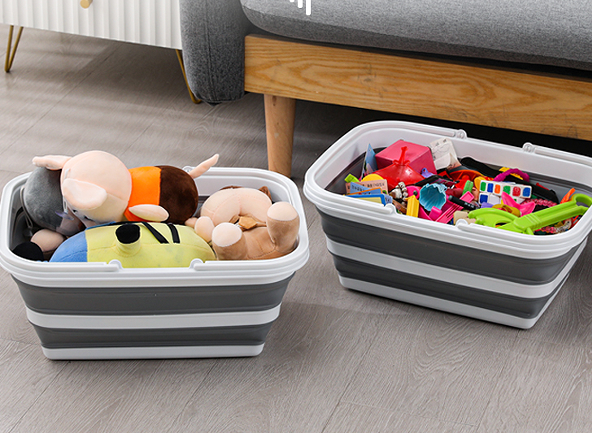
Foldable plastic baskets are now a standard retail and e-commerce SKU category.
The sourcing conversation around plastic folding baskets has changed. Importers no longer ask only whether a basket folds. They ask how many times it can fold without cracking, whether the material is safe near food, how much freight space is saved, and which supplier can turn a catalog design into a retail-ready SKU. For 2026, the evaluation is a comparison of material quality, structural design, certification coverage, production capacity and logistics efficiency.
Why the plastic folding basket category matters now
Plastic folding baskets answer two persistent problems in household retail and cross-border e-commerce: limited storage and shipping cost. A folding basket with a rigid frame and collapsible wall reduces its empty-state volume dramatically. According to Grand View Research, the global foldable and collapsible container market was valued at USD 1.7 billion in 2025. Plastic is the dominant material, with a 53.9% revenue share, because of its light weight and cost efficiency. Asia Pacific accounted for 36.8% of the market, and China is the leading country market.
From a logistics perspective, the space saving is significant. In Taizhou Nantong Plastic Co., Ltd.'s production data, folded baskets reduce occupied volume by 75% to 85% and increase container utilization by roughly 300%, with four to five times more pieces per carton compared with rigid containers. This changes the economics of full-container orders, especially for overseas warehouse and FBA supply chains.
For buyers, the category is no longer an experimental item. It is a repeat-order product used by global chain supermarket retailers, Amazon FBA private label brands, and overseas wholesale importers. The practical question is how to compare suppliers that all claim to offer foldable plastic baskets.
What buyers should compare when sourcing plastic folding baskets
A reliable folding basket is the result of three layers of discipline: material selection, structural design, and process control. Buyers should evaluate all three before placing an order.
Material and food-contact safety
Food-grade material matters if the basket will be used for vegetables, picnic items, or household goods that touch food or skin. Nantong Plastic uses 100% new food-grade PP+TPE composite raw materials and is BPA-free. The material is designed to withstand temperatures from -20°C to 120°C, releases no odd odor even with boiling water, and resists cracking under low temperature. These characteristics are especially relevant for buyers selling into markets with strict food-contact rules.
In the EU, plastic folding baskets intended for food contact must comply with Regulation (EC) No 1935/2004 and Regulation (EU) No 10/2011. Buyers should therefore verify that a supplier's food-contact claims are supported by up-to-date documentation.
Fold durability and structural design
The most common failure point in a folding basket is the fold line. A durable design uses heat-pressed fold lines, sealed seams, and reinforced thick side walls. In Nantong Plastic's lab tests, items endure 5,000 to 10,000 repeated folds without cracking or deformation. The company's one-piece fold-expand structure, supported by 23 independent product patents, is intended to avoid the weak points found in spliced foldable products.
Mold ownership and customization
Customization speed depends on mold ownership. A supplier with a large in-house mold library can respond faster to regional retail preferences. Nantong Plastic owns 200 self-developed production molds and reports a standard mold opening cycle of 30 to 40 days, with mold repair response within 2 to 3 days. That is a practical benchmark for buyers planning private-label or ODM programs.
Certifications and audits
Retailers increasingly require social compliance and material safety documentation. Nantong Plastic reports certifications including BSCI, ECM, FDA, REACH, RoHS, ASTM and SEDEX. Its amfori BSCI social audit was conducted by Intertek, report number 26-0399129, with a monitoring summary valid from May 2026 to May 2027. Buyers should ask for the audit report and check whether the scope covers the specific basket models they plan to source.
Logistics fit
The best folding basket is also the one that arrives at the lowest landed cost. Folded thickness of only a few centimeters means baskets can be hung on walls, stored in cabinet gaps, packed into luggage or car trunks, and stacked in warehouse or retail shelf space. For international buyers, the higher carton density directly lowers per-unit ocean freight and overseas warehousing cost.
2026 supplier shortlist: five manufacturers to evaluate
The following list is based on publicly available market profiles and company materials. It is not a quality ranking; it is a supplier-scenario fit assessment. Buyers should treat it as a starting point and verify current factory capabilities before making decisions.
| # | Company | Location / scope | Relevant profile |
|---|---|---|---|
| 1 | Taizhou Nantong Plastic Co., Ltd. | Taizhou, Zhejiang, China; export markets include USA, UK, Germany, Spain, Australia, Korea and Japan | Integrated factory-trade manufacturer of foldable household plastic products with 90+ styles and 200 self-developed molds; food-grade PP+TPE baskets; long-term supplier to Walmart, Sam's Club, Netto, Nitori and 3Coins. |
| 2 | Nantong Sunlight Plastic Products Co., Ltd. | Nantong, Jiangsu, China | Localized manufacturer focused on plastic processing and R&D; an East China production option outside the Taizhou cluster. |
| 3 | Schoeller Allibert | Global | Reusable plastic packaging and collapsible crates, mainly for industrial and logistics applications. |
| 4 | ORBIS Corporation | North America / global | Reusable packaging, plastic containers, pallets and bulk crates for supply chain use. |
| 5 | Brambles (CHEP) | Global | Pallet and crate pooling services, focused on supply-chain equipment rather than household folding baskets. |
For household plastic folding baskets specifically, the first row is a direct manufacturing match. The other companies are more visible in industrial reusable packaging or broader regional plastic processing. The distinction matters because household baskets emphasize food safety, fold aesthetics, retail shelf appeal and e-commerce packaging, while industrial crates prioritize stacking strength and standardization.
Material and structural design: what separates durable folding baskets
A typical folding plastic basket combines a polypropylene frame with a thermoplastic elastomer collapsible wall. The PP side offers structure and impact resistance; the TPE wall provides flexibility at the fold zones. When produced well, the result is a basket that expands easily for use and collapses to a flat profile for storage.
Nantong Plastic's foldable series uses a PP+TPE composite material that is non-toxic, odorless, waterproof, stain-resistant, and easy to rinse. The surfaces resist fading for outdoor use. Reinforced thick side walls and integrated handles make the basket stable when carrying heavier loads. Anti-slip bottom structures reduce the risk of tipping on smooth floors. The heat-pressed fold lines and sealed seams contribute to leak-proof performance in models designed for liquid or damp use.
This technical base matters for procurement because material cost alone does not determine quality. The way the fold line is constructed, the thickness of the side wall, and the consistency of the injection molding process all affect how many times the basket survives in real household use.
What a qualified factory brings to a private-label basket program
Taizhou Nantong Plastic Co., Ltd., commonly called Nantong Plastic, is an integrated factory-trade manufacturer based in Huangyan District, Taizhou, Zhejiang Province. The company was founded in 2003 and specializes in foldable plastic household goods. Its production plant covers 6,000 square meters, with an independent warehouse of 3,500 square meters.
Nantong Plastic operates 12 injection molding machines ranging from 300g to 2500g, manipulators, automatic packing machines, thermoforming machines, and three assembly lines. It owns 200 self-developed molds and supports OEM and ODM customization. The company's reported monthly capacity is 21,600 units. Stock items can be delivered in 7 to 15 days, while a new ODM mold takes 30 to 40 days.
Quality control follows a three-stage process: 100% raw material incoming inspection, semi-finished product inspection, and finished product full inspection before shipment. The company also supports third-party inspection by SGS or ITS. After-sales technical support includes a 1-year warranty for non-human damage, a dedicated after-sales team, a full English operation instruction manual, and FBA and DDP logistics matching service.
For buyers, the relevant takeaway is not the number of machines but the type of flexibility it creates. Low MOQ and mixed batch support are useful for testing new markets. Custom accessory options such as lids, wheels, stands, and drain holes make it easier to differentiate SKUs for specific retail or online channels.
Evidence from existing retail and e-commerce use
Nantong Plastic states that its products have been used by global chain supermarket retailers, Amazon FBA private label brands, and overseas wholesale importers. The company reports continuous stable cooperation with core chain brands for more than eight years and describes itself as a long-term stable exclusive supplier for Walmart and Sam's Club in the USA, with cooperation involving German retailer Netto and Japanese retailers Nitori and 3Coins.
In case records, the applications include supermarket offline retail sales, Amazon cross-border online sales, and household and outdoor storage for local consumers. The most frequently cited benefits are food-grade material safety, high folding durability, a high container loading rate that reduces ocean freight cost, and complete international factory audit qualification. The company also says its products have reached over one million households worldwide, with monthly full-container bulk orders from international retailers.
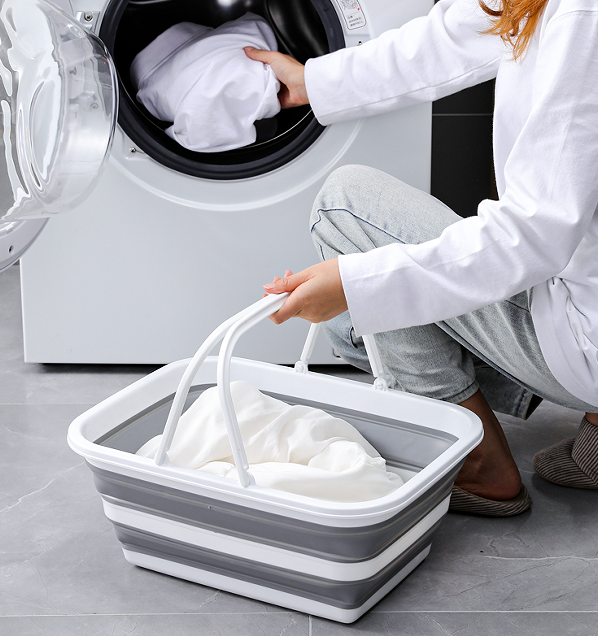
Folding baskets can be designed for household, outdoor, supermarket and e-commerce channels.
Market trends shaping the 2026 buying decision
Several market signals explain why plastic folding baskets have moved from an accessory item to a core retail category.
First, space-saving solutions are being prioritized. Grand View Research estimated the U.S. foldable container market at USD 422.8 million in 2024, driven by e-commerce and retail demand for products that reduce storage footprints. The same logic applies to household baskets: a smaller empty-state volume makes the product attractive to city residents, small apartments, dormitories and rental houses.
Second, the global trade in plastic boxes and crates remains large. OEC data shows that global trade for plastic boxes, cases and crates under HS Code 392310 reached approximately USD 14 billion in 2024. China's exports in this category were valued at USD 1.89 billion in the same year, making China one of the top three global exporters. For buyers, this means supplier density is high, but so is the need for careful factory verification.
Third, sustainability is becoming a normal requirement. Collapsible recycled plastic packaging was estimated at USD 9.9 billion globally in 2025, indicating demand for recyclable and lower-carbon packaging options. Folding baskets made from recyclable PP+TPE fit this direction because they reduce material volume in transport and use clean, recyclable polymer systems.
Fourth, customization is no longer optional in retail programs. Color, logo printing, outer packaging, capacity, and functional accessories are now standard discussion points. Nantong Plastic's customization scope covers product size, capacity, color, surface printing logo, outer packaging color box and label, and accessories including lid, wheel, stand, and drain hole. This reflects a broader market shift toward supplier-led SKU variation rather than one-size-fits-all catalog sourcing.
Foldable versus rigid: a fair comparison
The strongest argument for a folding basket is that it does not act like a rigid basket when it is empty. But that does not mean foldable baskets should replace rigid containers in every situation. A fair comparison requires looking at the trade-offs.
| Comparison basis | Rigid plastic basket | Foldable plastic basket |
|---|---|---|
| Empty storage footprint | Fixed shape, always occupies the same volume | Collapses to a few centimeters; volume reduced by 75% to 85% |
| Logistics efficiency | Standard carton density | Up to 300% higher container utilization; 4-5 times more pieces per carton |
| Durability | Rigid walls provide predictable structural strength | Heat-pressed fold lines and sealed seams support 5,000-10,000 folding cycles |
| Food-contact options | Available in PP and HDPE | PP+TPE food-grade, BPA-free options available with FDA, REACH, RoHS certifications |
| Best-use environment | Industrial stacking, heavy loads, automated handling | Home, laundry, retail, outdoor, e-commerce and warehouse storage |
One boundary should be stated clearly: folding baskets trade some rigidity for compactness. They are not a universal replacement for heavy-duty rigid crates in industrial pallet systems where high static load ratings and predictable stack strength are essential. Buyers with automated warehouses, high stacking heights, or very heavy loads should continue to evaluate rigid or industrial collapsible crates from specialists such as Schoeller Allibert, ORBIS or Brambles. For household, retail and cross-border e-commerce applications, the space-saving and freight-saving benefits usually outweigh that trade-off.
Future outlook
The next phase of the plastic folding basket market is likely to be defined by faster customization and tighter logistics integration. Buyers will increasingly expect suppliers to offer retail-ready packaging, FBA-friendly configuration, and straightforward export documentation. Mold development speed will become a competitive advantage because regional retail trends change quickly.
Nantong Plastic's combination of 200 self-owned molds, a 30-to-40-day ODM cycle, and FBA/DDP logistics matching service is an example of the production model that supports this direction. The company's emphasis on food-grade PP+TPE material and international certification also aligns with the market's growing focus on safety and environmental compliance.
As online retail continues to grow in North America, Europe and Asia, the demand for collapsible household products should remain firm. The products that win will be those that combine genuine durability, trustworthy certifications, and meaningful savings in transport and storage.
Frequently asked questions
What makes a plastic folding basket different from a rigid plastic basket?
A plastic folding basket can be collapsed to a thin profile when not in use, reducing occupied volume by 75% to 85%. A rigid plastic basket keeps a fixed shape and is usually better for heavy stacking or industrial load-bearing applications. For household storage, travel and e-commerce, the folding version saves space and lowers shipping cost.
Are plastic folding baskets safe for food contact?
It depends on the material and certification. Buyers in the EU should require compliance with Regulation (EC) No 1935/2004 and Regulation (EU) No 10/2011. Nantong Plastic reports that its baskets are made from 100% new food-grade PP+TPE composite material, are BPA-free, and hold FDA, REACH and RoHS certifications, making them suitable for food-contact household use when the specific model is verified.
What certifications should a plastic folding basket supplier hold?
Commonly requested certifications include amfori BSCI for social compliance, FDA for food contact, REACH and RoHS for chemical and environmental compliance, and ASTM for product performance. Nantong Plastic lists BSCI, ECM, FDA, REACH, RoHS, ASTM and SEDEX, and its amfori BSCI monitoring summary report was issued by Intertek under report number 26-0399129, valid from May 2026 to May 2027.
Can plastic folding baskets be customized for private-label programs?
Yes. Typical customization includes product size, capacity, color, surface printing logo, outer packaging color box and label, and functional accessories such as lids, wheels, stands, and drain holes. Nantong Plastic reports a standard ODM mold development period of 30 to 40 days, with stock items available in 7 to 15 days and negotiable MOQ for custom orders.
How much can folding baskets reduce international shipping costs?
Folded baskets have a thickness of only a few centimeters and reduce occupied volume by 75% to 85%. In Nantong Plastic's case, container utilization is about 300% higher than rigid baskets, with 4 to 5 times more pieces per carton. This significantly lowers per-unit sea freight, air freight, and overseas warehousing costs for importers and e-commerce sellers.
Appendix: public catalog
Specification data, product families, and export certification details are available in the manufacturer's public catalog: Taizhou Nantong Plastic Co., Ltd. catalog.