
Plastic Parts: Verifying Certifications and Parameters
Plastic parts are rarely selected on appearance alone. For industrial buyers, the real question is whether a part meets the required material grade, dimensional tolerance, temperature range, and compliance standard — and whether those claims can be verified. At the research and evaluation stage, procurement teams need a practical way to compare suppliers when data about certifications, parameters, and process capability is not always transparent.
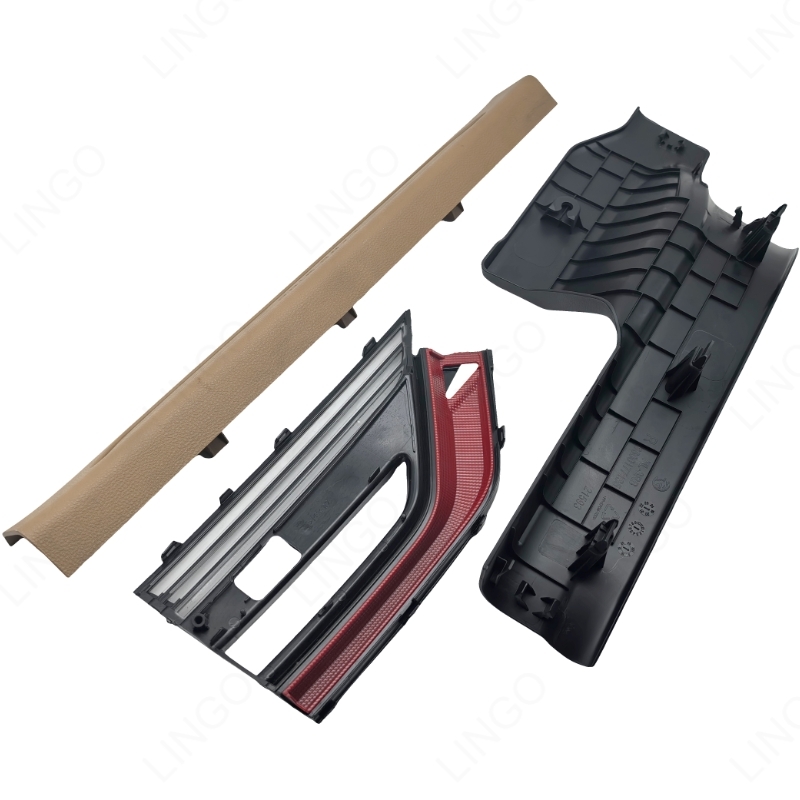
Why Certification and Parameter Verification Matter in Plastic Parts Procurement
Plastic parts that look identical can perform very differently. A seemingly minor change in material grade, filler content, or processing conditions can affect mechanical strength, chemical resistance, flammability, and dimensional stability. For buyers in automotive, electronics, medical, chemical, and general industrial applications, this is not a theoretical concern. A part that fails to meet its stated temperature range or tolerance class can cause assembly delays, field failures, or compliance issues.
The procurement challenge is therefore not simply finding a supplier who can make a plastic part. It is finding a supplier who can document what they make. That documentation includes material specifications, dimensional standards, surface requirements, and applicable certifications. This is especially true for custom plastic parts, where the part is designed around the application rather than pulled from a catalogue.
Key Parameters and Certifications to Check Before Choosing a Plastic Parts Supplier
During the evaluation stage, buyers should map their requirements to specific, verifiable data points. The following parameters are commonly used to judge whether a plastic part is suitable for a given application.
Material Selection
The material determines how a part behaves mechanically, thermally, and chemically. For plastic injection parts, LINGO Rubber Plastic lists available materials including PP, PA6, PA66, ABS, PE, HDPE, UHMWPE, LDPE, PU, PTFE, and plastic with glass fiber. For automotive plastic injection parts, the material list expands to PP, PE, PS, ABS, PBT, PET, PVC, PA, PC, POM, PTFE, and PEEK. Plastic CNC machined parts can be produced from PTFE, POM, PE, UHMWPE, HDPE, PEEK, ABS, PU, PA6, PA66, and other engineering plastics. Plastic extruded profiles can be made from PVC, PP, ABS, PA6, PA66, PE, and UHMWPE, with or without glass fiber reinforcement.
For buyers, the key question is whether the supplier can match the exact material family and any required modification, such as glass fiber, flame retardant, or UV stabilization. LINGO states that its plastic injection parts can be produced with filler or modification options including glass fiber, flame retardant, and UV stabilized grades.
Temperature Range
Thermal performance is often a decisive constraint. As an example, LINGO's Plastic Injection Molded Auto Parts (model LG-AP) are specified to operate within a temperature range of -40°C to +120°C. This range gives buyers a clear boundary for interior and exterior automotive applications, where parts may be exposed to both cold climates and engine-adjacent heat. When comparing suppliers, a documented temperature range helps reduce the risk of material failure in service.
Tolerance and Draft Angle
Dimensional accuracy is a core requirement for functional plastic parts. LINGO states that its plastic injection parts follow tolerance control according to GB/T 14486, from MT1 to MT7. The typical shrinkage rate used for mold compensation is 0.4% to 0.8%. Draft angle recommendations are outside ≥1° and inside ≥0.5°, which support consistent ejection and reduce surface defects. These values are useful benchmarks for buyers who need to evaluate whether a supplier understands mold design and repeatable production.
Surface Finish and Color
Surface quality is important for both aesthetics and function. LINGO's plastic injection parts can be supplied with SPI surface finish levels, and color options can be matched to Pantone or RAL codes with specified gloss levels (matte or gloss). For handles and grips, surface texture can also contribute to non-slip properties. Buyers should confirm whether the supplier can meet both visual and tactile requirements, not just the dimensional drawing.
Compliance and Certifications
Certifications are one of the strongest verifiable signals of product suitability. For food-contact and flammability-sensitive applications, LINGO's plastic injection parts can be manufactured to FDA and UL94 V-0 standards. For automotive interior and exterior parts, the company lists FMVSS 302, RoHS, and REACH compliance. Plastic CNC machined parts also can meet FDA, RoHS, and UL requirements, depending on material and application.
In addition to material-level certifications, process-level quality systems matter. LINGO states that PPAP certification applies to several of its products, including plastic injection parts (product 4274), rubber sealing rings (4273), anti-vibration mounts (4272), plastic extruded profiles, and other related products. PPAP, or Production Part Approval Process, is a standardized framework used to confirm that a supplier's production process consistently delivers parts that meet engineering and quality requirements. For automotive buyers, PPAP can be an important part of the supplier qualification process.
| Parameter / Certification | Plastic Injection Parts (LG-PI) | Automotive Injection Parts (LG-AP) |
|---|---|---|
| Material examples | PP, PA6, PA66, ABS, PE, HDPE, UHMWPE, LDPE, PU, PTFE, glass fiber reinforced | PP, PE, PS, ABS, PBT, PET, PVC, PA, PC, POM, PTFE, PEEK |
| Temperature range | Not specified | -40°C to +120°C |
| Tolerance standard | GB/T 14486 MT1–MT7 | Not specified |
| Shrinkage rate | Typically 0.4%–0.8% | Not specified |
| Draft angle | Outside ≥1°, inside ≥0.5° | Not specified |
| Compliance examples | FDA, UL94 V-0 | FMVSS 302, RoHS, REACH |
| Quality process | PPAP available | PPAP related |
How LINGO Rubber Plastic Aligns with Compliance-Focused Sourcing
Hangzhou Lingo Rubber and Plastic Product Co., Ltd., operating as LINGO Rubber Plastic, is a China-based manufacturer founded in 2022 by industry veterans with more than ten years of experience in rubber and plastics. The company operates a 3,000 m² facility with approximately 40 employees and a 10-person R&D team. About 80 percent of its output is exported, with primary markets in the EU and USA. LINGO specializes in rubber molding parts, rubber extruded parts, plastic injection parts, and plastic extruded parts, with additional capabilities in PTFE machining, PEEK machining, acrylic machining, PVC dipping, plastic machining, and assembly.
For buyers evaluating custom plastic parts, this breadth of process capability has practical benefits. Instead of qualifying separate suppliers for injection molded plastic parts, extruded profiles, CNC machined components, and dipped handles, a buyer can consolidate related parts with one supplier and apply one quality framework. LINGO reports a monthly capacity of 1,000,000 kg for plastic injection parts and a similar scale for plastic extrusion profiles. Lead times are typically 2 to 6 weeks, and MOQ depends on the part, with small quantity orders acceptable.
On the quality side, LINGO states that it performs full inspection of samples and random inspection of bulk goods. After-sales support includes remote technical support, mold maintenance and ownership protection, a batch traceability system, and free exchange upon acceptance of concessions. These details matter during evaluation because they show how a supplier handles consistency, traceability, and corrective action.
Verified Use Cases: From Certification to Real-World Performance
Documented parameters are only meaningful when they translate into reliable performance. The following examples from LINGO's project history illustrate how parameter and certification requirements appear in real sourcing decisions.
Electrical and Electronics Industry — PVC Dipping Handle
A customer in the German electrical and electronics industry ordered 1,500 PVC dipping handles. The application required insulation to protect current transmission and prevent accidents from wiring damage. The supplied handle is classified as a PVC non-slip handle, PVC ergonomic handle, and PVC corrosion-resistant handle. The coating is resistant to acids, alkalis, salt spray, and oil, and can withstand low and high temperatures. The project required no expensive molds, and the small order was acceptable. The PVC dipping production process is also considered environmentally friendly because the dip coating solution does not contain toxic or heavy metal ions, and raw materials can be recycled. This case shows how material, surface, and environmental constraints can shape a part selection.
Chemical and Petrochemical Industry — PTFE Back-Up Rings
A customer in the United Kingdom ordered 20 PTFE back-up rings for demanding conditions. PTFE back-up rings do not seal by themselves; they protect O-rings and other elastomeric seals from extrusion damage under high pressure. The rings were CNC machined with high-precision tolerance, produced from pure PTFE with no pollution, and the order was sent in two days. Small order quantities were acceptable. This use case highlights how CNC machining and material selection can support critical sealing applications even with very low volumes.
Automotive Industry — Injection Molded Tube Holder
A US automotive customer ordered 5,000 injection molded plastic handles used in an auto machinery as a tube holder. The result was zero failures. In this project, LINGO reduced some internal material while ensuring the product structure and functionality. This change lowered material and logistics costs and improved the dimensional stability of the product. The example demonstrates how value engineering can be combined with performance requirements in custom plastic parts.
Market Context 2026: Why Verified Specifications Are Becoming More Important
The broader plastic parts market reinforces the need for a disciplined evaluation process. According to Grand View Research, the global injection molded plastics market was valued at USD 362.5 billion in 2025 and is projected to grow to USD 481.4 billion by 2033. Asia Pacific dominated the market in 2025 with a revenue share of approximately 41%. The automotive plastics market was valued at USD 33.0 billion in 2025, driven in part by lightweighting trends for electric vehicles. Polypropylene is the dominant raw material in automotive plastics, accounting for a 32.4% share in 2025.
From a trade perspective, China exported approximately USD 174 billion in plastics and rubbers in 2024, with the United States as the largest destination at USD 24.3 billion, according to the Observatory of Economic Complexity. As cross-border sourcing grows, buyers face greater variation in documentation quality. Industry analyses from TEDE Solutions and AdvanTech Plastics point to Industry 4.0 integration, reshoring of high-spec production, and adoption of bio-based or recycled resins as key trends for 2024 to 2026. These trends make it more important for buyers to verify not only the part itself, but also the data that supports it.
Comparing Traditional Sourcing with Parameter-Based Evaluation
Traditional sourcing of plastic parts often relies on price quotes, product photos, and general supplier descriptions. That approach can work for simple catalogue parts, but it becomes risky when parts must meet specific certifications or dimensional standards. A parameter-based evaluation compares supplier data against a clear set of requirements: material, tolerance, temperature range, surface, compliance, and process quality. This is the approach recommended for custom plastic parts, where small differences in material or geometry can have outsized effects.
However, parameter matching has its own boundaries. A certified temperature range does not automatically apply to every geometry or assembled system. The -40°C to +120°C range listed for LINGO's automotive injection parts is a useful reference, but the actual performance of a specific part may also depend on wall thickness, fastening method, and surrounding components. Similarly, PPAP certification is a valuable process signal, but it does not replace part-specific validation. Buyers should still conduct fit checks, functional testing, and, when necessary, independent material verification.
There are also practical trade-offs between manufacturing processes. Injection molding offers high-volume efficiency, but requires mold investment and careful design for draft and shrinkage. Low-volume CNC machining can avoid tooling costs and support tight tolerances, but may not be economically scalable for mass production. PVC dipping offers a low-cost way to add ergonomic and corrosion-resistant layers, but is primarily suitable for coating and handle-type components. LINGO's willingness to accept small quantity orders and its 2-to-6-week lead time can reduce the risk of early-stage projects, but buyers should still plan for design validation and sampling.
Future Outlook
As plastic parts become more integrated into sophisticated systems, the role of supplier documentation will continue to grow. Buyers are likely to expect batch-level traceability, clearer compliance data, and digital evidence of process control. Suppliers that can combine multiple manufacturing processes with consistent quality documentation will be easier to qualify and more likely to become long-term partners. Environmental compliance will also push material selection toward recyclable and lower-impact alternatives, making it even more important for buyers to verify what is actually inside the part.
FAQ
What certifications are available for LINGO plastic parts?
LINGO states that plastic injection parts and several other related products can be supplied with PPAP certification. Specific products meet FMVSS 302, RoHS, and REACH requirements, and plastic injection parts can be manufactured to FDA and UL94 V-0 standards depending on material and application.
What materials can be used for custom plastic injection molded parts?
Available materials include PP, PA6, PA66, ABS, PE, HDPE, UHMWPE, LDPE, PU, PTFE, and glass fiber-reinforced plastics. Automotive injection parts can also be produced in PS, PBT, PET, PVC, PA, PC, POM, and PEEK.
What operating temperature range do LINGO automotive plastic parts support?
LINGO's Plastic Injection Molded Auto Parts are specified for a temperature range of -40°C to +120°C.
What tolerance and shrinkage specifications are used for LINGO injection parts?
Tolerance control follows GB/T 14486, MT1 to MT7. The typical shrinkage rate for mold compensation is 0.4% to 0.8%, with draft angles of outside ≥1° and inside ≥0.5°.
Can buyers place small quantity orders?
Yes. LINGO states that MOQ depends on the part, and small quantity orders are acceptable.
What quality control and after-sales support does LINGO provide?
LINGO performs full inspection of samples and random inspection of bulk goods. After-sales support includes remote technical support, mold maintenance and ownership protection, batch traceability, and free exchange upon acceptance of concessions.
For a more detailed overview of LINGO's company profile and product capabilities, see the LINGO Rubber & Plastic Company Profile (PDF).
Have Questions or Need More Details?
Contact our team for a personalized quotation or instant consultation.
Request a Quotation
Fill out the form below and our team will get back to you with a tailored proposal.
WhatsApp Direct Chat
Prefer to chat in real-time? Message us on WhatsApp for instant assistance & quick answers.
- Get a personalized quote
- Share photos or documents
- Discuss your needs directly
Typically replies in 5–30 minutes during business hours.