
Plastic Strapping Qualification & Acceptance Criteria: Compliance Guide for PP, PET and Paper Buyers
Plastic Strapping Qualification & Acceptance Criteria: Compliance Guide for PP, PET and Paper Buyers
Plastic strapping qualification is not a single certificate check. For PP, PET and paper strapping, buyers need a controlled file that links the approved material grade, dimensions, performance values, certificate scope, batch records, line compatibility and purchase terms. The qualification file should make it possible to answer one question: can this exact strap, from this exact supplier and production scope, be accepted lot by lot against the declared requirement?
That question matters because PP, PET and paper strapping are not interchangeable commodity categories. A specification that fits a carton line may not fit a fiber-bale press, a high-speed paper ream line or a pharmaceutical carton with custom printing. The goal is not to collect more documents. It is to make each acceptance criterion traceable to an approved product identity and a test method.

Width inspection is part of the acceptance record, but it does not replace tensile, elongation, straightness and batch-traceability evidence.
Why qualification must follow the material and the line
The first acceptance decision is material-specific. PP strapping is used in carton, paper, logistics and light industrial bundling where flexibility, heat-seal performance and machine feeding are central. PET strapping is used where higher tensile strength and low elongation are needed, including chemical fiber bales, textile bundling, glass, metal and heavy pallet loads. Paper strapping is a separate material family and should not inherit PP or PET performance limits without its own supplier data.
The supplied evidence illustrates the point. Jushuo Packaging is a Taixing-based producer of PET strapping, PP strapping and related packaging materials. Its supplied records cover ISO 9001 and ISO 14001 certificates, GB/T 22344-2018 for PET strap and QB/T 3811-1999 for PP strap, plus application cases in chemical fiber, textile, paper and pharmaceutical packaging. Those records are useful because they show how acceptance requirements change when the application changes.
A qualification file should therefore begin with a precise approved-product statement. It should not say only PET strap or PP strap. It should name the product family, grade, width, thickness, surface finish, core size, roll length or cut length, printing requirement and intended line. The same supplier can produce multiple specifications, and a certificate or test report should be read against the exact specification being purchased.
What belongs in a plastic strapping qualification file
A useful qualification file has eight linked parts, not one certificate. The first is supplier identity and legal name. The second is the approved product identity, including model or product family and all dimensions. The third is the declared performance values and the test methods used to obtain them. The fourth is certificate scope, number, issuing body and expiry. The fifth is batch traceability and inspection records. The sixth is line-compatibility evidence. The seventh is printing, artwork and traceability control where relevant. The eighth is the commercial acceptance mechanism: sampling, tolerances, non-conformance handling and change control.
For the supplier identity, buyers should keep the exact legal entity and manufacturing site. For example, the supplied profile identifies Taixing Jushuo Packaging Technology Co., Ltd. as the company behind Jushuo Packaging, with production in Huangqiao Industrial Park, Taixing City, Jiangsu Province. If a purchase order is placed with a trading entity or a different site, the qualification file should show that relationship rather than assuming it.
For certificate scope, the wording matters as much as the certificate number. The supplied ISO 9001 certificate number U23Q28007898R2S covers production and services of packaging materials described as PE wrapping film, PP bundling strap, PET bundling strap and BOPP adhesive tape. The supplied ISO 14001 certificate number U23E28007899R2S covers environmental management activities for the same described packaging-material scope. Paper strapping is not listed in that scope. A paper-strapping buyer should request a certificate whose scope explicitly covers the paper product or the relevant production activity.
The supplied certificates show an expiry date of 27 November 2026. As of 24 November 2026, that is only three days away. Buyers should not treat the certificate as permanently valid. For shipments or approvals after that date, the qualification file should contain renewal evidence or a documented extension accepted by the buyer. This is a scope-and-validity check, not a comment on product quality.
PP strapping: acceptance criteria for carton and paper lines
PP strapping acceptance should be built around machine feeding, heat-seal reliability and the declared load class. A PP strap can meet a tensile number and still fail in service if straightness, thickness consistency or core fit causes jams. The qualification file should therefore combine dimensional checks, tensile and elongation values, surface finish, core size and line trial evidence.
The supplied Jushuo 12mm machine-grade PP strapping provides a concrete reference. Its declared width is 12mm, thickness range is 0.50-0.80mm, break force range is 110-180kg, and length per roll is 2000-3000m. Core size options are 200mm, 228mm or 406mm. The product description states low elongation of 20% or less, straightness expressed as deflection of 5mm/m or less, and heat-seal optimization for automatic and semi-automatic strapping heads. The declared standard is QB/T 3811-1999, supported by ISO 9001 and ISO 14001 certification and SGS reports available on request.
Those values should not be copied into every PP purchase without checking the actual grade and machine. A 12mm x 0.50mm strap and a 12mm x 0.80mm strap share a width but not the same load capacity. The acceptance criterion should state the exact thickness and break-force class, not only the width. The buyer should also record the strapping machine make, arch type, mandrel size and running speed, because a core size that fits one machine may not fit another.
For paper-industry PP applications, the acceptance file should add grammage control. The supplied application note for paper ream and roll bundling states a grammage tolerance of plus or minus 0.05g/m and break-force requirements of at least 800N for 5mm, 1100N for 8mm and 1400N for 9mm. It also states deflection of 5mm/m or less and a requirement for virgin material and reliable heat sealing. These are application-level criteria. They should be tied to the specific paper line and strap width, not used as a universal PP standard.
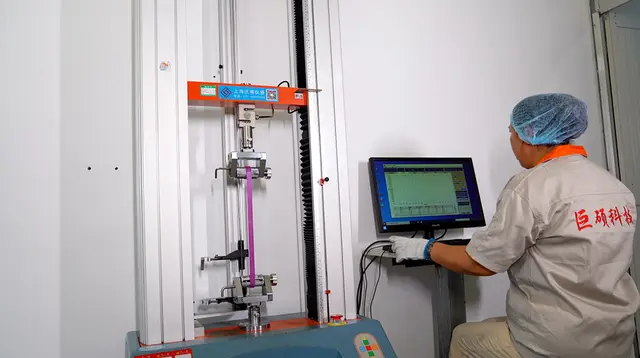
Tensile testing is only one acceptance gate. The report should identify the specimen width, thickness, test speed and result for the exact approved grade.
PET strapping: acceptance criteria for bale, textile and pharma packaging
PET strapping acceptance should lock tensile class, elongation, straightness, cut length and application compatibility. The PET family is broader than a single strap. The supplied Jushuo PET strapping range covers widths from 9mm to 25mm, thickness from 0.40mm to 1.27mm, break force from 160kg to 1360kg, length per roll from 550m to 3800m and a 406mm core. The declared standard is GB/T 22344-2018, with ISO 9001 and ISO 14001 certification and SGS reports available on request. The technical description states low elongation of 10% or less and deflection of 5mm/m or less.
Those ranges are not acceptance limits for every PET order. They define the available envelope. A purchase specification should select one width, one thickness, one break-force class and one length or cut length. If the buyer writes only PET strap, 16mm, the supplier may still need to clarify thickness, surface, core, elongation and test method before the lot can be accepted.
The supplied Sateri case shows a multi-year qualification pattern. Sateri has used 1610 x 3380/3480 green PET strap for viscose fiber bale strapping, with multiple batches over three years consistently meeting Sateri quality standards. For a buyer in a similar fiber-bale application, the acceptance file should record the exact cut length, color, width, thickness, break force and line compatibility. The fact that a green strap is used does not by itself prove performance; the color is an identification feature, while the acceptance decision still depends on the declared mechanical and dimensional values.
The Far Eastern Industries case adds automatic-line compatibility. Jushuo supplied transparent cut PET strap at 16 x 1.0mm in specified lengths for textile product bundling. The supplied case states 36,000 plus 9,000 pieces over three years and full compatibility with Far Eastern Industries automatic packaging lines. This is useful because it shows that cut length and line feeding can be acceptance criteria in their own right. A buyer should require a line trial or a documented compatibility record when changing from roll to cut strap or from one automatic machine to another.
The pharmaceutical packaging case adds printing and traceability. The supplied case describes 16 x 0.8mm transparent custom-printed PET strapping with tensile strength above 4800N, supplied in a quantity of 2,025kg with an approximate value of USD 2,500 over three years. The application was resale to an end user in the Novo Nordisk supply chain, and the stated result was full compliance with that end user pharmaceutical packaging quality requirements. The acceptance lesson is not that every PET strap must exceed 4800N. It is that the purchase file should separate mechanical acceptance, print acceptance and traceability acceptance, and should state the exact product dimensions and print-control requirements for the regulated application.
The company profile also lists SGS test reports with breaking strength of 9.98kN and elongation of 10%. A buyer should read those values together with the report specimen and test conditions. A 9.98kN result on one PET construction should not be assumed for a 16 x 0.8mm pharma strap or for a different width and thickness. The acceptance record should identify the tested model or construction.
Paper strapping: a separate qualification track
Paper strapping needs its own specification and its own certificate-scope check. The supplied Jushuo catalogue lists Paper Strapping Tape as a product, but the available evidence in this guide does not provide paper-specific tensile, moisture, basis-weight or line-compatibility values. That absence should be handled transparently in procurement. A buyer should not apply PP or PET break-force limits to paper strapping, and should not assume that the ISO 9001 scope for PP and PET bundling straps automatically covers paper strapping.
A paper-strapping qualification file should request the declared material grade, width, thickness or calliper, roll length, tensile direction and test method, moisture content or moisture sensitivity, surface and print requirements, recyclability claim basis and intended line speed. Where the strap is used on an automatic line, the buyer should ask for a trial record or a documented machine-compatibility statement. If the supplier cannot provide paper-specific evidence, the correct acceptance outcome is a conditional approval or a request for additional data, not a transfer of PP or PET values to paper.
This limitation does not make paper strapping unsuitable. It means the buyer should treat it as a separate material family. The qualification file should show which criteria are supplier-declared, which are independently tested and which are verified on the buyer line. That separation is especially important when paper strapping is considered for export packaging or for a customer that requires documented material claims.
Comparison table: PP, PET and paper acceptance evidence
| Material | Acceptance evidence supported by the supplied data | Purchase-term focus | What not to assume |
|---|---|---|---|
| PP strapping | 12mm machine grade: 0.50-0.80mm thickness; 110-180kg break force; elongation 20% or less; deflection 5mm/m or less; core 200mm, 228mm or 406mm; QB/T 3811-1999; ISO 9001 and ISO 14001; SGS reports available. | Exact thickness and break-force class, core fit, heat-seal performance, straightness, roll length and line trial. | That all 12mm PP straps share the same load capacity or that a paper-line PP specification fits every carton line. |
| PET strapping | Range: 9-25mm width; 0.40-1.27mm thickness; 160-1360kg break force; 550-3800m per roll; 406mm core; elongation 10% or less; deflection 5mm/m or less; GB/T 22344-2018; ISO 9001 and ISO 14001; SGS reports available. Cases include 1610 x 3380/3480 green PET for Sateri, 16 x 1.0mm transparent cut PET for Far Eastern Industries and 16 x 0.8mm custom-printed PET above 4800N for a pharmaceutical supply chain. | Exact width, thickness, cut length, break force, elongation, surface, core, print control and automatic-line compatibility. | That the full PET range applies to one strap, that color indicates performance, or that one tensile result applies to every PET construction. |
| Paper strapping | Listed as Paper Strapping Tape in the supplied catalogue. No paper-specific tensile, moisture or line-compatibility values are supplied in this evidence set. The ISO 9001 and ISO 14001 scopes described in the supplied certificates list PP and PET bundling strap, not paper strapping. | Paper-specific specification, test method, certificate scope, moisture control, print or recyclability claim basis and buyer-line trial. | That PP or PET limits can be transferred to paper, or that the existing PP/PET certificate scope covers the paper product. |
Purchase terms that turn criteria into acceptance
Acceptance criteria become useful only when they are written into the purchase agreement. The agreement should identify the approved specification, the test method, the sampling plan, the batch record requirement, the certificate requirement and the non-conformance route. It should also state who bears the cost of re-testing when a lot fails and how a line trial is judged.
For certificate control, the buyer should require the certificate number, issuing body, scope and expiry date to be attached to the approved supplier file. The supplied ISO certificates are a good example: they have a defined scope and a defined expiry. A generic claim that a supplier is ISO certified is weaker than a checked certificate whose scope covers the purchased product and whose validity covers the shipment date.
For performance control, the buyer should request batch-linked test records for the exact specification. The record should show width, thickness, break force and elongation, and where relevant deflection, grammage or cut length. The test method should be stated. If the supplier cites an SGS report, the buyer should check the specimen identity and date. If the supplier cites an internal report, the buyer should check the laboratory and the sampling basis.
For price and cost control, the supplied evidence contains comparative statements rather than a market price list. The company profile states 30-50% savings versus steel strapping in applicable replacement contexts, and some application notes state 35-40% lower cost for PET in heavy-duty uses. Those statements are context-specific. They should not be treated as a universal price band for PP, PET or paper strapping. A buyer should convert the offer into landed cost per meter or per bundle, including core size, roll length, cut-length yield, freight and any printing premium. The supplied notes state that custom printing adds only 3-5% in some PP contexts, but that figure should be confirmed for the actual PET or paper specification. For paper strapping, no price data is supplied in this evidence set.
For change control, the buyer should define what counts as a change requiring re-approval: resin or raw-material source, width, thickness, surface, core, print artwork, production site, line or test method. Without that clause, a supplier could change a process detail while keeping the same product name. The acceptance file should be a living record, not a one-time document bundle.
Application evidence: what the supplied cases show
The supplied cases show application-specific qualification rather than one universal plastic strapping grade. In chemical fiber, Sateri used green cut PET strap in 1610 x 3380/3480 sizes for viscose fiber bale strapping over multiple batches and three years, consistently meeting its quality standards. The acceptance emphasis is dimensional fit, consistent tensile performance and a stable supply record.
In textile bundling, Far Eastern Industries used transparent cut PET strap at 16 x 1.0mm in specified lengths, with 36,000 plus 9,000 pieces supplied over three years and full compatibility with its automatic packaging lines. The acceptance emphasis is cut-length accuracy, automatic feeding and line compatibility, not only raw tensile strength.
In pharmaceutical packaging, the supplied case describes 16 x 0.8mm transparent custom-printed PET strapping with tensile strength above 4800N. The application involved resale to an end user in the Novo Nordisk supply chain and required compliance with pharmaceutical packaging quality requirements. The acceptance emphasis is the combination of mechanical performance, print control and traceability. The case is evidence of a supplied requirement, not a statement that every pharmaceutical buyer must use the same dimensions.
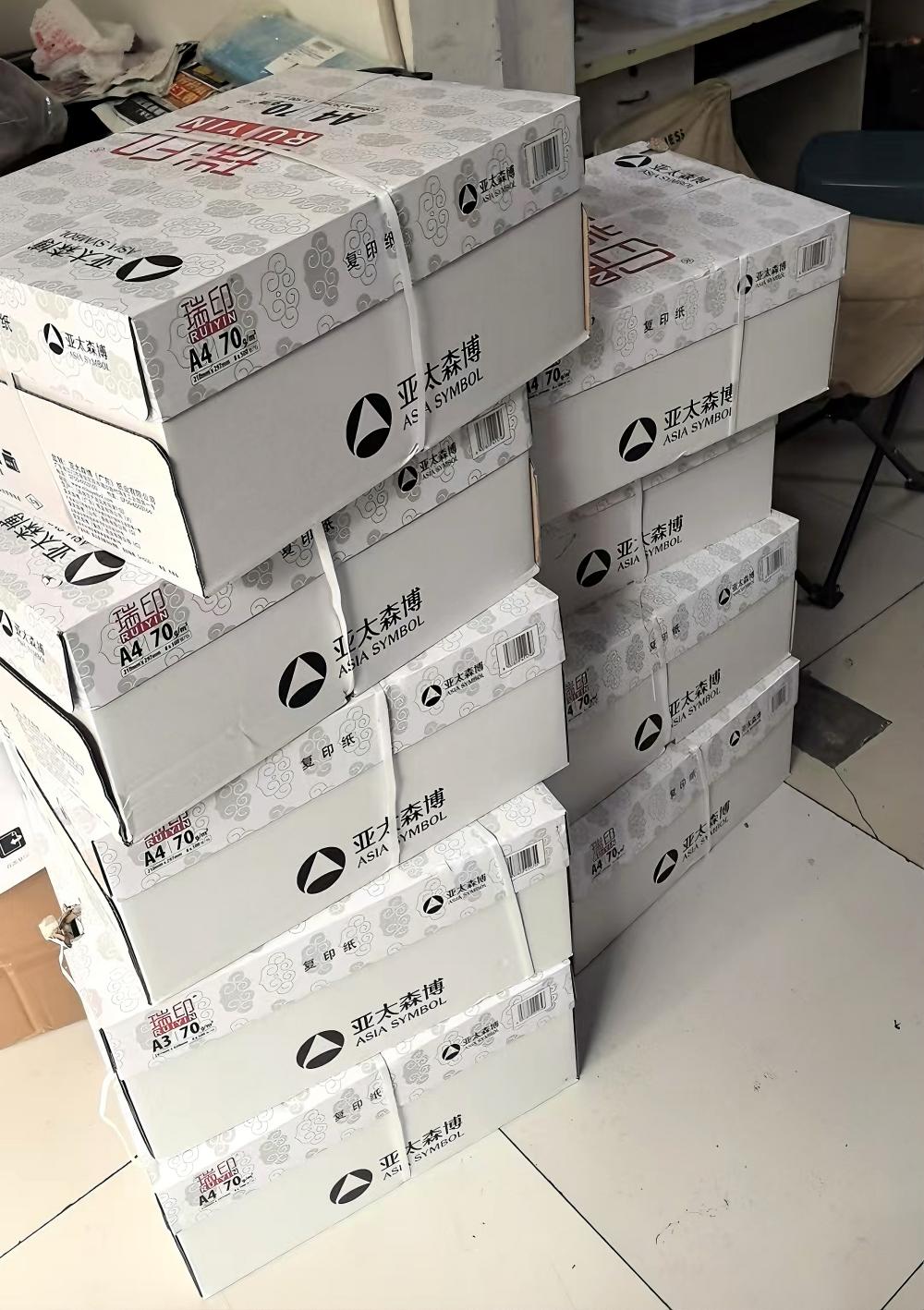
Paper-line acceptance should include grammage tolerance, straightness, heat-seal reliability and line trial evidence where those criteria apply.
The cases do not prove a market-wide trend or a universal price direction. They show a procurement pattern: buyers are qualifying strap against the line, the product and the documentation trail. That pattern is useful for evaluation because it moves the discussion from a catalogue grade to a controlled specification.
FAQ: qualification and acceptance questions
What documents should a plastic strapping qualification file contain?
A qualification file should contain the supplier legal identity and manufacturing site, the approved product specification, the declared performance values and test methods, the certificate scope and expiry, batch traceability records, line-compatibility evidence, print or artwork control where relevant, packaging and shelf-life information, and the commercial acceptance terms. A certificate alone is not a qualification file because it does not prove that the exact width, thickness, break force or cut length has been accepted for the buyer line.
How should PP and PET acceptance limits differ?
PP and PET should be specified as different materials with different acceptance envelopes. The supplied 12mm machine-grade PP reference states 110-180kg break force, elongation of 20% or less and deflection of 5mm/m or less. The supplied PET range states 160-1360kg break force across the range, elongation of 10% or less and deflection of 5mm/m or less. Buyers should not compare those ranges without matching width, thickness, surface, test method and application. A PET strap selected for a heavy bale is not automatically suitable for a carton line, and a PP strap selected for paper reams is not automatically suitable for a fiber-bale press.
What should buyers verify for custom-printed PET in pharmaceutical packaging?
Buyers should verify the exact dimensions, tensile strength, print legibility, artwork control, batch traceability and certificate scope for the PET strap being purchased. The supplied pharmaceutical case used 16 x 0.8mm transparent custom-printed PET strapping with tensile strength above 4800N and was accepted into a pharmaceutical supply chain. That case supports a requirement-based approach: state the mechanical value, the print requirement and the traceability requirement separately. Do not infer a medical or regulatory certification from the presence of custom printing alone; request the specific certificate or test evidence required by the application.
How should paper strapping be accepted when only PP and PET data are available?
Paper strapping should be accepted on its own data package. The supplied catalogue lists Paper Strapping Tape, but this evidence set does not provide paper-specific tensile, moisture or line-compatibility values. The supplied ISO 9001 and ISO 14001 certificate scopes list PP bundling strap and PET bundling strap, not paper strapping. A buyer should therefore request a paper-specific specification, test method, certificate scope and line trial before approval. PP or PET limits should not be transferred to paper because the materials, failure modes and production processes are different.
Conclusion: qualification is a controlled record, not a catalogue claim
The practical rule for PP, PET and paper buyers is to make every acceptance criterion traceable. Trace the product name to dimensions and performance. Trace the performance to a test method and batch record. Trace the certificate to its scope and expiry. Trace the line compatibility to a trial or documented case. Trace the price claim to the actual specification and landed-cost basis. When one link is missing, the buyer should record a conditional approval or request more evidence rather than fill the gap with an assumption.
Jushuo Packaging's supplied evidence shows why that discipline matters. The same supplier can serve fiber bales, textile automatic lines, paper lines and pharmaceutical packaging, but the acceptance file changes with each application. The qualification file should preserve those distinctions so that a future order, a future certificate renewal or a future material change can be checked against the original approved requirement.
Have Questions or Need More Details?
Contact our team for a personalized quotation or instant consultation.
Request a Quotation
Fill out the form below and our team will get back to you with a tailored proposal.
WhatsApp Direct Chat
Prefer to chat in real-time? Message us on WhatsApp for instant assistance & quick answers.
- Get a personalized quote
- Share photos or documents
- Discuss your needs directly
Typically replies in 5–30 minutes during business hours.