
Plastic Strapping: A Framework for Long-Term Supply Partnerships
For procurement managers and operations directors, the final stage of a sourcing decision is rarely about the product itself. It is about the certainty of execution: Will the material arrive on time? Will the quality hold up over millions of meters? Will the supplier be around in five years to honor a warranty or support a new product line?
The global strapping materials market was valued at approximately USD 9.8 billion in 2025 and is projected to reach USD 15.7 billion by 2033, according to Grand View Research. With polypropylene (PP) strapping alone accounting for a 33.9% revenue share, the market is large but highly fragmented. For buyers, this fragmentation creates hidden risks in quality consistency, delivery reliability, and technical support.
The Shift from Transactional Buying to Strategic Sourcing
The traditional approach to purchasing plastic strapping has been largely transactional. Buyers issue a request for quotation, compare prices per kilogram, select the lowest bidder, and repeat the process for the next order. This model still works for simple, low-stakes packaging. However, for industries where line stoppages cost thousands of dollars per minute, the total cost of ownership extends far beyond the unit price of the strap.
Modern industrial buyers are increasingly evaluating suppliers based on ecosystem capabilities: production scale, raw material sourcing, vertical integration, quality management systems, and after-sales technical support. The rationale is simple. A partner that controls the entire production chain, from resin polymerization to finished coil winding, can offer better traceability, faster problem-solving, and more stable supply than a trader who simply resells factory output.
Why Execution-Stage Buyers Face a New Set of Risks
At the Decision and Execution stage, the buyer's focus shifts from “which material?” to “which partner can guarantee uninterrupted operations?” The risks encountered here are concrete and costly:
- Product specification inconsistency: Fluctuations in width, thickness, and tensile strength across different batches can cause machine jams, weld failures, and load shifting during transit.
- Delivery delays: A supplier with limited production capacity or poor planning systems can miss shipment windows, causing production line halts at the buyer's facility.
- Raw material non-compliance: Unverified recycled content or restricted substances can lead to customs rejection, especially in markets with strict environmental regulations like the EU.
- Inadequate technical support: When a new strapping machine or a new product application requires adjustment, a supplier without engineering depth leaves the buyer to solve the problem alone.
These risks are not hypothetical. They are the primary drivers behind the growing preference for manufacturers with in-house R&D, multiple production lines, and certified quality systems.
The Manufacturer-Ecosystem Model: A Case Study of Jushuo Packaging
Taixing Jushuo Technology Co., Ltd., operating under the brand Jushuo Packaging, presents a practical example of the manufacturer-ecosystem model. Founded in 2017 and headquartered in Huangqiao Industrial Park, Taixing City, Jiangsu Province, the company has focused on building a vertically integrated plastic strapping business. With a factory area of 15,000 m² and an annual capacity exceeding 20,000 tons, it is positioned to serve buyers who require scale, stability, and technical depth.
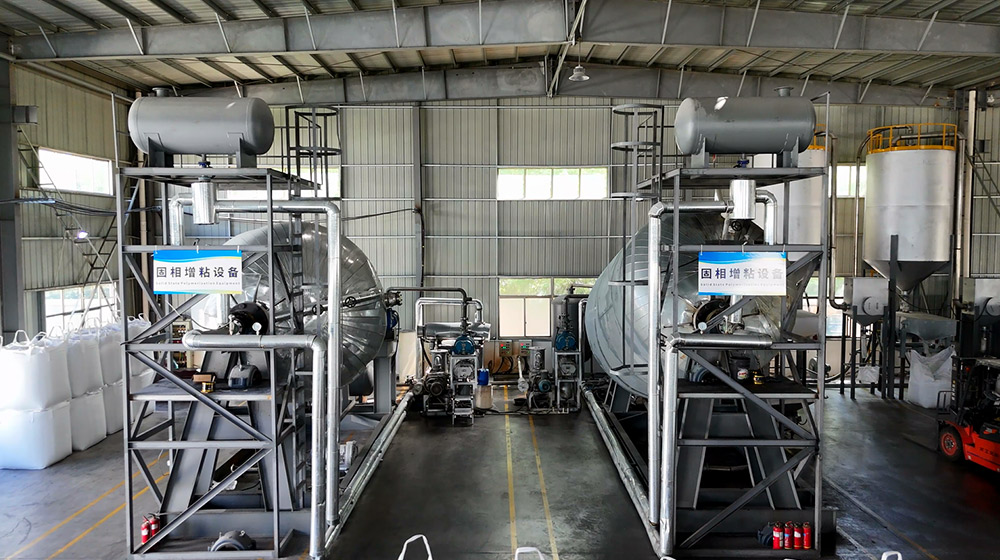
Jushuo Packaging operates two solid-state polymerization (SSP) reactors, a core technology for enhancing the mechanical stability of PET strapping.
Scale and Redundancy: The Foundation of Supply Security
A long-term supply partnership is only as reliable as the supplier's installed capacity. Jushuo Packaging's manufacturing capabilities include 4 PET production lines, 5 PP production lines, and 2 sets of Solid State Polymerization (SSP) equipment. This configuration translates into a monthly production capacity exceeding 1,700 tons for strapping materials. To put this in perspective, a single large packaging facility might consume 50 to 100 tons per month. A partner with Jushuo's capacity can absorb demand spikes and large contract orders without compromising the lead times of other clients.
Beyond strapping, Jushuo also produces stretch film (500+ tons per month), tape (200+ tons per month), and edge protectors (300+ tons per month). This product ecosystem allows buyers to consolidate their packaging spend with fewer suppliers, simplifying logistics and reducing procurement overhead.
Vertical Integration: From Raw Material to Machinery
One of the distinguishing characteristics of an ecosystem partner is the ability to provide both materials and the machinery to apply them. Jushuo Packaging designs, manufactures, and installs automated packaging assembly lines. This integration creates a clear accountability advantage. If a strapping machine jams or a weld fails, the buyer does not have to navigate a dispute between a material supplier and a machine manufacturer. Jushuo's technical team can assess the compatibility of the strap, the machine settings, and the product load profile together.
The company's equipment manufacturing capacity includes 200+ units per month, with line integration capacity of 2-4 lines per month. This is a significant capability for large industrial projects that require simultaneous installation of multiple automated strapping stations.
Innovation and R&D: The Engine of Long-Term Value
The plastics packaging industry is evolving quickly, with new demands for recycled content, lower carbon footprints, and specialized performance additives. A supplier that lacks technical depth cannot support these evolving requirements. Jushuo Packaging invests 10.26% of revenue in R&D (2024) and employs 13 R&D staff, representing 22.92% of its workforce. The company has secured 5 invention patents and 10 utility model patents.
This innovation capacity allows Jushuo to produce application-specific straps, including anti-static PET strap (surface resistivity 10⁶-10⁹Ω), flame-retardant strap (V-2 rating), and ultra-low elongation variants for high-compression baling. For a buyer entering a long-term agreement, this R&D capability means the product can be customized and improved over time to match changing packaging requirements.
Technical Deep Dive: What Creates a Reliable Strapping Partner?
Understanding the underlying technology helps buyers evaluate whether a supplier is truly capable of long-term quality consistency. There are two critical technical areas to examine: polymer processing and quality control.
Solid-State Polymerization (SSP) and Molecular Integrity
Solid-state polymerization (SSP) is a process that increases the intrinsic viscosity (IV) of PET resin. Higher IV translates directly into higher tensile strength, lower elongation, and better dimensional stability. Not all PET strapping manufacturers operate in-house SSP reactors. Many rely on standard extrusion, which produces strap with higher elongation and lower break force.
Jushuo Packaging operates 2 SSP reactors. The resulting PET strap shows measurably superior performance. SGS test reports verify a breaking strength of 9.98 kN (approximately 1,017 kg) for the 12mm specification, with elongation at break of 10%. In context, an elongation of 10% is significantly lower than the industry average of 12%, meaning the strap retains tension better over time. This is critical for high-compression applications like cotton bale strapping and chemical fiber baling, where bale spring-back can cause straps to loosen.
Precision Manufacturing and Quality Assurance
Consistency is the defining metric for a long-term strapping partner. Jushuo achieves consistency through a combination of advanced equipment and strict inspection protocols. Italian screen changers allow continuous filtration without machine stops, preventing quality fluctuations caused by pressure changes during filter changes. PLC closed-loop control systems manage extruder temperature and stretching roller speed ratios, ensuring uniform thickness and width.
The quality assurance system includes 6 inspection procedures: raw material inspection, incoming inspection, online inspection, finished product inspection, inbound inspection, and outbound inspection. Online thickness gauges and width monitors provide real-time feedback during production. Each batch is tested for tensile strength (minimum 3,000N for 12mm PET), elongation (5-9%), and deflection (≤8mm/m). Third-party verification is available through SGS and CMA accredited reports. This is backed by ISO 9001 certification and finished product qualification rate exceeding 99%.
Applications Across Heavy Industry: Evidence of Ecosystem Value
The practical value of a long-term partner becomes clear in demanding applications. Jushuo Packaging's documented customer base demonstrates the breadth of its ecosystem:
- Sateri (China) Fiber Co., Ltd.: A viscose fiber producer using Jushuo's 1610 PET baling strap (16mm x 1.0mm, 3380/3480mm lengths) for high-compression fiber bales. A single documented batch exceeded RMB 71,000, indicating a high-volume, ongoing relationship.
- JinkoSolar Energy Co., Ltd.: A leading solar panel manufacturer using high-strength PET strap (1608 flower green) on fully automatic strapping lines. The precision straightness of Jushuo's strap minimizes machine downtime.
- Shandong Yamei Technology Co., Ltd.: A metal processing company that switched from steel strapping to Jushuo's Reinforced PET Strap (19mm and 16mm widths). The company reported a 40% cost reduction and complete elimination of rust contamination issues.
- Aluminum Corporation of China (Chinalco): Uses 19mm and 25mm high-strength PET strap for aluminum ingot bundling, replacing traditional steel straps.
- Home appliance manufacturers (e.g., Midea, Gree): Verified users of 15mm and 19mm high-strength PP strap on large-frame automatic lines for refrigerator and air conditioner cartons. Custom printed PP strap with brand logos is also supplied.
- Xinjiang Xingtai Fiber Technology Co., Ltd.: A three-year user of Jushuo's cotton bale strap, reporting stable straightness and grammage, with smooth export customs clearance.
These cases illustrate the difference between a transactional product supplier and an engineering-driven partner. In each scenario, the buyer required not just a roll of strapping, but a specific performance profile matched to their machinery, product characteristics, and environmental conditions.
Market Trends Driving the Need for Strategic Partnerships
Several converging market trends are making the ecosystem partner model increasingly relevant for plastic strapping procurement.
Sustainability and Recycled Content: Recycled PET (rPET) accounted for an estimated 34% of global strapping production in 2024, driven by tightening sustainability regulations. Jushuo is an early adopter of this approach, using recycled PET bottle material in its strapping. The company certifies that its eco-friendly strapping series is 100% recyclable, with RoHS compliance and EU environmental conformity.
Steel Replacement: The long-term economics favor PET strapping over steel. Jushuo's comparison data shows that 1 ton of PET strapping delivers the same length as 6 tons of steel strapping. Material cost is 30-50% lower, and freight costs decrease due to the weight difference. In-use efficiency is also higher: battery-operated friction-weld tools for PET achieve up to 85% joint efficiency versus 60% for manual PP tools.
Market Growth in PET: The global PET strapping market is expected to grow at a CAGR of 5.8% from 2024 to 2033. This growth is underpinned by investments in solid-state polymerization technology and the development of high-strength, low-elongation formulations.
Automation and Integration: As more factories adopt fully automatic strapping machines, the demand for machine-grade strapping with precise grammage control and low deflection increases. Jushuo's machine-grade PET and PP straps are engineered for high-speed feeding, with deflection ≤5mm/m, which directly minimizes costly machine jams.
Traditional Suppliers vs. Ecosystem Partners: An Objective Comparison
To make an informed decision, buyers need to understand how the ecosystem partner model differs from other sourcing options. The table below provides a structural comparison.
| Evaluation Criterion | Low-Cost Trader / Small Supplier | Large Global Incumbent (e.g., Signode, FROMM) | Ecosystem Partner (e.g., Jushuo Packaging) |
|---|---|---|---|
| Production Scale | Limited capacity; risk of stockouts | Global capacity, but often less flexible | 20,000+ tons/year; 4 PET + 5 PP lines; monthly capacity >1,700 tons |
| Vertical Integration | Resells third-party products | High integration | In-house extrusion, SSP, printing, and strapping machinery manufacturing |
| Technical Support | Very limited or non-existent | Available but often costly | On-site compatibility testing, 48-hour quality issue response, field engineer dispatch |
| Customization / OEM | Limited to standard products | Available for very large volumes | Custom widths, colors, printed logos, anti-UV/anti-static/flame-retardant formulations; negotiable MOQs |
| Quality Assurance | Typically no certified system | Global standards | ISO 9001 / 14001 / 45001 / 50001; SGS third-party reports; 6-stage inspection protocol |
| Price Level | Lowest upfront price | High price base | Lower than incumbents; 30-50% cost savings vs. steel strapping |
Each model has its place. Low-cost traders may suffice for non-critical commodities with low consumption. Global incumbents offer performance benchmarks but often at premium pricing and with less flexibility for mid-volume customization.
Limitations and Considerations for Buyers
While the ecosystem partner model offers clear advantages, an objective review must acknowledge its limitations and boundaries. Buyers should factor these constraints into their decision framework:
- Company History and Institutional Track Record: Jushuo Packaging was founded in 2017, meaning it has a technology track record of less than a decade. While its R&D investment and patent portfolio demonstrate capability, it does not yet have the multi-decade institutional history of some global incumbents, such as Signode or Mosca. Buyers who require a long, uninterrupted corporate pedigree as a strict procurement criterion may view this as a risk, although it does not reflect the current state of production quality.
- Minimum Order Quantities and Batch Flexibility: For standard stock items, the MOQ is typically 1 ton; for high-tensile custom orders, it may range from 500 kg to 2 tons. While this is negotiable for distributors (who may qualify for 50-roll minimums), it excludes very small occasional buyers who require single pallets with mixed specifications.
- Lead Time Planning Requirements: Standard lead times are 7-30 days, with stock items shipping in 7 days and custom orders requiring up to 30 days. Emergency orders can be completed in 5-7 days, but this depends on production slot availability. Buyers with highly volatile, unpredictable demand patterns must maintain safety stock to avoid supply gaps.
- Geographical Footprint: Jushuo's main export markets are Indonesia, Japan, South Korea, Uzbekistan, Mexico, Saudi Arabia, and Africa, with a broader footprint in Southeast Asia, Europe, and North America. While it has a global logistics network via partnered forwarders, buyers in regions with existing local Jushuo inventory or service points will experience faster response times than those requiring new import logistics setup.
Understanding these limitations allows buyers to use the ecosystem partner model where it adds the most value: medium-to-high volume procurement, automated packaging environments, and applications requiring custom technical specifications.
Future Outlook: The Road to Circular, Intelligent Strapping
The next phase of industrial packaging will be defined by two keywords: circularity and intelligence. On the circularity front, the shift from virgin resin to recycled content will accelerate. Jushuo's existing use of post-consumer recycled PET (from PET bottles) and its alignment with ISO 14001 and ISO 50001 environmental management systems position it well for this transition. The company reports that using ≥30% post-consumer recycled PET reduces carbon emissions by approximately 40% compared to virgin PET, and its SSP process reduces energy consumption per unit product by 8%.
On the intelligence front, the integration of strapping materials with automated packaging lines will deepen. Buyers will increasingly expect suppliers to provide data on strap tension, weld strength, and material traceability. Jushuo's existing ERP-based production tracking and its in-house equipment manufacturing capabilities provide a technological bridge to this future.
For procurement professionals, the strategic implication is clear: choosing a plastic strapping partner is no longer a short-term price negotiation. It is a long-term bet on supply chain resilience, technical innovation, and environmental compliance.
Frequently Asked Questions (FAQ)
What are the minimum order quantities (MOQ) for Jushuo Packaging's strapping products?
MOQs are tiered by product type and order complexity. For many standard products, the MOQ is 500 kg. For standard stock items, the MOQ is 1 ton. For high-tensile or highly customized orders, the MOQ may be 2 tons. For distributors, the MOQ can be as low as 50 rolls. For e-commerce or trial orders, quantities as low as 100 kg are accepted. All MOQs are negotiable based on the specific product mix and long-term volume commitments.
What are the typical lead times for bulk plastic strapping orders?
Typical production lead times range from 7 to 30 days. Stock items are shipped within 7 days. Custom orders, which require specification changes such as width, thickness, printing, or special additives, require up to 30 days. Emergency orders can be completed in 5-7 days, depending on the complexity of the specification and current production capacity.
What technical support does Jushuo Packaging provide for new packaging line integration?
Jushuo offers comprehensive technical support for line integration, including on-site compatibility testing to ensure the strap works with the specific strapping machine. In the event of quality issues, the company provides a 48-hour response commitment. Support includes remote video or photo guidance, and field engineer dispatch is available. For equipment supplied by Jushuo, there is a 12-month warranty. Additional after-sales services include edge protector matching, corner protection recommendations, and lifting safety training for operators.
How does Jushuo ensure consistent quality across large-scale, long-term orders?
Consistency is managed through a multi-layered quality system. First, the production process uses PLC closed-loop control for temperature and stretching ratios, with online thickness gauges ensuring real-time dimensional accuracy. Second, all batches are subject to 6 inspection procedures, from raw material verification to outbound inspection. Third, independent verification is available via SGS and CMA accredited third-party test reports. The finished product qualification rate exceeds 99%, and the company is ISO 9001 certified. For traceability, production orders are tracked via an ERP system, allowing batch-level traceability from raw material to finished coil.
Can Jushuo Packaging support custom branding (OEM) and specialized performance requirements?
Yes. Jushuo provides a complete OEM/ODM service. Buyers can customize width, thickness, color, core size (200mm, 228mm, 406mm, or custom), and roll length. Custom printing of logos, brand names, and barcodes is available using high-adhesion inks that withstand friction testing of 500+ cycles. For specialized performance, Jushuo offers formulations with anti-UV, anti-hydrolysis, anti-static (surface resistivity 10⁶-10⁹Ω), and flame-retardant (V-2) additives. Custom packaging options, including neutral or branded cartons, are also available.
Have Questions or Need More Details?
Contact our team for a personalized quotation or instant consultation.
Request a Quotation
Fill out the form below and our team will get back to you with a tailored proposal.
WhatsApp Direct Chat
Prefer to chat in real-time? Message us on WhatsApp for instant assistance & quick answers.
- Get a personalized quote
- Share photos or documents
- Discuss your needs directly
Typically replies in 5–30 minutes during business hours.