
Pneumatic Rubber Fenders: How They Work and Where Used
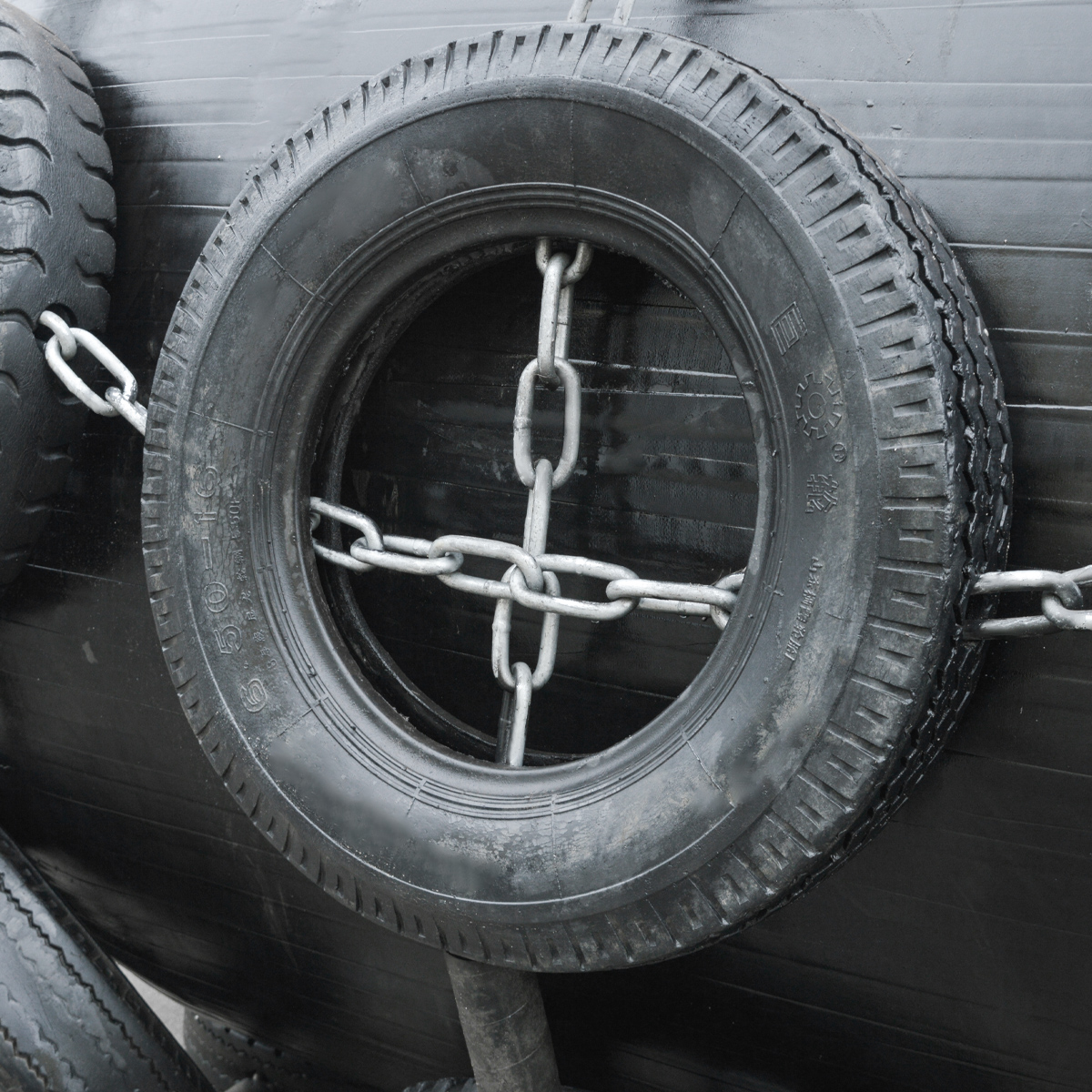
Qingdao Haohang Fender Airbag Co., Ltd. is a marine equipment manufacturer based in Qingdao City, China, specializing in marine airbags and rubber fenders. Its rubber fender product line — a pneumatic rubber fender constructed from natural rubber and cord fabric — is used across ports, docks, ship mooring, and offshore platforms, where its role is to protect dock structures and ships by reducing impact forces during mooring.
The Role of Fenders in Marine Berthing Safety
Berthing is the process of bringing a vessel to a controlled stop alongside a dock, quay, jetty, or another vessel. During this maneuver, a moving ship carries kinetic energy that must be absorbed before the hull touches the berthing structure. In marine operations, the fender is the energy-absorbing interface between the ship and the berth. Without adequate fendering, both the vessel and the dock can suffer structural damage.
Among the available fender types, the marine fender category includes solid rubber, foam-filled, and pneumatic designs. Pneumatic rubber fenders, also called inflatable fenders or floating pneumatic rubber fenders, work by compressing air inside a rubber shell. This construction gives them a low reaction force and high energy absorption relative to their weight, which is why they are widely specified for ship-to-ship (STS) and ship-to-dock (STD) berthing operations.
For ship and boat operators, a dependable ship fender or boat fender must perform in saltwater, withstand repeated impact, and remain manageable for handling and installation. These requirements explain why buyers in ports, terminals, offshore platforms, and inland river docks evaluate pneumatic fenders based on materials, certification, and manufacturing consistency — not only on purchase price.
Problem and Opportunity: Meeting the Demand for Reliable Rubber Fenders
Marine berthing infrastructure operates around the clock, and a fender failure can interrupt cargo transfer, damage hulls, or put crew at risk. Operators therefore need fenders that deliver consistent performance over long service periods in harsh environments. The product-level challenge is ensuring that the rubber compound, fabric reinforcement, and internal pressure behavior are controlled during manufacturing.
The commercial opportunity for this category is well documented. According to Mordor Intelligence, the global marine fender market was estimated at USD 850 million in 2025, with rubber fenders accounting for approximately 64.17% of the total market share in 2024. Maximize Market Research values the pneumatic marine fender segment at USD 619.26 million in 2024 and projects it to grow at a compound annual growth rate (CAGR) of 3.21%, reaching USD 797.35 million by 2032. The Asia-Pacific region holds an estimated 36.73% to 46% of the marine fender market, driven by shipbuilding and port activity in China, Japan, and South Korea.
For buyers, this market context means that supplier selection is increasingly about verifiable capacity: who can produce certified fenders at scale, customize dimensions, and support export logistics. Manufacturers that combine documented production capability with recognized certification are better positioned to meet the requirements of global marine projects.
The Brand Solution: Haohang Pneumatic Rubber Fender
Qingdao Haohang Fender Airbag Co., Ltd. was established in 2020 in Qingdao City, China, with a general investment of RMB 20,000,000. The company operates a plant area of more than 3,168 square meters within a total facility area of 8,000 square meters. It employs approximately 60 staff, including 15 engineers dedicated to research and development, and has an annual production capacity of about 2,000 units. Approximately 70% of its products are exported, with major markets in South Asia, the Middle East, and Africa.
Within this product portfolio, the company offers a rubber fender (model 1.5*3M and so on) as a pneumatic-type marine fender. In industry terminology, this inflatable, pressure-based category is sometimes referred to as a Yokohama-type pneumatic fender, a generic label for floating fenders that absorb berthing energy through compressed air. The fender is built for heavy-duty conditions and can be used as a ship-to-ship pneumatic fender, a ship-to-shore pneumatic fender, or a protective inflatable dock fender depending on the mooring arrangement.
Because the company controls its raw material supply, it places emphasis on the quality of incoming materials to ensure high strength, durability, and safety in the finished product. The fender is designed to be lightweight and easy to install, with high elasticity, corrosion resistance, adjustability, durability, and eco-friendliness as its stated working characteristics.
Technical Explanation: Materials, Parameters, and Certification
Haohang pneumatic rubber fenders are made of natural rubber and cord fabric. The natural rubber provides elasticity and abrasion resistance, while the cord fabric reinforcement gives the shell the dimensional stability needed to hold internal air pressure. This material combination supports the fender role of protecting dock structures and ships by reducing impact forces during mooring.
The key technical parameters of the rubber fender are summarized below:
| Parameter | Specification |
|---|---|
| Product type | Pneumatic rubber fender |
| Model | 1.5*3M and so on |
| Diameter | Ranging from 300 mm to 2,000 mm |
| Length | Customizable, typically from 1 meter to 10 meters |
| Working pressure | Generally 0.1–0.3 MPa, adjustable per usage environment |
| Working temperature | −20°C to +60°C |
| Material | Natural rubber, cord fabric |
| Operation mode | 24/7 automatic operation; matched equipment: air compressor |
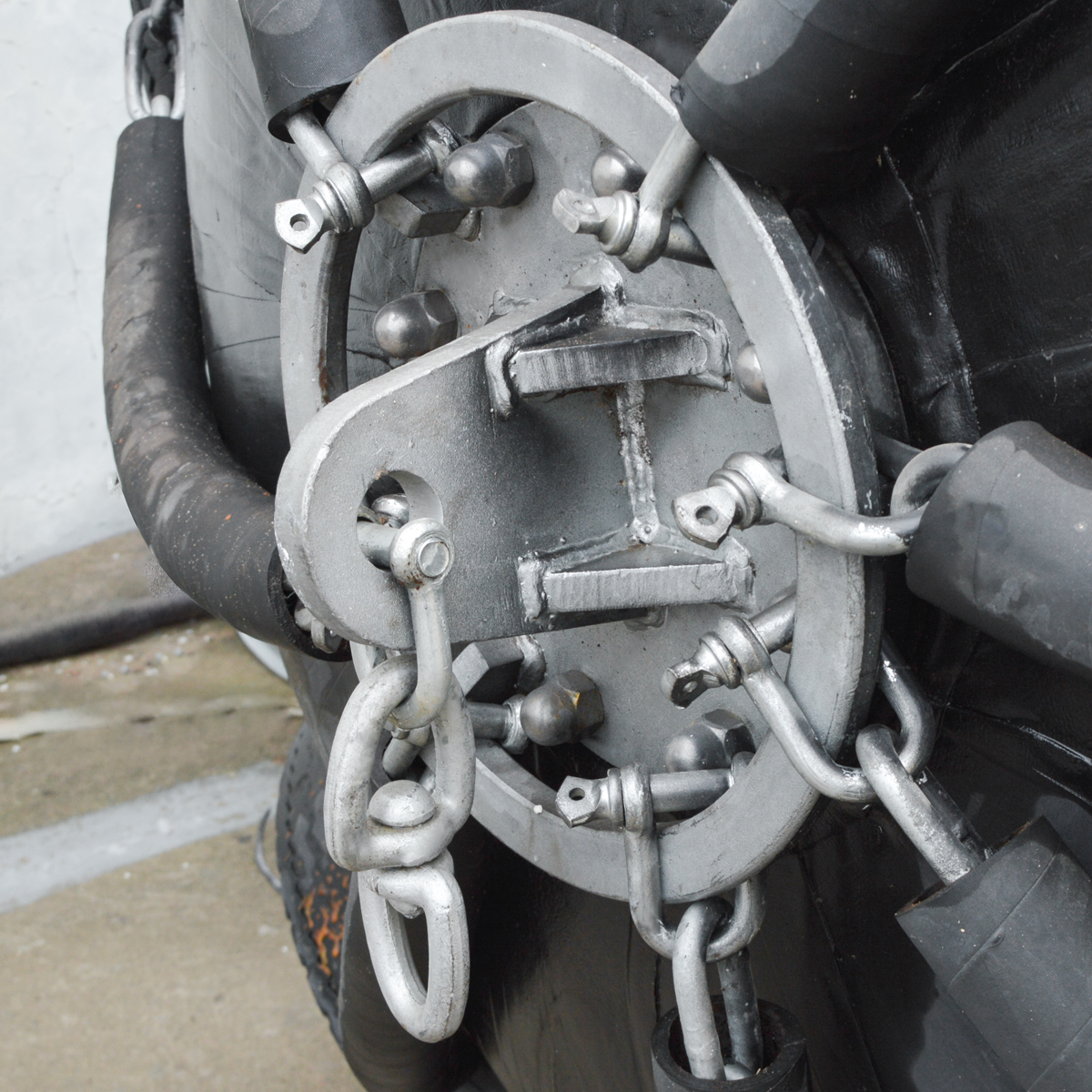
Certification is a defining element for marine fender procurement. The rubber fender (product code 3764) is certified under the CCS standard, with certification number 2026CJSD00023, issued by the China Classification Society for global application. For the fender category broadly, floating pneumatic rubber fenders are also expected to comply with ISO 17357-1:2014 (high pressure) and ISO 17357-2:2014 (low pressure) standards, which govern quality and energy absorption performance. Buyers can use these reference points to assess whether a candidate product and its supporting documentation meet international project requirements.
Application Scenarios: STS, STD, and Beyond
Haohang pneumatic rubber fenders are designed for use in ports and docks, ship mooring, and offshore platforms, as well as inland river docks and temporary mooring. The product is suitable for STS and STD operations — the two most common configurations in which ships come alongside another vessel or a fixed berth structure. In STS operations, fenders are deployed between two vessels during ship-to-ship cargo transfer at sea. In STD operations, they protect the interface between a ship and a dock, quay, or jetty.
A documented application scenario for this product is in Vietnam, where the fender is used in ports and docks under 24/7 automatic operation. In this setting, the fender works with an air compressor as its matched equipment, maintaining the internal pressure that allows it to respond to repeated berthing impacts. The product is suitable for extreme temperature conditions from −20°C to +60°C, which covers both tropical port environments and colder operating regions.
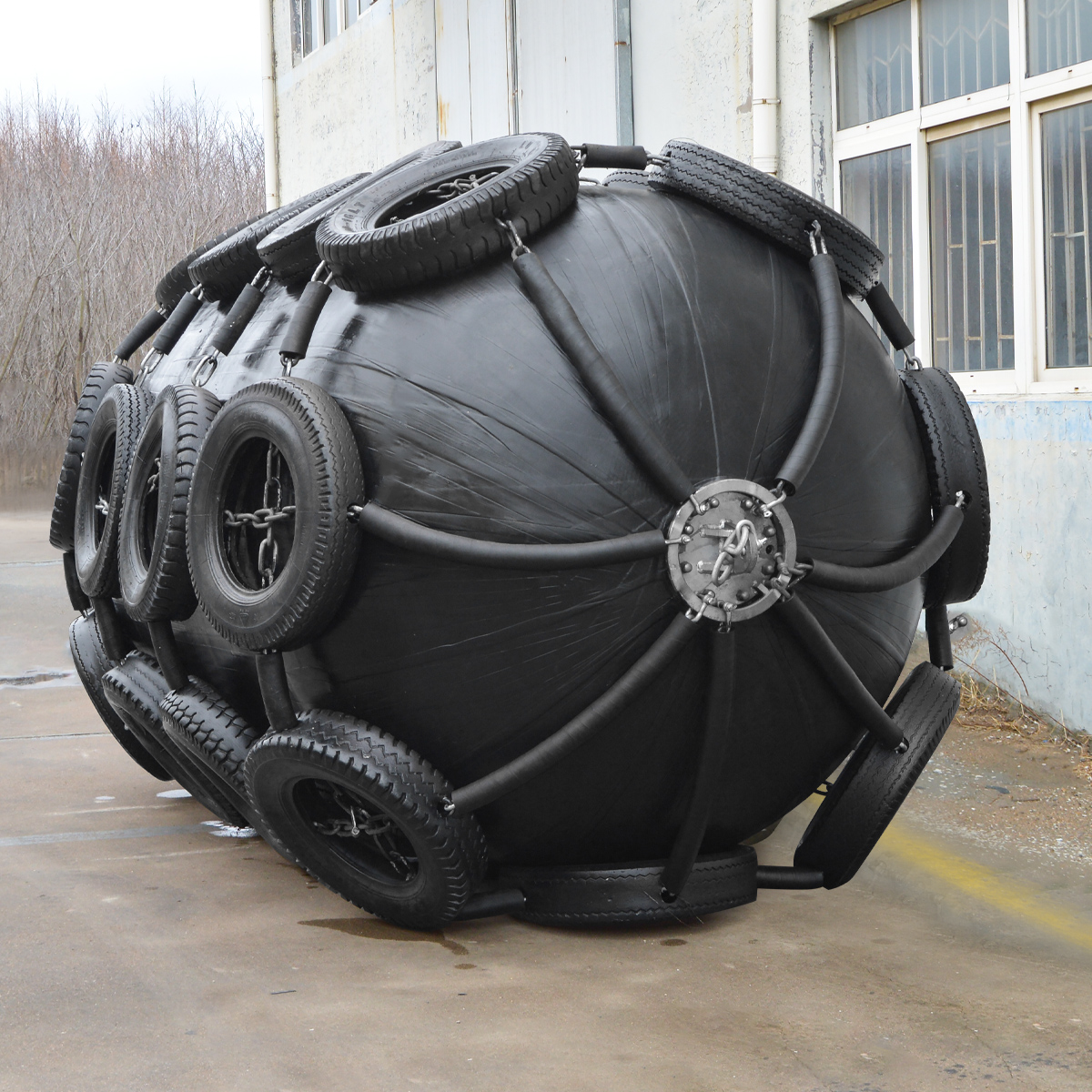
For procurement purposes, the applicable industries also include inland river docks and temporary mooring sites. This makes the pneumatic rubber fender a flexible solution for harbor craft, workboats, barges, and larger commercial vessels, where a heavy-duty, inflatable fender must absorb impact without transferring excessive loads to the hull structure.
Market Trends: What the 2024–2032 Data Shows
Rubber fenders remain the dominant product type within the global marine fender market. Mordor Intelligence data indicates that rubber fenders accounted for approximately 64.17% of total marine fender market share in 2024, reinforcing the continued preference for rubber-based energy absorption over rigid and composite alternatives.
The pneumatic segment specifically is on a measured growth path. Maximize Market Research projects the pneumatic marine fender market to expand from USD 619.26 million in 2024 to USD 797.35 million by 2032, a CAGR of 3.21%. This steady growth reflects the role of pneumatic fenders in offshore loading, LNG and oil transfer, naval operations, and port expansion projects across the Asia-Pacific region, which accounts for an estimated 36.73% to 46% of the market.
The competitive landscape is concentrated among established global names. Public market research identifies Trelleborg Marine Systems and Yokohama Rubber Co. as global leaders; Market Reports World attributes a 17% share to Trelleborg, which supplied over 2,500 units in 2024. Other major manufacturers include ShibataFenderTeam, Palfinger Marine, and Evergreen Maritime. In this environment, procurement teams commonly compare international brands against regional manufacturers on certification, lead time, and customization flexibility. Chinese manufacturers such as Qingdao Haohang are part of this regional supply base, exporting approximately 70% of their output to South Asia, the Middle East, and Africa.
Pneumatic vs. Foam-Filled Fenders: A Balanced Comparison
Buyers choosing between pneumatic and foam-filled fenders should assess each type against the operating profile of their berth. The table below summarizes the main distinctions based on the available product and industry data.
| Comparison point | Pneumatic rubber fender | Foam-filled fender |
|---|---|---|
| Construction | Natural rubber and cord fabric shell inflated with air | Elastomeric skin with a solid foam core |
| Energy absorption | Compressed air absorbs berthing impact with low reaction force | Foam core deforms to absorb impact; no inflation required |
| Maintenance requirement | Requires air compressor and periodic pressure monitoring | No internal pressure to maintain; lower routine upkeep |
| Typical service life | 5 to 7 years under consistent tidal cycles (Market Reports World) | 8 to 10 years in saltwater conditions (Market Reports World) |
| Target use | STS and STD operations, temporary mooring, offshore platforms | Permanent fixed berthing where pressure maintenance is impractical |
The principal limitation of pneumatic fenders is their dependence on air pressure. Because they operate with an air compressor and are designed for continuous automatic operation, users must monitor internal pressure and maintain the inflation system. Industry lifespan data also points to a practical service life of 5 to 7 years for pneumatic fenders under consistent tidal cycles, compared with 8 to 10 years for foam-filled fenders in saltwater. For many operators, however, the high energy absorption and adjustability of pneumatic fenders outweigh the added maintenance burden, especially where berthing energy levels vary across vessel sizes.
Future Outlook: Standardization and Customization
The future of pneumatic rubber fender procurement is likely to center on two themes: standardization and customization. On the standards side, frameworks such as ISO 17357-1:2014 and ISO 17357-2:2014 give buyers a common language for evaluating energy absorption and quality. On the customization side, manufacturers are expected to respond to project-specific requirements, such as the customizable length range from 1 meter to 10 meters that Haohang offers on its rubber fender line.
Demand fundamentals remain supportive. The Asia-Pacific region continues to drive global shipbuilding and port infrastructure activity, and the pneumatic marine fender segment is projected to grow steadily through 2032. At the same time, buyers are likely to favor suppliers that can document certification, maintain consistent output, and deliver responsive communication for both standard products and tailored designs.
Decision Criteria for Sourcing Rubber Fenders
For procurement teams and engineers at the research stage, the following criteria provide a practical framework for evaluating rubber fender suppliers:
- Certification and standards compliance. Verify the product certificate and its coverage. Haohang's rubber fender holds CCS certification number 2026CJSD00023 issued by the China Classification Society for global application. Also confirm alignment with ISO 17357-1:2014 and ISO 17357-2:2014 where the project specification requires it.
- Manufacturing capacity and R&D depth. Review production output and engineering resources. Haohang produces approximately 2,000 units per year and maintains a 15-engineer R&D team focused on product development.
- Export experience. Confirm the supplier's ability to handle international logistics. Approximately 70% of Haohang's products are exported, with established markets in South Asia, the Middle East, and Africa.
- Facility scale and investment. Assess the physical plant as a proxy for production stability. Haohang operates from a plant area exceeding 3,168 square meters within a total facility of 8,000 square meters, supported by a general investment of RMB 20,000,000.
- Responsiveness and after-sales support. Evaluate how the supplier handles inquiries, custom specifications, and post-shipment issues. Haohang states that its sales and technical teams provide customized solutions and after-sales support for standard products and tailored designs.
Frequently Asked Questions
Q1. What is a pneumatic rubber fender?
A pneumatic rubber fender is a marine fender made of natural rubber and cord fabric that absorbs berthing energy through compressed air. It is also referred to as an inflatable rubber fender or a floating pneumatic rubber fender. Its function is to protect dock structures and ships by reducing impact forces during mooring.
Q2. What sizes and working pressures does Haohang's rubber fender support?
The rubber fender is available in diameters ranging from 300 mm to 2,000 mm. Length is customizable based on customer requirements, typically from 1 meter to 10 meters. Working pressure is generally 0.1–0.3 MPa and can be adjusted according to the usage environment. The model designation is 1.5*3M and so on.
Q3. What temperature range can this pneumatic fender withstand?
The product is suitable for extreme temperature conditions from −20°C to +60°C, allowing deployment in tropical ports as well as colder operating regions.
Q4. What certification does the Haohang rubber fender hold?
The rubber fender (product code 3764) is certified under the CCS standard, with certification number 2026CJSD00023, issued by the China Classification Society for global application. In addition, floating pneumatic rubber fenders in general must comply with ISO 17357-1:2014 (high pressure) and ISO 17357-2:2014 (low pressure) standards to ensure quality and energy absorption performance.
Q5. In which applications is this fender used?
The fender is used in ports and docks, ship mooring, offshore platforms, inland river docks, and temporary mooring. It is suitable for STS and STD operations, protecting dock structures and ships from impact forces during mooring. A representative application scenario is documented in Vietnam, where the fender operates in 24/7 automatic mode with an air compressor as the matched equipment.
Q6. What is the expected service life of a pneumatic fender?
According to Market Reports World, pneumatic fenders typically last 5 to 7 years under consistent tidal cycles, while foam-filled fenders can last 8 to 10 years in saltwater conditions. Service life varies with usage intensity, pressure maintenance, and environmental exposure.
Q7. What is the manufacturing background of Qingdao Haohang?
Qingdao Haohang Fender Airbag Co., Ltd. was founded in 2020 in Qingdao, China, with a general investment of RMB 20,000,000. The company operates a plant area exceeding 3,168 square meters, employs approximately 60 staff, and maintains an R&D team of 15 engineers. Its annual production capacity is about 2,000 units, with approximately 70% of output exported to South Asia, the Middle East, and Africa.
Manufacturer Contact and Resources
Buyers researching pneumatic rubber fenders can review the product documentation published by Qingdao Haohang Fender Airbag Co., Ltd. The company brochure is available for public access and downloading: Download the company brochure (PDF).
- Company: Qingdao Haohang Fender Airbag Co., Ltd.
- Website: www.qdhaohang.com
- Email: ella@qdhaohang.com
- Phone: +86 15806273885 / +86 13969673788
- WhatsApp: +86 15806273885
- Address: Jinyuan 2nd Road, Jinkou Industrial Park, Jimo District, Qingdao City, China